FIST LOGIC, VIDEO

WORKING WITH MOMENTUM


What are these attributes that we are exploring?


This is a repost from a couple of years ago, but while we are in isolation and have no assistants this is the best way to remind ourselves of this aspect of our Forms.

There are aspects of Biu Gee that are all about gaining a better understanding of momentum.


 Understanding the aspect of the IDEA represented in each of the first three Forms.

Chan Wah Shun had a maxim on the wall of his school, “STRUCTURE NEUTRALISES, FOOTWORK DISSOLVES” this clearly indicates the transition from S.L.T. though to Chum Kiu in its application.

The physical movement of the Forms are to a very large extent unimportant, they are simply a vehicle to explore the IDEA, ultimately any movement set can be performed with the IDEA of any of the Forms, we could and indeed should do the movements of the First Form {S.L.T.} with the attitude and attributes of Biu Gee, and of course, we could and should do the movements of the Biu Gee with the attitude and attributes of the First Form.

What are these attributes that we are exploring?

Abstract IDEAs are difficult to find a common explanation to, they are governed by language and imagination and all of us use these two tools very differently. This is why there are so many analogies in Wing Chun, analogies are not real, frequently it is the best we can do, but we should be careful of anything that begins with anal, including of course analysis.

If we looked at them as a gearbox they would be neutral, reverse and forward, this is pretty much their role in the application, the First Form builds the body, creates awareness and understanding of how that body works but does nothing else, it does not interact with the outside world, the Chum Kiu shows how that S.L.T. Body receives and redirects FORCE and the Biu Gee shows how that S.L.T. Body creates and releases POWER.

The only significant difference between the Forms is not the shape and variety of the movements but the placement of the active body mass axis, or line of gravity.

In the First Form line of gravity is central, equal weight in each leg, neutral, it is like a Prayer Wheel, when you push it the Wheel rotates but does not diminish or increase the force of contact, it redirects it but otherwise does not affect it.

Chum Kiu Form is a movement originating from a neutral body position, when the neutral body receives force it shifts the line of gravity into the rear of the body, the weight is shifted into the rear leg, away from the attackers intended line of action, the incoming force is extended and weakened, just like throwing a rock into a lake, the initial splash makes small tight ripples or waveforms that hold the energy of the rock, the ripples spread out with equal force but they get wider, slower, the energy is released over a longer period and as a result becomes weaker.

Biu Gee Form is a movement originating from a Chum Kiu body position, the line of gravity is shifted from the rear of the body into the front of the body, the weight is in the front leg, the FORCE of the weight shift moving into the opponent compresses and increases, it is like a bullwhip, the force created at the stock is transferred into the body of the whip, this creates a large ripple or waveform that gets progressively smaller, the initial energy is released over ever-decreasing periods and it becomes much, much stronger.

Chan Wah Shun had a maxim on the wall of his school, “STRUCTURE NEUTRALISES, FOOTWORK DISSOLVES” this clearly indicates the transition from S.L.T. though to Chum Kiu in its application, but it does not tell us how to turn the tide on our attacker if anything this aspect is the secret that was not meant to leave through the front door of the school.

When we are training in Wing Chun something that should be held front and centre in our mind is that Wing Chun is based on normal Human body movement, if for some reason we are struggling with any particular action or any section of any form it is because we are not moving like a normal human. Once we get past the dance, at their core all Forms are just dances, Forms function as an observation deck into how much we understand about our own body, they are not really teaching us anything, we already know how to move around, placing special emphasis on any particular set of movements is a trap that binds and blinds, it prevents us from understanding the totality of the Wing Chun system, the end game of which is to be able to create power from any position, any shape with any part of our body.

There are ideas introduced in Chum Kiu that are not repeated in Biu Gee that we are meant to take along with us just as we are meant to bring everything from the First Form with us into Chum Kiu. In particular, we have a Bong / Dai movement that is performed in the first section with a pivot and in the second section with a shift. This is a clear indication that all arm structures can be performed either pivoting or shifting.

All arm structures.

Biu Gee is predominately performed with pivots, but if we follow what was introduced in Chum Kiu the moves can also be done shifting, and of course, we see that in the Dummy with the Kwan Sau and Garn Sau movements being performed with shifting in the first section and pivoting in the second and third section of the Dummy Form.

By the time we complete our study of Biu Gee we have been introduced to the complete repertoire of movement in Wing Chun, but it is still to a large extent a jig-saw that needs putting together, looking ahead we see that there is backwards shifting and stepping in the Knives and the Pole, the straight back shift to the cat stance from the Pole is introduced in Chum Kiu albeit, in two separate parts, the lateral curved backwards shift in the Knives was introduced in Biu Gee.

Deconstructing the forms and reassembling them in different ways is the key to mastery, bringing forward the idea from the S.L.T. to use only one hand breathes new life into the Chum Kiu and Biu Gee, performing the opening sequence from the S.L.T. with the movement and aggression of Biu Gee is exactly what we do with the Dummy and of course in its application. Breaking apart the sequence even the direction of travel is enlightening.


For reasons I really do not understand the majority of the people that I began this journey with over 25 years ago have chosen to mostly work on the First Form, if as I firmly believe what we are talking about is learning to understand how to use our body this is a bit like learning to walk on only one leg, not in any way normal human body movement in my book.

Wing Chun is a system, although we have six Forms all the relevant information is in the first three, the Dummy, Knives and Pole Forms add complexity and difficulty due to the tools themselves this allows us to approximate challenges in controlling our body mass and balance that we may face when confronting the force of an opponent.


WORK ON YOUR WEAKNESS.

PLAY TO YOUR STRENGTH.

STAY FROSTY.
 

FIST LOGIC, VIDEO

BIU GEE – A START OF SORTS.

BEFORE ANYTHING ELSE – IT MUST CONCUR WITH OUR FIST LOGIC.


The people that stutter and struggle are usually conservative by nature in their outside lives, they think that we should stick with what we did last year because it worked last year.


Wing Chun is like a house with many windows, when we look through different windows we see different things.

I approach the S.L.T. as being a composite of the first three Forms, I see what many refer to as the S.L.T. as the “A” section, the Chum Kiu as the “B” Section and the Biu Gee as the “C” Section, things make a great deal more sense to me this way than thinking that they are separate practices.

The First Form teaches us how to stack our body and align our limbs, specifically our arms, it teaches the most efficient way to use our joints and how to hold our body correctly to facilitate the acceptance and issuance of force.

Chum Kiu adds to this and as such teaches us only the things that are not covered in the First Form, there is no need to learn a new way to set up our body or a new way to move our arms.

When we move our arms in the Chum Kiu we are performing a variation of the First Form. Chum Kiu is a composite of two different instances of the IDEA, or more correctly two ideas working in tandem.

Chum Kiu is primarily concerned with different methods of moving the waist with as little disruption to what we learned in the First Form as possible. The lower and upper bodies are held together and move as one.

With Biu Gee once again there is additional information, and again the only things we are learning are the things we did not use in Chum Kiu, and they are primarily concerned with the shoulder girdle. The method, however, is a complete departure from how we addressed the Chum Kiu.

Biu Gee provides freedom of movement for the upper torso, the chest and shoulder girdle from the lower torso the pelvis, hips and legs.

Any living thing that moves has three states…

  1. Static.
  2. Fluid.
  3. Dynamic.

Static – Sil Lim Tao, Joint integrity, putting everything where it belongs, working correctly.

Fluid – Chum Kiu, Developing Mobility, and by mobility, I mean the full range of motion.

Dynamic – Biu Gee, Maximising Mobility to bring about Efficiency. By efficiency, I am referring to the way our body can effortlessly communicate with itself to bring about any required action.

If we relate this purely to the movement we could say that the progression is from slow to smooth to ballistic.

With this model S.L.T. is performed slowly, Chum Kiu is faster but with an emphasis on smoothness and Biu Gee is as fast as we can make it without losing control.

If we look at the hierarchy of movement S.L.T. moves first, slowly, then Chum Kiu comes along smoothly followed by Biu Gee ballistically.

If we do not have the sequential acceleration I outline the three body sections cannot complete their individual tasks together.

And we are lost.


For reasons I have never understood the ‘bog standard’ Wing Chun person seems to hate progress, they abhor change from what they consider tradition.

They call it Lineage.

For the person that originally manifested Wing Chun from the multitude of Kung Fu influences, THERE WAS NO BEFORE,  there was no Lineage.

There was a time, maybe long ago, when Wing Chun was the vehicle of change from the established Kung Fu.

One thing I have noticed is that the people that progress have very open minds, in their outside lives they are ordinary and love the idea of change.

The people that stutter and struggle are usually conservative by nature in their outside lives, they think that we should stick with what we did last year because it worked last year.


Conservatives search for answers while progressives look for questions.
Conservatives believe that ’cause creates effect’.
Progressives understand that effects create the illusion of a cause.
 
Biu Gee requires us to throw everything away and start again.
WORK ON YOUR WEAKNESS’.
PLAY TO YOUR STRENGTH.
STAY FROSTY.


FIST LOGIC, VIDEO

BIU GEE PRIMER.


Biu Gee needs us to unhinge our thinking a little bit and allow what we see to come into being


If we look around the Wing Chun community at the way the Biu Gee is performed we soon realise that there is no apparent consensus on how to do it.

If we take our research a bit deeper we find that this has always been the way, Yip Man taught the Biu Gee to, amongst others, Chu Shong Tin and Wong Shun Leung, not only did they both do a slightly different   {which, in reality, equates to completely different, 99% right = 1% wrong =100% wrong}   Form than their teacher but they also did a different Form than each other.

The trend repeated with their transmission of the information to their students like Gary Lam {W.S.L.} and my teacher Jim Fung {C.S.T.}.

I know that my Sifu passed on information to my group of students that was different than the information he gave our senior group of students.

Even within one generation of students, there was a difference.

This is what happens when our ‘base data’ is a concept and not a concrete IDEA.

The question before us is “what thread do I follow”?

I have been working with Biu Gee since 2003, due to my videoing of a great deal of my progress through this period I have a relatively detailed record of my thinking and my approach.

Even in this BIU GEE microcosm there is ongoing change.

Growth.

In the earliest videos I was, to be expected, pretty much a clone of my Sifu, but even back then differences in our physicality {my Spine is quite literally “screwed together” making spinal manipulation a whole different ball game for me} meant that there were slight deviations.

We will all find that our body makes decisions we have no choice but to go with, this will affect what we believe we can realise with this IDEA, with this movement.

Through all of the changes during this time I have maintained the central IDEA that my Sifu passed on to me, which I expect would be the same for him and his Sifu C.S.T. and the same with C.S.T. and Yip Man.

The shape of any Form is just a dance to aid memory.

Learn it well, be accurate and perform it smoothly.

Do not worry if this goes here or if I am doing this correctly.

When the music changes so must the dance.

The difference between the steps we all make is only shading, nuance.

I will lay-out what I believe we should look for in the Biu Gee, what we should pay attention to, even point to IDEAS I think are wrong, but that does not in any way mean that I think I am right, look around, if someone else says something that makes sense to you adopt it.

Biu Gee needs us to unhinge our thinking a little bit and allow what we see to come into being, if we don’t, can’t or won’t do this it will never be our own and we will never trust it enough to use it when the chips are down.


At the still point in a moving world. Neither flesh nor fleshless; neither from nor towards; at the still point, there the dance is ….. neither ascent or decline. Except for the point, the still point, there would be no dance, and there is only the dance”.      T.S. Elliot.

When the music changes so must the dance.


WORK ON YOUR WEAKNESS’.

PLAY TO YOUR STRENGTH.


FIST LOGIC, VIDEO

BECOMING DYNAMIC.


Getting a handle on these will teach you more than I ever can.


Hi guys,


I am changing the format of these posts, we have plenty of time so instead of the usual brief videos to fit the idea of a quick visit to the Vlog I am making longer more detailed videos, I will post less frequently so that there is no information overload, and inside of the Videos, I will repeat information so that there is less chance of something going through to the keeper.


Things to get your head around and develop a deep personal understanding of are…

“How does a Counter Attacking Style operate and why.”?

“What does it mean to not carry an opponents weight”

“Why was Isaac Newton the greatest Wing Chun Sifu of all time”?

Getting a handle on these will teach you more than I ever can.


These videos are for your benefit to assist with your “Solo Training” during the lockdown, I have no personal agenda, if there is anything at all you would like me to cover hit me up, there is no reason for some sort of orderly progression, if you have a question on the knives or the pole do not wait until I start talking about the knives or pole, the dummy is difficult to set up and film as a one-man band but I am working on it William.


STAY FROSTY.

STAY HEALTHY.

STAY INDOORS.


FIST LOGIC, VIDEO

AREA OF INFLUENCE.

MY SIFU JIM FUNG. SADLY LONG GONE BUT STILL INFLUENCING MY THINKING.


If we reflect on this as we do the First Form we can absorb practical technical information without supervision.


The movements of the First Form establish our working parameters or the boundary of our area of influence.

We sooner or later discover our personal metric of this boundary dependent on our bodies range of movement but there is a generic we can use to work with the theory.

The generic model builds a rectangular box from our abdomen to the top of our head, from our left shoulder to our right shoulder, and the depth of our Arm, measured from chest to wrist up to the stretch reflex point.

If we add a vertical Centreline to this bounding box we have a left and right side of our Torso, if we then add a horizontal centreline to this bounding box we now have 4 sections or gates.

The Torso is now divided into an upper left gate and an upper right gate, a lower left gate and a lower right gate.

As we are looking at the First Form we will ignore the legs at this time, but they would add another 2 gates below the waist and the 6 boxes would now be upper, middle and lower.

In keeping with Wing Chun’s philosophy of simplicity and practicality any incoming strike that entered any box would be intercepted and moved to a different box.

Wing Chun Centreline Theory maintains that any strike on the left of the Centreline would be intercepted by the hand/leg on that side of the Centreline, as it is with a strike on the right side of the Centreline.

The intercepted strike would then be redirected into any of the adjacent empty boxes, it is this IDEA that gives rise to practical, functional techniques without needing to understand any techniques.

If we call the upper gates A and B1with the lower boxes being C and D any strike intercepted at A could be directed straight across to B, straight down to C or diagonally down to D.

The same would apply to an intercept at C, straight across to D, upwards to A and upwards and across to B.

If we intercept an incoming strike and occupy the Centreline we automatically redirect that strike into an adjacent gate.

The main principals, Wing Chun’s FIST LOGIC, are…

  • Simplicity
  • Practicality
  • Directness
  • Economy of movement

If we reflect on this as we do the First Form we can absorb practical technical information without supervision.


STAY FROSTY.

STAY HOME.


FIST LOGIC, VIDEO

APPLYING THE IDEA TO THE MOVEMENT.

All of the videos I do are deliberately a little disconnected and vague, we learn very little by being spoon-fed, without struggle we attach no importance.

Hi Guys.

A great deal of our training, especially now while in lockdown is by its very nature imaginary.

This is not the best situation but it is not as bad or as ineffective as we may think.

Everything we do in life begins with us imagining the action we intend to perform and then following through physically.

Mostly this happens subconsciously, but we can train it to work more efficiently.

As I have recounted to you guys before, back in 1996 when I had my big operation and ended up in a half body cast for 3 months and was not usually upright, my teacher, Jim Fung Chuen Keung, recommended that even though I was almost glued to the couch I engage in imagining myself standing up and doing the Form.

I was instructed that if I lost the flow of my thinking, forgot where I was at or just became a bit vague to quit and restart.

This was not an easy task.

It was a long time before I could achieve full completion of the Form without distractions or disconnections, I was never able to do it straight of the bat, and it was not a forgone conclusion that I would succeed in my attempt, there were many times I did not.

All up I was away from training for more than 6 months.

When I returned I fully expected to be significantly behind my old training partners but much to my joy and surprise that was not the case, in some instances, I had moved ahead.

There is no reason that we cannot all experience this same phenomenon when we exit lockdown.

All of the videos I do are deliberately a little disconnected and vague, we learn very little by being spoon-fed, without struggle we attach no importance.

All of the Forms are HERE, plus a good chat about what they are and what we should look for.

There is a video of a much younger slimmer me doing the S.L.T.Form HERE, following the moves is advantageous, following the thinking is imperative.

Treat these video classes like a normal class, if it is not clear what I am getting at ask the question.

STAY FROSTY.

WASH YOUR HANDS.

FIST LOGIC, VIDEO

PARADIGM SHIFTING.


Without knowing why we are here and what we expect to find we will live and die in the lobby.


WE MEET THE FORM ON DIFFERENT LEVELS.

Let’s engage in some mental gymnastics.

If we use our imagination and think of doing the Form as getting into an elevator, it could be an office or a store, what floor do we go to and what will we find there?

It is not possible to answer this without some prior knowledge such as “what am I after and what floor is it on”.

Jumping in the lift and randomly pressing a button cannot work unless there is only one other floor, only a single choice.

If the Sil Lim Tao was represented by a building it would most likely be a 40 or 50 story skyscraper.

Without knowing why we are here and what we expect to find we will live and die in the lobby.


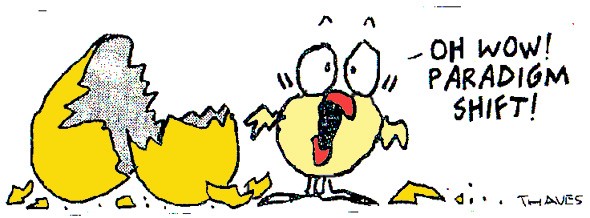
An important aspect of engaging with the Form is to bring about a paradigm shift, to learn how to see things as they are and not as we want them to be.

If we correctly apply Wing Chun thinking then we would be making things more simple, and not more complicated.

We would use Occam’s Razor, the Law of Parsimony.

Einstein once famously answered a colleagues question with “It all depends on your frame of reference”

One of the first reference points we encounter in Wing Chun is Taan Sau, if we are not careful this will cloud all future encounters.


Once we fully understand it is so meaningless to refer to these actions as actions.

They exist of themselves, we are more a part of them that they are a creation of ours.

Once we GROK we are confronted by a bizarre and confronting dichotomy.

Either we never knew,  never can know and never will know.

Or we have always known, which makes training {doing the Form} a pointless self-gratification ritual.


You do know that you can go blind doing that?


STAY FROSTY.


FIST LOGIC, VIDEO

GROKING THE HAND JIVE.


It may not be glaringly obvious but there is a world of difference between the condition of being “still” and the condition of “not moving”.


Working with the Form takes place on different levels that have different learning objectives.

  1.  Maintaining optimum body shape and body condition, building the Chassis so to speak.
  2. Moving the Arms without disturbing the Chassis {down the line this is a good term that can avoid the overuse of the word Body after all our Arms are Body as well}.
  3. Developing the correct action and condition of the Arms, things like becoming aware of the stretch reflex, consistency of placement, timing and effort.
  4. Maintaining a consistent action and condition of the Arms as we move them.

These are just the most obvious levels as we progress the list grows and grows.

Although it may be possible to do all of these things at once there is little to gain by trying and plenty to lose once we get distracted or mixed up.

It may not be glaringly obvious but there is a world of difference between the condition of being “still” and the condition of “not moving”.

Being still is passive, it is a non-doing, it can be left to its own devices as we do something else, such as focusing on how we engage our Arms.

Not moving is active, it needs to be physically engaged and mentally observed and controlled.

Attempting to Focus on “not moving” the Chassis at the same time as we attempt to Focus on “moving” the Arms is not a very good an idea.

Especially at the moment when we have plenty of time to do the work twice with our attention being firstly on maintaining the Chassis without disturbance and then secondly correctly moving the Arms.

I also think that we benefit from having a different Arm movement set when we are focusing on the Chassis, it helps sharpen our attention when the movements are not connected directly through Wing Chun.

I think we would all agree that it is hard to do Tarn Sau and not think of Tarn Sau.

The range of movement exercise that I call the ‘Hand Jive’ contains joint manipulations that are very similar to those we use in the Form so much so that there is a positive, dexterity inducing flow-on effect when we, later on, move the Arms according to the requirements of the Form.


Years ago when I was still a Chef I would iron my uniform in a similar manner to this training, moving the iron without moving my body, then holding the iron still as I pivoted in place or walked around the ironing board.

When we “Grok” this approach, everything becomes a training exercise.


As a bit of a pandemic bonus here is a link to K.Star talking about improving shoulder stability, a must for Wing Chun practitioners.

And something to make you all smile.

Error
This video doesn’t exist


STAY FROSTY.


FIST LOGIC, VIDEO

DIRECTIONAL CUES – REFERENCE POINTS


Self-correction is only possible if we understand the function of the shapes and positions that we are referencing.


First and foremost, Forms are not about movement.

It is easy to think that they are because we are moving as we do them.

Forms are about establishing “Directional Cues” in our practice that can be developed into practical actions that may perhaps look and feel like nothing we have worked on in training, but will never the less be influenced and informed by the training we have done.

It is the “Cues” that are important and not the shape or movements of the Forms.

What “directional Cues” are we getting from the Forms when we do them?

By “Directional Cues” I mean what are the relationships that the movement of the Forms are making us aware of?

“Cues” are reference positions, reference positions between Wing Chun philosophy and practical usage.

We will never use anything from the Forms in the way that we do them, this should be obvious, but the IDEAS behind these movements we should be able to transpose them to other shapes, other situations.

It is the Cues inside the Forms that we should be researching and spending our time on and not the Form itself.

For example, Taan Sau is a reference position for when I intercept an incoming strike and not a methodology.

Self-correction is only possible if we understand the function of the shapes and positions that we are referencing.


STAY FROSTY.


FIST LOGIC, VIDEO

MOVING THE ARMS


I cannot stress enough how important the whole building of the chassis is, especially as we move forwards into Chum Kiu and Biu Gee.


Hi Guys,


If there is anything that you would like me to do a video on. anything you would like to go over from training drop me a note and if it is possible I will do it.

This initiative is for you lot, after all, I already know this stuff.

William asked me if I could do a video of the Dummy Form, unfortunately this is not possible without assistance from someone that also knows the Dummy Form, sorry William.


I cannot stress enough how important the whole building of the chassis is, especially as we move forwards into Chum Kiu and Biu Gee.


STAY FROSTY.