Without knowing why we are here and what we expect to find we will live and die in the lobby.
WE MEET THE FORM ON DIFFERENT LEVELS.
Let’s engage in some mental gymnastics.
If we use our imagination and think of doing the Form as getting into an elevator, it could be an office or a store, what floor do we go to and what will we find there?
It is not possible to answer this without some prior knowledge such as “what am I after and what floor is it on”.
Jumping in the lift and randomly pressing a button cannot work unless there is only one other floor, only a single choice.
If the Sil Lim Tao was represented by a building it would most likely be a 40 or 50 story skyscraper.
Without knowing why we are here and what we expect to find we will live and die in the lobby.
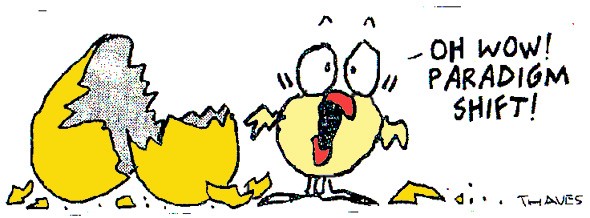
An important aspect of engaging with the Form is to bring about a paradigm shift, to learn how to see things as they are and not as we want them to be.
If we correctly apply Wing Chun thinking then we would be making things more simple, and not more complicated.
We would use Occam’s Razor, the Law of Parsimony.
Einstein once famously answered a colleagues question with “It all depends on your frame of reference”
One of the first reference points we encounter in Wing Chun is Taan Sau, if we are not careful this will cloud all future encounters.
Once we fully understand it is so meaningless to refer to these actions as actions.
They exist of themselves, we are more a part of them that they are a creation of ours.
Once we GROK we are confronted by a bizarre and confronting dichotomy.
Either we never knew, never can know and never will know.
Or we have always known, which makes training {doing the Form} a pointless self-gratification ritual.
It may not be glaringly obvious but there is a world of difference between the condition of being “still” and the condition of “not moving”.
Working with the Form takes place on different levels that have different learning objectives.
Maintaining optimum body shape and body condition, building the Chassis so to speak.
Moving the Arms without disturbing the Chassis {down the line this is a good term that can avoid the overuse of the word Body after all our Arms are Body as well}.
Developing the correct action and condition of the Arms, things like becoming aware of the stretch reflex, consistency of placement, timing and effort.
Maintaining a consistent action and condition of the Arms as we move them.
These are just the most obvious levels as we progress the list grows and grows.
Although it may be possible to do all of these things at once there is little to gain by trying and plenty to lose once we get distracted or mixed up.
It may not be glaringly obvious but there is a world of difference between the condition of being “still” and the condition of “not moving”.
Being still is passive, it is a non-doing, it can be left to its own devices as we do something else, such as focusing on how we engage our Arms.
Not moving is active, it needs to be physically engaged and mentally observed and controlled.
Attempting to Focus on “not moving” the Chassis at the same time as we attempt to Focus on “moving” the Arms is not a very good an idea.
Especially at the moment when we have plenty of time to do the work twice with our attention being firstly on maintaining the Chassis without disturbance and then secondly correctly moving the Arms.
I also think that we benefit from having a different Arm movement set when we are focusing on the Chassis, it helps sharpen our attention when the movements are not connected directly through Wing Chun.
I think we would all agree that it is hard to do Tarn Sau and not think of Tarn Sau.
The range of movement exercise that I call the ‘Hand Jive’ contains joint manipulations that are very similar to those we use in the Form so much so that there is a positive, dexterity inducing flow-on effect when we, later on, move the Arms according to the requirements of the Form.
Years ago when I was still a Chef I would iron my uniform in a similar manner to this training, moving the iron without moving my body, then holding the iron still as I pivoted in place or walked around the ironing board.
When we “Grok” this approach, everything becomes a training exercise.
As a bit of a pandemic bonus here is a link to K.Star talking about improving shoulder stability, a must for Wing Chun practitioners.
Self-correction is only possible if we understand the function of the shapes and positions that we are referencing.
First and foremost, Forms are not about movement.
It is easy to think that they are because we are moving as we do them.
Forms are about establishing “Directional Cues” in our practice that can be developed into practical actions that may perhaps look and feel like nothing we have worked on in training, but will never the less be influenced and informed by the training we have done.
It is the “Cues” that are important and not the shape or movements of the Forms.
What “directional Cues” are we getting from the Forms when we do them?
By “Directional Cues” I mean what are the relationships that the movement of the Forms are making us aware of?
“Cues” are reference positions, reference positions between Wing Chun philosophy and practical usage.
We will never use anything from the Forms in the way that we do them, this should be obvious, but the IDEAS behind these movements we should be able to transpose them to other shapes, other situations.
It is the Cues inside the Forms that we should be researching and spending our time on and not the Form itself.
For example, Taan Sau is a reference position for when I intercept an incoming strike and not a methodology.
Self-correction is only possible if we understand the function of the shapes and positions that we are referencing.
I cannot stress enough how important the whole building of the chassis is, especially as we move forwards into Chum Kiu and Biu Gee.
Hi Guys,
If there is anything that you would like me to do a video on. anything you would like to go over from training drop me a note and if it is possible I will do it.
This initiative is for you lot, after all, I already know this stuff.
William asked me if I could do a video of the Dummy Form, unfortunately this is not possible without assistance from someone that also knows the Dummy Form, sorry William.
I cannot stress enough how important the whole building of the chassis is, especially as we move forwards into Chum Kiu and Biu Gee.
If in any doubt what to do just learn how to move a bit easier, a bit smoother, a bit Cat-Like.
I hope everyone is healthy, staying at home as much as possible and doing some training.
When I was filming this blog, Saturday 28th at 0830 there was so much air traffic from Bankstown airport, so much more than usual, there are some stupid people out there.
If in any doubt what to do just learn how to move a bit easier, a bit smoother, a bit Cat-Like.
As always get in touch with me if you have any questions about this or anything Wing Chun related.
To put it another way, 99% correct is 100% incorrect.
To get any long term benefit from Forms training we need to be able to develop good focus, we need to pay attention.
If our focus is split then we will make very poor progress, mentally prepare yourselves to do the work, clear your head, sit down with a cup of tea or coffee and spend 30 minutes thinking about what you are going to do before beginning.
One thing to think about is exactly when does something change from being correct to be incorrect?
My first job was as an apprentice Toolmaker, an Engineer, when we made something it always had a tolerance level between acceptance and throw it in the bin, usually give or take a couple of “thousands of an inch”.
.001 tolerance, one-tenth of one per cent.
If something is 1% incorrect it is completely incorrect.
1% incorrect is the equivalent of 99% correct.
To put it another way, 99% correct is 100% incorrect.
Focus on just what you are doing.
I will also post this video and all future videos on the ISOLATION TRAINING ADVICE PAGE to make it easy to find if you wish to review it.
Feel free to comment or even contact me if you need anything clarified.
What we think of as six Forms are better seen as two different presentations of the one “Little Idea”.
Hi Guys,
I have not been able to do the videos I promised to do as I have unfortunately pulled the muscles in the side of my neck and the rear of my shoulder that is stopping me from holding my head straight.
I will be doing some videos as soon as my neck/shoulder allows but in the meantime here is some food for thought.
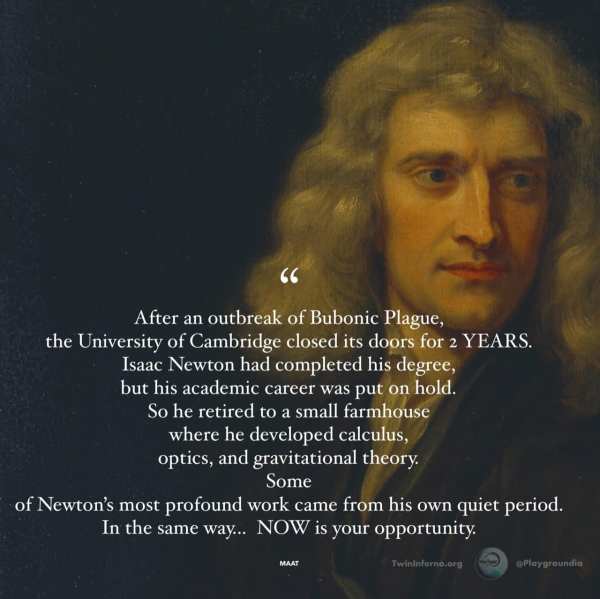
In this time of self-isolation, the only access we can have to Wing Chun is through the Forms.
What we think of as six Forms are better seen as two different presentations of the one “Little Idea”.
The first three Forms present as Information, the second three Forms present as Application.
What most people refer to as the Sil Lim Tao Form is in fact only the “A” Section of the Sil Lim Tao Form, Chum Kiu is the “B” Section and Biu Gee the “C” Section.
Only on completion of the Biu Gee set have we seen all of the components of the Sil Lim Tao Form.
The Dummy, the Knives and the Pole are three semi-practical methods/constructions for exploring the “Little Idea” with a more physical agenda.
Seeing the S.L.T. Chum Kiu and Biu Gee as different levels of the same thing makes it easier to understand the unified nature of Wing Chun and from there to engage in deconstruction and reconstruction which is the only way we can coax them into life.
Break them down and build them up better than before.
To do this we need to have a deep understanding of what the Forms are, how they fit in the system, what the critical components are and how they inter-relate.
During this awkward time, we have a chance to really engage with the Bio-mechanical aspects of the Wing Chun body without the distraction of trying to solve aggressive physical problems in that thing we call training.
If we can all get into this it will save everyone years of stumbling in the dark.
It should not be too long before I can film but in the meantime, I will put up the new page and populate it with some of my previous videos.
We do this by sourcing good quality information from reliable sources.
Hi Guys.
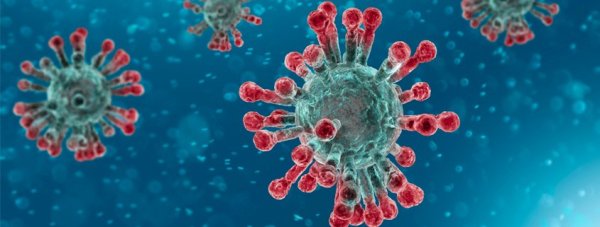
It looks certain that at some time soon we will all need to isolate ourselves in the face of Covid – 19, the Carona virus.
The question that arises is how do we maintain our training without supervision, how do we prevent ourselves from undoing all of our good work?
There are numerous answers to this question but first and foremost the best way forwards is to improve our knowledge.
We do this by sourcing good quality information from reliable sources.
This immediately disqualifies most Martial Art / Wing Chun promoters, {including me if you are not one of my students and up to speed with my thinking and methodology} at best all it can bring is confusion.
Most Martial Art / Wing Chun promoters are just advertising their product, a very large amount of what is sold as Wing Chun on the Internet is rubbish that will not work.
I hate to inform you of this but you cannot use the Law of Attraction to learn how to fight, I have been a Chef since 1970 and something I know is that you cannot make an omelette without breaking eggs.
Over the next few days, I will put together a number of short videos with suggestions on what to do if there is no training available, fun things that will advance your ability and teach new skills at the same time.
Not boring pointless advice like “Just do the Form”.
Perhaps the problem is not the act of “Kicking” but rather what we think the act of “Kicking” is?
This is a reposting from 6 months ago, the reason for the re-post is because we are here again, kicking causes such confusion for some students.
One thing that has always confused me has been the role of kicking in a ‘FIST’ art like Wing Chun.
Is it necessary, should it even be there?
What is the historical perspective?
If we go to the Kuen Kuit to get assistance there is practically nothing related to kicking, this is more than odd I think, especially as the Kuen Kuit is the repository of Wing Chun’s original wisdom.
Somewhat concerning is the fact that one of the only times the Kuen Kuit cleary references kicking is in the line “Kicks lose nine times out of ten”, this does not sound much like a positive credit.
The Kuen Kuit also says “Learning the usual ways will allow later variations”.
It just appears that the usual way did not favour kicking.
There are many situations within the ‘Canon’ of Wing Chun were things that make up the backbone of our work begin to fall apart, even contradict themselves, I believe that this is a conflict of translation over interpretation.
My teacher {Jim} Fung Chuen Keung would often say that some things in Wing Chun defy translation to English, if we take this to its ultimate conclusion we westerners that depend on such translations are all, and quite possibly always, wrong, the only option available is a personal interpretation of what is a very cryptic, and incorrectly translated Kuen Kuit.
People, being people, this fluidity leads to ‘Cherry Picking’.
Is it possible that kicking entered Wing Chun because Ip Man was very small, did he elevate kicking because it afforded him the potential of extra distance?
Perhaps the problem is not the act of “Kicking” but rather what we think the act of “Kicking” is?
There is a tendency amongst many Wing Chun commentators to forget that everything we do has a very real physical purpose that supersedes any pseudo – mechanical or semi-mystical deep thinking.
The product supersedes the process.
Any kick has a job to do, and that job has very little to do with how we move our limbs, it is all about distance control, contact, cause and effect, hurting the Bad Guy.
Wing Chun is a ‘Close Range’ fighting style, kicks, on the other hand, are at best mid-range, more often than not long-range.
Approaching kicking as something we do with ourselves as opposed to something we do to an attacker is a road to nowhere.
What do we think a kick is?
Does it fit the Wing Chun ethos?
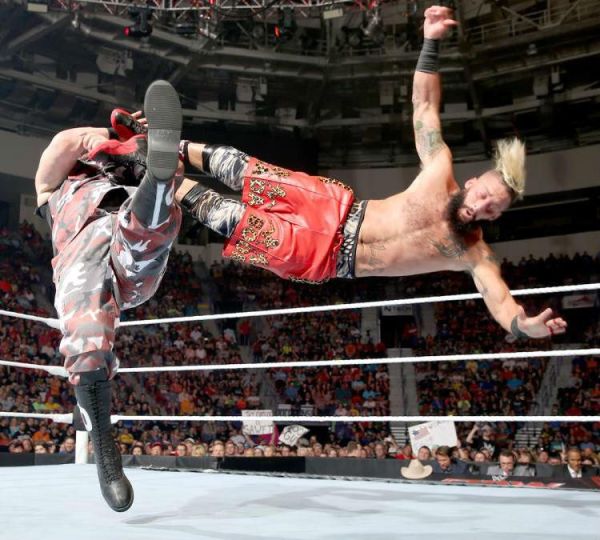
First and foremost and something that needs to be contemplated deeply is that “Kicking” is effectively fighting on one leg.
It requires exquisite levels of skill to remain in balance on one leg during a dynamic exchange, a lack of balance leads to a lack of power.
A wider and more generalised consensus we can be comfortable with could be…
A blow delivered to an opponent by a foot of shin that has built its energy from a swinging leg.
Kicking is an overt attacking move, often pre-emptive, all eggs in one basket kind of approach, it is difficult to align this with the Kuen Kuit’s ‘he attacks first, but I strike first’ which is alluding to a counter-attack.
Nowhere in any of the Wing Chun Forms does this type of movement exist, in both the Chum Kiu and the Biu Gee it is the body that moves and not the leg.
In Chum Kiu practice we are advised that the extension of the leg must not compromise our balance that we should be able to maintain balance with the leg extended.
This position, this one-legged stance if you wish is called the “Hanging Horse”.
This is a static, solid, stable position that if an attacker walks into is the equivalent of a bike rider hitting a parked car.
If the timing is correct and the attacker makes contact at the exact time that the position is established the exchange of momentum would be almost perfect and extremely powerful.
Seeing this take place from an outside vantage point would look very much like a consensus kick, a swinging leg.
Like so many other aspects of Wing Chun what appears to be is never what is, this can only be taught hands-on, and validated through experience.
I realise that many people reading this will to some extent disagree, and that is cool as I said at the beginning “I am one of those that are in favour of each of us making our interpretation of the work we do, forging our own path ” and of course there is valid and effective leg work in Wing Chun, it is just not kicking.
In Wing Chun we are informed and influenced by an IDEA, to be expected the same IDEA that informs and influences our arms informs and influences our legs.
We do not swing our arms around or hammer them into the opponent’s arms do we, this alone should raise a few flags.
“Greet what comes in, follow what goes out”.
Like the bike rider and the parked car, we offer a place for the opponent’s energy to exhaust itself under Newtons Third Law and the Law of Momentum Conservation.
We then step forward and finish them off.
This is shown in all its simplicity in the Chum Kiu and Biu Gee leg movements, there is no need to add anything.
We call this “Jamming”, to anyone that does not understand the finer points this can look just like kicking and as such is frequently taught as kicking with all of its overt, overcommitted implications.
When it comes to a personal assessment of the validity and effectiveness of kicking, I must admit to holding a bias on this point, my first 20 years in the Martial Arts I followed styles that did not need kicking to get a favourable result, Boxing, Ju-Do, Bu-Jutsu.
Add to this that throughout my teenage years, the “soccer hooligan’ years of the 1970s in the U.K. On the occasions when everything went ‘Pear Shaped’ I consistently fared much better against people that tried to kick me than I did against non-kickers.
This, of course, could also be that many people, back then and today, try to kick because they have little confidence or ability in striking.
The more I think about and the more I study Wing Chun I am drawn to the conclusion that overt attacking kicking does not have a rightful place in this art, I know many people will disagree, many have in the past, but in today’s time-poor training world I think we should question the value of training something that the Kuen Kuit says fails 9 times out of 10.
This is not me saying do not train to kick, if you think you need it then train it, I just think that it is a little bit of an illegal import.
A final thought, FIGHTING ON ONE LEG.
Apart from 1970s Shaw Bros movies, this is something that no one with any sense would choose over fighting on two legs.
It’s a balance thing.
Even the most highly accomplished of kickers, Baas Rutten and Benny “the Jet” Urquidez { if these guys are unknown to you hit up YouTube} to name just two of my all-time faves would, on occasion fail and fall down, thankfully in that environment the opponent was prevented from jumping up and down on their heads.



 Wing Chun Sydney, Australia