FIST LOGIC

HOW TO FIGHT LIKE AN OLD MAN.

It is the “Holy Grail”…

it is “Effortless Power”

The late great Hélio Gracie one quipped, “Learn to fight like an Old Man, because one day you will be”.

What does it mean to ‘Fight like an Old Man’?

Perhaps we should ask one.

As hard as it is for me to get my head around it, I am a 70 year OLD MAN.

Fighting like an OLD MAN boils down to not relying on all of the stuff that young men rely on.

Things like fitness, speed of motion, and strength, in short, brute force and effort.

Which is just as well for I am no longer fit, fast, or strong.

But despite this, in a ‘self-defence situation’ I would still back myself against anybody, be they 30, 40, or even 50 years younger than me.

However, in a Mano-a-Mano stand-up fight against someone 30, 40, or 50 years younger, even I would put my money on the other guy.

But self-defence is a different beast altogether, the opening minute is always up for grabs, first in best served.

I do not B.S. myself, even if it is a self-defence situation, every second after that opening minute my chances of success would sink dramatically.

An OLD MAN must rely on skill, luck, and old-fashioned Bastardry.

Old-fashioned Bastardry is the second aspect of “Fighting like an OLD MAN”.

The first aspect is using skill as opposed to effort, and of having enough trust in oneself and one’s skill set to stick to using skill and correct application even when things go south.

Trusting a skill set is a highly degradable commodity, if we do not keep up the training, and keep close company with the skill set, this trust vanishes as quick as V.B. turns to piss.

It goes without saying that an important component of fighting like an OLD MAN is to still be training when you are an OLD MAN.

The second aspect is to get the job done and dusted in under a minute.

To achieve this we need an element of deliberate brutality, or as I prefer to call it, ‘Old fashioned Bastardry’.

Whenever we make contact with an attacker, especially in defence, we must always hurt them, so the question becomes “How do we hurt people while we are trying to stop them from hurting us”?

We do it by developing a frame that hurts people who make contact with it, even when we are a little bit lost and do not exactly know what is going on.

An unbreakable exoskeleton that is appears hard, yet flexible, as if made of solid rubber.

The best place to start, the spot where the “rubber” meets the road so to speak…

… is Lan Sau.

Like so much if not all of Wing Chun, Lan Sau is presented as a single shape, or movement, but it is, in reality, the final rung of a long ladder.

The cosmologist  Carl Sagan had an Apple Pie recipe that went like this…

…step 1.  Create the Universe.

As humorous as this is without the Universe there will be no planets, no environments, no trees, no fruit and so on.

So when I talk of Lan Sau it is in the mode of Carl Sagan’s apple pie recipe.

For Lan Sau to even exist there is a chain of supporting structures that must be developed first.

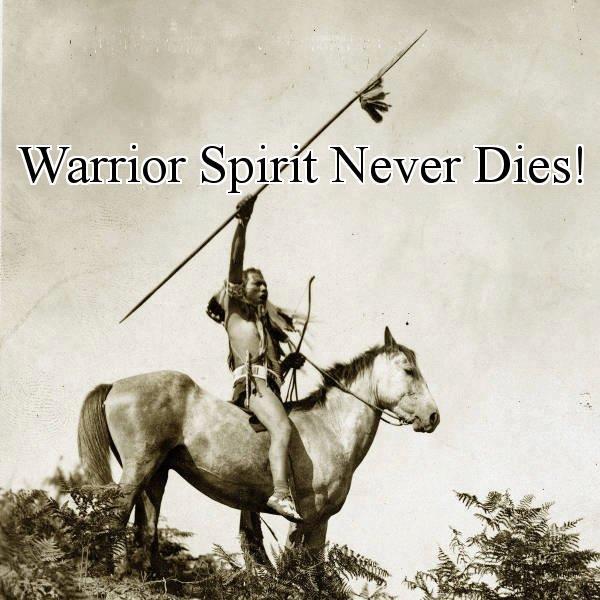
For starters, we must engage Crazy Horse, which in itself is a grouping of concepts such as Head-up – Body down, Shaolin Archer, and the totality of  Y.G.K.Y.M.

The shape or posture that we train as Lan Sau is elementary stuff, as useful and effective as can be in a violent situation, in training it is just an exercise for us to isolate the concept so that we can explore it.

Lan Sau translates to the Bar Arm, or sometimes Obstructing Arm, and in its first showing it helps maintain or regain our distance from an attack, and if this is all you learn it will serve you well, but there is more, much more.

If we choose to retranslate Lan Sau into ‘the Unbending Arm’ and think of all the ways that having an arm that does not bend under force is useful, we can begin to see that unlocking this concept for use everywhere is an absolute game changer. 

In an earlier video I referred to moving as if we had a prosthetic arm to clear the way, this is how I see Lan Sau, as an unbending, somewhat neutral, but extremely sturdy, prosthetic arm.

As you all know, I do not think that striking ability is any kind of magic sauce, even without training we all know how to hit someone, and if we cannot hit very hard we will just hit multiple times.

But the potential to not be hit, surely that IS some kind of magic, developing an unbending arm gives us a major advantage in any violent situation.

Lan Sau may not be a ‘Magic Bullet’, but it is not far off.

It is worth noting that Lan Sau does not get introduced until Chum Kiu, certain fundamental IDEAS/Concepts such as ‘Do not fight force’ or “Do not cary your opponents weight’ need to be understood before working on Lan Sau, plus there exists some subtle differences between ‘Accepting Force and Issuing Force’ that we need to align with.

The following video is some footage from a one-on-one session I had with Sam, as always it was unplanned and as such it may jump around or be hard to follow, if this happens just observe how little either of us is disturbed as we experiment with Lan Sau against deliberate force.

You all know that while I never make it extremely difficult to achieve the training objective, you also know that I never make it easy, when Sam physically moves me, even when it appears that he is doing very little, he is really moving me and as such would move anyone.

There is one spot in the video where Sam gets it spot on and shunts me away with almost zero force, the look on his face was priceless.

What is “Fighting like and Old Man”?

It is the “Holy Grail”…

… it is “Effortless Power”

what moon?
FIST LOGIC

SIMULTANEOUS ATTACK AND DEFENCE, what is it?

It is highly unlikely that the Bad Guy has a plan, so any plan we have is a step up from them.

The video footage with this post is of the senior guys working on developing an understanding of the ‘Concept’ of Simultaneous Attack and Defence.

Apart from ‘Simplicity’, it is this concept that is paramount to functionality.

The body text of this post is another way of ‘EXPLORING’ the ‘BIG PICTURE”.

Wing Chun, in its purest representation, has no techniques, no patterns, and no set strategies, to non Wing Chun people this is its biggest weakness, but to those of us that understand…

             … it is its greatest strength.

But like so much of Wing Chun’s Fist Logic, this is so counter intuitive that very few students give it enough time to sink in.

The above statement does not mean that we go in eyes closed and Brain on pause, it is more that we care little about what the Bad Guy wants to do, and focus mainly on what we want to do.

To start this thought experiment let’s open with two questions.

Q. 1.  Why is it that highly skilled, highly trained martial artists with many years of experience get their asses handed to them by “Punks in Pubs”?

Q. 2.  Why is it that completely untrained people can be so effective when it comes to fighting?

The majority of non-competetive martial artists tend to overthink the situation, underestimate their own ability, and go way to soft with their opening , while untrained people just do not know enough to be worried and so go in full bore without fear of reply.

The default position for Wing Chun is that we are being attacked, as a result we are always starting in second place, so we cannot afford to hesitate when it comes to ‘Go Time’, we need clear plan, and we need to implement it with extreme prejudice.

Now you may ask “How can we have a clear plan if we do not know what is happening”?

And that would appear to be a fair question, except we do know what is happening, we are being fronted by someone that wishes to hurt us, and we also have a plan, counter-attacking using simultaneous attack and defence.

This may sound like a vague even half baked plan, but it is enough.

Something many people struggle to understand is that no plan ever works, whatever we plan to do will need to be changed, on the fly, so we can go in with anything, and the simpler that anything is the better.

It is highly unlikely that the Bad Guy has a plan, so any plan we have is a step up from them.

If we have set ourselves up correctly, physically, mentally, and emotionally, our attackers options are far fewer than they think, and even though we may think we are starting in second place, if we have a correct Wing Chun set up, such as CRAZY HORSE, we are pretty much in pole position. 

I cannot express strongly enough how important our state of mind is when we are navigating a violent situation.

Something to be wary of is if we loose our ability to think on our feet we will rapidly become overwhelmed.

If we become overwhelmed we will at the very least hesitate, quite possibly just shut down, no more movement, then it is curtains.

If being overwhelmed prevents us from moving, then the reverse should also be true, that moving will prevent being overwhelmed.

A positive state of mind and a clear plan of action, and free and easay movement is all that is required to prevent ourselves being overwhelmed.

This is what our training should be focused on and what we want it to provide.

OVERTHINKING: THE ART OF CREATING PROBLEMS OUT OF SOMETHING THAT WAS NEVER THERE.

BATMAN.

WHAT KIND OF DAY IS IT?
FIST LOGIC

IT IS KICKING OFF, NOW WHAT?

In a live performance, theory counts for shit!

At training last Friday Saleh and Rick initiated a conversation about the dynamics of violence.

It was an intelligent and insightful conversation, and Salah asked if I would do a post on the subject so that he could refer to it when needed.

This conversation is not as simple as we may wish because Violence is a complex and ever-changing environment that unfortunately never has just one answer.

Especially as most situations can be as good as decided before the fists fly, and the most important and defining factors have nothing to do with the style of Martial Art we practice, at least not directly.

But to begin with I wish to address an old chestnut.

“Does Wing Chun, or any Martial Art, work in a Street Fight’?

This is a silly question ‘put out there’ to create mayhem amongst ‘Keyboard Warriors’.

We may as well ask…

“Does the Pentatonic Scale, or Arpeggios, or even Guitar licks work in a RockConcert”?

Forms = Scales.

Arpeggios = Chi Sau.

Killer Riffs = Techniques.

To prevent the Internet from exploding let’s choose to answer this way…

“IT DEPENDS”!!

There is little doubt that someone banging out a tune on a guitar who has deep knowledge of Scales, and arpeggios and knows a hat full of killer riffs will create far more interesting music than someone without this knowledge.

But in a one-off 10-second burst it could be close, and that is the point.

If two guys picked up a guitar at a party, I would put my money on the trained musician to be better, just as if an argument broke out I would put my money on the trained martial artist to do better.

But it is not a sure bet.

In a live performance, theory counts for shit!

Let me try to explain why.

No two ‘Violent Encounters’ are ever the same, I think we all know this, so it calls into question the wisdom of learning any system as an answer.

As I have said many times, I do not regard Wing Chun as a fighting system, but as a method of organisation that once understood just happens to help us perform optimally in violent situations.

But it requires that we have some level of control over our own emotions, thinking and movement.

There is much more to come in this direction, ask me about it.

MOVE FAST AND BREAK THINGS.

That bloke from FaceBook.

FIST LOGIC

IT IS ALL IN OUR HEAD, BUT CAN WE GET IT OUT?

what on earth were we doing last year?

Hey guys.

The first video of 2024, and the question is how do we get what we think we got.

This is a very important topic, and not just for our Wing Chun, if you can do some research of your own.

Every new year our training should involve a new approach, if we need to cover old ground again, in the same way, what on earth were we doing last year?

WHAT KIND OF DAY IS IT?
FIST LOGIC

WE MAY DO IT DIFFERENTLY, BUT WE ARE ALL DOING THE SAME THING.

But the IDEA remains the same, constant, fundamental.

We can only get so far by training in purely physical expressions of Wing Chun, no matter what those physical expressions are, techniques, Chi Sau, and even Forms.

Physical work will allow us to know how to make these movements, but only the thinking that created them can lead us to advanced understanding.

There is only one Wing Chun, one way of accessing the Wing Chun IDEA.

Furthermore, there really is no right way / wrong way to do things.

Let me clarify this a bit, when training if we are involved in a specific exercise, then yes, there is a right/wrong way for that specific training IDEA, but this is not, as may be thought, about correctness, it is about consistency.

If we are doing an exercise differently on each pass-through, even if it is only by the smallest amount, as far as our Brain is concerned we are doing different exercises, and this will have a negative flow-on to how we remember this IDEA, and to be expected a negative flow-on to how we retrieve that memory, in particular when we remember the IDEA intending to use the skill.

So it is only right/wrong in the context of that specific exercise, and at that particular time, and not in the wider IDEA of how we would use our skill set.

As I have mentioned many times, we will never use the things we do in training out in the wild, we will always need to refine/adjust/adapt them to the situation, so the important thing is to lay down a consistent ‘Default Base Idea’.

This ‘Default Base Idea’ is of course where the term ‘Basics” comes from.

Any physical exercise/action in Wing Chun is always just a way for us to explore the fundamental IDEA behind that action.

The chosen method of approaching and exploring the IDEA can vary in the extreme, with every Instructor and every School free to do this in any way that they feel comfortable with.

But the IDEA remains the same, constant, fundamental.

Once we understand this we can learn from any Instructor, even when their physical or external approach looks completely different to our own.

It allows us to participate in another school’s exercises and approaches without clashing with our own approach.

Which has the potential to end the constant bickering around the opinion that  “My school or sifu is better than your school or sifu”

There is only one Wing Chun.

We are all individuals with different levels of understanding and different life experiences, and this difference is multiplied over generations, so some approaches will be easier to access for us than others, but the IDEA is the same.

What is even more remarkable is that not only can we train in different approaches to Wing Chun and still train the same fundamentals, but once our knowledge is deep enough we can train in a totally different martial art and still explore the fundamental aspects of Wing Chun.

This becomes abundantly clear once we focus on the similarities between various methods instead of the differences that they all most certainly have.

Many basic Western Boxing Footwork drills, if slowed down enough and looked at as a collection of single moves, as we do with our FORMS, are almost identical to how we play the Baat Cham Dao Form, and many Muay Thai techniques again slowed down, reflect Biu Gee to an uncanny extent.

There is, and always was, going all the way back to Dr Leung Jan, only one IDEA of Wing Chun.

And no matter how differently we all do it…

we all do it.

THE “D” MAN.
WHAT KIND OF DAY IS IT?
FIST LOGIC

TRAINING IS JUST TRAINING, BUT THIS CAN BE A GOOD THING.

In fact, it is because what we are training will never be used that we need to be even better at it.

Some students embrace it while other students try to not even think about it, but we cannot escape the fact that what we do in training will never be used out in the wild.

All types of training, in every style, will always need to be creatively adapted to suit the situation we find ourselves in when the ‘Brown And Sticky Gets Airborne’, this really should be a great big “DUH”, or ‘Facepalm’ moment.

Accepting that nothing we do will ever be used can be remarkably liberating.

I have always found this a positive way of thinking, it allows me, in fact almost forces me, to think deeply about what the training is showing, it encourages me to work on the shapes and movement in different sizes, different directions, in particular doing things in reverse, yes, do the whole move, or even Form backward.

And I do not get distracted by thoughts of ‘Will this shit fly”?

I know from the very beginning that it will not fly, unless of course I can find a way to make it fly, and the more I know about any movement, shape, or even IDEA the higher the chance I can make it operational.

But this does not mean that we can be in any way ‘half-assed’ about our training, especially solo training, where there is no one to correct or motivate us.

In fact, it is because what we are training will never be used that we need to be even better at it.

If we are looking at adapting something we know the more accurate, more internalised, and most importantly the closer to perfect the movement or IDEA is then the better will be the adaptation. 

This situation is like what we find with a computer, G.I.G.O. which as we know stands for “Garbage in, garbage out”.

If we can reach a position where we fully accept that training is just training, we begin to, almost surreptitiously, accelerate the work of suppressing the ego, which is a far more valuable asset than any technique could ever be.

If the work we are doing is never going to be used for real, then why are we doing it and what is the value?

Very often the learning objective is not obvious, the real gold needs to be dug up.

We can use an aspect of the stance to illustrate this really well.

Wether we are using the YEE GEE KIM YEUNG MA, the basic Wing Chun Stance, or we are using the BO MA, which is the Horse Stance from the Pole and the Knives, both of them share the action of rotating the leg, albeit in opposite directions.

The Y.C.K.Y.Ma uses adduction, it turns the leg inwards toward the centre, while the Bo Ma uses abduction, it turns the leg outwards away from the centre.

Both actions create TORSION, and torsion improves stability of the joints, which inhibits loss of power transmission.

The ‘IDEA’ of  TORSION can be used in any shape and is naturally present in many of our fundamental movements, such as Taan Sau, and Bong Sau, both of which create a small amount of torsion in the forearm and upper arm bringing healthy stability to shoulder and elbow joint, both extremely important aspects of structure and power transmission.

Once we see this, and make the connection, we instinctively become more confident about this action. Confidence reduces stress, reduced stress helps us relax, and increased relaxation just makes stuff work better.

This is a cycle of improvement that happens if we are aware of it or not.

Frequently what we think we are training is not the “nugget” that we will get the best value from, just like the role of rotation, which we tend to think is just an aspect of the methodology.

I think we all understand that any adaptations we make to our training, at the moment of using it, when it is go time, will pretty much be a background task carried out by our ‘Mind-Intention Matrix’ and not a deliberate, conscious decision.

The wider the selection of accurate, correct movements that are available the more chance the ‘Man inside” has of creating something amazing.

What our ‘Mind-Intention Matrix’ chooses to adapt and use will always be beyond our control, so filling our ‘Long Term Memory’ with anything other than optimal information could seriously backfire when it picks something that is just no good because we did not train it properly.

If we think of all the potential benefits that we can get from accepting that training is just training and has F.A. to do with violence, even if just for a minute, then we must factor in all of the opposite, negative things that can come from thinking that what we train is what we will use.

I have personal experience of hitting someone with what I thought was my best shot and seeing him just blink.

I think that hurt me more than the smack in the head that he delivered.

I wouldn’t tell you if it wasn’t true..

what moon?
FIST LOGIC

Is Wing Chun a ‘Self-Defence System’ or is it a ‘Fighting system’.

We cannot be in two different, contrasting states at the same time.

There is a widely held opinion that Wing Chun is a Self-defence system, purely because it is a Counter-Attacking style, but this is a poor way of looking at things.

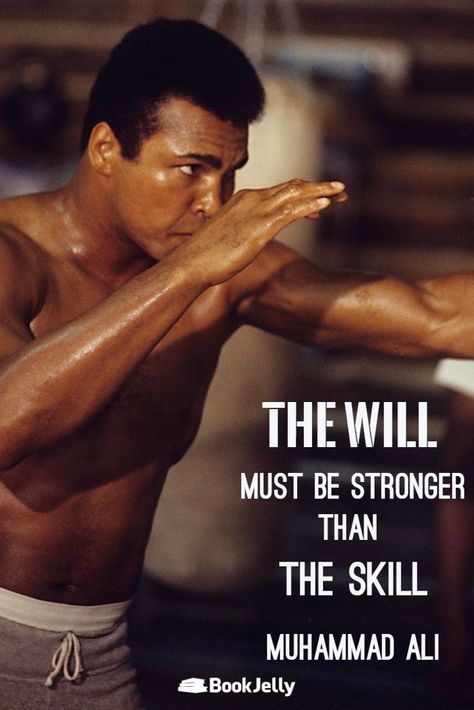
Mohamed Ali and Floyd Mayweather Junior were both predominately Counter-attackers, even Mike Tyson, despite his aggression, was fundamentally a counter-puncher, but I do not think that anyone considers Pugilism, especially at the Elite level, as a self-defence system.

This is a complex consideration that is far more a psychological puzzle than a physical or stylistic one. 

How we frame Wing Chun in our thinking, how we internalise it, will have a direct and immense impact on not only how we use it but more importantly how we understand the training.

If we wish to train in a way that somewhere down the track does not sow confusion, we must consciously decide whether we are training for self-defence situations or training to fight, because they are very different situations that make some automatic and fundamental differences to everything we do and think.

Self-defence is two people telling themselves different stories, looking for different outcomes, whereas fighting is two people telling themselves the same story, looking for the same outcome.

Let’s look at it this way, the attacker is a guy with a hosepipe and the defender is the poor guy being soaked.

To the attacker, the only considerations are the things he wants to do, in this instance soaking the other guy, there is no thought for the other guy, there is no respect or fear just a wish to be dominant at all costs.

To the defender it is a similarly myopic situation, he does not care about the attacker, there is no searching for telegraphed movements or weakness’, no thought of dealing with the attacker’s strategy, he just wants to get out of the deluge.

Fighting is more a battle of wills than skill, the need not to lose overruled by the wish to win, patience, and planning, pay big dividends.

The desired objective in self-defence is escape and survival, and high on the wish list is to dish out a debilitating injury or something along the lines of a one-shot-knockout, whereas fighters are up for a war of attrition and work deliberately at wearing the opponent down.

We could look at it through the lens of cause and effect, what the attacker does causes the effect of defending.

In an attempt to illuminate the situation, we could consider this a ‘Cause State’ and an ‘Effect State’, the ‘Cause State’ is always dynamic, making things happen, and the ‘Effect State’ is always stuck in a reactive loop.

We cannot be in two different, contrasting states at the same time.

The real skill is not as we may think, it is not being able to switch from the effect state to the cause state, for reasons driven by ego this offer is never on the table, but to be able to establish a neutral state where we can evaluate and make sound decisions.

There is no ‘Neutral’ for a fighter.

When two people fight they are both firmly ensconced in the cause state, and frequently we will see a person getting punched stupid but still trying to push forward and cause damage to the other.

It is often overlooked in training but the first thought we have is the most important, if it is a poor thought it can instantly turn into the last thought.

All the training in the world is of little use if we are forced into an effect state when all we know is what to do in the cause state.

The most important decisions are made before the first punch is thrown.

FIST LOGIC

WING CHUN IN 2024.

All in all, he was a serious dude with serious fighting skills.

HAPPY NEW YEAR ‘INC’AS.

Every new year is ‘Rinse and Repeat’, you all know the drill by now, start at the beginning and see if we missed anything on the last run-through.

We usually have, I did for years upon years.

As we all agree, and tell anyone willing to listen, Wing Chun is a ‘Concept Driven’ Martial Art.

Concepts are not physical, and to a very large degree Concepts do not live in the present moment, they are an IDEA that we intend to develop and take forward.

If they exist at all they exist in the future, but we endeavor to train them today.

This is head-banging stuff, especially on the day after New Year’s Eve.

What we need more than anything else, especially here at the restart, is to reject the already known, the familiar, the accepted dogma and engage in abstract thinking.

Wing Chun today is a long way removed from what it was at its inception back in the mid-1860s by Dr Leung Jan of Foshan.

It is a long way removed from what Ip Man taught in Hong Kong back in the mid-1950s.

Wing Chun is a concept-driven Martial Art, and as more people navigate and share its theories, it evolves and is reborn anew and it always will evolve.

But at its heart, it is still the same Wing Chun that Dr Leung Jan developed, and Ip Man carried forward.

If we wish to give ourselves the best chance of understanding the “Concept or perhaps Concepts” that live at the heart of Wing Chun we would do well to engage in a thought exercise around why Dr Leung Jan found the need to begin a process that changed his personal approach to Martial Arts usage, and as such create Wing Chun.

Who was Dr Leung Jan?

As far as we know he was a Herbalist and Chinese Medicine Practitioner who worked closely with the Red Boat Opera Troupe that performed around the Pearl River Delta on the S.E. Coast of China.

The shows that made up the programs of all Chinese Opera of that time contained Complex Martial depictions that called on every known Martial Art, in his role as the troupe’s doctor he, Dr Leung Jan, would have first-hand knowledge of what Martial Arts techniques damaged the body and which techniques didn’t damage the body, simply from repairing the actors.

Because of this, he would have naturally, almost without thinking, recommended removing or avoiding stances, movements, and techniques that carried negative physical consequences.

 And those techniques that remained he would have advised on finding an easier way, as all doctors do.

Again as far as we know, Dr Leung Jan was a celebrated and famous tournament fighter in Foshan, who in some accounts had over 300 fights.

 While this number is obviously not a true number, we can read it as shorthand for him having had many, many fights.

It is reported that he never lost any of his fights, this again should be taken as an exaggeration, no one ‘never loses’, but I think we can safely assume that his success rate was impressive.

All in all, he was a serious dude with serious fighting skills.

The time was 1864ish and the Pearl River Delta was aflame due to the Red Turban Rebellion, a catastrophic Civil War. 

As is always the case in Civil Wars, law and order had collapsed, muggings, home invasions and burglaries would have become commonplace, and as Dr Leung Jan was a wealthy man with his own Herbalist shop it is not hard to imagine that he was a regular target.

Taking all of this into consideration we can begin the thought exercise…

… Why did this well-respected, successful Martial Artist find the need to refine what he did and the way that he did it?

The first consideration must be ‘Why does someone change a winning formula’?

The only reason anyone would change a winning formula is because the winning formula no longer worked.

This speaks to the heart of the difference between tournament fighting and self-defence.

Tournament fighting is organised, social, and planned out.

Self-defence is everything but this, the situations are always unexpected, always a surprise.

Surprise is the key.

Dealing with surprise needs instinct more than strategy.

Dealing with surprise needs whatever action is chosen to work straight away, there is no room for working out the opponent’s rhythm and looking for weaknesses to exploit later.

Dealing with surprise relies on us knowing our own skills because our opponent’s skills would be unknown.

Dealing with surprise needs creativity more than conditioning.

Dealing with surprise is far more emotional and psychological than it is physical.

List as many things as you can think of, there must be hundreds more, and do not shy away from the manifestation of fear and its repercussions.

In my thought exercise… Dr. Leung Jan would be awoken in the night by unfamiliar noises coming from his shop, half asleep and unsure of what was going on he would find someone behind his counter looking for money, and he would be set upon by a second thief he had not seen.

In the crowded environment of his shop, and of course in the dark, he would have little if any space to move around, and half asleep would be unsure where he could safely move to.

This is the worst possible environment for a tournament fighter, even a celebrated, successful tournament fighter.

Thinking about this scenario as a root cause it is easy to understand why he based his refinements around the five principals of…

  1. SIMPLICITY.

2. PRACTICALITY.

3. DIRECTNES.

4. ECONOMY OF MOVEMENT.

5. MINIMUM USE OF BRUTE FORCE.

The world has moved on and our requirements may differ but very little else has changed.

A Violent Surprise still needs the same responses.

This is why Wing Chun was brought into being.

If it was just about fighting, Dr Leung Jan had no need to change.

So if we follow the thinking of Wing Chun’s progenitor, we see that Wing Chun concepts are not about fighting, or rather not about learning how to fight, but are intended to improve an already present skill set to work under conditions of unexpectedness, unpreparedness, and surprise.

It was and still is, about developing emotional and physiological stability in the face of violence.

It is easy to misunderstand this aspect of Wing Chun and to think that consciously working on the non-physical, non-fighting aspect of Wing Chun is of little value in a violent situation, but this is incorrect.

As contradictory as it sounds, it is the very fact that we are involved in a non-physical, non-fighting activity that infuses and improves our Self-defence ability by magnitudes of intensity.

Fighting is nothing more than two EGOs battling for supremacy, no need to think too much, just go hard and do as much damage as possible to the other guy.

Fighting is always EGO-driven, malevolent, and malicious.

Self-defence is about smart decision-making, it is Conflict Resolution, and easier to achieve with a clear mind, a good heart, and no thought of malice.

Even though we may cause harm it is not because of a wish to do so, it is simply survival, the most natural of Human Instincts.

FIST LOGIC

Where are we going?

Say what?

It is as if the closer we come to the perfection of movement the clearer the IDEA becomes.

Hey guy’s,

I hope you are all at least thinking about Wing Chun, in between Mince Pies of course, if the excess sugar that is Christmas has not eaten your brains here is something to engage your little grey cells.

As we are all well aware Wing Chun is a ‘Concept Driven’ Martial Art.

But what concept is doing the driving?

As you all know, I believe that if we are focusing on simply perfecting the physical actions of Wing Chun we are at odds with the intentions of its founder, Dr Leung Jan of Foshan, who was simply trying to improve his shit at a very bad time in Chinese history.

But how does that help us today?

My Sifu would say that we learn Wing Chun in three steps, or waves, or perhaps cycles.

  1. Copy the moves of your teacher.
  2. Once copied, make these movements your own.
  3. Once the moments are your own, let the mind do the work.

As ‘Out there’ as this approach sounds, and for quite a while I thought it to be nothing more than Kung Fu Mumbo Jumbo, it hooked me deep, and trying to understand what he meant has been central to all of my personal work.

While he was with us, my Sifu would help with my search, but his suggestions and hints were as mysterious as the original three-step IDEA.

For instance, I would be standing doing S.L.T. Form and he would ask me what my ankles were doing.

On another occasion, he told me that ‘Wing Chun operates in the spaces before contact and after contact’.

But one thing he did tell me that has proved to be of great value, at least to me anyway, was that the Forms are how we look for the IDEA.

The Forms ‘ARE’ the ‘Concept’ if we can just realise it.

In my ongoing search to find this Concept or perhaps even Concepts, I have discovered several ways to engage with the training so that we can almost ‘feel’ the IDEA.

As I have said, I do not think that the physical actions are the point of the training, but I also think that it is only once we can replicate the movements seamlessly, effortlessly, and correctly, all of our movements, not just the Forms, that we can get the scent of the IDEA.

As if the closer we come to the perfection of movement the clearer the IDEA becomes.

It appears to be almost essential that we hold a decent understanding of  Wing Chun from the perspective of how a body performs it, i.e. ‘how we actually, physically do it’, before we can unlock Wing Chun as a mind.

And let it do the work.

But this can cause some confusion because Concepts only exist in the mind.

This reminds me of a quote from Brian Clough, the at the time manager of Nottingham Forest F.C…

   … “On paper, we should have won this game, but unfortunately it was played on grass”.

Can we transfer the training in our mind to the street?

I believe we can.

I realise that the following statement may sound ridiculous, but, we must find a way to take Wing Chun out of the work.

Yet again we find ourselves in the territory of the ‘Finger pointing at the moon’.

When Dr. Leung Jan began the work that became Wing Chun, his intention was to refine and simplify his existing skill set, which was more than likely a Shaolin style.

He was not aiming at inventing a new way to fight, he could already do that.

Wing Chun, it appears, is about how we use a trained skill set, and how we use the way we fight.

This is why firstly we learn the physical fighting stuff, it is only once we have this in the bag that we begin the work that is Wing Chun.

Most of us are seniors and have a good grasp of the fighting stuff, so this letting the mind do the work is where we need to be looking.

For those of you who may think you lack something in the fighting stuff area, I will fast-track you so that you can at least connect to the mind stuff.

If you think back to an earlier post I pointed out that all that is needed to win a fight is to sidestep and then poke the Bad Guy in the eye, I can teach that in 2 minutes.

Let’s dig deep in 2024.

As a bit of a heads-up for next year answer me this…

… is a Stance a SHAPE, or an IDEA?

WHAT KIND OF DAY IS IT?

I WOULDN’T TELL YOU IF IT WASN’T TRUE.

THE ‘D’ MAN.