If this is the case, which it could be, I would recommend immediately activating the “Nike Defence”, you know, run like hell.
Hi Guys,
You may wonder about the title of this piece and its relevance to self-defence, and believe me, it is relevant.
It stems from a conversation I held with our senior students Sam and Costas about the desire to develop more power, or simply put, ‘hitting harder’.
We have all noticed that lately there is a preponderance of videos on YouTube to this end, “How to hit harder”.
My position on this is that for Wing Chun students this type of video is not only of no value but holds the potential to undo all of our good work, let me try to explain.
The essence of Wing Chun, and many other “Soft Style” Martial Arts, is that we develop hitting power by naturally transferring “Body Mass” into a single point of our body and then onto a single point of a chosen target, not by physically trying to impart force by making a “Big Hit”.
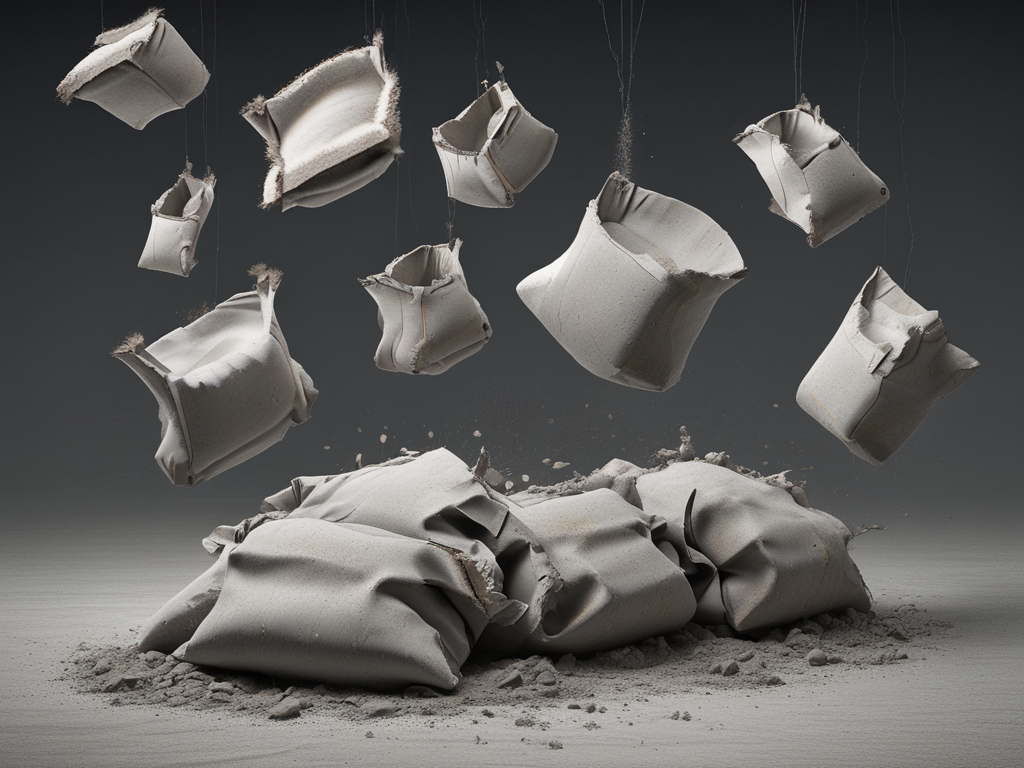
No one in my Martial Arts community is lighter than 60kg, as you all know I have always only taught adults. Here in Australia, a bag of pre-mixed concrete is 20 kg, so anyone that weighs 60 kg has the equivalent “Body Mass” of 3 bags of Concrete.
If we think that a 60kg guy cannot naturally hit hard enough, we are saying that dropping 3 bags of concrete onto an opponent will not get the job done?
If this is the case, which it could be, I would recommend immediately activating the “Nike Defence”, you know, run like hell.
Hitting someone shares the same science as any collision, and as such the force created is the sum of both forces involved, so if we are 60kg and the Bad Guy is 80kg {Bullies tend to be bigger than their chosen target}, the impact created will be the summation of both forces and closer to 140kg.
Which is of course 7 bags of concrete.
How is that not enough?
And again if that is the case, and it could be, here for sure, we use the Nike Defence.
To fully cover this topic we need to bring in some different concepts, which can end up in a bloated and somewhat confusing video, so I will break it down into smaller, bite-sized chunks.
This video is essentially just an intro.
Despite this there is a way for a 60kg person to drop 120kg onto an opponent without any extra training, yes you get it, hit them twice.
Which to me sounds a lot like what we train to do.
Once we change Wing Chun it is no longer Wing Chun.
At the heart of my own training is the practice of ‘Deconstruct – Reconstruct’.
During ‘Lockdown’ this has been elevated to a much higher level.
Instead of being a weekly practice, it is now more often daily.
Whenever I deconstruct what I know and then reconstruct the components there are always a few bits that I realise are not needed, so they get discarded, and my training becomes streamlined, more compact, more concise.
Occam’s Razor.
I am at a very different place than where I was before COVID 19.
Something that I have always known is that training is training and nothing more.
Nothing we do in training will be usable in an environment that is different than the one we train in.
A violent encounter is a ‘VERY’ different environment than our training environment.
The usual response to this statement by most people is that when needed we will just adapt our training to the new environment.
Really?
Are we to become some kind of Kung Fu Flying Fish.
To adapt means to change from one state of being to another.
Once we change Wing Chun it is no longer Wing Chun.
If what we depend on to get us out of a dangerous situation is not Wing Chun why are we training Wing Chun?
The most obvious example of this is Chi Sau.
Chi Sau has no connection to reality, in fact, Chi Sau only works when playing Chi Sau.
These geometric concepts of Wing Chun are presented in relatively fixed positions and shapes congruent with their respective Forms but they need to translate to all Forms
We had a great nights training on Monday, it was very theory-heavy but all the guys were up for it so it was a real eye-opener and very enjoyable as the teacher.
This post is, on the whole, a memory aid for my guys to go back and refresh their thinking because there was way too much information to take in in one evening.
Theory can be dry, and it is always tricky because only people with genuine fighting experience understand that theory and reality are in no way related, so we mixed it up with a lot of live contacts to feel the IDEA.
Of equal importance, we worked hard on creating a language to describe the work that we could all understand.
One of if not the first theory we encounter is “Centreline Theory”.
What is a centreline?
The definition of a Centreline is a line that bisects a plane.
The Wing Chun Centreline bisects the Coronal or Frontal plane of our body dividing us into left and right sides.
An imaginary line connecting ourselves to an opponent is not a centre-line, this is a common misunderstanding that leads people down the wrong path, in theory, our Centreline acts like a plane {Sagitalplane} extending forwards so it is easy to see how this confusion arises.
The use of the term Centre-line for a line from person to person is a misnomer it would be easier to grasp if we called it centre plane.
If this is confusing ask yourself “If a line from myself to my opponent is a centreline, what plane is it the centre of? What and where are the two halves”?
This may seem like a triviality but if we do not understand what a Centreline is how can we understand Centreline Theory?
This line that our perception creates that we think links us to an opponent can be anything we want it to be because it does not exist, I like to think of it as the line of mass, this IDEA can tie into other aspects of our strategy and theory.
Line of Mass is just a name we came up with on the night, if it does not work for you pick a different name, just not Centreline.
The reason I chose Line of mass is that irrespective of what type of movement is being used the opponent’s body mass follows this line, and as for ourselves, this is how we promote our body mass toward an attacker even as we appear to be avoiding an attack or moving away.
Then there is the attack- line, this is a line that runs fro the shoulder or the hip of an attacker in toward us.
An opponents attack aways finishes at a point on this line, even from a wildly swinging punch or kick, redirecting this line, and not the arm/fist/weapon using this line is the purpose of our defensive manoeuvres.
Intercepting the attack line and not the arm/leg is the most effective way to defend.
Chi Sau helps us identify and understand this and it also shows us how to create diagonal movement by the use of circular arm motion and curved arm paths.
The proximal to distal {in to out} direction of our action is always in a straight line even from a curved movement, i.e. Bong Sau travels in a straight line.
Try to not confuse straight with being parallel or perpendicular to an external reference point.
Single Arm Chi Sau essentially moves or redirects an intercepted attack-line up and down on our centre-line.
Double Arm Chi Sau moves or redirects an attack-line from the “inside gate” out to the periphery of our structure or from the outside of our structure into our centre effectively breaking both the attack-line and the line of mass of our attacker.
In a real-world application, we would combine a little of both IDEAs, for example in toward the CL and down or out away from the CL and up.
In a poorly trained person, the attack-line is rarely separated from the line of mass.
As a Wing Chun fighter on the attack, we cannot maximise our output if we do not understand the geometry and how to combine the line of mass with the attack-line while at the same time creating torque through “muscular” rotation.
These geometric concepts of Wing Chun are presented in relatively fixed positions and shapes congruent with their respective Forms but they need to translate to all Forms, all planes and directions of action, this is the heart of the work.
This is one of the principal learning objectives of Chum Ku, understanding how to support the actions {arm shapes} with our body mass as we make contact with an opponent.
Anything that makes contact with an opponent in any way, either defending or attacking creates a bridge and as such is Chum Kiu.
The following video is not the best I have ever done if you are a visitor I apologise, for us INCas it is a fairly accurate representation of what we worked on all week, I will repost it to the BODYWORK page so you can revisit easily.
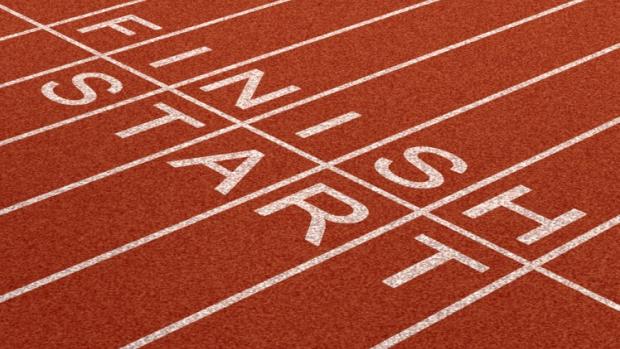
If you start correctly and finish correctly it is just not possible to go wrong in the middle.
After my Spinal Fusion surgery in 1996, I decided to try a new career path so I studied to be a Ceramic Artist, part of the three-year course was reading up on the history of Ceramics and Ceramic Artists from all around the globe.
It should be no surprise that the approach of many of the Japanese Potters was very closely connected to Zen Buddhism, it was impossible to read about a period or pottery area without deviating into Ikebana, Rock Gardens, the Tea Ceremony and even the Martial Arts.
Everything was interrelated, positions for fighting were used in flower arranging, advice for throwing clay was used in fighting.
One particular thing from pottery that has had a deep influence on my training and teaching of Kung Fu is that when making a vase or teacup only the footring and lip are of importance, and these must be correct and as near perfect as possible.
The IDEA is that when the footring and lip are perfect, nothing in between can be wrong.
When my students get to Chum Kiu this is when I introduce them to this thinking, start perfect, end perfect ignore the middle.
When I have a guest or casual students from other schools I notice that they tend to put most if not all of their attention on the movement in the middle, as a result, they struggle to perform or properly understand Chum Kiu.
So many students think that it is about the moving of the body that they ignore the simplicity of knowing what shape we are in now, and what shape we wish to be next.
If you start correctly and finish correctly it is just not possible to go wrong in the middle.
If the Footring and Lip are in the correct alignment and relationship to each other the pot pretty much shapes itself and does so perfectly. if they are out of synch the pot will throw itself from the wheel.
Our eyes may not see it but our senses feel that when the footring and lip are in harmony the pot breathes, it comes alive and we can feel its practicality.
When the foot ring and lip are out of synch the pot may well be very beautiful, but we see it in a sculptural way, solid but stationary and ever so slightly dead.
This is true of any movement set.
If we start correctly and finish correctly by default with no effort on our part the middle becomes perfect.
If the middle was not perfect we would struggle to finish at all let alone finish correctly.
Bringing this into line with my posts on conditioning I would like to offer a quote from a book I am reading…
“Correct human movement is not open to debate. Technique is not some theoretical idea about the best way to move; it provides the means to fully express movement potential in the most stable positions possible’.
“Becoming a Supple Leopard”. Kelly Starrett.
We should work hard to keep this attitude, things either work because they are correct or they fail because they are not, the result is usually injury and not just failure to fire, this is not a critique of your Sifu or Lineage.