everyone there is trying to sell something, and it is not always Kosher.
Now that there are 5 of you working on the Dummy it is important that we are all on the same page.
I have no issues with people checking out the DUDES on Youtube to see what they are about but never forget that youtube is a shopping platform, everyone there is trying to sell something, and it is not always Kosher.
At the end of the day anything that helps… helps.
So go at it.
Just remember that how you train is how you will fight, so unless you are fighting a stationary piece of wood…?
A General Theory of Fighting Arts becomes grounded in Human Movement and not, as it so often is, ‘Esoteric Ideology’.
The General Theory of Fighting Arts is a term widely used to try to get students to identify the mutual movements of all martial styles, and the alignment with most dynamic sports.
One thing we have all been told, and if we are talking to beginners or non Wing Chun people often repeat is that ‘Wing Chun movement is based on normal human body movement’.
I do not think that students give enough credence to this statement, that ‘Wing Chun movement is based on normal human body movement’.
It gets treated as if it is just some sort of cagey advertising spin just as many Instructors still claim that Wing Chun was invented by a woman, a device to encourage smaller, less athletic men to take up Wing Chun instead of a rival code.
But Wing Chun IS based on normal human body movements.
If we approach the work from this perspective and look at what is presented and how it is presented, we see a pattern emerge, that in the progression of the FORMS, as we move from the first Form to Chum Kiu and then Biu Gee, this progression is nothing more than the introduction of more complex movement for people not familiar with this way of moving.
This approach more than likely had merit back in 1860s Foshan but today, due to the average sporting curriculum of most western schools every 12-year-old child is familiar with these moves.
A very large proportion of what is introduced through the Forms is simply unnecessary, at least from the point of view of controlling our body.
Do not get me wrong, the FORMS are needed for other reasons so I am not suggesting abandonment.
But we can easily be moving at a level that is needed for any aspect of the work be it the Dummy, the Pole or the Knives if we put more practice and focus into moving better as a Human.
Take any movement or action from any sport, especially a throwing or bat and ball sport, and you will find the moves somewhere in the Form.
A General Theory of Fighting Arts becomes grounded in Human Movement and not, as it so often is, ‘Esoteric Ideology’.
This week spend some quality time exploring the similarities between Martial Movement, Sports and Dancing, once you see how they amalgamate, consolidate and integrate FORMS become a secondary consideration.
IMAGINE, MANIFEST AND WORK ON THE IDEA OF THE FRAME.
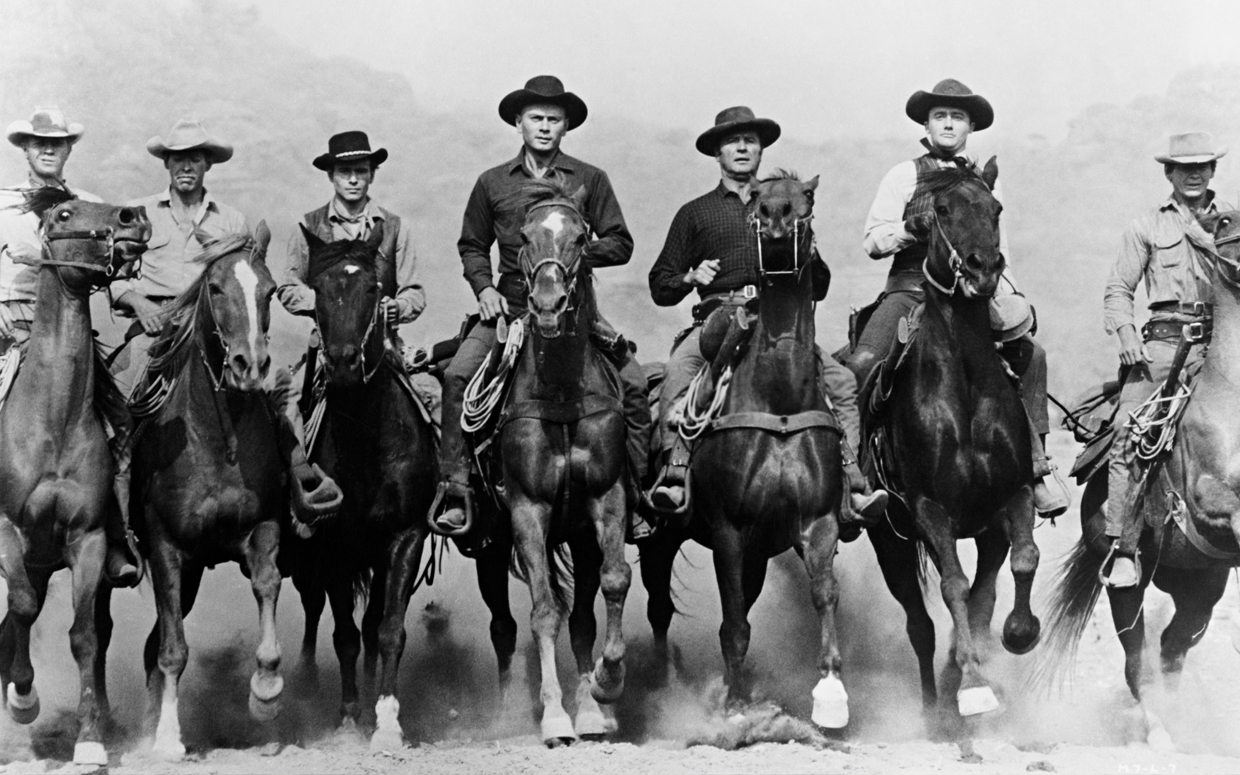
And while you a re at it put some minutes into the MAGNIFICENT SEVEN.
Here they are, and here is a recap.
WHEN YOU UNDERSTAND, THINGS ARE JUST THE WAY THEY ARE.
WHEN YOU DO NOT UNDERSTAND, THINGS ARE JUST THE WAY THEY ARE.
The aim of all training in every Martial Art is to understand how to control our body in an unexpected environment, Knee Sau takes us there.
Hey Guys,
Here is a short video on what we accidentally discovered while looking for new ways to spice up training and help to help us develop a better feeling of what it is to be in contact with and control our mass.
As whacky as this appears it is astonishing at helping us feel what is needed to power our body with our CORE.
Which is, of course, the ultimate goal of Biu Gee.
What is really amazing is the way we can transfer the IDEA from a kneeling position to a standing position.
Check it out.
This may at first look like a crazy thing to do, even a waste of valuable training time.
But once we consider that nothing we ever do in training is anything like being involved in a genuine violent encounter, that what we train is a long way from reality, and even your favourite Youtube Wing Chun poser is doing nothing that would work in a real encounter, we may as well have fun while we are at it.
Training being nothing remotely like the real thing is not just a Wing Chun issue, it is every style of Martial Art and it is even worse for an untrained Bad Guy, so we do not need to panic, if we are training we are miles ahead of the curve.
Whatever that curve might be.
The aim of all training in every Martial Art is to understand how to control our body in an unexpected environment, Knee Sau takes us there in Spades.
It may be difficult to think that the guy with the knife in the video was defending himself, but I am willing to bet that he thought he was.
HEY TRIBE.
In light of our ongoing Whatsapp chap about the video that shows that fatal stabbing, I just wanted to get this out there.
I have spoken of this so often to so many students both past and present, but it really needs repeating, because it is still so grossly misunderstood.
In the Martial Arts Community, there is great disagreement about what style is good for fighting and what style is not good for fighting.
And then there are conflicting opinions about what style is a fighting art and what style is a self-defence system.
This is blown out of all proportion by the fact that most people do not fully understand the difference between fighting and self-defence.
Especially when it comes to understanding {and admitting that we are training in}, a self-defence system.
I grew up in post-war Britain, every grown-up in my world potentially suffered from P.T.S.D. All had experienced the horror of war in one way or another and it shaped their worldview.
As a 5 to 7-year-old boy the advice I was given was that if you get into an disagreement, scuffle, or argument hit the other guy before he hits you.
This, was self-defence in the 1950s.
And it worked for me.
This was pretty much how things carried on deep into the 1990s.
And it still worked for me.
Now, 30 years on in the 2020s, we are a society that is better informed and more connected, we understand that hitting someone first may be a savvy tactical decision, but it is not Self-Defence, right-here right-now, it is, in fact, assault.
Later on it can be argued in court.
We all recently viewed that tragic -48 second video were a young mans life ended in a S.N.A.F.U. of a shit fight before a punch had landed.
I have been in this kind of standoff, in a situation like this both sides see this as a self-defence situation.
We cannot be sure how the agro in the video kicked off because we do not witness the build-up, but it is safe to assume that words were exchanged, that is usually the case, and then both sides felt the need to defend their assumed position.
Their ethnicity, their territory or even just their football team.
In many ways, it was ignorance that led to this tragic outcome.
A few of you have asked if we can look at this in training, and I am sure that there are many students of multiple styles of Martial Arts that are asking their teacher a similar thing.
We need to go deeper than “What would we as {insert chosen M.A. Style} practitioners do in this situation”?
To everyone out there and not just our mob, what do you think your chosen style is teaching you?
Is it teaching you to fight people, or is it teaching you to defend yourself?
It may be difficult to think that the guy with the knife in the video was defending himself, but I am willing to bet that he thought he was.
Over the years I have asked every student to imagine a situation where they would be called upon to use their training.
To a man {generic} it is always a situation where an argument or some other anti-social behaviour turns physical.
It is usually described this way… ‘we were arguing and then he {generic} suddenly thew a punch, my training kicked in and I just reacted.’
Is this self-defence?
This is such a grey area, it is nothing short of a slippy slope on a foggy night. Excuse the poetic viewpoint.
Despite the oft-used cliche´, ‘always expect the unexpected’ in truth we all know that we cannotexpect the unexpected, so if we can react to a sudden attack without surprise then on some level we were expecting it.
DUH!!!
I am not trying to take some moral stance here with this post, if this was me 30 years ago I would have already hit the guy first and asked questions later.
But it is not 30 years ago.
Can we claim self-defence if we are waiting for the attack?
If we are not trying to de-escalate the situation, even if it is not our intention, we are allowing it to escalate.
We are now preparing to fight this person and not defend ourselves.
I can almost hear the young offender from the video saying ‘it was a slippy slope on a foggy night, your honour’.
The most important aspect of Martial Art is to try to understand violence, not to learn how to use violence, and not to learn how to choose violence.
At least not as a first choice.
In the original Karate Kid movie, Mr. Miyagi says “best defence, don’t be there”.
If we see it coming and do not avoid it, are we defending ourselves?
Or are we waiting to join in?
If I am arguing with someone and I sense that it might kick off why am I still there?
Yes, there are most definitely times when we will not expect it, this is self-defence, how to go from the ‘Oh Shit” moment of just sticking our arms out and into something that can make good our escape.
We will work on this, the ‘Oh Shit” moment, and not on how to defend against a knife.
I just wanted to get this out there, especially as we were all talking about the stabbing.
NO ONE WINS A FIGHT, ONE PERSON JUST LOSES A BIT LESS THAN THE OTHER.
Once seen, these movements cannot be unseen, the thing is CAN YOU SEE IT?
Hey Tribe and friendly visitors, something to ponder during yet another deluge.
All Forms are dancing until we make them singularly important and decide that they are something else, something meaningful, something uniquely special.
If we extend this to its logical conclusion if all Forms are dancing then all dancing is a Form and they are also are something else, something meaningful, something uniquely special.
In the exceptional video that I have chosen watch it with the sound as low as you can make it and still keep the rhythm then see if you can identify some very obvious Wing Chun movements.
If, as we claim, Wing Chun is made up of ‘normal everyday human movement’ and that there is ‘only one movement, only one shape, only one body’ Wing Chun should be, and is, everywhere.
Watching how dancers create complex movements from essentially simple shapes can help us understand, expand, and empower our Forms training.
Like them or not, Bollywood films have exceptional movements, and usually movements that come directly from the Martial Tradition.
Once seen, these movements cannot be unseen, the thing is CAN YOU SEE IT?
It is being the best of ourselves, that makes Wing Chun, or any Art, work.
I AM NOT BEING STILL. I AM JUST NOT MOVING.
This is not semantics, this is something we need to get our head around, to understand the language, understand the thinking, and then understand the functionality before we can get our body to comply.
Do not try to be still, this is not a natural state for human beings we are built to move.
I have seen many students doing the S.L.T. and trying to be still.
What we should be doing, and trying to think about, is not making unnecessary movement.
Moving anything except our arms when playing the S.L.T. Form isunnecessary movement.
If this results in stillness, all is well and good, but being still is not the goal.
If we are called on to use our training, what good will being still be?
What we think Wing Chun is at the beginning of our training, {and being what most outsiders think Wing Chun is}, ends up being just 10% Wing Chun and 90% being a human being.
Everything we do in Wing Chun training is essentially just theatre, the Forms, Chi Sau the whole kit and caboodle.
Smoke and mirrors, dancing.
The rest, the 90% simply helps the advanced student reache a place in their life where they are in control of themselves enough to almost seem in control of the world around them.
We are not Alchemists of course, we have not discovered the philosophers stone, but when you can effortlessly do what others put great effort into and fail, their only answer is that we must know Magic.
It is being the best of ourselves, that makes Wing Chun, or any Art, work.
This is in no way pooh-poohng the training, on the contrary, if we are a “Perfect {generic} Man” but have no “IDEA” how to get out of trouble…
…we do not get out of trouble.
So it would be prudent to do our best that to compliment our Wing Chun training we work to become and understand what it means to be, a better human being.
Here is a video presentation from a group of guys that have a Youtube Channel called Functional Patterns, as you all know, my bias is and has always been towards functionality, so it should come as no surprise to you that I like a lot of what these guys do.
This video presentation is about “Breathwork”, the presenter is a bit hyper but the info is, at the very least, Food for Thought.
As always, if this post brings up questions, which I hope it does, then bring them in, and I will try my best to answer them.
To visitors, if this post spikes your curiosity, you know, you ask yourself W.T.F?
If you have any questions, hit me up in the comments, I will try to explain W.T.F?, Or at least point you in a direction that may help.
“There is only one thing that makes a dream impossible to achieve: the fear of failure.”
It is what it says on the box, power that is effortless.
I was working with Rick and Anthony last evening, the same stuff we have all been doing this week, in many ways the same stuff we are always working on…
…developing effortless power.
Let’s be fair and honest with ourselves, in the recent training sessions you have all been amazed by the results.
And then amazed once again when I show how we have been doing this since ‘day one’ but you didn’t connect the dots.
It is tricky stuff.
What is effortless power?
It is what it says on the box, power that is effortless.
One of my favourite examples is when I ask…
Q. Have you ever walked into the edge of a table?
A. Yes.
Q. What hit you?
A. The Table????? DUH!
Well, NO, it was you.
You walked ‘into’ the table.
Or did the table jump out at you?
You did not try to hit the table, you did not mean to hit the table, all the same, without malic or intention you just walked into it.
Effortlessly.
No set-up or practice, no special shape or secret move, just effortless power, creating instant pain.
There is a well-used saying, ‘topunch above one’s weight, it means performing or achieving results better than expected and beyond one’s ability, skill, experience etc.
This is used as a compliment, but it is a silly compliment because, in the real world, we cannot punch above our weight.
Our power production is an expression of our weight.
Striking power can be maximised by good movement, correct structure, accurate strike placement, and fortuitous connections with an opponent.
But we can never surpass what our body weight delivers effortlessly in any situation.
Questions we should ask ourselves.
Do I get heavier if I contract and tense my muscles?
Do I get heavier if I put in more effort?
Do I get heavier by doing things in a particular or ‘special’ way?
Do I get heavier by … {fill in the blank}?
The answer to all of the above and any other consideration is…
…We do not.
We can only ever hit as hard as our body weights contribution.
In so many ways power is nothing more than throwing our weight around.
It is how and where we throw it that is the key.
Effortless power is the efficient organisation of our body weight.
On one level FORMS are a way for us to begin to understand how to organise our body weight, from static, to mobile, to dynamic.
So is Dancing.
So is Yoga.
So is Table Tennis.
The difference between FORMS, Dancing, Yoga, and Table Tennis is how we organise our thinking.
You guys always laugh when I say that Table Tennis could be an outstanding Martial Art.
And I laugh at you laughing because I know one day you will get it and think that back then you must have been a bit of a dick.
Another thing to ask ourselves is… What do we need to organise first?
If we consider that we are the same weight in our sleep, the same weight on the toilet, and the same weight in training, what does that tell us?
Here in Australia, a bag of cement weighs 20kg.
I do not think that any of us would like someone to drop a bag of cement on us, even effortlessly.
With the most basic of self-organisation we can effortlessly transfer our body weight when we make contact with an opponent, even if we only bump into them.
Work out how many bags of cement you are the equivalence of and ask yourself “why do I not think this is enough”?
The lightest of us would be equivalent to 3 to 4 bags of cement and to transfer this all we need to do is reach out and touch someone.
It is our thinking that we must organise.
Consider this, when you reach out and touch someone on the shoulder and do not put them on their ass it is because your Monkey Brain understands weight transfer much better than your Human Brain.
It is time to play catch up.
Monkeys are superior to men in this: when a monkey looks into a mirror, he sees a monkey.
Many Wing Chun students think that Wing Chun training is a linear progression, Sil Lim Tao – Chum Kiu – Bill Gee and that every time we progress along that line things become more advanced.
This may be true of some other styles but it is not true of Wing Chun.
In Wing Chun, there is no beginner level, no intermediate level and no advanced level.
In Wing Chun, we are all and always beginners.
In this respect, Wing Chun is akin to Jazz!
When asked ‘What is Jazz’? Dave Brubeck replied, “Jazz is”.
By this logic, Wing Chun “IS”.
So the question becomes “can you riff”?
If there is a set progression in Wing Chun it is circular, hop on anywhere and keep going round.
THERE IS ONLY ONE MOVE, ONLY ONE SHAPE, AND ONLY ONE BODY.
Saturday morning we decided to explore Biu Gee’s actions from the perspective of how to recover from a situation where we had lost our favoured Wing Chun position.
Sometimes referred to as emergency Techniques”, something I find over-elaborate, we explored and discovered that Biu Gee contains all the things we did, albeit badly before we even began Wing Chun, and definitely did on our first day of Wing Chun training.
This video footage is of a normal training session, it is not an organised seminar, we made things up as we went along and repeated things over and over again at a pace and intensity that we could feel, see and understand what our body was doing while we played Biu Gee.
If you are a visitor to this blog these clips may well lack continuity and possibly context, it is a bit like one of them “you had to be there jokes” but there is good info here.
At 20 minutes it is a lengthy video grab so there are some timestamps to help you navigate.
From a still position think Fook Sau, perform Fook Sau, stop.
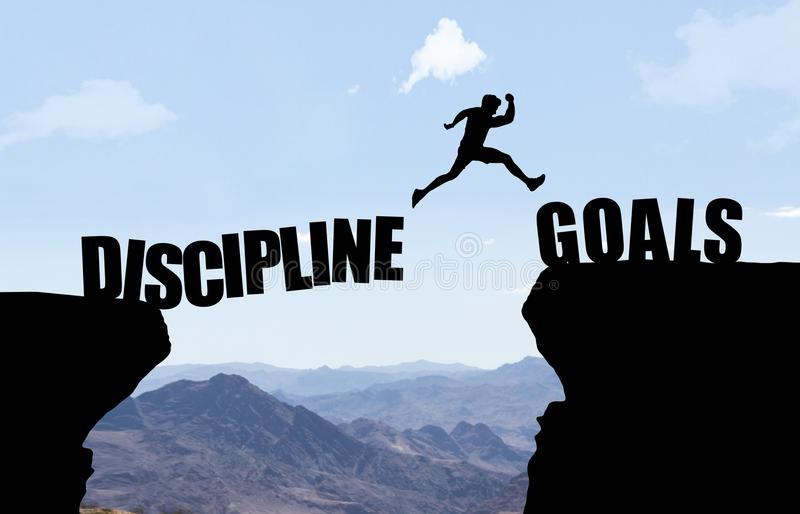
WHERE IS THE DISCIPLINE TRAINING IN EVERYDAY WING CHUN?
If we get in trouble our best chance of getting out of trouble is to stay disciplined, to do what we need to do, where we need to do it, and when we need to do it.
But what does that mean and where is it in our training?
As young kids engaged in Western Boxing, this was drilled into us by a 10-minute sparring exercise where we could not defend ourselves, hold up a guard or counter-attack our sparring partner.
Our sparring partners were free to {lightly} hit us anywhere and any way they wanted to, all we could do was evade, but without retreating, we could step away but not run away.
Without fear of a counter-attack, our sparring partner was relentless, often leaving themselves wide open for a counter we were forbidden to deliver.
This was preparing us to not fall for dummies or feints by trying to get in cheap shots that in a real fight could easily lead to our undoing.
Every few minutes the coach would shout ‘HIT’ this gave us permission to take one shot at our sparring partner and then back to the drill, this taught us how to be disciplined, how to wait until the shot was on, to not try to force the fight, to be patient.
This was an excellent drill that ‘really’ paid out when needed.
Do we have anything in Wing Chun that remotely approaches this kind of training?
That depends.
If we can look beyond what we think we are doing, and look at the fundamental IDEA we are seeking, then the answer is YES, we do.
First up, what is the IDEA we are hoping to find?
A method to develop PATIENCE and DISCIPLINE.
These are, of course, CONCEPTS, or IDEAS.
If we are completely tuned in to our training these IDEAS can be found anywhere, but an ideal, easy, and convenient place to begin is to be found in doing the Forms.
Not the specific movements of the Forms, but rather in the way we approach the Forms, the mindset more than the movement set.
The rhythm we establish, the flow from one thought to another thought more than the transition from one movement to another movement.
Essentially all Forms are a collection of single movements and not a movement set per se, there should be an established start point and an equally established finish point for each and every shape/movement.
When we finish one shape/movement we change our thinking to the next phase before we transition our posture or shape/movement.
For example, if we think of the progression of Fook Sau, Huen Sau, Wu Sau, Tor Sau {if we could endure the boredom we could do this forever and learn everything}.
From a still position think Fook Sau, perform Fook Sau, stop.
Think Huen Sau, perform Huen Sau, stop.
Think Wu Sau, perform Wu Sau, stop.
Think Tor Sau, perform Tor Sau, stop.
Rinse and repeat until the ‘End of Days’.
As a two-person training drill, there is nothing better than ‘Single Arm Chi Sau’.
At first, the very IDEA of ‘perform, stop, think, perform, stop, think, perform, stop, think, perform’ may seem very robotic and unnatural, but PATIENCE and DISCIPLINE, and of course awareness, will allow us to control the timing of the pauses between stop, think, perform so that it becomes Human, natural, responsive instead of reactive.
Obviously, this exercise, this way of utilising the Sing Chi Sau Drill, requires that both players disconnect their EGOs.
Which in itself is training us to be DISCIPLINED.
Training in any Form should never be easy, it should never be enjoyable, it should always annoy us at some level, it is learning to ignore the thing that we think is not needed and still do it, the thing Sifu says is important but we do not think is in any way important, this teaches the greatest lesson.
How we decode the data is the key, not what we call it or opine about it…..
A while ago I was having a conversation with a D.J. about how Karate was sourced from White Crane Kung Fu, and that at their heart they are the same thing, this led to him asking me if Chinese Forms and Japanese Kata are essentially the same things.
There is an opinion within Kung Fu circles, or at least within the Wing Chun circles I was part of that Forms and Kata are completely separate and different from each other.
I disagree, from my standpoint FORMS and KATA are just different words for the same thing, all training, be it subtle or overtly physical, is nothing more than the accumulation of information, the collection of raw data.
How we decode the data is the key, not what we call it or opine about it.
I think we can benefit from the approach that Wing Chun has FORMS and KATA.
Where is our starting point, and what is our position?
It is the usual thinking that FORMS are about understanding our shapes/postures, understanding their physical/emotional/mental make-up, and how to create and maintain that shape/posture.
The practice of moving slowly, and softly, allows a greater opportunity to ‘clearly’ observe how the shape/posture is constructed and how it relates to the rest of the frame, an observation that would be disrupted by the overt use of active muscles that would cause such tactile feedback as to wipe out the subtle nuances of joint control.
On the other hand, KATA is considered to be Shadow-Boxing exercises performed at full power with the mental image of actual contact and the deliberate injection of overt strength and tension.
Sadly, I have often experienced partisan, myopic snoberry calling out KATA as being way too forceful for a person to be able to feel anything, implying that they are somehow less than FORMS.
I think it is worth repeating myself here, all training, be it subtle or overtly physical, is nothing more than the accumulation of information, the collection of raw data.
How we decode the data is the key, not what we call it or opine about it.
FORMS and KATA do not teach us how to FIGHT, they teach us how to THINK.
As a memory aid FORMS and KATA are two different methods to explore the same sequence.
FORMS are somewhat passive, while KATAS are somewhat dynamic.
They are two sides of the same coin, a touchy-feely tactile method that we use to help us connect with our training.
It is so important that we do not drift off into some fantasy world in any aspect of our training, but especially so in FORMS and KATA, they are memory aids and not fighting tools.
When push does come to shove both FORMS and KATA are inappropriate and useless.
FORMS and KATA do not teach us how to FIGHT, they teach us how to THINK.
Some say that FORMS are a type of mindfulness training while KATAS are a type of shadow-boxing, but in reality, the only difference between these two ideas is not the content just the context, i.e. If you think that you are being mindful, you are being mindful, or if you think that you are shadow-boxing, you are shadow-boxing as you go through the same set of movements.
If you think you are on the can… it is what it is…
With this is mind, if we so wish, FORMS can be used as KATA and KATA can be used as FORMS.
Forms and Kata are just data, albeit two different methods to extract information from the same data.
FORMS are information about ‘SHAPE and CONDITION’, whereas KATA is information about ‘MOVEMENT and SEQUENCE’.
When observing the complete SIL LIM TAO FORM { comprising S.L.T. Chum Kiu and Biu Gee} our focus is on how we create certain shapes, firstly just hand/arm shapes but leading on to whole body shapes, but of equal if not greater importance is how we live inside of these shapes.
Our Body Being, or the ‘Condition’ that I refer to as CRAZY HORSE.
In FORMS there is no promenading, no movement through space, everything happens in one spot, and what movement there is in the FORM is just repetition, mental reinforcement.
The shapes/postures we study in the SIL LIM TAO FORM are starting shapes/positions and finishing shapes/positions, there is no set, organised way to get from one place to another, from point ‘A’ to point ‘B’.
The SIL LIM TAO FORM is, as we all know, an IDEA.
The whole reason for doing THE SIL LIM TAO FORM is to observe our Body doing the SIL LIM TAO FORM, to observe the shape and condition of our body as it does the SIL LIM TAO FORM, and not to observe us doing anything else.
Especially fighting off an attacker.
This point alone is worth serious contemplation.
FORMS exist like a frozen moment in time, an aspect of ‘ONE SHAPE, ONE MOVEMENT, ONE BODY’ but let’s not go there today.
So what of KATA in Wing Chun?
KATA is everything else, the missing bits, the reflections.
If we regard FORMS as still pictures, KATA is a movie made from those still pictures.
If FORMS are simple shapes, conditions, and intentions KATA is a method to transform those simple shapes, conditions, and intentions into action.
And then optimally progress from one action to another action.
FORMS are impractical, KATA is the very heart of practicality.
Heads/Tails, Yin/Yang, two sides of the same coin.
If we buy into this type of thinking that says we can have the SIL LIM TAO FORM as well as the SILL LIM TAO KATA, where is this dynamic physical practice to be found and explored?
MOK JAN JONG, the wooden dummy.
LIK BOON DIM QUAN the six and a half point pole.
BAAT CHAM DOA, the eight cutting/slashing knives.
From the perspective of the Wing Chun structure, there is nothing new introduced as we progress beyond the Biu Gee Form.
What is introduced is a method of dynamic movement and physical power production.
Performing KWAN SAU on the Dummy, the vigorous side slash of the Knives or the lunging thrust of the Pole what are these actions if not a KATA.
Understanding why FORMS ‘are the way they are’, has the potential to teach us more about FORMS than practising them ever can.
Spend time contemplating this statement…..
We do THE SIL LIM TAO FORM for no other reason than to observe our Body doing the SIL LIM TAO FORM.
For no other reason than to observe the shape and condition of our body as it does the SIL LIM TAO FORM.
We do not do THE SIL LIM TAO FORM to observe our body doing something else!
Especially fighting off an attacker.
Why does man kill? He kills for food.
But not only food: frequently there must be a beverage. – Woody Allen