FIST LOGIC

TRAINING THE SUBTLE BODY IS PSYCHOPHYSICAL.

The idea that Shaolin monks would seek enlightenment and then go off to war is a Wuxia invention, a Hong Kong Movie Industry Myth.

Now that we have begun exploring along the lines of the Subtle Body we mustn’t wander off {mentally} and think that it is something that it is not, namely MINDFULNESS.

There is nothing wrong with mindfulness or using Kung Fu shapes to practice mindfulness.

Although it should be obvious that when you are using Kung Fu shapes to practice mindfulness you are practising mindfulness and not Kung Fu.

Working with the IDEA of the Subtle Body is very much a part of physical training for physical Kung Fu, albeit psychophysical/psychoneural/psychomotor, perhaps just plain PSYCHO!

Mindfulness practice has no place in fighting and cannot aid with the physical aspects of training.

What we in the west refer to as mindfulness came about due to a Medical Professor named Jon Kabat-Zinn, who created an 8-week course for terminally ill cancer patients to relieve pain, anxiety and stress, he called it Mindfulness-Based Stress Reduction (MBSR).

Mindfulness is a powerful tool when used as intended

The 9 Attitudes of Mindfulness according to Jon Kabat-Zinn

  • Non-judging.
  • Acceptance.
  • Patience.
  • Beginner’s mind.
  • Trust.
  • Non-Striving.
  • Letting Go.
  • Gratitude.

I think it is quite clear that none of the above attitudes is of any use in physical training and even less use in a violent situation.

Mindfulness should be an aspect of our holistic training and I will cover that in a later post.

The idea that Shaolin monks would seek enlightenment and then go off to war is a Wuxia invention, a Hong Kong Movie Industry Myth.

Do not fall for it!

The work we are heading towards is influenced by some of the giants of neuroscience the late Prof. Karl H. Pribram, the late Dr. Moshé Feldenkrais and the very alive Dr. V.S. Ramachandran.

Look them up and get a head start on training.

Stay tuned, stay in touch, there is much more to come and as I get a better handle on explaining things it may even begin to make sense.

IN A STREET FIGHT STYLE AND TECHNIQUE ACHIEVE VERY LITTLE AND MEAN NOTHING.

IT IS AGGRESSION AND DETERMINATION THAT MEAN EVERYTHING
HOKKA HEY.

WHAT KIND OF DAY IS IT?

FIST LOGIC

WHAT IS THE SUBTLE BODY TO US?

AFTER YOU, OR IS IT YOU?

It is not possible to meditate in the grips of the ‘Fight or Flight response.

WHAT IS THE SUBTLE BODY?

More extraordinary minds than mine have pondered this experience.

A ‘subtle body’ of sorts has been part of humanities perception from the dawn of civilisation, we come across it in such diverse instances as the Egyptian Book of the Dead, the Tibetan book of the Dead, Buddhist meditation, Taoist alchemy, Tantric Yoga, the Jewish Kabballah, the esoteric writings of Gurdjieff to the magic of Alister Crowly and the ‘Order of the Golden Dawn’.

Nobody knows what it is but all of us have experienced it or something akin to it at some time or another and many of us have a sneaking feeling that it could be real.

Try this.

Sit in your favourite chair, close your eyes, and ‘relax’.

Imagine that there is a knock at the door, still using your imagination get up, walk across the room and answer the door.

Who got up and opened the door?

It was the ‘Subtle Body’.

We cannot and indeed should not separate Kung Fu from the people that formulated it, the Shaolin Monks, it was their lived experience that created Kung Fu.

The constant danger of attack from bandits was a central part of their lived experience.

Physically working hard every day was a central part of their lived experience.

Training every day was a central part of their lived experience.

Practising Dhyāna/Chan/Zen was a central part of their lived experience.

Unfortunately, we cannot trust any of the histories that are put forward about the Shaolin Monks. On many occasions, the monastery was razed to the ground and all authentic written histories lost.

What we can safely accept is that they did work and train hard every day and they did practice Dhyāna/Chan/Zen every day.

If we apply modern sports science/sports medicine thinking to these two facts alone we find that hard training creates an abundance of Cortisol in the body.
Cortisol hangs around for a long time, more than 24 hours and the monks trained every day.
Cortisol is a stress hormone similar to adrenalin and is a precursor to the ‘fight or flight’ response.
If all the monks did was train hard they would be permanently in a ‘Flight or fight’ mindset.

Dhyāna/Chan/Zen is a practice that is known to decrease Cortisol.

Despite Kung Fu movie depiction, Shaolin Monks were spiritual people living in violent times, their main goal was meditation, fighting was an ugly but necessary evil {usually, but not always, performed by a secular section of the order}.

It is not possible to meditate in the grips of the ‘fight or flight response.

The practice of Dhyāna/Chan/Zen, or what today is often referred to as ‘Mindfulness” was not an aid to the Monk’s Kung Fu, on the contrary, it was an antidote to the Monk’s Kung Fu.

The more secular monks no doubt found that their Dhyāna/Chan/Zen practice had mental benefits to their physical practice so some cross-pollination becomes inevitable.

It is also inevitable that some of the monks would have lost limbs in clashes, so the lost limb syndrome, although it would not be seen as such at that time, could well account for the manifestation of the subtle body to the less spiritual monks.

Food for thought.

Your mileage may vary.

WE MUST AIM TO BE EQUAL TO THE LARGENESS OF THE THINGS AROUND US.

HOKKA HEY

WHAT KIND OF DAY IS IT?
FIST LOGIC

THE SUBTLE BODY.

Engaging in this kind of mental exercise allows us to step away from what have come to think as reality.

It is almost scary how much these old post echos what we did this past Saturday, using the Wing Chun Fist logic of Economy of movement this is a re-post and not a rewrite.

When we are confronted by abstract IDEAs that we struggle to adequately explain we use the mental tool of an analogy using the description of something we understand at some level to stand in for another completely different thing.

Such as seeing our body as a grove of bamboo that bends and sways with the wind instead of resisting it to imagine how to handle incoming force.

Or in the way the Shaolin Monks crafted their movements after different animals, this is also a kind of analogy.

Tiger, Crane, Leopard, Snake, and Dragon are all essentially the same Kung Fu, the same preparation, the same conditioning, the same body-work it is only their inspiration of how to use their Kung Fu that differs.

Tiger style relies on brute force and upper body strength, Leopard style is defined by fast attacks targeting soft tissues, pressure points, and vital areas, Crane style is more of an evasive style, Snake style relies on speed and intimidation and finally Dragon style, which combines traits of the other four animals. 

The chosen movement style of any monk is a reflection of the physical analogy they most relate to and of course, that choice is fueled by their imagination, fueled by how well they can visualise and internalise the analogy.

It is not that big a stretch to say that all Kung Fu is the same body-work and that only the individual analogies separate them, we all begin with the same blank canvas.

In the more word-centric western thinking, we do well to replace the IDEA of analogy with the IDEA of strategy.

In this way, there is only one martial Style with many ways to use it, which means we can learn from a multitude of sources.

Setting up the body, understanding how to maintain the set-up when moving and changing shapes are the core of the training, how and where we use that training is dictated by our chosen strategy/analogy.

Things get a bit wacky when we look into this way of training, there is a need to suspend our chosen reality and view everything as a movie, later on we can decide what the movie was about.

Movie #1.
A twig on a river, the twig moves but the river stays in the same place.
Our arms are the twig, our body is the river.

Movie #2.
A Fire Hose, no matter how much water is gushing out of the hose nozzle, the hose is always full.
Our hands are the water, our body is the hose.

Movie #3.
Our Body is a Spider Web, it is not possible to only move one part of the web, it all moves together no matter what part we move.

Engaging in this kind of mental exercise allows us to step away from what we have come to think of as reality, step away from the rules that govern it, and get closer to seeing things as they are.

Before we get all Carlos Castaneda stay connected to the FACT that at the centre of all Shaolin Fighting Moks training was Dhyāna/Chan/Zen – a state of being, an IDEA, they were always trying to be in the moment and to understand themselves as men, they were never trying to be animals.

Engaging in out-of-our-head thinking can be more than beneficial in so many ways…

BUT…

…At the end of the day, 2 + 2 must always equal 4.

It is good to keep an open mind, but not so open that our brain falls out.

The universe is founded in symmetry, unification through symmetry, the fundamental theme of Mother Nature, all of the forces of the universe combine to form simpler structures, unifying them through a simple symmetry.

What is simpler than being ourselves?

Unification through symmetry is the theme of the universe.

The governing paradigm of the whole universe is symmetry.

HOKKA HEY!

WHAT KIND OF DAY IS IT?
FIST LOGIC

NON WING CHUN PREP FOR CHUM KIU.

Forms are organising patterns that have little if any genuine purpose apart from dexterity and proprioception.

This post is mainly for Richard, most of you do not him but he is one of us.

It never hurts to go over stuff we think we know.

All Forms are a way to organise our body along certain lines to fit certain agendas.

Forms are organising patterns that have little if any genuine purpose apart from dexterity and proprioception.

Added to this we are training our body to be in a specific and exact shape.

This is very important and frequently overlooked or at the very least misunderstood.

Creating an exact shape is a transferable skill, once we can accurately make one exact shape we can accurately make any exact shape.

Chum Kiu introduces us to contact and as such introduces us to force/power and how to deal with it, use it.

Force/power comes from Gravity, sinking or dropping. It comes from Momentum, moving in a straight line and it comes from Torque, rotation.

Instead of just taking all this as a given try to identify these IDEAS in the various FORMS.

Don’t tell people how to do things, tell them what to do and let them surprise you with their results.  George S. Patton

HOKKA HEY!

WHAT KIND OF DAY IS IT?
FIST LOGIC

HOW DO YOU SPELL THAT?

This is how Wing Chun is usually taught, the way I was taught, the old way, perhaps the wrong way.

I have a small number of private students that train with me to achieve specific goals, not just the blanket IDEA of “I want to learn Wing Chun”.

This suits me fine as I position myself to fill the role of a coach a lot more than I position myself as a Sifu or whatever honorific we may use.

My job is to help the student get the most they can from the information I give them, to help them think, and hopefully to help them think in a different direction when thinking of Self-Defence in general and Wing Chun in particular.

I do this by understanding what the student wants but seeing it from the vantage point of what the student can do at this point and then try to carve a specific path for each student to achieve their aims in an acceptable timeframe.

I do not just turn my brain off and teach/mime the Sil Lim Tao.

This is how Wing Chun is usually taught, the way I was taught, the old way, perhaps the wrong way.

I still use Forms as a teaching aid, but that is all, they can help us traverse blockages and illuminate homework but they are not important, at least not to the extent that they were impressed upon me, and most certainly not in the numerical order they were presented to me.

6 should be 1.

The core of Wing Chun is an IDEA, that is what everyone that is anyone tells us.

I agree with this completely, as a result, this is how I approach the work, trying to teach the IDEA, only using Forms if words are falling short, which occasionally they do.

What is the Siu Nim Tao Form?

The Sil Lim Tao Form, {the whole Form that includes C.K. & B.G}. Is a way of organising all the relevant body movements that we would use to express our style in a way that is easy to store to and retrieve from memory.

It is not a sacred dance.

It is a hard drive.

The Sil Lim Tao Form is a vehicle that if we are simply honest with ourselves allows us to make a series of self-discoveries about how the human body works and how we can use it.

Or become aware of how we were misusing it previously.

Self-discoveries are personal, we may, indeed will all make different discoveries, they will still be Wing Chun despite their differences.

It should come as no surprise that I have an opinion of what the first section of the Sil Lim Tao Form {the bit that retains the name S.L.T} is all about and what it brings to the system on a fundamental level.

What is the IDEA behind the {first section of the} Siu Nim Tao Form?

The first section of the S.L.T. is about establishing and understanding the IDEA of NEUTRALITY.

Before we embark on any physical exploration I start by introducing this IDEA as something to get our head around and fill it out with sections of the cosmetic/physical movements that make up the Form.

What is the IDEA of the Chum Kiu Form?

The Chum Kiu introduces ideological and philosophical ideas that define the style like nothing else, it introduces the IDEA of ACTIVITY, as a Martial Art the activity this refers to is fighting.

How to – when to.

For whatever reasons these ideas were never seriously broached in my Sifu’s school, the Form was presented as just another rung on a long ladder.

Chum Kiu is not part of a progression, Wing Chun is a system, a whole, there are no parts.

Any grading system or standardised progression is nothing more than a financial/business-minded decision, not an effort to advance Wing Chun as genuine Martial Art, thankfully the immense value of Chum Kiu is self-evident.

What is the IDEA of the Biu Gee Form?

Biu Gee is often represented, quite disingenuously, as an advanced/secret information Form, this is the money path.

There is no Bigger, Better, Stronger in Wing Chun, but there is faster.

Biu Gee introduces variations on moves already introduced but delivered ballistically. Biu Gee introduces the IDEA of DYNAMISM.

Do their FORM movements spell out that IDEA?

NEUTRALITY, ACTIVITY, DYNAMISM.

For me, the answer is YES.
And it is spelt out clearly.

But as with all spelling, understanding is determined by how well we read.

KNOWLEDGE IS GAINED BY ADDING SOMETHING EVERYDAY.

WISDOM IS GAINED BY REMOVING SOMETHING EVERYDAY.

HOKKA HEY!

WHAT KIND OF DAY IS IT?

FIST LOGIC

CONNECTING TO THAT K.STARR. PRESENTATION.

IS THIS THE LITTLE IDEA?

Any held shape becomes an end of range calisthenic exercise.

Connecting to the K.Starr. Video I posted on our Whatsapp channel.

For visitors here is a link… https://www.youtube.com/watch?v=_nKlgxn5FeY

I cannot stress how important the information Kelly Starret passes on is to a Wing Chun Player.

If you cannot relate K.Starr’s input to our Wing Chun training it is a failing of understanding on your part and not a disassociation from K.Starr.

Any held shape becomes an end of range calisthenic exercise, the Chinese were well aware of this and a very large part of ANY FORM in ANY STYLE is acting as a conditioning tool for a specific action, one specific to that style.

Things are easier to examine, connect and interpret when we relate them to the movements of the ‘Magnificent 7‘ which are Squat, Hinge, Twist, Lunge, Push, Pull and Carry.

From this perspective every Stance becomes a variation of a Squat, if we are applying this thinking to Chum Kiu then we are in the territory of the ‘Pistol Squat’.

Approaching the Heun Mah, the turned stance, as a variant ‘Pistol Squat’ we see how the approach K.Starr. {Kelly Starret} was taking can be used to great benefit when dealing with our Huen Mah.

Points of interest that we already do…

Unloaded Single Leg Pistol exercises, upstream conective tissue reacts very differently in Huen Mah and in the kick even though they are almost the same shape and come from the same IDEA.

K.Starr talks about black holes in our functionality, they exist, we all know they do, the real work is not to seek out and find these ‘Functional Black Holes’ but rather to join the search and see what else we find.

As always… there is no RIGHT answer.

To keep inline with what we are doing physically in training at the moment…

… and hopefully to encourage some people to return to training and some other people to up your game and train with me more often…

… you all know who you are…

… here is a shortish presentation on how to fit your thinking into your striking.

FIST LOGIC

STANCES, FORMS, STILLNESS AND MOVEMENT.

The things we can learn from STANCES and FORMS are so deeply important that they are beyond value.

This post was only put up a few weeks ago but I would like us all to revisit it as I am planning on taking a deep dive into ‘FUNDAMENTALS’ in the very near future. It would be a good idea to revisit https://wordpress.com/post/wingchunsydney.com/2252 as well.

Anyone with fighting experience, especially ‘Street fighting’ experience, will tell you that there are ‘NO STANCES’ in a fight.

A stance is a perfect Idea, an ideal shape and position that we benefit from being as close to as we can be.

The reason for this is explained by the ‘THEORY OF THE CONSERVATION OF MOMENTUM’.

In practice, we only ever move into a stance or out of a stance, yet all the action happens in the space between these points.

STANCES and FORMS share the same confusion, we spend a great deal of time and energy training them but in the end, we will never use them.

This is a paradox of cosmic proportions.

This is why it is so difficult to get beginning students to engage in a meaningful way, even students with zero fighting experience know instinctively that STANCES and FORMS have no practical value.

The first confusion we come across is that although we train them statically they are in fact transitional shapes that we move into or out of.

The things we can learn from STANCES and FORMS are so deeply important that they are beyond value.

How we resolve this importance from a purely personal perspective will determine the quality of most if not all of our Martial Actions.

Stances should be looked as being still points in a progressive movement, and not specific shapes and locations.

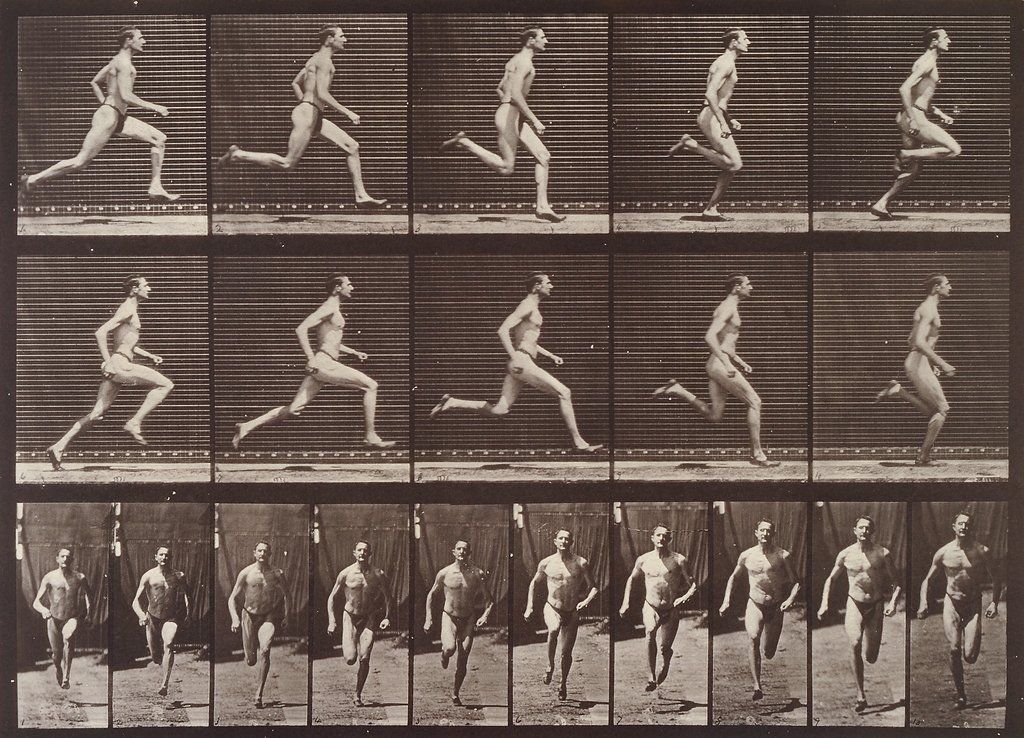
If it was available back in 1860 Doctor Leung Jan would have simply used ‘Time Lapse Photography’ and completely ignored the path of STANCES and FORMS.

Despite Stances being static they are an exploration of Human Movement, allowing us to look in detail at how our body is set up at different points in a possible progression.

Most importantly starting points and finishing points, but they can also function as a fault-finding method if we are not hitting the end stance position correctly when we move through a certain sequence.

When we look at Stances in relation to Forms we see a suggestion of how we would/could connect a start point Stance to an endpoint Stance.

STAND AND DELIVER!

Adding otherworldly importance or abilities to STANCES and FORMS has definite entertainment value if someone is a ‘Hobbyist’, but being involved in any kind of thinking that is not ‘RIGHT HERE-RIGHT NOW’ can only be detrimental to an aspiring Martial Artist.

We can only become the Martial Artist that we hope to be in 2,3 or 5 years by understanding and being the Martial Artist that we are today.

And we can only become that person by understanding the training we are doing today.

HOKKA HEY
WHAT KIND OF DAY IS IT FOR YOU?
FIST LOGIC

HERE IS AN IDEA.

Today’s Wing Chun is a Western Martial Art that may benefit from being looked at through Western thinking.

PODCAST. https://anchor.fm/derek-john-evans/episodes/HERE-IS-AN-IDEA-ev6ai2

In Cantonese the Sil Lim Tao translates to ‘The Way Of The Little Idea’

It is a method for experiencing and exploring the ‘Little Idea’.

It is not the ‘Little Idea’.

Think about that for a moment.

It is not the ‘Little Idea’.

Eastern-thinking, philosophy, is very different from Western-thinking, philosophy.

When considering the Sil Lim Tao would we do well to consider the parable of “The finger pointing at the Moon”?

When speaking of the Sil Lim Tao would we do well to consider the Dao de Ching that states “The way that can be spoken of is not the true way“?

When practising Sil Lim Tao would we do well to consider “PU”, “the uncarved block,” a state of pure potential which is the primordial condition of the mind before the arising of experience?

This would be how to engage the Sil Lim Tao by way of Eastern thought.

In 2021, there are more Western-educated Wing Chun students than there are Eastern-educated Wing Chun students.

Today’s Wing Chun is a Western Martial Art that may benefit from being looked at through Western thinking.

I have always held the opinion that the Sil Lim Tao is a window and not a mirror, as with all windows, there are many ways of looking through it.

For example, look up, look down, look left, look right, look straight ahead.

Only a fool would ignore this and use the window just to study their reflection.

Especially hour after hour, week after week, year in year out as is often the practice.

If we choose to engage some Western thinking to observe the Sil Lim Tao where should we start?

“If I had an hour to solve a problem I’d spend 55 minutes thinking about the problem and five minutes thinking about solutions.” Albert Einstein.

The Sil Lim Tao is a lesson, not a teacher.

“Losing an illusion makes you wiser than finding a truth”. Karl Ludwig Börne

Learn the Form, then forget the Form.

“Nothing is more dangerous than an idea when it is the only one you have”.  Emile Chartier

Especially when it is a ‘Little Idea’.

But with the proliferation of so many Wing Chun Movies, yes there is another on the way and from what shorts I have seen it is even sadder and sillier than Ip Man 3, perhaps this bloke nailed it.

“Right now it’s only a notion, but I think I can get the money to make it into a concept, and later turn it into an idea.”  Woody Allen.

HOKKA HEY.

WHAT KIND OF DAY IS IT?
FIST LOGIC

STRIKING.

Our 200-kilo punch to the face of our attacker becomes a 200-kilo headbutt to our hand.

It is not possible to win a violent encounter by defence alone, somewhere-sometime we must hit the opponent and deliver as much Force as we can.

The combination of Wing Chun Body Mechanics and ‘Fist Logic’ can deliver astonishingly heavy blows with very little effort.

Force is a two -way street, as Sifu Issac pointed out…

…to every action, there is a reaction of the same magnitude in the opposite direction…

Our 200-kilo punch to the face of our attacker becomes a 200-kilo headbutt to our hand.

Understanding the correct mechanics of our strikes can not only allow us to impart devastating blows but can also save us from injury.

Even if we do not suffer an injury from our incorrect Form we will leak power at every link in the kinetic chain and fail to encourage the Bad Guy to “cease and desist”.

It is beneficial for all of us, irrespective of our experience to stay in touch with the absolute basics of how to make a fist, and what it takes to deliver force through a strike.

Training for power is dubious at best, the 200-kilo punch we drop on the pads every night at training may not even land on the opponent if we do not move effectively.

Should we be able to land our strike it must land plumb to achieve its weight exchange.

Landing the strike we want on the target we want is a very difficult task, usually because the Bad Guy has his own agenda of which we know nothing.

Let’s just focus on what we can influence in real time.

Below is some random footage from training, putting words into action.

Do not be deceived by the apparent lack of effort by George, this is a big, highly skilled man moving correctly and making big circles.

If you know what to look for there is no recoil, no return force after the strike, it was a complete transference of momentum.

The end product was tasty.

The end product was Wing Chun.

HOKKA HEY.
WHAT KIND OF DAY IS IT FOR YOU?

FIST LOGIC

THE MAN AND THE PLAN.

To survive an emergency we do not need special skills, we just need a plan and the courage to follow it.

To get the most from our training, for it to be fit for purpose so to say, we must have some IDEA of what ‘that purpose’ may be.

Unfortunately for anyone involved in Martial Art training violence does not come in a ‘One Size Fits All ‘ variant.

Different situations will throw up different problems and those different problems will need different solutions.

What type of situation do we think we will be in when we call upon our training?

If your environment is a large group environment such as being at school. serving in the military or even working in construction ‘pecking order fights’ could be your main concern.

If you play a full-contact sport it could be a boil over that erupts.

Will it be one on one, multiple attackers or surprise random violence.

Will it be a confined space or an open area?

We all have differing IDEAS as to where the danger lies, for instance living in the U.K. through the 1970s when Soccer Hooliganism was at its peak young people avoided going anywhere on their own if they could manage it.

As a result, when trouble happened it was often seen coming from some distance away and it was LARGE so understanding how to deal with multiple attackers was far more valuable than a great ground game.

Each of us understands our immediate environment and even if it is not at the forefront of our thinking we know where the Dragons are

Surviving an unexpected violent attack will be one of the most harrowing things we will ever endure, going in with no idea how to get out, or at least how to begin to get out, is a recipe for failure.

Having even the vaguest of Blueprints will give us a place to start from, a place to build from.

Although no two violent situations are ever the same, controlling the immediate environment and knowing our capabilities can bring them into the same Ball-park.

Do we attack our attacker?
Do we defend ourselves and wait for an opening.
Do we stand and fight?
Do we look for an opening and then retreat?

How we answer these questions will pretty much shape the purpose of our training.

All training will work if you know where and when to use it.


To survive an emergency we do not need special skills, we just need a plan and the courage to follow it.

Self Defence is only needed once Self Protection has Failed.

HOKKA HEY

WHAT KIND OF DAY IS IT FOR YOU?