FIST LOGIC

THINKING HATS — ON.

Look it up on Youtube., someone there will explain it better than I will here.

If you talk with a sports psychologist they will tell you that all training is task-specific.

They will tell you that all training needs to be task-specific for our brains to be able to store it in the correct place so that we can access the information easily and quickly.

Our brain is not just lust like a computer, it is a computer, and data stored incorrectly rapidly degrades and becomes garbage

G.I.G.O.

Garbage in, garbage out.

Information is a language.

And like any language, we need more than just an alphabet to be able to use it effectively.

Especially if that language is context-specific like a Kung Fu Form, is context-specific.

But the language needs to be clear and correct.

And the instruction needs to be clear and correct, and if possible scientifically verifiable.

How often do we hear Teachers talking about the ‘Mind – Body’ connection?

I get what they are going on about, but there is a giant fly in their ointment.

‘Mind’ does not exist.

You cannot point to a part of the Cerebral Cortex and say this is the ‘Mind’. 

This is where ‘Mind’ lives.

Because what gets referred to as Mind exists everywhere in our Brain, it is the collective of our synapses acting together.

Mind itself is a concept.

And more often than not it is ‘Mind’ that is making the mistakes, doing everything wrong when we attempt a new Form or a new movement.

How often do you hear me say that “Our brain is a self-organising pattern maker’ that is only concerned about the pattern and not so concerned about the pros or cons of that pattern?

In general psychology, there is a process that is called the Schmidt Schema Theory.

Look it up on Youtube., someone there will explain it better than I will here.

The theory attempts to explain how and why we store general motor programs that we, later on, adapt to suit our needs.

It describes the theory as having 4 stages.

  1. Initial Conditions; where am I?
  2. Response specifications; what is expected from me in this position? {PERFORM SKILL / RUN MOTOR PROGRAMME}.
  3. Sensory consequences; A feedback loop that allows us to quantify what we did, how did it look and feel?
  4. Response Outcome; The hoped-for objective, did it work.

Here is a WIKI-gab from …. about Schema theory.

R.A. Schmidt developed the “schema theory” of motor learning

Schmidt argued, partly against J.A. Adams'(1971) closed loop theory, that people don’t learn specific movements. Instead, they construct “generalized motor programs.” They do this by exploring programming rules, learning the ways in which certain classes of movement are related. Then they learn how to produce different movements within a class by varying the parameters that determine the way in which movements are constructed.

Parameters are features of a movement, for instance, its duration or overall time, or the level of force that develops in the muscles that contribute to the movement. By scaling these parameters up or down (vertical axis), people produce variations (horizontal axis) among a class of movements.

As people practice a movement, like throwing a ball various distances or in various directions, or climbing stairs of various dimensions, they learn the relationship between the parameters and the outcome. By collecting “data points” like the ones in the figure (adapted from Schmidt, 1988, Fig. 14-7), they improve their understanding of the relationship between a movement outcome and their control of the movement’s parameters (the “best-fitting straight line” in the figure).

An important prediction of the theory is that people will more quickly learn the relationship between manipulating parameters and achieving a desired movement outcome if they practice a task in wide variety of sitations, and experience errors in the process. To use the figure as an illustration, the theory predicts that people will more quickly appreciate the underlying “best-fitting line” (the rules by which a generalized motor program produces a class of movements) when they accumulate a large and broad scatter of data points (a varied experience of movement).

Practice that lacks variety, but is instead precise or repetitious, will not (from Schmidt’s perspective) provide enough information for a learner to fathom the rules that underlie the generalized motor program.

In Schmidt’s theory, this relationship betweeen the parameters and outcomes are collected in two “schemes” or “schema,” hence the name by which his theory is known.

If we add this to col. John Boyds’s O.O.D.A. Loop we can transition from not only knowing and understanding how we move to how and why we will use it.

I am feeling a bit lazy today so here is another link O.O.D.A.LOOP.

This type of low to mid-level research can not only help us understand, but more importantly it can help us understand what it means to understand.

It takes FORMS practice out of the W.T.F. basket and puts it into the “Got It” basket, but only once you understand.

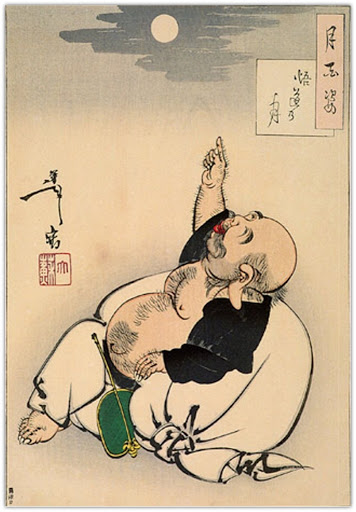
WHEN YOU UNDERSTAND, THINGS ARE JUST THE WAY THEY ARE.

WHEN YOU DO NOT UNDERSTAND, THINGS ARE JUST THE WAY THEY ARE.

ZEN SAYING.
WHAT MOON?
WHAT KIND OF DAY IS IT?
FIST LOGIC

TALKING IS THE BEST TRAINING.

3 SIXES AND NOT OUT.

Ability is gained through trust, trusting the knowledge enough to use it when things get nasty.

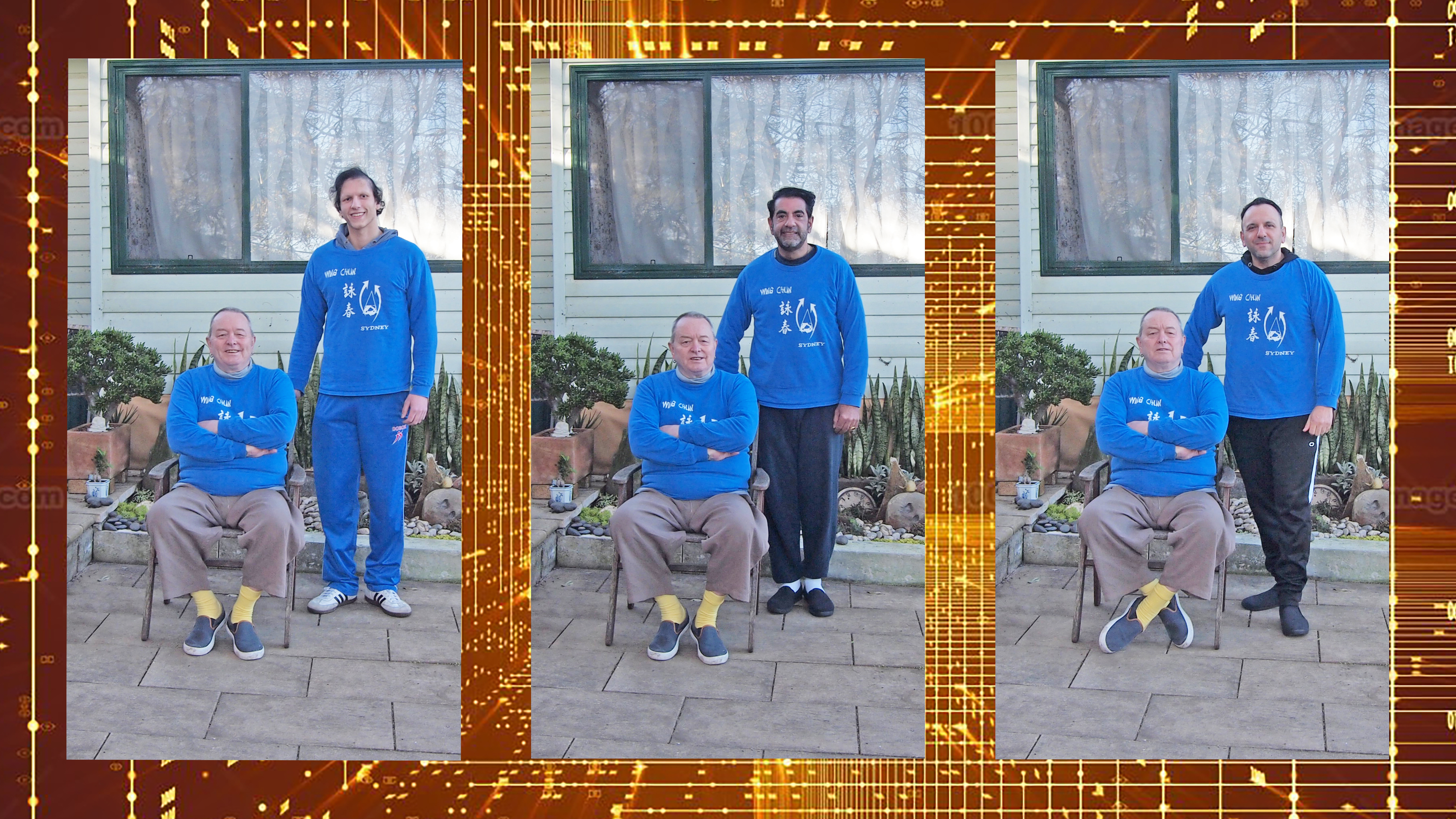
Saturday mornings are most often just me and the seniors, Sam, Costas, and George.
This Saturday was a little bit exceptional because I recognised their training effort and awarded them a level 6 Certificate.
So what does that mean?
I follow the same progression as my own Sifu did with his school and treat each of the Forms as a level.
Level 6 equates to having finished the training that comes with each Form.
Which, as you know for me, means that they have completed the first circuit of the completed Sil Lim Tao Form.
So what now?
Easy.
Rinse and repeat.
In terms of organisation, they are now officially Junior Masters {how I hate that term} and are beginning the descent into becoming Masters.


Descent why not ascent?


To teach others how to fly, we must start back at the airfield.
The requirements needed to safely make this landing, and to claim the right to call oneself a Master, are earned by developing enough understanding of the 6 Forms to teach someone else how to get to Level 6.
When a person reaches J. M. Level, there is nothing new physically to learn, ironically this is where the going gets tough, the training wheels come off and we go headlong into turbulence.
We must chart our flight path to develop our IDEA of Wing Chun.
This is very hard, it is easy to get lost and drift off course.
All of us have our EGO as a co-pilot, yes, we could, with a certain level of honesty, say that now we know all there is about Wing Chun.
But knowledge is not the same as ability.
Not even close.
There is a misconception that being a Kung Fu Master equates to being able to fight like Iron Mike, and we see the results of this thinking every time a Kung Fu Master engages a Professional Fighter.
However, ability is a lot easier to develop once we have knowledge.
Ability is gained through trust, trusting the knowledge enough to use it when things get nasty.
Trust comes through understanding.
The next step in the 3 Sixes training is to understand what they know.
Most of this training happens in quiet moments of contemplation.

Congratulation guys.
You earned it.

In the video above we are exploring and mostly talking about the FORMS and tying them into actions, from the outside, this may not look very advanced, but hey, street fights are not very advanced.

The real value in this training is what we talk about, what we question, and what answers we come up with, this is the real stuff if you can listen more than watch.

And watch what is happening away from the conversation that I am having, don’t watch me watch the guys.

Watch how effortlessly people are being thrown around, thrown away.

If I have seen further than others, it is by standing upon the shoulders of giants.

GREAT GRAND MASTER ISAAC NEWTON
THAT MOON, NOW I SEE IT.
FIST LOGIC

KUNG FU TEA

The above picture is the image from a recent blog post at Kung Fu Tea.

As you all know I have great respect for the research work of people like Ben Judkins and Paul Bowman, if you are not following their work I advise you start now.

This is a recent post that is on a subject that I discuss time and time again with my students and contemporaries.

Dive in, enjoy.

WHAT KIND OF DAY IS IT?
FIST LOGIC

STRETCHING AN IDEA.

peeping over a fence at someone’s training

Here is a glimpse of last Monday’s training, the camera was in a dreadful position and so the framing is dead-set crap, but the info is good.

At 15 minutes it is more than a cup of coffee, as always this is to tie in with this weeks training. If it looks like fun then turn up on Saturday morning.

The IDEA we ran with was that once we make the actions bigger, like in this case we used a spear and sword IDEA, it is easy to see that they are in all our FORMS in a smaller more compressed state.

The best way to approach this is that you are peeping over a fence at someone’s training, there is good info here if you can find it.

Watch, question and train it up.

If we talk to modern day Sports Physiologists and Sports Psychologist and they will tell us that all training is sports-specific, our training must reflect the thing we are going to do or it will have very little practical use.

Everything will work to a certain extent, and everything will fail to a certain extent.

It is about 3 things.

Understanding how our body works

Understanding our Fist logic

Understanding how to build a bridge between the two.

Because if we ever do get into a fight it will be on that bridge.

We are not people learning Wing Chun, we are people using WingChun to learn about ourselves.

Asking me “will my Martial art work”? Is a little bit like asking will this stick work?

It will work if you know how to use it and are willing to use it.

There is a joke here in Oz.

Question, What do you call a boomerang that does not come back?

Answer, A stick.

The moral of this tale is knowing the right stick.

Everything we do must end up with us hitting someone.

If we find ourselves in a violent situation either we did not see it coming, if we had we would have avoided it completely, or we started it ourselves.  Think about that.

The “D” Man.
WHAT KIND OF DAY IS IT?
FIST LOGIC

PUBLIC HOLIDAY FUN.

EVERY DAY IS THIS DAY.

if you look closely you will find gold amongst the debris.

Guys, let me be honest, the main reason for this post is to remind you that above all else training is easy and it is fun.

So where the hell are you?

But as for the post itself, we started the day with a Sword and Spear IDEA of how to see the FORM in everything we do, there is no reason to do anything, it is just THERE.

The camera was just running, and that is why the framing has you looking more at my garden litter than the Wing Chun, but if you look closely you will find gold amongst the debris.

This was toward the end of the day where we brought that IDEA into closer focus, most Wing Chun students fail to see that Chi Sau is about creating the space and opportunity to simply smack the Bad Guy, but to be honest we all need to be reminded of this.

As you are all well aware I consider everything from all of the Forms, to Chi Sau, to Headbutts to scratching your Arse as components of the Sil Lim Tao.

Videos can only show shapes and movements, to get any value from this or anyone else’s videos the learning objective must be “can you identify the shapes and movements, can you relate them to your own skill”?

We had a really great morning on Public Holiday Monday, but in reality, this was just what happens every Saturday morning.

Get your shit together and come join us, yes, all the senior tribe Members are there but Wing Chun is just Wing Chun.

Wing Chun is easy.

WHAT MOON?
JUST ME, MOONWALKING.
FIST LOGIC

A MEANS TO WHAT END?

THINK ABOUT THIS.

So our first aim should be to understand how to compromise an attacker’s stability while dissipating incoming force without compromising our own stability.

This past Saturday we spent the whole session putting meat on the bones of the last post, All is One.

For any that have not met him yet, Rick is a fairly new member of the Tribe who usually trains with me one-on-one, having him join us on a Saturday was great because it gave us all an excuse to do some much-needed revision.

So that I do not need to cover the same ground twice we can substitute Chi Sau with the Dummy if you are at that level.

As I have mentioned my Sifu would say that Chi Sau is a ‘means to an end and not an end in itself’.

What this means, is that what we think we are doing and practising is not the learning objective.

So what is?

Firstly let us consider this…

…If we get attacked the problem we face comes from the Bad Guy’s thinking, not his actions because it is the thinking that drives the actions.

Shut down the thinking and we shut down the actions.

There are a few tried and tested ways to shut down an opponent’s capacity to think.

Knock them out.

Always successful but very difficult to pull off, especially in the first exchanges of an attack.

Causing them serious pain.

This one is in the ‘kind of’ category because if the attacker is highly adrenalised, drunk or on something like ‘meth’ their response to pain may not be what we need.

Compromising their balance.

An absolute winner, even drunks try to regain their stability if it is compromised, the brain simply turns all of its attention to righting the ship and stops everything else.

What we are studying in Chi Sau is the functionality of balance and stability in a dynamic situation.

Chi Sau simulates making contact with an incoming force.

Chi Sau’s practise teaches us how to turn that first contact into a destabilising event for the attacker.

Because contact is a two-way street this has the potential to destabilise us at the same time so Chi Sau also allows us to work on maintaining our own balance and stability in a chaotic situation.

After all, we do not want our own thinking to be ‘turned-off’.

Chi Sau is Chum Kiu, and Chum Kiu is the defensive logic of Wing Chun.

 So our first aim should be to understand how to compromise an attacker’s stability while dissipating incoming force without compromising our own stability.

Chi Sau training will teach us this even when we are unaware of what it is we are seeking, but we get there much quicker when we understand what we are looking for.

It is difficult, especially at the beginning, to not get lost in the ‘Arm Work’ of Chi Sau but these are really just smoke and mirrors that we use when playing the Chi Sau game, if we fall into this trap, even when we successfully dissipate incoming force, we fail to grasp that the important thing is the why and not the how.

Whether we are exploring Chum Kiu logic via Chi Sau or exploring Biu Gee logic through the Dummy, the ultimate learning objective, the real deal, is maintaining stability.

One extra spin-off of this is that now when we watch other people playing Chi Sau on Youtube or whatever we know what to look for before we make some ‘Foot in Mouth’ comments.

STRUCTURE NEUTRALISES, AND FOOTWORK DISSOLVES.

CHAN WAH SHUN.
IT IS WORTH REPEATING.
WHAT MOON?
WHAT KIND OF DAY IS IT?
FIST LOGIC

ALL IS ONE, ONE IS ALL.

This is a door that once opened cannot be closed.

James, one of my most senior students, has found himself in a place that many have found themselves in before him, work commitments and a young family make it more than just challenging to take part in regular training.

James’s solution to this problem is to buy a Mok Jan Jong so that even though he may only train with us once a month he can keep up his connection to training by working on the Dummy.

In the last two private sessions we have begun the work to understand the Mok Jan Jong Form.

Right away we hit a wall that every pre-Master before him has run into head-on.

There is no such thing as the Mok Jan Jong Form.

The Jong does not stand alone, the Dummy does not exist as a separate practice.

The dummy is an expression of everything we know about the ‘IDEA’ that is Sil Lim Tao.

It is a microcosm-macrocosm.

All is one, one is all.

This is a door that once opened cannot be closed.

This is, of course, good news.

To do any given movement on the Mok Jan Jong we must know every single movement and IDEA that makes up Wing Chun.

This is good news because it means when we perform any given movement on the Dummy, we are performing everything that is Wing Chun.

Working on the Jong requires us to start the journey over, at least from the perspective of information, of raw data.

To begin a total revision of all we know, it is at this point that we realise that the progression of Wing Chun is circular and not linear and that when we once again meet the Jong we will rinse and repeat.

 Albeit with a higher level of understanding.

Everything in Wing Chun is the Sil Lim Tao, and the Sil Lim Tao Is everything in Wing Chun.

This is the way of the small IDEA.

All into one.

On subsequent rotations, the practices and learning outcomes of Chi Sau reposition themselves, and as such their importance becomes clearer.

 We can now see that Chi Sau was a way to explore Chum Kiu.

 First, we seek the bridge, once found Chi Sau gives us IDEAS of what to do next from a defensive standpoint.

Do not carry the opponents’ weight, do not press the contact, and do not fight force.

We recognise that our first run at the dummy should have been a way to explore transitioning from Chum Kiu’s thinking of accepting force to Biu Gee’s thinking of issuing force so that the Dummy itself becomes another aspect of Chi Sau.

Looking back we see that Biu Gee showed us how to not carry the opponent’s weight, how to not press the contact, and how to not fight force.

To see a World in a Grain of Sand.

WILLIAM BLAKE
WHAT KIND OF DAY IS IT?
FIST LOGIC

EFFORTLESS POWER.

IT REALLY IS THAT EASY.

It is what it says on the box, power that is effortless.

I was working with Rick and Anthony last evening, the same stuff we have all been doing this week, in many ways the same stuff we are always working on…

 …developing effortless power.

Let’s be fair and honest with ourselves, in the recent training sessions you have all been amazed by the results.

And then amazed once again when I show how we have been doing this since ‘day one’ but you didn’t connect the dots.

It is tricky stuff.

What is effortless power?

It is what it says on the box, power that is effortless.

One of my favourite examples is when I ask…

Q. Have you ever walked into the edge of a table? 

A. Yes.

Q. What hit you?

A. The Table????? DUH!

Well, NO, it was you.

You walked ‘into’ the table.

 Or did the table jump out at you?

  You did not try to hit the table, you did not mean to hit the table, all the same, without malic or intention you just walked into it.

Effortlessly.

No set-up or practice, no special shape or secret move, just effortless power, creating instant pain.

There is a well-used saying, ‘to punch above one’s weight, it means performing or achieving results better than expected and beyond one’s ability, skill, experience etc.

This is used as a compliment, but it is a silly compliment because, in the real world, we cannot punch above our weight.

Our power production is an expression of our weight.

Striking power can be maximised by good movement, correct structure, accurate strike placement, and fortuitous connections with an opponent. 

But we can never surpass what our body weight delivers effortlessly in any situation.

Questions we should ask ourselves.

Do I get heavier if I contract and tense my muscles?

Do I get heavier if I put in more effort?

Do I get heavier by doing things in a particular or ‘special’ way?

Do I get heavier by … {fill in the blank}?

The answer to all of the above and any other consideration is… 

…We do not.

We can only ever hit as hard as our body weights contribution.

In so many ways power is nothing more than throwing our weight around.

It is how and where we throw it that is the key.

Effortless power is the efficient organisation of our body weight.

On one level FORMS are a way for us to begin to understand how to organise our body weight, from static, to mobile, to dynamic.

So is Dancing.

So is Yoga.

So is Table Tennis.

The difference between FORMS, Dancing, Yoga, and Table Tennis is how we organise our thinking.

You guys always laugh when I say that Table Tennis could be an outstanding Martial Art.

And I laugh at you laughing because I know one day you will get it and think that back then you must have been a bit of a dick.

Another thing to ask ourselves is… What do we need to organise first?

If we consider that we are the same weight in our sleep, the same weight on the toilet, and the same weight in training, what does that tell us?

Here in Australia, a bag of cement weighs 20kg.

I do not think that any of us would like someone to drop a bag of cement on us, even effortlessly.

With the most basic of self-organisation we can effortlessly transfer our body weight when we make contact with an opponent, even if we only bump into them.

Work out how many bags of cement you are the equivalence of and ask yourself “why do I not think this is enough”?

The lightest of us would be equivalent to 3 to 4 bags of cement and to transfer this all we need to do is reach out and touch someone.

It is our thinking that we must organise.

Consider this, when you reach out and touch someone on the shoulder and do not put them on their ass it is because your Monkey Brain understands weight transfer much better than your Human Brain.

It is time to play catch up.

Monkeys are superior to men in this: when a monkey looks into a mirror, he sees a monkey.

Malcolm de Chazal

YOU LOOKING AT ME PUNK?
WHAT KIND OF DAY IS IT?
FIST LOGIC

AFTER 30 YEARS WHAT DO I KNOW?

BUT CAN YOU PROVE IT?

I do not think that Wing Chun is a Martial Art and I do not think that Wing Chun teaches people how to fight.

Later this year will mark 30 years of training, teaching and exploring Wing Chun.

30 years and I am still finding new things, still improving.

One thing I spend a fair bit of time musing over is…. ‘why are there so many different approaches to Wing Chun’?

Different Schools teach what sometimes appear to be completely different styles.

Even within one sub-lineage there are deviations, in all honesty, these days even my own approach is very different than the contemporaries that I trained with under the same teacher, Sifu Jim Fung, here in Sydney Australia.

Personalisation is comletely natural, making our style more suited to our own body type, mentality and experience, but the differences in Wing Chun go way beyond personalisation.

Wing Chun runs the whole gamut of being a hard Bhuddist {Shaolin} style to a soft Taoist {Wudang} style and, of course, everything inbetween.

Is anyone even close?

My Sifu, who was born, raised, and trained in Hong Kong, would say that Wing Chun does not translate out of Chinese into any other language.

So at best, we are guessing.

But does that matter?

The majority of Traditional Chinese Martial Arts students of all styles that are training today are not training to fight.

Ask them and they will say it is ‘in case’ something happens, which is fear management, and not because they know’ something will happen, which is danger management.

But I digress and that is a road I have no wish to go down at this posting, but it is interesting.

So here I am, 30 years in and with no intention of slowing down let alone stopping, so when it comes to the ‘so many differences’ situation, how do I answer myself?

Considering how deeply commited to Wing Chun I am, and how I genuinly believe that what it has taught me will get me out of any tight spot or situation of random violence.

This thought I hold surprises me.

I do not think that Wing Chun is a Martial Art and I do not think that Wing Chun teaches people how to fight.

Say what?

What I think, is that it is a system or method to help fighters fight better.

Much better.

There is nothing original in Wing Chun, all of the physical movements or technical aspects were co-opted from one Shaolin Kung Fu or another by Dr Leung Jan who was himself a highly respected Martial Artist who had many competitive fights.

Unfortunately for Dr Leung, he lived at a time of great peril in S.E. China.

I think that during the unparraleled social unrest caused by the Taiping Rebellion he found that his ‘tried and tested’ competition ready Kung Fu did not work in unexpected situations and random violent events.

So he set about refining his stuff to fit the times.

Remember that he already had great skill, and more than likely a good measure of self-confidence.

Nesecity is the ‘Mother of Invention’.

He was in constant danger and needed to improve his Kung Fu.

He invented Wing Chun, or rather began the never ending search for refinement and self improvement.

We should only ever be looking to improve what we already have.

That is a pretty steep hill to climb if students think that they start with nothing.

If we look at the people around us that are very good at Wing Chun, they all did something else before taking it up, a combat sport,military service, first responder service, or club door work.

I also think we all know of someone or another that appeared to be good at Wing Chun and was highly regarded in their school, who reached a high level only to then give it up to go and play Jiu-Jitsu out of a lack of belief in Wing Chun.

Jiu-Jitsu does teach people how to fight, Jiu-Jitsu does supply tangible reasons to believe.

Two of my seniors who were excellent practitioners took this path.

Niether were brilliant teachers it should be noted, it is hard to teach without a deep belief in the work.

Something I now as a Baby Boomer growing up in the 50s and 60s is that violence is messy, chaotic, unorganised, and above all else, easy to do.

Every prison on the planet is full of people that are very good at violence that have never done any kind of training.

Because, violence is easy.

The thing is Wing Chun does not teach violence.

No one leaves training bruised and bloodied.

What Wing Chun does do, is develop incredible and effortless power that will never let you down if you trust it.

But if someone thinks that they do not know how to fight, how to match another persons violence, that is a big ask.

So what does Wing Chun teach?

It teaches us to trust ourselves and act accordingly.

The frog in the well knows nothing of the sea

Japanese proverb.

THERE IT IS.
FIST LOGIC

SELF TALK

This aspect of the training is where some people get confused or threatened and think that we are drifting into pseudo-spirituality.

I am still working on the E-book, but to be honest sometimes I am happier just posting.

EXPLAINING THINGS TO OURSELVES and the little idea.

There is a non-physical side to what we do, we need the physical aspect to be established before we embark on this, but we should briefly mention the non-physical here to get us ready.

Developing our power is 100% in the Mind, consciousness is not an option, if we are awake we are aware, conscious power is everyday power. 

Developing our subconscious power is less automatic, we reach it through consistent, deliberate practice.  

The key to developing our self-image is positive self-talk.  

This is nothing new, every self-help guru on the Internet will tell you the same thing.

This aspect of the training is where some people get confused or threatened and think that we are drifting into pseudo-spirituality.

Thinking this takes us away from our training, away from the WAY.

The ‘Way of the Little Idea”.

The Sil Lim Tao, is the development and understanding of the Wing Chun ideal, in body, mind and spirit.

To phrase this in easy English the aim is to Act, Feel and Think in the same way to the same end. 

This could be any end, even enlightenment, so it can be a suitable vehicle for spirituality, but what type of person thinks that developing violence is a suitable approach to spirituality?

For Wing Chun these two paths cannot be mixed, the Sil Lim Tao is the opposite of spirituality, it is about becoming not only fully aware of ourselves and our potential but the best version of US there can be.

To be fully aware of every living, dynamic aspect of ourselves, not to blend into the void and achieve Nirvana.

Think on this,  jumping from a high building is mechanically  the same as jumping from a low step, but when we land the results are not remotely similar.

What we believe to be ourselves, US, our self-image was built up over many years and is still being added to today, every minute of everyday.

If we can imagine a situation that we would be using our Wing Chun training in, it will be the image we have of ourselves and the image that we have created for our attacker that will engage each other.

The physical image of ourselves is the simplest to refine, that is the first aspect of every FORM that we do, this is the entry to the “Way of the Little Idea”, our physical self-image, the bit of us that acts in the way of the “Little Idea”.

When observing ourselves doing any Form, any movement set any physical action whatsoever we must address it positivity. Yes, at all times we can think that we would like to do it better, but we are never doing it wrong.

Paying attention to what we are doing is the job of the conscious mind, activating our conscious mind by being deliberate is how we start to learn a new skill. 

We must know what we want to learn, and then we must break that down into its seperate parts. Each part is then practised individually until it’s grooved, solid, imprinted onto the subconscious mind.

Sound familiar? 

This is how we do the FORM.

This is a very wide and deep avenue to cross and it will be the focus of a seperate E-Book.

But the way in is through honesty, understanding and remembering.

Did we forget why we started this journey, did we forget that the goal was not to learn how to defend ourselves or how to fight? The goal was to become that person that was ready for the fight.  

If we stop training we stop being that person. 

Mastery of any skill fades, masters remain even when their skill diminishes.

We don’t see things as they are, we see them as we are.

Anais Nin.
WHAT KIND OF DAY IS IT?