FIST LOGIC

OLD WISDOM/CLIMBING A MOUNTAIN.

Imagine that we live on a small ‘Tropical Island’ that has a large extinct volcano

History has proven over and over that the greatest impediment to rapid progress is outdated information.

Old Wisdom.

Seeking direction for the future through Old Wisdom does not make for an easy or clear journey.

Those travelers amongst us that progress more quickly than the main group and send back updated information of what is ahead, are disbelieved sometimes ridiculed for the sudden and often severe change in their views from what everyone else sees before them, in some situations these vanguards are branded heretics or some other negative term.

Why do fearful people always shoot the messenger?

In the Martial Arts, especially those of China and South-Eastern Asia participants pride themselves on working exclusively within the Old Wisdom.

However, all of us know instinctively that as we progress from one level of our training to another we reevaluate and update what we know, in this way we are constantly updating the Old Wisdom, converting it to Today’s Wisdom.

Even as we do this we fail to understand that soon what we see as Today’s Wisdom will also be outdated, will be just more Old Wisdom that needs to be updated and yet we deliberately delay, we resist change, falter in the face of progress.

If we could accept that in time that the idea of Tomorrow’s Wisdom that is so confronting will be the Old Wisdom with which we are so familiar, perhaps we would be more comfortable seeking out Tomorrow’s Wisdom, today.

Climbing a mountain is a fairly common allegory in the Martial Arts, it helps us to understand our insignificance, although we all struggle and a few amongst us reach the top we never in truth conquer the mountain because after we are long gone and forgotten the mountain remains.

Lets us engage in a thought experiment.

Imagine that we live on a small ‘Tropical Island’ that has a large extinct volcano, one side of this mountain, let’s say the Eastern side is covered in trees, the other side of the mountain is clear of vegetation thanks to along forgotten lava flow.

At base camp #0, before we begin the climb, we look East, nothing but trees. We look West, scrub, and pasture. We look South, the blue ocean stretches to the horizon. We look North, only the mountain.

At base camp #1 to the East are still the trees, to the South the ocean still stretches to the horizon, to the North there is still only the mountain, but to the West, we now see fields, farmlands, small communities.

At base camp #2 to the East are still the trees, to the South the ocean still stretches to the horizon, to the North there is still only the mountain, but to the West we now see the land laid out like a tapestry, different crops, different land-use depicted as swatches of varying colour.

At base camp #3 to the East are still the trees, to the South the ocean still stretches to the horizon, to the North there is still only the mountain, but to the West we now see the land running away to the horizon all details merged into a homogenous grey/green/brown cut by rivers running towards an unseen coast.

When we inform the people at the lower base camps of our recent and surprising discoveries doubts are raised, questions asked.

At base camp #4 we climb way above the tree line, to the East are still the trees, below us now stretching away forever a carpet of green, to the South the ocean still stretches to the horizon, to the North there is still only the mountain, but to the West we now see the rivers meet the ocean and understand yes we are an island.

At base camp #5, the next stop is the summit, to the East are still the trees, like the rivers we now see that they also march to a distant ocean, to the South the ocean still stretches to the horizon, but now there is a landmass on the horizon, another side to our ocean, to the North there is still only the mountain, but to the West we now see a sameness that is difficult to explain, except to know that it is our island.

When we inform the people at the lower base camps of our newer discoveries again doubts are raised and we can hear people talking of altitude sickness and occasionally we hear laughter.

At the summit, we see uninterrupted for 360 degrees and finally understand our island, everything we knew, held dear and considered to be important, specific, the very essence of our island has blended into one unrecognisable mass.

Up here at the roof of our world we see a distant continent filling the horizon to the south and west, a continent that through the Old Wisdom we did not even consider could have existed, a continent that we are more than likely part of.

The only thing we do not see is the mountain.

It has vanished from view at this level, it is now just a part of the totality of the land, and we begin to think that from this height maybe all mountains are the same that all lands look the same.

That all Wisdom is the same.

When we inform the people at the lower base camps that we are at the very top we advise them to wait and see for themselves, but for those that do not make the summit, there will always be a nagging doubt.

Do they stick with the Old Wisdom, the world they know or do they trust in the vanguard?

TRAIN ON YOUR WEAKNESSES, WORK TO YOUR STRENGTH.
WHAT KIND OF DAY IS IT FOR YOU?
FIST LOGIC, VIDEO

MORE ON SOLO TRAINING.


 ‘shadow boxing is good training and great fun, but shadow boxing never won a fight’…

Knowing what to do in Solo Training is harder than we may imagine, there is a saboteur lodged in our head that works against us.

It is our Brain.

Our Brain is a self-organising pattern maker, it looks out at the Chaos around us and starts clumping things together to give us a reference point, a means of recognition.

This is both a good thing and a bad thing.

Good for dealing with the general chaos of life, bad for understanding the finer details of dynamic movement, for instance, the type of movement found in Forms.

Our brain loves patterns, they are literally in our D.N.A. so we do not notice when we fall into them or overlay them where they do not belong.

Given the choice between paying attention to the overall shape of the pattern or the individual content of the pattern, our brains choose the shape of the pattern.

At the very beginning of our training, we are told that every single move of every Form is a Form in and of itself, but we forget this in the flood of new information and end up just following the pattern.

This is not restricted to the martial arts it is everywhere in life.

Following patterns feels so natural and right that very few amongst us notice the problem, only the artists, the poets, and the philosophers recognise this problem and work hard to change the contents of their patterns.

They choose the Red Pill.

Any Form is just style preferred specific information collated in a way that is easy to remember, it is only the individual bits of information that have any genuine value.

Left to its own devices our brain will focus its attention on the whole Form and not the bits of information, when this happens we are just dancing, you know how it goes  ‘this move follows that move and then we do this other move’.

Just a dance, perhaps a sacred dance, but never the less just a dance.

Solo Training allows us the chance to deconstruct the existing familiar patterns and explore them in their own right, if for no other reason than to see if it is even a useable pattern.

Focusing on anything except the specific thing we are doing physically is not going to bring about the results we are after, how could it, all training is task-specific

If we are thinking about the Form, focusing on the Form, trying to be mindful and become one with the Form, what we are learning is the Form, do not expect to learn anything else.

To put it into a sports perspective, world-class ball hitters, tennis, cricket, baseball you pick will set the ball machine to deliver the same shot over and over again, this is how we improve, little by little, first fix this problem then move on to the next.

What they do not do is set the machine to send out variable balls, to different places at differing speeds, this would be completely useless, more than likely a lot of fun, but nothing to learn here.

When we focus on the whole Form we lose connection with the reality of whatever we are moving, we will not think so because our brain loves this pattern, it is comfortable and familiar.

Does doing something comfortable and familiar sound like a tried and tested way to learn something new or to take the old thinking forward?

Years ago my tennis coach had a saying .. ‘if it feels right it must be wrong, only bad habits feel right’.

Finally, concerning the IDEA that doing the whole Form is a way to prepare us for any necessary spontaneous action, my boxing coach would tell us all … ‘shadow boxing is good training and great fun, but shadow boxing never won a fight’…


For me, solo training is an opportunity to deconstruct what I know and then find a newer, better way to put it back together, to rewire our interaction with ourselves {Ego} so that it is no longer an operating system on autopilot, but rather a ‘heads up display, a personal user interface’.

To learn anything we must stay with authentic reality, remain rooted in the absolute certainty of the lived experience.

Otherwise, everything is just make-believe.


Work on your weaknesses, play to your strengths.


WHAT KIND OF DAY IS IT FOR YOU?

FIST LOGIC

SOLO TRAINING.


At the moment we begin thinking we stop paying attention.


What is Solo Training?

At its most obvious it is training on our own, our own space, our own time, agenda and intentions.

In the Martial Arts solo participation in a Form provides us with the tools to approach our training on an even footing, to see it as it is and not as how we think it is or might be told it is.

This is the main purpose of all Forms, they achieve different reasons later but initially, it is this.     Objectivity.

The ultimate expression of any Art, Martial or otherwise, is to become one with it, lose one’s identity and become the thing we do.

But there is a paradox afoot here, doing is not being, in fact doing prevents being.

‘Doing’ requires thinking, ‘Being’ requires attention.

At the moment we begin thinking we stop paying attention.

We arrive at an awkward situation, once we start to actively do the Form, in a certain manner, to a certain pattern, once we begin to follow the instruction we enter the world of the subjective, and just like that {imaginary snap of the fingers}, doing the Form becomes a contradiction of the reason we are doing the Form in the first place.     Objectivity.

However, if we can explore the space between the contradictions of being and doing we can learn, or perhaps it would be more accurate to say discover, how to become creative ‘in the moment’, how to turn something that is on the surface quite useless, such as a Form, into a useable and powerful action.

The key is ‘Intention’.

But in this context what is ‘Intention’?

If we think of causality then Intention is the effect.

This is a mental game, not a physical game, and it can be a real head spin, the effect is the thing we achieve with the being state, not the doing state.

How do we transition from doing to being to effect?

Once we are working in the realm of different mental states it does not need to be bounded by any limitations that our Martial Art may require stylistically.

This means we do not need the Form to understand the Form, and by extension, once we reach this understanding we no longer have any reason to physically do the Form.

Go ask Alice, I think she’ll know.

In the last 50 years, there has been remarkable progress in the fields such as neurobiology, psychology, psychoneuromuscular theory and even technology through A.I. and machine learning that gives us a very different explanation of how we do stuff.

My own experience with this began in the late 1970s with Timothy Gallwey’s ‘The Inner Game of Tennis’ and in the early 1980’s Sybervisions Tennis and Golf psychoneuromuscular training systems and it is why to this day I approach things via sports.

In particular, Gallwey’s book could very well be ‘The Inner Game of S.L.T.’

If you are one of the many people that spend a large amount of time doing the Form there is a very real chance that you are working against yourself.

You may not be, but the recent findings in the applied fields of human behavior would suggest that more than likely you are.

Don’t panic, this is not a dead-end, but it will require a change in direction, or at least a major change in thinking because it does not matter what we are doing physically, what style or shape, fast or slow, you can safely keep the old body patterns.

This post is about Solo Training, and about changing our thinking, a good place to start is to ask ourselves a few questions, there is no right or wrong answer the purpose is simply to put a pin in the map and see where we are.

Q. What is the Goal of Solo Training?

Q. Do we know why we are doing this?

Q. Can Solo Training exist in a group situation?

Q. Can it be realistically thought of as Solo Training if we are in a room full of people doing the same thing?

Q. Why train on our own if we can have a partner help us?

Q. If we are in a group situation why not use the group?

Q. Can Solo Training teach applied techniques or practical applications?

Q. If not what do we expect to learn?


Sometimes we see more clearly when we look at things from an alien perspective, such as looking at out training through the lens of economics.


The economics of Solo Training.

Q. What is the cost against the returns?

Q. Do I take out more than I put in?

Q. What’s in it for me?

Q. When do I expect a return on my investment?


This is a big area to explore, I will come back to it later on.


WORK ON YOUR WEAKNESSES, PLAY TO YOUR STRENGTHS.


WHAT KIND OF DAY IS IT FOR YOU?

FIST LOGIC

THE EMPTY FORM.

FILL BEFORE EMPTYING.


We cannot find something that is not there.


Why is it that different schools, different lineages even different teachers think so differently about the Wing Chun Form?

Why is there no overall consensus on what the Form is all about?

The issue, if we consider it an issue, is not with the different schools, lineages or teachers but to be expected is with ourselves.

Each individual student.

Q. What can we expect to get from practicing the Wing Chun Form?

A. We can expect to get the same thing as we would from any empty vessel.

We can only take away what we put in.

If you want softness and relaxation then you must put in softness and relaxation.

If you want strength and speed then you must put in strength and speed.

If you want to observe balance and stability you must put in balance and stability.

We cannot find something that is not there.

How could it possibly be any other way, that would require magic or at least the intervention of an outside magical force?

As always I like to relate all things Wing Chun to sports and sports training.

Today I choose Tennis.

If we have an important game coming up in a couple of months we decide to prepare for it by 6 weeks of daily, intensive training.

But imagine if all we train is our forehand, what do we think will happen to our backhand?

If we train nothing but groundstrokes from the baseline, what do we think will happen to our volleying or dinking?

If all of our training is with a Ball Machine set to the same speed/force always into the same corner of the court how will we learn to cope with rythm changes and speed changes, drop shots or lobs?

And during all this time the most important shot of all, our service, is going to the dogs due to lack of use.

It is foolish to think we can engage in one aspect of training and yet learn something completely different.

What many students expect to get from the Form is at best unrealistic, most, if they think about results at all, expect to get multiple benefits from a single action.

Where else in life does this happen?

If you know please leave a comment, we will all benefit from such information.

We can take away only what we put in.

We have been hearing a variation of this since we were kids, but what does it mean?

Most of us, and I have most certainly been guilty of this in the past, think it just means more effort, longer hours, to engage more attention to the subject at hand, to get a better teacher.

None of the above have anything to do with what we put in, only how we put it in.

If I was to ask you to go into the forest and find me a Rana Caerulea the very first thing you would do was find out what the hell it was.

No one would just trot off into the forest hoping that somehow they would stumble upon it.

But that is exactly what most people do with the Form.

We can take away only what we put in means that we must know what we are looking for.

As with all training, a good place to start is to seek advice from someone skilled, but no matter who that person is they can only tell you what they were looking for, tell you what they found.

What I put into my Forms today has nothing in common with the things I put in to get me here, where is the value in describing the destination without pointing out the path?

‘Intention’ is a nebulous word, hard to pin down to a single IDEA but that is what we put into our Forms, this is not a ‘get out of jail free’ card, a one size fits all type of answer, it leads to other questions such as what is Intention? What are you Intending to do as you practice your Form?

What are you putting in?

Many years ago I was diligently practicing my First Form at my Sifu’s school, I knew he was watching so I put in extra effort, applied more focus, engaged more attention.

Sifu came across to me, watched as I played Tarn Sau and asked ‘What are your feet doing right now’?

He knew by my blank expression that I did not know what my feet were doing.

‘Why would you expect that Tarn Sau to be effective if you do not know where your feet are, what they are doing or how they relate to the rest of your body’?

We tend to think that wisdom and knowledge arrive like a flash of lightning out of a clear blue sky, the reality is that wisdom and knowledge are a hole in the ground that we accidentally fall into while walking in the dark.

What we need is a flashlight.


WHAT KIND OF DAY IS IT FOR YOU?

FIST LOGIC

COGITO, ERGO SUM.


‘not being broken does not mean it’s working, so if it ain’t broke break it’.


Few would disagree that in the late 1960s or early 1970s the world was given a nudge which broke its inertia and changed the direction of the future.

That nudge was Lateral Thinking, I was lucky enough, through my employment, to be a part of the mental revolution it began and it quite simply changed my life, and all for the better.

A new approach to business that took hold in the 1980s was if your competitors were doing better than you were in the market place you just bought them out, stripped out the profitable things and sold or scrapped the rest.

Overnight I became part of a large multinational company, a company that interestingly thought that all its managers, no matter how large or small their impact on the overall company, needed to be working from the same page, that page was Lateral Thinking.

From the beginning, the board meetings I attended had nothing in common with what I had previously experienced. The usual format at most Board Meetings would start by going over the last meeting, follow up reports and if the changes implemented were successful and ongoing move on to the new business.

In short, ‘if it is still working it is not broken, if it ain’t broke don’t fix it’.

In the Lateral Thinking Board Room, things got turned on their heads, ‘can what we did be done any better? Can this solution work on other problems? Do we even need this solution?

In short, ‘not being broken does not mean it’s working, so if it ain’t broke break it’.

Echoes of this can still be heard today with Mark Zuckerberg’s ‘move fast and break things’.

A big buzz phrase in leadership and management education was deconstruction/reconstruction, we would be encouraged to break things down, study all the individual parts and put them back together in a new way, sometimes leaving bits out on purpose, this was pretty much a worldwide happening and it catapulted us forward.

By now you are probably thinking what has this got to do with the Martial Arts in general and Wing Chun in particular?

Deconstruction/ reconstruction.

Once you train your brain to work this way you cannot untrain it.

Traditional Martial Arts are by nature backward-looking, just like the business of the 1960s, change, if it ever comes, comes slowly, ‘if it ain’t broke…..’

Without any overt intention, I always find myself deconstructing the things I do, Wing Chun is no exception.

Why 6 Forms?

Why 1 Form for the Arms, 1 Form for the lower body and 1 Form for the upper body?

Why do we still train archaic weapons in the age of the gun?

Are the Forms really a linear progression?

When we deconstruct the first 3 Forms and reconstruct them into just 1 new Form something magic happens, not only do we get a better more functional Form but we see the inherent value in the 3 individual Forms.

We begin to see them for what they are and not just what we want them to be.

In the Lateral Thinking Board Room, ideas were never intended to be permanent, this month’s Epiphany will be next week’s deconstruction, as will whatever arises out of that idea.

We can make 1 new form every month if we feel like, in a strangely contradictory way this is quite possibly the best way to hold on to the original Forms, to keep it pure so that we can always alter it, rebuild it.

Keepers of the Flame and there are thousands in all Martial Arts will poo-poo this for no other reason than holding on to the past.

Let’s stick to the source code or we will all lose our way.

Where would we be, and what language would we be speaking if Alan Turing had thought this way.

There is an absolute mass of empirical evidence that modern Wing Chun is not holding its own ground.

Pretending that this is not happening is not going to save the day, it may not even slow down the coming of the night.

The Emperor has not got new clothes, but between us, if we choose to, we can go out and get him some.


WHAT KIND OF DAY IS IT FOR YOU?

FIST LOGIC

THE WING CHUN UNIVERSE’S ‘BLACK HOLE’.


There are some CONCEPTS in Wing Chun that that require us to use different mindsets, wear different hats, different levels of thinking


WING CHUN is a counter-attacking fighting style, we believe that to strike first is to show our hand, and in doing so to open ourselves up to our opponent’s counter-attack, we stand, we wait, we watch, we see him begin something then we end him.

It is a very sound system that has been proven effective time after time in real-world situations.

There is also a mass of real-world empirical evidence that points to preemptive strikes predominantly leading to a successful outcome.

If we are certain that violence is going to happen do we stand and wait or do we act preemptively?

To effectively use counter-attack we engage our senses to observe any indicators of an incoming strike. Once a trigger is noticed, primarily at a subconscious level, we act.

To effectively use a preemptive strike we engage our senses, usually at a conscious level, to observe any targets of opportunity, openings we can exploit to land a blow. Once an opening is noticed we strike through.

We cannot effectively do both at once, look for openings as we scan for attack indicators, they use different parts of the Brain, different Mindsets, different levels of interaction, conscious, subconscious.

It is like playing Rugby, a ball is coming my way, so is the opposing sides defender, do I catch the ball and run or do I catch the ball and pass?

If I wait to decide until I have the ball I will be flattened.

Escaping violent situations is not really about what style we use, what technique we employ or how good we are at fighting, it is about making good decisions on time.

There are some CONCEPTS in Wing Chun that that require us to use different mindsets, wear different hats, different levels of thinking, in some cases they are contradictory, when jointly engaged they just neutralise each other.

Attacking uses a different mindset to Defending, different focus, different goals, positive and negative, matter and antimatter.

As a concept, ‘Simultaneous Attack and Defense’ is an enticing theory, one that is easy to make happen in a controlled environment, seductive.

But it is a duality.

Violence is a singularity.


TRAIN YOUR WEAKNESSES, WORK TO YOUR STRENGTHS.


WHAT KIND OF DAY IS IT FOR YOU?

FIST LOGIC, VIDEO

PLANNING.


We often imagine that we generally operate by some kind of plan, that we have goals we are trying to reach. But we’re usually fooling ourselves; what we have are not goals but wishes.

The 33 Strategies Of War – Greene, Robert


Followers of this blog will be well aware of my conviction that Wing Chun is completely devoid of intelligent, workable strategy, yet still, I love it.

In my often clumsy attempt to inform the ill-informed I have sometimes come over as being Ego driven and stupidly opinionated, I will accept that critique as wrong as it is, I should have done better and I am forever trying to do just that.

In the last couple of years, I have written thousands of words to this end, read countless books and articles to try to improve my delivery because it is the message that is important and not me.

I recently happened upon the author Robert Greene, his book ‘The 33 Strategies of War’ is everything I was trying to say, just done so much better, so much clearer and far more eloquently, better still I found a Youtube video of him presenting his book.

In the previous posting on this blog, I spoke about the difference between Qi Kung and Kung Fu.

Qi Kung is thinking about the work, Kung Fu is spending time and effort doing the work.

This video is one hour long, investing time in the work is what Kung Fu demands, if you cannot find the time to watch this, and preferably more than once you are not involved in Kung Fu.

A quote that echoes loudly when I watch most Wing Chun people  training is,

We often imagine that we generally operate by some kind of plan, that we have goals we are trying to reach. But we’re usually fooling ourselves; what we have are not goals but wishes.

The 33 Strategies Of War – Greene, Robert


TRAIN YOUR WEAKNESSES, WORK TO YOUR STRENGTH.
 

WHAT KIND OF DAY IS IT FOR YOU?

FIST LOGIC

QI KUNG IS NOT KUNG FU.


My approach is Kung Fu first, Qi Kung second, this often puts me at odds with my old training friends.

Wing Chun is a concept-driven Martial Art, and this is the core of most disagreements amongst the different practitioners, we all interpret the concepts differently.

Despite the overwhelming disagreements, I do not think any would argue that there are two main approaches and these approaches depend on whether a person is doing WingChun as a Qi Kung or doing Wing Chun as a Kung Fu.

Ultimately both approaches are needed if we wish to be truly effective.

The majority of the people I know, who are from the Choy Shung Tin – Jim Fung lineage approach the work mainly from the perspective of Qi Kung, establishing the ‘condition’ to do the work of Kung Fu.

There is absolutely nothing wrong with this approach, all roads lead to Rome, as long as somewhere along the line they start learning how to use that ‘condition’.

It is not possible to have good Kung Fu without Qi Kung, but it is all too common these days to have good Qi Kung that has no Kung Fu.

Qi Kung is not Kung Fu.

When doing a Form from the perspective of Qi Kung the awareness and intention should be a whole-body awareness,  easy comfortable movement with no predetermined use, releasing tension, opening the joints to let the energy move freely.

When doing a Form for Kung Fu it must be almost the opposite, the awareness needs to be singular, direct, focused, we must ask ourselves what are we trying to do here? Where is the work being done?  What is powering the work?

My approach is Kung Fu first, Qi Kung second, this often puts me at odds with my old training friends.

Because of this perspective what I believe to be the most important of the Wing Chun Forms and the one that I would recommend spending more time on is not as many think the First Form but is, in fact, the Fourth Form, the Mok Jan Jong or Wooden Dummy.

Each of the first three forms brings us to part of the total information that we can then work on uniting through the practice of the Dummy, Knives, and Pole, however only the Dummy works as a hands-on solo training that allows us to explore possible combinations of the various movements and ideas introduced in the first three Forms with tactile resistance.

The Jong makes it very clear that the two most important things to be comfortable with, are time and space.

The time to do the work and the space to do the work, without this control everything goes out of the window, only the dummy gives us this aspect of training, everything else is little more than imaginary training, and is only of use in imaginary fighting.

Working on the Dummy is working on all of the previous Forms in a compounded and more practical way, this is, in fact, the raison d’être of the Dummy.

To understand and benefit from the Dummy it is critical that we abandon all fantasy,  50% of the moves in the Dummy Form are wrong and the other half are useless, it is a training aid that helps us understand ourselves and how we move, how to accept force and issue force, it is not a sparring partner.

Before we can have any hope of gaining benefit from the Dummy we must understand the working or core aspects of the first three Forms, and have at least a basic understanding of how to combine them.

From the perspective of Kung Fu, not Qi Kung.

How do we know if we are doing Kung Fu or if we are doing Qi Kung?

If it is just you doing a Form it is Qi Kung, if you are not hitting something, it is Qi Kung, if you are not moving dynamically, it is Qi Kung.

As I said earlier, there is absolutely nothing wrong with this approach, in fact, it is an essential ingredient, the problem arises when someone is training Chi Kung while thinking that they are training Kung Fu.

Qi Kung is not Kung Fu.


Work on your weaknesses, play to your strengths.


WHAT KIND OF DAY IS IT FOR YOU?

FIST LOGIC

THE PARABLE OF THE BOMB.


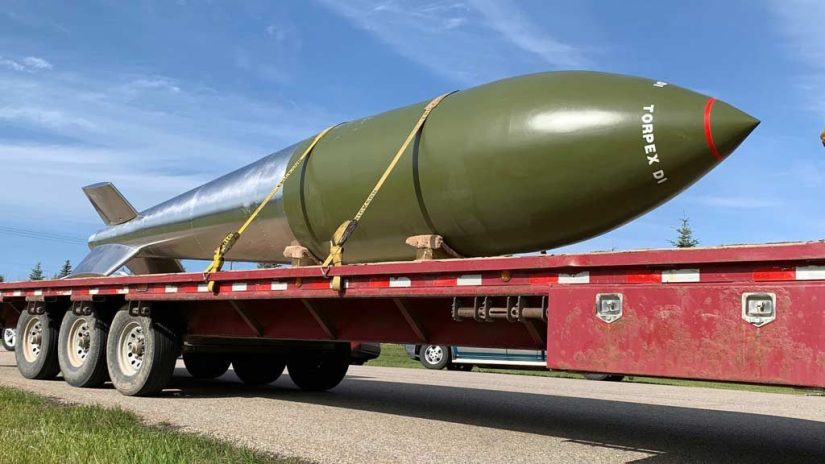
A very simple Bomb, a very powerful Bomb.


A while back I asked ‘what is the pointy end of your Wing Chun training’?

The pointy end referring to the aspect that delivers the pay off to all of the training that has been done, the why and the how made into one corporeal expression.

To show where I am coming from with this, to guide our thinking in the correct direction I have created an allegory or if you wish a parable.


There were two countries locked in a war that appeared to have no end, every move was countered every battle ultimately ground to a stalemate, no end was in sight.

It was decided to build a giant bomb and drop it on the enemy capital finishing the war at one stroke.

A Factory was built, the most modern Factory imagined, fully automated, carbon-neutral, the best and brightest scientist were assembled, cutting edge tech invented and the Bomb was created.

A very simple Bomb, a very powerful Bomb.

Even though there was no other factory anywhere in the world equal to this factory, it existed for one purpose and one purpose only.

To build the Bomb.

As the Factory was under construction a tunnel was dug from the Factory to the airfield, the tunnel was secret, safe and the track was a Magnetic Levitation system that could transport the Bomb safely with no chance of fire.

No tunnel of this kind existed anywhere else on the planet and the Mag-Lev system was the first of its kind, but this was unimportant, its only reason for existence was to transport the Bomb.

At the Airfield a new prototype Carbon Fibre Stealth Bomber awaited, it was completely undetectable to all known scanning technology, it was fully autonomous and capable of reaching speeds of Mach 8, there was no equal to this plane.

Without the Bomb, this plane would have never been built.

Looking backward at everyone that had been involved in the project, in all the support, all the innovation all the progress and sheer audacity it all came into being only for the Bomb.

Years later when the war was long over and the world was at peace people only spoke about the Bomb.


Aligning this with Wing Chun training what is our Bomb?

What is our Factory, our MagLev Train, our U.A.V. Bomber Drone?

Just for the sake of this conversation let us nominate the First Form to be the Factory, it could, of course, be anything or even a combination of things, a piece of the First Form, a slice of Chi Sau and a pinch of something else.

Is the way you do the First Form capable of creating your ‘Bomb”?

Delivering the Bomb to the airfield is pretty much what Chum Kiu is all about.

Dropping the Bomb could be the IDEAS formulated in Biu Gee.

In training, we can focus on the three different stages, build it, deliver it, drop it. This not only helps to understand transitioning but can lend an air of semi-reality to the movement.

The most important thing is to understand that even though we have a fantastic Factory, even though we have a cutting edge Maglev system, and even though our Drone is the most hi-tech and advanced when push comes to shove it is all and only about the Bomb.


Train up your weaknesses, work to your strengths.


WHAT KIND OF DAY IS IT FOR YOU?

FIST LOGIC

PLANNING TO BE OUR BEST IN THE WORST OF TIMES.

Do you know your weaknesses, more importantly, do you know how to avoid them?

Let me remind everyone that I am a Martial Artist that does Wing Chun, I am not a Wing Chun disciple.

This is in no way meant to be demeaning to Wing Chun, quite the opposite, I choose Wing Chun because I think it works as well if not better for me than my previous training.

I have a wide and varied fighting skill set that encompasses Boxing, Judo, Military C.Q.C. plus traditional European and S. East Asian weapons training, still, I choose to stay connected to Wing Chun.

Full disclaimer that needs to be factored in, I am 68years old and semi disabled, if I was ever knocked down it would be near impossible for me to get back up quickly, this greatly affects how and what I teach, how and what I train.

Do you know your weaknesses, more importantly, do you know how to avoid them?

How can we plan for something that we do not even know is going to happen?

Let’s start with the worse thing we can think of, it will be different for all of us but be honest to yourself, there is no need for anyone else to know, we all have one darker fear and if we are ever slipping towards it, we will panic big time if we have not at least played it out in our minds a few times.

My favourite military maxim that should always be considered is …. ‘no battle plan survives contact with the enemy’.

This is not about being real, it is about being semi-prepared, engage your imagination, if in doubt about what would happen in a real situation pick the worst option you can think of.

I will use my worst fear as an example, but it is just the thought process that is important, develop, ask and answer your own questions.

My biggest worry is that I am on the floor!!!

Question #1. How did I get here?

Did the Bad Guy knock me down? Did he catch a kick I attempted and threw me? Did I trip over my own feet?

Most fights that end up on the floor are there because people fall over much more than someone does Ju-Jitsu.

Whatever we decided caused this problem becomes an area for involvement in our training, develop a style that kicks less, stay out of reach of your partner, develop a better, more well-balanced movement.

Question #2. Could I have prevented this?

If it was something the Bad Guy did what happened that allowed him to be in a position to do that? Was it his skill and speed or was it a case of me being inattentive or late to respond?

Either way, this problem was caused by not being in control of my personal space and something I can take into training is the question “what does it mean to control my personal space”?

As a training exercise in Chi Sau get a friend to continuously press you and work on maintaining the same shape, position and distance from them at all times.

Ask yourself can I control my personal space by standing in the one spot while my attacker is mobile, there is no correct or incorrect answer here, just a specific personal idea that we can train to be more natural.

Question #3. Was he fast or was I slow?

We can always work on our speed, especially the speed we think, our body only ever works at the speed of our thoughts, to a very large extent being quick is about having fewer choices to deliberate on.

Do not waste valuable mental processing time on trying to develop or use ‘Mind Force’, be deliberate and only think about things you can do that will actively help.

If we do not know how to transition from one situation or one position to another we will be frozen in time and space and an easy target.

Again as a Chi Sau drill work on changing shapes, stances, and positions in space.

Create a drill in Chi Sau where one partner applies a strong forward drive, the other partner tries to find a way to get behind the aggressor, do not be nice to each other, make it a win / lose game.

In training we usually tend to just do as we are told, often there is no genuine connection to what we as students think may happen, what we may need, very rarely is there any student input to reflect a personal worry or experience.

As Instructors we should encourage this type of engagement, as students, we should force ourselves to ask questions, even when we think they may be stupid.

Nearly everything we do in Wing Chun falls under the umbrella of simultaneous attack and defense, in so many street situations this is a practical impossibility. The IDEA is sound, but how close can we get to it?

In street situations the attacker has no time to try to find the best shot, there is no feinting, no dodging and weaving patiently seeking a better position, it is just a flurry of whatever and it is instantly in our face.

Most street violence that Wing Chun would engage with, the average mugging, for instance, is over in less time than it takes to read this sentence.

I am serious, if we lose control of the first 4 or 5 seconds it is lights out and go home.

If we do not see it coming we are not going to stop it from happening, this is an alarming thought, but it is what it is.

Question #4. Why was I unprepared?

No one can teach functional situational awareness because the situation changes from day to day and place to place, because of this most situations we find ourselves in will appear to be ‘almost out of nowhere’.

Unpreparedness is our default position, get used to it, train it.

If our regular training does not include ways to regain a good position from a bad position then the prognosis will be terminal, do not fall for the fantasy that Biu Gee teaches emergency techniques, find a way to make space and regain balance.

Question #5. How did this situation arise?

The only way to avoid potential problems is to see them as they evolve, and leave before conception.

Most people that fail in a violent situation do not fail because of a lack of skill or ability, it is usually a lack of trust, a lack of confidence all made more destructive by the shock inherent in being attacked.

There are hundreds if not thousands of violently effective people who have no training at all in our world, but they are courageous to the level of foolhardiness, they will walk into our fists, we have a huge advantage if we can only bring it to the fore.

Think. Plan ahead. Survive. This is what all training should be. Any other approach is leading to the wrong choice at the wrong time.

Work on your weaknesses, play to your strengths.

WHAT KIND OF DAY IS IT FOR YOU?