FIST LOGIC, VIDEO

TENSION AND TORSION.


Muscles are binary, we turn them on by applying tension, and we turn them off by relaxing.

There is a widely held belief in Wing Chun that we must, relax, not have any tension in our muscles, limbs or joints.

Where did this IDEA come from?

Muscles only work when we add tension, the only way we can stabilise any joint is to introduce tension to keep everything in its natural place.

Yes, if we apply tension incorrectly by placing it in the wrong part of the structure, by over contracting and locking up the muscle then, of course, nothing performs the way we want it to.

It is the same with tension created stiffness.

Our spine is not designed to handle loaded positions, trust me, with my medical history I know this more than most.

The musculature surrounding our spine is designed to create stiffness, firstly for safety and support, ‘self splinting’, but also so that we can effectively transmit energy from our hips to our shoulders, the practice of ‘relaxing’ [sic] the spine is a recipe for disaster.

We need a better understanding of the role of tension.

There has been a seismic shift between older models of human movements, such as Kung Fu Forms and the needs of the modern sportsman/fighter/combat athlete.

Today we have a much better understanding of how to maximise our condition, our physical programing.

If ‘our thing’ is to not only survive but blossom we are in great need of a software update.

Muscles are binary, we turn them on by applying tension, and we turn them off by relaxing.

It should be self-evident that when we turn them off, relax them, we fall over because nothing is now holding our limbs in place to support us.

Tension is created by stretching something, like a students spine when we tell them to ‘raise-up’, hold their head high.

Torsion is created when something is twisted, think of ringing out a wet Tee-Shirt, or the action of our ‘Core’ when we perform the opening Biu Gee “shoulder spins elbow” movement.

“To every action, there is an equal reaction of the same magnitude in the opposite direction” Sir Issac Newton.

When we create tension return force tries to pull it back, this is, of course, the ‘stretch reflex’ I spoke off previously.

When we create torsion, when we wind something tighter, the return force, the ‘stretch reflex’, tries to unwind it back to the point of origin, this force is expressed as torque.

Tension and torsion are power generators that we should be taking advantage of and not trying to avoid.

Another quality of torsion is that it compresses what it twists making it denser, stronger, more solid.

In effect, it makes the twisted item heavier by condensing its mass into a smaller space, our very own singularity.

The creation of torque requires that there is a fixed base and not a moving base that would simply dissolve the accumulated kinetic energy delivered as torque.

If we pivot and allow or even cause our feet to slide with us we are dissolving torque, dissolving the power, the kinetic energy that we have built up.

There are two sides to this coin, as there are to every coin.

In defence against an attack, if I want to dissolve my opponent’s power then I allow my feet to slide as I pivot, causing the force he intended to hurt me with to be wasted by converting it into movement.

If I am attacking an opponent why would I choose to waste the torque created kinetic energy by allowing my feet to slide, disconnecting my stability and removing me from my source of power, denying myself the benefit of return force?

When attacking, keep the feet firmly planted.


A similar yet different coin.

Moving into an opponent creates power by compression.

Moving away from or with an opponent dissolves power by extension.

Think ‘Forward Force’, or even simpler and more practical think about the Doppler Effect.

In summary.

When we add tension/torsion we increase force, when we remove tension/torsion we dissolve force.

Understanding when and where is the real key, they are both equally important.

WORK ON YOUR WEAKNESS; PLAY TO YOUR STRENGTH.

WHAT KIND OF DAY IS IT FOR YOU?
FIST LOGIC, VIDEO

FOOTRING AND LIP.


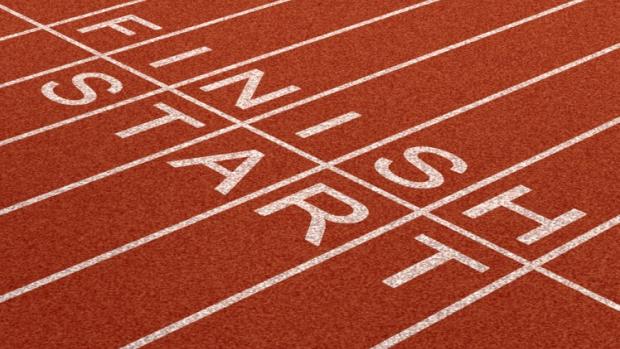
If you start correctly and finish correctly it is just not possible to go wrong in the middle.


After my Spinal Fusion surgery in 1996, I decided to try a new career path so I studied to be a Ceramic Artist, part of the three-year course was reading up on the history of Ceramics and Ceramic Artists from all around the globe.

It should be no surprise that the approach of many of the Japanese Potters was very closely connected to Zen Buddhism, it was impossible to read about a period or pottery area without deviating into Ikebana, Rock Gardens, the Tea Ceremony and even the Martial Arts.

Everything was interrelated, positions for fighting were used in flower arranging, advice for throwing clay was used in fighting.

One particular thing from pottery that has had a deep influence on my training and teaching of Kung Fu is that when making a vase or teacup only the footring and lip are of importance, and these must be correct and as near perfect as possible.

The IDEA is that when the footring and lip are perfect, nothing in between can be wrong.


When my students get to Chum Kiu this is when I introduce them to this thinking, start perfect, end perfect ignore the middle.

When I have a guest or casual students from other schools I notice that they tend to put most if not all of their attention on the movement in the middle, as a result, they struggle to perform or properly understand Chum Kiu.

So many students think that it is about the moving of the body that they ignore the simplicity of knowing what shape we are in now, and what shape we wish to be next.

If you start correctly and finish correctly it is just not possible to go wrong in the middle.

If the Footring and Lip are in the correct alignment and relationship to each other the pot pretty much shapes itself and does so perfectly. if they are out of synch the pot will throw itself from the wheel.

Our eyes may not see it but our senses feel that when the footring and lip are in harmony the pot breathes, it comes alive and we can feel its practicality.

When the foot ring and lip are out of synch the pot may well be very beautiful, but we see it in a sculptural way, solid but stationary and ever so slightly dead.

This is true of any movement set.

If we start correctly and finish correctly by default with no effort on our part the middle becomes perfect.

If the middle was not perfect we would struggle to finish at all let alone finish correctly.


STARTS AND FINISHES from WC INCa’s on Vimeo.


Bringing this into line with my posts on conditioning I would like to offer a quote from a book I am reading…

“Correct human movement is not open to debate. Technique is not some theoretical idea about the best way to move; it provides the means to fully express movement potential in the most stable positions possible’.

 “Becoming a Supple Leopard”.  Kelly Starrett.

We should work hard to keep this attitude, things either work because they are correct or they fail because they are not, the result is usually injury and not just failure to fire, this is not a critique of your Sifu or Lineage.


WORK ON YOUR WEAKNESS, PLAY TO YOUR STRENGTH.


WHAT KIND OF DAY IS IT FOR YOU?

FIST LOGIC

THE PARABLE OF THE BOMB.


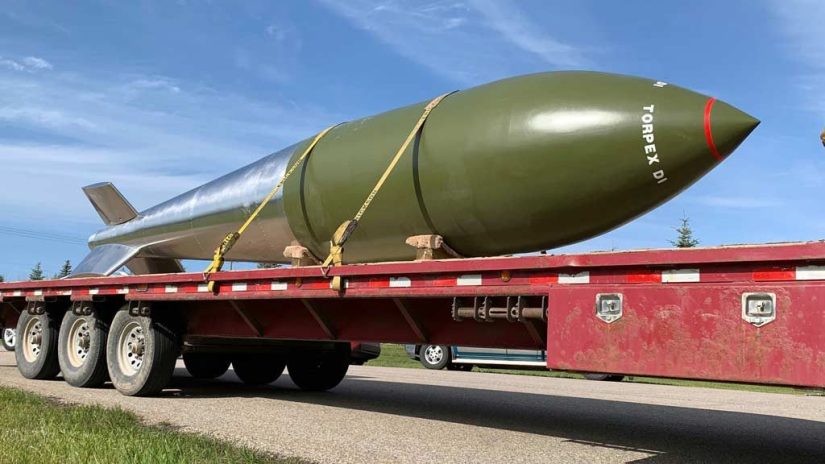
A very simple Bomb, a very powerful Bomb.


A while back I asked ‘what is the pointy end of your Wing Chun training’?

The pointy end referring to the aspect that delivers the pay off to all of the training that has been done, the why and the how made into one corporeal expression.

To show where I am coming from with this, to guide our thinking in the correct direction I have created an allegory or if you wish a parable.


There were two countries locked in a war that appeared to have no end, every move was countered every battle ultimately ground to a stalemate, no end was in sight.

It was decided to build a giant bomb and drop it on the enemy capital finishing the war at one stroke.

A Factory was built, the most modern Factory imagined, fully automated, carbon-neutral, the best and brightest scientist were assembled, cutting edge tech invented and the Bomb was created.

A very simple Bomb, a very powerful Bomb.

Even though there was no other factory anywhere in the world equal to this factory, it existed for one purpose and one purpose only.

To build the Bomb.

As the Factory was under construction a tunnel was dug from the Factory to the airfield, the tunnel was secret, safe and the track was a Magnetic Levitation system that could transport the Bomb safely with no chance of fire.

No tunnel of this kind existed anywhere else on the planet and the Mag-Lev system was the first of its kind, but this was unimportant, its only reason for existence was to transport the Bomb.

At the Airfield a new prototype Carbon Fibre Stealth Bomber awaited, it was completely undetectable to all known scanning technology, it was fully autonomous and capable of reaching speeds of Mach 8, there was no equal to this plane.

Without the Bomb, this plane would have never been built.

Looking backward at everyone that had been involved in the project, in all the support, all the innovation all the progress and sheer audacity it all came into being only for the Bomb.

Years later when the war was long over and the world was at peace people only spoke about the Bomb.


Aligning this with Wing Chun training what is our Bomb?

What is our Factory, our MagLev Train, our U.A.V. Bomber Drone?

Just for the sake of this conversation let us nominate the First Form to be the Factory, it could, of course, be anything or even a combination of things, a piece of the First Form, a slice of Chi Sau and a pinch of something else.

Is the way you do the First Form capable of creating your ‘Bomb”?

Delivering the Bomb to the airfield is pretty much what Chum Kiu is all about.

Dropping the Bomb could be the IDEAS formulated in Biu Gee.

In training, we can focus on the three different stages, build it, deliver it, drop it. This not only helps to understand transitioning but can lend an air of semi-reality to the movement.

The most important thing is to understand that even though we have a fantastic Factory, even though we have a cutting edge Maglev system, and even though our Drone is the most hi-tech and advanced when push comes to shove it is all and only about the Bomb.


Train up your weaknesses, work to your strengths.


WHAT KIND OF DAY IS IT FOR YOU?

Uncategorized

PRODUCT, NOT PROCESS.


Life does not resemble training, never did, never will,

I think that as a result of the focus on Forms, Kata, Drills, Chi Sau or whatever we call them, as Martial Artists we are guilty of overlooking the obvious, it is only the end result, the PRODUCT of all of our training that really matters.

You disagree, then imagine this, we find ourselves in a situation were violence is unavoidable, inevitable and we are given the following choice beforehand ……….

  1. To perform our chosen Martial Art flawlessly without error in accordance with everything  that the Martial Art stands for displayed and intact for all to see, but sadly get the living shit beaten out of us.
  2. To fight in a way that made us look like we had never undergone a days training in our life but finish victorious without a single scratch, bruise or blemish to our person with the opponent left as a crumpled mess in the dirt at our feet.

I know my choice.

If you chose “3” to fight perfectly and win you are living in dreamland, and I hope you know it.

People in the Martial Arts community that have never had fights, let alone lost one or two badly, develop distorted ideas based more on hope than genuine expectations.

They have no idea how foolish they sound to people that have experienced violence first hand when they go on, and on, and on, and on, and on about how Forms, Kata, whatever { insert favourite word here} are more important than Function.

Forms, Kata etc are important without and beyond any shadow of a doubt but how can any type of training be more important than the ability to win?

WHAT DOES IT TAKE TO WIN?

If we are in a sporting contest then skill is often the deciding factor, if it is a chaotic street encounter then the deciding factor is more often than not luck.

CAN WE TRAIN TO BE LUCKY?

There is a well know and often used maxim / quote that goes “The harder I train the luckier  I get” that somehow implies that training itself is enough, that does not sound quite right to me, however there is an earlier similar maxim that says  “The more you know, the more luck you will have” which to me speaks of experience and understanding over simply training.

I like maxims / quotes, they act on me as seeds of creative thought that allow me to look at the same thing in many different ways, getting this post back on track with Product over Process in respect of being in a violent situation two more maxims / quotes come to mind.

Maxim #1. “It is not the strongest or the most intelligent who will survive but those who can best manage change.” 

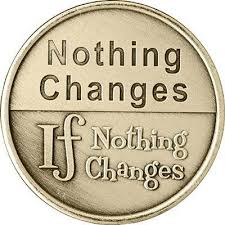
This Darwinian sounding quote begs the question “how does building the basis of our training around the uniformity of doing the same or similar Form or Kata day after day, week after week, year after year in any way prepare us for change or equip us with the tools for change”

The absolute opposite of change is uni-form-ity.

Maxim #2.  “The race is not always to the swift, nor the battle to the strong, but that’s the way to bet”. There is something about this maxim that just makes sense, skilled or not, lucky or not we need the physical wherewithal to both deliver and take a blow, being attacked is the impetus for all our training.

I have had the misfortune to lose a fight badly, in competition and in the wild.

It sucks.

And for a few days so did I because I could not chew.

I have hit men hard, real hard and watched them take the best I have and spit it back at me, like it or not this is what we train for, everyone gets a turn at losing.

It is how we come back from defeat that really makes us what we are.

Think on that and ask “will my Process in any way help me recover”?

“Will the trust in my Product survive for me to fight again”?

Life does not resemble training, never did, never will, sitting in the comfortable centre will not prepare us for when the going gets weird, but how do we prepare, is there even a way?

Training uniformly in the comfortable centre will not prepare us for what happens out at the edges, we must mix it up before we are pushed over that edge.

I cannot resist a last maxim – quote

The Edge… there is no honest way to explain it because the only people who really know where it is are the ones who have gone over.

Hunter S. Thompson

WHAT KIND OF DAY IS IT FOR YOU?

Uncategorized

BALANCE, STABILITY and COORDINATION.

Balance and Stability:

Keeping it simple Balance is maintaining equilibrium when motionless against nothing but the Force of Gravity.

Balance is motionless, if we are moving it is more accurate to talk about Stability.

Stability is maintaining or regaining Balance against outside forces, including forces created by ourselves, as in our own movement.

Balance is motionless and Stability is maintaining or regaining Balance, therefore Stability is about remaining or becoming still.

Some confusion arises because frequently Stability is referred to as either Static Balance or Dynamic Balance, especially if we include coordination, in this context :

Static Balance refers to the ability to maintain the body’s centre of mass within its base of support, as in standing still.

Dynamic Balance refers to the ability to move the centre of mass outside the body’s base of support, while maintaining postural control as in moving.

Balance and Coordination.

 Dynamic Balance is the ability to stay upright or maintain control of body movement, and Coordination is the ability to move two or more body parts under this control, smoothly and efficiently.

As always the best approach is to do your own research and form your own opinion.

Three important principals of Balance / Stability.

  1. A broader base of support {wider feet} increases stability.
  2. Keeping the line of gravity central inside the support base increases stability.
  3. A lower centre of gravity increases stability.

From a Wing Chun perspective, the lower stances / positions of the Chum Kiu and Baat Cham do are more Stable than the higher stance / position of the First Form {S.L.T}.

Getting back to the previous statement that “Balance is motionless and Stability is maintaining or regaining Balance”, it is more useful to think that Stability is about remaining or becoming still, we can see that the movements activated through the various Wing Chun Forms are not so much about moving to or from an opponent but rather moving from one position of equilibrium to another, moving to a new position of Stability, they are about stopping.

This is an important factor in power production and in keeping with the Conservation of Momentum Theory.

If we use the Chum Kiu Form as our testing ground the cycle of movements should go from being still {Static Balance} through the sequence or movement of choice, for instance the lateral shifting with Dai Sau and Bong sau {Dynamic Balance} culminating in stillness at the completion of the sequence or movement {back to Static Balance}.

The movement of the arms adds extra complexity to maintaining Balance by introducing new vectors but the main take away for the arms is in developing coordination of the upper and lower body, the action should fill the same time period, both stopping and starting,  as the movement of the legs and waist. 

If one moves they all move if one stops they all stop.

The Wing Chun Forms are subtle and use minimal movement deliberately, because of this it can be difficult to observe the movements in detail, it is often easier and more effective to have stand alone exercises to study this, once we are familiar with the connections between Balance, Stability, Coordination and Movement the understanding can be transposed onto the various Forms.

BALANCE / STABILITY OVERVIEW.

BALANCE

POSTURE.

CORE ACTIVATION.

Uncategorized

VIDEOS FOR EXPLORING CHUM KIU.

None of our forms can teach us anything except how to move in a particular pattern, all Forms are solo training, it is only once we get a partner to provide resistance or force that we can begin to explore how to use this pattern to reflect the Fist Logic that is Wing Chun.

Because none of our Forms can ever teach us anything practical they can never be seen as right or wrong.

Here are some IDEAS to begin your own exploration of Chum Kiu.

These Vid’s are quite old, the information is sound although the presentation leaves plenty to improve, I will update them in the not too distant future.

Using the Body to support the Arms.

An Intro to Pivoting.

More on Pivoting.

An Intro to Shifting.

More on Shifting.

Easy Partner Training.

Active Chum Kiu.

Uncategorized

THOUGHTS ON BIU GEE VIDEOS.

Biu Gee is by far the most complex of the first three Forms, the Jewel in the Crown, as these are stand alone videos from my old Blog there is some repetition of information.

Transitioning from Chum Kiu.

Meeting the Biu Gee

Biu Gee Rotation.

Overview of the Power Shift.

Overview of Power Production

Biu Gee Shoulders

Opening the Upper Torso.

Understanding our Biu Gee Shoulders.

Adding forces in Biu Gee.


Uncategorized

CHI SAU.

IT IS JUST A GAME OF HANDS.

ROLLING BRIDGES.

Chi Sau is Chum Kiu, we seek our partners bridge and then try to roll it away, the seeking of the bridge in Chi Sau is an “Internal aspect”, we seek to place our awareness in our partners bridge, we are not “Externally” pressing our partners bridge, we are not trying to find it.

Think about this for a moment.

If Chi Sau is to prepare us for combat, and if Wing Chun is a “Counter-attacking” martial art we have no need to try to find our opponents arm / strike because it is in the process of finding us, we just wait and meet it.

 It can be very difficult to maintain this Internal idea while playing Chi Sau, our Ego wants to get involved and tries to control or manipulate our opponent, we can even engage in a type of sparring through Chi Sau, which if you think about it, and you are honest, is a total contradiction of all Wing Chun theory.

What is the learning objective of Chi Sau?

If Chi Sau is Chum Kiu and Chum Kiu is how we address the moment of contact then Chi Sau is equally about how we address the moment of contact. 

In application we would be talking split seconds of active contact and not minutes of rolling.

Make contact – roll away, break contact – punch.

Wing Chun uses chain punching when attacking, or at least relentless striking, so we would make contact and break contact in the blink of an eye.

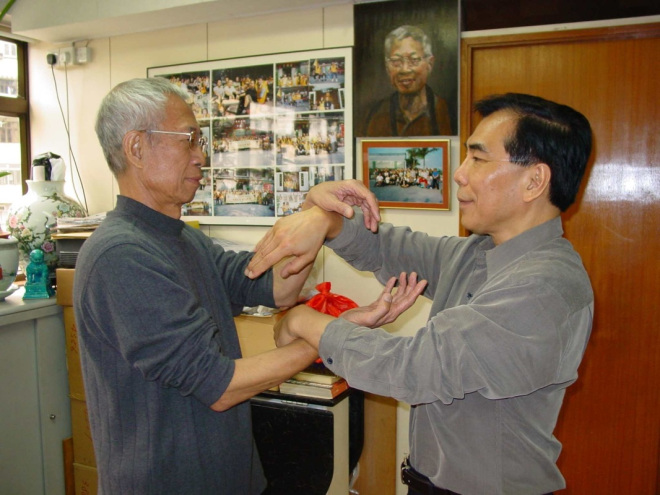
In training when practising basic Lok Sau, the rolling arms, only one person, partner “A” can be actively involved in a Wing Chun learning objective, the other partner “B” deliberately and purposefully suspends all Wing Chun theories and engages in pushing and applying direct force to “A’s” bridges. In this way “A” can work on how to maintain his shape, his “Body Being”, rolling away “B’s” force and taking the weight into his own body.

“B” is not trying to hit “A” just apply steady pressing {however it is beneficial if the shapes are like strikes}, in this way “A” can experiment using Chum Kiu pivoting and shifting under pressure, observing what happens when you pivot with a Chum Sau, shift sideways with a Tarn Sau or shift back with Jut Sau.

Without presence of mind, constant awareness of the objective, and good supervision this can degenerate rapidly into  Arm Wrestling.

Chi Sau is not concerned about moving our opponents arms, this happens as a by-product caused by our own movement, Chi Sau is about developing trust in the fact that we cannot be prevented from moving our own arms any time and anywhere we think fit irrespective of the amount of force presented to them.

This is how we gain confidence in our defensive structures and ideas, this is how we learn.

Another learning objective in Chi Sau is the development of sensitivity.

Sensitivity to what?

I have heard it said that we are gaining the sensitivity to feel what our opponent is intending to do so that we can pre-empt them, even if this was possible it would only be of use when playing Chi Sau when we are rolling for minutes, it would be redundant in the split second of make contact – roll away, break contact – punch which is the reality of what Wing Chun does in combat. 

I do wish to be sensitive to my partner, but only in so much that I can be aware of where his weight is coming from so that I can understand what shape I need to be for it to enter my frame and settle in my centre so that I can destroy his stability with my movement, once I have this knowledge tied down and stored away it will become the shape I choose to make contact, mostly I want to be sensitive to myself, to what is happening to my “Body Being” while engaged.

Information is drip fed to us through our Forms, jigsaw pieces dropping at different times for no real reason, my Sifu once told me “this is just where that particular piece of information is stored”, for instance there is an aspect of the Mok Jan Jong that is essential for Chi Sau if we wish to be able to transfer it into a fighting skill, and that is as soon as any resistance is placed on our arm we move away from it, we change our shape, change the relation ship, this is Chi Sau in application.  Make contact – roll away, break contact – punch.  It may be contained in the fourth Form but most of us are introduced to it when we start Dan Chi Sau as running palms.

Chi Sau allows us to see the full gamut of the Wing Chun defensive idea, we are learning how to defend ourselves equally on both sides of our body and from multiple directions.

Chi Sau rolling is a practice tool that has us deliberately defending with both arms at once, Wing Chun does not do this, in fact we advise against it, so it is not a suggestion for a plan of engagement, it is the exploration of ideas, and like so many of the things we do with both arms a way to maximise our training time.

As popular as it is Chi Sau sparring is a practice to be avoided, if you wish to have a go at each other get it on properly with a partner throwing genuine, random shots at you so that you can identify how everything we do is based in Chi Sau but not Chi Sau.

Chi Sau sparring is defending with two arms and then forcing a strike through your partners bridge, what part of “when the arms are FREE strike through” does this reflect?

WHAT KIND OF DAY IS IT FOR YOU?
Uncategorized

SIL LIM TAO


The First Form or part “A”.

If ever I use the terms Internal or External it is to delineate between the Imaginary {Mental} aspects and the Real {Physical} aspects.

I am not going to go into how to physically do the S.L.T.   If you are in training you have already been shown one way and as the movements and the shape are relatively unimportant it is best keep to what you know.

What I want to speak of is how to connect with it.

To the best of my knowledge Sil Lim Tao translates to “the Way of the Little Idea”, this is important, it is not the Little Idea itself, only a way to approach or discover it.

It is not the shape, it is not the movement, it is the reason behind the shapes and movement. 

The most important learning objective in the Form, in fact the only learning objective of any real value in the Form is about understanding what it means to be a body.

Not just anybody.

Our own body.

 Understanding the relationship of  each part of the body to every other part of the body, and then to begin to understand how to move while maintaining the awareness of these relationships, and ultimately to do it all from the perspective of performing Wing Chun, which if you are a person that thinks there are six forms in Wing Chun instead of just one, moving from the perspective of performing Wing Chun is a culmination of all six Forms. 

Over all there is very little movement in the First Form, only the arms move, everything else is still, deliberately still, deliberately neutral.

Everything except the arms is disconnected so that later we can re-connect them correctly.

To think at this time that  the arms are in any way connected to this still, neutral body is moving in the wrong direction.

There are really only two things to understand here, what needs to be done to keep the body still, and what needs to be done to move the arms without disturbing that stillness.

Keeping the body still is not as some people think, it is not achieved by simply turning movement off any more than moving is commenced by turning stillness off, it is active, it is deliberate it is focused and it is only achieved when the whole body works together.

Stillness is active, we cannot achieve it by just turning things off.

For my shoulder, my hip, my elbow, my knee, my hand or my foot to be still I must be aware of their position not only in the world around them but also in the spatial relationship between them.

Only when everything is in the right place at the right time can there be stillness, this is the beginning of the manifestation of “Body Being”.

As you stand, quite still, become aware of the two different ways of perceiving our condition, the “Head” rising up and the “Body” sinking down, and balance them so that neither is overpowering the other, this constant antagonistic movement brings about a powerful type of balance and equilibrium, an active almost energetic neutrality with unlimited potential, there is nothing physical being done here yet, this is just the thinking.

Many Chinese Kung Fu’s call this the tension between Heaven and Earth.  The feeling of “Head Up, Body Down”.

From the perspective of “Body Being” all of the arm movements in the Form are about not disturbing the tension free stillness, maintaining the energetic neutrality of the body, this is a difficult IDEA to put into writing it really needs to be experienced first hand, it is a condition similar to a sprinter n the blocks waiting for the starting gun.

 As we progress through the pattern of moves that make up the S.L.T. each section brings in a different type of movement, each section increases the complexity of the move creating greater challenges to maintaining the tension free stillness of our body, making it more difficult to keep our “Body Being” active.

This is the sole function of the Internal / Mental aspect of the Sil Lim Tao Form, energetic neutrality. 

Some of the most important things to identify and understand within the first Form exist before the arms make their opening move.

Only from true stillness can true movement arise.

MOVING THE ARMS.

Here again I am not going to try to tell anyone how to move their arms, keep to what you know, what you are comfortable with, after all Wing Chun uses normal human body movement, every move should be just as we would pick our keys up from the table.

There are only two things we can do with an arm, open it or close it, even if it is rotating it is still opening or closing, keeping it still is not doing anything at all with our arm.

All of the arm movements in the first Form are variations of the same opening or closing movement, or more accurately different physical manifestations of the same thought that opens and closes an arm, the variations are natural deviations caused by how the arm sits in the shoulder joint at different positions through a rotation, and sometimes because of the effect gravity has on a moving arm.

This is why the actual shape of the moves is unimportant, if your intention is always the same your body will try its best to always do the same thing, the shape may change but the thinking remains, Bong Sau is the shape the arm assumes as it tries to perform Tarn Sau while it is rotating. 

Until we reach a point where we have personal awareness of our “Body Being” we need a mechanism to guide the training.

The first step is to be able to feel our Arms in a completely tangible and  tactile manner, zero imagination, 100% feeling, feel where they are in space, feel how they fit in our body, feel how they move, feel the weight of them, take into account the joints and the hierarchy of their movements.

What happens when our Arm extends? What moves first? What moves second? What creates tension? What releases tension? This is what we are looking for, an understanding of how our Arm works.  This is the little IDEA.

The pattern of the Form is not as important as we might wish to think, it is just an aid to memory, what is important is that we are accurate, deliberate and consistent. By accurate I mean that we need to be spot on, deliberate means thinking of nothing but that move , where we are placing it, after all different moves do go to different places and how it is unfolding, and by consistent I mean hitting the Bullseye every time, thinking the same thought.

Be totally involved in the physicality of what you are doing, no zoning out in dreams of ascending power, if you are thinking of circulating energy you are no longer paying attention to the movement and how it feels, to a very large extent you are no longer doing the Form at all.

PERFORMING / PLAYING THE FORM.

Each move in the Sil Lim Tao is a stand alone experiment in movement and self control, as such there is no particular benefit in performing / playing the whole Form in one go as each move is the same move, unless you are a one in a billion type of person you will not be able to remain fully aware of all the complex actions throughout the whole Form, and any part of the Form done without awareness and attention is done incorrectly so why waste your time?

All of our arm movements are produced from the same blueprint, all of the moves are to a very large extent the same move, the description of the Tarn Sau movement could just as well be Bong Sau or Garn Sau, instead of spending 10 minutes in random arm waving spend that time in total immersion of just one move, choose a different move everyday, it will repay you a thousand fold.

Consistency is paramount, what we are trying to learn is how to place our wrist accurately and deliberately on a point of our choosing, how to achieve total control over our limbs.

Do not invest the first Form with non existent qualities, it touches nothing and it does nothing, it is just ourselves learning how to drive this vehicle we call Body.

PARTNER TRAINING.

Once the pattern has been memorised and can be performed easily it is time to work on the condition of the arm, a partner will hold the wrist while a move, any of the moves, is performed. The aim here is not to try to affect the partner but to set up a feedback loop to observe how the arm operates against resistance, the thought should be of pushing ourselves away from the partner and not the partner away from us.

Because of the resistance we should be able to identify if we are creating the movement by primarily using our joints or our arm muscles. While in a position of static resistance practice isolating the elbow joint and moving it independently, then practice isolating the shoulder joint and moving that independently and finally combining the use of both of the joints simultaneously.

The awareness should be on the return force created by the resistance to the movement, once this is identified it can be used to check the alignment of the whole body by tracking its passage through the arm into the body and down to the floor.

At first this practice is done with selected, single positions against static resistance, later on the arms move from one position to another for instance Tarn Sau to Chit Sau, the same idea of pushing ourselves and not our partner and allowing the return force to enter into us and pass through us is in play through out the exercise.

It should be easy to see how this progresses into an exercise where both parties can be active, this of course is Chi Sau.

For people that think of Chum Kiu as being a seperate Form any exercises that need a partner should be considered as a Chum Kiu exercise, Chi Sau is a Chum Kiu exercise.