If this is the case, which it could be, I would recommend immediately activating the “Nike Defence”, you know, run like hell.
Hi Guys,
You may wonder about the title of this piece and its relevance to self-defence, and believe me, it is relevant.
It stems from a conversation I held with our senior students Sam and Costas about the desire to develop more power, or simply put, ‘hitting harder’.
We have all noticed that lately there is a preponderance of videos on YouTube to this end, “How to hit harder”.
My position on this is that for Wing Chun students this type of video is not only of no value but holds the potential to undo all of our good work, let me try to explain.
The essence of Wing Chun, and many other “Soft Style” Martial Arts, is that we develop hitting power by naturally transferring “Body Mass” into a single point of our body and then onto a single point of a chosen target, not by physically trying to impart force by making a “Big Hit”.
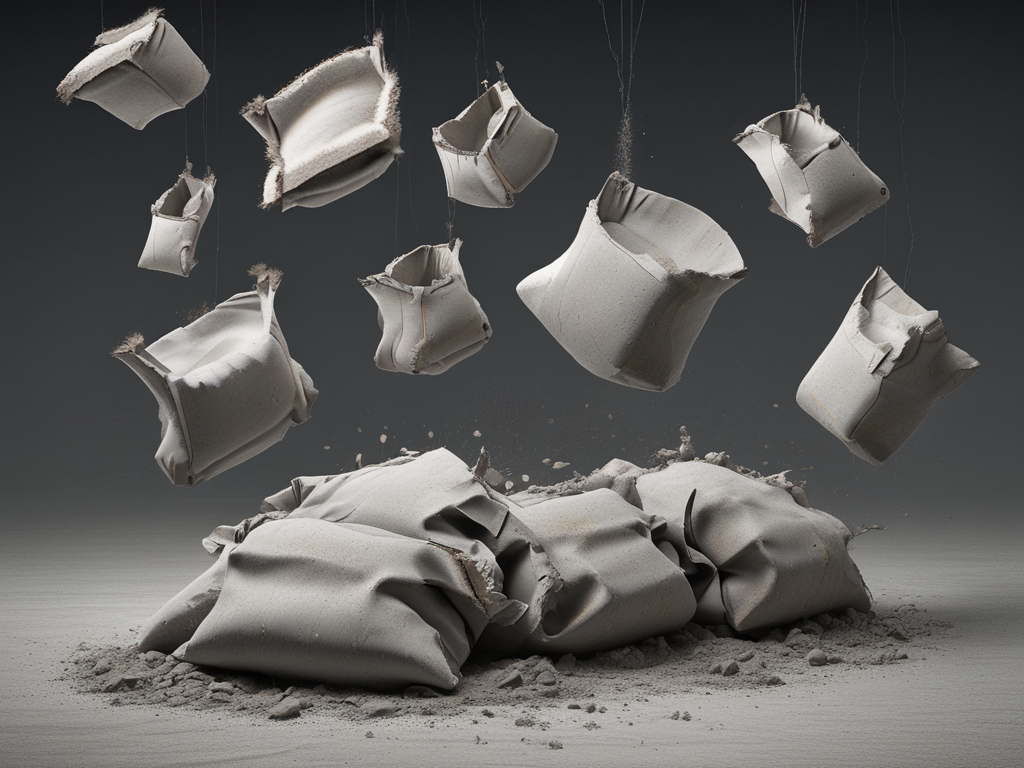
No one in my Martial Arts community is lighter than 60kg, as you all know I have always only taught adults. Here in Australia, a bag of pre-mixed concrete is 20 kg, so anyone that weighs 60 kg has the equivalent “Body Mass” of 3 bags of Concrete.
If we think that a 60kg guy cannot naturally hit hard enough, we are saying that dropping 3 bags of concrete onto an opponent will not get the job done?
If this is the case, which it could be, I would recommend immediately activating the “Nike Defence”, you know, run like hell.
Hitting someone shares the same science as any collision, and as such the force created is the sum of both forces involved, so if we are 60kg and the Bad Guy is 80kg {Bullies tend to be bigger than their chosen target}, the impact created will be the summation of both forces and closer to 140kg.
Which is of course 7 bags of concrete.
How is that not enough?
And again if that is the case, and it could be, here for sure, we use the Nike Defence.
To fully cover this topic we need to bring in some different concepts, which can end up in a bloated and somewhat confusing video, so I will break it down into smaller, bite-sized chunks.
This video is essentially just an intro.
Despite this there is a way for a 60kg person to drop 120kg onto an opponent without any extra training, yes you get it, hit them twice.
Which to me sounds a lot like what we train to do.
The late great Hélio Gracie one quipped, “Learn to fight like an Old Man, because one day you will be”.
What does it mean to ‘Fight like an Old Man’?
Perhaps we should ask one.
As hard as it is for me to get my head around it, I am a 70 year OLD MAN.
Fighting like an OLD MAN boils down to not relying on all of the stuff that young men rely on.
Things like fitness, speed of motion, and strength, in short, brute force and effort.
Which is just as well for I am no longer fit, fast, or strong.
But despite this, in a ‘self-defence situation’ I would still back myself against anybody, be they 30, 40, or even 50 years younger than me.
However, in a Mano-a-Mano stand-up fight against someone 30, 40, or 50 years younger, even I would put my money on the other guy.
But self-defence is a different beast altogether, the opening minute is always up for grabs, first in best served.
I do not B.S. myself, even if it is a self-defence situation, every second after that opening minute my chances of success would sink dramatically.
An OLD MAN must rely on skill, luck, and old-fashioned Bastardry.
Old-fashioned Bastardry is the second aspect of “Fighting like an OLD MAN”.
The first aspect is using skill as opposed to effort, and of having enough trust in oneself and one’s skill set to stick to using skill and correct application even when things go south.
Trusting a skill set is a highly degradable commodity, if we do not keep up the training, and keep close company with the skill set, this trust vanishes as quick as V.B. turns to piss.
It goes without saying that an important component of fighting like an OLD MAN is to still be training when you are an OLD MAN.
The second aspect is to get the job done and dusted in under a minute.
To achieve this we need an element of deliberate brutality, or as I prefer to call it, ‘Old fashioned Bastardry’.
Whenever we make contact with an attacker, especially in defence, we must always hurt them, so the question becomes “How do we hurt people while we are trying to stop them from hurting us”?
We do it by developing a frame that hurts people who make contact with it, even when we are a little bit lost and do not exactly know what is going on.
An unbreakable exoskeleton that is appears hard, yet flexible, as if made of solid rubber.
The best place to start, the spot where the “rubber” meets the road so to speak…
… is Lan Sau.
Like so much if not all of Wing Chun, Lan Sau is presented as a single shape, or movement, but it is, in reality, the final rung of a long ladder.
The cosmologist Carl Sagan had an Apple Pie recipe that went like this…
…step 1. Create the Universe.
As humorous as this is without the Universe there will be no planets, no environments, no trees, no fruit and so on.
So when I talk of Lan Sau it is in the mode of Carl Sagan’s apple pie recipe.
For Lan Sau to even exist there is a chain of supporting structures that must be developed first.
For starters, we must engage Crazy Horse, which in itself is a grouping of concepts such as Head-up – Body down, Shaolin Archer, and the totality of Y.G.K.Y.M.
The shape or posture that we train as Lan Sau is elementary stuff, as useful and effective as can be in a violent situation, in training it is just an exercise for us to isolate the concept so that we can explore it.
Lan Sau translates to the Bar Arm, or sometimes Obstructing Arm, and in its first showing it helps maintain or regain our distance from an attack, and if this is all you learn it will serve you well, but there is more, much more.
If we choose to retranslate Lan Sau into ‘the Unbending Arm’ and think of all the ways that having an arm that does not bend under force is useful, we can begin to see that unlocking this concept for use everywhere is an absolute game changer.
In an earlier video I referred to moving as if we had a prosthetic arm to clear the way, this is how I see Lan Sau, as an unbending, somewhat neutral, but extremely sturdy, prosthetic arm.
As you all know, I do not think that striking ability is any kind of magic sauce, even without training we all know how to hit someone, and if we cannot hit very hard we will just hit multiple times.
But the potential to not be hit, surely that IS some kind of magic, developing an unbending arm gives us a major advantage in any violent situation.
Lan Sau may not be a ‘Magic Bullet’, but it is not far off.
It is worth noting that Lan Sau does not get introduced until Chum Kiu, certain fundamental IDEAS/Concepts such as ‘Do not fight force’ or “Do not cary your opponents weight’ need to be understood before working on Lan Sau, plus there exists some subtle differences between ‘Accepting Force and Issuing Force’ that we need to align with.
The following video is some footage from a one-on-one session I had with Sam, as always it was unplanned and as such it may jump around or be hard to follow, if this happens just observe how little either of us is disturbed as we experiment with Lan Sau against deliberate force.
You all know that while I never make it extremely difficult to achieve the training objective, you also know that I never make it easy, when Sam physically moves me, even when it appears that he is doing very little, he is really moving me and as such would move anyone.
There is one spot in the video where Sam gets it spot on and shunts me away with almost zero force, the look on his face was priceless.
It is highly unlikely that the Bad Guy has a plan, so any plan we have is a step up from them.
The video footage with this post is of the senior guys working on developing an understanding of the ‘Concept’ of Simultaneous Attack and Defence.
Apart from ‘Simplicity’, it is this concept that is paramount to functionality.
The body text of this post is another way of ‘EXPLORING’ the ‘BIG PICTURE”.
Wing Chun, in its purest representation, has no techniques, no patterns, and no set strategies, to non Wing Chun people this is its biggest weakness, but to those of us that understand…
… it is its greatest strength.
But like so much of Wing Chun’s Fist Logic, this is so counter intuitive that very few students give it enough time to sink in.
The above statement does not mean that we go in eyes closed and Brain on pause, it is more that we care little about what the Bad Guy wants to do, and focus mainly on what we want to do.
To start this thought experiment let’s open with two questions.
Q. 1. Why is it that highly skilled, highly trained martial artists with many years of experience get their asses handed to them by “Punks in Pubs”?
Q. 2. Why is it that completely untrained people can be so effective when it comes to fighting?
The majority of non-competetive martial artists tend to overthink the situation, underestimate their own ability, and go way to soft with their opening , while untrained people just do not know enough to be worried and so go in full bore without fear of reply.
The default position for Wing Chun is that we are being attacked, as a result we are always starting in second place, so we cannot afford to hesitate when it comes to ‘Go Time’, we need clear plan, and we need to implement it with extreme prejudice.
Now you may ask “How can we have a clear plan if we do not know what is happening”?
And that would appear to be a fair question, except we do know what is happening, we are being fronted by someone that wishes to hurt us, and we also have a plan, counter-attacking using simultaneous attack and defence.
This may sound like a vague even half baked plan, but it is enough.
Something many people struggle to understand is that no plan ever works, whatever we plan to do will need to be changed, on the fly, so we can go in with anything, and the simpler that anything is the better.
It is highly unlikely that the Bad Guy has a plan, so any plan we have is a step up from them.
If we have set ourselves up correctly, physically, mentally, and emotionally, our attackers options are far fewer than they think, and even though we may think we are starting in second place, if we have a correct Wing Chun set up, such as CRAZY HORSE, we are pretty much in pole position.
I cannot express strongly enough how important our state of mind is when we are navigating a violent situation.
Something to be wary of is if we loose our ability to think on our feet we will rapidly become overwhelmed.
If we become overwhelmed we will at the very least hesitate, quite possibly just shut down, no more movement, then it is curtains.
If being overwhelmed prevents us from moving, then the reverse should also be true, that moving will prevent being overwhelmed.
A positive state of mind and a clear plan of action, and free and easay movement is all that is required to prevent ourselves being overwhelmed.
This is what our training should be focused on and what we want it to provide.
OVERTHINKING: THE ART OF CREATING PROBLEMS OUT OF SOMETHING THAT WAS NEVER THERE.
I ask myself, does my IDEA that Wing Chun has only ‘one move’ transfer to the blades?
I finished my training this morning {Monday 23 / 08}, outside in that glorious sunshine, and I decided to do a little cleaning/maintenance of my sword collection, of course, once you take a sword from its scabbard, ‘Mars, the God of War’ decrees, it must be swung.
Like it or not, every Martial Artist is a Priest of Mars.
2 European ‘Hand and a Half’ swords, a Japanese Samurai Katana, a Pearl River Pirate Wakizashi, a Chinese Jian, an Indonesian Kris, and also, even though it is technically a Dagger, a Tanto.
I am always amazed, even though I should not be, how each sword feels so different.
As a Chef of 50 years, I am well aware and comfortable in the knowledge {the IDEA} that every blade has a different purpose, and that if you treat them poorly, or use them for a lesser purpose… they will bite you.
I have the scars to prove this.
The length, the weight, and the balance of each weapon lend themselves to very different visualisations.
The European Swords ask us to pierce aggressively, to smash and wield almost as a hammer.
The Katana is ‘so’ obviously built for cutting, slashing, slicing and dicing. Quick, lethal.
The Wakizashi conjurs up images of leaping from ships hacking anyone that stands in the way. A tool for strong men.
The Jian and the Kris both talk of mobility and elegance, of footwork and quick thinking. Of noble men and tribal princes.
Finally, the Tanto, close-quartered and possibly sneaky, to the point, if you will excuse the pun. An assassins choice.
I did not use any recognised FORM for my play, I let the blade decide what to do, and they all chose something different yet apt for my imagining.
Was it really the swords making these choices or were my actions the result of the movie I was playing in my head?
I ask myself, does my IDEA that Wing Chun has only ‘one move’ transfer to the blades?
Why not?
One thing I do know is that every time you play with a bladed weapon, be it a sword, a dagger, or a war axe, there is always a real purpose in that play.
A purpose that does not end well.
Later on, sitting quietly, absorbing, internalising what I had acted, how I had moved, and what was my intention, I could see the IDEA, the Sil Lim Tao, in my actions.
But is it really there, or am I trying to force a square peg into a round hole?
If it is there, as I believe it is, how do we manifest it into our everyday work?
There are only two forces in the world, the sword, and the spirit. In the long run, the sword will always be conquered by the spirit.
All Martial Art styles come about to answer a specific yet local problem.
Chi Sau is both an exceptional learning drill and a uniquely social ‘training hall’ game.
From a practical perspective, if we find ourselves in a violent situation while also being in the position or shape that we play Chi Sau we are in the wrong place at the wrong time.
We have well and truly stepped in ‘IT’.
If we are in ‘IT’ our priority must be to get out of ‘IT’, and not to start rolling with our attacker.
This is a no-brainer, so what does it say about Chi Sau Trapping?
It is all so “stand and deliver”.
Does it have a practical application or is it just a way to enhance the GAME aspect of Chi Sau?
Is it something that was once useful but is now surplus to requirements?
All Martial Art styles come about to answer a specific yet local problem.
If the local problem is that attackers rush in hey diddle-diddle and attack the centre, then that’s what the style seeks to deal with.
If the local problem changes or another problem comes to the fore, the Martial Art styles evolve to keep pace.
Untrained people very rarely attack head-on, attacking straight down the centre is an indication of training.
In Wing Chun, we talk about our shape and set-up as superior to the basic side-on stance of other Kung Fu styles as it gives us better access to our defences and attacks.
It would appear from this that the local problem Wing Chun was facing was other Kung Fu styles that used a side-on stance and attacked down the middle.
This is exactly what Dr Leung Jan would have faced when he formulated Wing Chun back in the 1860s during the unrest caused by the Taiping Rebellion.
But I digress, this is about Chi Sau trapping.
We stand face to face in the same position as our partner.
The local problem now is a mirror image of ourselves and not a side-on stance Kung Fu opponent.
This can lead us into thinking that Chi Sau trapping only works when playing the game of Chi Sau.
To a certain extent, this is true, how we do what we do in Chi Sau, only works in the default Chi Sau position.
A positions which, as I have said, we should immediately change if we do find ourselves in.
There is no doubt that ‘Trapping’ is more than useful when playing Chi Sau, but does it teach us anything that can transpose to a violent confrontation?
The short answer is ‘yes’, but do we know what to look for?
In some ways, the ‘Game’ of Chi Sau is not correct or proper Wing Chun, even though it is a central aspect of our training.
We defend with both arms, a Wing Chun no-no.
We strike while our arms are in contact, ignoring Lut Sau Jik Chung when the hands are FREE strike through.
We voluntarily give away the superior position afforded by our set-up, giving our partner access to all of their defences and attacks and as a result, putting ourselves in a compromised position.
It is all so wrong.
How can this be, is this meant to happen?
As I often say, the real work is to recognise moveable, transposable patterns.
We must also recognise that some things and shapes are just a framework to allow the drill to revolve and repeat.
We must learn how to separate the WHEAT from the CHAFF.
Chi Sau is not, as is easy to forget, double-arm rolling it is simultaneous single-arm rolling.
Traps and locks where we pin our partner to our arm are a convenience of the game, in practical usage, we would be pinning the opponent’s arm to themselves as we applied our body weight with the deliberate aim of compromising their balance, {and of course, hit them with our FREE hand}.
It is this aspect of Chi Sau trapping that is the WHEAT.
This is the IDEA to take away from the play.
The breaking of the opponents defencive structure, and the introduction of instability.
The Wing Chun trained person always aims to be in the ‘position of dominance’.
A position where we have better access to our defences and attacks than our opponent.
There can be only one reason a Wing Chun trained person would be in violent contact with another person, and that is we are under attack and in real danger of physical harm.
In this case, every contact that we initiate needs to do one of two things.
Cause severe pain or if possible injury.
Takeaway the attacker’s balance, no balance = no power.
Luckily simultaneous attack and defence allow us to do both.
The pins and latches that make the game of Chi Sau so much fun transpose effortlessly into a method for keeping our attacker continuously out of balance.
A never-ending rotation of pin/hit, latch/hit, press/hit, pull/hit.
Rinse and repeat.
Man overboard!
Lost at sea.
It is only politeness and respect for our training partner that prevents us from clearly seeing that this is the real power of Chi Sau trapping as we hurl them around the training space.
Once we change Wing Chun it is no longer Wing Chun.
At the heart of my own training is the practice of ‘Deconstruct – Reconstruct’.
During ‘Lockdown’ this has been elevated to a much higher level.
Instead of being a weekly practice, it is now more often daily.
Whenever I deconstruct what I know and then reconstruct the components there are always a few bits that I realise are not needed, so they get discarded, and my training becomes streamlined, more compact, more concise.
Occam’s Razor.
I am at a very different place than where I was before COVID 19.
Something that I have always known is that training is training and nothing more.
Nothing we do in training will be usable in an environment that is different than the one we train in.
A violent encounter is a ‘VERY’ different environment than our training environment.
The usual response to this statement by most people is that when needed we will just adapt our training to the new environment.
Really?
Are we to become some kind of Kung Fu Flying Fish.
To adapt means to change from one state of being to another.
Once we change Wing Chun it is no longer Wing Chun.
If what we depend on to get us out of a dangerous situation is not Wing Chun why are we training Wing Chun?
The most obvious example of this is Chi Sau.
Chi Sau has no connection to reality, in fact, Chi Sau only works when playing Chi Sau.
These geometric concepts of Wing Chun are presented in relatively fixed positions and shapes congruent with their respective Forms but they need to translate to all Forms
We had a great nights training on Monday, it was very theory-heavy but all the guys were up for it so it was a real eye-opener and very enjoyable as the teacher.
This post is, on the whole, a memory aid for my guys to go back and refresh their thinking because there was way too much information to take in in one evening.
Theory can be dry, and it is always tricky because only people with genuine fighting experience understand that theory and reality are in no way related, so we mixed it up with a lot of live contacts to feel the IDEA.
Of equal importance, we worked hard on creating a language to describe the work that we could all understand.
One of if not the first theory we encounter is “Centreline Theory”.
What is a centreline?
The definition of a Centreline is a line that bisects a plane.
The Wing Chun Centreline bisects the Coronal or Frontal plane of our body dividing us into left and right sides.
An imaginary line connecting ourselves to an opponent is not a centre-line, this is a common misunderstanding that leads people down the wrong path, in theory, our Centreline acts like a plane {Sagitalplane} extending forwards so it is easy to see how this confusion arises.
The use of the term Centre-line for a line from person to person is a misnomer it would be easier to grasp if we called it centre plane.
If this is confusing ask yourself “If a line from myself to my opponent is a centreline, what plane is it the centre of? What and where are the two halves”?
This may seem like a triviality but if we do not understand what a Centreline is how can we understand Centreline Theory?
This line that our perception creates that we think links us to an opponent can be anything we want it to be because it does not exist, I like to think of it as the line of mass, this IDEA can tie into other aspects of our strategy and theory.
Line of Mass is just a name we came up with on the night, if it does not work for you pick a different name, just not Centreline.
The reason I chose Line of mass is that irrespective of what type of movement is being used the opponent’s body mass follows this line, and as for ourselves, this is how we promote our body mass toward an attacker even as we appear to be avoiding an attack or moving away.
Then there is the attack- line, this is a line that runs fro the shoulder or the hip of an attacker in toward us.
An opponents attack aways finishes at a point on this line, even from a wildly swinging punch or kick, redirecting this line, and not the arm/fist/weapon using this line is the purpose of our defensive manoeuvres.
Intercepting the attack line and not the arm/leg is the most effective way to defend.
Chi Sau helps us identify and understand this and it also shows us how to create diagonal movement by the use of circular arm motion and curved arm paths.
The proximal to distal {in to out} direction of our action is always in a straight line even from a curved movement, i.e. Bong Sau travels in a straight line.
Try to not confuse straight with being parallel or perpendicular to an external reference point.
Single Arm Chi Sau essentially moves or redirects an intercepted attack-line up and down on our centre-line.
Double Arm Chi Sau moves or redirects an attack-line from the “inside gate” out to the periphery of our structure or from the outside of our structure into our centre effectively breaking both the attack-line and the line of mass of our attacker.
In a real-world application, we would combine a little of both IDEAs, for example in toward the CL and down or out away from the CL and up.
In a poorly trained person, the attack-line is rarely separated from the line of mass.
As a Wing Chun fighter on the attack, we cannot maximise our output if we do not understand the geometry and how to combine the line of mass with the attack-line while at the same time creating torque through “muscular” rotation.
These geometric concepts of Wing Chun are presented in relatively fixed positions and shapes congruent with their respective Forms but they need to translate to all Forms, all planes and directions of action, this is the heart of the work.
This is one of the principal learning objectives of Chum Ku, understanding how to support the actions {arm shapes} with our body mass as we make contact with an opponent.
Anything that makes contact with an opponent in any way, either defending or attacking creates a bridge and as such is Chum Kiu.
The following video is not the best I have ever done if you are a visitor I apologise, for us INCas it is a fairly accurate representation of what we worked on all week, I will repost it to the BODYWORK page so you can revisit easily.
If you start correctly and finish correctly it is just not possible to go wrong in the middle.
After my Spinal Fusion surgery in 1996, I decided to try a new career path so I studied to be a Ceramic Artist, part of the three-year course was reading up on the history of Ceramics and Ceramic Artists from all around the globe.
It should be no surprise that the approach of many of the Japanese Potters was very closely connected to Zen Buddhism, it was impossible to read about a period or pottery area without deviating into Ikebana, Rock Gardens, the Tea Ceremony and even the Martial Arts.
Everything was interrelated, positions for fighting were used in flower arranging, advice for throwing clay was used in fighting.
One particular thing from pottery that has had a deep influence on my training and teaching of Kung Fu is that when making a vase or teacup only the footring and lip are of importance, and these must be correct and as near perfect as possible.
The IDEA is that when the footring and lip are perfect, nothing in between can be wrong.
When my students get to Chum Kiu this is when I introduce them to this thinking, start perfect, end perfect ignore the middle.
When I have a guest or casual students from other schools I notice that they tend to put most if not all of their attention on the movement in the middle, as a result, they struggle to perform or properly understand Chum Kiu.
So many students think that it is about the moving of the body that they ignore the simplicity of knowing what shape we are in now, and what shape we wish to be next.
If you start correctly and finish correctly it is just not possible to go wrong in the middle.
If the Footring and Lip are in the correct alignment and relationship to each other the pot pretty much shapes itself and does so perfectly. if they are out of synch the pot will throw itself from the wheel.
Our eyes may not see it but our senses feel that when the footring and lip are in harmony the pot breathes, it comes alive and we can feel its practicality.
When the foot ring and lip are out of synch the pot may well be very beautiful, but we see it in a sculptural way, solid but stationary and ever so slightly dead.
This is true of any movement set.
If we start correctly and finish correctly by default with no effort on our part the middle becomes perfect.
If the middle was not perfect we would struggle to finish at all let alone finish correctly.
Bringing this into line with my posts on conditioning I would like to offer a quote from a book I am reading…
“Correct human movement is not open to debate. Technique is not some theoretical idea about the best way to move; it provides the means to fully express movement potential in the most stable positions possible’.
“Becoming a Supple Leopard”. Kelly Starrett.
We should work hard to keep this attitude, things either work because they are correct or they fail because they are not, the result is usually injury and not just failure to fire, this is not a critique of your Sifu or Lineage.
Yet another Kung Fu Master has been humbled by an M.M.A. Fighter in China, here is a LINK to a video commentary on the event by the China-based professional fighter and trainer Ramsey Dewey, it is well worth watching, Ramsey never just puts people down, he is polite, knowledgable and impartial.
One thing that always sticks out like Doggy Meat Bags to me is the almost complete absence of anything like dynamic or just plain old strategic movement by these Masters, this one just stood still while the M.M.A. Guy picked his spot, stepped in and turned his lights out.
Over the years I have had many conversations with Martial Artists who believe Wing Chun has no footwork, I would play with them and at least hold my own only for them to claim that I was using my old Boxing training and not Wing Chun.
Haters are going to hate no matter what we show them, but then during training at my Sifu’s school training partners would make the same accusations, I.M.O. this was just them trying to find excuses for not moving.
Wing Chun is loved by lazy students if we are honest.
Wing Chun is Boxing, that is what Kuen means.
Surely in the light of so many Kung Fu / Wing Chun hopefuls falling in a great big pile of doo-doo, we would do well to explore the similarities of what we do and what other styles or sports do?
Something we should all realise is that no part-time Martial Artist, living or dead, would last long against a full-time professional Combat Athlete and we do ourselves and our style a disservice when we pretend that they would.
The following 2 videos are part of what I teach my students, some if not most of the information you may recognise if you watched my posts on throwing the discus and Wing Chun.
I advise all of my guys to get on Youtube and watch some Olympic Level fencing, Ice hockey, Speed skating, even a few episodes of ‘Come Dancing’, pretty much anything lively and to try to recognise movements that they use that could easily be from one of our Forms.
Movement is just movement, if you are in trouble the only wrong move is to not move.
I am a firm believer that we cannot train for violence we can only train to control our own movement and our own decisions
To be expected I have a number of friends that are involved in the Martial Arts, a surprising number of them in Traditional Chinese Styles with traditional approaches, they often quiz me on why I put more stock in sports instruction than even the instruction from the very top teachersof my own lineage, especially now that I am at Master level and have my own school and students.
The first thing I ask them to consider is the position that modern sports are a ritualistic replacement for combat, people engage each other with a vigour as intense and desperate as any violent encounter, at elite level even non contact sports tend towards what is essentially full contact and can readily slip into actual physical violence.
Whilewe as Traditional Martial Artists on the other hand are involved in training that never engages an opponent in anger with a real outcome to prosecute and secure, much if not all of our training is a lot closer to imagination than reality so can we honestly say that there is any practical difference between the moves used in Ritualistic Combat vs the moves from Traditional Martial Arts Sources?
Once we begin to ask honest questions we eventually come head first into the ugly question that asks “if we never use our training in anger how do we know it will work in anger”?
We don’t, none of us do including myself, I am not trying to set myself above anyone here, it has been approaching 10 years since I used my skill set to its obvious conclusion.
Relating back to sports I am not sure I would put my money on a player that has been out of the game for 10 years no matter how hard he trained, or who he trained with.
From a personal perspective I have been in enough violent encounters to know that each encounter was different from all the previous encounters, over the yearsI have used numerous styles so the common denominator was not what I did, I did what I did in spite of my training not because of it, the only real common denominator was me as a person.
How I moved, how I reacted to stimulus how, how I read the play as the encounter unfolded.
I am a firm believer that we cannot train for violence we can only train to control our own movement and our own decisions, in the sports environment this could be advantageous positioning and intelligent shot selection, in a violent encounter it could be to get out of the Bad Guy’s way and hit him while he is not looking.
Some well knownissues in the M.A. training environment is that many students get a little too close to the target and try to hit it too hard, it is almost impossible to be aware of this as we do not have an accurate metric to measure it by, however if we are playing a ball sport, Tennis or perhaps BaseBall, being too close, even by as little as half an inch and trying to hit too hard always result in failure.
There is no practical difference between learning how to be in the right place at the right time using the correct timing and technique to hit a baseball or tennis ball as there is in hitting an opponent.
If we allow ourselves this freedom, and it is a case of allowance, blinding dogma is always a choice, we notice that at a base level all of the moves that create the impulse { Force times Time} to generate momentum are the same for every sport, every martial arts style every normal movement.
It is a Human Movement thing.
We Humans have a limited range of movements with which we perform all actions, as obvious as it is, it is of no matter what we may think we are doing we can only move in a human way so to that end all of our moves in any endeavourare the same thing from the same place, there is no special way of doing anything.
Once we see this it cannot be unseen and everything becomes the same, for instance the lateral body shift in the Chum Kiu Form is exactly the way a good baseball player hits a ball, baseball players practice in an environment that is a great deal closer to their sports reality than most of what we do in the Martial Arts.
Positional and structural ideas that Baseball Coaches think are important for hitting a base ball will crossover seamlessly into our practice of Chum Kiu, shot put and discus ideas crossover seamlessly into our Biu Gee practice, if we have the eyes to see without personal bias.
Below is the link I spoke of in the video, it is a bit long at 10 minutes but it is really well presented information.











 Wing Chun Sydney, Australia