FIST LOGIC

A UNIFIED THEORY OF WING CHUN.

it is like thinking that 6 different patterns combined in an ornate carpet are somehow 6 different carpets

Hi guys, over the years I have written hundreds of posts and articles, but I think that this is the most important of all of them. If you can take some time to think about the information here it will certainly help you understand how I think about Wing Chun but also get you well on the way to forming your own IDEA.

The main goal for all of us is to make Wing Chun a personal expression of our knowledge.

Then any information can be valuable information.

When we surf the Internet we find many different opinions on what Wing Chun is, this is completely fine and we have no need to worry about it, the difference is only in the training approach which may or may not relate to the learning outcome.

At times like this we do well to remember that all roads lead to Rome.

For my guys, all rivers eventually reach the ocean.

And take their twigs with them.

Wing Chun is usually described as having 6 forms, I do not like this description, it is clumsy and suggests a separation that simply does not exist, it is like thinking that 6 different patterns combined in an ornate carpet are somehow 6 different carpets.

I prefer to regard Wing Chun as having only 1 Form, which is of course the Sil Lim Tao, presented in the way of 3 attitudes, the first Form [that usually retains the S.L.T.title], the Chum Kiu Form and the Biu Gee Form.

And 3 processes, Mok Jan Jong [dummy], Baat Cham Dao [knives] and Lok Dim Boon Kwan [pole] that allow us to combine and explore the 3 individual attributes.

A more contemporary way to perceive this is to see the First Form, the Chum Kiu Form and the Biu Gee Form as 3 separate yet related theories that we test in the 3 processes of Dummy, Knives and Pole with the goal of discovering ‘our own’ Unified Theory of Wing Chun.

This is the code that grants us access to the Sil Lim Tao.

WHAT ARE THE 3 THEORIES?

First Form Theory. A method of how to set up an upright neutral body, how to move the arms without disturbing this neutral body and finally how to positively charge this neutral body to become a powerful single unit.

Core learning objective. Unify/stabilise an [Upright] STATIC FRAME.

Related research process. The Mok Jang Jong.

Second Form Theory. A method for supporting the arms with the body on contact with incoming force, how to coordinate the movement of the arms with the movement of the body, an introduction to the hierarchy of movement and sequential acceleration in a linear orientation.

Core learning objective. Unify/stabilise a MOVING FRAME.

Related research process. The Lok Dim Boon Kwan.

Third Form Theory. A method of focusing attention to specific points of the body, to develop an understanding of how to enlist the powerful core muscles, and an introduction to weight shifting within the bounds of the frame in a rotary orientation.

Core learning objective. Dynamically empower a unified/stabilised MOVING FRAME.

Related research process. The Baat Cham Dao.

While there are established Forms for the Dummy, Pole and Knives they should be seen as good places to begin testing the theories and not as essential patterns.

A unified theory of Wing Chun resides inside each and every one of us, the big question is can we get it to come out?

HOKKA HEY

WHAT KIND OF DAY IS IT FOR YOU?
FIST LOGIC

TRAINING THE SUBTLE BODY IS PSYCHOPHYSICAL.

The idea that Shaolin monks would seek enlightenment and then go off to war is a Wuxia invention, a Hong Kong Movie Industry Myth.

Now that we have begun exploring along the lines of the Subtle Body we mustn’t wander off {mentally} and think that it is something that it is not, namely MINDFULNESS.

There is nothing wrong with mindfulness or using Kung Fu shapes to practice mindfulness.

Although it should be obvious that when you are using Kung Fu shapes to practice mindfulness you are practising mindfulness and not Kung Fu.

Working with the IDEA of the Subtle Body is very much a part of physical training for physical Kung Fu, albeit psychophysical/psychoneural/psychomotor, perhaps just plain PSYCHO!

Mindfulness practice has no place in fighting and cannot aid with the physical aspects of training.

What we in the west refer to as mindfulness came about due to a Medical Professor named Jon Kabat-Zinn, who created an 8-week course for terminally ill cancer patients to relieve pain, anxiety and stress, he called it Mindfulness-Based Stress Reduction (MBSR).

Mindfulness is a powerful tool when used as intended

The 9 Attitudes of Mindfulness according to Jon Kabat-Zinn

  • Non-judging.
  • Acceptance.
  • Patience.
  • Beginner’s mind.
  • Trust.
  • Non-Striving.
  • Letting Go.
  • Gratitude.

I think it is quite clear that none of the above attitudes is of any use in physical training and even less use in a violent situation.

Mindfulness should be an aspect of our holistic training and I will cover that in a later post.

The idea that Shaolin monks would seek enlightenment and then go off to war is a Wuxia invention, a Hong Kong Movie Industry Myth.

Do not fall for it!

The work we are heading towards is influenced by some of the giants of neuroscience the late Prof. Karl H. Pribram, the late Dr. Moshé Feldenkrais and the very alive Dr. V.S. Ramachandran.

Look them up and get a head start on training.

Stay tuned, stay in touch, there is much more to come and as I get a better handle on explaining things it may even begin to make sense.

IN A STREET FIGHT STYLE AND TECHNIQUE ACHIEVE VERY LITTLE AND MEAN NOTHING.

IT IS AGGRESSION AND DETERMINATION THAT MEAN EVERYTHING

HOKKA HEY.

WHAT KIND OF DAY IS IT?

FIST LOGIC

THE SUBTLE BODY.

Engaging in this kind of mental exercise allows us to step away from what have come to think as reality.

It is amazing how much these old posts echo what we did this past Saturday, you would think we had passed this way before.

Using Wing Chun Fist Logic, Economy of Movement, this is a re-post and not a rewrite.

When we are confronted by abstract IDEAs that we struggle to adequately explain we use the mental tool of an analogy using the description of something we understand at some level to stand in for another completely different thing.

Such as seeing our body as a grove of bamboo that bends and sways with the wind instead of resisting it to imagine how to handle incoming force.

Or in the way the Shaolin Monks crafted their movements after different animals, this is also a kind of analogy.

Tiger, Crane, Leopard, Snake, and Dragon are all essentially the same Kung Fu, the same preparation, the same conditioning, the same body-work it is only their inspiration of how to use their Kung Fu that differs.

Tiger style relies on brute force and upper body strength, Leopard style is defined by fast attacks targeting soft tissues, pressure points, and vital areas, Crane style is more of an evasive style, Snake style relies on speed and intimidation and finally Dragon style, which combines traits of the other four animals. 

The chosen movement style of any monk is a reflection of the physical analogy they most relate to and of course, that choice is fueled by their imagination, fueled by how well they can visualise and internalise the analogy.

It is not that big a stretch to say that all Kung Fu is the same body-work and that only the individual analogies separate them, we all begin with the same blank canvas.

In the more word-centric western thinking, we do well to replace the IDEA of analogy with the IDEA of strategy.

In this way, there is only one martial Style with many ways to use it, which means we can learn from a multitude of sources.

Setting up the body, understanding how to maintain the set-up when moving and changing shapes are the core of the training, how and where we use that training is dictated by our chosen strategy/analogy.

Things get a bit wacky when we look into this way of training, there is a need to suspend our chosen reality and view everything as a movie, later on we can decide what the movie was about.

Movie #1.
A twig on a river, the twig moves but the river stays in the same place.
Our arms are the twig, our body is the river.

Movie #2.
A Fire Hose, no matter how much water is gushing out of the hose nozzle, the hose is always full.
Our hands are the water, our body is the hose.

Movie #3.
Our Body is a Spider Web, it is not possible to only move one part of the web, it all moves together no matter what part we move.

Engaging in this kind of mental exercise allows us to step away from what we have come to think of as reality, step away from the rules that govern it, and get closer to seeing things as they are.

Before we get all Carlos Castaneda stay connected to the FACT that at the centre of all Shaolin Fighting Moks training was Dhyāna/Chan/Zen – a state of being, an IDEA, they were always trying to be in the moment and to understand themselves as men, they were never trying to be animals.

Engaging in out-of-our-head thinking can be more than beneficial in so many ways…

BUT…

…At the end of the day, 2 + 2 must always equal 4.

It is good to keep an open mind, but not so open that our brain falls out.

The universe is founded in symmetry, unification through symmetry, the fundamental theme of Mother Nature, all of the forces of the universe combine to form simpler structures, unifying them through a simple symmetry.

What is simpler than being ourselves?

Unification through symmetry is the theme of the universe.

The governing paradigm of the whole universe is symmetry.

HOKKA HEY!

WHAT KIND OF DAY IS IT?
Uncategorized

LAYERS UPON LAYERS.

 In this Saturday morning’s training I felt that we had in some way finished a rotation and we were once again setting our first steps on the journey that is understanding Wing Chun, but this time with the benefit of the knowledge we accumulated from previous rotations.

Borrowed maps from fellow travellers.

Over the coming week, I am going to re-run a number of posts that are in sync with this IDEA.

ONCE MORE WITH FEELING.

There is more to a Bus Journey than a Driver and a Bus, there needs to be interaction, our Ego makes us think that we bring about that interaction, we think the act of driving is us creating the interaction, but Driving is an inherent part of being a Driver, just as much as breathing or eating. 

Interaction is not done, it just happens.

The magic in all of this is that the Bus does not know the Driver exists, and the Driver does not realise that he is part of the Bus.

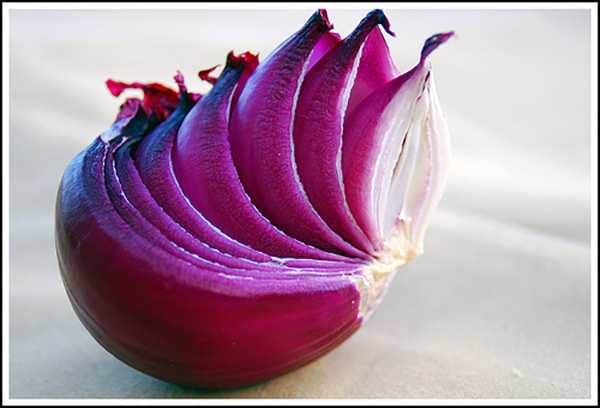
When we think of Layers we tend to envision them as physical things like layers of an Onion, without realising it we think we have some control over them, that we can separate them manually, move from one to another simply by choosing to, this is rarely the case, we would do better to see Layers as something like a state change or dimension shift, something that happens around us, something we have little control over like the dawning of a new day, one moment it is pitch black, then a sliver of light breaks in and then just like magic it is all daylight.

When we first do the Form we place our awareness into a single Arm and we keep it there as we make the different movements, for a long time that’s all there is, an Arm moving somewhere, we become amazed, and slightly obsessed. 

As we become familiar and comfortable with this way of being we start to sense that there is something else here, without noticing the transition our awareness is now consumed by the rotation of the Shoulder, the hinging of the Elbow, the flexing of the Wrist and the extension of the Fingers, in everything we do this is the new reality of moving, and again we become amazed, and slightly obsessed.

With repetition comes familiarity, increased knowledge begins another transition, now our awareness is consumed by the Bridge alone {the lower Arm from the Elbow to the Finger tips}, externally the moves are the same, everything that was happening before is still happening, including the amazement and obsession.

Time, repetition, familiarity, transition, the pattern repeats but now there is just one tiny spot on the Bridge, it could be anywhere, a Finger Tip, an Elbow, a Wrist, as if someone had just marked us with a Felt Tipped Board Marker, a little Green Dot.

Every move every action is just this little Green Dot going about its business, following our intention. Time, repetition, familiarity, transition, we realise that our whole Body is made up of millions of little Green Dots, connected, and unified, when one Green Dot moves they all move, so we only ever need to move one Green Dot.

Any green dot we choose, it could be on our wrist if we are thinking Sil Lim Tao, on our Waist if we are thinking Chum Kiu, on a Shoulder if we are thinking Biu Gee, it is just a thought, just an IDEA.

When any single part of us moves all of us moves.

There is a perception that deeper levels or layers bring greater more complex IDEAS, this is as far from the truth as we can get, every layer underneath is smaller, simpler and closer to the core.

The easiest place to experience these transitions, these layers, these dimension shifts or state changes is of course the First Form, not because it is in any way superior to the other Forms but because there is a lot less going on,

This is why so many people spend so much time on this Form, but there is a danger in this practice, if we cannot, or do not make the connections between all the Forms, if we cannot or do not create one unified method, one unified IDEA we may end up with a deep understanding of the First Form but a shallow understanding of Chum Kiu and Bill Gee.

When we consider that in ‘application’ we only ever use aspects of Chum Kiu and Bil Gee this could become a problem.

There is no special trick or skill to unifying the Forms, we just spend an equal amount of time on each one, if we can find one move, one feeling, that is exactly the same in all the Forms and work outwards from that point, interaction will just happen.

The Driver boards the Bus and takes his seat, the Bus kicks into life and the Journey begins.

Today is a different journey than yesterday, even if we take the same route.

The journey from ‘not knowing’ to ‘knowing’ is very much like travelling along a dark road, when knowledge arrives it does not come as a bolt of lightning that brings instant illumination and clarity, it is much more like falling into a hole in the road that was always there, we just could not see it in the dark.

WHAT KIND OF DAY IS IT FOR YOU?


FIST LOGIC

CONNECTING TO NATURAL HUMAN BODY MOVEMENT

A General Theory of Fighting Arts becomes grounded in Human Movement and not, as it so often is, ‘Esoteric Ideology’.

To get maximum benefit to your Wing Chun education, this post, the previous two posts, and a few more to come, should be treated as a long read.

 The General Theory of Fighting Arts is a term widely used to try to get students to identify the mutual movements of all martial styles, and the alignment with most dynamic sports.

One thing we have all been told, and if we are talking to beginners or non Wing Chun people often repeat is that ‘Wing Chun movement is based on normal human body movement’.

I do not think that students give enough credence to this statement, that ‘Wing Chun movement is based on normal human body movement’.

It gets treated as if it is just some sort of cagey advertising spin just as many Instructors still claim that Wing Chun was invented by a woman, a device to encourage smaller, less athletic men to take up Wing Chun instead of a rival code.

But Wing Chun IS based on normal human body movements.

If we approach the work from this perspective and look at what is presented and how it is presented, we see a pattern emerge, that in the progression of the FORMS, as we move from the first Form to Chum Kiu and then Biu Gee, this progression is nothing more than the introduction of more complex movement for people not familiar with this way of moving.

This approach more than likely had merit back in 1860s Foshan but today, due to the average sporting curriculum of most western schools every 12-year-old child is familiar with these moves.

A very large proportion of what is introduced through the Forms is simply unnecessary, at least from the point of view of controlling our body.

Do not get me wrong, the FORMS are needed for other reasons so I am not suggesting abandonment.

But we can easily be moving at a level that is needed for any aspect of the work be it the Dummy, the Pole or the Knives if we put more practice and focus into moving better as a Human.

Take any movement or action from any sport, especially a throwing or bat and ball sport, and you will find the moves somewhere in the Form.

 A General Theory of Fighting Arts becomes grounded in Human Movement and not, as it so often is, ‘Esoteric Ideology’.

This week spend some quality time exploring the similarities between Martial Movement, Sports and Dancing, once you see how they amalgamate, consolidate and integrate FORMS become a secondary consideration. 

IMAGINE, MANIFEST AND WORK ON THE IDEA OF THE FRAME.

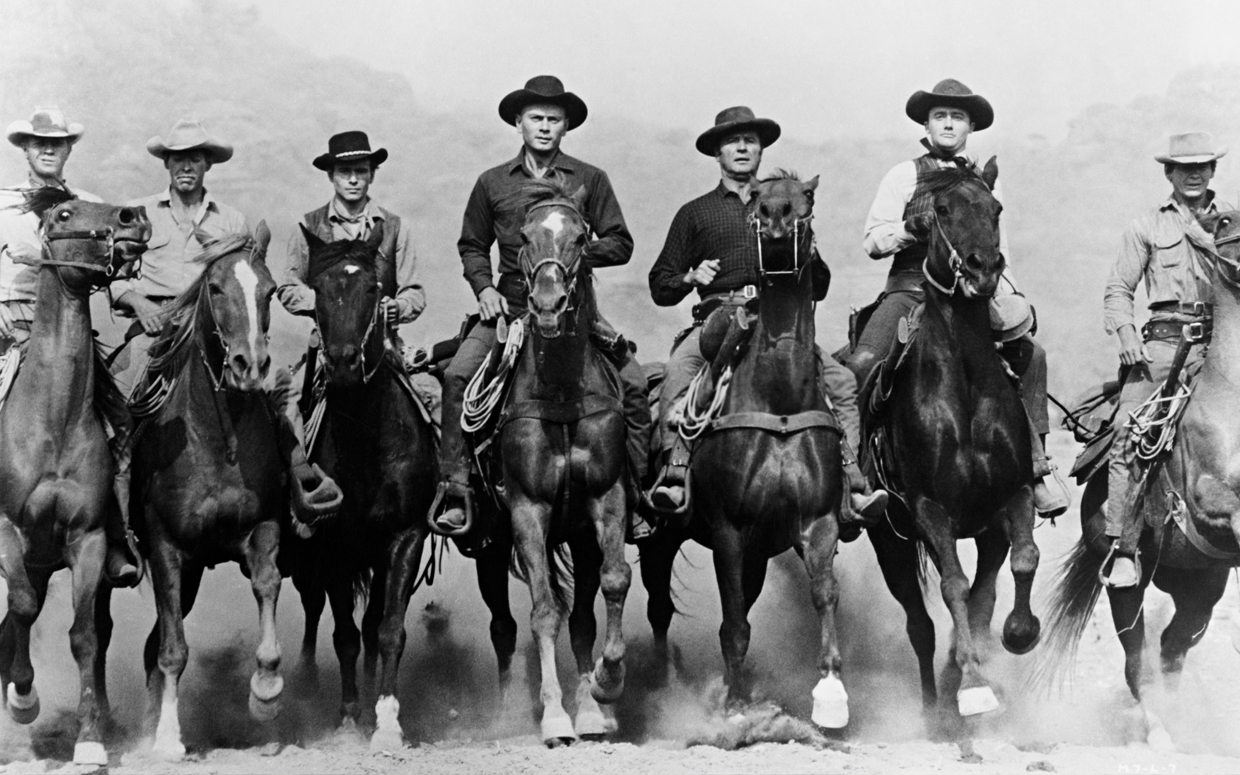
And while you a re at it put some minutes into the MAGNIFICENT SEVEN.

Here they are, and here is a recap.

WHEN YOU UNDERSTAND, THINGS ARE JUST THE WAY THEY ARE.

WHEN YOU DO NOT UNDERSTAND, THINGS ARE JUST THE WAY THEY ARE.

HOKKA HEY

WHAT KIND OF DAY IS IT FOR YOU?
FIST LOGIC

STANCES, FORMS, STILLNESS AND MOVEMENT.

The things we can learn from STANCES and FORMS are so deeply important that they are beyond value.

This post is pretty much a follow on from the last one, these types of posts allow us to approach the IDEA from more everyday Human perspectives.

Anyone with fighting experience, especially ‘Street fighting’ experience, will tell you that there are ‘NO STANCES’ in a fight.

A stance is a perfect Idea, an ideal shape and position that we benefit from being as close to as we can be.

The reason for this is explained by the ‘THEORY OF THE CONSERVATION OF MOMENTUM’.

In practice, we only ever move into a stance or out of a stance, yet all the action happens in the space between these points.

STANCES and FORMS share the same confusion, we spend a great deal of time and energy training them but in the end, we will never use them.

This is a paradox of cosmic proportions.

This is why it is so difficult to get beginning students to engage in a meaningful way, even students with zero fighting experience know instinctively that STANCES and FORMS have no practical value.

The first confusion we come across is that although we train them statically they are in fact transitional shapes that we move into or out of.

The things we can learn from STANCES and FORMS are so deeply important that they are beyond value.

How we resolve this importance from a purely personal perspective will determine the quality of most if not all of our Martial Actions.

Stances should be looked as being still points in a progressive movement, and not specific shapes and locations.

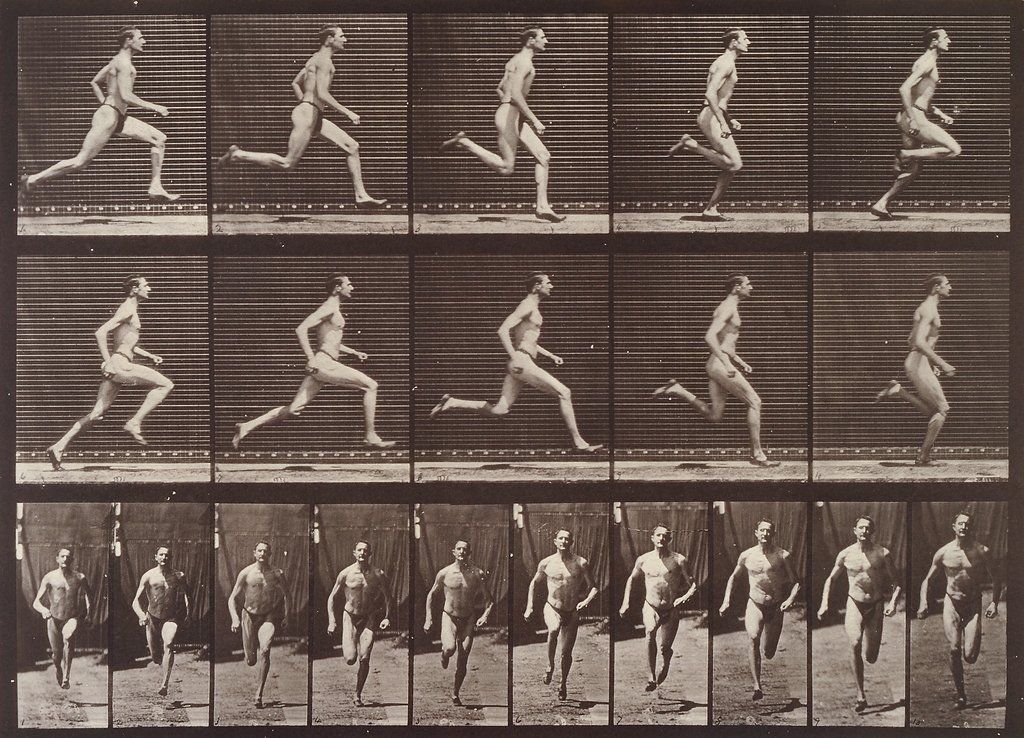
If it was available back in 1860 Doctor Leung Jan would have simply used ‘Time Lapse Photography’ and completely ignored the path of STANCES and FORMS.

Despite Stances being static they are an exploration of Human Movement, allowing us to look in detail at how our body is set up at different points in a possible progression.

Most importantly starting points and finishing points, but they can also function as a fault-finding method if we are not hitting the end stance position correctly when we move through a certain sequence.

When we look at Stances in relation to Forms we see a suggestion of how we would/could connect a start point Stance to an endpoint Stance.

STAND AND DELIVER!

Adding otherworldly importance or abilities to STANCES and FORMS has definite entertainment value if someone is a ‘Hobbyist’, but being involved in any kind of thinking that is not ‘RIGHT HERE-RIGHT NOW’ can only be detrimental to an aspiring Martial Artist.

We can only become the Martial Artist that we hope to be in 2,3 or 5 years by understanding and being the Martial Artist that we are today.

And we can only become that person by understanding the training we are doing today.

HOKKA HEY
WHAT KIND OF DAY IS IT FOR YOU?
FIST LOGIC

SPINAL STABILISATION.

The Little Idea???

MOVING ON THE OUTSIDE, STILL ON THE INSIDE.

This is a repost from before Covid 19. It is extremely important stuff, without this we are just dancing.

Where or what is the ‘LITTLE IDEA’.

Could it be that we are the ‘LITTLE IDEA’?

Any training is really about self-realisation.

The development of a new self, or at least a new vision that goes above and beyond us, sets new paradigms, attains new heights.

A self that is physically, mentally and emotionally on a different level.

A competent and capable self.

Trained and ready to face any challenge. 

Not just violence.

Wing Chun is a vehicle.

But like any vehicle on any long journey, we would do well to know how it works, how to fix it when it breaks down, to treat it with respect, so that it lasts us a life time.

On any journeys of significance, as we progress, we accumulate new knowledge and develop opinions.

Opinions that change as we gain further knowledge.

It is how we grow, move forward, transcend.

At this juncture, my opinion is this… 

The most important aspect of our training is to stabilise our spine.

 I believe that this is ‘THE NUCLEUS OF THE LITTLE IDEA’!

All of our training, all of our FORMS, our drills, our Chi Sau and whatever else we are involved in and around are nothing more than ‘stress tests’ to see if we can play them and maintain “a stable spine’.

If this is ‘THE NUCLEUS OF THE LITTLE IDEA’, what is ”THE LITTLE IDEA’?

It grows from using this Nucleus, thinking about this Nucleus, becoming this Nucleus.

MOVING ON THE OUTSIDE, STILL ON THE INSIDE.

Task number one.

HOW DO WE STABILISE THE SPINE?

There are numerous methods although ultimately they all boil down to Intra-abdominal Pressure {I.A.P.}

I am in no way a physical therapist, I am not going to advise you how to do this, but to be expected there is a ‘living shit tonne’ of videos on Youtube, by real doctors.

This is a decent one for getting the general gist of where and how to start.

Watch this and then surf the recommended video links on the right of the presentation and find one that makes sense to you.

Work on this alongside your ‘Crazy Horse’ exercises.

‘Crazy Horse’ is an awareness and conditioning exercise, in time we need to infuse I.A.P. into it.

This is not particularly difficult, but neither is it quick.

In the numerous styles that I have studied there has always been talk of breathing techniques, Buddhist breathing, Daoist breathing, belly breathing, diaphragmatic breathing, breathing into our feet the list is endless.

They are all on the right track but they are also wrong in so many ways.

It was not until about 5 years ago when I was seeing a rehab specialist for several weeks, at the ‘Pain Clinic in Liverpool Hospital’, that I was finally able to put all the pieces together

We always boast that what we do in Wing Chun is based on ‘normal, human body movement’ but few schools teach ‘normal, human body movement’.

They teach ‘Wing Chun’ movement, which is so very rarely normal and only partly human.

I know that I am repeating myself here…

First, let’s be better humans.

As always…

WORK ON YOUR WEAKNESS – PLAY TO YOUR STRENGTH.

WHAT KIND OF DAY IS IT FOR YOU?
HOKKA HEY!
FIST LOGIC

SERIOUSLY DOING NOTHING.

IT IS ONLY TRAINING.

Do as little as is possible, this is not as easy to do as it is to say

The core of my School is really quite senior, both in experience and age, they are all about or over 40 years of age, and they have been training with me from 5 to 10 to 15 years so most of the work we do is not the usual run of the mill Form Stuff, in many ways if you are still overtly working with Forms you are not very advanced.

There comes a time in everyone’s training {if they stick to it for long enough} where we understand that what we do has precious little in common with any of the things we have been involved in over the years, not the Shapes, not the Forms, not the Stances, these were simply vehicles for us to come to understand how to do very little, in an easy a way as is humanly possible.

There is no correct way to do anything at all in Wing Chun, no techniques, no answers to the dilemma of violence, once your mind and body understand, every movement creates a new technique and every time an opponent touches you they create the answer to that particular problem.

In Daoism, this state is known as 樸 PU, the Uncarved Block.

It may take almost a lifetime but we eventually see that we have always had this ability, it is inherent in all of us, the reason the journey takes so long is that a great deal of it is backtracking to an earlier, simpler and natural way of being, we do not really learn Wing Chun or any natural skill for that matter, we simply learn to release it from the bonds that we ourselves created.

Just like when carving wood, we are not involved in a struggle to force the wood into a new shape, we simply remove everything that does not belong and what is left is what we were after all along.

After 30 years of Wing Chun, I feel that at last everything is now natural, effortless almost empty.

Can this be taught?

I do not think that it can be, it needs to simply grow, but I do believe that there are ways to make the length of the journey far more acceptable, and the first thing needed is to stop taking Wing Chun so seriously, wishing to improve is a curse, thinking that there is a correct way to do this thing is just making the chains harder and tighter.

Do as little as is possible, this is not as easy to do as it is to say, when I do stuff with my students I get zero feedback in a physical sense, I just watch them get thrown away and understand what and why and these days that is enough, this is a softness that is in no way soft.

When you touch me you touch the planet.

Do less, much less.

Clarity of vision is the key to achieving your objectives.

TOM STEYER

der it is.
FIST LOGIC

WAS EINSTEIN CONFUSED OR WHAT?

NOTHING HAPPENS UNTIL SOMETHING MOVES.

I.M.O. Wing Chun is not a fighting art, it is a way to think!

Listen up Tribe!

I doubt that many of you will remember this post from over a year ago, seeing as we were deep into the second Covid lockdown, we all had much more to think about, or at least complain about, so it may well have gone through to the ‘keeper.

It is worth revisiting however because I think that this is an important notion that once gripped never falls away from us.

As scattered as it may at first appear, the video to this post is a powerful aid to progressing as a human being, let alone a Wing Chun Man, save it somewhere and come back to it every few months just in case I do not cover the same ground again.

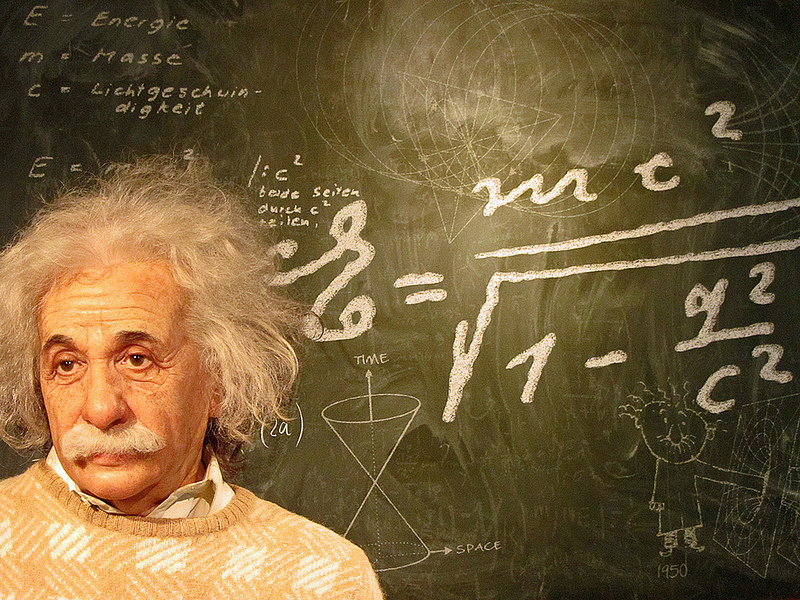
Albert Einstein was of the opinion that “time is an illusion”.

Without time nothing happens, so nothing moves.

Hence the confusion because of his own words ‘nothing happens until something moves’.

Well, I hear you ask, what does Uncle Albert have to do with Kung Fu?

Here is where I am coming from, I.M.O. Wing Chun is not a fighting art, it is a way to think.

This is why it fails so often when people try to use it as it is taught, as a stand-up fighting skill.

I do not think that this was ever Dr. Leung Jan’s intention.

How we engage with the work mentally is more important than how we engage with it physically.

Mental fluidity is essential for us to reach out and touch the ‘little idea’.

The ancient Chinese monks that established and expanded Kung Fu, be they Buddhist or Taoist, considered their training as a form of alchemy, turning lead {the initiate} into gold {the master}.

Most of my own training is a hybrid of all the things that have affected my life, Boxing, Judo, numerous diverse sports, cooking, and even music because it is through this eclectic lived experience that I view my Wing Chun.

To be expected, you will see it differently as you have lived differently.

WELCOME TO THE EDGE.

A common issue with all solo training is that we can begin to doubt that we get it, begin to doubt that we are doing the right thing.

Problem solved, there is no ‘right thing, there is only ‘doing‘, use Yoda’s voice when you verbalise that.

So as not to overwhelm us all with too much information I will post a follow-up blog article, I am writing it as you read this so it is fresh info, hopefully in the next few days.

Stay tuned.

The Edge… there is no honest way to explain it because the only people who really know where it is are the ones who have gone over. 

Hunter S. Thompson

HOKKA WHEN?
WHAT KIND OF NOW IS IT?

FIST LOGIC

STABILITY.

HOLD IT RIGHT THERE.

“[Stability] is the cornerstone upon which your strength is delivered, your aerobic performance is delivered and your anaerobic performance is delivered. And it’s the way that you do so safely.”

PETER ATTIA.

Hey Tribe.

This is a link to a podcast I subscribe to from Peter Attia.

Peter is a dead-set Wonderkind, he is an extreme athlete, a Mathematician, a Surgeon, and a Physician, oh, and a very clever man.

I am not posting this podcast as an “I told you so”, moment but…

“I TOLD YOU SO”!

WHAT KIND OF DAY IS IT?