FIST LOGIC

That Conversation.


Styles do not win fights…..   Men do!


I recently posted a Joe Rogan video on the club’s FaceBook page where he claimed that Wing Chun was ineffective and a waste of time, that had the effect of raising a tsunami of indignation, old training acquaintances that have not spoken to me in years suddenly filled my personal messages and inbox about the content of that video.

Joe Rogan is a skilled and experienced fighter, to say that he is wrong, that he does not know what he is talking about is tantamount to saying that we believe we can beat him in a fight, is this really what everyone thinks?

If we cannot beat him how can we put our hands up and say that he is wrong?

One friend asked “My question back to you Derek is do you think Wing Chun works? I doubt you would still be doing Wing Chun if you didn’t believe it was effective”?

Hmmmmm… does Wing Chun work?

That Conversation.

This is not the simple question it sounds like it is.

This is little like asking “does water boil”?

Water does boil if you understand what needs to be done to it to make it boil, without that knowledge and the correct application of that knowledge it may not even get hot.


I have trained in the Martial Arts for nearly 60 years, only the past 27 of those years in Wing Chun, I am a Martial Artist first and a Wing Chun player second.

As a teacher, I teach people how to fight and the vehicle I choose to illustrate how to do this is Wing Chun, an effective vehicle for this job, in my opinion.

Because I am a Martial Artists that approaches Wing Chun as a vehicle to fight with I have a different relationship to the style than many other people, I see nothing romantic in what we do.

There is a fair amount of stuff in Wing Chun that sounds good but on closer inspection is found to be questionable.

There is also a total lack of workable strategy, something more important than ability in close contests.

I must admit that I am more than a little confused as to why people get so animated when someone like Joe Rogan says Wing Chun does not work, and even more confused as to why I am questioned for airing his opinion.

My opinion, on some levels similar to Joe’s, is derived from experience and not just imagination, hope or personal bias.

There have unfortunately been a number of occasions over the years that I have taken a beating, a hammering to be honest, does this mean that Boxing does not work, or that Judo does not work, or that Military C.Q.C. do not work, or whatever style I was training in at the time did not work.

Of course not, all it means is that on that day against that man I was not good enough.

In a similar vein, there have been fights I won that I should never have walked away from, does that mean that the style I used on that occasion was the best in the world?

Styles do not win fights.

Men do!

But styles can lose fights, especially if someone tries to make them work the way they do in training.

Wing Chun is a style, a tool that we can use to help us fight, it is not a way to fight in and of itself.

That is why it has the potential to fail against people with genuine fighting skills and creative imagination.

One day what we do will be enough the next day it may not, this is just the way it goes, get over it.

There are better questions we can ask than “does Wing Chun work”? Questions that once answered can help forge direction such as “what is the ultimate take away from Wing Chun”?

All training is task-specific, “what task does Wing Chun perform”?

If Wing Chun was a stick, “where is the pointy end”?

Because these are the aspects that we are banking on making the difference between being beaten down or walking away.

The deeper our understanding of both Wing Chun and how we think we may use it, the shorter this answer becomes.

This post is getting lengthy so I will leave it here, for now.

A final question I would like everyone to address is “what is your go-to finishing move”?

I will expand on this later, this is the conversation we should be having.

As always, train your weakness, work to your strength.
 

WHAT KIND OF DAY IS IT FOR YOU?
FIST LOGIC, VIDEO

SPORTS IDEAS FOR THE MARTIAL ARTS.


I am a firm believer that we cannot train for violence we can only train to control our own movement and our own decisions


To be expected I have a number of friends that are involved in the Martial Arts, a surprising number of them in Traditional Chinese Styles with traditional approaches, they often quiz me on why I put more stock in sports instruction than even the instruction from the very top teachers  of my own lineage, especially now that I am at Master level and have my own school and students.

The first thing I ask them to consider is the position that modern sports are a ritualistic replacement for combat, people engage each other with a vigour as intense and desperate as any violent encounter, at elite level even non contact sports tend towards what is essentially full contact and can readily slip into actual physical violence.

While  we as Traditional Martial Artists on the other hand are involved in training that never engages an opponent in anger with a real outcome to prosecute and secure, much if not all of our training is a lot closer to imagination than reality so can we honestly say that there is any practical difference between the moves used in Ritualistic Combat vs the moves from Traditional Martial Arts Sources?

Once we begin to ask honest questions we eventually come head first into the ugly question that asks “if we never use our training in anger how do we know it will work in anger”?

We don’t, none of us do including myself, I am not trying to set myself above anyone here, it has been approaching 10 years since I used my skill set to its obvious conclusion.

Relating back to sports I am not sure I would put my money on a player that has been out of the game for 10 years no matter how hard he trained, or who he trained with.

From a personal perspective I have been in enough violent encounters to know that each encounter was different from all the previous encounters, over the years  I have used numerous styles so the common denominator was not what I did, I did what I did in spite of my training not because of it, the only real common denominator was me as a person.

How I moved, how I reacted to stimulus how, how I read the play as the encounter unfolded.

I am a firm believer that we cannot train for violence we can only train to control our own movement and our own decisions, in the sports environment this could be advantageous positioning and intelligent shot selection, in a violent encounter it could be to get out of the Bad Guy’s way and hit him while he is not looking.

Some well known  issues in the M.A. training environment is that many students get a little too close to the target and try to hit it too hard, it is almost impossible to be aware of this as we do not have an accurate metric to measure it by, however if we are playing a ball sport, Tennis or perhaps BaseBall, being too close, even by as little as half an inch and trying to hit too hard always result in failure.

There is no practical difference between learning how to be in the right place at the right time using the correct timing and technique to hit a baseball or tennis ball as there is in hitting an opponent.

If we allow ourselves this freedom, and it is a case of allowance, blinding dogma is always a choice, we notice that at a base level all of the moves that create the impulse { Force times Time} to generate momentum are the same for every sport, every martial arts style every normal movement.

It is a Human Movement thing.

We Humans have a limited range of movements with which we perform all actions, as obvious as it is, it is of  no matter what we may think we are doing we can only move in a human way so to that end all of our moves in any endeavour  are the same thing from the same place, there is no special way of doing anything.

Once we see this it cannot be unseen and everything becomes the same, for instance the lateral body shift in the Chum Kiu Form is exactly the way a good baseball player hits a ball, baseball players practice in an environment that is a great deal closer to their sports reality than most of what we do in the Martial Arts.


Positional and structural ideas that Baseball Coaches think are important for hitting a base ball will crossover seamlessly into our practice of Chum Kiu, shot put and discus ideas crossover seamlessly into our Biu Gee practice, if we have the eyes to see without personal bias.

Below is the link I spoke of in the video, it is a bit long at 10 minutes but it is really well presented information.

https://www.youtube.com/watch?v=D0lm_GigMJE&list=PLLTdvs1kZsQ6IEym7CzwOb0f_poNk2F2o&index=3&t=26s


WHAT KIND OF DAY IS IT FOR YOU?
FIST LOGIC

Science we can feel and see.


it may not hang together so well without all the jibber jabber that was going on


On Saturday morning we were digging into Chum Kiu and justifying our actions to the basics of Newtonian physics, on the off chance of some good work being done I had the camera rolling and I was miked up, it was all pretty ad hoc and as a result some of the filming and lighting is pretty shoddy but the IDEAS are sound.

This is a 5 minute breakdown of a 2 hour session so it may not hang together so well without all the jibber jabber that was going on, as always my main intention is to try to get people to open their minds and do their own research.


WHAT KIND OF DAY IS IT FOR YOU?
FIST LOGIC

A little bit of real Science.


Wing Chun is divided into two schools of thought, one side believes in magical forces the other does not, the thing is it makes no difference


There has been a great deal of stuff on a few Wing Chun community chat boards lately describing how various Wing Chun Forms and methodologies can create massive force, and the implication has been that because of these mechanics Wing Chun delivers greater hitting power than some other systems, this is a really big misunderstanding of the Conservation of Momentum theory.

A misunderstanding of the irrefutable reality of our universe.

One example of how and when much of Wing Chun thinking deviates from reality is everyones favourite way of explaining why the Wing Chun way creates power, the much quoted equation F=ma  , the kicker in this is that   F=ma holds fast even if we are slowing down and moving backwards, more on this a little later.

An issue of mine with much  of todays Wing Chun analysis, especially by people that cannot reconcile that the only thing Wing Chun ever wants to do is hit other people, is confusing force {F} with momentum {p}, as a fighting art our intent is to hit people hard, to create a collision, transfer the combined momentum of both participants into our opponent or in a defensive situation to defuse our opponents attack, create a force deflection and impede the transfer of the same combined momentum into ourselves.

It is the quality of the impact and not the force of the hit that determines the amount of {p} momentum transferred on impact.

Hit Power is not the amount of Force that created that momentum but rather the amount of momentum transferred on contact, as much if not more momentum could be transferred into my opponent by the Bad Guy walking into my outstretched arm as any poorly landed strike.

The quality of the impact is determined by the relationship to each other of both participants, to this extent they are a closed system, all of the energy is retained inside the system, nothing is lost only exchanged.

We can actually hit bigger people with more force than smaller people with the same amount of effort due to the fact that they contribute more to the system by their own heavier weight.

The force of the blow is probably the least important aspect when compared to time, space, and orientation, but this is for a different post.

Newtons 2nd law states F=ma  , force is equal to the mass multiplied by acceleration.

Acceleration does not mean going faster it means changing speed, going slower {confusingly referred to in English as deceleration} is also acceleration, negative acceleration, acceleration is the change in velocity over the change in time,   a=∆v \ ∆t.

I do not have a math plugin for this site so  equations such as . ∆v \ ∆t is   ∆v over ∆t.

The conservation of momentum theory states p=mv  , momentum {p} is equal to the mass multiplied by the velocity.

We would do well to replace the idea of F=ma   with the formula of F = m∆v \ ∆t,  mass multiplied by the change in velocity, divided by the change in time, now when we are concerned with applied force we can use F = ∆t \ ∆p, Force is the change in momentum over the change in time.

Be close, hit fast, hit heavy.

It has been many years since I was at school so forgive me if the science is not spot on, the idea is correct even if the equations are not.

One of the reasons I prefer Sports Science to Traditional Wing Chun thinking is that it always justifies its approach through Physics,  a Tennis player applies Force to the ball through the service mechanics, this Force changes the velocity and direction {vector} of the ball by transferring momentum into it.

It is the same with all ball sports.

I went to a very odd Grammar School, one of the sports we played was Fives, both Eton and Rugby Fives, the game was the same but the court was different, essentially it is a racquet sport played without a racquet, if we used Fives methodology there would be absolutely no difference whatsoever in hitting a ball and hitting a person.

Wing Chun is divided into two schools of thought, one side believes in magical forces the other does not, the thing is it makes no difference because no matter what we think is happening it is all governed by the rules of the universe and we would do well to become a little better acquainted with them.

Punching someone is the same science as a car crash, the same science as throwing a ball.

Defending is the same science as surfing or flying a kite.

I will revisit this in more detail in the not too distant future.

Work on your weakness, play to your strength.


WHAT KIND OF DAY IS IT FOR YOU?
FIST LOGIC

Align with Sports Science.


All power is momentum.

Momentum is a product of  velocity, in particular changing velocity, dynamics.

When I am digging deeper into the Fist Logic of Wing Chun my first port of call is to see if what is being suggested can be understood along known Sports Science and Modern Sports Methodologies lines, if it cannot it is dispensed with immediately, if it is dubious it is relegated to the bench to be explored at a later date.

Why do I do this, is Sport the same as violence?

Any one with competitive experience of any of the contact sports knows all to well that contact sports are a thinly veiled substitute for combat, in important matches between local rivals the veil often slips and we all know what happens next, many sociologists make a life long career out of just this topic.

North American first nation tribes such as the Mohawk and Choctow would solve regional differences with a version of what is now called Lacrosse instead of all out Martial conflict.

These types of  War games are at home in most cultures, in 600 B.C. Persian and Turkoman tribesmen would try to place a goat carcass in the opposing tribes territory, a similar game appeared in South America today it is organised into Polo and is one of the oldest team sports on record.

And of course there is the fighting sports, variants of boxing or grappling, the Greek style of Pankration was documented at least 2500 years ago.

There are very tangible connections to the creation of Kung Fu from Alexander the Great’s Army introducing Pankration into the Indian Martial Art which then made its way to China with Bodhidharma.

The practice of these Martial Sports was not just about conflict substitution or resolution, often and more importantly they were about conflict readiness.

Anyone can learn the moves of a particular way of engaging an enemy but making it work in real time against a real and equally engaged opponent takes hands on experience, in a Martial Sport you can fail, try again, fail again try again until you get it right.

There are no do-overs in war.

For me the question should not be why do I need everything to align with the most up to date Sports Science with my own M.A. training, but rather who are people kidding if they think that there is no need for them to do this with their own Martial Arts training?

I do not buy into the thought bubble of “not everyone does a Martial Art to fight”, people may very well remain in training their art long after they have developed a fighting skill set for other reasons, but everyone starts from the standpoint of wanting to fight better.

I have played numerous contact sports, Ice Hockey, Rugby Union, Rugby League, Lacrosse, the difference between myself and the many people that played better than me was very rarely plain old skill, often my own skill level was on par with them, usually it was speed and co-ordination, this gave them the opportunity to do the exact same things that I could do, but sadly before I could do them.

All power is momentum.

Momentum is a product of  velocity, in particular changing velocity, dynamics.

Violence is dynamic, if our training is not dynamic we are not training for violence.

In an organised and social society it is difficult to train for violence without being involved in violence.

Hence the importance of Sport, and here we are back at the beginning.


WHAT KIND OF DAY IS IT FOR YOU?
FIST LOGIC, VIDEO

BENEFITING FROM OUTSIDE INFLUENCES.


In top level professional Elite Sports if a player can improve by as little as 1% they can earn many millions of dollars in extra prize money

In the last post I spoke of changing our thinking and approach to moving in Wing Chun, and how if we can connect to other skills from other places, such as sports, then we can dramatically increase our rate of improvement.

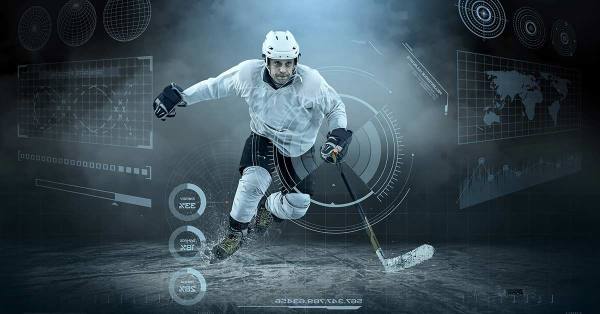
Previously I focused on throwing skills and how they relate and can improve our understanding and application of Biu Gee, today I want to revisit how Ice Hockey and Speed Skating can improve our understanding and application of Chum Kiu.

But firstly we need to accept that there is no internal power in Wing Chun, as hopeful and tempting as that may be, standing still moving our arms will give us nothing we were not born with, everything is physical, in fact everything is Physics.

I occasionally get outside students from other schools or friends of friends coming to see me to help them with Chum Kiu.

I ask them to show me what they know and then apply resistance against their movement, in fairness if they knew what to do properly they would not be seeing me so to be expected they fail to move correctly.

I ask them “where are you moving from”?

The most common answer is “my centre”.

This is wrong.

All movement comes from the ground, not the hips, not the centre, these are the initiators of the force but not where we are moving from, this is a subtle but enormous difference, once we understand this we can begin to understand the fundamental aspects of Chum Kiu.

Straight off the bat we can explore this with an office chair.

It is the interaction with the ground that makes all movement, when the waist turns it creates torsion that is transferred into movement.

Without that connection to the ground all we can do is wiggle our butt.

It is the torsion in the leg that creates the down force that coupled with dropping the weight creates instant movement as soon as we remove any brakes we may of put in place, such as our other leg, a common error made by students that think the Y.C.K.Y.M. is an actual working stance.

The Y.C.K.Y.M. introduces us to the idea of torsion, allows us to experience it, feel it, trust it, to get what I mean think of it as being two rear legs in Chum Kiu being trained at the same time, which of course is what it is.

The torsion in the leg can be created in numerous ways, but the most effective for dynamic application, and the most natural is by turning the chest.

If we understand Core Winding and allow the upper body separation that we can learn from Biu Gee the act of turning the chest creates torsion with the waist and passes it down the kinetic chain via weight dispersion into the foot, then the ground, Newtons third law then turns this into movement.

When I was a nipper and learning the fundamentals of Skating for Ice  Hokey the coach would say when you turn you go top down, turn with your head not your feet, this is the same thing, the head turns the Chest and so on down to the feet, the legs and feet themselves do nothing except keep us upright.

When we do Chum Kiu in the training hall we can get many things wrong and never really notice, on the ice even the smallest errors in balance, weight dispersal, weight shifting and postural alignment can and usually do result in kissing the ice.

An error many students that spend too much time in the Y.C.K.Y.M frequently make is trying to keep the feet flat on the ground, this interferes with the alignment of the reaction force from the planet, in our everyday life when we walk there is a certain amount of natural pronation that occurs, we really must free up the ankles to allow natural pronation to occur where and when it is needed, we do not deliberately pronate the foot, but neither do we prevent it from happening.

Allowing the natural weight shift to pronate my foot, even if I just lean into it creates and action that pushes the floor, the resulting reaction moves me forwards, if I use torsion to pronate it has the effect of magnifying that action / reaction.


OTHER INPUTS from WC INCa’s on Vimeo.


The big difference between being on the ice and being in the training hall is all about traction, in the training hall our feet create traction with the floor that prevent us from realising we are minimally out of balance and alignment, or that we are building negative or at least contrary tension or torsion in our body, on the ice the traction is so slight that these negatives instantly effect our direction and stability.  Having even just a slight understanding of what it takes to be balanced on a slippery surface is a huge advantage on a sound surface.

In top level professional Elite Sports if a player can improve by as little as 1% they can earn many millions of dollars in extra prize money, it makes sense to cross reference everything we think we know against modern sports science.


TRAIN YOUR WEAKNESS, WORK TO YOUR STRENGTH.


WHAT KIND OF DAY IS IT FOR YOU?
FIST LOGIC

NEUTRAL AND THEN FORWARDS.


Once we can align our present study with established knowledge we learnt in another context we understand that there is nothing new to learn.


CONNECTING THE FORMS.

What I believe is the most important of the Wing Chun Forms and the one that I would recommend spending more time on is not as many think the First Form but is in fact the Fourth Form, the Mok Jan Jong or Wooden Dummy.

Each of the first three Forms brings us part of the total information that we can then work on uniting through the practice of the Dummy, Knives and Pole, however only the Dummy works as a hands on solo training that allows us to explore possible combinations of the various movements and ideas introduced in the first three Forms, in real time and real space.

As Sci Fi as it may sound the 2 most important things to be comfortable with are time and space, the time to do the work and the space to do the work, without this control everything goes out of the window, only the dummy gives us this aspect of training, everything else is little more than imaginary training, and is only of use in imaginary fighting.

Working on the Dummy is working on all of the previous Forms in a compounded and more practical way, this is in fact the raison d’être of the Dummy.

To understand and benefit from the Dummy it is critical that we abandon all fantasy,  50% of the moves in the Dummy Form are wrong and the other half are useless, it is a training aid that helps us understand ourselves and how we move, accept force and issue force, it is not a sparring partner.

Before we can have any hope of gaining benefit from the Dummy we must understand the core aspects of the first three Forms, and have at least a basic understanding of how to combine them.

This is a very brief overview that is intended to prepare the mind to change its Frame of Reference that I hope to fill out over the coming months.

Before commencing any of the Forms there is a period of non activity, we simply stand, settle in and settle down, this is not just a precursor to doing the Forms, in so many ways this is the most important aspect of our solo training, and the most important frame of reference to measure all of the Forms against, I call this our Personal Neutral.

The Personal Neutral is the state of being that we inhabit before we do anything, the person we are when we are not thinking about or talking to ourselves, the person we are when there is no time to chose or make plans, the person that we hope will get us out of trouble.

It can and usually does take many years before we wake up and realise the importance of establishing and understanding our own Personal Neutral.

Core aspects of the First Form.

Developing and understanding our Personal Neutral, being still, in balance with the correct alignment for self support, in many ways it is learning how to connect to ourselves as a being, understanding what and where we are.

The  Personal Neutral is both a physical condition and a Mental Mindset.

Once established the active aspect of the First Form is to be able to move the arms without disturbing our Personal Neutral.

Core aspects of Chum Kiu.

Moving the waist with minimal disturbance of our Personal Neutral whilst maintaining balance and correct alignment for self support.

Develop the ability to support the arms with the body, which leads to being able to coordinate the movement of the arms and waist with minimum disturbance of the Personal Neutral which allows for an acceptance or transfer of force without resistance.

Core aspects of Biu Gee.

Moving the Shoulder girdle with minimal disturbance to our Personal Neutral whilst maintaining balance and correct alignment for self support.

Connect the upper and lower halves of the body primarily with the Muscles of the Core which leads to developing and understanding the kinetic chain including muscle hierarchies to issue force.

If we can allow ourselves to explore Biu Gee as a purely mechanical process we will find many movements shared by all throwing sports, golf, tennis and even swimming.  Once we can align our present study with established knowledge we learnt in another context we understand that there is nothing new to learn.

This will accelerate our progress.

Play to your strength, work on your weakness.


WHAT KIND OF DAY IS IT FOR YOU?


Uncategorized

COUNTER ATTACKING pt.3. DEVELOPING AND USING THE SHIELD ARM.

MAXIM FROM THE SCHOOL OF CHAN WAH SHUN { PRINCIPAL TEACHER OF IP MAN }

The most difficult thing to accept and the steepest learning curve is to ‘NOT’ try to prevent someone from hitting us.

We develop the use and understanding of the Shield Arm, like so many other aspects of Wing Chun through Chi Sau.

Or to be more precise and  correct through the thoughtful engagement with an opponent in Chi Sau while operating with the knowledge that Chi Sau itself is a practice from Chum Kiu.

As seductive as the idea of osmosis is we should not place any faith in it, a reality in every walk of life is that ‘People without questions rarely find answers’, just playing Chi Sau will not deliver an understanding of the Shield Arm unless we are actively looking to understand the Shield Arm and using Chi Sau as the means to that end, unless we can manifest the IDEA of the Shield no amount of Chum Kiu will teach us how to move it.

The most difficult thing to accept and the steepest learning curve is to ‘NOT’ try to prevent someone from hitting us.

That is Defending.

Wing Chun Counter Attacks.

The Shield is there to stop the Bad Guy hitting us, it is not used to try to hit the Bad Guy, the only time a shield was used to hit the opponent was once knights started to wear plate armour that could resist sword cuts, then the damage came from being knocked down crashing about inside a metal suit, a bit like a car crash, not from the shield bash.

I mentioned that in all probability we will need to bring about the transition from the initial chaos of contact to a position where we can implement our Counter Attack philosophy, this does require physical use of the shield, but not by attacking.

Using the Shield to make the space to transition from the initial chaos of the first encounter to phase #2 is about using our own force or energy to move us to a safer place by using the opponent as an anchor, it is not about trying to move them to better position to attack them, that is not to say that we could not or should not do that, it would just not be considered ‘Counter Attacking’, it would be diametrically opposed to this philosophy.

Once we are in a safer place the Bad Guy is once again invited to attack us.

Philosophies should be guides, not dogma, this is the deep philosophy behind Wing Chun, the deep philosophy behind our training.

Theory and reality are not in anyway similar, in reality if we find ourselves in a violent situation anything goes, if it works it was the correct choice.

Over the years quite a few people of accused me of trying to re invent the wheel with the way I approach Wing Chun, my usual reply is that people accused John Dunlop and Charles Goodyear of the same thing when they introduced the pneumatic tyre, it is incorrect to imply that I am involved in reinventing the wheel, It would be a lot more accurate to say that I am trying to upgrade the suspension.

WHAT KIND OF DAY IS IT FOR YOU?

Uncategorized

COUNTER ATTACKING pt.2.

Counter Attacking does not require defence, only that we are under attack.

Counter Attacking as a philosophy means that we not only expect but must in fact invite the Bad Guy to attack us

When writing about anything we always run into the power and the awkwardness of words, subtleties are missed simply because some people do not use words as well as others, defence mechanisms kick in, comments such as ‘that is just another way of saying blah, blah, blah’ or ‘thats just semantics’ prevent people from seeing the reality of what is in front of them, the simplicity.

In the last post I mentioned defending and attacking require different mindsets, that we cannot defend and attack at the same time, due to this fact Simultaneous Attack and Defence needs to be seen as a concept and not a method,.

Perhaps as a method for applying the philosophy of Counter Attack it has some value, if you are in an Attacking / Predatory mindset {using the Shield Arm, I will cover this later}, but by equal measure it has zero value if you are in a Defensive / Survivalist mindset.

Counter Attacking is a philosophy that once understood and abided by is outside of the win – loose matrix.

Getting back to the subtlety and awkwardness of words for a second, different things are ‘called’ different things because they ‘are’ different things.

If we are defending we are only defending, if we are attacking we are only attacking, if we are under attack and turn the tables on our attacker we are not defending we are {counter} attacking

Is the last statement subtle or awkward?

Or simple and clear?

Counter Attacking is turning the tables and attacking in return, Counter Attacking does not require defence, only that we are under attack.

Simultaneous Attack and Defence is a method we use only if we are being attacked to try to turn the tables and snatch some measure of control, it is always reactive, we are a victim of external circumstances and all the negative  implications that come along with that randomness, we are involved in someone else’s agenda, someone else plan, someone else event, and our own actions will be controlled by a Mindset that will be a product of that event and not necessarily of our own choosing.

Counter Attacking as a philosophy means that we not only expect but must in fact invite the Bad Guy to attack us so that we can then turn the tables and return the attack, we choose to allow the attacker the opening shot, if need be tempting them with clear openings and easy targets that they would find hard to pass up.

This is very much the difference between learning Wing Chun and learning how to use Wing Chun.

Having invited the attacker in, there is very little surprise in their actions and this allows us to respond, not react.  It is now our agenda, our plan, our event.

Something that should not be overlooked is that now that it is our event, it is our actions that drive our opponents Mindset and not their own.

Looking back to the three phases of a fight I mentioned in the previous post, the majority of the Wing Chun training I have been involved in and witnessed at various other schools is all about phase #1, and of course it is faultless if we find ourselves in this position.

To be in phase #1 requires that we are in control of the situation from the very beginning, something the Bad Guy will not want if this is an attack and not a fight, often we ourselves will sacrifice this position by being over involved in the pre violence theatre and missing the attack indicators.

The vast majority of violence we will face will be phase #2. 

More often than not we will of missed phase #1 completely,  we will need to force a separation and create the space for phase #2 to come into being, often we will not even be defending ourselves, just creating space any way we can.

Earlier in this piece I mentioned the Shield Arm, this will make more sense to people with a European background of my generation than others, as children we played with swords and shields as they were an important aspect of European History, from the Greek and Trojan wars through to Medieval times they were the weapons of choice for most armies, we covered it in High School, there were countless movies and popular legends and to top it off social conventions of the 1960s and 1970s thought it healthier for children to be Spartans or Knights than Gunslingers.

There was period in my teenage years that a group of fellow Martial Art friends and I were involved in some semi – serious play with swords and shields, we did research as well as we could and on occasions took instruction from one of the organisations that involved historical reenactments, great fun and very informative, when you play with sword and shield, or dirk and buckler it becomes crystal clear that weapon arts came before empty hand arts, but that is a post for another time.

In the Wing Chun Genesis Myth a stork is observed warding off the attacks of a snake by using its wing, not to counter attack but to absorb and redirect the attack, just as a soldier would use a shield, this action is called Bong Sau, the Wing Arm it could just as easily be called the Shield Arm.

Chi Sau teaches how to dampen force through the Wing Arm / Shield Arm, Chum Kiu teaches how to manoeuvre the shield to intercept the incoming strike before it manifests its potential force, decrease impact forces. 

When we shift in Chum Kiu we shift along the line of the incoming attack, not towards the attacker, we do this so as to shorten the length and as such decrease power of the swing as we counter attack with the free Striking Hand / Sword Arm.

Although there are a number of methods to apply a shield, what they all have in common is that the action is a relatively  passive one, the shield accepts the attack, it does not try to add any of its own force or actively redirect it, any redirection is a product of the shape of the Shield and the direction of the bodies movement upon contact.

The shield acts as a damper, or as I describe it to my guys a passive or inactive defence, by placing the shield in the path of the strike there is no longer any need to monitor the incoming strike and all of our concentration, focus and intention can be diverted to attacking open targets that cannot be defended because the attacker is involved in their own attack.

To be continued… pt. 3. HOW DO WE TRAIN THE SHIELD ARM?

WHAT KIND OF DAY IS IT FOR YOU?
FIST LOGIC, Uncategorized

A LITTLE ABOUT THROWING PUNCHES

This is a quickie to help everyone correlate throwing punches with the dynamics of athletic throwing, in particular the discus.

In the video the mention to separation and stretch reflex should not be something to cause concern, they are present every time we defend and attack even if we are not aware of it.

Pay special attention to the weight shifts and the torque creation, in physics talk this is the summation of forces at play, and it translates to power.

Observe how the upper body balance is conserved even as the lower body is dynamically mobile, and then observe the weight transfer as the athletes lower body stops causing immense acceleration of the upper body in the same way that a Trebuchet works.

In the discus the sinking and rising is really quite pronounced, but sinking and rising is an inherent part of both Chum Kiu and Biu Gee, just much subtler.

Relate this to your Knife and Pole forms to get the most benefit, then go hit something.

WHAT KIND OF DAY IS IT FOR YOU?