FIST LOGIC

CHI SAU TRAPPING, CAN IT BE USED?

All Martial Art styles come about to answer a specific yet local problem.

Chi Sau is both an exceptional learning drill and a uniquely social ‘training hall’ game.

From a practical perspective, if we find ourselves in a violent situation while also being in the position or shape that we play Chi Sau we are in the wrong place at the wrong time.

We have well and truly stepped in ‘IT’.

If we are in ‘IT’ our priority must be to get out of ‘IT’, and not to start rolling with our attacker.

This is a no-brainer, so what does it say about Chi Sau Trapping?

It is all so “stand and deliver”.

Does it have a practical application or is it just a way to enhance the GAME aspect of Chi Sau?

Is it something that was once useful but is now surplus to requirements?

All Martial Art styles come about to answer a specific yet local problem.

If the local problem is that attackers rush in hey diddle-diddle and attack the centre, then that’s what the style seeks to deal with.

If the local problem changes or another problem comes to the fore, the Martial Art styles evolve to keep pace.

Untrained people very rarely attack head-on, attacking straight down the centre is an indication of training.

In Wing Chun, we talk about our shape and set-up as superior to the basic side-on stance of other Kung Fu styles as it gives us better access to our defences and attacks.

It would appear from this that the local problem Wing Chun was facing was other Kung Fu styles that used a side-on stance and attacked down the middle.

This is exactly what Dr Leung Jan would have faced when he formulated Wing Chun back in the 1860s during the unrest caused by the Taiping Rebellion.

But I digress, this is about Chi Sau trapping.

We stand face to face in the same position as our partner.

The local problem now is a mirror image of ourselves and not a side-on stance Kung Fu opponent.

This can lead us into thinking that Chi Sau trapping only works when playing the game of Chi Sau.

To a certain extent, this is true, how we do what we do in Chi Sau, only works in the default Chi Sau position.

A positions which, as I have said, we should immediately change if we do find ourselves in.

There is no doubt that ‘Trapping’ is more than useful when playing Chi Sau, but does it teach us anything that can transpose to a violent confrontation?

The short answer is ‘yes’, but do we know what to look for?

In some ways, the ‘Game’ of Chi Sau is not correct or proper Wing Chun, even though it is a central aspect of our training.

We defend with both arms, a Wing Chun no-no.

We strike while our arms are in contact, ignoring Lut Sau Jik Chung when the hands are FREE strike through.

 We voluntarily give away the superior position afforded by our set-up, giving our partner access to all of their defences and attacks and as a result, putting ourselves in a compromised position.

It is all so wrong.

How can this be, is this meant to happen?

As I often say, the real work is to recognise moveable, transposable patterns.

We must also recognise that some things and shapes are just a framework to allow the drill to revolve and repeat.

We must learn how to separate the WHEAT from the CHAFF.

Chi Sau is not, as is easy to forget, double-arm rolling it is simultaneous single-arm rolling.

Traps and locks where we pin our partner to our arm are a convenience of the game, in practical usage, we would be pinning the opponent’s arm to themselves as we applied our body weight with the deliberate aim of compromising their balance, {and of course, hit them with our FREE hand}.

It is this aspect of Chi Sau trapping that is the WHEAT.

This is the IDEA to take away from the play.

The breaking of the opponents defencive structure, and the introduction of instability.

The Wing Chun trained person always aims to be in the ‘position of dominance’.

A position where we have better access to our defences and attacks than our opponent.

There can be only one reason a Wing Chun trained person would be in violent contact with another person, and that is we are under attack and in real danger of physical harm.

In this case, every contact that we initiate needs to do one of two things.

  1. Cause severe pain or if possible injury.
  2. Takeaway the attacker’s balance, no balance = no power.

Luckily simultaneous attack and defence allow us to do both.

 The pins and latches that make the game of Chi Sau so much fun transpose effortlessly into a method for keeping our attacker continuously out of balance.

A never-ending rotation of pin/hit, latch/hit, press/hit, pull/hit.

Rinse and repeat.

Man overboard!

Lost at sea.

It is only politeness and respect for our training partner that prevents us from clearly seeing that this is the real power of Chi Sau trapping as we hurl them around the training space.

If you touch them, move them.

MOVING QUICKLY IS GAINED FROM SMOOTHNESS.

SMOOTHNESS IS GAINED BY MOVING SLOWLY.

HOKKA HEY
WHAT KIND OF DAY IS IT?
FIST LOGIC

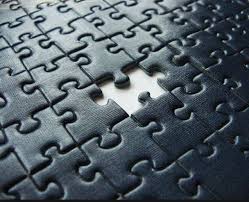
JIG SAW OR LEGO? YOUR CALL.

NOW WHAT?

 Even when we think we have discovered something amazing we should tear it down and rebuild it.

Wing Chun Forms are not Kata, they are not Shadow Boxing Sets, they are not anything concrete but instead are a kind of shifting puzzle.

At first, they appear as a Jig Saw, here are the pieces here is the picture, make it. 

But later they become much more like a Lego set, here are the bricks build it, once we have completed the picture on that box we can take it apart and make another shape, instead of Big Ben we can make a train engine, very different model but the same bricks.

No matter how challenging or interesting a Jig Saw is, once it has been done, it has been done, and there is a considerable drop off in the involvement with that puzzle from that point on.

 Lego on the other hand can be reutilised, can be added to, there is even the chance to work without plans to come up with something original, or at the very least something new for ourselves.

Repeating the same Form the same way is the cornerstone of some schools,  the idea that to truly know something you must repeat it 10,000 times is set deep and hard into their ideology.

 This is a very Eastern way of thinking, in the West it has long been held that if you always do the same thing, you will always get the same result and to think otherwise is madness.

Thinking that we can grow by performing the same set of movements in the same way, for many hours a week, over many years, is hope, not training. 

The only thing we can hope to get from repetition is a repeat of what has already been done, already been learned, to move forwards we need to change, we need to approach the work from a different perspective, we need to do something different.

 This is called evolving.

Wing Chun is clearly defined by its principles, not its Forms, as long as we adhere to these principles we should allow ourselves to tear down the old and rebuild it, just like Lego, not just once but constantly.

 Even when we think we have discovered something amazing we should tear it down and rebuild it.  

In lateral thinking Dr Edward De Bono advises to find the best answer that you can come up with, he calls this the “First Best Answer”, and then discard it and begin again.

 The first best answer only looks like the best answer because it ticks all the present boxes, it does nothing that could tick the boxes of the future, solve the problems that we will certainly be presented with.

Learn the form, but seek the formless.

Learn it all, then forget it all.

Learn The Way, then find your own way. “THE SILENT MONK

WHAT MOON?
WHAT KIND OF DAY IS IT?
FIST LOGIC

SECOND VERSE, SAME AS THE FIRST.

IF IN DOUBT – MOVE.

Wing Chun fighters ALWAYS anticipate clever opponents.

What could be better than starting the New Year with some Old Advice?

There is a very big difference in the thinking on weight shifting between Wing Chun {in fact most Chinese Boxing} and Western Boxing, in Wing Chun etc when engaging an attack the weight is held in the rear leg and at most allowed to shift to a neutral centre position, squaring up, as we counter.

In Western boxing it is common to see boxers shift their weight completely into the front leg to the extent that they frequently change stances bringing the rear foot through to the front.

The reason is not as one might think to do with power production, even though the Boxers punch does have more power, it is in fact all about leverage, or to be more accurate what your opponent can do with leverage.

Western boxers do not need to worry about having their lead hand grabbed or pulled, something that would be a big problem if your weight is in the front leg, neither do they need to fear having their front, now supporting leg kicked or swept from under them. 

To a Western boxer there is nothing wrong in shifting your weight forwards, allowing your weight to cross your centre and shift to your other leg will create a huge amount of power, we should not kid ourselves Boxers are the best punchers in the world by a country mile, but it also places you at the mercy of a clever opponent.

Wing Chun fighters ALWAYS anticipate clever opponents.

RULES OF ENGAGEMENT.

Whatever Martial Art we may practice they are all nothing but tools when it comes to a violent encounter, a means to an end, how we deploy and use these tools is in reality of more importance than what the tool is, this aspect is rarely worked on at a training level, for good reason, it is hard to realistically deal with violence unless you use violence.  

What we can do however is to decide on a plan of action we would follow if we found ourselves in a position to make the first few decisions.

What shape would we adopt, what stance and guard?

Would we be still or moving?

Would we engage or respond?

There are many more approaches as I am sure you can imagine, does your training cover what you believe you would do?

The initial engagement would be something on the lines of the following.

Break the line.

Get offline.

Take the blindside.

What line are we talking about here?  It is the power line, and that comes from the opponents Shoulder if punching and Hip if kicking.

It doesn’t matter what shape of a strike is thrown the limitations of our bodies mean that all strikes will land in line with the Shoulder or Hip. 

Do I break the line of the attack by intercepting it outside of the line from my opponent’s shoulder to myself?

Or by pushing it across my body if it is already online?  

In short I do something that prevents the arm or leg from pointing at me.

I get off the line. By moving the intended target to a place that the arm is not pointing at, pretty much the same idea as the first but in this instance, I move me and not him.

I get out of the way. 

Wing Chun is a very Belt and Bracers type of art, so just in case, we would use a combination of both, step away as we redirect the strike, this is Chum Kiu.

To take the blind side the most important factor is to not affect the attacker’s body mass, we should allow the movement to complete itself as we dynamically place ourselves in a position that is to the side of and at least adjacent to the attacking arm. 

From here an attack from the opponents other arm is not possible, his other fist does not have access to a viable target, it is blind.

The attacker thankfully walks head first into our fist in this instance.

Choosing to step in towards the attacker or to stay put in front of them make all of these choices inaccessible.

Stance and guard choices. 

What is widely regarded as the Wing Chun Guard, both hands on the centre pointing at the attacker is not as effective as many would like to believe.

I know the thinking behind it, it forces people to throw round punches that are slower than straight punches. 

The thing is in street violence everyone throws round punches anyway, they do not need an invitation, setting up on the centre is setting up to allow the attacker easy access to his strength, his favourite attack, we would do better to make it more difficult.

The one-hand forward and one hand back idea needs a bit of scrutiny, for one thing, it is a lot weaker than having both hands level and requires constant maintenance against a mobile attacker or multiple attackers.  

Another consideration is that all boxers are taught from very early on to attack extended arms. That front hand becomes the first thing hit, and getting knuckled heavily on the back of the hand is enough to mess you up real good.

Stances can be really strong and stable, but in a street fight no one stands still, least of all the Bad Guy, all we need is balanced movement, forget stances.

Where there is only a choice between cowardice and violence, I would advise violence.” – Mahatma Gandhi

HOKKA HEY!
WHAT KIND OF DAY IS IT?
FIST LOGIC

LOOKING FORWARDS.

THIS IS ALSO TRUE OF WING CHUN.

The road to simplicity is stacked high with little packages of Complex Over-complications.

I am in the process of writing a new Ebook so I am putting a few things out there just to see how they look.

Feel free to disagree.

In Wing Chun, we place a great deal of importance on simplicity.

Acting/Reacting with ‘simplicity’ is frustratingly difficult.

Simplicity is achieved, not developed, by the removal of un-needed complexity.

But before we can do this we need an overly complex view of what it is we wish to trim down, to simplify.

The good news on this front is that we all hold an overly complex complicated view of what a Martial Art is and does before we take up training.

From day one we have all the ingredients to begin the work.

But it can take many years to trim the fat of this Porker.

The road to simplicity is stacked high with little packages of Complex Over-complications.

From a Martial Arts point of view, what does it mean to act simply?

After all, there is nothing as simple or as practical as a short, sharp, straight jab to the nose or an unseen kick to the groin, something most untrained 7-year-old boys are well aware of.

Without meaning to preach, ‘Simplicity is achieved, not developed, by the removal of un-needed complexity.

Our goal is to unpack what we think we know to get down to what we truly know.

To get back to being that 7 years old boy.

And when we get there we realise that we already knew it and there never was anything to learn.

Taking away the clutter is just returning to fundamentals.

There is a lot of theatre in Martial Arts, a great deal of ritual and storytelling, this is how styles are remembered, how arts are passed on, this is how the work begins.

In a world where learning to fight was a way of protecting one’s life and not just a pastime or hobby the line between ritual and useable was clearly understood.

At least by the survivors.

Before progressing there is an understanding that we need to take on.

We will never use the things we train.

We will do very similar things in very similar ways, but nothing will be as we train it.

How ‘different’ does a movement/technique need to be to become a ‘different’ movement/technique?

How long is a piece of string?

To get out of trouble all we need is to think like a 7-year-old boy.

MOON, WHAT MOON?
WHAT KIND OF DAY IS IT?
FIST LOGIC

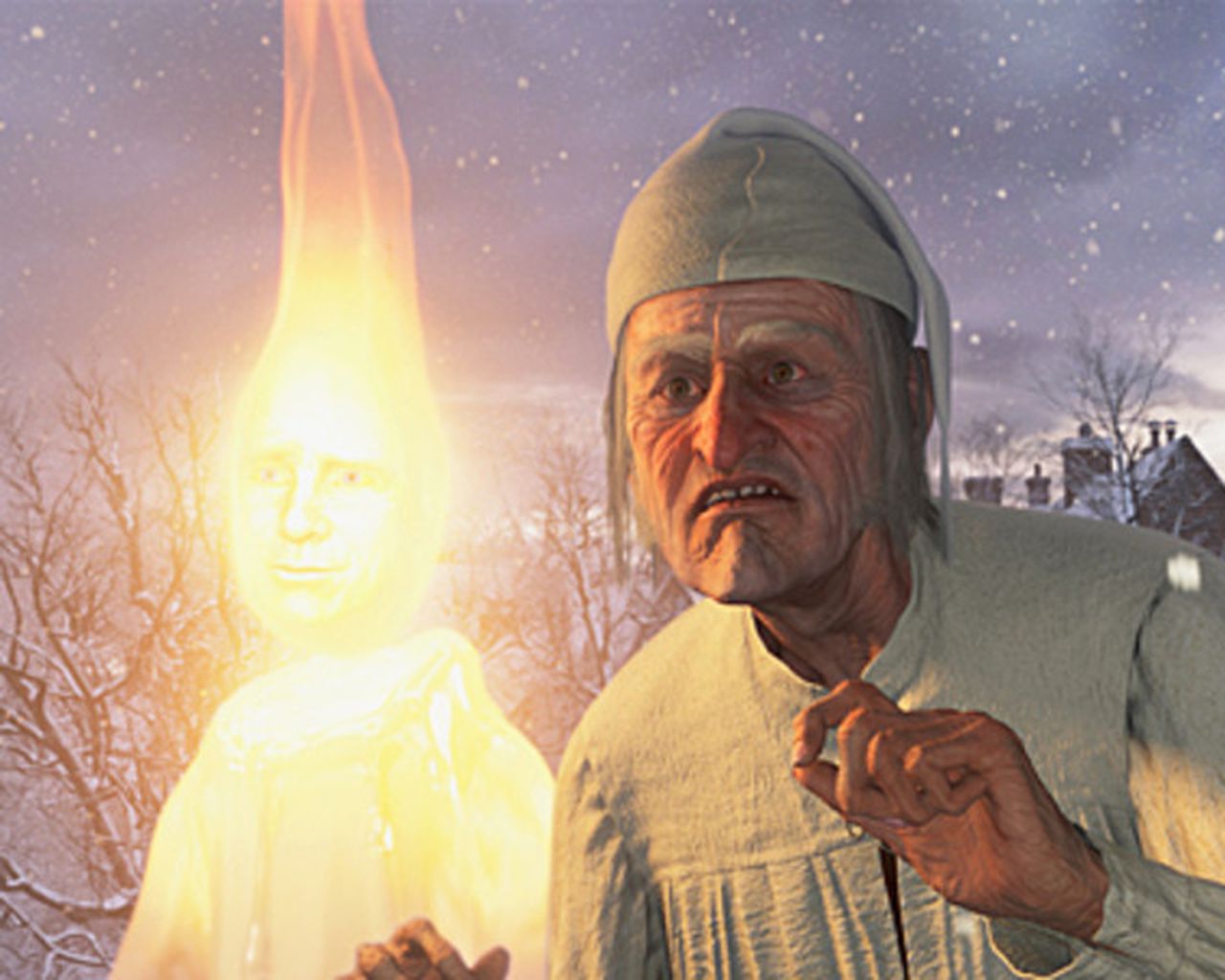
THE GHOST OF ‘TRAINING PAST’.

IS THAT YOU? TINY TIM. YOU SHOULD BE DOING THE FORM.

What does it take to stand there using only enough strength or energy to not collapse into the floor?

A DEEPER APPROACH TO TRAINING

In class do not think that you are paying money for training, this is not correct.

What you are paying for is the teacher’s time.

Your teacher is setting aside a small parcel of his/her life, something he/she can never get back or use again so that you can begin to understand something he/she already understands.

Just for you.

Once you connect with this you realise that you are also setting aside a small parcel of time that you can never get back or use again.

This can help you connect to the work.

To the importance of the work.


At the heart of all Kung Fu is the physical condition known as SONG JONG.

This translates into many different things but essentially it is a body without unnecessary tension, a released body, a neutral body that works with and does not fight against Gravity.

This is the most important aspect of the work.

I should say “becoming aware of how we do this” is the most important aspect of the work because we do not learn this.

It would be more accurate to say that we re-discover it.

Releasing the tension that we subconsciously create in our everyday dealing with gravity is something we all do as we fall into sleep.

To be expected a good place to re-connect with this ability is of course in our bed.

Lay flat and simply observe how your body falls into the bed.

Observe how your bones are sinking inside your body as they try to rest, through your muscles onto the mattress.

Just observe, become aware of that feeling.

If possible paint a mental picture of what you feel is happening.

We can do this every night.

Not only will this help us enter a night of deep relaxed sleep, but we are also engaging in ‘serious’ Kung Fu training.

The next step is to do this lying on the floor, preferably on a yoga mat or the like so that we are comfortable and our body does not react to the discomfort by creating tension.

The same job, release the tension and let the bones sink into the mat.

The next step is probably the hardest but not ‘all that’ difficult.

Stand up and repeat the process.

What does it take to stand there using only enough strength or energy to not collapse into the floor?

What is holding your body up?

How do you maintain your shape?

Next, engage your imagination.

Imagine that there is a force or energy that is filling your body the way that air would fill a balloon or water would fill a bottle.

This is not intended to create some kind of internal pressure, but all the same, we must fill up every space, leave no gaps.

In the language of Kung Fu, this is “Song Jong”.

The neutral, empty or relaxed body.

SIFU ISAAC KNEW HOW TO LET THINGS SINK IN.

FIST LOGIC

ANOTHER ONE BITES THE DUST.

WHO’S A PRETTY BOY THEN?

All the Kung Fu movie actors, Jackie Chan, Jet Li, Donny Yen even Bruce Lee were dancers that would get owned by a genuine fighter.

The internet Martial Arts sensation that is D.K. Yoo has sadly joined the ranks of failed defenders of the Traditional Chinese Martial Arts flame.

We need to address this.

This result is no surprise as D.K.Yoo was fighting someone much younger, much heavier, and much stronger.

Also, his opponent, Bradley Scott, is a credentialed fighter and not a fellow demonstration athlete, or one of his students or awestruck visitors.

The Glass Ceiling is a real thing.

But it was D.K. Yoo’s choice, if you ask me a stupid choice.

Anybody that chooses to pit themselves against such an obviously superior opponent only has themselves to blame when things go south.

The fight was really embarrassing from the point of view of a person that respects Kung Fu.

Many inexperienced students, inexperienced with violence, look at people like D.K. Yoo and think ‘shit yeah, this is the stuff’ and feel very deflated by the result.

Don’t be.

We can still respect the movement and fluidity of D.K.Yoo, he worked hard to get where he is, his ability did not come in a show bag, but we must understand that what he does is dancing and not fighting.

All the Kung Fu movie actors, Jackie Chan, Jet Li, Donny Yen even Bruce Lee were dancers that would get owned by a genuine fighter.

Pro or street.

So would I.

So would you.

Get over it, we are not training to challenge genuine fighters.

We can gain something from this believe it or not.

We can understand that looking good is only for the bedroom.

Escaping a violent situation in one piece, which is what we are training for, ESCAPE, is more about understanding and controlling the environment we find ourselves in than physical skill.

Wing Chun is a somewhat specialised Martial Art that exists in a very specific environment/space, if we can create this environment/space Wing Chun works as well or better than most other styles.

Below is some footage from Saturday’s Junior Master training, the first thing to note is that the training is relatively slow and relatively easy.

Single Arm Chi Sau is of immense value for genuine violent encounters, much more valuable than doubles.

The aim is to be in control of what we do, moving slow and easily takes more control than rushing.

Adrenalin and the actions of your opponent dictate what speed you need to be operating at, your nervous system will understand what is needed.

When we consider that all movement is initiated by our thinking, acting fast requires us to think fast, not move fast.

Thinking fast requires a calm head and as few choices as possible.

If our head is in the right place when using these IDEAS in a violent situation everything we do will take place in a millisecond, that is the whole IDEA.

At 24 minutes this is a long video, consider it a Christmas present.

In case you live in a cave with only the N.B.N. here are some links to follow.

D.K. Yoo’s fight. Keep in mind that this is his own highlight reel, he was proud of this, and do not be put off by the fact that he looks like Freddy Mercury. Fight highlights HERE

This is a breakdown from an active M.M.A. Fighter and coach that is worth listening to, at least the first half which is par for the course with his stuff. He loves the chat. Ramsey Dewey Roast, HERE.

If in doubt, run away. D.K. Yoo.

MOON, WHAT MOON?

WHAT KIND OF DAY IS IT?
FIST LOGIC

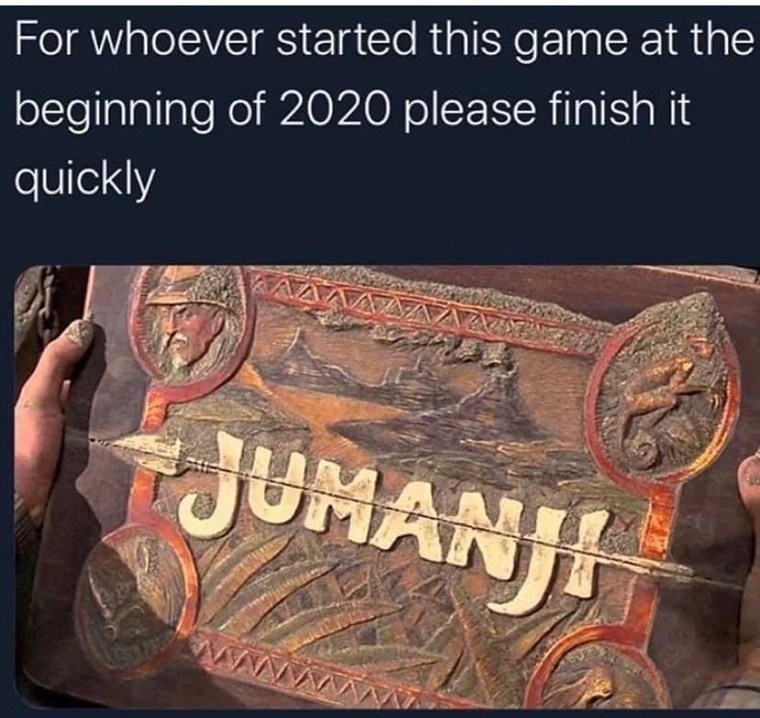
JUMANJI IS NOT A MOVIE.

THIS AI’NT FUNNY.

Everything that happens to us happens because of a choice we made.

What is this thing we do?

THIS WING CHUN THING .

Before we respond, we must answer a different question. 

What do we think this thing does?

And before that, we must ask, ‘for what reason did I choose to push my Canoe down this particular stream’?

It was always OUR choice.

I have helped enough people on this journey to know, without any doubt or malice, that most people lose sight of what they want to do the moment they are told what they need to do.

Most.

Not all.

But we must not, even for a single second, place ourselves with the ‘Not all’ as opposed to the ‘Most’.

But we will.

I did.

I still do.

If we do not choose to think in this way, how do we proceed?

 How do we go forward?

This – is the WORK.

Who is at fault here?

The teacher that says ‘This is the way”?

Or the student that does not listen and so does not hear?

This – is the WORK.

As I have already said…

It was always our choice.

This is not some new age, Kung Fu Master, Zen shit.

This is not Mindfulness.

Everything that happens to us happens because of a choice we made.

It may have appeared as a small choice.

I will get the train and save the cost of Taxi.

Even smaller, I will turn left onto Goulburn Street.

A few moments later it is like that early Batman series, “Boom, Bash, Crash, Capow.”

Who created the violent situation that occurred a few moments later?

We did.

IF WE WERE NOT THERE IT WOULD NOT/COULD NOT HAVE HAPPENED.

Open your mind before employing your preferred bias.

Face it.

That other dude did not make us take the train.

That other dude did not make us turn left.

Deal with it.

Understanding this, accepting this, controlling this…

… is the WORK.

Wing Chun is just a method to use the WORK.

IN THE WORLD OF THE BLIND.

THE ONE EYED IS KING.

HOKKA HEY.
WHAT KIND OF DAY IS IT?
FIST LOGIC

THIS ONE IS FOR THE WORLD.

LIVE LONG AND PROSPER.

Wing Chun cannot be all things to all people, but if you find the right teacher it can be exactly what you need it to be.

Emerging from the Covid 19 lockdowns my understanding of the best way to teach people Wing Chun has changed dramatically.

My understanding of Wing Chun itself is unchanged, I just no longer see the value in carrying on the old method favoured by Yip Man and his disciples.

A list that by lineage includes my own Sifu.

Before Yip Man opened his first school he was just as you and I are, a Wing Chun Man carrying his teachers knowledge.

But there is serious doubt that he passed on this knowledge, at least not as he had been given it.

Yip Man changed Wing Chun to such an extent that when his two sons reunited with him after 10 years of enforced separation they did not recognise what he was teaching.

Two of Yip Man’s more renowned students, Wong Shun Leung and Chu Shong Tin made serious departures from Yip Man’s teaching to the extent that they became different enough to be looked at as separate practices.

Initially, my Sifu always taught Wing Chun the way he had been taught by his teacher Chu Shong Tin.

He was a true disciple. If there was ever any doubt during training he would refer to then defer to his Sifu.

But in 1999 he refused to change the direction of his teaching when Chu Shong Tin changed the direction of his Wing Chun.

There is nothing amiss with a Master changing his methods or his way of teaching in his own school, but we should wonder “what was left out that was originally Wing Chun, or what was added that takes things in a different direction”?

And of course, we should ask this of every Master that makes any changes.

This ultimately leads to the question ‘what is Wing Chun’?

There are well-regarded teachers that present Wing Chun as a Combat oriented Fighting Art.

There are well-regarded teachers that present Wing Chun as a Pseudo-Spiritual Self Improvement method.

There are well-regarded teachers that present Wing Chun as a Counter-Attacking Self Defence System.

Can it really be all things to all people?

History paints a very different picture of Yip Man than those silly films.

He lived in difficult times and to survive he needed to make difficult decisions.

We live in easy times, we can make easy decisions.

The first decision is to ask ‘smart questions’ of real people instead of listening to Youtubers.

The first smart question should be to ourselves and it must be “What do I want Wing Chun to be”?

Once we know this we can pose real questions to real people.

Wing Chun cannot be all things to all people, but if you find the right teacher it can be exactly what you need it to be.

The most important attribute for a Martial Artist is honesty.

We begin training in Martial Arts and as such become fledgeling Martial Artists, the moment we decide to seek training.

If we cannot be honest with ourselves, honest about what we want from the training we have no right to expect a teacher to be honest with us.

HOKKA HEY!
WHAT KIND OF DAY IS IT?
FIST LOGIC

DECEMBER!

Staying the course is the most important work we can ever do, if we hope to become Masters.

HEY GUYS.

Here we are at the doorstep of the Holydays.

Normally this would just be a hiccup but this year, post Covid 19, it could morph into a projectile vomit.

And by the time we wash that sh*t off of our shoes we will be long gone and thinking of other things.

This year more than any other year we must be aware of how easy it is to simply drift off course.

As you all know I have varying amount of experience in Eight {8} Martial Arts.

So I really do know what I am talking about when I talk of losing my commitment to a goal that I previously thought was so important.

Staying the course is the most important work we can ever do, if we hope to become Masters.

BREATHE.

CHILL.

KEEP TRAINING.

HOKKA HEY.

FIST LOGIC

ONE MOVEMENT – MIND DOES THE WORK.

Letting the Mind do the work begins with thinking about the work.

LET THE MIND DO THE WORK.
What IDEA does this statement lead us to?
There is no doubt that the mind plays a vital indeed critical part in all and any movement.

If we do not think it, it simply does not happen, quite literally.

So on one level LET THE MIND DO THE WORK could be as straightforward as being aware of what we intend to do.

INTENTION is most definitely a component, but there must be more for it to manifest itself dynamically.

All movement is the result of an impulse from our brain that informs the nervous system to move the muscles.

VIDEO

Letting the mind do the work is not Mindfulness.

Be very weary about Mindfulness, my advice is to avoid it, and any that speak it.

Letting the Mind do the work is not circulating Chi or any other esoteric IDEA.

Be very weary of talk of esoteric forces, again, avoidance is advised.

Letting the Mind do the work begins with thinking about the work and nothing else.

It begins with simply thinking anything and seeing if it resonates with the work.

The ultimate aim of training is INCLUSION.

How do we include all of the attributes of all of the FORMS into one single whole, it is only when we do this that we begin to approach what Wing Chun IS.

This is where the work begins.

This is where one movement lives.

This is the Mind thinking.

HOKKA HEY.
WHAT KIND OF DAY?