I realise that offering up 5 videos and expecting any of us to truly get anything from them, is, to say the least, hopeful.
So I will try to unpack them over the next few weeks, on the blog, and in training.
As you should be well aware of I grew up in a different world, back in the 60s & 70s in particular, violence was accepted.
And expected.
My lived experiences give me a ‘very different approach to, and expectation of, all Self-Defence or Fighting Arts.
This influences how I present the work.
Because of my lived experiences, I understand that no Martial Art, Fighting Style, or Combat Sport prepares us for a violent encounter.
They just give us better tools.
Here is footage from Saturday morning with Sam and Rick, unpacking some information from last week.
We have done all this many times, but one of the mysteries of being a Human Being is that we need to do things again and again before the penny drops.
Even when we get it and know it inside-out, we must keep repeating the exercise to maintain the IDEA.
The most important thing to keep front and centre is that everything we do has a real purpose, just using this filter can answer many of the questions that crop up.
If not, just ask me.
Never forget or doubt that “FIGHTING IS EASY”.
Winning that fight or not getting injured are slightly different matters.
That part of violence is not what Wing Chun teaches.
If you think it does, you are taking a BIG risk.
Wing Chun only teaches Wing Chun.
Develop honesty.
“Everything we call real is made of things that cannot be regarded as real.”
BOTH SHAOLIN AND TAOIST MONKS THOUGHT OF KUNG FU AS ALCHEMY.
One thing I have always accepted, even back in the day as a tradesman teaching apprentices, is that any failings of the student are the fault of the teacher.
This post was initially meant to be a follow-up of sorts to the last post.
However, once I started thinking of reusing, and as such viewing some of the older videos that no longer get viewed, I realise what a wealth of information I have put out there, that is now sadly just talking to itself.
And I cannot help but ask, “have I always been talking to myself”?
You all by now know my IDEA of “only one shape, only one movement, and only one body”, and without meaning any disrespect to anyone I just do not see it, even in the senior guys.
I struggle to try to understand why this is and what I can do to change it.
One thing I have always accepted, even back in the day as a tradesman teaching apprentices, is that any failings of the student are the fault of the teacher.
I caused this problem, by always creating new content I unwittingly diminish the value of the old content and create the illusion that there is still more to learn.
There isn’t.
From the day before we began this journey, yes you read that correctly, the day before we began, we already knew everything.
NORMAL HUMAN BODY MOVEMENT.
This has turned into a huge post, I realise that these days many people do not have the attention span for something like this, so it may well be for nothing, but I hope not, try approaching it in the way we eat an Elephant.
One bite at a time.
Read through the text before watching the videos, this act in itself will be a severe test for the YouTube generation.
In my time as a teacher I have assisted hundreds of students with their training, back in my teacher’s school, I was the go-to mentor for my group when talking about all things Chum Kiu, but even then, almost 20 years ago, the advice I gave did not show on the students, and I would wonder.
Why do intermediate Wing Chun players move so poorly?
One big issue is that after spending some time getting to understand the “Standard Model”, that in Chum Kiu the lower body moves the upper body, which from the outset is a misleading way of describing it, we move on to Biu Gee, and everything changes to the extent that it almost gets turned on its head.
This contradiction arises from the fact that most mainstream Wing Chun is still working with 1950s Body Mechanics, or at least how to teach and understand the Kinetic Chain approach to Body Mechanics.
In reality, it is much better to see that in Chum Kiu we only move the Pelvis/Hips, we do not move the upper body at all, the Torso simply sits there and goes along for the ride.
Better or easier understanding is not helped by the teaching/learning of the Forms as stand-alone patterns, especially in a linear way.
There is and has always been “only one Form”.
If, as we always claim, that Wing Chun is based on normal human body movement then everything we do is, at some level at least, Wing Chun.
As an “IDEA” and not a Form, Sil Lim Tau is a circle, with no set beginning, and no set end.
Even though it is taught Arms first, then Lower Body/Pelvis, and then Upper body/Torso, to be understood it must be seen as an impulse from the feet up through the Body and out of the Arms.
However the learning curve is too steep if we do not learn the Arms Form first, this is why I refer to it as what everyone knows as S.L.T. as the “First Form” until we have progressed through the cycle.
Once we have some understanding of the First Form, then the Chum Kiu Form, and then the Biu Gee Form we now have the information that makes up the Sil Lim Tao.
Not the Sil Lim Tao Form, the IDEA itself, but to see it we must read it from Chum Kiu Form, then Biu Gee Form, and then Sil Lim Tao Form.
There are countless complexities inside all of the Forms, but if we are talking about how to move the Wing Chun Frame it could be learned in a weekend.
Chum Kiu is simply side-stepping, Biu Gee is Core Winding and Sil Lim Tao is extending the Arms in an optimal condition.
It really is this simple, but like all “GOOD THINGS,” the Devil is in the details.
Here are some views on how to play the Forms.
Here is another video, try to see that these are all just different ways to observe the IDEA, it is like looking into a large hall from different windows, a different perspective from every window, but still the same hall.
Or if you prefer a more imaginative visualisation, we circle the IDEA like hungry sharks around a dying whale.
A bite here, a swim, and then a bite there.
If the window we are looking through is the window that helps us use our training out in the wild it would look a lot like the video below. At 6.00 minutes there is some important information about natural body recruitment. We think we know this stuff but usually, we do not, we only think we do and as such overlook it.
At last the Steak Knives.
If any of these videos fulfill its promise as a direct follow-on to the last post it is this one.
Hopefully, you have watched all of the videos and can clearly see how, in their own way, they were expanding on this.
A really significant difference between today and the earlier times, 1960 through to 2000 in particular, is the availability of information, especially Wing Chun information.
Up until the mid-1990s, there was nothing on video, it was all written and very expensive at that.
Finding anything in English was rare, and anything about Wing Chun was even rarer.
Information was cherished and reread many times until even the page numbers were remembered.
Today information is everywhere and easy to access, so it is not looked on with the same reverence, to the extent that nothing is important anymore.
To paraphrase Rutherford Rogers, “we are awash with information and starved of motivation”.
If we do not wish to be the type of students that watch and forget, we need to deliberately become the type of students that watch and learn.
It is simply a choice, unfortunately, I do not have a video for that.
IT IS NOT WHAT YOU LOOK AT THAT MATTERS, IT IS WHAT YOU SEE.
I.M.O. Wing Chun is not a fighting art, it is a way to think!
Listen up Tribe!
I doubt that many of you will remember this post from over a year ago, seeing as we were deep into the second Covid lockdown, we all had much more to think about, or at least complain about, so it may well have gone through to the ‘keeper.
It is worth revisiting however because I think that this is an important notion that once gripped never falls away from us.
As scattered as it may at first appear, the video to this post is a powerful aid to progressing as a human being, let alone a Wing Chun Man, save it somewhere and come back to it every few months just in case I do not cover the same ground again.
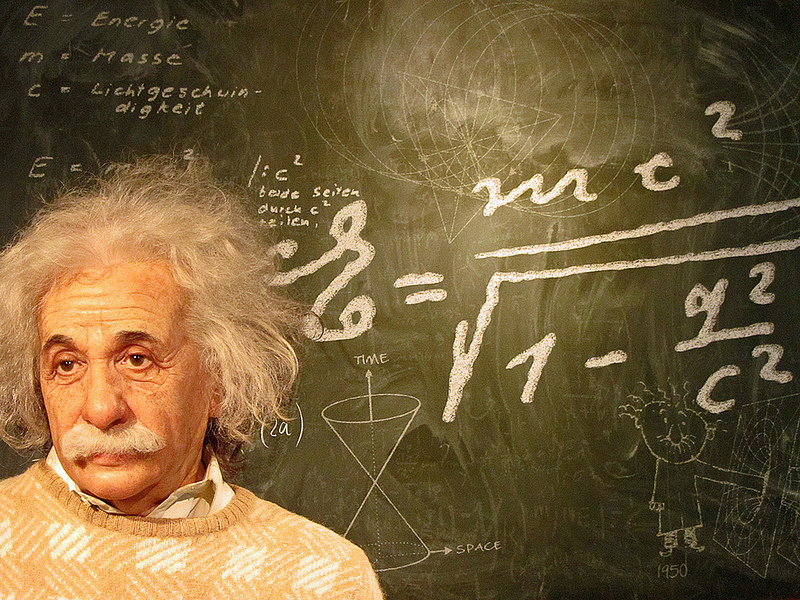
Albert Einstein was of the opinion that “time is an illusion”.
Without time nothing happens, so nothing moves.
Hence the confusion because of his own words ‘nothing happens until something moves’.
Well, I hear you ask, what does Uncle Albert have to do with Kung Fu?
Here is where I am coming from, I.M.O. Wing Chun is not a fighting art, it is a way to think.
This is why it fails so often when people try to use it as it is taught, as a stand-up fighting skill.
I do not think that this was ever Dr. Leung Jan’s intention.
How we engage with the work mentally is more important than how we engage with it physically.
Mental fluidity is essential for us to reach out and touch the ‘little idea’.
The ancient Chinese monks that established and expanded Kung Fu, be they Buddhist or Taoist, considered their training as a form of alchemy, turning lead {the initiate} into gold {the master}.
Most of my own training is a hybrid of all the things that have affected my life, Boxing, Judo, numerous diverse sports, cooking, and even music because it is through this eclectic lived experience that I view my Wing Chun.
To be expected, you will see it differently as you have lived differently.
WELCOME TO THE EDGE.
A common issue with all solo training is that we can begin to doubt that we get it, begin to doubt that we are doing the right thing.
Problem solved, there is no ‘right thing, there is only ‘doing‘, use Yoda’s voice when you verbalise that.
So as not to overwhelm us all with too much information I will post a follow-up blog article, I am writing it as you read this so it is fresh info, hopefully in the next few days.
Stay tuned.
The Edge… there is no honest way to explain it because the only people who really know where it is are the ones who have gone over.
“[Stability] is the cornerstone upon which your strength is delivered, your aerobic performance is delivered and your anaerobic performance is delivered. And it’s the way that you do so safely.”
PETER ATTIA.
Hey Tribe.
This is a link to a podcast I subscribe to from Peter Attia.
Peter is a dead-set Wonderkind, he is an extreme athlete, a Mathematician, a Surgeon, and a Physician, oh, and a very clever man.
everyone there is trying to sell something, and it is not always Kosher.
Now that there are 5 of you working on the Dummy it is important that we are all on the same page.
I have no issues with people checking out the DUDES on Youtube to see what they are about but never forget that youtube is a shopping platform, everyone there is trying to sell something, and it is not always Kosher.
At the end of the day anything that helps… helps.
So go at it.
Just remember that how you train is how you will fight, so unless you are fighting a stationary piece of wood…?
A General Theory of Fighting Arts becomes grounded in Human Movement and not, as it so often is, ‘Esoteric Ideology’.
The General Theory of Fighting Arts is a term widely used to try to get students to identify the mutual movements of all martial styles, and the alignment with most dynamic sports.
One thing we have all been told, and if we are talking to beginners or non Wing Chun people often repeat is that ‘Wing Chun movement is based on normal human body movement’.
I do not think that students give enough credence to this statement, that ‘Wing Chun movement is based on normal human body movement’.
It gets treated as if it is just some sort of cagey advertising spin just as many Instructors still claim that Wing Chun was invented by a woman, a device to encourage smaller, less athletic men to take up Wing Chun instead of a rival code.
But Wing Chun IS based on normal human body movements.
If we approach the work from this perspective and look at what is presented and how it is presented, we see a pattern emerge, that in the progression of the FORMS, as we move from the first Form to Chum Kiu and then Biu Gee, this progression is nothing more than the introduction of more complex movement for people not familiar with this way of moving.
This approach more than likely had merit back in 1860s Foshan but today, due to the average sporting curriculum of most western schools every 12-year-old child is familiar with these moves.
A very large proportion of what is introduced through the Forms is simply unnecessary, at least from the point of view of controlling our body.
Do not get me wrong, the FORMS are needed for other reasons so I am not suggesting abandonment.
But we can easily be moving at a level that is needed for any aspect of the work be it the Dummy, the Pole or the Knives if we put more practice and focus into moving better as a Human.
Take any movement or action from any sport, especially a throwing or bat and ball sport, and you will find the moves somewhere in the Form.
A General Theory of Fighting Arts becomes grounded in Human Movement and not, as it so often is, ‘Esoteric Ideology’.
This week spend some quality time exploring the similarities between Martial Movement, Sports and Dancing, once you see how they amalgamate, consolidate and integrate FORMS become a secondary consideration.
IMAGINE, MANIFEST AND WORK ON THE IDEA OF THE FRAME.
And while you a re at it put some minutes into the MAGNIFICENT SEVEN.
Here they are, and here is a recap.
WHEN YOU UNDERSTAND, THINGS ARE JUST THE WAY THEY ARE.
WHEN YOU DO NOT UNDERSTAND, THINGS ARE JUST THE WAY THEY ARE.
The aim of all training in every Martial Art is to understand how to control our body in an unexpected environment, Knee Sau takes us there.
Hey Guys,
Here is a short video on what we accidentally discovered while looking for new ways to spice up training and help to help us develop a better feeling of what it is to be in contact with and control our mass.
As whacky as this appears it is astonishing at helping us feel what is needed to power our body with our CORE.
Which is, of course, the ultimate goal of Biu Gee.
What is really amazing is the way we can transfer the IDEA from a kneeling position to a standing position.
Check it out.
This may at first look like a crazy thing to do, even a waste of valuable training time.
But once we consider that nothing we ever do in training is anything like being involved in a genuine violent encounter, that what we train is a long way from reality, and even your favourite Youtube Wing Chun poser is doing nothing that would work in a real encounter, we may as well have fun while we are at it.
Training being nothing remotely like the real thing is not just a Wing Chun issue, it is every style of Martial Art and it is even worse for an untrained Bad Guy, so we do not need to panic, if we are training we are miles ahead of the curve.
Whatever that curve might be.
The aim of all training in every Martial Art is to understand how to control our body in an unexpected environment, Knee Sau takes us there in Spades.
It may be difficult to think that the guy with the knife in the video was defending himself, but I am willing to bet that he thought he was.
HEY TRIBE.
In light of our ongoing Whatsapp chap about the video that shows that fatal stabbing, I just wanted to get this out there.
I have spoken of this so often to so many students both past and present, but it really needs repeating, because it is still so grossly misunderstood.
In the Martial Arts Community, there is great disagreement about what style is good for fighting and what style is not good for fighting.
And then there are conflicting opinions about what style is a fighting art and what style is a self-defence system.
This is blown out of all proportion by the fact that most people do not fully understand the difference between fighting and self-defence.
Especially when it comes to understanding {and admitting that we are training in}, a self-defence system.
I grew up in post-war Britain, every grown-up in my world potentially suffered from P.T.S.D. All had experienced the horror of war in one way or another and it shaped their worldview.
As a 5 to 7-year-old boy the advice I was given was that if you get into an disagreement, scuffle, or argument hit the other guy before he hits you.
This, was self-defence in the 1950s.
And it worked for me.
This was pretty much how things carried on deep into the 1990s.
And it still worked for me.
Now, 30 years on in the 2020s, we are a society that is better informed and more connected, we understand that hitting someone first may be a savvy tactical decision, but it is not Self-Defence, right-here right-now, it is, in fact, assault.
Later on it can be argued in court.
We all recently viewed that tragic -48 second video were a young mans life ended in a S.N.A.F.U. of a shit fight before a punch had landed.
I have been in this kind of standoff, in a situation like this both sides see this as a self-defence situation.
We cannot be sure how the agro in the video kicked off because we do not witness the build-up, but it is safe to assume that words were exchanged, that is usually the case, and then both sides felt the need to defend their assumed position.
Their ethnicity, their territory or even just their football team.
In many ways, it was ignorance that led to this tragic outcome.
A few of you have asked if we can look at this in training, and I am sure that there are many students of multiple styles of Martial Arts that are asking their teacher a similar thing.
We need to go deeper than “What would we as {insert chosen M.A. Style} practitioners do in this situation”?
To everyone out there and not just our mob, what do you think your chosen style is teaching you?
Is it teaching you to fight people, or is it teaching you to defend yourself?
It may be difficult to think that the guy with the knife in the video was defending himself, but I am willing to bet that he thought he was.
Over the years I have asked every student to imagine a situation where they would be called upon to use their training.
To a man {generic} it is always a situation where an argument or some other anti-social behaviour turns physical.
It is usually described this way… ‘we were arguing and then he {generic} suddenly thew a punch, my training kicked in and I just reacted.’
Is this self-defence?
This is such a grey area, it is nothing short of a slippy slope on a foggy night. Excuse the poetic viewpoint.
Despite the oft-used cliche´, ‘always expect the unexpected’ in truth we all know that we cannotexpect the unexpected, so if we can react to a sudden attack without surprise then on some level we were expecting it.
DUH!!!
I am not trying to take some moral stance here with this post, if this was me 30 years ago I would have already hit the guy first and asked questions later.
But it is not 30 years ago.
Can we claim self-defence if we are waiting for the attack?
If we are not trying to de-escalate the situation, even if it is not our intention, we are allowing it to escalate.
We are now preparing to fight this person and not defend ourselves.
I can almost hear the young offender from the video saying ‘it was a slippy slope on a foggy night, your honour’.
The most important aspect of Martial Art is to try to understand violence, not to learn how to use violence, and not to learn how to choose violence.
At least not as a first choice.
In the original Karate Kid movie, Mr. Miyagi says “best defence, don’t be there”.
If we see it coming and do not avoid it, are we defending ourselves?
Or are we waiting to join in?
If I am arguing with someone and I sense that it might kick off why am I still there?
Yes, there are most definitely times when we will not expect it, this is self-defence, how to go from the ‘Oh Shit” moment of just sticking our arms out and into something that can make good our escape.
We will work on this, the ‘Oh Shit” moment, and not on how to defend against a knife.
I just wanted to get this out there, especially as we were all talking about the stabbing.
NO ONE WINS A FIGHT, ONE PERSON JUST LOSES A BIT LESS THAN THE OTHER.
Once seen, these movements cannot be unseen, the thing is CAN YOU SEE IT?
Hey Tribe and friendly visitors, something to ponder during yet another deluge.
All Forms are dancing until we make them singularly important and decide that they are something else, something meaningful, something uniquely special.
If we extend this to its logical conclusion if all Forms are dancing then all dancing is a Form and they are also are something else, something meaningful, something uniquely special.
In the exceptional video that I have chosen watch it with the sound as low as you can make it and still keep the rhythm then see if you can identify some very obvious Wing Chun movements.
If, as we claim, Wing Chun is made up of ‘normal everyday human movement’ and that there is ‘only one movement, only one shape, only one body’ Wing Chun should be, and is, everywhere.
Watching how dancers create complex movements from essentially simple shapes can help us understand, expand, and empower our Forms training.
Like them or not, Bollywood films have exceptional movements, and usually movements that come directly from the Martial Tradition.
Once seen, these movements cannot be unseen, the thing is CAN YOU SEE IT?
It is being the best of ourselves, that makes Wing Chun, or any Art, work.
I AM NOT BEING STILL. I AM JUST NOT MOVING.
This is not semantics, this is something we need to get our head around, to understand the language, understand the thinking, and then understand the functionality before we can get our body to comply.
Do not try to be still, this is not a natural state for human beings we are built to move.
I have seen many students doing the S.L.T. and trying to be still.
What we should be doing, and trying to think about, is not making unnecessary movement.
Moving anything except our arms when playing the S.L.T. Form isunnecessary movement.
If this results in stillness, all is well and good, but being still is not the goal.
If we are called on to use our training, what good will being still be?
What we think Wing Chun is at the beginning of our training, {and being what most outsiders think Wing Chun is}, ends up being just 10% Wing Chun and 90% being a human being.
Everything we do in Wing Chun training is essentially just theatre, the Forms, Chi Sau the whole kit and caboodle.
Smoke and mirrors, dancing.
The rest, the 90% simply helps the advanced student reache a place in their life where they are in control of themselves enough to almost seem in control of the world around them.
We are not Alchemists of course, we have not discovered the philosophers stone, but when you can effortlessly do what others put great effort into and fail, their only answer is that we must know Magic.
It is being the best of ourselves, that makes Wing Chun, or any Art, work.
This is in no way pooh-poohng the training, on the contrary, if we are a “Perfect {generic} Man” but have no “IDEA” how to get out of trouble…
…we do not get out of trouble.
So it would be prudent to do our best that to compliment our Wing Chun training we work to become and understand what it means to be, a better human being.
Here is a video presentation from a group of guys that have a Youtube Channel called Functional Patterns, as you all know, my bias is and has always been towards functionality, so it should come as no surprise to you that I like a lot of what these guys do.
This video presentation is about “Breathwork”, the presenter is a bit hyper but the info is, at the very least, Food for Thought.
As always, if this post brings up questions, which I hope it does, then bring them in, and I will try my best to answer them.
To visitors, if this post spikes your curiosity, you know, you ask yourself W.T.F?
If you have any questions, hit me up in the comments, I will try to explain W.T.F?, Or at least point you in a direction that may help.
“There is only one thing that makes a dream impossible to achieve: the fear of failure.”












 Wing Chun Sydney, Australia