FIST LOGIC

THE ATTRIBUTES OF WING CHUN’S TRINITY.

TARN, FOOK AND BONG.

Ip Man stated that there are 3 hands {Sau’s} in Wing Chun, Tarn Sau, Fook Sau, and Bong Sau.

A standard training model in Wing Chun is to study the bio-mechanics of all the Forms, especially the first Form, known to most as the S.L.T. 

As a result, training tends to become full of statements like “Rise up, sink down, focus forward, and relax”.

As important as these things are they have the potential to lead students away from the true purpose of  Wing Chun, which is of course dealing with violent people that mean us harm.

In the lineage that I am part of, there are almost 500  moves in the 6 combined Forms.

It is inevitable that students will get lost and start thinking that at least some of these moves are important.

I assure you, THEY ARE NOT.

They may even believe that these moves are a representation of what Wing Chun is.

Once again, THEY ARE NOT.

They may start believing that to be successful in a fight you must relax when in truth, most people who survive violent street encounters do not recall what they did that was so successful.

Usually, it was a lucky punch that saved the day.

As Arnold Palmer once noted when a spectator called one of his shots lucky  “it sure was, and the more I train the luckier I get”.

So, training is important if we ever hope to get lucky.

What should we be training? 

What should we look at taking away from that training?

What are all of the Forms and all of the buzzwords teaching us to understand?

Learning a Form or even all the Forms will only teach us how to do a Form.

Chi Sau will only teach us how to do Chi Sau.

Relaxing will only ever help us to relax. 

Many of my contemporaries will of course argue with this, but there is no getting away from the fact that all training is catastrophically task-specific.

This is mostly due to the way that our brain stores information and has little to do with the training methods of past Grand Masters.

What is our training trying to teach us?

Keep it simple.

Wing Chun always tries to keep things simple, it is teaching us how to dissipate force and expel force, it is teaching us how to hit another person and how to avoid being hit by another person.

That’s it.

Every move in every Form can be used for defensive purposes or attacking purposes, so it cannot be the move itself that is important.

If we think about it we can parry with a punch, we can strike with a Fook Sau, studying punches and Fook Saus in their own right is pointless.

We should study what it is they are trying to achieve, once we understand this we can do it with any posture, any movement, any name.

What we are trying to achieve is shaped exclusively by our Intention.

Intention” is a wide subject, even in something as simple and limited as Forms, so in this instance, I prefer to call it the “Inherent Attribute”, or even easier just “Attribute” of the move.

Ip Man stated that there are 3 hands {Sau’s} in Wing Chun, Tarn Sau, Fook Sau, and Bong Sau.

Everything else stems from them, this is why the first Form is at the core of Wing Chun, it introduces this Trinity for our examination.

It is the Attributes of this Trinity that everything is built upon, not the shape or where it is situated in the Form.

What is the Attribute of  Tarn Sau?

Although we have a shape that we call Tarn Sau we could redirect incoming force with any shape, hence Dai Sau and Bill Sau appear as variations of the Tarn Sau shape, in fact, a Fook Sau latch operates as redirection and when doing so could be seen as working as a Tarn Sau.

Tarn Sau introduces The Attribute of Redirection.

What is the Attribute of Fook Sau?

From my singular perspective, for instance during Chi Sau, the aspect of
Fook Sau is about controlling the space behind my bridge, and not an attempt to exert control on the opponent.

However, if wanted to I could control my opponent by pressing with a Pak Sau or Chum Sau even folding the elbow over but either way, Fook Sau is about control.

It does not matter what I am using if I am controlling my space or controlling my opponent’s Arms with any shape. I am accessing the Attribute of Fook Sau.

Fook Sau introduces The Attribute of Control.

What is the Attribute of Bong Sau?

Bong Sau is the Wing Arm, whenever or wherever we move our Arm we are flapping our Wing, all our Arm movements are us flapping our Wing. 

If we follow this rationale then every time we move our Arm anywhere we are performing Bong Sau, if we are performing the movement we normally refer to as Tarn Sau I am utilising my Bong Sau with the redirection attribute.

Think about that for a moment, digest it.

When performing what we normally refer to as Fook Sau I am utilising my Bong Sau with the control attribute.

Think about that, digest that.

When I strike I simply put a hand weapon such as a Fist, a Knife Hand, or Palm on the end of my Bong Sau.

Bong Sau introduces   The Attribute of Movement.

So much less to learn. So simple.

From this perspective Chi Sau becomes almost magical, all I do is control my own space behind my bridge {Fook Sau}, yet my partner is constantly redirected my action {Tarn Sau}.

This approach to training simplifies all applications, I either redirect or control, and of course strike.

The latter Forms teach us new ways to use our whole body, a Butterfly Knife or a Pole to redirect or control.

First and foremost of the Wing Chun Principles is Simplicity.

Think about that, digest that.

“THINK BIG, START SMALL, MOVE FAST!”

CHAD MOFFIET

WHAT KIND OF DAY IS IT?

FIST LOGIC

CONNECTING TO NATURAL HUMAN BODY MOVEMENT

A General Theory of Fighting Arts becomes grounded in Human Movement and not, as it so often is, ‘Esoteric Ideology’.

To get maximum benefit to your Wing Chun education, this post, the previous two posts, and a few more to come, should be treated as a long read.

 The General Theory of Fighting Arts is a term widely used to try to get students to identify the mutual movements of all martial styles, and the alignment with most dynamic sports.

One thing we have all been told, and if we are talking to beginners or non Wing Chun people often repeat is that ‘Wing Chun movement is based on normal human body movement’.

I do not think that students give enough credence to this statement, that ‘Wing Chun movement is based on normal human body movement’.

It gets treated as if it is just some sort of cagey advertising spin just as many Instructors still claim that Wing Chun was invented by a woman, a device to encourage smaller, less athletic men to take up Wing Chun instead of a rival code.

But Wing Chun IS based on normal human body movements.

If we approach the work from this perspective and look at what is presented and how it is presented, we see a pattern emerge, that in the progression of the FORMS, as we move from the first Form to Chum Kiu and then Biu Gee, this progression is nothing more than the introduction of more complex movement for people not familiar with this way of moving.

This approach more than likely had merit back in 1860s Foshan but today, due to the average sporting curriculum of most western schools every 12-year-old child is familiar with these moves.

A very large proportion of what is introduced through the Forms is simply unnecessary, at least from the point of view of controlling our body.

Do not get me wrong, the FORMS are needed for other reasons so I am not suggesting abandonment.

But we can easily be moving at a level that is needed for any aspect of the work be it the Dummy, the Pole or the Knives if we put more practice and focus into moving better as a Human.

Take any movement or action from any sport, especially a throwing or bat and ball sport, and you will find the moves somewhere in the Form.

 A General Theory of Fighting Arts becomes grounded in Human Movement and not, as it so often is, ‘Esoteric Ideology’.

This week spend some quality time exploring the similarities between Martial Movement, Sports and Dancing, once you see how they amalgamate, consolidate and integrate FORMS become a secondary consideration. 

IMAGINE, MANIFEST AND WORK ON THE IDEA OF THE FRAME.

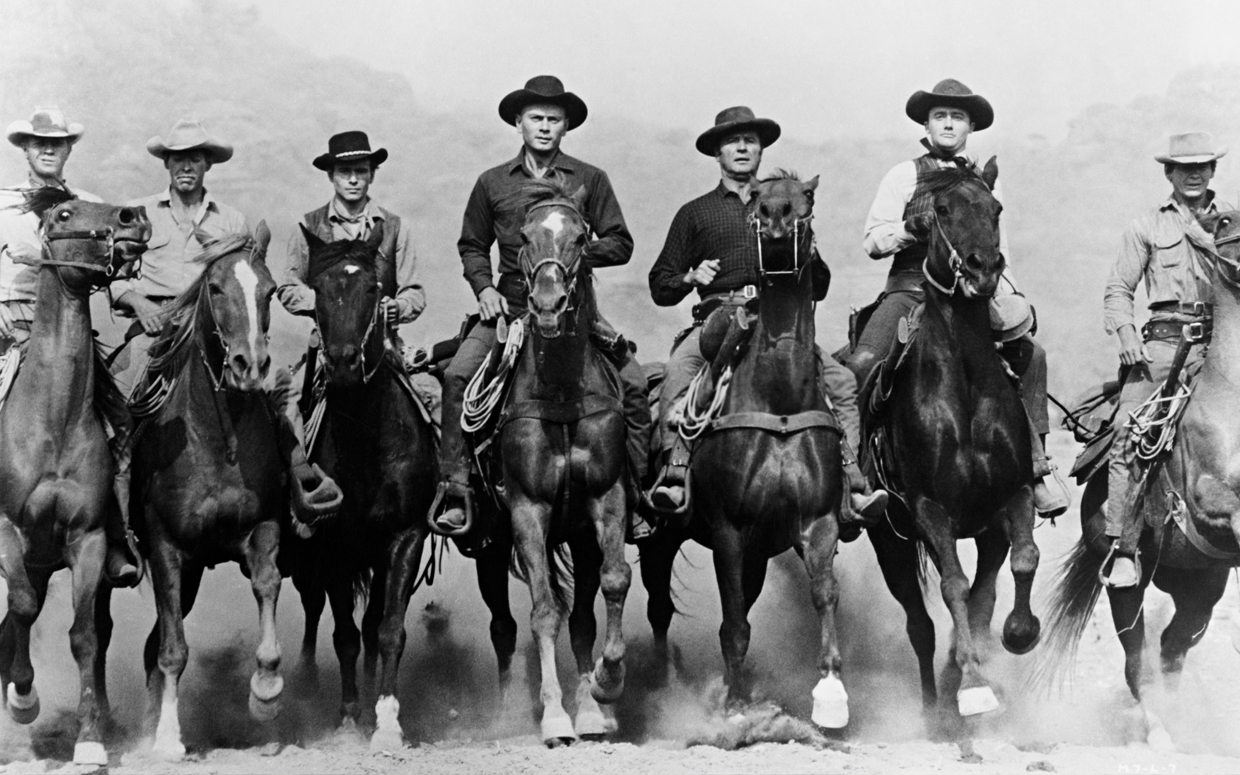
And while you a re at it put some minutes into the MAGNIFICENT SEVEN.

Here they are, and here is a recap.

WHEN YOU UNDERSTAND, THINGS ARE JUST THE WAY THEY ARE.

WHEN YOU DO NOT UNDERSTAND, THINGS ARE JUST THE WAY THEY ARE.

HOKKA HEY

WHAT KIND OF DAY IS IT FOR YOU?
FIST LOGIC

STANCES, FORMS, STILLNESS AND MOVEMENT.

The things we can learn from STANCES and FORMS are so deeply important that they are beyond value.

This post is pretty much a follow on from the last one, these types of posts allow us to approach the IDEA from more everyday Human perspectives.

Anyone with fighting experience, especially ‘Street fighting’ experience, will tell you that there are ‘NO STANCES’ in a fight.

A stance is a perfect Idea, an ideal shape and position that we benefit from being as close to as we can be.

The reason for this is explained by the ‘THEORY OF THE CONSERVATION OF MOMENTUM’.

In practice, we only ever move into a stance or out of a stance, yet all the action happens in the space between these points.

STANCES and FORMS share the same confusion, we spend a great deal of time and energy training them but in the end, we will never use them.

This is a paradox of cosmic proportions.

This is why it is so difficult to get beginning students to engage in a meaningful way, even students with zero fighting experience know instinctively that STANCES and FORMS have no practical value.

The first confusion we come across is that although we train them statically they are in fact transitional shapes that we move into or out of.

The things we can learn from STANCES and FORMS are so deeply important that they are beyond value.

How we resolve this importance from a purely personal perspective will determine the quality of most if not all of our Martial Actions.

Stances should be looked as being still points in a progressive movement, and not specific shapes and locations.

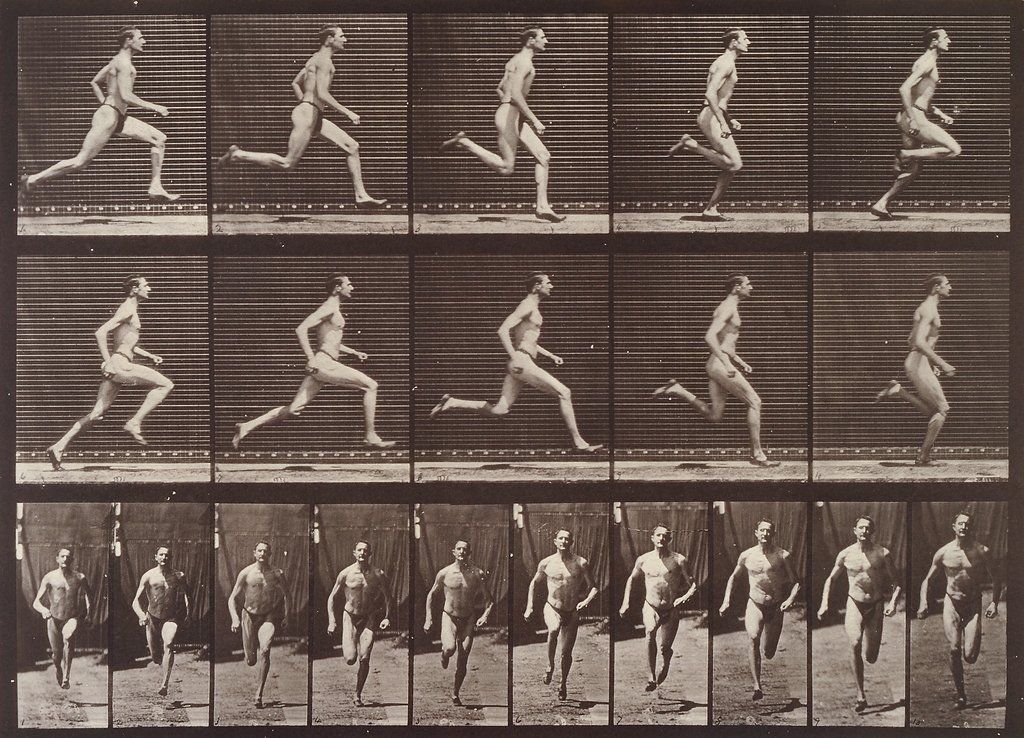
If it was available back in 1860 Doctor Leung Jan would have simply used ‘Time Lapse Photography’ and completely ignored the path of STANCES and FORMS.

Despite Stances being static they are an exploration of Human Movement, allowing us to look in detail at how our body is set up at different points in a possible progression.

Most importantly starting points and finishing points, but they can also function as a fault-finding method if we are not hitting the end stance position correctly when we move through a certain sequence.

When we look at Stances in relation to Forms we see a suggestion of how we would/could connect a start point Stance to an endpoint Stance.

STAND AND DELIVER!

Adding otherworldly importance or abilities to STANCES and FORMS has definite entertainment value if someone is a ‘Hobbyist’, but being involved in any kind of thinking that is not ‘RIGHT HERE-RIGHT NOW’ can only be detrimental to an aspiring Martial Artist.

We can only become the Martial Artist that we hope to be in 2,3 or 5 years by understanding and being the Martial Artist that we are today.

And we can only become that person by understanding the training we are doing today.

HOKKA HEY
WHAT KIND OF DAY IS IT FOR YOU?
FIST LOGIC

SPINAL STABILISATION.

The Little Idea???

MOVING ON THE OUTSIDE, STILL ON THE INSIDE.

This is a repost from before Covid 19. It is extremely important stuff, without this we are just dancing.

Where or what is the ‘LITTLE IDEA’.

Could it be that we are the ‘LITTLE IDEA’?

Any training is really about self-realisation.

The development of a new self, or at least a new vision that goes above and beyond us, sets new paradigms, attains new heights.

A self that is physically, mentally and emotionally on a different level.

A competent and capable self.

Trained and ready to face any challenge. 

Not just violence.

Wing Chun is a vehicle.

But like any vehicle on any long journey, we would do well to know how it works, how to fix it when it breaks down, to treat it with respect, so that it lasts us a life time.

On any journeys of significance, as we progress, we accumulate new knowledge and develop opinions.

Opinions that change as we gain further knowledge.

It is how we grow, move forward, transcend.

At this juncture, my opinion is this… 

The most important aspect of our training is to stabilise our spine.

 I believe that this is ‘THE NUCLEUS OF THE LITTLE IDEA’!

All of our training, all of our FORMS, our drills, our Chi Sau and whatever else we are involved in and around are nothing more than ‘stress tests’ to see if we can play them and maintain “a stable spine’.

If this is ‘THE NUCLEUS OF THE LITTLE IDEA’, what is ”THE LITTLE IDEA’?

It grows from using this Nucleus, thinking about this Nucleus, becoming this Nucleus.

MOVING ON THE OUTSIDE, STILL ON THE INSIDE.

Task number one.

HOW DO WE STABILISE THE SPINE?

There are numerous methods although ultimately they all boil down to Intra-abdominal Pressure {I.A.P.}

I am in no way a physical therapist, I am not going to advise you how to do this, but to be expected there is a ‘living shit tonne’ of videos on Youtube, by real doctors.

This is a decent one for getting the general gist of where and how to start.

Watch this and then surf the recommended video links on the right of the presentation and find one that makes sense to you.

Work on this alongside your ‘Crazy Horse’ exercises.

‘Crazy Horse’ is an awareness and conditioning exercise, in time we need to infuse I.A.P. into it.

This is not particularly difficult, but neither is it quick.

In the numerous styles that I have studied there has always been talk of breathing techniques, Buddhist breathing, Daoist breathing, belly breathing, diaphragmatic breathing, breathing into our feet the list is endless.

They are all on the right track but they are also wrong in so many ways.

It was not until about 5 years ago when I was seeing a rehab specialist for several weeks, at the ‘Pain Clinic in Liverpool Hospital’, that I was finally able to put all the pieces together

We always boast that what we do in Wing Chun is based on ‘normal, human body movement’ but few schools teach ‘normal, human body movement’.

They teach ‘Wing Chun’ movement, which is so very rarely normal and only partly human.

I know that I am repeating myself here…

First, let’s be better humans.

As always…

WORK ON YOUR WEAKNESS – PLAY TO YOUR STRENGTH.

WHAT KIND OF DAY IS IT FOR YOU?
HOKKA HEY!
FIST LOGIC

SQUARE PEG, MEET ROUND HOLE.

‘AVE A GO YA MUG.

I ask myself, does my IDEA that Wing Chun has only ‘one move’ transfer to the blades?

I finished my training this morning {Monday 23 / 08}, outside in that glorious sunshine, and I decided to do a little cleaning/maintenance of my sword collection, of course, once you take a sword from its scabbard, ‘Mars, the God of War’ decrees, it must be swung.

Like it or not, every Martial Artist is a Priest of Mars.

2 European ‘Hand and a Half’ swords, a Japanese Samurai Katana, a Pearl River Pirate Wakizashi, a Chinese Jian, an Indonesian Kris, and also, even though it is technically a Dagger, a Tanto.

I am always amazed, even though I should not be, how each sword feels so different.

As a Chef of 50 years, I am well aware and comfortable in the knowledge {the IDEA} that every blade has a different purpose, and that if you treat them poorly, or use them for a lesser purpose… they will bite you.

I have the scars to prove this.

The length, the weight, and the balance of each weapon lend themselves to very different visualisations.

The European Swords ask us to pierce aggressively, to smash and wield almost as a hammer.

The Katana is ‘so’ obviously built for cutting, slashing, slicing and dicing. Quick, lethal.

The Wakizashi conjurs up images of leaping from ships hacking anyone that stands in the way. A tool for strong men.

The Jian and the Kris both talk of mobility and elegance, of footwork and quick thinking. Of noble men and tribal princes.

Finally, the Tanto, close-quartered and possibly sneaky, to the point, if you will excuse the pun. An assassins choice.

I did not use any recognised FORM for my play, I let the blade decide what to do, and they all chose something different yet apt for my imagining.

Was it really the swords making these choices or were my actions the result of the movie I was playing in my head?

I ask myself, does my IDEA that Wing Chun has only ‘one move’ transfer to the blades?

Why not?

One thing I do know is that every time you play with a bladed weapon, be it a sword, a dagger, or a war axe, there is always a real purpose in that play.

A purpose that does not end well.

Later on, sitting quietly, absorbing, internalising what I had acted, how I had moved, and what was my intention, I could see the IDEA, the Sil Lim Tao, in my actions.

But is it really there, or am I trying to force a square peg into a round hole?

If it is there, as I believe it is, how do we manifest it into our everyday work?

There are only two forces in the world, the sword, and the spirit. In the long run, the sword will always be conquered by the spirit.

NAPOLEON BONAPARTE

IT IS THE MAN, NOT THE BLADE.

WHAT KIND OF DAY IS IT?
FIST LOGIC

THE GHOST OF CHRISTMAS PAST.

Can learning how to meditate make you a better fighter?

I was writing something this morning and I had a Deja´ Poo experience, ‘hang on I have written this shit before’.

This is a reposting of a piece from 2019, but it still says what I want it to say.

This post is intended as a provocation and conversation starter, please feel free to rip into me.

As something for us all to think about over the festive break I want to share some thoughts on the condition known as ‘Sung’, and whether it has any role or benefit in the Martial Arts.

There is no doubt about its value for health and has not been in doubt since the 5th century when Da mo introduced it to the Shaolin monks.

I believe that it is a great aid to training, but for the real world, I am not so sure any of us could create the environment needed to make it active.

I first came across the IDEA of Sung in the 1970s, I had been getting into meditation and discovered a Daoist Martial Art I had never heard of called Bagua Zhang.

Something that confused me was the Master telling me Bagua Zhang was a martial art that did not fight, he went on to say that no Daoist Martial Styles were intended for fighting.

They could be used in that way if the need for a physical response was required but it was primarily Daoist Alchemy, self-improvement.

I only trained in this style for around 2 years and only ever with this one teacher, I am sure there are other views out there.

The work consisted mainly of walking circles doing different Form sets the sole purpose was to develop ‘Sung ‘ while moving through evolving steps and shapes.

Sung means to ‘let go’.

Of everything.

“Sung” had three elements to it

First, we develop ‘Sung’ of the Physical Body, this frees up our energy channels from obstructions and allows our energetic body to wake up and our internal energy to flow freely and naturally.

Secondly, once awoken we mobilise our internal energy {Sung of the Energetic Body} and use it to feed different parts of our real physical body, our organs, our tendons and ligaments, our bone marrow and finally our brain.

Thirdly, with a healthy body and well-fed brain, we clear our mind of everyday thoughts.

I am paraphrasing my teacher’s words here b the intention but the I got was that the final goal was to be able to separate ourselves from the world {and confussions} of men.

Feet on the ground, head in heaven.

Wing Chun appropriates some of the aspects of Sung of the Physical Body, although there is no talk of trying to use Sung to correct any errors or illness in the body, to cleanse the organs, muscles, even the bone marrow.

Tendon/Muscle changing and Bone Marrow Washing is the original exercise set passed on by Bodhidarma to the monks of the Shaolin Monastery to improve their condition to meditate.

This is very clearly Qi Gung {health/meditation} and not Kung Fu {fighting skills}.

The reason I gave this away was that I trusted my teacher, he told me that it is not possible to progress to the second stage of Sung of the Energetic Body until I had mastered the first stage of Sung of the Physical Body, and that would take many years.

I can truly understand how the complete ‘Sung” would be of great benefit to a Martial Artist, in a Kippling kind of way…

If you can keep your head when all about you are losing theirs…

but I am unsure what use just the Sung of the Physical Body would be if we have become one of the others and lost our head.

The extended Wing Chun that I am a part of borrows a number of Meditation techniques, Dai Gung,  is a version of the Indian Buddhist practise of Mula Bandha, which is essential when attempting to awaken and raise Kundalini.

And as I have mentioned Sung is Daoist Meditation.

I am very aware that many people do Wing Chun with absolutely no intention to fight, but the style sells itself as a genuine fighting style.

Can learning how to meditate make you a better fighter?

If the person learning to meditate is already a decent fighter then yes, I believe it can.

However, learning meditation practises can only help in meditation, that should be a no brainer.

In my very first Wing Chun lesson, I was informed that we must cultivate Sung because we cannot absorb force if we have any tension in the body.

I thought ‘is this a practical fighting method or a self-improvement method’?

I have asked many senior Wing Chun people ‘what is Sung and how does it relate to fighting’?

On one occasion one senior told me that although he could not explain it he knew what it was and that I had it and used it.

If we cannot explain something how can we recognise it in others?

At the end of the day always the same answer ‘you cannot absorb force if you have tension in the body’.

The thing is that this is incorrect.

This incorrect information is a very real problem that has the potential to create doubt in other aspects of Wing Chun.

Doubt erodes confidence, lack of confidence allows fear to take hold, fear prevents Sung of the Mind”.

Do I have any answers?

Not really this is just a conversation starter, where do we go from here and why?

I do think we should stop using the term RELAX.

Relaxed is an adjective, it describes a condition that is brought about by stopping doing something, it is passive, inactive and our brain recognises this at a very deep level.

Letting go is a verb, we do it, it is active, dynamic and our brain recognises this.

Do we genuinely think that stopping activity {relaxing} is a winning tactic in a fight?

As always I find better information in sport, and especially in my personal experiences, as a young Ice Hockey player, my coaches would say ‘do not hold yourself so tightly, loosen up’ they never said relax.

WHAT KIND OF DAY IS IT FOR YOU?
FIST LOGIC

SERIOUSLY DOING NOTHING.

IT IS ONLY TRAINING.

Do as little as is possible, this is not as easy to do as it is to say

The core of my School is really quite senior, both in experience and age, they are all about or over 40 years of age, and they have been training with me from 5 to 10 to 15 years so most of the work we do is not the usual run of the mill Form Stuff, in many ways if you are still overtly working with Forms you are not very advanced.

There comes a time in everyone’s training {if they stick to it for long enough} where we understand that what we do has precious little in common with any of the things we have been involved in over the years, not the Shapes, not the Forms, not the Stances, these were simply vehicles for us to come to understand how to do very little, in an easy a way as is humanly possible.

There is no correct way to do anything at all in Wing Chun, no techniques, no answers to the dilemma of violence, once your mind and body understand, every movement creates a new technique and every time an opponent touches you they create the answer to that particular problem.

In Daoism, this state is known as 樸 PU, the Uncarved Block.

It may take almost a lifetime but we eventually see that we have always had this ability, it is inherent in all of us, the reason the journey takes so long is that a great deal of it is backtracking to an earlier, simpler and natural way of being, we do not really learn Wing Chun or any natural skill for that matter, we simply learn to release it from the bonds that we ourselves created.

Just like when carving wood, we are not involved in a struggle to force the wood into a new shape, we simply remove everything that does not belong and what is left is what we were after all along.

After 30 years of Wing Chun, I feel that at last everything is now natural, effortless almost empty.

Can this be taught?

I do not think that it can be, it needs to simply grow, but I do believe that there are ways to make the length of the journey far more acceptable, and the first thing needed is to stop taking Wing Chun so seriously, wishing to improve is a curse, thinking that there is a correct way to do this thing is just making the chains harder and tighter.

Do as little as is possible, this is not as easy to do as it is to say, when I do stuff with my students I get zero feedback in a physical sense, I just watch them get thrown away and understand what and why and these days that is enough, this is a softness that is in no way soft.

When you touch me you touch the planet.

Do less, much less.

Clarity of vision is the key to achieving your objectives.

TOM STEYER

der it is.
FIST LOGIC

A NICE DAY FOR A SHIT STORM.

WRONG WAY, GO BACK!

“Hey Fella, you wanna buy some crap? I am just your guy, full contact all reality pressure tested crap, right here, just sign up”.

As a follow on from my comment that new students struggle to grasp Wing Chun because it does not reflect the thing they fear.

We must, above all else, realise that what we fear will never happen and just settle the ‘fk’ down.

Easier said than done.

This ‘false belief’ prospective students hold heavily impacts what is being offered up in the Martial Arts Marketplace as training.

Never doubt that it is a marketplace, even with my small operation there are costs that must be met, and I meet them by selling my IDEA.

For the most part, and for most salesmen, selling is selling, and the customer calls the shots.

“Hey Fella, you wanna buy some crap? I am just your guy, full contact all reality pressure tested crap, right here, just sign up”.

In the early 1900s, George Bernard Shaw opined that “Those who can do, those who can’t teach”.

And on the wall of Liverpool University {U.K.} A centre for prospective teachers, a wag wrote, “and those who can’t teach, teach teachers”.

This is oh so true of the Martial Arts.

So many teachers have little to no lived experience of random violence, if they had they would spend more time and effort teaching the NIKE DEFENCE and less on chaining impossible combos and machine gun punching.

Why am I any different?

One thing I know, that many others simply do not, is what it is like to be on the wrong end of a beating.

Let’s just be honest for a moment, this is the place we do not want to go to, this is what we are trying to avoid, and this is what we need to learn and understand.

It is a place I hope to never revisit, especially as I have been there more than once.

A few things I know about being hit, especially by big men, is first, that it hurts.

A LOT.

Forget the IDEA that adrenalin will make it so that you do not feel anything, for that to happen you need to know what is going on and have not only already had an adrenalin dump but been able to MANAGE it. 

In sport, this happens back in the sheds before the run-on and not just before or upon contact.

Secondly, being hit turns your brain off, the world becomes a blizzard that you do not understand, and dealing with an angry Bad Guy is difficult when your mind is elsewhere.

And thirdly, being hit moves you through space.

In the movies people get hit with all manner of stuff and not only stand there but also just keep going, doing whatever it was they were about to do, they bounce off of walls and into a perfect stance without so much as a stain in their tighty whities. 

And then they fight back… good luck with that. 

Fantasies of chaining multiple shots together while Big Ben is ringing in your ears are just that, fantasies.

If films are where students choose to get their IDEAS from, then they should all watch and rewatch the original ‘Karate Kid’.

Mr Miyagi tells his student “Best defence, not be there”.

As great as this advice is if we are in trouble we did not take it, so our aim should be to escape this Shit Storm, and not just try to become Jason Statham.

As every Shit Storm is different this cannot take the form of any kind of techniques, defences or attacks, and it is not something we can make up on the fly.

This is about having a strategy to escape before that strategy is needed, and then simply having the courage to put that plan in place.

Keep it SIMPLE, keep it DIRECT and above all else, make sure it is PRACTICAL.

Once we understand this, we understand Wing Chun.

But it is not all doom and gloom.

For some ‘unexplainable’ reason’, Martial Arts students think that this nasty reality will only happen to themselves and not to the Bad Guy.

What I refer to as the “Bruce Lee’s cousin syndrome”.

This is not the case.

All the negative things that happen to us when we get hit will also happen to the Bad Guy when we hit them.

It is Sifu Isaac’s second Law.

Once we understand this, we understand Wing Chun.

DO UNTO OTHERS… BUT DO IT FIRST.

HENRY FLAGLER

AS IT COMES IN, SO IT GOES OUT.

WHAT KIND OF DAY IS IT?
FIST LOGIC

WHY DO BEGINNERS FIND WING CHUN ODD?

HELLO… SIFU?

They get VIOLENCE confused with FIGHTING.

Many, in fact, most, new students struggle to grasp Wing Chun because it does not reflect the thing they fear.

Big swinging punches, high kicks, rushing to and fro to deliver thunder crash elbows, arm bars, rear naked chokes or any of the choreographed movie fight scenes they imagine.

Even people that have suffered from violence, where the reality was unexpected, brutal, and above all else quick, still do not seem to understand that random violence is over in the blink of an eye.

They get VIOLENCE confused with FIGHTING.

Fighting is ‘Social’. – Violence is ‘Anti-social.

What does this mean?

Fighting is a social contract between two people, usually, but not always, two blokes.

They agree to meet at a set place and a set time. Sometimes months in advance but sometimes just ‘you and me, outside right now’.

It is still social, a choice, a request that can be refused or accepted.

In a fight, all bets are off.

From the onset, both parties constantly attack, until one or the other is defeated.

Nobody defends in a fight they may dodge, they may duck and weave, they may even evade and avoid.

But no one defends, it is attack, attack, and win at all cost.

As an anti-social situation, violence is a one-sided affair for both parties.

The “Bad Guy” attacks the “Good Guy” unannounced and for no good reason, it is an assault.

And if the Bad Guy has timed it right, and that will be their aim, it will also be a surprise.

People choose to use assault because they are too scared to fight.

The ‘Good Guy tries to do their best not to be overwhelmed, defending as best they can.

It should be a no-brainer that good fighters fail just as much as poor fighters when assaulted by surprise.

I have said it many times before, the goal of Wing Chun is to survive and overcome the initial surprise and then turn the tables on the Bad Guy and become the attacker,

If we manage to do this, turn the tables, it is still a solo operation as we attack relentlessly, neutralise the threat, and then make good our escape.

Our aim is total, one-sided domination, Not to start a fight.

In a fight, both sides fancy their chances, maybe even trust their training, if they have any, but only one can win, and history tells us that “will” always beats skill.

But mostly, it is luck.

That is why ‘Scum Bags’ choose to attack by surprise.

“Do you feel lucky punk”!

HOKKA HEY.
FIST LOGIC

UNPACKING. BOX #1.

Never forget or doubt that “FIGHTING IS EASY”.

I realise that offering up 5 videos and expecting any of us to truly get anything from them, is, to say the least, hopeful.

So I will try to unpack them over the next few weeks, on the blog, and in training.

As you should be well aware of I grew up in a different world, back in the 60s & 70s in particular, violence was accepted.

And expected.

My lived experiences give me a ‘very different approach to, and expectation of, all Self-Defence or Fighting Arts.

This influences how I present the work.

Because of my lived experiences, I understand that no Martial Art, Fighting Style, or Combat Sport prepares us for a violent encounter.

They just give us better tools.

Here is footage from Saturday morning with Sam and Rick, unpacking some information from last week.

We have done all this many times, but one of the mysteries of being a Human Being is that we need to do things again and again before the penny drops.

Even when we get it and know it inside-out, we must keep repeating the exercise to maintain the IDEA.

The most important thing to keep front and centre is that everything we do has a real purpose, just using this filter can answer many of the questions that crop up.

If not, just ask me.

Never forget or doubt that “FIGHTING IS EASY”.

Winning that fight or not getting injured are slightly different matters.

That part of violence is not what Wing Chun teaches.

If you think it does, you are taking a BIG risk.

Wing Chun only teaches Wing Chun.

Develop honesty.

“Everything we call real is made of things that cannot be regarded as real.”

Niels Bohr.

WHAT KIND OF DAY IS IT?