FIST LOGIC

CONNECTING TO NATURAL HUMAN BODY MOVEMENT

A General Theory of Fighting Arts becomes grounded in Human Movement and not, as it so often is, ‘Esoteric Ideology’.

To get maximum benefit to your Wing Chun education, this post, the previous two posts, and a few more to come, should be treated as a long read.

 The General Theory of Fighting Arts is a term widely used to try to get students to identify the mutual movements of all martial styles, and the alignment with most dynamic sports.

One thing we have all been told, and if we are talking to beginners or non Wing Chun people often repeat is that ‘Wing Chun movement is based on normal human body movement’.

I do not think that students give enough credence to this statement, that ‘Wing Chun movement is based on normal human body movement’.

It gets treated as if it is just some sort of cagey advertising spin just as many Instructors still claim that Wing Chun was invented by a woman, a device to encourage smaller, less athletic men to take up Wing Chun instead of a rival code.

But Wing Chun IS based on normal human body movements.

If we approach the work from this perspective and look at what is presented and how it is presented, we see a pattern emerge, that in the progression of the FORMS, as we move from the first Form to Chum Kiu and then Biu Gee, this progression is nothing more than the introduction of more complex movement for people not familiar with this way of moving.

This approach more than likely had merit back in 1860s Foshan but today, due to the average sporting curriculum of most western schools every 12-year-old child is familiar with these moves.

A very large proportion of what is introduced through the Forms is simply unnecessary, at least from the point of view of controlling our body.

Do not get me wrong, the FORMS are needed for other reasons so I am not suggesting abandonment.

But we can easily be moving at a level that is needed for any aspect of the work be it the Dummy, the Pole or the Knives if we put more practice and focus into moving better as a Human.

Take any movement or action from any sport, especially a throwing or bat and ball sport, and you will find the moves somewhere in the Form.

 A General Theory of Fighting Arts becomes grounded in Human Movement and not, as it so often is, ‘Esoteric Ideology’.

This week spend some quality time exploring the similarities between Martial Movement, Sports and Dancing, once you see how they amalgamate, consolidate and integrate FORMS become a secondary consideration. 

IMAGINE, MANIFEST AND WORK ON THE IDEA OF THE FRAME.

And while you a re at it put some minutes into the MAGNIFICENT SEVEN.
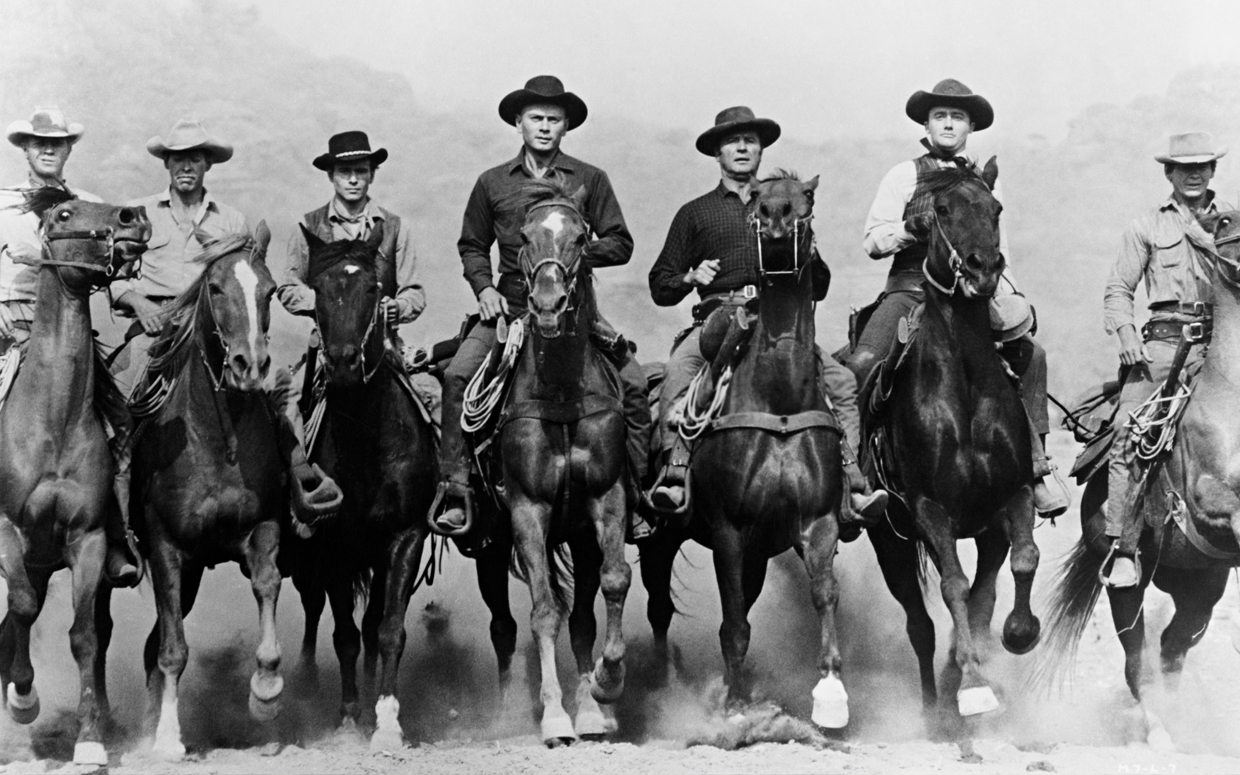
Here they are, and here is a recap.

WHEN YOU UNDERSTAND, THINGS ARE JUST THE WAY THEY ARE.

WHEN YOU DO NOT UNDERSTAND, THINGS ARE JUST THE WAY THEY ARE.

HOKKA HEY

WHAT KIND OF DAY IS IT FOR YOU?
FIST LOGIC

STANCES, FORMS, STILLNESS AND MOVEMENT.

The things we can learn from STANCES and FORMS are so deeply important that they are beyond value.

This post is pretty much a follow on from the last one, these types of posts allow us to approach the IDEA from more everyday Human perspectives.

Anyone with fighting experience, especially ‘Street fighting’ experience, will tell you that there are ‘NO STANCES’ in a fight.

A stance is a perfect Idea, an ideal shape and position that we benefit from being as close to as we can be.

The reason for this is explained by the ‘THEORY OF THE CONSERVATION OF MOMENTUM’.

In practice, we only ever move into a stance or out of a stance, yet all the action happens in the space between these points.

STANCES and FORMS share the same confusion, we spend a great deal of time and energy training them but in the end, we will never use them.

This is a paradox of cosmic proportions.

This is why it is so difficult to get beginning students to engage in a meaningful way, even students with zero fighting experience know instinctively that STANCES and FORMS have no practical value.

The first confusion we come across is that although we train them statically they are in fact transitional shapes that we move into or out of.

The things we can learn from STANCES and FORMS are so deeply important that they are beyond value.

How we resolve this importance from a purely personal perspective will determine the quality of most if not all of our Martial Actions.

Stances should be looked as being still points in a progressive movement, and not specific shapes and locations.

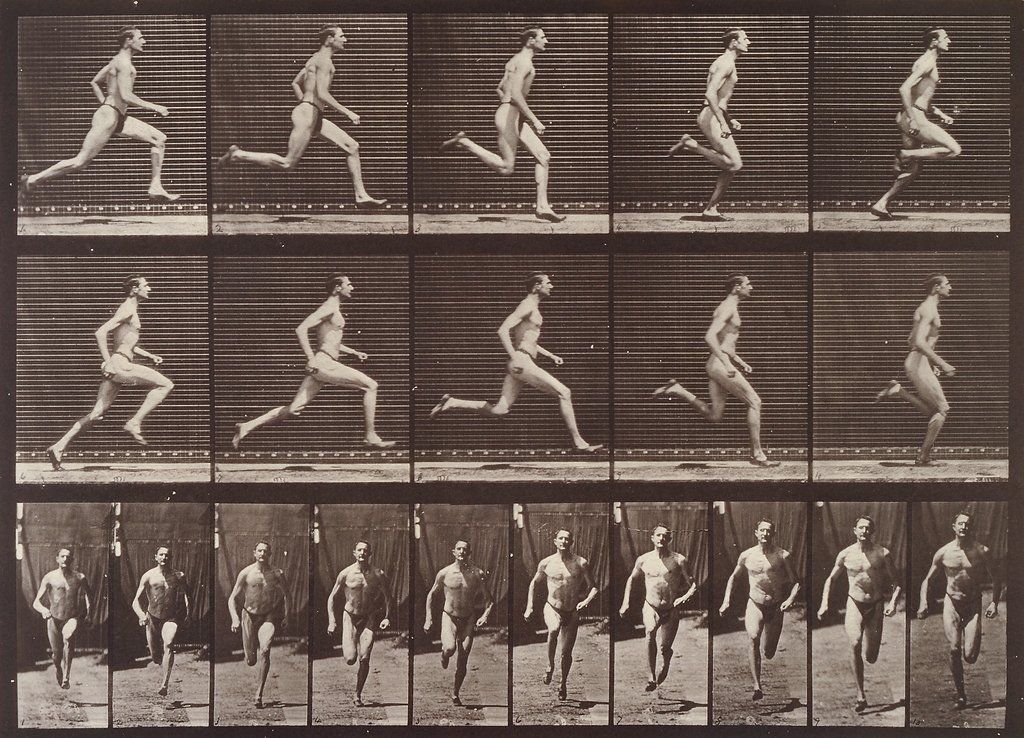
If it was available back in 1860 Doctor Leung Jan would have simply used ‘Time Lapse Photography’ and completely ignored the path of STANCES and FORMS.

Despite Stances being static they are an exploration of Human Movement, allowing us to look in detail at how our body is set up at different points in a possible progression.

Most importantly starting points and finishing points, but they can also function as a fault-finding method if we are not hitting the end stance position correctly when we move through a certain sequence.

When we look at Stances in relation to Forms we see a suggestion of how we would/could connect a start point Stance to an endpoint Stance.

STAND AND DELIVER!

Adding otherworldly importance or abilities to STANCES and FORMS has definite entertainment value if someone is a ‘Hobbyist’, but being involved in any kind of thinking that is not ‘RIGHT HERE-RIGHT NOW’ can only be detrimental to an aspiring Martial Artist.

We can only become the Martial Artist that we hope to be in 2,3 or 5 years by understanding and being the Martial Artist that we are today.

And we can only become that person by understanding the training we are doing today.

HOKKA HEY
WHAT KIND OF DAY IS IT FOR YOU?
FIST LOGIC

SPINAL STABILISATION.

The Little Idea???

MOVING ON THE OUTSIDE, STILL ON THE INSIDE.

This is a repost from before Covid 19. It is extremely important stuff, without this we are just dancing.

Where or what is the ‘LITTLE IDEA’.

Could it be that we are the ‘LITTLE IDEA’?

Any training is really about self-realisation.

The development of a new self, or at least a new vision that goes above and beyond us, sets new paradigms, attains new heights.

A self that is physically, mentally and emotionally on a different level.

A competent and capable self.

Trained and ready to face any challenge. 

Not just violence.

Wing Chun is a vehicle.

But like any vehicle on any long journey, we would do well to know how it works, how to fix it when it breaks down, to treat it with respect, so that it lasts us a life time.

On any journeys of significance, as we progress, we accumulate new knowledge and develop opinions.

Opinions that change as we gain further knowledge.

It is how we grow, move forward, transcend.

At this juncture, my opinion is this… 

The most important aspect of our training is to stabilise our spine.

 I believe that this is ‘THE NUCLEUS OF THE LITTLE IDEA’!

All of our training, all of our FORMS, our drills, our Chi Sau and whatever else we are involved in and around are nothing more than ‘stress tests’ to see if we can play them and maintain “a stable spine’.

If this is ‘THE NUCLEUS OF THE LITTLE IDEA’, what is ”THE LITTLE IDEA’?

It grows from using this Nucleus, thinking about this Nucleus, becoming this Nucleus.

MOVING ON THE OUTSIDE, STILL ON THE INSIDE.

Task number one.

HOW DO WE STABILISE THE SPINE?

There are numerous methods although ultimately they all boil down to Intra-abdominal Pressure {I.A.P.}

I am in no way a physical therapist, I am not going to advise you how to do this, but to be expected there is a ‘living shit tonne’ of videos on Youtube, by real doctors.

This is a decent one for getting the general gist of where and how to start.

Watch this and then surf the recommended video links on the right of the presentation and find one that makes sense to you.

Work on this alongside your ‘Crazy Horse’ exercises.

‘Crazy Horse’ is an awareness and conditioning exercise, in time we need to infuse I.A.P. into it.

This is not particularly difficult, but neither is it quick.

In the numerous styles that I have studied there has always been talk of breathing techniques, Buddhist breathing, Daoist breathing, belly breathing, diaphragmatic breathing, breathing into our feet the list is endless.

They are all on the right track but they are also wrong in so many ways.

It was not until about 5 years ago when I was seeing a rehab specialist for several weeks, at the ‘Pain Clinic in Liverpool Hospital’, that I was finally able to put all the pieces together

We always boast that what we do in Wing Chun is based on ‘normal, human body movement’ but few schools teach ‘normal, human body movement’.

They teach ‘Wing Chun’ movement, which is so very rarely normal and only partly human.

I know that I am repeating myself here…

First, let’s be better humans.

As always…

WORK ON YOUR WEAKNESS – PLAY TO YOUR STRENGTH.

WHAT KIND OF DAY IS IT FOR YOU?
HOKKA HEY!
FIST LOGIC

SERIOUSLY DOING NOTHING.

IT IS ONLY TRAINING.

Do as little as is possible, this is not as easy to do as it is to say

The core of my School is really quite senior, both in experience and age, they are all about or over 40 years of age, and they have been training with me from 5 to 10 to 15 years so most of the work we do is not the usual run of the mill Form Stuff, in many ways if you are still overtly working with Forms you are not very advanced.

There comes a time in everyone’s training {if they stick to it for long enough} where we understand that what we do has precious little in common with any of the things we have been involved in over the years, not the Shapes, not the Forms, not the Stances, these were simply vehicles for us to come to understand how to do very little, in an easy a way as is humanly possible.

There is no correct way to do anything at all in Wing Chun, no techniques, no answers to the dilemma of violence, once your mind and body understand, every movement creates a new technique and every time an opponent touches you they create the answer to that particular problem.

In Daoism, this state is known as 樸 PU, the Uncarved Block.

It may take almost a lifetime but we eventually see that we have always had this ability, it is inherent in all of us, the reason the journey takes so long is that a great deal of it is backtracking to an earlier, simpler and natural way of being, we do not really learn Wing Chun or any natural skill for that matter, we simply learn to release it from the bonds that we ourselves created.

Just like when carving wood, we are not involved in a struggle to force the wood into a new shape, we simply remove everything that does not belong and what is left is what we were after all along.

After 30 years of Wing Chun, I feel that at last everything is now natural, effortless almost empty.

Can this be taught?

I do not think that it can be, it needs to simply grow, but I do believe that there are ways to make the length of the journey far more acceptable, and the first thing needed is to stop taking Wing Chun so seriously, wishing to improve is a curse, thinking that there is a correct way to do this thing is just making the chains harder and tighter.

Do as little as is possible, this is not as easy to do as it is to say, when I do stuff with my students I get zero feedback in a physical sense, I just watch them get thrown away and understand what and why and these days that is enough, this is a softness that is in no way soft.

When you touch me you touch the planet.

Do less, much less.

Clarity of vision is the key to achieving your objectives.

TOM STEYER

der it is.
FIST LOGIC

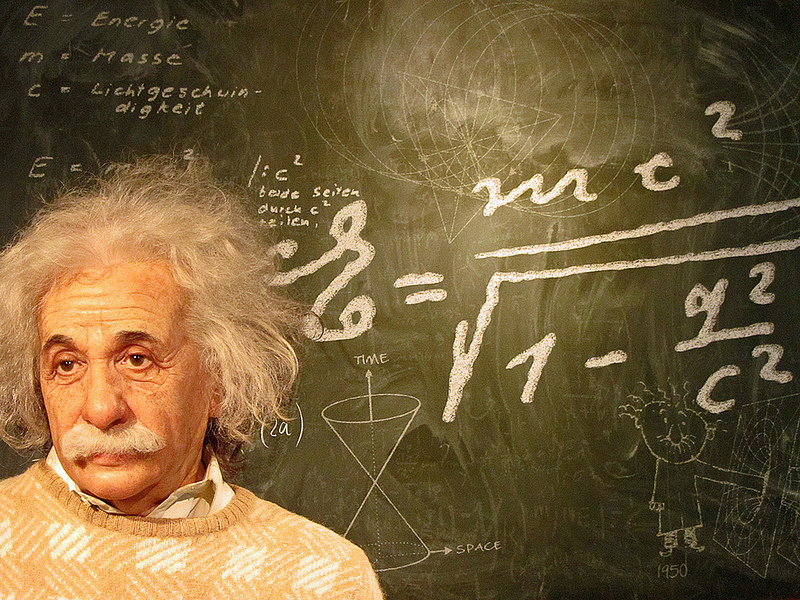
WAS EINSTEIN CONFUSED OR WHAT?

NOTHING HAPPENS UNTIL SOMETHING MOVES.

I.M.O. Wing Chun is not a fighting art, it is a way to think!

Listen up Tribe!

I doubt that many of you will remember this post from over a year ago, seeing as we were deep into the second Covid lockdown, we all had much more to think about, or at least complain about, so it may well have gone through to the ‘keeper.

It is worth revisiting however because I think that this is an important notion that once gripped never falls away from us.

As scattered as it may at first appear, the video to this post is a powerful aid to progressing as a human being, let alone a Wing Chun Man, save it somewhere and come back to it every few months just in case I do not cover the same ground again.

Albert Einstein was of the opinion that “time is an illusion”.

Without time nothing happens, so nothing moves.

Hence the confusion because of his own words ‘nothing happens until something moves’.

Well, I hear you ask, what does Uncle Albert have to do with Kung Fu?

Here is where I am coming from, I.M.O. Wing Chun is not a fighting art, it is a way to think.

This is why it fails so often when people try to use it as it is taught, as a stand-up fighting skill.

I do not think that this was ever Dr. Leung Jan’s intention.

How we engage with the work mentally is more important than how we engage with it physically.

Mental fluidity is essential for us to reach out and touch the ‘little idea’.

The ancient Chinese monks that established and expanded Kung Fu, be they Buddhist or Taoist, considered their training as a form of alchemy, turning lead {the initiate} into gold {the master}.

Most of my own training is a hybrid of all the things that have affected my life, Boxing, Judo, numerous diverse sports, cooking, and even music because it is through this eclectic lived experience that I view my Wing Chun.

To be expected, you will see it differently as you have lived differently.

WELCOME TO THE EDGE.

A common issue with all solo training is that we can begin to doubt that we get it, begin to doubt that we are doing the right thing.

Problem solved, there is no ‘right thing, there is only ‘doing‘, use Yoda’s voice when you verbalise that.

So as not to overwhelm us all with too much information I will post a follow-up blog article, I am writing it as you read this so it is fresh info, hopefully in the next few days.

Stay tuned.

The Edge… there is no honest way to explain it because the only people who really know where it is are the ones who have gone over. 

Hunter S. Thompson

HOKKA WHEN?
WHAT KIND OF NOW IS IT?

FIST LOGIC

STABILITY.

HOLD IT RIGHT THERE.

“[Stability] is the cornerstone upon which your strength is delivered, your aerobic performance is delivered and your anaerobic performance is delivered. And it’s the way that you do so safely.”

PETER ATTIA.

Hey Tribe.

This is a link to a podcast I subscribe to from Peter Attia.

Peter is a dead-set Wonderkind, he is an extreme athlete, a Mathematician, a Surgeon, and a Physician, oh, and a very clever man.

I am not posting this podcast as an “I told you so”, moment but…

“I TOLD YOU SO”!

WHAT KIND OF DAY IS IT?
FIST LOGIC

SIFU ISSAC AND THE MOK JAN JONG.

TRAINUNG IS THE NEW TRAINING.

everyone there is trying to sell something, and it is not always Kosher.

Now that there are 5 of you working on the Dummy it is important that we are all on the same page.

I have no issues with people checking out the DUDES on Youtube to see what they are about but never forget that youtube is a shopping platform, everyone there is trying to sell something, and it is not always Kosher.

At the end of the day anything that helps… helps.

So go at it.

Just remember that how you train is how you will fight, so unless you are fighting a stationary piece of wood…?

GIVE ME CONVENIENCE OR GIVE ME DEATH.

JELLO BIAFRA.

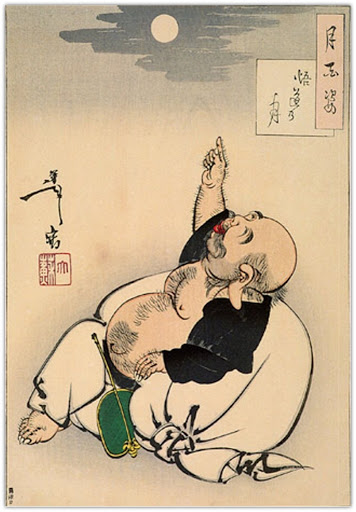
SAME FINGER, STILL NO MOON.
NOTHING CHANGES UNLESS…
FIST LOGIC

THE MAGNIFICENT 7.

A General Theory of Fighting Arts becomes grounded in Human Movement and not, as it so often is, ‘Esoteric Ideology’.

 The General Theory of Fighting Arts is a term widely used to try to get students to identify the mutual movements of all martial styles, and the alignment with most dynamic sports.

One thing we have all been told, and if we are talking to beginners or non Wing Chun people often repeat is that ‘Wing Chun movement is based on normal human body movement’.

I do not think that students give enough credence to this statement, that ‘Wing Chun movement is based on normal human body movement’.

It gets treated as if it is just some sort of cagey advertising spin just as many Instructors still claim that Wing Chun was invented by a woman, a device to encourage smaller, less athletic men to take up Wing Chun instead of a rival code.

But Wing Chun IS based on normal human body movements.

If we approach the work from this perspective and look at what is presented and how it is presented, we see a pattern emerge, that in the progression of the FORMS, as we move from the first Form to Chum Kiu and then Biu Gee, this progression is nothing more than the introduction of more complex movement for people not familiar with this way of moving.

This approach more than likely had merit back in 1860s Foshan but today, due to the average sporting curriculum of most western schools every 12-year-old child is familiar with these moves.

A very large proportion of what is introduced through the Forms is simply unnecessary, at least from the point of view of controlling our body.

Do not get me wrong, the FORMS are needed for other reasons so I am not suggesting abandonment.

But we can easily be moving at a level that is needed for any aspect of the work be it the Dummy, the Pole or the Knives if we put more practice and focus into moving better as a Human.

Take any movement or action from any sport, especially a throwing or bat and ball sport, and you will find the moves somewhere in the Form.

 A General Theory of Fighting Arts becomes grounded in Human Movement and not, as it so often is, ‘Esoteric Ideology’.

This week spend some quality time exploring the similarities between Martial Movement, Sports and Dancing, once you see how they amalgamate, consolidate and integrate FORMS become a secondary consideration. 

IMAGINE, MANIFEST AND WORK ON THE IDEA OF THE FRAME.

And while you a re at it put some minutes into the MAGNIFICENT SEVEN.

Here they are, and here is a recap.

WHEN YOU UNDERSTAND, THINGS ARE JUST THE WAY THEY ARE.

WHEN YOU DO NOT UNDERSTAND, THINGS ARE JUST THE WAY THEY ARE.
HOKKA HEY

WHAT KIND OF DAY IS IT FOR YOU?
FIST LOGIC

AN INTRODUCTION TO KNEE SAU.

IT IS UPWARDS FROM HERE.

The aim of all training in every Martial Art is to understand how to control our body in an unexpected environment, Knee Sau takes us there.

Hey Guys,

Here is a short video on what we accidentally discovered while looking for new ways to spice up training and help to help us develop a better feeling of what it is to be in contact with and control our mass.

As whacky as this appears it is astonishing at helping us feel what is needed to power our body with our CORE.

Which is, of course, the ultimate goal of Biu Gee.

What is really amazing is the way we can transfer the IDEA from a kneeling position to a standing position.

Check it out.

This may at first look like a crazy thing to do, even a waste of valuable training time.

But once we consider that nothing we ever do in training is anything like being involved in a genuine violent encounter, that what we train is a long way from reality, and even your favourite Youtube Wing Chun poser is doing nothing that would work in a real encounter, we may as well have fun while we are at it.

Training being nothing remotely like the real thing is not just a Wing Chun issue, it is every style of Martial Art and it is even worse for an untrained Bad Guy, so we do not need to panic, if we are training we are miles ahead of the curve.

Whatever that curve might be.

The aim of all training in every Martial Art is to understand how to control our body in an unexpected environment, Knee Sau takes us there in Spades.

TODAY IS THAT DAY.
DAT NO MOON!
FIST LOGIC

SELF DEFENCE OR FIGHTING?

IT ALL HAPPENS HERE.

It may be difficult to think that the guy with the knife in the video was defending himself, but I am willing to bet that he thought he was.

HEY TRIBE.

In light of our ongoing Whatsapp chap about the video that shows that fatal stabbing, I just wanted to get this out there.

I have spoken of this so often to so many students both past and present, but it really needs repeating, because it is still so grossly misunderstood.

In the Martial Arts Community, there is great disagreement about what style is good for fighting and what style is not good for fighting.

And then there are conflicting opinions about what style is a fighting art and what style is a self-defence system.

This is blown out of all proportion by the fact that most people do not fully understand the difference between fighting and self-defence.

Especially when it comes to understanding {and admitting that we are training in}, a self-defence system.

I grew up in post-war Britain, every grown-up in my world potentially suffered from P.T.S.D. All had experienced the horror of war in one way or another and it shaped their worldview.

As a 5 to 7-year-old boy the advice I was given was that if you get into an disagreement, scuffle, or argument hit the other guy before he hits you.

This, was self-defence in the 1950s.

And it worked for me.

This was pretty much how things carried on deep into the 1990s.

And it still worked for me.

Now, 30 years on in the 2020s, we are a society that is better informed and more connected, we understand that hitting someone first may be a savvy tactical decision, but it is not Self-Defence, right-here right-now, it is, in fact, assault.

Later on it can be argued in court.

We all recently viewed that tragic -48 second video were a young mans life ended in a S.N.A.F.U. of a shit fight before a punch had landed.

The attack itself took less than -2 seconds.

https://www.9news.com.au/national/queensland-murder-investigation-underway-after-body-found-at-brisbane-train-station/be1e2f2e-fb5f-4ff7-8b72-03770b1b0e4a

I have been in this kind of standoff, in a situation like this both sides see this as a self-defence situation.

We cannot be sure how the agro in the video kicked off because we do not witness the build-up, but it is safe to assume that words were exchanged, that is usually the case, and then both sides felt the need to defend their assumed position.

Their ethnicity, their territory or even just their football team.

In many ways, it was ignorance that led to this tragic outcome.

A few of you have asked if we can look at this in training, and I am sure that there are many students of multiple styles of Martial Arts that are asking their teacher a similar thing.

We need to go deeper than “What would we as {insert chosen M.A. Style} practitioners do in this situation”?

To everyone out there and not just our mob, what do you think your chosen style is teaching you?

Is it teaching you to fight people, or is it teaching you to defend yourself?

It may be difficult to think that the guy with the knife in the video was defending himself, but I am willing to bet that he thought he was.

Over the years I have asked every student to imagine a situation where they would be called upon to use their training.

To a man {generic} it is always a situation where an argument or some other anti-social behaviour turns physical.

It is usually described this way… ‘we were arguing and then he {generic} suddenly thew a punch, my training kicked in and I just reacted.’

Is this self-defence?

This is such a grey area, it is nothing short of a slippy slope on a foggy night. Excuse the poetic viewpoint.

Despite the oft-used cliche´, ‘always expect the unexpected’ in truth we all know that we cannot expect the unexpected, so if we can react to a sudden attack without surprise then on some level we were expecting it.

DUH!!!

I am not trying to take some moral stance here with this post, if this was me 30 years ago I would have already hit the guy first and asked questions later.

But it is not 30 years ago.

Can we claim self-defence if we are waiting for the attack?

If we are not trying to de-escalate the situation, even if it is not our intention, we are allowing it to escalate.

We are now preparing to fight this person and not defend ourselves.

I can almost hear the young offender from the video saying ‘it was a slippy slope on a foggy night, your honour’.

The most important aspect of Martial Art is to try to understand violence, not to learn how to use violence, and not to learn how to choose violence.

At least not as a first choice.

In the original Karate Kid movie, Mr. Miyagi says “best defence, don’t be there”.

If we see it coming and do not avoid it, are we defending ourselves?

Or are we waiting to join in?

If I am arguing with someone and I sense that it might kick off why am I still there?

Yes, there are most definitely times when we will not expect it, this is self-defence, how to go from the ‘Oh Shit” moment of just sticking our arms out and into something that can make good our escape.

We will work on this, the ‘Oh Shit” moment, and not on how to defend against a knife.

I just wanted to get this out there, especially as we were all talking about the stabbing.

NO ONE WINS A FIGHT, ONE PERSON JUST LOSES A BIT LESS THAN THE OTHER.

THE “D” MAN.