Once seen, these movements cannot be unseen, the thing is CAN YOU SEE IT?
Hey Tribe and friendly visitors, something to ponder during yet another deluge.
All Forms are dancing until we make them singularly important and decide that they are something else, something meaningful, something uniquely special.
If we extend this to its logical conclusion if all Forms are dancing then all dancing is a Form and they are also are something else, something meaningful, something uniquely special.
In the exceptional video that I have chosen watch it with the sound as low as you can make it and still keep the rhythm then see if you can identify some very obvious Wing Chun movements.
If, as we claim, Wing Chun is made up of ‘normal everyday human movement’ and that there is ‘only one movement, only one shape, only one body’ Wing Chun should be, and is, everywhere.
Watching how dancers create complex movements from essentially simple shapes can help us understand, expand, and empower our Forms training.
Like them or not, Bollywood films have exceptional movements, and usually movements that come directly from the Martial Tradition.
Once seen, these movements cannot be unseen, the thing is CAN YOU SEE IT?
It is being the best of ourselves, that makes Wing Chun, or any Art, work.
I AM NOT BEING STILL. I AM JUST NOT MOVING.
This is not semantics, this is something we need to get our head around, to understand the language, understand the thinking, and then understand the functionality before we can get our body to comply.
Do not try to be still, this is not a natural state for human beings we are built to move.
I have seen many students doing the S.L.T. and trying to be still.
What we should be doing, and trying to think about, is not making unnecessary movement.
Moving anything except our arms when playing the S.L.T. Form isunnecessary movement.
If this results in stillness, all is well and good, but being still is not the goal.
If we are called on to use our training, what good will being still be?
What we think Wing Chun is at the beginning of our training, {and being what most outsiders think Wing Chun is}, ends up being just 10% Wing Chun and 90% being a human being.
Everything we do in Wing Chun training is essentially just theatre, the Forms, Chi Sau the whole kit and caboodle.
Smoke and mirrors, dancing.
The rest, the 90% simply helps the advanced student reache a place in their life where they are in control of themselves enough to almost seem in control of the world around them.
We are not Alchemists of course, we have not discovered the philosophers stone, but when you can effortlessly do what others put great effort into and fail, their only answer is that we must know Magic.
It is being the best of ourselves, that makes Wing Chun, or any Art, work.
This is in no way pooh-poohng the training, on the contrary, if we are a “Perfect {generic} Man” but have no “IDEA” how to get out of trouble…
…we do not get out of trouble.
So it would be prudent to do our best that to compliment our Wing Chun training we work to become and understand what it means to be, a better human being.
Here is a video presentation from a group of guys that have a Youtube Channel called Functional Patterns, as you all know, my bias is and has always been towards functionality, so it should come as no surprise to you that I like a lot of what these guys do.
This video presentation is about “Breathwork”, the presenter is a bit hyper but the info is, at the very least, Food for Thought.
As always, if this post brings up questions, which I hope it does, then bring them in, and I will try my best to answer them.
To visitors, if this post spikes your curiosity, you know, you ask yourself W.T.F?
If you have any questions, hit me up in the comments, I will try to explain W.T.F?, Or at least point you in a direction that may help.
“There is only one thing that makes a dream impossible to achieve: the fear of failure.”
It is what it says on the box, power that is effortless.
I was working with Rick and Anthony last evening, the same stuff we have all been doing this week, in many ways the same stuff we are always working on…
…developing effortless power.
Let’s be fair and honest with ourselves, in the recent training sessions you have all been amazed by the results.
And then amazed once again when I show how we have been doing this since ‘day one’ but you didn’t connect the dots.
It is tricky stuff.
What is effortless power?
It is what it says on the box, power that is effortless.
One of my favourite examples is when I ask…
Q. Have you ever walked into the edge of a table?
A. Yes.
Q. What hit you?
A. The Table????? DUH!
Well, NO, it was you.
You walked ‘into’ the table.
Or did the table jump out at you?
You did not try to hit the table, you did not mean to hit the table, all the same, without malic or intention you just walked into it.
Effortlessly.
No set-up or practice, no special shape or secret move, just effortless power, creating instant pain.
There is a well-used saying, ‘topunch above one’s weight, it means performing or achieving results better than expected and beyond one’s ability, skill, experience etc.
This is used as a compliment, but it is a silly compliment because, in the real world, we cannot punch above our weight.
Our power production is an expression of our weight.
Striking power can be maximised by good movement, correct structure, accurate strike placement, and fortuitous connections with an opponent.
But we can never surpass what our body weight delivers effortlessly in any situation.
Questions we should ask ourselves.
Do I get heavier if I contract and tense my muscles?
Do I get heavier if I put in more effort?
Do I get heavier by doing things in a particular or ‘special’ way?
Do I get heavier by … {fill in the blank}?
The answer to all of the above and any other consideration is…
…We do not.
We can only ever hit as hard as our body weights contribution.
In so many ways power is nothing more than throwing our weight around.
It is how and where we throw it that is the key.
Effortless power is the efficient organisation of our body weight.
On one level FORMS are a way for us to begin to understand how to organise our body weight, from static, to mobile, to dynamic.
So is Dancing.
So is Yoga.
So is Table Tennis.
The difference between FORMS, Dancing, Yoga, and Table Tennis is how we organise our thinking.
You guys always laugh when I say that Table Tennis could be an outstanding Martial Art.
And I laugh at you laughing because I know one day you will get it and think that back then you must have been a bit of a dick.
Another thing to ask ourselves is… What do we need to organise first?
If we consider that we are the same weight in our sleep, the same weight on the toilet, and the same weight in training, what does that tell us?
Here in Australia, a bag of cement weighs 20kg.
I do not think that any of us would like someone to drop a bag of cement on us, even effortlessly.
With the most basic of self-organisation we can effortlessly transfer our body weight when we make contact with an opponent, even if we only bump into them.
Work out how many bags of cement you are the equivalence of and ask yourself “why do I not think this is enough”?
The lightest of us would be equivalent to 3 to 4 bags of cement and to transfer this all we need to do is reach out and touch someone.
It is our thinking that we must organise.
Consider this, when you reach out and touch someone on the shoulder and do not put them on their ass it is because your Monkey Brain understands weight transfer much better than your Human Brain.
It is time to play catch up.
Monkeys are superior to men in this: when a monkey looks into a mirror, he sees a monkey.
Many Wing Chun students think that Wing Chun training is a linear progression, Sil Lim Tao – Chum Kiu – Bill Gee and that every time we progress along that line things become more advanced.
This may be true of some other styles but it is not true of Wing Chun.
In Wing Chun, there is no beginner level, no intermediate level and no advanced level.
In Wing Chun, we are all and always beginners.
In this respect, Wing Chun is akin to Jazz!
When asked ‘What is Jazz’? Dave Brubeck replied, “Jazz is”.
By this logic, Wing Chun “IS”.
So the question becomes “can you riff”?
If there is a set progression in Wing Chun it is circular, hop on anywhere and keep going round.
THERE IS ONLY ONE MOVE, ONLY ONE SHAPE, AND ONLY ONE BODY.
Saturday morning we decided to explore Biu Gee’s actions from the perspective of how to recover from a situation where we had lost our favoured Wing Chun position.
Sometimes referred to as emergency Techniques”, something I find over-elaborate, we explored and discovered that Biu Gee contains all the things we did, albeit badly before we even began Wing Chun, and definitely did on our first day of Wing Chun training.
This video footage is of a normal training session, it is not an organised seminar, we made things up as we went along and repeated things over and over again at a pace and intensity that we could feel, see and understand what our body was doing while we played Biu Gee.
If you are a visitor to this blog these clips may well lack continuity and possibly context, it is a bit like one of them “you had to be there jokes” but there is good info here.
At 20 minutes it is a lengthy video grab so there are some timestamps to help you navigate.
From a still position think Fook Sau, perform Fook Sau, stop.
WHERE IS THE DISCIPLINE TRAINING IN EVERYDAY WING CHUN?
If we get in trouble our best chance of getting out of trouble is to stay disciplined, to do what we need to do, where we need to do it, and when we need to do it.
But what does that mean and where is it in our training?
As young kids engaged in Western Boxing, this was drilled into us by a 10-minute sparring exercise where we could not defend ourselves, hold up a guard or counter-attack our sparring partner.
Our sparring partners were free to {lightly} hit us anywhere and any way they wanted to, all we could do was evade, but without retreating, we could step away but not run away.
Without fear of a counter-attack, our sparring partner was relentless, often leaving themselves wide open for a counter we were forbidden to deliver.
This was preparing us to not fall for dummies or feints by trying to get in cheap shots that in a real fight could easily lead to our undoing.
Every few minutes the coach would shout ‘HIT’ this gave us permission to take one shot at our sparring partner and then back to the drill, this taught us how to be disciplined, how to wait until the shot was on, to not try to force the fight, to be patient.
This was an excellent drill that ‘really’ paid out when needed.
Do we have anything in Wing Chun that remotely approaches this kind of training?
That depends.
If we can look beyond what we think we are doing, and look at the fundamental IDEA we are seeking, then the answer is YES, we do.
First up, what is the IDEA we are hoping to find?
A method to develop PATIENCE and DISCIPLINE.
These are, of course, CONCEPTS, or IDEAS.
If we are completely tuned in to our training these IDEAS can be found anywhere, but an ideal, easy, and convenient place to begin is to be found in doing the Forms.
Not the specific movements of the Forms, but rather in the way we approach the Forms, the mindset more than the movement set.
The rhythm we establish, the flow from one thought to another thought more than the transition from one movement to another movement.
Essentially all Forms are a collection of single movements and not a movement set per se, there should be an established start point and an equally established finish point for each and every shape/movement.
When we finish one shape/movement we change our thinking to the next phase before we transition our posture or shape/movement.
For example, if we think of the progression of Fook Sau, Huen Sau, Wu Sau, Tor Sau {if we could endure the boredom we could do this forever and learn everything}.
From a still position think Fook Sau, perform Fook Sau, stop.
Think Huen Sau, perform Huen Sau, stop.
Think Wu Sau, perform Wu Sau, stop.
Think Tor Sau, perform Tor Sau, stop.
Rinse and repeat until the ‘End of Days’.
As a two-person training drill, there is nothing better than ‘Single Arm Chi Sau’.
At first, the very IDEA of ‘perform, stop, think, perform, stop, think, perform, stop, think, perform’ may seem very robotic and unnatural, but PATIENCE and DISCIPLINE, and of course awareness, will allow us to control the timing of the pauses between stop, think, perform so that it becomes Human, natural, responsive instead of reactive.
Obviously, this exercise, this way of utilising the Sing Chi Sau Drill, requires that both players disconnect their EGOs.
Which in itself is training us to be DISCIPLINED.
Training in any Form should never be easy, it should never be enjoyable, it should always annoy us at some level, it is learning to ignore the thing that we think is not needed and still do it, the thing Sifu says is important but we do not think is in any way important, this teaches the greatest lesson.
How we decode the data is the key, not what we call it or opine about it…..
A while ago I was having a conversation with a D.J. about how Karate was sourced from White Crane Kung Fu, and that at their heart they are the same thing, this led to him asking me if Chinese Forms and Japanese Kata are essentially the same things.
There is an opinion within Kung Fu circles, or at least within the Wing Chun circles I was part of that Forms and Kata are completely separate and different from each other.
I disagree, from my standpoint FORMS and KATA are just different words for the same thing, all training, be it subtle or overtly physical, is nothing more than the accumulation of information, the collection of raw data.
How we decode the data is the key, not what we call it or opine about it.
I think we can benefit from the approach that Wing Chun has FORMS and KATA.
Where is our starting point, and what is our position?
It is the usual thinking that FORMS are about understanding our shapes/postures, understanding their physical/emotional/mental make-up, and how to create and maintain that shape/posture.
The practice of moving slowly, and softly, allows a greater opportunity to ‘clearly’ observe how the shape/posture is constructed and how it relates to the rest of the frame, an observation that would be disrupted by the overt use of active muscles that would cause such tactile feedback as to wipe out the subtle nuances of joint control.
On the other hand, KATA is considered to be Shadow-Boxing exercises performed at full power with the mental image of actual contact and the deliberate injection of overt strength and tension.
Sadly, I have often experienced partisan, myopic snoberry calling out KATA as being way too forceful for a person to be able to feel anything, implying that they are somehow less than FORMS.
I think it is worth repeating myself here, all training, be it subtle or overtly physical, is nothing more than the accumulation of information, the collection of raw data.
How we decode the data is the key, not what we call it or opine about it.
FORMS and KATA do not teach us how to FIGHT, they teach us how to THINK.
As a memory aid FORMS and KATA are two different methods to explore the same sequence.
FORMS are somewhat passive, while KATAS are somewhat dynamic.
They are two sides of the same coin, a touchy-feely tactile method that we use to help us connect with our training.
It is so important that we do not drift off into some fantasy world in any aspect of our training, but especially so in FORMS and KATA, they are memory aids and not fighting tools.
When push does come to shove both FORMS and KATA are inappropriate and useless.
FORMS and KATA do not teach us how to FIGHT, they teach us how to THINK.
Some say that FORMS are a type of mindfulness training while KATAS are a type of shadow-boxing, but in reality, the only difference between these two ideas is not the content just the context, i.e. If you think that you are being mindful, you are being mindful, or if you think that you are shadow-boxing, you are shadow-boxing as you go through the same set of movements.
If you think you are on the can… it is what it is…
With this is mind, if we so wish, FORMS can be used as KATA and KATA can be used as FORMS.
Forms and Kata are just data, albeit two different methods to extract information from the same data.
FORMS are information about ‘SHAPE and CONDITION’, whereas KATA is information about ‘MOVEMENT and SEQUENCE’.
When observing the complete SIL LIM TAO FORM { comprising S.L.T. Chum Kiu and Biu Gee} our focus is on how we create certain shapes, firstly just hand/arm shapes but leading on to whole body shapes, but of equal if not greater importance is how we live inside of these shapes.
Our Body Being, or the ‘Condition’ that I refer to as CRAZY HORSE.
In FORMS there is no promenading, no movement through space, everything happens in one spot, and what movement there is in the FORM is just repetition, mental reinforcement.
The shapes/postures we study in the SIL LIM TAO FORM are starting shapes/positions and finishing shapes/positions, there is no set, organised way to get from one place to another, from point ‘A’ to point ‘B’.
The SIL LIM TAO FORM is, as we all know, an IDEA.
The whole reason for doing THE SIL LIM TAO FORM is to observe our Body doing the SIL LIM TAO FORM, to observe the shape and condition of our body as it does the SIL LIM TAO FORM, and not to observe us doing anything else.
Especially fighting off an attacker.
This point alone is worth serious contemplation.
FORMS exist like a frozen moment in time, an aspect of ‘ONE SHAPE, ONE MOVEMENT, ONE BODY’ but let’s not go there today.
So what of KATA in Wing Chun?
KATA is everything else, the missing bits, the reflections.
If we regard FORMS as still pictures, KATA is a movie made from those still pictures.
If FORMS are simple shapes, conditions, and intentions KATA is a method to transform those simple shapes, conditions, and intentions into action.
And then optimally progress from one action to another action.
FORMS are impractical, KATA is the very heart of practicality.
Heads/Tails, Yin/Yang, two sides of the same coin.
If we buy into this type of thinking that says we can have the SIL LIM TAO FORM as well as the SILL LIM TAO KATA, where is this dynamic physical practice to be found and explored?
MOK JAN JONG, the wooden dummy.
LIK BOON DIM QUAN the six and a half point pole.
BAAT CHAM DOA, the eight cutting/slashing knives.
From the perspective of the Wing Chun structure, there is nothing new introduced as we progress beyond the Biu Gee Form.
What is introduced is a method of dynamic movement and physical power production.
Performing KWAN SAU on the Dummy, the vigorous side slash of the Knives or the lunging thrust of the Pole what are these actions if not a KATA.
Understanding why FORMS ‘are the way they are’, has the potential to teach us more about FORMS than practising them ever can.
Spend time contemplating this statement…..
We do THE SIL LIM TAO FORM for no other reason than to observe our Body doing the SIL LIM TAO FORM.
For no other reason than to observe the shape and condition of our body as it does the SIL LIM TAO FORM.
We do not do THE SIL LIM TAO FORM to observe our body doing something else!
Especially fighting off an attacker.
Why does man kill? He kills for food.
But not only food: frequently there must be a beverage. – Woody Allen
Training to be capable of responding to violence does not make us a violent person, it makes us a prepared person.
RESPONDING TO ANTI-SOCIAL VIOLENCE.
Just like the majority of Martial Artists, my hope is that I never need to use my training. I hope to never again experience violence.
To be honest, I do not like violence, and the thought of being involved in violence is uncomfortable.
However training in any Martial Art for whatever reason, be it sport, aesthetics, fitness or cultural curiosity, is at its core a study of violence.
An attempt to understand and be able to respond to violence.
Training to be capable of responding to violence does not make us a violent person, it makes us a prepared person.
“Chance favours the prepared mind”. Louis Pasteur.
Do we think that violence can be understood? It is such a vast field.
For instance, although what we do is called Martial Art we are not talking about Military Conflict.
That is a different version of violence altogether.
As non-military Martial Artists, our concern is Interpersonal Violence.
Even here the lived experience of most people is usually very different from each other, the best we can hope for is a Generalised conversation.
To do this without misunderstanding we need to have a shared lexicon, the same terminology, to be on the same page using the same frames of reference.
What follows is a legend for this and any other of my posts.
Interpersonal Violence comes in two basic flavours.
Organised – Social Violence.
Random – Antisocial Violence.
Social Violence is a situation where all parties know what is going to happen, when it is going to happen and where it is going to happen.
Above these considerations is the fact that at any time one of the participants can simply say “no thanks I have changed my mind”, this is why to an extent this is a social event.
Social violence is any competition at any level from a World Championship U.F.C. Match, to an Olympic T.K.D. round to a Club sparring session even to two blokes saying “O.K. let’s take this outside”.
There is always the option to say “not today thank you”.
Antisocial Violence is where an attacker, Person #1, has an agenda that is for the most part unknown to Person #2.
The scope of this aspect of violence is truly huge, but for this post let’s think that it spans situations such as P. #1 attacks P. #2 from an unseen position, to wearing the wrong Football Jersey in the wrong suburb, to being caught out eyeing up a jealous and Pig Headed blokes girlfriend, to a random difference of opinion that boils over without too much warning.
This is the environment we envision.
Social Violence/Competition is the realm of Combat Sports and of course Combat Athletes. N.Q.U.
Anti-Social/Violence Self Defence is the realm of Traditional Martial Arts, the realm of the majority of Citizen Martial Artists, such as ourselves.
It is of the utmost importance that we know where we fit so that we can evaluate and steer our training in the right direction.
Zoom in a little.
ORGANISED/SOCIAL VIOLENCE.
In Combat Sport both parties begin from the same position, no one man has an advantage, there is no surprise, there is a known start, and a known finish.
And there are rules.
Once the contest kicks off there is little thought of organised deliberate defence, to a very large extent Combat Athletes depend upon their physical, mental and emotional conditioning to ignore the shock, ignore the pain and press on.
If they have any thought of defence it is knowing how to evade incoming strikes as they themselves attack, both parties aiming to knock the fight out of their opponent first.
This is what a “FIGHT” is, this is what “FIGHTING” is, two men {or women} flat out attacking each other, no quarter asked or given, they just swap punches until someone can no longer continue or the fight is stopped.
Despite the apparent chaos, there is a level of certainty in this situation.
Let me put this in here, it will explain itself later…..
…..WING CHUN DOES NOT FIGHT.
RANDOM/ANTISOCIAL VIOLENCE.
Long story short, being in a random encounter is the complete opposite of Competition, especially from the perspective that there is some sort of certainty to the situation.
Social violence is relatively straightforward, what you see is what you get, partly because of the rules, but also because of the Athletes themselves, despite them being on occasion BRUTAL neither side are out for blood, they just want to win the bout.
Here is a somewhat harsh truth. Random Violence is finding ourselves in a completely unknown and unknowable situation.
Is it even possible for us to prepare for an unknown and unknowable situation?
That depends.
It depends on if we see it coming, and if we have a plan.
We should not fool ourselves, if we do not see it coming we are toast, so we can bypass that discussion.
It should be a total no-brainer that if we can de-escalate any situation and walk away that should be the first choice, but Random Violence is rarely about being offered choices.
It may be cliche´but in any violent situation the only thing we can control is ourselves and the more we know of ourselves the easier it will be to keep control.
The first aim of any training is learning about ourselves so that when it happens we are not completely clueless.
Then through training various scenarios to build up some kind of Blueprint.
There should be a great deal more to training than learning how to physically hit someone.
What we do know and is something to think about and factor in is that the mindset, attitude, or demeanour of an attacker is so completely different from the mindset, attitude, or demeanour of a defender that they cannot exist at the same time.
This is pretty much the cornerstone of Wing Chun’s Fist Logic, how we set our strategy.
What do we know about our {unknown} attacker?
He [she] wants to hurt us and to do it as quickly as possible.
Their plan is shock and awe.
The very fact that they are so brazenly attacking us, tells us that they are not expecting any significant resistance.
If it is an argument that has boiled over, if the attacker is angry they have already lost control of their thinking and they will not be able to change their mind quickly or easily once the circumstances change.
What else do we know?
Attackers attack and have no thought of defence.
Defenders defend and have no thought of attack.
Fighting is two people attacking each other.
When people lose control of their thinking this is what happens.
To everybody.
WING CHUN DOES NOT FIGHT.
I know all too well that in a real situation it is unwise to assume, but here it is fine so I am assuming that whatever the situation we are fully aware of what is happening, aware that something is about to go off.
It is no longer a situation in our control.
If possible we should make a little more space, which will give us a little more time.
On a surface level, our aim is to turn the tables, to make ourselves the attacker, in the fullest sense, we attack relentlessly until the fight has gone out of the Bad Guy, then we leave. P.O.Q.
There is of course a chance that we cannot fully turn the tables, we start exchanging punches, we start to FIGHT.
WING CHUN DOES NOT FIGHT.
If this happens we break away, make space, reset and prepare to go again once the Bad Guy resumes attacking.
IF THEY DO NOT ATTACK, GOOD, WE ALL GO HOME. BUT IF THEY DO.
We do not prepare to defend, we prepare to turn the tables on them once more, to become the attacker once more.
This is of course counter-attacking, this is Wing Chun.
On a deeper level, we are using our thinking to destroy our attackers thinking.
It is their IDEA of hurting us that we need to change.
It is quite pointless to be concerned about techniques or styles and how to counter them, we need to cause chaos in their thinking, overwhelm their nervous system.
Two ways that are guaranteed to achieve this are causing them pain and compromising their balance.
Once we have managed to stop them thinking we have taken away not only their reason for attacking but also their ability to defend themselves.
This is a very general overview, this is the picture I have painted for myself over many, many years to give much-needed context to my training, it does not need to be your picture.
But it really helps if you have something like it.
Anyone can fight, seven-year-olds do it every day, my Cats do it.
We are not training to FIGHT, we are training to THINK.
Sports Psychologists are often engaged to address the Sef-Talk of the player.
Hi Guys,
The Sil Lim Tao is like a three-legged stool, and like a three-legged stool if we remove one of the legs the stool fails.
The area that is the third leg is the area that in sports is the realm of Sports Psychology, and this is an area we would all do well to research.
Sports Psychologists are often engaged to address the Sef-Talk of the player.
We are no different, that is part of my job as a teacher.
Self-Talk may appear to be a minor part of learning a Martial Art, but once we can ‘clearly’ see the BIG PICTURE, we come to the conclusion that it is, in fact, the most important part of our training.
You have heard me say over and over that the most important aspect for a Martial Artist to develop is honesty.
A genuine plus here is that this aspect of our training delivers a major positive effect on our everyday life.
Positive, honest Self-Talk firstly benefits our training and then leaks into our all-around behaviour making us more reliable and more responsible people, better people, speaking the truth to ourselves leads to speaking the truth to others and by extension living the truth.
Living the truth leads to good decision making not just in a violent confrontation but in every interaction that we get involved in.
The first and most important step is, to be honest about our training.
Honest about ourselves and why we are training.
Honest about what it is we are training and where and why we would need it.
On the whole Wing Chun people are not aggressive people, we would prefer to avoid confrontation than engage it, we choose to be good citizens.
But this is not a description of the person attacking us.
There is a fair amount of political correctness in Martial Arts training, very few students are comfortable to admit that we are learning to be violent, to be better at violence than the person being { not attempting to be } violent to us, but this is the core of what we do.
Violence is rarely the answer, but when it is the answer, it is the only answer.
TIM LARKIN.
A large part of the ‘Third Leg’, our Psychology or as I call it our ‘FIST LOGIC’ is becoming comfortable with this proposition.
Every sports team of any merit has a sports psychologist on their staff, the difference between ‘Elite’ teams and just very good teams is frequently down to their psychology.
The difference between going home or going to the hospital could be down to our psychology.
WHEN IT IS GO-TIME THERE IS NO CHOICE EXCEPT TO BE BE ALL IN.
But we are not and have never claimed or pretended to be training to become Elite Combat Athletes
Hey Tribe.
I had a fantastic two and a half hours with James Monday evening, mostly talking through what we have been doing for the last month and a half while he was away.
I have been a mentor to James for over twenty years we have a very open training relationship, James has never cared too much about the “Art” side of our thing, he cares more about what happens when the rubber meets the road, at the pointy end of the stick.
He sees what we do as a capital M ….. Martial -art, and not a capital A, ….. martial-Art.
If James thinks anything is in any way ‘suss’ he calls it out.
So Monday was probably 70% chat as I tried to explain the whole three-legged stool thing.
You know Mind – Body – [fighting] Spirit thing.
Being able to see beyond what we are doing at that moment in training, to be able to see things as dynamic relationships can help us see where and how our training fits into the bigger picture of surviving and escaping violence. This is I.M.O. The key to being a capable, competent human being.
This can only be done later in our down-time, going over events in our mind, comparing what we did to what we meant to do, when we self-evaluate the actions we took in training or in a shit-storm.
In the military this would be referred to as an ‘after-action report’, or debrief.
In training, we work on how to defend/defuse all and any of the usual attacks we can think a Bad Guy may use.
This is referred to as ‘generic attack training’.
Through this method we see that we can deal with any generic shape, any generic attempts to hit us, in short, we can beat anything a generic attacker will throw at us.
The complaint many Armchair Warriors throw at this generic approach is that all of the things we train against are nothing less than feeds, that we are ready for them, and that we not only know what is coming but make sure our training partners avoid trickery so that we do see it coming.
The claim is that in a real fight the Bad Guy will not let us see it coming.
On the surface, this sounds like a fair call.
But it is not and here is why.
Perhaps if we are two highly skilled Elite Combat Athletes that have trained intensely for this fight for months, watched videos to understand each others style and have come up with new ways to beat established defences this would be true.
On top of all that we, the Elite Combat Athletes, arrive at the venue for the fight fully rested, in peak condition, full of confidence and self-belief to the extent that when it gets hard and messy we can stay calm and not get stressed in anyway, hold off adrenalin, stay focused and stick to the game plan.
This complaint may appear to make sense.
Especially if you have never been a guest at one of these occasions.
But we are not and have never claimed or pretended to be training to become Elite Combat Athletes
For everyone except Elite Combat Athletes this claim is just as self-delusional as the claim that generic training is self-delusional.
The IDEA of training IS“to be ready for it”, and the IDEA of developing awareness IS“to see it coming”.
But training is never fighting and we all know this.
Not for ourselves or the Elite Combat Athletes.
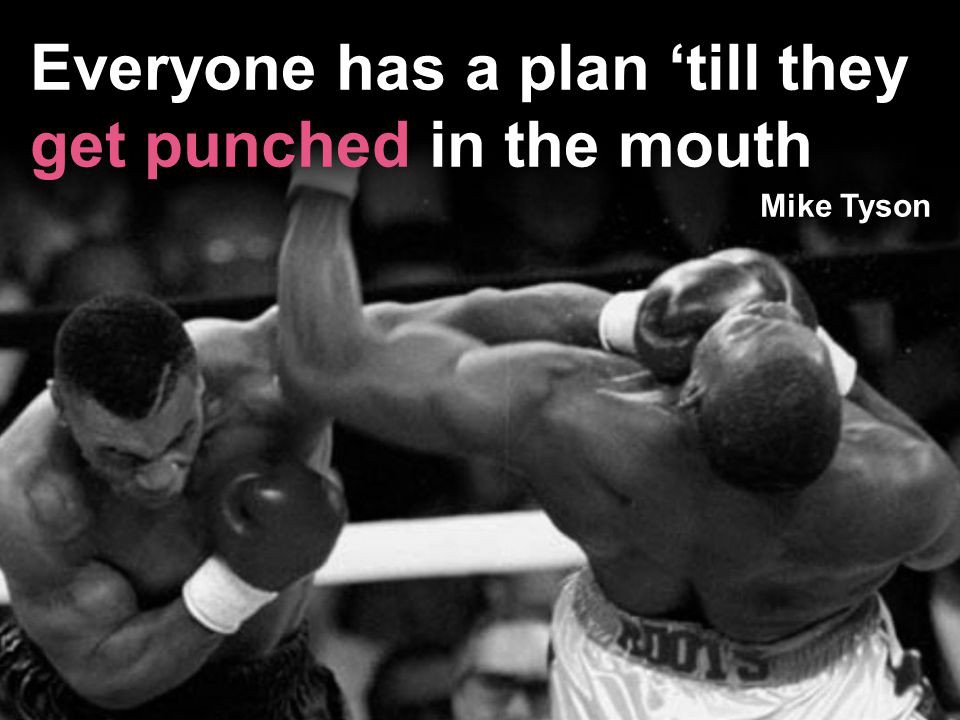
Things never go the way we plan or the way we hope.
But if we start without a plan we cannot change our plan.
If we start without hope we have no hope.
There is a maxim in the Military, and if anyone truly knows about conflict it is the real Warriors, the guys that go to war, the Military. They say….
…. “No battle plan survives contact with the enemy”.
What we are trying to achieve through training is a condition, a mind-set, an attitude that when it is “Go-Time” we have the “IDEA” of being ready and the “IDEA” of awareness.
That will put us streets ahead because in a real shit storm the Bad Guy will soon have no IDEA ….. just anger.
Let’s keep this conversation going, we all speak English in slightly different ways, feel free to ask me what I mean by certain word choices.
Not Counter-Attack as a method or Counter-Attack as a strategy but as an IDEA or group of IDEAS that can give purpose to method and direction to strategy.
O.K. Guys.
This mini-essay was way too big for the WhatsApp chat and anyway you may need to bookmark it to come back and re-read it.
Wing Chun was hybridised in the late 1860s from various Shaolin Styles by Dr. Leung Jan, this is history, not news, but do we understand why it is worth remembering?
If the physical shapes we use began as Shaolin shapes they are still Shaolin shapes.
Therefore Wing Chun is everything else apart from the Shaolin shapes.
The everything else package is the “Little Idea”, the five principles, and one concept.
The “Little Idea” of uniting the three aspects of Body, Mind, and {fighting} Spirit to the same end.
The principles of Directness, Practicality, Simplicity. Economy of Movement and Non-use of Brute Force.
The concept of Counter-Attack.
Not Counter-Attack as a method or Counter-Attack as a strategy but as an IDEA or group of IDEAS that can give purpose to method and direction to strategy.
If we watch anyone trying and failing to use Wing Chun in a violent situation, it is usually because they are FIGHTING and not Counter-Attacking.
They are using shapes we would recognise as they walk into punches or stand still for kicks and take-downs, but these are Shaolin shapes.
People that have little to no experience of what Geoff Thompson referred to as the ‘Pavement Arena’, street violence, struggle to understand how to take this dance we are learning and make it shine out there in the dark.
Without experience, there is no way to compare our training to the ugly mess of violent reality.
But we do not need experience of violent street contact to understand a Concept.
A concept is a head thing, ‘reality’ is everything else.
I know that you guys think that I am some kind of sports nut and that’s why I bring everything we do into the sports universe.
As Hercule Poirot would quip, ‘au contraire mon ami’.
Sports is ritual warfare, it was a semi-civilised substitute for violent contact between rival tribes, you only need to watch Liverpool v Everton in the English Premier League, New South Wales v Queensland in ‘The State of Origin’, Chicago Bears v the Green Bay Packers in the American National Football League or the old U.S.S.R.v Czechoslovakia ice hockey teams in the Olympics to see that it still is.
A good starting point for this chat, what is Counter-Attacking in Sport?
Counter-Attacking begins with a turnover of the ball/puck in the build-up attack by team ‘A’.
Up to that point, team ‘B’ was either not in the play or under the cosh.
This can come about from a tackle or a bad pass but to be relevant to Wing Chun it comes from team ‘B’ reading the play and being in the right place at the right time.
A team ‘B’ player unexpectedly intercepts a pass while team ‘A’ is still pressing forward, breaks free unmarked and heads for the team ‘A’s goal.
I can almost hear you all saying ‘DUH’ we know how does it help?
To ‘GROK” Counter-Attack we need to understand what team ‘B’ is NOT DOING before the interception.
Of great importance is they are not trying to force the play.
They are simply taking up intelligent positions, moving with the press, filling gaps and waiting for that moment their training tells them will come, waiting for their window of opportunity to open.
And when it opens, they dive through.
Recently when we were working on defending against an opponent that kicks, I suggested that the learning objective should be to understand why the kicks failed and not why we succeeded.
This is tricky stuff because we need to refuse our ego the credit of a job well done and reduce it to a bad decision by the attacker.
As I said at the time, we should work on these defences against opponents kicks to understand the futility of unsophisticated, obvious attacking.
As we know Wing Chun is based on everyday human body movements, if our attacker is an everyday type of human, which they will be, there is a random chance that they could come up with the same response as we would use to the same attack.
Without realising or intending it.
I realise that this is Chimpanzee typing out Shakespear level of possibility but it is a possibility, and Wing Chun does not take chances no matter how small.
Wing Chun is not for sport, if we are using our training someone is actively trying to harm us.
Not a place to take chances.
Wing Chun training shows us is that when we use our shapes and movements, working from the perspective of Counter-Attack, the majority of what others see as effective, useable attacks do nothing more than put the attacker in a perilous position.
Returning to the Sports counter-Attack for a moment, once the breakthrough has been made the counter-Attack is completed.
From this point on it is an attack in its own right, do not miss this.
Did you miss it?
There is still a lot of work to be done, team ‘A’ will turn and chase, if it is Soccer or Hockey there is a goalie to take on and there is every chance of the break fizzling out and it is back to the drawing board, once again taking up intelligent positions, moving with the press, filling gaps and waiting for that moment, waiting for a window of opportunity to open.
Counter-Attacking is not a method or strategy it is a conscious and deliberate decision not to force an attack.
It is a waiting game.
Once taken, this decision can apply our method and prosecute our strategy.
I realise that this is a bit wordy and may take a few run-throughs to get it, there is another way, go watch some Football or Ice Hockey.
WE DO NOT SEE THE WORLD AS IT IS. WE SEE IT AS WE ARE.