FIST LOGIC

SEEKING THE COMBAT BRIDGE.

ARNHEM – A BRIDGE TOO FAR.

It is your journey and your choice.

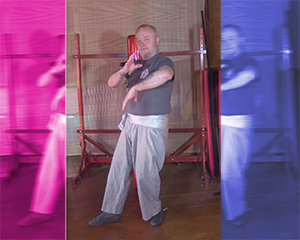
Richard asked if I could put a post up to cover as much of Chum Kiu as I could, I am pretty sure it will be of use to a few of you.

First off, when listening to anyone about any Form from any style stay aware of the fact that a Form is nothing more than a structural framework that allows the concepts to be laid out in a way that makes sense to the right person at the right time.

In due course we will all interpret the information [any Form] in a way that fits the way we think and compliments the way we move.

Remain mentally flexible.

Let’s get to it.

What is the best way to approach Chum Kiu?

We can approach Chum Kiu in as many ways as we can think up, it can be super simple such as “How many new moves are the in Chum Kiu that I need to understand”?

The answer to this is just 2?!

Pivoting and Shifting.

Or we can dig deep into every nuanced interpretation and now there are millions of ways.

The best is, as with everything, start small and grow, from the super simple to the insanely complex.

It is your journey and your choice.

CHUM KIU- A CLOSER BRIDGE.

There are some personal picks from the archive below that will help your journey and save you making a detour into the past posts department.

FROM THE ARCHIVE.

Here are some earlier posts that will help with the work and the training of the aspects we explore with Chum Kiu.

I recommend reading the text to the posts as it sometimes adds clarity to the context of the video, but if you are stuck for time, as we all are, just watch the vids.

This is a pretty complete overview of the Chum Kiu application from the perspective of vectors, but it is quite long, Video duration 18 minutes. https://wordpress.com/post/wingchunsydney.com/1456

This is a medium length video that helps understand the transition from Crazy horse to Chum kiu. Video duration 09 minutes. https://wordpress.com/post/wingchunsydney.com/2064

This pivoting primer that is one of the best videos I have done for information transmission that can be easily used. Video duration 11 minutes. https://wordpress.com/post/wingchunsydney.com/1482

This post will also aid with pivoting. Video duration 07 minutes. https://wingchunsydney.com/2020/01/18/tension-and-torsion/

This post is mostly about punching but it has good instruction on Core Winding. Video duration 05 minutes.https://wordpress.com/post/wingchunsydney.com/509

This post is about the often overlooked aspect of sinking and Rising. An inherent part of all movement. Video duration 07 minutes. https://wordpress.com/post/wingchunsydney.com/2331

This post covers the summation of forces. The heart of Chum Kiu. Video duration 03 minutes. https://wordpress.com/post/wingchunsydney.com/2290

HOKKA HEY.
WHAT KIND OF DAY IS IT?
FIST LOGIC, VIDEO

CONDITIONING, A CONTINUATION.

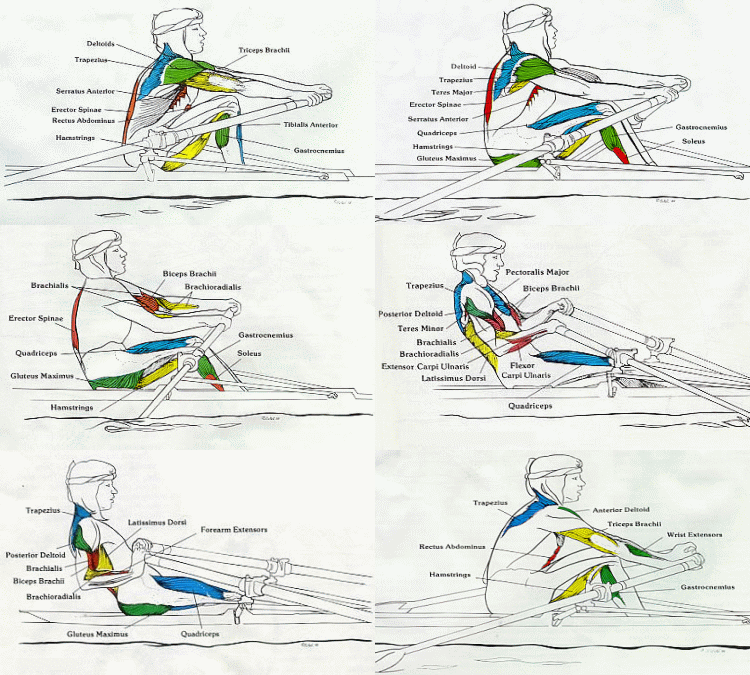
Force summation of a rower. (source: sportsmedbiotech, 2009)

Up goes the cry ‘Wing Chun does not use strength”.

Guess what? Conditioning and fitness are not just about strength!

This is a reposting from 18 months ago, but this is a vital piece of the puzzle. Rule #1 if you wish to win a blue, be a better human.

I want to spend a few weeks looking at various types of and approaches to conditioning to make the most of our training, this may sound off-key but there is a great deal more to being effective at Wing Chun than just learning Wing Chun.

Fighting is a physical experience, so surely there needs to be a physical element to the training.

It makes no difference what so ever if we do ‘Internal’ or ‘External’ Wing Chun.  If we depend on ‘Thought Force’ or ‘Physical Force’

If our body is not up to the task of performing as the blunt instrument needed to deliver our force of choice we could be in serious trouble the day we need to use it.

Hands break when they hit faces, this is the real reason Boxers wear gloves.

Talking to certain sections of the Wing Chun community about the need to introduce strength and fitness is as difficult and fruitless as talking to an Australian Liberal politician about the need to phase out coal.

Up goes the cry ‘Wing Chun does not use strength”.

Guess what? Conditioning and fitness are not just about strength!

It is just as much about building mobility to get out of the way, improving our VO2 Max so we do not gas out in 5 seconds or developing the resilience to not fall in a heap if we fail to get out of the way and get hit in the head.

Wing Chun very strangely does not have specialised training regimes such as Chi Kung of other T.C.M.A.

I have no idea why this is, it makes no sense.

But perhaps it does, perhaps we have just stopped identifying them as such, upgraded them to something else, helped of course by the post-war Hong Kong entertainment industry.

If we had not all fallen the romanticised exploitation of Chi Kung and Kung Fu that was perpetrated by the Shaw Brothers beginning in the early 1950s perhaps we would have realised that Chi Kung was a precursor of today’s sports science and maybe, just maybe Kung Fu would not have slipped into obscurity and disregard compared to Modern Combat Sports.

The idea of a genteel scholar defeating thugs was such a breadwinner for the Shaw Studios it was pretty much the theme of every movie, perhaps unintentionally it allowed weak unfit people to think they could compete if they just played Kung Fu.

Many still do.

Many are still wrong.

What conditioning do I think we need?

This is a very difficult question to answer, it all depends on what type of trouble we think we will get into.

I am sure we all think different things.

Do we need to be steady, stable and strong?

Do we need to be mobile, quick and adaptive?

Can we be both?

If we can begin to see all of the Forms as being conditioning exercises, at least at a base level, we are at least starting from a sound base.

By all means, keep seeing them as ways to circulate Chi if that is your approach but first let them be simply physical.

In my last post, I mentioned the ‘Stretch Reflex’ and how in some situations it can have a negative impact on our actions.

That does not mean that the ‘Stretch Reflex’ is always negative, there are many situations where it can be used to our advantage.

Understanding the ‘Stretch Reflex’ and how we condition our body and our thinking to work with it, and of great importance understanding that we cannot influence it in any way.

No matter what some people may say or even claim, we cannot train a reflex. Training is a conscious action, reflexes are unconscious actions.

To think otherwise is to pursue a fantasy.

But once we identify, understand and can predict the effect of a Stretch Reflex we can adapt our training so that it has less of a chance of working against us.

So that we have less of a chance of working against ourselves.

CONDITIONING – STRETCH REFLEX from WC INCa’s on Vimeo.

There are a lot of people that say Wing Chun does not work on account of some very sad YouTube fights, the simple truth is that a hobbyist, a weekend warrior, no matter how skilled or capable will always loose to a full-time combat athlete.

Survival of the fittest is not a cliche, neither in the ring or on the street.

If we wish to do better we must become more athletic, more dynamic, more physical, the whole IDEA behind the do not use strength argument is a misrepresentation, it should be “do not depend on strength”, which really is just another way of saying trust your skill first, however, if your attacker is smaller and weaker there is nothing wrong with using strength, it will work.

The popular sales pitch representation that doing Wing Chun will “level the playing field” against a stronger, bigger, faster, fitter opponent only works if the opponent has no skill, only brute strength.

Being faster, fitter, stronger does not guarantee a win, but it helps.

Get fitter, get stronger, get faster, get conditioned, and of course, keep improving your skill.

Learn how to walk and chew gum.

TRAIN YOUR WEAKNESS, WORK TO YOUR STRENGTH.

WHAT KIND OF DAY IS IT FOR YOU?

FIST LOGIC

A UNIFIED THEORY OF WING CHUN.

it is like thinking that 6 different patterns combined in an ornate carpet are somehow 6 different carpets

Hi guys, I am at last getting around to updating the Information on the Forms page, they are quite outdated when you think of how we train now, hopefully, it will not take me too long, the IDEAs posted below are just a starting point, there is a tonne of things we can find and explore in the Forms.

The main goal for all of us is to make Wing Chun a personal expression of our knowledge.

Then any information can be valuable information.

When we surf the Internet we find many different opinions on what Wing Chun is, this is completely fine and we have no need to worry about it, the difference is only in the training approach which may or may not relate to the learning outcome.

At times like this we do well to remember that all roads lead to Rome.

For my guys, all rivers eventually reach the ocean.

And take their twigs with them.

Wing Chun is usually described as having 6 forms, I do not like this description, it is clumsy and suggests a separation that simply does not exist, it is like thinking that 6 different patterns combined in an ornate carpet are somehow 6 different carpets.

I prefer to regard Wing Chun as having only 1 Form, which is of course the Sil Lim Tao, presented in the way of 3 attitudes, the first Form [that usually retains the S.L.T.title], the Chum Kiu Form and the Biu Gee Form.

And 3 processes, Mok Jan Jong [dummy], Baat Cham Dao [knives] and Lok Dim Boon Kwan [pole] that allow us to combine and explore the 3 individual attributes.

A more contemporary way to perceive this is to see the First Form, the Chum Kiu Form and the Biu Gee Form as 3 separate yet related theories that we test in the 3 processes of Dummy, Knives and Pole with the goal of discovering ‘our own’ Unified Theory of Wing Chun.

This is the code that grants us access to the Sil Lim Tao.

WHAT ARE THE 3 THEORIES?

First Form Theory. A method of how to set up an upright neutral body, how to move the arms without disturbing this neutral body and finally how to positively charge this neutral body to become a powerful single unit.

Core learning objective. Unify/stabilise an [Upright] STATIC FRAME.

Related research process. The Mok Jang Jong.

Second Form Theory. A method for supporting the arms with the body on contact with incoming force, how to coordinate the movement of the arms with the movement of the body, an introduction to the hierarchy of movement and sequential acceleration in a linear orientation.

Core learning objective. Unify/stabilise a MOVING FRAME.

Related research process. The Lok Dim Boon Kwan.

Third Form Theory. A method of focusing attention to specific points of the body, to develop an understanding of how to enlist the powerful core muscles, and an introduction to weight shifting within the bounds of the frame in a rotary orientation.

Core learning objective. Dynamically empower a unified/stabilised MOVING FRAME.

Related research process. The Baat Cham Dao.

While there are established Forms for the Dummy, Pole and Knives they should be seen as good places to begin testing the theories and not as essential patterns.

A unified theory of Wing Chun resides inside each and every one of us, the big question is can we get it to come out?

HOKKA HEY

WHAT KIND OF DAY IS IT FOR YOU?

FIST LOGIC

THE PHYSICAL/NON-PHYSICAL CONUNDRUM.

“Reality is what we take to be true,” 

pioneering physicist David Bohm

To be able to deeply understand Kung Fu we have no option other than suspending reality in an attempt to see deeper into what it is we are doing.

I am not trying to go all NEO and the MATRIX here but there is an element of that.

Our training needs to dip its toe into different realities, the outcome we are seeking is to change our perception of what it is we are doing, in fact what it is we are.

This is not as whacky as it sounds, neuro scientists and physicists have held the opinion that the universe is a hologram for decades, we have no need to go that deep but this is the way.

“Reality is what we take to be true,” pioneering physicist David Bohm asserted in 1977. “What we take to be true is what we believe… What we believe determines what we take to be true. What we take to be true is our reality.”

I was working on this with James on Monday evening the following video may look a bit sus but this was very advanced training, and training that transfers very well to increased physiality.

VIDEO

If nothing else this next few months should be interesting and amusing.

HOKKA HEY.

WHAT KIND OF DAY IS IT?

FIST LOGIC

TRAINING THE SUBTLE BODY IS PSYCHOPHYSICAL.

The idea that Shaolin monks would seek enlightenment and then go off to war is a Wuxia invention, a Hong Kong Movie Industry Myth.

Now that we have begun exploring along the lines of the Subtle Body we mustn’t wander off {mentally} and think that it is something that it is not, namely MINDFULNESS.

There is nothing wrong with mindfulness or using Kung Fu shapes to practice mindfulness.

Although it should be obvious that when you are using Kung Fu shapes to practice mindfulness you are practising mindfulness and not Kung Fu.

Working with the IDEA of the Subtle Body is very much a part of physical training for physical Kung Fu, albeit psychophysical/psychoneural/psychomotor, perhaps just plain PSYCHO!

Mindfulness practice has no place in fighting and cannot aid with the physical aspects of training.

What we in the west refer to as mindfulness came about due to a Medical Professor named Jon Kabat-Zinn, who created an 8-week course for terminally ill cancer patients to relieve pain, anxiety and stress, he called it Mindfulness-Based Stress Reduction (MBSR).

Mindfulness is a powerful tool when used as intended

The 9 Attitudes of Mindfulness according to Jon Kabat-Zinn

  • Non-judging.
  • Acceptance.
  • Patience.
  • Beginner’s mind.
  • Trust.
  • Non-Striving.
  • Letting Go.
  • Gratitude.

I think it is quite clear that none of the above attitudes is of any use in physical training and even less use in a violent situation.

Mindfulness should be an aspect of our holistic training and I will cover that in a later post.

The idea that Shaolin monks would seek enlightenment and then go off to war is a Wuxia invention, a Hong Kong Movie Industry Myth.

Do not fall for it!

The work we are heading towards is influenced by some of the giants of neuroscience the late Prof. Karl H. Pribram, the late Dr. Moshé Feldenkrais and the very alive Dr. V.S. Ramachandran.

Look them up and get a head start on training.

Stay tuned, stay in touch, there is much more to come and as I get a better handle on explaining things it may even begin to make sense.

IN A STREET FIGHT STYLE AND TECHNIQUE ACHIEVE VERY LITTLE AND MEAN NOTHING.

IT IS AGGRESSION AND DETERMINATION THAT MEAN EVERYTHING

HOKKA HEY.

WHAT KIND OF DAY IS IT?

FIST LOGIC

WHAT IS THE SUBTLE BODY TO US?

AFTER YOU, OR IS IT YOU?

It is not possible to meditate in the grips of the ‘Fight or Flight response.

WHAT IS THE SUBTLE BODY?

More extraordinary minds than mine have pondered this experience.

A ‘subtle body’ of sorts has been part of humanities perception from the dawn of civilisation, we come across it in such diverse instances as the Egyptian Book of the Dead, the Tibetan book of the Dead, Buddhist meditation, Taoist alchemy, Tantric Yoga, the Jewish Kabballah, the esoteric writings of Gurdjieff to the magic of Alister Crowly and the ‘Order of the Golden Dawn’.

Nobody knows what it is but all of us have experienced it or something akin to it at some time or another and many of us have a sneaking feeling that it could be real.

Try this.

Sit in your favourite chair, close your eyes, and ‘relax’.

Imagine that there is a knock at the door, still using your imagination get up, walk across the room and answer the door.

Who got up and opened the door?

It was the ‘Subtle Body’.

We cannot and indeed should not separate Kung Fu from the people that formulated it, the Shaolin Monks, it was their lived experience that created Kung Fu.

The constant danger of attack from bandits was a central part of their lived experience.

Physically working hard every day was a central part of their lived experience.

Training every day was a central part of their lived experience.

Practising Dhyāna/Chan/Zen was a central part of their lived experience.

Unfortunately, we cannot trust any of the histories that are put forward about the Shaolin Monks. On many occasions, the monastery was razed to the ground and all authentic written histories lost.

What we can safely accept is that they did work and train hard every day and they did practice Dhyāna/Chan/Zen every day.

If we apply modern sports science/sports medicine thinking to these two facts alone we find that hard training creates an abundance of Cortisol in the body.
Cortisol hangs around for a long time, more than 24 hours and the monks trained every day.
Cortisol is a stress hormone similar to adrenalin and is a precursor to the ‘fight or flight’ response.
If all the monks did was train hard they would be permanently in a ‘Flight or fight’ mindset.

Dhyāna/Chan/Zen is a practice that is known to decrease Cortisol.

Despite Kung Fu movie depiction, Shaolin Monks were spiritual people living in violent times, their main goal was meditation, fighting was an ugly but necessary evil {usually, but not always, performed by a secular section of the order}.

It is not possible to meditate in the grips of the ‘fight or flight response.

The practice of Dhyāna/Chan/Zen, or what today is often referred to as ‘Mindfulness” was not an aid to the Monk’s Kung Fu, on the contrary, it was an antidote to the Monk’s Kung Fu.

The more secular monks no doubt found that their Dhyāna/Chan/Zen practice had mental benefits to their physical practice so some cross-pollination becomes inevitable.

It is also inevitable that some of the monks would have lost limbs in clashes, so the lost limb syndrome, although it would not be seen as such at that time, could well account for the manifestation of the subtle body to the less spiritual monks.

Food for thought.

Your mileage may vary.

WE MUST AIM TO BE EQUAL TO THE LARGENESS OF THE THINGS AROUND US.

HOKKA HEY

WHAT KIND OF DAY IS IT?
FIST LOGIC

THE SUBTLE BODY.

Engaging in this kind of mental exercise allows us to step away from what have come to think as reality.

It is almost scary how much these old post echos what we did this past Saturday, using the Wing Chun Fist logic of Economy of movement this is a re-post and not a rewrite.

When we are confronted by abstract IDEAs that we struggle to adequately explain we use the mental tool of an analogy using the description of something we understand at some level to stand in for another completely different thing.

Such as seeing our body as a grove of bamboo that bends and sways with the wind instead of resisting it to imagine how to handle incoming force.

Or in the way the Shaolin Monks crafted their movements after different animals, this is also a kind of analogy.

Tiger, Crane, Leopard, Snake, and Dragon are all essentially the same Kung Fu, the same preparation, the same conditioning, the same body-work it is only their inspiration of how to use their Kung Fu that differs.

Tiger style relies on brute force and upper body strength, Leopard style is defined by fast attacks targeting soft tissues, pressure points, and vital areas, Crane style is more of an evasive style, Snake style relies on speed and intimidation and finally Dragon style, which combines traits of the other four animals. 

The chosen movement style of any monk is a reflection of the physical analogy they most relate to and of course, that choice is fueled by their imagination, fueled by how well they can visualise and internalise the analogy.

It is not that big a stretch to say that all Kung Fu is the same body-work and that only the individual analogies separate them, we all begin with the same blank canvas.

In the more word-centric western thinking, we do well to replace the IDEA of analogy with the IDEA of strategy.

In this way, there is only one martial Style with many ways to use it, which means we can learn from a multitude of sources.

Setting up the body, understanding how to maintain the set-up when moving and changing shapes are the core of the training, how and where we use that training is dictated by our chosen strategy/analogy.

Things get a bit wacky when we look into this way of training, there is a need to suspend our chosen reality and view everything as a movie, later on we can decide what the movie was about.

Movie #1.
A twig on a river, the twig moves but the river stays in the same place.
Our arms are the twig, our body is the river.

Movie #2.
A Fire Hose, no matter how much water is gushing out of the hose nozzle, the hose is always full.
Our hands are the water, our body is the hose.

Movie #3.
Our Body is a Spider Web, it is not possible to only move one part of the web, it all moves together no matter what part we move.

Engaging in this kind of mental exercise allows us to step away from what we have come to think of as reality, step away from the rules that govern it, and get closer to seeing things as they are.

Before we get all Carlos Castaneda stay connected to the FACT that at the centre of all Shaolin Fighting Moks training was Dhyāna/Chan/Zen – a state of being, an IDEA, they were always trying to be in the moment and to understand themselves as men, they were never trying to be animals.

Engaging in out-of-our-head thinking can be more than beneficial in so many ways…

BUT…

…At the end of the day, 2 + 2 must always equal 4.

It is good to keep an open mind, but not so open that our brain falls out.

The universe is founded in symmetry, unification through symmetry, the fundamental theme of Mother Nature, all of the forces of the universe combine to form simpler structures, unifying them through a simple symmetry.

What is simpler than being ourselves?

Unification through symmetry is the theme of the universe.

The governing paradigm of the whole universe is symmetry.

HOKKA HEY!

WHAT KIND OF DAY IS IT?
FIST LOGIC

STANCES, FORMS, STILLNESS AND MOVEMENT.

The things we can learn from STANCES and FORMS are so deeply important that they are beyond value.

This post was only put up a few weeks ago but I would like us all to revisit it as I am planning on taking a deep dive into ‘FUNDAMENTALS’ in the very near future. It would be a good idea to revisit https://wordpress.com/post/wingchunsydney.com/2252 as well.

Anyone with fighting experience, especially ‘Street fighting’ experience, will tell you that there are ‘NO STANCES’ in a fight.

A stance is a perfect Idea, an ideal shape and position that we benefit from being as close to as we can be.

The reason for this is explained by the ‘THEORY OF THE CONSERVATION OF MOMENTUM’.

In practice, we only ever move into a stance or out of a stance, yet all the action happens in the space between these points.

STANCES and FORMS share the same confusion, we spend a great deal of time and energy training them but in the end, we will never use them.

This is a paradox of cosmic proportions.

This is why it is so difficult to get beginning students to engage in a meaningful way, even students with zero fighting experience know instinctively that STANCES and FORMS have no practical value.

The first confusion we come across is that although we train them statically they are in fact transitional shapes that we move into or out of.

The things we can learn from STANCES and FORMS are so deeply important that they are beyond value.

How we resolve this importance from a purely personal perspective will determine the quality of most if not all of our Martial Actions.

Stances should be looked as being still points in a progressive movement, and not specific shapes and locations.

If it was available back in 1860 Doctor Leung Jan would have simply used ‘Time Lapse Photography’ and completely ignored the path of STANCES and FORMS.

Despite Stances being static they are an exploration of Human Movement, allowing us to look in detail at how our body is set up at different points in a possible progression.

Most importantly starting points and finishing points, but they can also function as a fault-finding method if we are not hitting the end stance position correctly when we move through a certain sequence.

When we look at Stances in relation to Forms we see a suggestion of how we would/could connect a start point Stance to an endpoint Stance.

STAND AND DELIVER!

Adding otherworldly importance or abilities to STANCES and FORMS has definite entertainment value if someone is a ‘Hobbyist’, but being involved in any kind of thinking that is not ‘RIGHT HERE-RIGHT NOW’ can only be detrimental to an aspiring Martial Artist.

We can only become the Martial Artist that we hope to be in 2,3 or 5 years by understanding and being the Martial Artist that we are today.

And we can only become that person by understanding the training we are doing today.

HOKKA HEY
WHAT KIND OF DAY IS IT FOR YOU?
FIST LOGIC

CONNECTING TO NATURAL HUMAN BODY MOVEMENT

A General Theory of Fighting Arts becomes grounded in Human Movement and not, as it so often is, ‘Esoteric Ideology’.

 The General Theory of Fighting Arts is a term widely used to try to get students to identify the mutual movements of all martial styles, and the alignment with most dynamic sports.

One thing we have all been told, and if we are talking to beginners or non Wing Chun people often repeat is that ‘Wing Chun movement is based on normal human body movement’.

I do not think that students give enough credence to this statement, that ‘Wing Chun movement is based on normal human body movement’.

It gets treated as if it is just some sort of cagey advertising spin just as many Instructors still claim that Wing Chun was invented by a woman, a device to encourage smaller, less athletic men to take up Wing Chun instead of a rival code.

But Wing Chun IS based on normal human body movements.

If we approach the work from this perspective and look at what is presented and how it is presented, we see a pattern emerge, that in the progression of the FORMS, as we move from the first Form to Chum Kiu and then Biu Gee, this progression is nothing more than the introduction of more complex movement for people not familiar with this way of moving.

This approach more than likely had merit back in 1860s Foshan but today, due to the average sporting curriculum of most western schools every 12-year-old child is familiar with these moves.

A very large proportion of what is introduced through the Forms is simply unnecessary, at least from the point of view of controlling our body.

Do not get me wrong, the FORMS are needed for other reasons so I am not suggesting abandonment.

But we can easily be moving at a level that is needed for any aspect of the work be it the Dummy, the Pole or the Knives if we put more practice and focus into moving better as a Human.

Take any movement or action from any sport, especially a throwing or bat and ball sport, and you will find the moves somewhere in the Form.

 A General Theory of Fighting Arts becomes grounded in Human Movement and not, as it so often is, ‘Esoteric Ideology’.

This week spend some quality time exploring the similarities between Martial Movement, Sports and Dancing, once you see how they amalgamate, consolidate and integrate FORMS become a secondary consideration. 

IMAGINE, MANIFEST AND WORK ON THE IDEA OF THE FRAME.

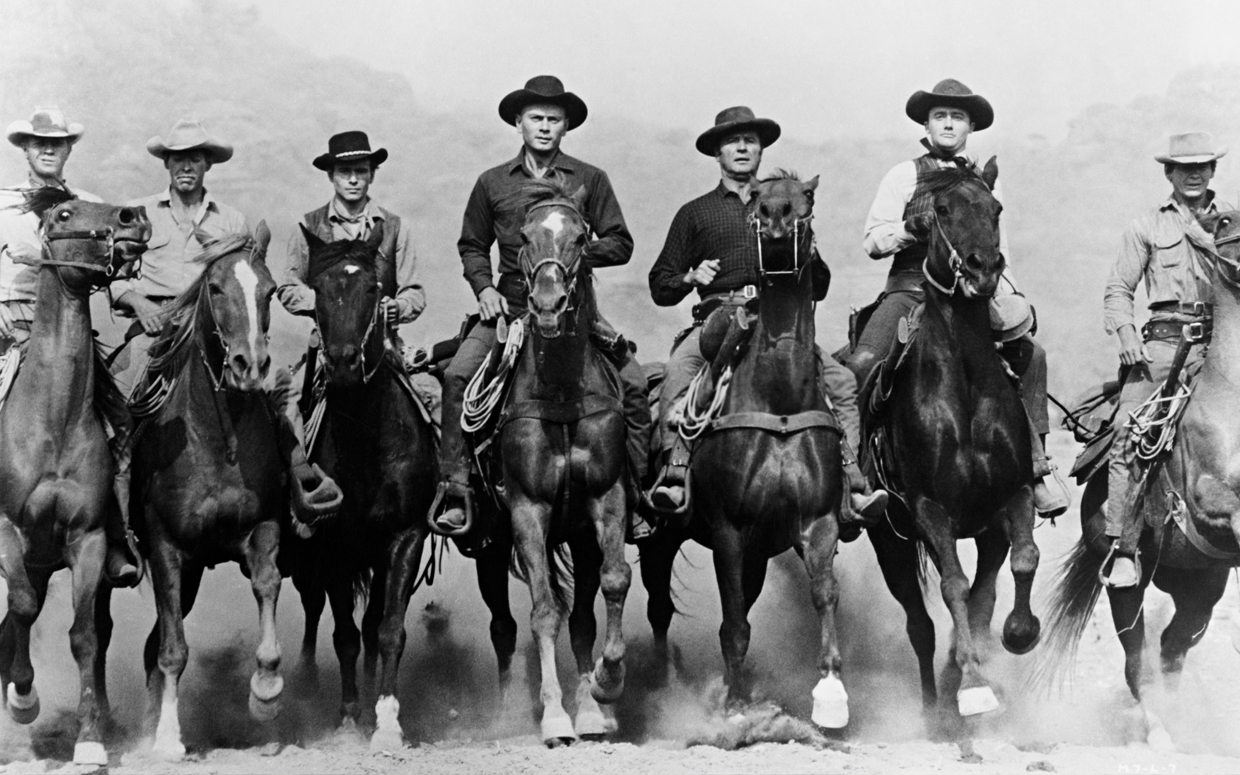
And while you a re at it put some minutes into the MAGNIFICENT SEVEN.

Here they are, and here is a recap.

WHEN YOU UNDERSTAND, THINGS ARE JUST THE WAY THEY ARE.

WHEN YOU DO NOT UNDERSTAND, THINGS ARE JUST THE WAY THEY ARE.

HOKKA HEY

WHAT KIND OF DAY IS IT FOR YOU?
FIST LOGIC

FABRICATING THE FRAME.

Simplification of information requires that at some point we need to be overcomplicated and moderately confused.

We all know that Wing Chun is a concept based Martial Art that is based around the Sil Lim Tao.

The ‘small thought or little idea’.

But what exactly is that?

After 30 years of training, I have concluded that the Sil Lim Tao as a concept is a Chinese equivalent of the ‘Law of Parsimony’.

Simplification of information requires that at some point we need to be overcomplicated and moderately confused.

We better get started is all I can say.

The IDEA of the ‘FRAME’ as a virtual reality 3-dimensional construct that we constantly use as our method of representing points in a space of given dimensions by internal physical coordinates. may sound a bit whacky at first but it is simple, quite elegant and readily accessible to anyone with any imagination.

Over the coming weeks I will attempt to expand and simplify the whole IDEA of building and working from the FRAME as opposed to using more common, physical or mechanical means.

This methodology is central not only to Wing Chun but to most other Martial Arts, all sport or any form of movement technology that is intended to be functional such as dance or acrobatics.

HOKKA HEY

WHAT KIND OF DAY IS IT FOR YOU?