FIST LOGIC

THE DEATH OF STILLNESS.

A VIEW FROM THE GETTY, LOS ANGELES.

Stability is having control of the body while we are moving or being affected by an outside influence.

Movement is born from stillness. Movement is the death of stillness.

This is a self-evident statement overlooked during training, especially in the pursuit of Stability.

Balance and Stability are frequently used interchangeably, I plead guilty to that myself, but they are two very different things.

Balance is having control of our body under the influence of gravity alone. Essentially standing still.

Stability is having control of the body while we are moving or being affected by an outside influence.

Think of it this way…

While practising the First Form, our body is still and we can work on being aware of what it means to be in balance.

While practising Chum Ku our body is moving, our balance is effectively surrendered but working on maintaining the connections of our body brings about stability.

Stance training is about working on these connections, understanding them, internalising them.

Things to look for and explore during stance training are conditions such as…

Where is our ‘Line of Gravity’?
Where is our ‘Centre of Gravity’?
Where is my ‘Lower Tantien?
Where is my ‘Middle Tantien’?
What is the relationship of each of these to each other
Are we in ‘Balance’?

Moving or transitioning from one ‘Stance’ to another ‘Stance’, which is what we are doing as we play Chum Kiu, requires that we ask ourselves the same set of questions as we move.
Where is our ‘Line of Gravity’?
Where is our ‘Centre of Gravity’?
Where is my ‘Lower Tantien?
Where is my ‘Middle Tantien’?
What is the relationship of each of these to each other?
How is the alignment of my feet to my ‘Lower Tantien’?
how is the alignment of my Arms to my ‘Middle Tantien’?

And of course, once we arrive at/in our new ‘Stance” we ask once more…

Where is our ‘Line of Gravity’?
Where is our ‘Centre of Gravity’?
Where is my ‘Lower Tantien?
Where is my ‘Middle Tantien’?
What is the relationship of each of these to each other?
Are we in ‘Balance’?

If we choose to stop a movement mid-transition, something I recommend, this becomes a ‘Stance’ and we begin the test again.

Hitting each other, doing drills and playing Chi Sau are fun games to prevent boredom and stagnation.

Stance training is where the ‘Gold’ is.

We started with a truth that sounds like a cliché, so let us also end with one…

Moving quickly evolves from smoothness. Soothness evolves from moving slowly.

Learn the form, but seek the formless.

Learn it all, then forget it all.

Learn The Way, then find your own way.

HOKKA HEY

FIST LOGIC

SUMMATION OF FORCES IN SHIFTING.

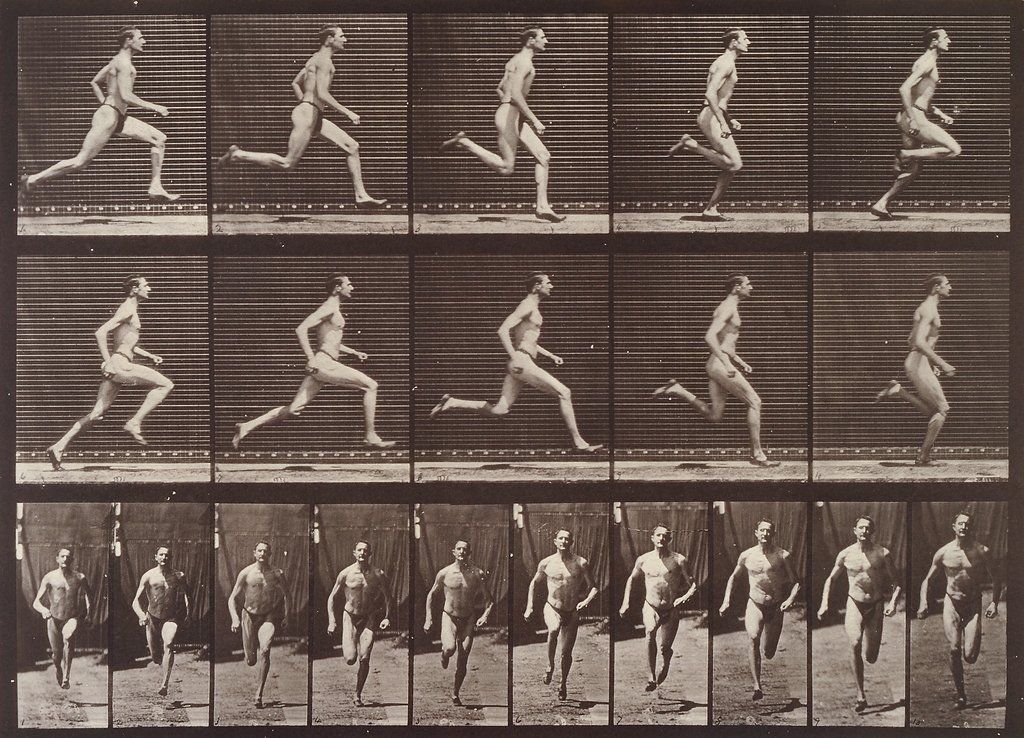
The illustration above could very well be someone throwing a punch.

Monday evening I was working on Sequential Acceleration and Summation of Forces with Saleh, it is important to understand that in Wing Chun the overall instruction of correct movement is scattered throughout the Sil Lim Tao { the complete S.L.T. Containing Chum Kiu and Biu Gee}, no single part of the Form has all of the pieces, some assembly is required.

Separate aspects of Chum Kiu and Biu Gee introduce all of the mechanical IDEAS for shifting our weight both inside our frame and through space that is later mixed and matched through the Dummy, the Knives and the Pole to give us a more complete view.

The illustration above could very well be someone throwing a punch, all it needs is to adjust for a more vertical spine.

The exercise usually equated with pre-Long Pole training is the culmination of all of our moving mechanisms and the closest we get to practical Martial movement.

Summation of Forces.

The combination of forces produced by different parts of the human body. When a person is moving or attempting to move an object, several different parts of the body act together to maximize the force. In theory, force summation occurs when all body parts act simultaneously In practice, the strongest and lowest body parts around the centre of gravity (e.g. trunk and thighs) move first, followed by the weaker, lighter, and faster extremities. This is known as sequential acceleration and results in successive force summation. To obtain a maximum force, summation also needs sequential stabilization of body parts, with some body parts having to be fixed at stable points while other parts produce the effective forces. OXFORD DICTIONARY OF SPORT.

THE ONLY WAY TO BE A BETTER MARTIAL ARTIST IN 3, 5 OR10 YEARS IS TO UNDERSTAND THE MARTIAL ARTIST WE ARE TODAY.

HOKKA HEY
WHAT KIND OF DAY IS IT FOR YOU?
FIST LOGIC

A BIT MORE ABOUT STANCES.

Everything we do, everything we train for is contact with either an incoming strike or an available target. And for that we need STABILITY.

In a one on one conflict, the aim is to affect our opponent more than they affect us, hopefully, before they affect us.

It becomes a bit of a no-brainer that everything we do must affect our opponent.

If my arms are still moving, I have not yet made contact with my opponent.

If I have not made contact with my opponent, I am not affecting them at all.

As counter-intuitive as it may appear, what we do is all about stopping.

Or to be more accurate, forcing our opponent into stopping our strike or interception with their body.

Everything we do, everything we train for is contact with either an incoming strike or an available target. And for that we need STABILITY.

Somehow this gets overlooked to the point of almost being ignored.

This is where STANCES live.

Once we spend some time working and thinking about stances, perhaps even begin to understand them a little, we see our Forms in a different light.

Forms become a way of practising how to move out of one stance and into another.

A method of transitioning from one position of stability to another position of stability.

This is the beginning of the “Little Idea”.

Each section of our body, Arms, Legs, Torso examined through the first, second and third forms respectively.

Stances provide Stability, Forms introduce Mobility, Stability is at the opposite end of a sliding scale from Mobility.

In a real situation, we will be using an amalgamation of IDEAs from all aspects of the Sil Lim Tao.

We can only become the Martial Artist that we hope to be in 2,3 or 5 years by understanding and being the Martial Artist that we are today.

HOKKA HEY

WHAT KIND OF DAY IS IT FOR YOU?
FIST LOGIC

STANCES, FORMS, STILLNESS AND MOVEMENT.

The things we can learn from STANCES and FORMS are so deeply important that they are beyond value.

Anyone with fighting experience, especially ‘Street fighting’ experience, will tell you that there are ‘NO STANCES’ in a fight.

A stance is a perfect Idea, an ideal shape and position that we benefit from being as close to as we can be.

The reason for this is explained by the ‘THEORY OF THE CONSERVATION OF MOMENTUM’.

In practice, we only ever move into a stance or out of a stance, yet all the action happens in the space between these points.

STANCES and FORMS share the same confusion, we spend a great deal of time and energy training them but in the end, we will never use them.

This is a paradox of cosmic proportions.

This is why it is so difficult to get beginning students to engage in a meaningful way, even students with zero fighting experience know instinctively that STANCES and FORMS have no practical value.

The first confusion we come across is that although we train them statically they are in fact transitional shapes that we move into or out of.

The things we can learn from STANCES and FORMS are so deeply important that they are beyond value.

How we resolve this importance from a purely personal perspective will determine the quality of most if not all of our Martial Actions.

Stances should be looked as being still points in a progressive movement, and not specific shapes and locations.

If it was available back in 1860 Doctor Leung Jan would have simply used ‘Time Lapse Photography’ and completely ignored the path of STANCES and FORMS.

Despite Stances being static they are an exploration of Human Movement, allowing us to look in detail at how our body is set up at different points in a possible progression.

Most importantly starting points and finishing points, but they can also function as a fault-finding method if we are not hitting the end stance position correctly when we move through a certain sequence.

When we look at Stances in relation to Forms we see a suggestion of how we would/could connect a start point Stance to an endpoint Stance.

STAND AND DELIVER!

Adding otherworldly importance or abilities to STANCES and FORMS has definite entertainment value if someone is a ‘Hobbyist’, but being involved in any kind of thinking that is not ‘RIGHT HERE-RIGHT NOW’ can only be detrimental to an aspiring Martial Artist.

We can only become the Martial Artist that we hope to be in 2,3 or 5 years by understanding and being the Martial Artist that we are today.

And we can only become that person by understanding the training we are doing today.

HOKKA HEY
WHAT KIND OF DAY IS IT FOR YOU?
FIST LOGIC

FEEDBACK LOOPS; BODY BEING.

We become familiar with the Body Being by creating and observing Feedback Loops.

In a nutshell, the ‘LITTLE IDEA’ is about understanding how to develop/build/create the condition/shape we are after and then learning how to use it.

This aspect is often referred to as the MIND/BODY CONNECTION, but it is primarily about being a BODY.

BEING a better body than we are today, BEING a better human being.

HUMAN BEING – HUMAN BODY – BODY BEING.

To aid clarity when we are talking about experiencing the Mind and Body working together we can refer to this unity as ‘BODY BEING’.

BODY BEING is a manifestation of self-awareness.

Physical leading Mental.

Inner leading Outer.

We cannot “BE” something we are not aware of, something we do not know about.

We become familiar with the Body Being by creating and observing Feedback Loops.

AS ALWAYS…

WORK ON YOUR WEAKNESS’, PLAY TO YOUR STRENGTH.

HOKKA HEY

WHAT KIND OF DAY IS IT FOR YOU?
FIST LOGIC

MIND BOXING.

Does the value lay in the act of the practice or the product of the practice’?

What is Mind Boxing?

First off it is an actual style of Kung Fu, named Yi Quan.

Yi Quan derives its name from a training method that is an intrinsic aspect of all Southern Fist Styles.

Outside of Yi Quan ‘Mind Boxing’ is a term used for a group of methodologies that unite the Mental and Physical into a combined new and superior whole.

This revolves around Chi Kung alongside that of martial techniques.

Although I have practised {minimally} the internal Kung Fu styles of Bagua Zhang, Xing Yi and I have also spent significant time on Ba Duan Jin Chi Kung.

I cannot say that I believe in the cultivation or application of Chi, but there is little doubt that something is going on that is of great value to a martial artist.

Something I find interesting is that many if not all of the early civilisations had some kind of energy work, but only the Chinese talk of it as being a physical power generator.

There are some subtle but intriguing variations in the Global Practice.

The Shaman of the Yaqui Indians of New Mexico advise keeping the hands closed to avoid energy spilling out, and then the Mongolian Shaman advises to keep or hands open so that the energy can come in.

Apart from this, the systems are very similar in thought and process to Chinese Chi Kung.

What do we make of this?

There is no doubt that we can ‘excite’ areas of our body by directing our attention to that place, relax our muscles with just our thoughts and send blood to our extremities by breathing, but I am pretty sure we could do that anyway, we just did not notice.

The big question is…

Does the value lay in the act of the practice or the product of the practice’?

Let me reiterate that I am not doubting that there is value.

Is it Intent or Intention?

The explosion of money in professional sport over the last century has also brought an equal explosion into sports-related research, and created the fields of ‘Sports Science’, and ‘Sports Medicine’.

And with it ‘Sports Psychologists’, Muscular-skeletal specialists, Physical therapists and an ever-increasing list of allied disciplines.

21st Century Sports Shamans?

There are several areas were the work of the ancient Shaman is verified by our modern-day Shaman.

But no-one can find verifiable existence of Chi.

As I say I am not doubting that there is something going on, but what?

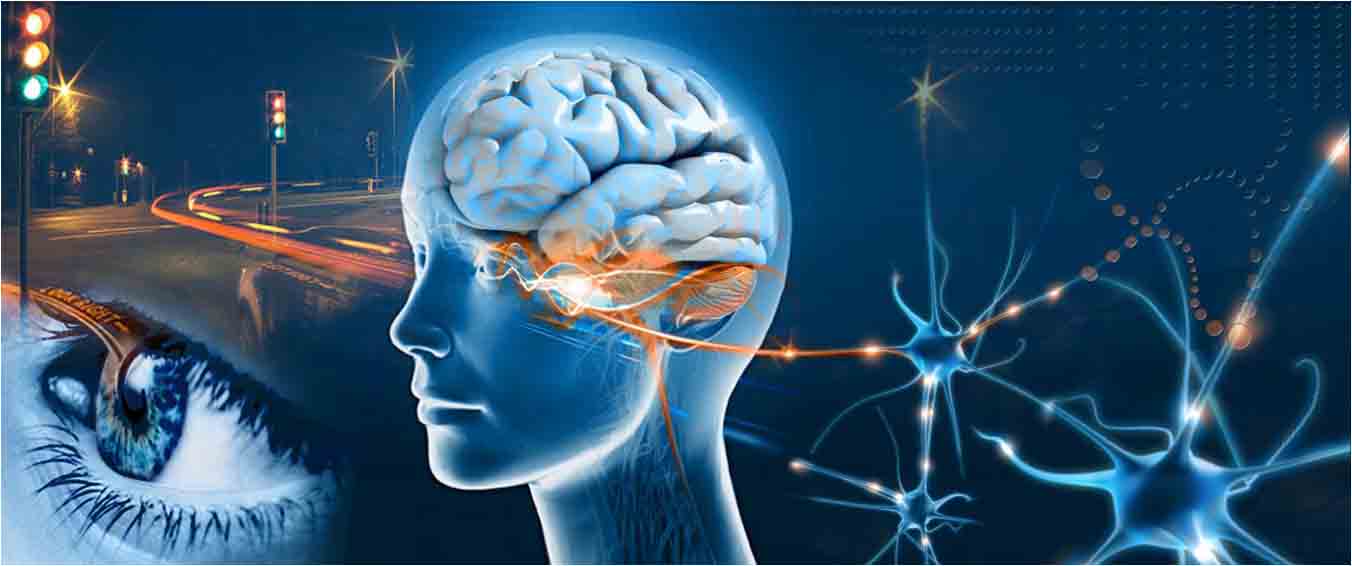
I believe that the juncture is the Neuro Biometric Boundry that controls all Physical movement, we are essentially rewiring or even reprogramming our brain.

As close as the old sifus were they just did not know what we know today, they were correct in thinking that the work is always done on the inside from the inside

Never disengage the mind in training or you will only be training your brain to hide away from what you think you are training for.

There is much more to come from me on this topic, it is just so very difficult to articulate.

HOKKA HEY.

WHAT KIND OF DAY IS IT FOR YOU?
FIST LOGIC

FOOD FOR THOUGHT.

This does not mean that we cannot reach the same destination by a different path.

The ancient Kung Fu masters did not explain or talk about the organising physics of our universe anything like the same way we western educated people do.

But that does not mean that they did not understand it, understanding something in a different way, even a completely different way, is still understanding.

Qi, jing, Yi, Sung are just words, used to describe a feeling, framed from the perspective of a certain philosophy.

These words make perfect and easy sense to a person that follows this type of philosophy and can manifest in many positive ways.

If we are not living this philosophy naturally in every minute of our waking day these words are meaningless and their practice is pointless.

This does not mean that we cannot reach the same destination by a different path.

Every wisdom tradition from every part of our world covers the same ground,

Every culture posses this profound knowledge and explains it very differently.

But it is the same thing.

Consciousness.

But it needs to be our own consciousness an not one borrowed from some exotic location.

Chi, Jing, Yi and Sung only exist in China, to be expected if we wish to talk about, experience or realise Chi, Jing, Yi or Sung we can only do it in China.

This does not in any way imply that the experience behind these words/names does not exist for example, here in Australia, but it will only answer and come to us when we use its Australian name.

As always…

WORK ON YOUR WEAKNESS’ – PLAY TO YOUR STRENGTH.

WHAT KIND OF DAY IS IT FOR YOU?
FIST LOGIC

FORMS ARE NOTHING – UNTIL WE MAKE THEM SOMETHING!

FILL BEFORE EMPTYING.

“What have you learned from 50 years in the study of Chadō?

One of my favorite maxims/stories is from 16th century Japan.

The famous Tea Master, Sen no Rikyū, a National Living Treasure was retiring after over 50 years following Chadō, the way of Tea.

He was asked…

“What have you learned from 50 years in the study of Chadō?

He thought for a while, massaged his chin and replied…

‘Before Chadō Tea was just Tea, but as I became more involved in Chadō Tea became much more than Tea, finally, once I understood Chadō Tea was once again just Tea.

As always…

TRAIN YOUR WEAKNESS’ – WORK TO YOUR STRENGTH.

WHAT KIND OF DAY IS IT FOR YOU?
FIST LOGIC

IMAGINATION – THE NEW FRONTIER.

ME, MYSELF AND “I”.

“Because what ever word we choose is just a made up word for an imaginary event that we only think is happening”.

Imagination is how we humans interact with the universe around us.

How we see it.

Not as it is.

But as something it is not.

Something that we can make sense of, work with.

This does not make it “REAL” in any sense of the word, but it does make it a very valuable mental method.

When teaching my IDEA of “Crazy Horse” I encourage my guys to give their imagination free reign.

I put it to them that what we are doing when we engage our imagination is creating a language that both our mind and our body can use to communicate with each other.

Creating what I refer to as “feeling pictures”, or “screenshots” of our inner working.

One imagining I like to use is to think that we have a hydraulic pump deep in our pelvis.

This pump sends pressurised water down our legs, up our spine, along our shoulders and into the arms and hands until we are full and can even feel our skin bulging as the water tries to exit through our fingers and toes.

Most students achieve this easily and sometimes ask….

“Is this Chi/Nim Lik/Nim Tao/Kundalini”?

I answer…

“It can be if you wish it to be”.

“Because what ever word we choose is just a made up word for an imaginary event that we only think is happening”.

Some people take umbridge with me for saying that Chi, or Nim Lik, or Nim Tao, or Kundalini are only imaginary, they feel I am being dissmissive.

I am not.

I do not see any problem with using our imagination.

I am repeating myself here but Imagination is how we humans interact with the universe around us.

We all deeply believe that when we look out of a window and see BLUE skies, GREEN trees, RED cars on BLACK roads it is because they are real.

And I am the first to agree that not only do I do this but that this is a universal consensus.

The fact that we all agree, all think and perhaps even see the same thing does not make it REAL.

Not even close.

We do not LOOK OUT of windows, we do not LOOK at anything, our eyes are more akin to cameras than scanners, we open the lens and the view flows IN.

We only IMAGINE that we look out.

In our universe there is no colour, there is only different wavelengths of electro-magnetic energy, we interpret these different wavelengths to represent different colours.

Except of course for the “Clour-blind” in our society.

All and any interpretation of any subject is just us using our IMAGINATION.

What has all this got to do with teaching and studying Wing Chun?

When people from the C.S.T. lineage like Sifu John Kaufman talk about Nim Lik and Nim Tao, when people from the Robert Chu lineage like Alan Orr talk about the 7 Bows and linking/de-linking or when I talk about putting on our Crazy Horse and staying in the Goldilocks Zone we are using a different imaginary language to talk about the same thing.

The Ghost in the Machine if you wish.

Underneath this language, our bodies are doing or at least attempting to achieve the same objective.

That is the reality of what we are doing and as such is the true work.

If we take the Kung Fu and Spirituality away completely, what is our body ‘actually’ doing when we ask it to link and de-link, to bend one of the 7 bows, raise up Nim Lik or engage Nim Tao, stay in the Goldilocks Zone or put on our Crazy Horse?

Whatever we think that is we would benefit from exploring in that direction.

Apart from any other considerations this thing is measurable, observable and capable of being experienced/felt by a person other than ourselves.

It is REALITY and not IMAGINATION.

Do I know what lies beneath the imaginary language I create, beneath my Crazy Horse and my Goldilocks Zone?

I believe I do.

But I could just be imagining it.

As always…

WORK ON YOUR WEAKNESS – PLAY TO YOUR STRENGTH.

WHAT KIND OF DAY IS IT FOR YOU?

FIST LOGIC

PREAMBLE TO A FUTURE CONVERSATION.

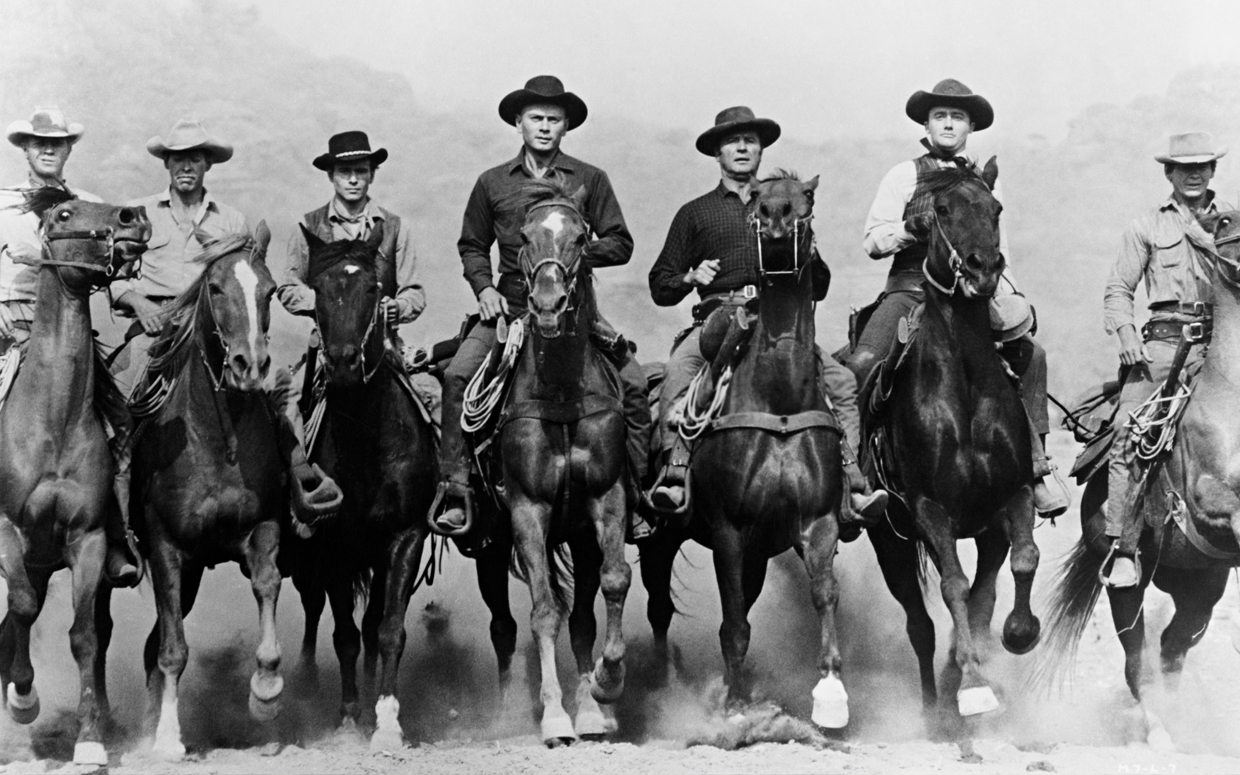
The usual suspects line up.

At the heart of Wing Chun, there is a small idea.

 There ‘really’ is.

 Many talk the talk, but it is only once we understand everything that we realise it was a small idea all along.

Can we teach this small idea from the outset?

Or do we all first need to spend 10 years amassing a fair whack of useless knowledge and then spend another 10 years getting rid of most of it.

As a starter we should stop telling tales, fairie stories that pretend to be historically factual but are little more than primitive self-advertising.

The usual suspects line up.

Wing Chun was created by a woman, a nun, that observed a crane and a snake fighting.

Wing Chun was named after a young girl, a dumpling seller that fought and beat a local warlord.

Biu Gee is only taught to students that have proven their fealty by training with the one school for 10 or 15 years.

Biu Gee is not taught to outsiders because it contains all of our emergency techniques.

The Wing Chun weapons are genuine “Martial Weapons”.

These are all tales Wing Chun tells and none of them true.

AS ALWAYS…

WORK ON YOUR WEAKNESS’ – PLAY TO YOUR STRENGTH.

WHAT KIND OF DAY IS IT FOR YOU?