FIST LOGIC

BALANCE AND STABILITY.

Stability is the quality of being unchanging.

This time of year is traditionally a time of reflection; we compare where we are at in this moment compared to a previous time, such as last year.

How we measure this comparison sets up the training goals going forward.

In my own experience, this is reflected in Wing Chun becoming smaller and simpler; it has been at least twenty years since I learnt anything that could be regarded as “NEW”, but the understanding and appreciation of these things I have known for years continuous to grow deeper and more profound.

But just like everyone else I still need a plan going forward or all of my gains will cease to exist.

Use it or lose it.

If, like most of us lot, you have been training for more than 10 years, in which time even if you are unaware of it you have been shown everything that there is to know about Wing Chun, the emphasis should be on refining what you think you know, reducing the content, trying to identify a common denominator, and then polishing it until it shines like the Sun.

So where do we look and how do we make it interesting and not just more of the same?

Something that fascinates me is the progress in Human-like robots, and there is a shit-tonne of info on the web, especially VIDEO, that we can access.

After all, isn’t that what we are doing with Kung Fu, trying to make a perfect human?

When I watch videos of the latest robots, the thing that impresses me most is their ability to keep Balance and Stability, even when being hit with a stick. It is pretty scary how good they are becoming.

We could do much worse than starting there.

First of all, let us be sure that we are talking about the same things, at least in the context of this post.

Balance is the ability to remain uptight working against no outside force other than gravity. 

Our weight is evenly distributed, and our spine is vertical.

Our body is aligned or “stacked’ in such a way that it is self-supporting and not held in place by using added physical strength to maintain it.

Stability is the quality of being unchanging.

From our Wing Chun perspective, this is especially the physical condition or feeling of self, what we refer to as “Body Being”, and to a certain extent the shapes we adopt when moving. 

Moving requires muscular effort, therefore, if we are moving, we are not in balance, counter-intuitively, this means that we are only in balance if we are still.

In the context of Wing Chun, where we constantly aim to minimise muscular tension, the implication is that the stiller we are, the closer to optimal we are, this is reflected in the principles of “Economy of Movement”, and “Minimal use of Brute Force”.

It should be quite obvious that being still is not the optimum position to defend ourselves from, but the theory is correct.

What we need is to establish a “Sliding Scale” with uninhibited free movement at one end and stillness at the other.

In a situation like this our training becomes more about this sliding scale used on our current knowledge than learning some IDEAL Wing Chun.

Training becomes about working with what we have and finding our personal “Goldilocks Zone”.

The way this Robot moves is the optimum way for a bipedal creature to move, and it looks like Chum Kiu.

It is clear that if we cannot stand up we cannot defend ourselves.

We cannot hope to achieve optimum Wing Chun without optimum Balance and stability.

FIST LOGIC

A UNIFIED THEORY OF WING CHUN.

it is like thinking that 6 different patterns combined in an ornate carpet are somehow 6 different carpets

Hi guys, over the years I have written hundreds of posts and articles, but I think that this is the most important of all of them. If you can take some time to think about the information here it will certainly help you understand how I think about Wing Chun but also get you well on the way to forming your own IDEA.

The main goal for all of us is to make Wing Chun a personal expression of our knowledge.

Then any information can be valuable information.

When we surf the Internet we find many different opinions on what Wing Chun is, this is completely fine and we have no need to worry about it, the difference is only in the training approach which may or may not relate to the learning outcome.

At times like this we do well to remember that all roads lead to Rome.

For my guys, all rivers eventually reach the ocean.

And take their twigs with them.

Wing Chun is usually described as having 6 forms, I do not like this description, it is clumsy and suggests a separation that simply does not exist, it is like thinking that 6 different patterns combined in an ornate carpet are somehow 6 different carpets.

I prefer to regard Wing Chun as having only 1 Form, which is of course the Sil Lim Tao, presented in the way of 3 attitudes, the first Form [that usually retains the S.L.T.title], the Chum Kiu Form and the Biu Gee Form.

And 3 processes, Mok Jan Jong [dummy], Baat Cham Dao [knives] and Lok Dim Boon Kwan [pole] that allow us to combine and explore the 3 individual attributes.

A more contemporary way to perceive this is to see the First Form, the Chum Kiu Form and the Biu Gee Form as 3 separate yet related theories that we test in the 3 processes of Dummy, Knives and Pole with the goal of discovering ‘our own’ Unified Theory of Wing Chun.

This is the code that grants us access to the Sil Lim Tao.

WHAT ARE THE 3 THEORIES?

First Form Theory. A method of how to set up an upright neutral body, how to move the arms without disturbing this neutral body and finally how to positively charge this neutral body to become a powerful single unit.

Core learning objective. Unify/stabilise an [Upright] STATIC FRAME.

Related research process. The Mok Jang Jong.

Second Form Theory. A method for supporting the arms with the body on contact with incoming force, how to coordinate the movement of the arms with the movement of the body, an introduction to the hierarchy of movement and sequential acceleration in a linear orientation.

Core learning objective. Unify/stabilise a MOVING FRAME.

Related research process. The Lok Dim Boon Kwan.

Third Form Theory. A method of focusing attention to specific points of the body, to develop an understanding of how to enlist the powerful core muscles, and an introduction to weight shifting within the bounds of the frame in a rotary orientation.

Core learning objective. Dynamically empower a unified/stabilised MOVING FRAME.

Related research process. The Baat Cham Dao.

While there are established Forms for the Dummy, Pole and Knives they should be seen as good places to begin testing the theories and not as essential patterns.

A unified theory of Wing Chun resides inside each and every one of us, the big question is can we get it to come out?

HOKKA HEY

WHAT KIND OF DAY IS IT FOR YOU?

FIST LOGIC

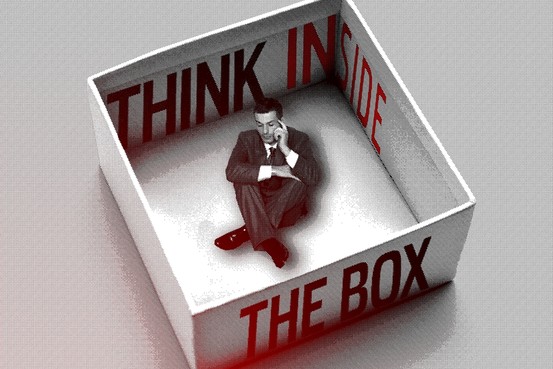
THE BOX IT CAME IN.

Forms are the theatre of teaching without words, the lessons are able to settle at their own pace and make their own sense.

This is a repost mainly for the benefit of our new friends Charlotte and Mikey, but understanding the fundamentals is the building block of every system.

Humour requires an open and nimble mind, it allows us to simultaneously see what is in front of us without unneeded complexity and also see things in a new and refreshing light.

For instance…

Q. What is the difference between a Greengrocer and an Aeroplane Pilot?

A. One sells veggies, and one flies a ‘plane.

Sometimes things are as obvious and in our faces as that, no need for inner depth or secret understanding.

Some other jokes help us see that we were in fact looking in the wrong direction…

Two girls were talking and one said to the other…

… “I lost my virginity years ago, but luckily I still have the box in came in!

Boom, Boom, sooner or later the really important things are not so important after all.

So above all else let’s try to be mentally flexible and open-minded.

2023 is just around the corner, do we know what it is we are carrying forwards to this new year.

I hope so, because that is all we have to build on…

…our past training is the foundation for our future progress.

Or regress!

As always we should begin with a question.

What is a FORM?

A FORM is a collation of IDEAS.

A FORM is a piece of theatre we use to explore and interpret these collated IDEAS.

It is a per-FORM-ance.

Intellectually a FORM is a filing cabinet to store all relevant data.

We could go as far as to say that a Form is ‘the box’ the IDEA came in.

Accepting this is the first step to understanding what is inside the box.

Anybody that has even the slightest understanding of Wing Chun knows that everything we do is infused with and directed by the Sil Lim Tao.

In short, in Wing Chun, everything is Sil Lim Tao.

Do we understand what we mean when we say “everything”?

A Form is a method for those few that know the deep secrets to explain their knowledge to the multitude that doesn’t know these secrets even exist.

Forms are the theatre of teaching without words, the lessons are able to settle at their own pace and make their own sense.

Forms are alchemy, a way to take a base material, the novice, and through practice, refine it to a more noble material, the practitioner, and eventually, a Master.

If like me you prefer science, in a book entitled Human Performance, the well-known psychologist Paul Fitts proposed three stages of learning motor skills:

  1. a cognitive phase.
  2. an associative phase.
  3. an autonomous phase.

Whichever lens we choose, whatever prose we use…

… Forms are the uncarved block that already contains the masterpiece before the first touch of the chisel.

Or the thumb drive that holds the algorithm.

The wordless wisdom holds us hostage.

I know from experience how difficult it is to dedicate time to doing just Forms, it took me around 7 years to finally commit and settle into a new way of approaching the work, but I also know that it is Forms that link us to the reality of using Wing Chun out in the wild.

If we are looking in the right direction.

TWO GUYS WALKED INTO A BAR.

OUCH!!!

IT WAS AN IRON BAR.

TOMMY COOPER.

HOKKA HEY.

FIST LOGIC

A TIME FOR SPARRING.

At its core, any problem, be it violent or non violent, is solved by good decision making and appropriate action.

Hey guys,

Salah returned to training last Thursday and he has asked if we can do a few sessions of active sparring.

So on Thursday, if you are turning up, bring a groin guard, as you all know I am not a big fan of P.P.E. in sparring, it is better to just work at 70%, because the threat of being hurt is a real thing and something we need to be aware of and to be working against, but being kicked in the knackers in training is just a bit too ‘Hard Core’ for my money.

Think about how you wish to go about sparring, there is more to it than you may imagine.

We are all aware that Martial Arts training can have positive value in non Martial Art situations.

Why did we think this is?

At its core, any problem, be it violent or non-violent, is solved by good decision making and appropriate action.

To be able to do this, make situationally appropriate decisions and then act accordingly, we need to understand the situation and be aware of our available options.

To do this we must ask good questions, I.e. What is this situation, what EXACTLY is going on here, and what are my options?

Bad decisions arise when we do not know EXACTLY what is going on and as such choose an inappropriate action.

Life and sparring.

Training, be it Martial Arts or otherwise, is fundamentally about developing numerous different options for similar situations.

Sparring is a way for us to cycle through these numerous different options to find which available options are appropriate and then which of these appropriate options is the most functional.

Sparring is not about learning how to do something physical or technical, which is the function of training, sparring is about resolving problems with options we already have in the Toolbox, which is the art of practice.

When sparring is approached as an opportunity to practice decision making, it is an extremely valuable use of our time.

When Sparring is approached as a way to learn how to do something, no matter what that ‘something’ is, it is missing the point completely and is of limited if not zero value out in the real world.

In Life or Self-Defence.

When we engage in a sparring session we must first of all ask ourselves ‘What is going on here, what is my objective or desired outcome, and what are my options’?

Then we start sparring.

If we do not do this we are just playing, and while playing is fun and enjoyable, it does not solve problems.

FIST LOGIC

WHERE, WHY, AND WHEN?

Everyday we will be “THINKING” differently, everyday we will be “FEELING” differently.

In a previous posts video I mentioned that, In My Opinion, the Martial Art style, or how well we use it, is not as much of a game changer as we might like it to be.

There is so much more to consider when shit is up and running than Tan Sau and Punch, or ALL of our training put together for that matter.

There is absolutely no doubt that the “HOW’ is important, but before we get there we must navigate the WHERE, WHY, and WHEN?

The best way to frame this conversation is to quote the Greek philosopher HERACLITUS.

“No man ever steps in the same river twice, for it’s not the same river and he’s not the same man”.  

This is not a cliche´, this is genuine wisdom.

Everyday we get out of bed we are a different person, we are older, our thinking has been affected by the events of the previous 24 hours, and how we feel about the events of the past 24 hours could very well be causing stress or excitement that is different to yesterday. 

Everyday we will be “THINKING” differently, everyday we will be “FEELING” differently.

This is a bit of a cliché, but also very true,

How we FEEL changes how we THINK.

How we THINK changes how we FEEL.

They both change how we act.

“NOT STEPPING IN THE SAME RIVER TWICE”, I am going to use my own lived experience to explore this, if possible read it once to get the IDEA  and then use your own lived experience.

I grew up in a gang culture, there was a more than average amount of violence in my life, especially the “Crazy Years”, 15 – 25, on one level there was a great deal of sameness about these events, it was pretty standard gang violence, but they where also completely different. 

Sometimes it was man on man, other times myself against multiples, and other times still multiples against multiples, in the 1970s at football matches it was tribe against tribe.

Use your imagination and put yourself in those situations, they are not the same.

There was a short period that I banged heads with the same person many times, every time different.  Sometimes he started it, sometimes I started it, sometimes I was really up for it and other times it was the last thing I wanted. 

Once again, use your imagination and put yourself in those situations, they are not the same.

From my perspective the difference was always the version of me that took part in that event, the next day I would look back and genuinely not be able to recall what I did in that moment, was it training, was it madness, was it luck?

The only thing I recall is that someone was left standing, and it wasn’t always me.

Because of this experience I can tell you, that if you are the person that kicks it off you are not thinking about style or technique, you are just going for surprise.

And again from my own experience, if you are the person being attacked, you are not thinking about style or technique, you are only thinking about surviving the next few seconds.

During this time I was also competing as a teenage Boxer and a few years later as a young adult Judoka, to many students there is a perceived similarity between competition/organised fighting and random/unorganised fighting.

If there was any similarity I did not notice it, neither the ring nor the mat was anything like the street.

A large part of competition fighting is training to be the same version of yourself on every occasion, the same level of fitness, the same mentality, the same emotional preparedness, in short working hard to be the same man, stepping into the same river.

This is where it becomes your own story.

Do you think you will always step into the same river?

Our training is only intended to be used once we step into the river.

How we got there, and in what condition, will determine if we sink or swim.

The why, the when , and the where all come before the how.

FIST LOGIC

KNIVES AND GUNFIGHTS. DO’NT BRING IT.

This is where it gets funky. It’s both.

Anyone with hands on experience of Wing Chun training will testify to how counter intuitive the training can be.

Wing Chun is a ‘Concept’ driven style that approaches all of our training as a means to understanding the force dynamics of the situation we find ourselves in, or as my teacher would say  “a means to an end, and not an end in itself”.  

What end? To turn the tables and prosecute our own agenda, that’s what end..

Wing Chun training is never representative of genuine combat, it is not imaginary fighting. Due to this there is no thought of ‘this leads on to this’, no linear progression of escalation as there is in many other styles, which is why to the uninformed it looks bogus or at best ineffective.

In early training many of the things we prioritise, such as do not focus on what the opponent is doing, and in particular not focusing on the point of contact,  standard approaches for many fighting styles, are the ‘means to an an end’ and not what the learning objective is.

The learning objective is to develop a whole body approach, which is usually accomplished after the development of the IDEAS introduced in Chum Kiu, reinforced in Biu Gee, explored on the Jong and personalised via the Pole and Knives. The IDEA of filling the body with ‘Intention’ even to the end of the Fingers {Biu Gee}.

This creates a level of misunderstanding and confusion about our training, even among some of our own students.

When any of us play on the Dummy, and of course when we play Chi Sau, we all consciously and deliberately make contact with our wrists, which on the face of it contradicts the ethos of ‘avoid the contact point’.

So what is it, focus on the contact point or ignore the contact point?

This is where it gets funky. It’s both. But wait minute, is that even possible? In reality NO, but conceptually YES.

The following video clip should be appreciated as a fly-on-the-wall type of thing, no one was trying to demonstrate or pose anything. I video these to make sure that I am not accidentally giving fantasy [read B.S.] ideas to my students. It is really important to me that if anyone uses what I show them, it will get them out of trouble.

It can, and in many cases but not all, take years for this to make sense. But once it does it is brilliant. This understanding is accomplished more by thinking than by punching, and a good place to begin this thinking is by exploring and improving our understanding of the out and out reality of counter-attack and self-defence… as CONCEPTS.

In training, we work hard to develop a whole-body approach that allows us to align everything behind any spot we choose, even a fingertip as in Biu Gee, a forearm as in Chum Kiu, or 13 feet away at the end of a long pole.

In a physical altercation, if given the chance, we will connect via our wrists as we do in Chi Sau, as we do on the Dummy, however…. our philosophy holds with the IDEA that we will probably not be able to make this decision in an all out attack against us, especially an unexpected attack, in this situation the ‘whole body’ approach which aligns the ‘whole body’ behind a single point, be it the contact point or not, maintains body integrity in all situations, even when we do not know what is going on.

Wing Chun is not and was never intended for fighting, it is intended for dealing with unwanted violent contact, this may of course require us to fight back, and just like our attacker do it violently and viciously, but that is not the work we do in training.

If we struggle to make sense of this, we will struggle to grasp the truly amazing aspects of  Wing Chun and, of course, struggle against violence.

Fortunately for them, many people have no personal experience of being violently attacked without much warning, but there is a downside to this, it tends to create the idea that an unexpected violent attack is somehow the same as a fight.

It is not.

It is closer, more aggressive, way scarier and over in just a few seconds, it is not that standard fighting skills will not work in this environment, it is more that we will not get the time or space to use them.

I am not trying to scare anyone with this, the opposite in fact, I am hoping to point to how it is the odd, sometimes weird and apparently pointless things that we do in late training that, often as a reflex action, stop attackers from overwhelming us in an instant, and as such give us the chance to turn the tables and retaliate.

Even once we turn the tables Wing Chun does not fight….It just beats the crap out of the Bad Guy.

And this brings us full circle to the main cause of confusion and fabrication…

… training is not fighting.

Break this down a bit, what is training? Training is learning, and learning is thinking.

What is fighting? Fighting is action, and action is movement.

Therefore, training = thinking, while action = movement.

Thinking is not ‘movement’.

FIST LOGIC

TRAINING TO BE OURSELVES.

We will all get better, that is the point of the training.

It does not take a great deal of research to verify that the person that lands the first meaningful blow usually wins any violent encounter.

First meaningful blow.

This is not in anyway connected to fighting style or type of training.

We all have a different tipping point, a different line in the sand when it comes to responding to what we feel is an attack, and then choosing to activate our counter-attack.

There is no one size fits all here, so this post is just one way of approaching this problem, food for thought, something to throw at the wall and see what sticks.

Sun Tzu, the sweetheart of all Kung Fu players, says we must understand our enemy as well as we understand ourselves, however, from the perspective of random violence we can only, at best, have a general knowledge of our enemy.

So we need a general knowledge of ourselves?

How can we measure this?

Well we can start by taking the B/S filters off when training.

Training should be about assessing ourselves as we are, right here, right now, at this moment of time that we are doing the training.

And measuring it against the possibility of immediate violence, no matter how you view this you will be better than you were yesterday.

Tomorrow, next week, or next grading is of limited value, violence happens in the NOW.

Violence could happen on the way home from any nights training.

Is our training doing this?

As a young pre-teen Boxer our Club Coach would get us wound up and shaking by telling us…

… ‘The Boxing Ring is where Tall Tales comes to die, in the ring there is nowhere to hide, it is the field of TRUTH’.

It turned out that his intention was not to boost our confidence, in reality it was to thin the ranks of the tire kickers among the new boys, but it made stepping through the ropes an even greater challenge.

But it was also true, as all of us that chose to step through those ropes all too soon found out.

However, while all of us boys had the choice of stepping into the ring or stepping back and going home, this is not a choice we will have with random violence, or any self-defence situation.

This is the reference point that we should be aware of.

In this case the first goal of training needs to be… ACCEPTANCE… It is happening, deal with it.

When we are training there is no need to pretend that we are more, or less, than we are, the truth is that none of us training tonight would choose to put ourselves in that dark place of genuine, unwanted violence.

But if we approach the work we call training with the IDEA that we are training ‘IN CASE’ we get in trouble, we are not training to ACCEPT the situation.

If we are not training to ACCEPT the situation then we are not training to deal with the situation. 

ACCEPTANCE begins with simply not pretending we are anything but ourselves. 

We will all get better, that is the point of the training.

I am as guilty as any of us for painting Wing Chun with the brightest light.

But it is always an honest light, Bullshit filter set close to zero.

Saying this, there is one thing that we absolutely must be honest about?

We can train hard, live well, be the best version of ourselves that we can possible be…

….and still not be good enough.

This is just the way it goes.

This is the simple truth at the heart of the work, once we ACCEPT this everything else is cake.

Being honest does not mean being negatively critical, sometimes an unknown new strength arises out of thin air because we avoided a well known old weakness.

We must learn to ACCEPT our weakness’, the weakness’ of our understanding and the weakness’ in our ability to use it.

Here’s some good news, if we avoid our weakness’ we will, by default, be using our strengths.

We cannot avoid our weakness’ if we refuse to recognise them.

In training we all enjoy playing the things we are good at, it is fun and satisfying, but it encourages us to ignore our weakness’.

As painful and unpleasant as working on things we think we suck at is, this is the only way to turn a weakness to a strength, even if that strength comes from recognising our weakness’ and avoiding using them.

Acceptance is always a personal journey and as such no two journeys will be the same, this is one of the shortfalls of traditional training methods, where we all do the same thing, in the same place, at the same time, hoping to get the same results as our seniors and get better rewards for the ‘more same’, the more like them, we do these things.

This is the relationship between training and gradings in a nutshell.

Our best bet is to be guided by the Principles of Simplicity and Non-use of Brute Force, and of course the fact that everything is based on normal human body movements.

If everything we do respects this, then everything we do, even if it is unrecognisable as Kung Fu,  will be GOOD ENOUGH.

FIST LOGIC

“IF”

For ex-competition fighters this requires a total reappraisal of what the training is teaching.

I was recently talking with my wife’s cousin Gordon about my life long continued training in Martial Arts.

He is closing in on 60 years of age but for over 20 years, from his pre-teens onwards, he trained and competed in Full-Contact Karate.

Like most ex-Martial Artists there was the  ‘I miss it, and part of me wishes I never gave it up” moment, but when I encouraged him to get back into it there was the also echoed “I am too old now, and it has been so long, that ship has sailed”.

I agree that if you intend to “compete” , especially “Full-Contact”, then there is a cut off point that is age driven.

Not because of age related physical ability, but rather the realisation that everyone you face will be “MUCH” younger, fitter, faster, stronger, and hungrier and as such the chance of life changing damage becomes a real possibility.

A genuine consideration that must be factored in.

But the need for self-defence never really changes, if anything the need is elevated as we become older, and at least at face value, are physically less viable. 

Here is the good news, those self-defence needs are few, relatively simple, and easy to maintain.

‘IF’ we keep up training.

This led to the question of how long can someone be away from training before it diminishes to the level of no longer being viable.

Although this is a classic ‘Horse for Courses’ situation it can help by looking at what happens in sport.

What happens to a sportsman/woman who is out of the game for 6 months?

Do they come straight back into the first team?

On their first game back do they get awarded the Man Of The Match Award?

In our own lives if we get invited to join in a fun run, or a charity bike ride when we have not been involved in these pursuits for years do we just turn up on the day and go for it?

In my own experience I had a 5 years break from golf, when I stopped playing I was a 12 handicap, decent but nothing to boast about, it means I would score around 84 for a round of golf, but on my first round back I actually had a few ‘Windys” , more than a few 3 putts and did not break 100.

When we are talking about sports we can work for weeks on our conditioning and get several warm up games under our belt before fronting up to our first real match.

But when we are talking self-defence there is no weeks of prep, there is no warm up, the situation is more like what we would find 5 minutes before full-time in the grand final against our strongest rivals.

Maybe this is over egging the cake a bit, but self-defence is always match day, and the closest we are to match ready the better will be the outcome.

If we are willing to accept that once we pass 40, no matter what style we play, we are now training for self defence, we benefit from fully understanding the difference between fighting and self-defence, and the different requirements we now expect from our training.

For ex-competition fighters this requires a total reappraisal of what the training is teaching.

The training itself does not need to change, only a reorganisation of priorities.

In competition ‘Fighting Skill’ can be the difference between a ‘W’ and a ‘L’, but in self-defence ‘Fighting Skill’ is not much more than a Toolbox.

If we use our own life experience of Toolboxes to paint this picture,  we take the same toolbox, or something very close to the same toolbox, when we go to fix the wife’s lawn mower as we do if go to tune the family car.

And in most circumstances this is less than optimum.

Thanks to YouTube we can access footage of genuine street violence, we can get a ‘Ball Park’ idea of what and who we will be up against, and if we are honest, it is nothing to be real worried about.

‘IF’ we approach it in the correct way.

It should be obvious that ‘Fighting Skill’ as useful and effective as it most certainly is…

… it is not the ‘SECRET SAUCE’.

Composure, co-ordination, and balance are king.

Not falling over is a game changer.

As I have said many times before, ‘IF we can poke them in the eye, we can push them over, IF we can push them over we can get out in one piece”.

To quote rudyard Kipling…

…If you can keep your head when all about you are losing theirs and blaming it on you; If you can trust yourself when all men doubt you, but make allowance for their doubting too;

This is why we train until the curtain falls.

FIST LOGIC

SYSTEMS ANALYSIS.

When we are talking about the central part of any system it is understandably difficult to understand until all of the other parts of that system are individually understood.

As nerdy as it may sound what we are talking about here is System Analysis, and it is a valuable investment of our time to do some research into Systems Analysis as a stand alone subject, it can help us not get lost when looking at Wing Chun, which after all is a system.

Apart from requiring knowledge of the individual parts we also need to understand how they connect to and integrate with each other.

Even in very simple systems, made up of very simple parts, such as Martial Arts, it is the integration that is a complex task, not collecting and collating the parts, that bit is so easy.

There comes a point in everyone’s training where they look back and say to themselves ‘how did I not put that together earlier”?

As obvious as things look in retrospect they are pretty much invisible until we have all the pieces.

The biggest handicap we have is that we get sidetracked, confused, and begin thinking that the individual parts are somehow superior to the system, when in fact the individual parts are almost useless until we combine them into the system.

This is the way with all systems.

HOW ABOUT SOME STEAK KNIVES?

Imagine this, you and three other people are in the wrong place at the wrong time, you are outnumbered, and those other guys are really pissed off.

This is a very, very, serious situation, and it is going south fast.

This is your imagination so it is your choice, who are the three guys with you?

If you can, pick real people from your own lived experience, but if you really want Batman, pick Batman.

Q. 1. How many of your team do Wing Chun?

Q.2. Was it even a consideration?

When people criticise Wing Chun, and to a certain extent those of us that sing Wing Chun’s praises, always point to one aspect of the system and look at in isolation. Apart from this being a fruitless exercise it fails to consider that any systems efficacy is dependent on the operator.

Wing Chun cannot fail.

But we can.

FIST LOGIC

HONG KONG SPAGHETTI ARMS; CLOSER THAN HONG KONG.

COME CLOSER.

“Never let the drive for perfection be the enemy of doing things effectively”

Back in the late 1990s and early 2000s, a significant number of students from my Sifu’s school would travel to Hong Kong to train at Grandmaster Chu ShongTin’s school,   Chu ShongTin was our Sifu’s Sifu.

Very few would stay for more than a week but they would return shining with an inner light and full of tales of amazing feats, brilliant teachings and the sheer joy of being in the company of greatness.

A fair call.

But they also returned with an arm structure that for some reason was much less efficient and effective than it was before they left Australia.

This condition humorously became known as ‘Hong Kong Spaghetti Arms’.

Those afflicted with Hong Kong Spaghetti Arms would act as if they knew something we did not, despite not being able to prevent themselves from being hit when playing Chi Sau.

If ever there was a case of “Never let the drive for perfection be the enemy of doing things effectively” this was it.

I know where the condition of Spaghetti Arms comes from and I also know that it is a correct step on the path to a capable and effective body, but it is only a transition phase, it is a means to an end, and not an end in itself.

But hey, what can you learn in a week?

Sadly these Wing Chun tourists were stuck half-way along the road to amazing unbendable arms, if they had stayed longer in Hong Kong they would have learned how to correctly take the “impractical softness” out of their arms and replace it with rigidity without using muscular strength.

The Sil Lim Tao Form, or rather the “A” section of the overall Sil Lim Tao has three major learning objectives.

  1. Set up the neutral body.
  2. Move the arms without disturbing the neutral body.
  3. Energise the neutral body so that it becomes an active body.

Step #2 is what results in Spaghetti Arms.

The purpose of the Sil Lim Tao Form is to become familiar with our own body structure, it is not in any way intended to make contact with another person or outside force so having Spaghetti Arms is of no consequence when doing the Form.

In fact, it is as it should be.

The third learning objective of the Sil Lim Tao Form, energising the neutral body, brings everything together, torso, arms, and legs by various stabilisations, both global and local.

 Stabilisation of the lower torso or Pelvic Girdle is achieved by recruiting the DEEP MUSCLES…

1. The muscles of the pelvic floor…. Contract the glutes.

2. The transverse abdominals…. pull in the navel

3. The multifidus….. Stand tall.

4. The Internal Obliques… breathe sideways.

5. The Diaphragm… tuck the diaphragm under the ribs.

In short our core muscles that attach to and hold our spine secure.

Local Stabilisation of the torso is not addressed in the S. L. T.  as there is zero body movement, it is introduced in Chum Kiu and Biu Gee.

Stabilisation of the upper torso or Pectoral Girdle is achieved by recruiting

 1. The Levator Scapulae …  Pull the head back and stretch the neck.

2. The Rotator Cuff Muscles…. Bend the Bar.

As you can see when we follow the simple set-up of…

  1. Contract the Glutes.
  2. Pull in the navel.
  3. Stand Tall.
  4. Breathe Sideways.
  5. Tuck up the diaphragm.
  6. Bend the Bar.
  7. Stretch the Neck.

… we stabilise our complete torso.

This set-up could well still suffer from Spaghetti Arms as there is still some work to do.

One of the many reasons we do the S. L. T. Form so slowly is to allow us to observe and make contact with the bones and most importantly the joints of our arms.

The shoulder joint, the Elbow joint, the wrist joint, and the finger joints.

If we ‘bend the bar’ we stabilise the shoulder joint, this results in a natural, pliable solidity in the shoulder joint.

When we hinge the elbow joint we create a kinetic force that pushes our forearm down into the wrist and our upper arm back into that stable shoulder joint connecting the upper arm to the torso and creating a return force back down the upper arm that crosses the elbow jointed reinforces the forearms force.

It is just physics.

In a contact any force pushing my wrist back toward us is met by the return force from our body, if the muscles surrounding and crossing the Elbow are contracted I have real problems, in effect both of us are putting pressure on the elbow joint, if it is natural and only working as a hinge the partner/opponent has real problems due to the aforementioned return force.

We, people, are not used to using the elbow joint as it was intended, as a hinge, instead we think that it is a way to move our arms and as such when the elbow struggles we engage all of the local muscles that we can call upon to get the elbow to move the arm.

Each muscle and there are 7 major muscles attached to the elbow joint and 9 that cross the elbow joint, calls up a favour from its neighbour, soon every muscle in our body except the little muscles in the Pinky Toe are giving a hand.

Result – Gridlock.

It is misleading of me to say just “control the Elbow Hinge and you control the whole arm” because teaching our body to trust that simple, natural movement when we are in dangerous situations is more than we can hope to get from an intense week in Hong Kong.

It can take a very long time to convince our Monkey Brain that this is a good IDEA.

Best we start today.

Book a flight.

Or come see me because as my Sifu would say about himself, “I am closer than Hong Kong”.

“A mind that is stretched by a new experience can never go back to its old dimensions.”

Oliver Wendell Holmes

HOKKA HEY.