FIST LOGIC

IT IS ALL THE SAME STUFF, AND NOT WHAT WE THINK IT IS.

I get it, I do, I was there once, as were Sam, George, and Costas, and we felt and acted just as you guys are feeling and acting.

Hey Guy’s…

…The posts are coming thick and fast… just like me…

…In last night’s training, Thursday, Jan 30th, there was a noticeable change in enthusiasm between when we were working on the Form and when we started exploring technical ways of dealing with strikes and hitting people.

This is not a surprise, it is more fun playing at being a “Bad Ass” than it is training to become one, but deep down, we know violence is serious, so if shit got real, why would our nervous system choose to play when we need to get serious?

NEWS FLASH… it won’t!

What does that mean in regards to developing capability in Self-defence?

Are we wasting our time?

Like so many questions that arise through training, the answer is…. It depends.

It depends on how closely our playing echos our Forms.

And the inverse is also true, how closely our Forms echo our playing.

To navigate a violent situation, our body will, as if by magic, echo moves from Sil Lim Tao, Chum Kiu and Biu Gee, even when we do not know these Forms, this is part and parcel of the whole “Wing Chun is based on normal human body mechanics”.

Forms do not teach us these moves, shapes and postures; they simply allow us to isolate, practice, observe, and understand them in a non-threatening, non-dynamic situation.

And they help us to trust them.

The obvious next step is to take this knowledge into Chi Sau and free play, both of which are still non-threatening but present escalating levels of dynamism. 

We do this at any and every time of our training journey, even when we get it.

This is very easy to understand and trust when like myself, Sam, George, and Costas you have been training for decades but is understandably ‘dead suss’ when what you want is the ability to defend yourself today and not the ability to accurately perform Sil Lim Tao.

I get it, I do, I was there once, as were Sam, George, and Costas, and we felt and acted just as you guys are feeling and acting.

This is why the non-physical side of the work is much more important and valuable than the technical side.

We did not believe that either.

There is not one move that any of you guys performed last night that you do not use somewhere in your everyday life, even punching.

The punching action, when done slowly with very little effort, is how you open doors, call elevators or do push-ups.

The first and perhaps the most challenging task is to accept that you can already do all the moves you need to effectively defend yourself, even before you began training, before you had even heard the name Wing Chun you had this knowledge and ability.

If we can accept this premise then everything becomes about improving what we already possess and not about learning something new and challenging.

Because you do not have the information to identify all of the Wing Chun Forms you cannot see that last night you were using aspects of  Sil Lim Tao, Chum Kiu, Biu Gee, and even the Dummy, Knives and Pole.

The linear way that we present the Forms is just to make as smooth a learning curve as we possibly can, there are no laws in Wing Chun that state because you are at the beginning of training, you cannot work on Biu Gee, it would just be extremely challenging because Biu Gee contains all of Chum Kiu, and Chum Kiu contains all of Sil Lim Tao.

But it certainly does not hurt to look ahead.

The stats of this site tell me that almost nobody explores the other sections of the Blog, and when you consider that there is information here for students of all levels, all the way to Master level, everything you wish to know is here somewhere, why wait for me to point it out?

Here is a video from the Isolation Training Advice page, sometimes, finding something you want and realising you do not know how to do it is all the motivation you need to dig into the work

WHEN YOU UNDERSTAND, THINGS ARE JUST THE WAY THEY ARE.

WHEN YOU DO NOT UNDERSTAND, THINGS ARE JUST THE WAY THEY ARE.

Zen parable, or perhaps Mind Boxing basics.

FIST LOGIC

FINDING YOUR OWN MIND BOXING MINDSET.

Zen is Chan. Kung Fu is Chan.

Hi Guys, I truly believe that the wider our field of research, and as a result, the wider our net of influence, the more likely we are to find our own way.

But where do we look?

Sometimes, having a grasp of the general historical record is more useful than a specific history, especially one just associated with Wing Chun.

Here is some general info that I hope can give you some idea of what to look for but also what to be wary of.

Kung Fu began in the Shaolin Monastery, which was also the birthplace of Chan Buddhism.

According to legend, what became Kung Fu was specifically created to improve the physical conditioning of the Shaolin Monks to enable meditation, it should surprise no one that there is an interconnection between both.

During the Kamakura (1185-1333) and the Muromachi (1336-1573) shogunates., Japanese monks from the Five ‘Mountain Temples’ would travel to the Shaolin Monastery to study Chan Buddhism, which in Japan became known as Zen Buddhism.

The Temple guards that accompanied the monks to China would train with the Shaolin Temple guards and take Shaolin Kung Fu back to Japan, where it became known as Shorinji Kempo..

The variation of Shaolin Kung Fu known as White Crane also migrated to Japan, to
Okinawa, where it was known as Karate-Do.

After the Chinese Communist Party’s victory in the Chinese Civil War, the nation’s leader, Mao Zedong, outlawed Kung Fu and destroyed most of the written history and recorded wisdom. To this day, there is a blanket ban on what Kung Fu was in its heyday, and as a result, today’s Shaolin Monastery is little more than a Martial Arts Theme Park, and any history has been heavily appropriated to fit the C.C.P.’s agenda.

In 1937, 12 years before the Chinese Communist Party came to power, Japan invaded China, and there has been no cultural influence or exchange since then, which ironically means that the blanket ban on all things Kung Fu by Mao Zedong did not have any influence on Japanese Martial Arts, which have become, to a certain extent, custodians of the original, fundamental precepts of Shaolin thought, simply because we can still gain access to Manuals and methodologies from groups and people that trained at the Shaolin monastery with the Abbots and Sifu’s that were active before the purge.

There are some very clear physical differences between the Japanese approach to Martial Arts and most styles of Kung Fu, but the non-physical things are still strongly aligned, and what is often referred to as a Zen Mindset would be very close to what a Chan Mindset would be if not for the Civil War.

Zen is Chan.

Kung Fu is Chan.

Taiwan was also insulated from the Mao Zedong blanket ban on Kung Fu, and as such, information from Taiwanese Kung Fu schools is as close to the original Shaolin Kung Fu that we can get.

It may sound quite insane, but Chinese history was rewritten from 1949 till today, and when we are talking about anything regarding Kung Fu, anything written after 1949 is pretty much B/S.

But there are a lot of good Kung Fu schools in Taiwan, and there is a shit-tonne of Westernised Zen writing.

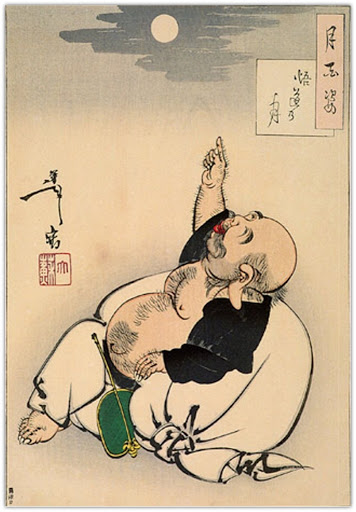
what moon?
FIST LOGIC

MIND BOXING.

Long story short, one of the most significant things I have become aware of is that we do all of our learning while we sleep.

This post is an intro to what I intend to be a relatively concise and probably long-winded look at the non-physical, intangible aspects of our training.

This stuff is a great deal more difficult to write about than it is to participate in, so do not get put off by this wordy approach.

As you all know my job in the 1980s required me to become familiar with the concepts and practices of “Lateral Thinking”, to the extent that I was sent off to a number of weekend even week-long workshops at the De Bono Institute for Creative Thinking, this in turn started my fascination for how the brain works and how the body interprets the signals.

Long story short, one of the most significant things I have become aware of is that we do all of our learning while we sleep.

Keeping this in mind, everything we learn, practice, train, or develop, be it tangible or intangible, physical or non-physical is a product of A SLEEPING MIND.

This places the whole physical or non-physical argument in a very strange place, but if nothing else shines a light n how important the INTANGIBLE aspects of the work are.

Q1. How often have you said or heard someone else say, “I was in two minds about it”?

Q2. How often have you said or heard someone else say, “ The guy was so Single-Minded”?

Q3. How many MINDS do we have?

It is widely accepted that we only have only one Mind, but I think we all have experienced situations, especially in training,  where the mind instructs our body to do things we did not ask it to, in fact, it acts against our interest as if it was a separate mind.

For instance, when I do my party trick of asking you to straighten your Arms, usually standing with your arms folded as in the stance, instead of following the very simple, very clear instructions and straightening your arms, you raise them to shoulder level.

How did this happen?

Our mind double-guesses the situation and decides that what was asked for was to straighten them in front of us.

But that was not what was asked.

This may seem quite trivial, but what would happen if our mind did this in the middle of a violent situation?

OOPS!

This is the realm of what my old Judo Sensei referred to as “Mind Boxing”.

 In case anyone finds it odd that a Judo Sensei would refer to ‘Mind Boxing” instead of “Mind Grappling” or whatever, we need to look at a small slice of British social history..

Between the end of W.W.2 and the explosion of  Kung Fu cinema in the late 1970s in Britain all Martial Arts styles were regarded as some sort of  Boxing. 

Hence the Boxer Rebellion in 1900 Hong Kong.

To the rank and file in Britain this how Martial Arts were described, there was… 

Roman Boxing or Pugilism which is today’s boxing.

Gentleman’s Boxing, which was the Victorian era Baritsu Fighting system.

Chinese Boxing,  which of course was Kung Fu.

Japanese Boxing, which is Karate.

Styles that used their feet were and still are called “Kick Boxing” even though their names say nothing about feet.

In Europe, this was French Kickboxing or Savate.

Even today, the majority of Americans and Australians who have no active involvement in Martial Arts call everything Karate.

So when my Judo Sesei talked of “Mind Boxing” he was not talking about Boxing, in todays way of speaking he would have probably called it ‘Mind Fighting” or perhaps “Mind Martial Art”.

In the late 1960s trying to instruct young “Christian” students in what was essentially Zen Buddhism risked the wrath of angry Catholic mothers or at least an irate local priest.

So, just like my early Sensei, when I talk of “Mind Boxing “, it is simply a label that is used to differentiate between the physical and visible aspects of the work from the purely mental/emotional and intangible aspects of the work.

WHAT MOON?
FIST LOGIC

BALANCE IN FORCE-ON-FORCE SITUATIONS, AND WHERE IT GOES FROM THERE.

Understanding this aspect of being human can give us a great advantage over a Bad Guy who does not understand this.

Hey Tribe.

Sam and I were going over some things we aim to bring to the fore in the coming few months, I am sure you can see that we had a hoot doing it, even if it is super serious.

We all take our ability to maintain balance for granted because to a very large extent it is not us that does the work, not consciously at any rate, it is an automatic background task that gets applied by a separate program than our everyday “I am Groot” Mind. mind.

On one level we all know this, but not the level that does Wing Chun.

Understanding this aspect of being human can give us a great advantage over a Bad Guy who does not understand this.

There are aspects of Boyd’s O.O.D.A. Loop at play here, and we will cover this during the work.

Stay Frosty and get back in here.

VIDEO

WHAT MOON?
FIST LOGIC

CORE IDEAS.

We need a method to train how to activate our previously “established” Chi Sau training in Sparring sessions. Or, we will just be dancing.

In any Martial Art, there is a well-established path from basic training to actual engagement, these “Core Ideas” separate one style from another.

This progression works along the lines of physical conditioning → coordination drills → combat technique → force-on-force sparring and then engagement.

Wing Chun is no different in its approach, the progression is the same just the type of content differs.

Our FORMS act as conditioning and basic coordination; we also have combat techniques, and then we have Chi Sau, which is as close as we come to force-on-force sparring.

But Chi Sau is far more complex than just sparring, Chi Sau is both a training vehicle and a sparring vehicle, which can cause problems and misunderstanding.

Training and Sparring are very different animals to the extent that Sparring is of very little value as a training vehicle, just as we are too busy to be thinking about training while sparring.

As a training vehicle Chi Sau teaches coordination, combat techniques, and physical conditioning, but of real interest, it teaches how to dynamically accept force.

Sparring is where we use what we have learned through training.

We need a method to train how to activate our previously established Chi Sau training in Sparring sessions. Or, we will just be dancing, and learn very little regarding engagement.

Wing Chun is a very intelligent system so it should be no surprise that we do have such a method, if we know where to look for it, and how to access it.

Enter the Mok Jan Jong, the Wooden Man.

Like so much of our training, there are many layers or levels of understanding to every component of our system, how we approach or work on the Wooden Man is far more important than what we do with it, this is the “Concept” aspect of the work.

When playing on the Dummy, what “Concept” are we trying to realise?

This is not as complex as it may sound, after all, the main IDEA behind Wing Chun is simplicity.

So what are we doing here, are we trying to realise attacking concepts are we trying to realise defending concepts, or are we exploring our Chi Sau?

The Wooden Man is nothing more than a training partner, so are we playing, sparring or training?

For the context of this post, we are exploring Chi Sau with our Wooden Man.

From this perspective, when working on the dummy pay special attention to the rotations that occur when moving into contact, at contact and through contact with the Dummy Arms.

This is SO very important, in fact, I recommend exaggerating the amount of rotation that you are using to illuminate that there is natural rotation in every move.

Once we reach a stage where through practised repetition we have internalised and habitualised rotating into, through, and out of contact it will naturally become how we make contact with everything we interact with.

It is this rotation that constantly compromises our attacker/partner’s balance.

If we are at a stage where we practise our FORMS with freedom of movement, going more with feeling than shape and pattern, and here as well it does not hurt to exaggerate the movements; we are adding more and more complex rotations to everything we do.

Bringing both of these practices into our Chi Sau allows us to get comfortable with doing them in a semi-dynamic environment, that transfers well to free play, and of course free play is a precursor to genuine engagement with an attacker.

Once we become comfortable with this type of work it becomes clear that this type of engagement keeps our attacker/partner permanently off balance and in a weakened position.


No man ever steps in the same river twice, for it’s not the same river and he’s not the same man. Heraclitus.

FIST LOGIC

BALANCE AND STABILITY.

Stability is the quality of being unchanging.

This time of year is traditionally a time of reflection; we compare where we are at in this moment compared to a previous time, such as last year.

How we measure this comparison sets up the training goals going forward.

In my own experience, this is reflected in Wing Chun becoming smaller and simpler; it has been at least twenty years since I learnt anything that could be regarded as “NEW”, but the understanding and appreciation of these things I have known for years continuous to grow deeper and more profound.

But just like everyone else I still need a plan going forward or all of my gains will cease to exist.

Use it or lose it.

If, like most of us lot, you have been training for more than 10 years, in which time even if you are unaware of it you have been shown everything that there is to know about Wing Chun, the emphasis should be on refining what you think you know, reducing the content, trying to identify a common denominator, and then polishing it until it shines like the Sun.

So where do we look and how do we make it interesting and not just more of the same?

Something that fascinates me is the progress in Human-like robots, and there is a shit-tonne of info on the web, especially VIDEO, that we can access.

After all, isn’t that what we are doing with Kung Fu, trying to make a perfect human?

When I watch videos of the latest robots, the thing that impresses me most is their ability to keep Balance and Stability, even when being hit with a stick. It is pretty scary how good they are becoming.

We could do much worse than starting there.

First of all, let us be sure that we are talking about the same things, at least in the context of this post.

Balance is the ability to remain uptight working against no outside force other than gravity. 

Our weight is evenly distributed, and our spine is vertical.

Our body is aligned or “stacked’ in such a way that it is self-supporting and not held in place by using added physical strength to maintain it.

Stability is the quality of being unchanging.

From our Wing Chun perspective, this is especially the physical condition or feeling of self, what we refer to as “Body Being”, and to a certain extent the shapes we adopt when moving. 

Moving requires muscular effort, therefore, if we are moving, we are not in balance, counter-intuitively, this means that we are only in balance if we are still.

In the context of Wing Chun, where we constantly aim to minimise muscular tension, the implication is that the stiller we are, the closer to optimal we are, this is reflected in the principles of “Economy of Movement”, and “Minimal use of Brute Force”.

It should be quite obvious that being still is not the optimum position to defend ourselves from, but the theory is correct.

What we need is to establish a “Sliding Scale” with uninhibited free movement at one end and stillness at the other.

In a situation like this our training becomes more about this sliding scale used on our current knowledge than learning some IDEAL Wing Chun.

Training becomes about working with what we have and finding our personal “Goldilocks Zone”.

The way this Robot moves is the optimum way for a bipedal creature to move, and it looks like Chum Kiu.

It is clear that if we cannot stand up we cannot defend ourselves.

We cannot hope to achieve optimum Wing Chun without optimum Balance and stability.

FIST LOGIC

A UNIFIED THEORY OF WING CHUN.

it is like thinking that 6 different patterns combined in an ornate carpet are somehow 6 different carpets

Hi guys, over the years I have written hundreds of posts and articles, but I think that this is the most important of all of them. If you can take some time to think about the information here it will certainly help you understand how I think about Wing Chun but also get you well on the way to forming your own IDEA.

The main goal for all of us is to make Wing Chun a personal expression of our knowledge.

Then any information can be valuable information.

When we surf the Internet we find many different opinions on what Wing Chun is, this is completely fine and we have no need to worry about it, the difference is only in the training approach which may or may not relate to the learning outcome.

At times like this we do well to remember that all roads lead to Rome.

For my guys, all rivers eventually reach the ocean.

And take their twigs with them.

Wing Chun is usually described as having 6 forms, I do not like this description, it is clumsy and suggests a separation that simply does not exist, it is like thinking that 6 different patterns combined in an ornate carpet are somehow 6 different carpets.

I prefer to regard Wing Chun as having only 1 Form, which is of course the Sil Lim Tao, presented in the way of 3 attitudes, the first Form [that usually retains the S.L.T.title], the Chum Kiu Form and the Biu Gee Form.

And 3 processes, Mok Jan Jong [dummy], Baat Cham Dao [knives] and Lok Dim Boon Kwan [pole] that allow us to combine and explore the 3 individual attributes.

A more contemporary way to perceive this is to see the First Form, the Chum Kiu Form and the Biu Gee Form as 3 separate yet related theories that we test in the 3 processes of Dummy, Knives and Pole with the goal of discovering ‘our own’ Unified Theory of Wing Chun.

This is the code that grants us access to the Sil Lim Tao.

WHAT ARE THE 3 THEORIES?

First Form Theory. A method of how to set up an upright neutral body, how to move the arms without disturbing this neutral body and finally how to positively charge this neutral body to become a powerful single unit.

Core learning objective. Unify/stabilise an [Upright] STATIC FRAME.

Related research process. The Mok Jang Jong.

Second Form Theory. A method for supporting the arms with the body on contact with incoming force, how to coordinate the movement of the arms with the movement of the body, an introduction to the hierarchy of movement and sequential acceleration in a linear orientation.

Core learning objective. Unify/stabilise a MOVING FRAME.

Related research process. The Lok Dim Boon Kwan.

Third Form Theory. A method of focusing attention to specific points of the body, to develop an understanding of how to enlist the powerful core muscles, and an introduction to weight shifting within the bounds of the frame in a rotary orientation.

Core learning objective. Dynamically empower a unified/stabilised MOVING FRAME.

Related research process. The Baat Cham Dao.

While there are established Forms for the Dummy, Pole and Knives they should be seen as good places to begin testing the theories and not as essential patterns.

A unified theory of Wing Chun resides inside each and every one of us, the big question is can we get it to come out?

HOKKA HEY

WHAT KIND OF DAY IS IT FOR YOU?

FIST LOGIC

THE BOX IT CAME IN.

Forms are the theatre of teaching without words, the lessons are able to settle at their own pace and make their own sense.

This is a repost mainly for the benefit of our new friends Charlotte and Mikey, but understanding the fundamentals is the building block of every system.

Humour requires an open and nimble mind, it allows us to simultaneously see what is in front of us without unneeded complexity and also see things in a new and refreshing light.

For instance…

Q. What is the difference between a Greengrocer and an Aeroplane Pilot?

A. One sells veggies, and one flies a ‘plane.

Sometimes things are as obvious and in our faces as that, no need for inner depth or secret understanding.

Some other jokes help us see that we were in fact looking in the wrong direction…

Two girls were talking and one said to the other…

… “I lost my virginity years ago, but luckily I still have the box in came in!

Boom, Boom, sooner or later the really important things are not so important after all.

So above all else let’s try to be mentally flexible and open-minded.

2023 is just around the corner, do we know what it is we are carrying forwards to this new year.

I hope so, because that is all we have to build on…

…our past training is the foundation for our future progress.

Or regress!

As always we should begin with a question.

What is a FORM?

A FORM is a collation of IDEAS.

A FORM is a piece of theatre we use to explore and interpret these collated IDEAS.

It is a per-FORM-ance.

Intellectually a FORM is a filing cabinet to store all relevant data.

We could go as far as to say that a Form is ‘the box’ the IDEA came in.

Accepting this is the first step to understanding what is inside the box.

Anybody that has even the slightest understanding of Wing Chun knows that everything we do is infused with and directed by the Sil Lim Tao.

In short, in Wing Chun, everything is Sil Lim Tao.

Do we understand what we mean when we say “everything”?

A Form is a method for those few that know the deep secrets to explain their knowledge to the multitude that doesn’t know these secrets even exist.

Forms are the theatre of teaching without words, the lessons are able to settle at their own pace and make their own sense.

Forms are alchemy, a way to take a base material, the novice, and through practice, refine it to a more noble material, the practitioner, and eventually, a Master.

If like me you prefer science, in a book entitled Human Performance, the well-known psychologist Paul Fitts proposed three stages of learning motor skills:

  1. a cognitive phase.
  2. an associative phase.
  3. an autonomous phase.

Whichever lens we choose, whatever prose we use…

… Forms are the uncarved block that already contains the masterpiece before the first touch of the chisel.

Or the thumb drive that holds the algorithm.

The wordless wisdom holds us hostage.

I know from experience how difficult it is to dedicate time to doing just Forms, it took me around 7 years to finally commit and settle into a new way of approaching the work, but I also know that it is Forms that link us to the reality of using Wing Chun out in the wild.

If we are looking in the right direction.

TWO GUYS WALKED INTO A BAR.

OUCH!!!

IT WAS AN IRON BAR.

TOMMY COOPER.

HOKKA HEY.

FIST LOGIC

A TIME FOR SPARRING.

At its core, any problem, be it violent or non violent, is solved by good decision making and appropriate action.

Hey guys,

Salah returned to training last Thursday and he has asked if we can do a few sessions of active sparring.

So on Thursday, if you are turning up, bring a groin guard, as you all know I am not a big fan of P.P.E. in sparring, it is better to just work at 70%, because the threat of being hurt is a real thing and something we need to be aware of and to be working against, but being kicked in the knackers in training is just a bit too ‘Hard Core’ for my money.

Think about how you wish to go about sparring, there is more to it than you may imagine.

We are all aware that Martial Arts training can have positive value in non Martial Art situations.

Why did we think this is?

At its core, any problem, be it violent or non-violent, is solved by good decision making and appropriate action.

To be able to do this, make situationally appropriate decisions and then act accordingly, we need to understand the situation and be aware of our available options.

To do this we must ask good questions, I.e. What is this situation, what EXACTLY is going on here, and what are my options?

Bad decisions arise when we do not know EXACTLY what is going on and as such choose an inappropriate action.

Life and sparring.

Training, be it Martial Arts or otherwise, is fundamentally about developing numerous different options for similar situations.

Sparring is a way for us to cycle through these numerous different options to find which available options are appropriate and then which of these appropriate options is the most functional.

Sparring is not about learning how to do something physical or technical, which is the function of training, sparring is about resolving problems with options we already have in the Toolbox, which is the art of practice.

When sparring is approached as an opportunity to practice decision making, it is an extremely valuable use of our time.

When Sparring is approached as a way to learn how to do something, no matter what that ‘something’ is, it is missing the point completely and is of limited if not zero value out in the real world.

In Life or Self-Defence.

When we engage in a sparring session we must first of all ask ourselves ‘What is going on here, what is my objective or desired outcome, and what are my options’?

Then we start sparring.

If we do not do this we are just playing, and while playing is fun and enjoyable, it does not solve problems.