What does the dummy have in common with a human being?
To a certain extent when we play on the dummy, we are involved in one man Chi Sau, or at the least Chi Sau with a very stiff and static partner.
Do we approach it with the same outlook as we approach Chi Sau?
A great many people play the dummy at a high pace and high physicality, taking pride in the speed they dance around it and how loud the sound of their contact.
One constant in all of our training should be, indeed must be, asking ourselves…
“What would need to happen for me to need this action being performed in this way, in this space”?
All training is task-specific, all training is preparing us for an event that is at least similar to what we are doing in that training.
What is the dummy doing that we are dealing with?
What does the dummy have in common with a human being?
We should consider these questions seriously and deeply.
It is all too easy when playing on the dummy, or even when playing Chi Sau, to get sidetracked into thinking that this action {or FORM} is teaching us something just by being there and just by us doing it.
It does not, it just becomes a game.
There is an inherent danger in all FORMS that are done in the same way with the same thinking day after day, that is when we turn on the auto-pilot and turn down the thinking, they become nothing more than dancing, or just standing still.
The physical orientation we have to the dummy, or our partner in Chi Sau, is nothing at all like the positions we will encounter if we face violence.
Unless the Bad Guy is a complete moron, he will not choose to stand anything like chest to chest, it is unlikely he will engage both arms, it is more likely that his actions, his choices, will make sure he is not in that place of vulnerability or weakness.
Not ours or our training.
If he is a moron and just walks into our punches we do not need our training to deal with him, if that is the guy we are training to face dancing around a tree probably is enough.
Dummies don’t move, people do, how do we all resolve this dilemma and come up with something useful from all that dancing and drumming?
One IDEA, and it is just an IDEA, a method to bring about a different way of looking at the dummy and Chi Sau is to focus on the transitions.
To become aware of how the dummy stops our movement as opposed to thinking that we hit it, and what we do next.
If we are facing violence and the Bad Guy can stop our movement we are a split second away from getting done in, if we are not aware of this ‘stopping’ and cannot transition from that phase to another phase in the shortest possible time it is game over.
Looking only at how we move in and make contact with the dummy is bordering on arrogance and disrespect for our opponent, this type of attitude very rarely ends well when facing a real person.
Is it practical to develop this type of attitude?
Make easy contact with the dummy, feel it stop you, observe the return forces and what they are doing to your shape and balance {this aspect alone is worth the time}, explore the best and most effective way to regain your shape and balance, then move.
Be stopped, observe, decide, transition. Rinse and repeat.
Wearing the hat of an Architect/Designer we could emulate this by doing all of our forms in a continuous progression from the pole back to the beginning of the First Form.
‘Form Follows Function’ is an old and much-used provocation, it comes in many flavours, Product over Process, Empirical over Theoretical, often sides are chosen the same way people choose football teams and are defended with just the same vigour.
The American Architect Louis Sullivan first coined the term ‘Form Follows Function’ and this became a battleline in more than just architecture, it is everywhere in the Martial Arts.
I find it enlightening to take a mental sidestep when contemplating anything like this, to put it in an alien context to see what is being looked at.
Think of your favourite shirt.
List the 3 things that you think are most important about that shirt.
Where on the list does growing the plant that the fibre came from sit?
Or how about making the cloth, designing the pattern of the cloth, cutting the cloth.
Usually, it is the fit, the feel and the look that rank highest, these are the things that FUNCTION as a shirt.
Sullivan had a young assistant, Frank Lloyd Wright, who realised how easy it was to misinterpret this IDEA and amended it to ‘Form and Function should be one, joined in a spiritual union’.
Without the plant that the fibre came from there could be no shirt, and equally, without the desire to make a shirt, there would be no need for the fibre.
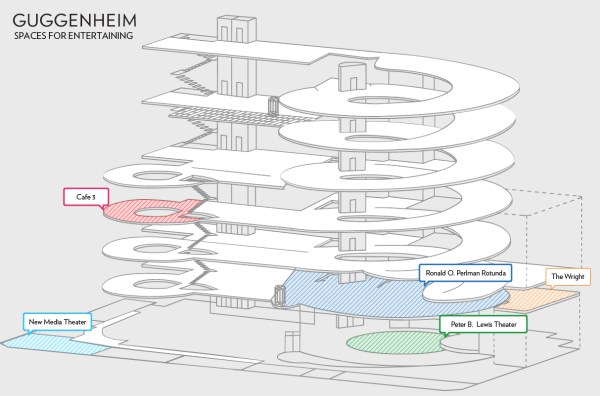
The most famous example of Frank Lloyd Wright’s approach is, of course, the Guggenheim Museum in New York.
Designed in the 1940s with Wright’s IDEA of the unity of purpose and design it still works today even though styles and tastes have changed so much.
On the Guggenheim’s web site it quotes a letter from Wright just before his death that reads…
“Yes, it is hard… to understand a struggle for harmony and unity between the painting and the building. No, it is not to subjugate the paintings to the building that I conceived this plan. On the contrary, it was to make the building and the painting a beautiful symphony such as never existed in the world of Art before.”
As Martial Artists if we can approach our work with the same openness and hope that Frank Lloyd Wright imbued in his designs, to not only look for but encourage a spiritual union between Form and Function, not take sides…
This principle is thoroughly visible in the plan for the Guggenheim Museum. According to Wright’s design, visitors would enter the building, take an elevator to the top and enjoy a continuous art-viewing experience while descending along the spiral ramp.
Wearing the hat of an Architect/Designer we could emulate this by doing all of our FORMS in a continuous progression from the pole back to the beginning of the First Form.
Then we might understand the “Art” as deeply as the “Martial” and vice verse.
Perhaps the problem is not the act of “Kicking” but rather what we think the act of “Kicking” is?
One thing that has always confused me has been the role of kicking in a ‘FIST’ art like Wing Chun.
Is it necessary, should it even be there?
What is the historical perspective?
If we go to the Kuen Kuit to get assistance there is practically nothing related to kicking, this is more than odd I think, especially as the Kuen Kuit is the repository of Wing Chun’s original wisdom.
Somewhat concerning is the fact that one of the only times the Kuen Kuit cleary references kicking is in the line “Kicks lose nine times out of ten”, this does not sound much like a positive credit.
The Kuen Kuit also says “Learning the usual ways will allow later variations”.
It just appears that the usual way did not favour kicking.
There are many situations within the ‘Canon’ of Wing Chun were things that make up the backbone of our work begin to fall apart, even contradict themselves, I believe that this is a conflict of translation over interpretation.
My teacher {Jim} Fung Chuen Keung would often say that some things in Wing Chun defy translation to English, if we take this to its ultimate conclusion we westerners that depend on such translations are all, and quite possibly always, wrong, the only option available is a personal interpretation of what is a very cryptic, and incorrectly translated Kuen Kuit.
People, being people, this fluidity leads to ‘Cherry Picking’.
Is it possible that kicking entered Wing Chun because Ip Man was very small, did he elevate kicking because it afforded him the potential of extra distance?
Perhaps the problem is not the act of “Kicking” but rather what we think the act of “Kicking” is?
There is a tendency amongst many Wing Chun commentators to forget that everything we do has a very real physical purpose that supersedes any pseudo – mechanical or semi-mystical deep thinking.
The product supersedes the process.
Any kick has a job to do, and that job has very little to do with how we move our limbs, it is all about distance control, contact, cause and effect, hurting the Bad Guy.
Wing Chun is a ‘Close Range’ fighting style, kicks, on the other hand, are at best mid-range, more often than not long-range.
Approaching kicking as something we do with ourselves as opposed to something we do to an attacker is a road to nowhere.
What do we think a kick is?
Does it fit the Wing Chun ethos?
First and foremost and something that needs to be contemplated deeply is that “Kicking” is effectively fighting on one leg.
It requires exquisite levels of skill to remain in balance on one leg during a dynamic exchange, a lack of balance leads to a lack of power.
A wider and more generalised consensus we can be comfortable with could be…
A blow delivered to an opponent by a foot of shin that has built its energy from a swinging leg.
Kicking is an overt attacking move, often pre-emptive, all eggs in one basket kind of approach, it is difficult to align this with the Kuen Kuit’s ‘he attacks first, but I strike first’ which is alluding to a counter-attack.
Nowhere in any of the Wing Chun Forms does this type of movement exist, in both the Chum Kiu and the Biu Gee it is the body that moves and not the leg.
In Chum Kiu practice we are advised that the extension of the leg must not compromise our balance that we should be able to maintain balance with the leg extended.
This position, this one-legged stance if you wish is called the “Hanging Horse”.
This is a static, solid, stable position that if an attacker walks into is the equivalent of a bike rider hitting a parked car.
If the timing is correct and the attacker makes contact at the exact time that the position is established the exchange of momentum would be almost perfect and extremely powerful.
Seeing this take place from an outside vantage point would look very much like a consensus kick, a swinging leg.
Like so many other aspects of Wing Chun what appears to be is never what is, this can only be taught hands-on, and validated through experience.
I realise that many people reading this will to some extent disagree, and that is cool as I said at the beginning “I am one of those that are in favour of each of us making our interpretation of the work we do, forging our own path ” and of course there is valid and effective leg work in Wing Chun, it is just not kicking.
In Wing Chun we are informed and influenced by an IDEA, to be expected the same IDEA that informs and influences our arms informs and influences our legs.
We do not swing our arms around or hammer them into the opponent’s arms do we, this alone should raise a few flags.
“Greet what comes in, follow what goes out”.
Like the bike rider and the parked car, we offer a place for the opponent’s energy to exhaust itself under Newtons Third Law and the Law of Momentum Conservation.
We then step forward and finish them off.
This is shown in all its simplicity in the Chum Kiu and Biu Gee leg movements, there is no need to add anything.
We call this “Jamming”, to anyone that does not understand the finer points this can look just like kicking and as such is frequently taught as kicking with all of its overt, overcommitted implications.
When it comes to a personal assessment of the validity and effectiveness of kicking, I must admit to holding a bias on this point, my first 20 years in the Martial Arts I followed styles that did not need kicking to get a favourable result, Boxing, Ju-Do, Bu-Jutsu.
Add to this that throughout my teenage years, the “soccer hooligan’ years of the 1970s in the U.K. On the occasions when everything went ‘Pear Shaped’ I consistently fared much better against people that tried to kick me than I did against non-kickers.
This, of course, could also be that many people, back then and today, try to kick because they have little confidence or ability in striking.
The more I think about and the more I study Wing Chun I am drawn to the conclusion that overt attacking kicking does not have a rightful place in this art, I know many people will disagree, many have in the past, but in today’s time-poor training world I think we should question the value of training something that the Kuen Kuit says fails 9 times out of 10.
This is not me saying do not train to kick, if you think you need it then train it, I just think that it is a little bit of an illegal import.
A final thought, FIGHTING ON ONE LEG.
Apart from 1970s Shaw Bros movies, this is something that no one with any sense would choose over fighting on two legs.
It’s a balance thing.
Even the most highly accomplished of kickers, Baas Rutten and Benny “the Jet” Urquidez { if these guys are unknown to you hit up YouTube} to name just two of my all-time faves would, on occasion fail and fall down, thankfully in that environment the opponent was prevented from jumping up and down on their heads.
the way Mandarin was written at the time of the Qing take over the term ‘Siu Lim Tao’ could have been read as the ‘Way of the Shaolin’.
This post is not to argue that there is no such thing as Internal Kung Fu or to argue that it works or does not work, in fact, for this post I am accepting the proposition that Internal Kung Fu is real and does work.
The question I wish to pose is whether or not Wing Chun can be seen as an Internal Kung Fu and still be regarded as Wing Chun.
The genesis myth of Wing Chun talks of the Shaolin Abbess Ng Mei observing a fight between a Cran and a Snake and as such developing the IDEA for Wing Chun.
The emphasis here is Shaolin.
There is an alternative genesis myth that says 5 masters of the mythical Southern Shaolin Monastery convened and brought there best attack and best defences to develop a fighting style to combat the imperial troops of the Qing Empire.
Again here the emphasis is on Shaolin.
Finally, I was told by a very well educated Chinese friend that the way Mandarin was written at the time of the Qing take over the term ‘Siu Lim Tao’ could have been read as the ‘Way of the Shaolin’.
You may ask what is the deal here with Shaolin?
Firstly the Shaolin monastery and all associated with it are Buddhist, everything they do is influenced by their Buddhist philosophies, more on this later.
Secondly, Shaolin Kung Fu is hard, physical and athletic, they are renowned for this, it deals a great deal with conditioning to take punishment, with quick movement and distance control, physical conditioning is super important if any progress is expected.
The influence of Shaolin spread all through the northern Chinese Kingdoms and as a result, northern Chinese Martial Arts are hard, physical, fast, and their practitioners are hardy and well-conditioned what is commonly referred to as ‘External’, being of the body.
Wing Chun’s own history tells of its appearance in Foshan through the players on the Red Boat Opera, although this is highly unlikely, the Red Boats did not appear until late the 1700s, it is worth noting that the Red Boat Opera was a spin-off from the Beijing Opera, northern Chinese, so any style they would off used in the Operas would have been Shaolin.
How did Wing Chun morph into a Daoist style?
In a lot of today,s Wing Chun, especially from the C.S.T. lineage of the Ip Man Tong, are practising what is clearly a Daoist influenced style, it is well known that Ip Mans family where Daoist, they had a family temple that they allowed Chan Wah Shun to use as his Kwoon, and of course there is the story of Ip Mans students copying his ‘Peach Wood’ Baat Cham Do and having him a set made in aluminium.
To a conscientious Daoist ‘Peach Wood’ knives or swords are not weapons of combat, they are symbolic spiritual weapons that the superior man uses to cut the bonds that bind him to the ‘world of men’.
Ip Man would recommend that his student Chu Shong Tin spend many hours doing the first and least effective of all of the Wing Chun Forms, this is the Daoist idea of Wu Wei, non-doing, brought into and influencing Ip Man’s Wing Chun.
The modern followers of C.S.T. Wing Chun spend as much time doing nothing, non-doing, mindfulness as anything that could be considered ‘martial’.
For the thousands of C.S.T. followers out there I am not saying that it is not effective, but it is certainly Daoism influencing the work and not informed by Buddhist philosophy.
Is this of any importance?
Yes, it is.
Viewing what we know as Wing Chun through the lens of Buddhism leads us to the uncarved block, a parable that says we must work hard to remove all that is not us.
We must cut away the softwood and get to the solid heart.
It leads us to the parable of the ‘finger pointing at the moon’ if we waste our time looking at the finger we will never see the moon.
The friend of mine that studied the different type of Chinese writing over the years told me that ‘Biu Gee’ could also be read as ‘pointing finger’, if we spend our time looking at the ‘Biu Gee’ or any Form, then we will never see Wing Chun.
If our approach is tempered by Daoist thinking as Ip Mans surely was, we are working in a realm that is removed from the world of men, ‘action’ that does not involve struggle or excessive effort, this is the philosophy of the thinker, not the fighter.
The Kuen Kuit, the ancient wisdom songs of Wing Chun reads completely differently if you approach it with a Buddhist “work hard to cut away the soft wood, finger pointing at the moon” mentality than it does when you approach it with a Daoist ‘non-action’ mentality.
They become different martial arts.
Hopefully, this post can encourage all that read it to stop following and start studying.
At the end of the day, styles do not win fights, men do, and better thinking is what separates the men from the boys.
Or if reading is not your thing try holding Mūla Bandha {Dai Gung} while you play a sport like Rugby, which is relatively similar in its physicality to fighting.
I am reading through some translations of old Chinese Martial Arts Books often referred to a Taiji Classics, the one I am revisiting at the moment is
練步拳圖說 A HANDBOOK FOR THE FOOTWORK-TRAINING SET 吳志青 by Wu Zhiqing [published by 大東書局 Great East Bookstore, March, 1931]
[translation by Paul Brennan, March, 2011]
Quite early in the pice it reads..
If we cannot assemble the boxing teachers of the nation and combine their experiences, then we cannot know the extent of their skills and the good and bad points of their art. But commonly people talk of the two schools of internal and external. One who has ability in the internal school is as rare as a phoenix feather or a unicorn horn, and I do not yet know of anyone. Although the external school has a great variety, generally speaking, it divides into the two branches of passive strength and active strength. Active strength uses hardness to win. Passive strength uses softness to win. Each reaches its extreme. Neither is better or worse, except when discussing how the body is nourished and then the passive strength does not compare to the active strength. The passive strength restrains the body to avoid opponents, with the chest hollowed like a monkey’s and the ribs shrunk in, the energy gathered and strictly confined. The active strength extends the arms and lengthens the sinews, moving with vigour. To begin training in the boxing arts these days, surely the active strength is the suitable one.
With the current trend, at least here in Australia to regard Wing Chun as an Internal Martial Art {something that I do not agree with} I found this quite remarkable especially as it was written in 1931.
Something that really caught my eye in this passage was the reference to the passive strength ‘chest like a monkey’, this is remarkably similar to the yoga practice of Uḍḍīyana Bandha, this is a well known meditation practice.
Internal Wing Chun followers talk highly of what they refer to as Tai Gung, which is of course the yoga practice of Mūla Bandha another meditation practice.
I did Yoga for many years as a young man and fully understand the benefits of these practices, but they foster stillness and not movement, passivity and not dynamism.
The Yoga Bandhas, or ‘Body Locks’, Jalandhara Bandha, the neck lock, Uḍḍīyana Bandha, the abdominal lock and Mūla Bandha the perineum lock are intended to keep all energy centred inside the body, an essential part of meditation, but if we are fighting we need to be able to issue our energy outwards to the striking limbs, we do in fact need to be able to ‘unlock’ the energy channels.
If like me you are doing Wing Chun as a fighting art then I advise that you do some research on the practice and usage of the Bandhas, and come to your own conclusion about their practicality in a dynamic activity like trying to save you from random violence.
Or if reading is not your thing try holding Mūla Bandha {Tai Gung}, while you play a sport like Rugby, which is relatively similar in its physicality to fighting.
Take the saying ‘Learning the usual ways will allow later variations’.
In the world of Wing Chun, two words are thrown around and used interchangeably that are in fact very different.
They are CONCEPT and IDEA.
How we use and understand these words has a direct and very real effect on our understanding of the core message of Wing Chun.
My understanding is that…
A Concept is abstract, vague, dynamic and self-generating, what it generates are multiple and quite diverse IDEAS.
While an IDEA, {the product of an earlier Concept} is static, concrete, fixed, the finished product, IDEAS may be built upon but never lose their identity, they are always recognisable as themselves.
However, individual IDEAS can be separated, taken out of context and used to function as a stand-alone CONCEPT to produce more IDEAS.
What makes the concept/idea definition such a bone of contention, is that depending on each individual’s level of education, and what thinkers/ philosophers they were exposed to at school, we can be coming from radically different directions.
While all thinking we are on the same page.
And then there are the problems that surround the quality of translation.
My teacher, {Jim} Fung Chuen Keung would say that Wing Chun does not translate to English because of the thinking and not the language. Western thinking and Eastern thinking evolved down different paths, with different thinkers, different philosophies.
My view is that a CONCEPT is an abstract notion, that through mental effort and creative thinking manifests into something real and useable.
An IDEA is a way of perceiving the CONCEPT.
The Sil Lim Tao Form is often referred to as an IDEA, or even THE IDEA, if this is the case what was/is the CONCEPT that created it?
This may seem like an overly academic reflection but I do not think that, if we do not know where the IDEA came from we are simply heading in the direction of BELIEF over EVIDENCE.
After many years studying Wing Chun, it has become pretty clear that many of the parts do not function as well as intended.
It doesn’t work very well.
But I do not think that it was ever meant to.
If Wing Chun is a CONCEPT driven martial art it was never meant to teach someone how to fight, it was meant to generate IDEAS that could be used in fighting.
Our connection to the past of Wing Chun is through the Kuen Kuit, the fact that these sayings are vague and difficult to pin down is, to me at least, a nod towards CONCEPTS over IDEAS.
Take the saying ‘Learning the usual ways will allow later variations’.
Why would this be suggested if it was not meant to be taken up?
Why has it been handed down from generation to generation?
When Ip Man taught his ‘Closed Door’ students they would spend 6 months on each Form, this again is consistent with developing a CONCEPT that each student could then spend the next 5, 10 or 20 years developing IDEAS out of.
Wong Shun Leung’s Wing Chun was very different than his clanmate Chu Shong Tin’s, a case of different minds creating different IDEAS out of the same CONCEPT.
I do not think anyone would argue that these 2 men were giants of Wing Chun.
To spend long years studying the Forms was not the way under Ip Man, which if you are from one of the Ip Man lineages means it is not the Wing Chun way.
I do not think this change has anything to do with an individual’s available time, more just a complete misunderstanding of the base data.
Again from the Kuen Kuit…
‘Learning the techniques without developing the skills will never bring any accomplishment’.
I do not think it cruel to substitute the word FORM for technique.
I have been fortunate to have attended numerous workshops held by the late Chu Shong Tin, he would conclude by saying something along the lines of ‘nothing in Wing Chun is written in stone’.
This is also consistent with seeing the Forms as CONCEPTS and not IDEAS.
I mentioned earlier about the difference in the philosophies between the West and East that creates the problems with translation and understanding, especially with Western students.
I have heard fellow {Westerner} students, especially those returning from the pilgrimage to Hong Kong use the terms Wu Wei {the action of no-action}, Wuji {infinite, unlimited, boundless} or Pu {the uncarved block}, but then in the same breath talk about how to do things correctly, this is a contradiction, this is misunderstanding the difference between CONCEPT and IDEA.
Many see the Sil Lim Tao Form as THE IDEA, but if it is an IDEA it must be as PU, the uncarved block, not as an operating manual as it is so often used.
The function of any and all Forms is to generate individual IDEAS.
IDEAS that can then be used to function as a CONCEPT.
A CONCEPT to generate new IDEAS, and so it goes, the wheel keeps turning.
Wing Chun is a concept-driven martial art, or so we are told.
Concepts are about thinking.
Think about this.
A Form, any Form in any style is simply a key to understanding.
If a person spends days, weeks, years even looking at the key, finding out everything there is to know about the key, holding it, feeling it, loving it what have they learned?
Apart from the fact that they now have a key has anything changed?
Like all keys, the value only manifests itself once we find the lock that pairs with it.
Keys allow us to open boxes, trunks, or even better to open doors.
In Wing Chun, the Sil Lim Tao Form is the key and the door it opens is the IDEA.
I know many people that have spent countless years studying this key, they know it intimately but to what value?
When they play their Form they play it the same way that they have played it since the beginning, nothing has changed.
Surely if someone studies an IDEA something changes?
IDEAS are departure points and not destinations.
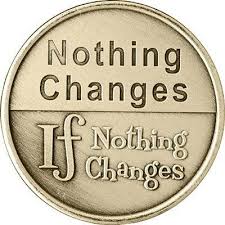
If there is no progressive transformation we must ask ourselves ‘what is the use of an IDEA that does not bring about change’?
This type of IDEA becomes nothing more than a window, something to look out of and wonder if there is more outside than the restricted view on offer.
If, as I truly believe, the IDEA is a door we need to step beyond it to begin the journey, not stay inside polishing the key.
What is ‘The Little Idea’?
More importantly, what does the IDEA need to deal with?
Wing Chun is a martial art, a fighting style, it makes little difference that we may all perceive this aspect differently, internal/external, soft/hard or whatever floats your boat, there is a commonality to every approach, whatever we do must be able to affect another human being in real-time.
Physically.
And then the next hurdle is how can we accomplish this with the tools on offer?
Imagine that we live on a small ‘Tropical Island’ that has a large extinct volcano
History has proven over and over that the greatest impediment to rapid progress is outdated information.
Old Wisdom.
Seeking direction for the future through Old Wisdom does not make for an easy or clear journey.
Those travelers amongst us that progress more quickly than the main group and send back updated information of what is ahead, are disbelieved sometimes ridiculed for the sudden and often severe change in their views from what everyone else sees before them, in some situations these vanguards are branded heretics or some other negative term.
Why do fearful people always shoot the messenger?
In the Martial Arts, especially those of China and South-Eastern Asia participants pride themselves on working exclusively within the Old Wisdom.
However, all of us know instinctively that as we progress from one level of our training to another we reevaluate and update what we know, in this way we are constantly updating the Old Wisdom, converting it to Today’s Wisdom.
Even as we do this we fail to understand that soon what we see as Today’s Wisdom will also be outdated, will be just more Old Wisdom that needs to be updated and yet we deliberately delay, we resist change, falter in the face of progress.
If we could accept that in time that the idea of Tomorrow’s Wisdom that is so confronting will be the Old Wisdom with which we are so familiar, perhaps we would be more comfortable seeking out Tomorrow’s Wisdom, today.
Climbing a mountain is a fairly common allegory in the Martial Arts, it helps us to understand our insignificance, although we all struggle and a few amongst us reach the top we never in truth conquer the mountain because after we are long gone and forgotten the mountain remains.
Lets us engage in a thought experiment.
Imagine that we live on a small ‘Tropical Island’ that has a large extinct volcano, one side of this mountain, let’s say the Eastern side is covered in trees, the other side of the mountain is clear of vegetation thanks to along forgotten lava flow.
At base camp #0, before we begin the climb, we look East, nothing but trees. We look West, scrub, and pasture. We look South, the blue ocean stretches to the horizon. We look North, only the mountain.
At base camp #1 to the East are still the trees, to the South the ocean still stretches to the horizon, to the North there is still only the mountain, but to the West, we now see fields, farmlands, small communities.
At base camp #2 to the East are still the trees, to the South the ocean still stretches to the horizon, to the North there is still only the mountain, but to the West we now see the land laid out like a tapestry, different crops, different land-use depicted as swatches of varying colour.
At base camp #3 to the East are still the trees, to the South the ocean still stretches to the horizon, to the North there is still only the mountain, but to the West we now see the land running away to the horizon all details merged into a homogenous grey/green/brown cut by rivers running towards an unseen coast.
When we inform the people at the lower base camps of our recent and surprising discoveries doubts are raised, questions asked.
At base camp #4 we climb way above the tree line, to the East are still the trees, below us now stretching away forever a carpet of green, to the South the ocean still stretches to the horizon, to the North there is still only the mountain, but to the West we now see the rivers meet the ocean and understand yes we are an island.
At base camp #5, the next stop is the summit, to the East are still the trees, like the rivers we now see that they also march to a distant ocean, to the South the ocean still stretches to the horizon, but now there is a landmass on the horizon, another side to our ocean, to the North there is still only the mountain, but to the West we now see a sameness that is difficult to explain, except to know that it is our island.
When we inform the people at the lower base camps of our newer discoveries again doubts are raised and we can hear people talking of altitude sickness and occasionally we hear laughter.
At the summit, we see uninterrupted for 360 degrees and finally understand our island, everything we knew, held dear and considered to be important, specific, the very essence of our island has blended into one unrecognisable mass.
Up here at the roof of our world we see a distant continent filling the horizon to the south and west, a continent that through the Old Wisdom we did not even consider could have existed, a continent that we are more than likely part of.
The only thing we do not see is the mountain.
It has vanished from view at this level, it is now just a part of the totality of the land, and we begin to think that from this height maybe all mountains are the same that all lands look the same.
That all Wisdom is the same.
When we inform the people at the lower base camps that we are at the very top we advise them to wait and see for themselves, but for those that do not make the summit, there will always be a nagging doubt.
Do they stick with the Old Wisdom, the world they know or do they trust in the vanguard?
‘shadow boxing is good training and great fun, but shadow boxing never won a fight’…
Knowing what to do in Solo Training is harder than we may imagine, there is a saboteur lodged in our head that works against us.
It is our Brain.
Our Brain is a self-organising pattern maker, it looks out at the Chaos around us and starts clumping things together to give us a reference point, a means of recognition.
This is both a good thing and a bad thing.
Good for dealing with the general chaos of life, bad for understanding the finer details of dynamic movement, for instance, the type of movement found in Forms.
Our brain loves patterns, they are literally in our D.N.A. so we do not notice when we fall into them or overlay them where they do not belong.
Given the choice between paying attention to the overall shape of the pattern or the individual content of the pattern, our brains choose the shape of the pattern.
At the very beginning of our training, we are told that every single move of every Form is a Form in and of itself, but we forget this in the flood of new information and end up just following the pattern.
This is not restricted to the martial arts it is everywhere in life.
Following patterns feels so natural and right that very few amongst us notice the problem, only the artists, the poets, and the philosophers recognise this problem and work hard to change the contents of their patterns.
They choose the Red Pill.
Any Form is just style preferred specific information collated in a way that is easy to remember, it is only the individual bits of information that have any genuine value.
Left to its own devices our brain will focus its attention on the whole Form and not the bits of information, when this happens we are just dancing, you know how it goes ‘this move follows that move and then we do this other move’.
Just a dance, perhaps a sacred dance, but never the less just a dance.
Solo Training allows us the chance to deconstruct the existing familiar patterns and explore them in their own right, if for no other reason than to see if it is even a useable pattern.
Focusing on anything except the specific thing we are doing physically is not going to bring about the results we are after, how could it, all training is task-specific
If we are thinking about the Form, focusing on the Form, trying to be mindful and become one with the Form, what we are learning is the Form, do not expect to learn anything else.
To put it into a sports perspective, world-class ball hitters, tennis, cricket, baseball you pick will set the ball machine to deliver the same shot over and over again, this is how we improve, little by little, first fix this problem then move on to the next.
What they do not do is set the machine to send out variable balls, to different places at differing speeds, this would be completely useless, more than likely a lot of fun, but nothing to learn here.
When we focus on the whole Form we lose connection with the reality of whatever we are moving, we will not think so because our brain loves this pattern, it is comfortable and familiar.
Does doing something comfortable and familiar sound like a tried and tested way to learn something new or to take the old thinking forward?
Years ago my tennis coach had a saying .. ‘if it feels right it must be wrong, only bad habits feel right’.
Finally, concerning the IDEA that doing the whole Form is a way to prepare us for any necessary spontaneous action, my boxing coach would tell us all … ‘shadow boxing is good training and great fun, but shadow boxing never won a fight’…
For me, solo training is an opportunity to deconstruct what I know and then find a newer, better way to put it back together, to rewire our interaction with ourselves {Ego} so that it is no longer an operating system on autopilot, but rather a ‘heads up display, a personal user interface’.
To learn anything we must stay with authentic reality, remain rooted in the absolute certainty of the lived experience.
At the moment we begin thinking we stop paying attention.
What is Solo Training?
At its most obvious it is training on our own, our own space, our own time, agenda and intentions.
In the Martial Arts solo participation in a Form provides us with the tools to approach our training on an even footing, to see it as it is and not as how we think it is or might be told it is.
This is the main purpose of all Forms, they achieve different reasons later but initially, it is this. Objectivity.
The ultimate expression of any Art, Martial or otherwise, is to become one with it, lose one’s identity and become the thing we do.
But there is a paradox afoot here, doing is not being, in fact doing prevents being.
At the moment we begin thinking we stop paying attention.
We arrive at an awkward situation, once we start to actively do the Form, in a certain manner, to a certain pattern, once we begin to follow the instruction we enter the world of the subjective, and just like that {imaginary snap of the fingers}, doing the Form becomes a contradiction of the reason we are doing the Form in the first place. Objectivity.
However, if we can explore the space between the contradictions of being and doing we can learn, or perhaps it would be more accurate to say discover, how to become creative ‘in the moment’, how to turn something that is on the surface quite useless, such as a Form, into a useable and powerful action.
The key is ‘Intention’.
But in this context what is ‘Intention’?
If we think of causality then Intention is the effect.
This is a mental game, not a physical game, and it can be a real head spin, the effect is the thing we achieve with the being state, not the doing state.
How do we transition from doing to being to effect?
Once we are working in the realm of different mental states it does not need to be bounded by any limitations that our Martial Art may require stylistically.
This means we do not need the Form to understand the Form, and by extension, once we reach this understanding we no longer have any reason to physically do the Form.
Go ask Alice, I think she’ll know.
In the last 50 years, there has been remarkable progress in the fields such as neurobiology, psychology, psychoneuromuscular theory and even technology through A.I. and machine learning that gives us a very different explanation of how we do stuff.
My own experience with this began in the late 1970s with Timothy Gallwey’s ‘The Inner Game of Tennis’ and in the early 1980’s Sybervisions Tennis and Golf psychoneuromuscular training systems and it is why to this day I approach things via sports.
In particular, Gallwey’s book could very well be ‘The Inner Game of S.L.T.’
If you are one of the many people that spend a large amount of time doing the Form there is a very real chance that you are working against yourself.
You may not be, but the recent findings in the applied fields of human behavior would suggest that more than likely you are.
Don’t panic, this is not a dead-end, but it will require a change in direction, or at least a major change in thinking because it does not matter what we are doing physically, what style or shape, fast or slow, you can safely keep the old body patterns.
This post is about Solo Training, and about changing our thinking, a good place to start is to ask ourselves a few questions, there is no right or wrong answer the purpose is simply to put a pin in the map and see where we are.
Q. What is the Goal of Solo Training?
Q. Do we know why we are doing this?
Q. Can Solo Training exist in a group situation?
Q. Can it be realistically thought of as Solo Training if we are in a room full of people doing the same thing?
Q. Why train on our own if we can have a partner help us?
Q. If we are in a group situation why not use the group?
Q. Can Solo Training teach applied techniques or practical applications?
Q. If not what do we expect to learn?
Sometimes we see more clearly when we look at things from an alien perspective, such as looking at out training through the lens of economics.
The economics of Solo Training.
Q. What is the cost against the returns?
Q. Do I take out more than I put in?
Q. What’s in it for me?
Q. When do I expect a return on my investment?
This is a big area to explore, I will come back to it later on.



 Wing Chun Sydney, Australia