Chi Sau is a game that we play by our own rules to get an outcome that we alone wish for, for reasons only we know.
I can only give my opinion here, and if we are honest that is all anyone has ever done from Leung Jan through Ip Man, C.S.T. or my own teacher Jim Fung.
I will not try to pretend that I know things that other people do not know, even though I do, as we all do.
Chi Sau is a game that we play by our own rules to get an outcome that we alone wish for, for reasons only we know.
In this way it is both remarkable and hopeless.
I think it is remarkable.
Many years ago when I was getting Tennis Instruction from an Australian National Coach, I was informed that we can only ever learn what we already know.
That explains why i never made it to State Grade, but what does it tell you about your Chi Sau?
There is more to a Bus Journey than a Driver and a Bus, there needs to be interaction, our Ego makes us think that we bring about that interaction, we think the act of driving is us creating the interaction, but Driving is an inherent part of being a Driver, just as much as breathing or eating.
Interaction is not done, it just happens.
The magic in all of this is that the Bus does not know the Driver exists, and the Driver does not realise that he is part of the Bus.
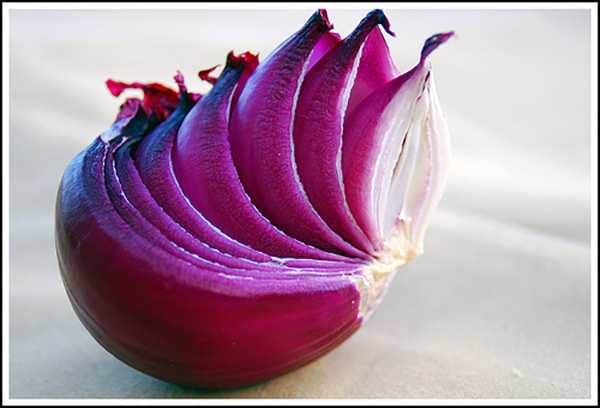
When we think of Layers we tend to envision them as physical things like layers of an Onion, without realising it we think we have some control over them, that we can separate them manually, move from one to another simply by choosing to, this is rarely the case, we would do better to see Layers as something like a state change or dimension shift, something that happens around us, something we have little control over like the dawning of a new day, one moment it is pitch black, then a sliver of light breaks in and then just like magic it is all daylight.
When we first do the Form we place our awareness into a single Arm and we keep it there as we make the different movements, for a long time that’s all there is, an Arm moving somewhere, we become amazed, and slightly obsessed.
As we become familiar and comfortable with this way of being we start to sense that there is something else here, without noticing the transition our awareness is now consumed by the rotation of the Shoulder, the hinging of the Elbow, the flexing of the Wrist and the extension of the Fingers, in everything we do this is the new reality of moving, and again we become amazed, and slightly obsessed.
With repetition comes familiarity, increased knowledge begins another transition, now our awareness is consumed by the Bridge alone {the lower Arm from the Elbow to the Finger tips}, externally the moves are the same, everything that was happening before is still happening, including the amazement and obsession.
Time, repetition, familiarity, transition, the pattern repeats but now there is just one tiny spot on the Bridge, it could be anywhere, a Finger Tip, an Elbow, a Wrist, as if someone had just marked us with a Felt Tipped Board Marker, a little Green Dot.
Every move every action is just this little Green Dot going about its business, following our intention. Time, repetition, familiarity, transition, we realise that our whole Body is made up of millions of little Green Dots, connected, unified, when one Green Dot moves they all move, so we only ever need to move one Green Dot.
Any one we choose, it could be on our wrist if we are thinking Sil Lim Tao, on our Waist if we are thinking Chum Kiu, on a Shoulder if we are thinking Biu Gee, it is just a thought, just an IDEA.
When any single part of us moves all of us moves.
There is a perception that deeper levels or layers bring greater more complex IDEAS, this is as far from the truth as we can get, just like an Onion every layer underneath is smaller, simpler and closer to the core.
The easiest place to experience these transitions, these layers, these dimension shifts or state changes is of the course the First Form, not because it is any way superior to the other Forms but because there is a lot less going on, this is why so many people spend so much time on this Form, but there is a danger here, if we cannot, or do not make the connections between all the Forms, if we cannot or do not create one unified method, one unified IDEA we may end up with a deep understanding of the First Form but a shallow understanding of Chum Kiu and Bill Gee.
When we consider that in application we only ever use aspects of Chum Kiu and Bil Gee this could be a problem.
There is no special trick or skill to unifying the Forms, we just spend an equal amount of time on each one, if we can find one move, one feeling, that is exactly the same in all the Forms and work outwards from that point, interaction will just happen.
The Driver boards the Bus and takes his seat, the Bus kicks into life and the Journey begins.
The journey from not knowing to knowing is very much like traveling along a dark road, when knowledge arrives it does not come as a bolt of lightning that brings instant illumination and clarity, it is much more like falling into an information filled hole in the road that was always there, we just could not see it in the dark.
First up a brief look at how the First form is important in the set up for striking, even though it is static and not intended to be used.
Secondly for those not back yet our man costas was in a very nasty car crash that wrote off his truck but luckily only damaged his hand.
All in all it is good news for Costas on the injury but bad news on no training for 6 weeks, keep him in your thoughts guys.
If there is anything any of you would like me to cover ping me. It is your Blog.
Forms are more than just a bit weird, they are simultaneously the most useless things we can spend time on but also the most important thing for us to understand.
To put this into a more Martial contex, Dwight D. Eisenhower is quoted as saying…
Plans are worthless, but planning is essential.
This is how to not go crazy when we approach the Forms.
‘Wing Chun is not based on any particular “Small Idea”, but on the WAY of a small idea’.
I had a very long conversation with my teacher ‘Jim’ Fung Chuen Keung about the heart of Wing Chun, the Sil Lim Dao, long as in short individual discussions over many years and not one marathon conflab.
One thing that came up time and again was his view that the difference between the ‘Chinese Collective Consciousness’ and the ‘European Collective Consciousness’ was so vast that translations became impossible.
When trying to explain/translate nuanced concepts, he would say ‘there are things that we Chinese people know that we are not aware we know’ but we know we cannot explain them in any other way than Chinese.
European and Chinese cultures stem from a different root.
Even though he was not a Daoist, Daoism influenced his and all Chinese peoples thinking and values, just as Judeo – Christian thinking influences European thinking and values, even when like me, one is an atheist.
As is the way with these type of conversations, ideas would lay dormant for months sometimes years and then bubble up unexpectedly to be rehashed, revisited.
In one exchange he said ‘Wing Chun is not based on any particular “Small Idea”, but on the WAY of a small idea’.
To my surprise, this made a lot of sense to me then and still does today.
The continuous practice of Wing Chun is about resolving everything down to its smallest and simplest possible state.
The work now becomes how do we reconcile this concept/idea/practice with 6 Forms and Chi Sau.
Beginners want instant gratification from their training, instant improvement, measurable, observable improvement, that they can see and feel.
As in Instructor, I spend a great deal of time trying to inspire my students to spend time engaged with our Forms.
Usually, it takes about three years before a student engages with the Forms on any level that is likely to enable genuine improvement.
The First Form gives no tactile feedback and in no way relates to dealing with violence.
Hence the hesitation to engage.
I get it, I ‘really’ do.
Beginners want instant gratification from their training, instant improvement, measurable, observable improvement, that they can see and feel.
{ it was this aspect that led to my abandoning Bagua Zhang and Xing Yi back in the ’80s, there was not enough of what I thought was “Real Work” that would improve my fighting ability}.
Actual improvement in how we play a Form is exceedingly difficult to measure and a long time coming.
Here is the rub, our improvement in Wing Chun is nothing other than a reflection of our understanding of the Forms.
It really is a ‘no brainer’ that the sooner we engage with our Forms the better.
The Paradox is that from a practical point of view all Forms are useless, but without Forms, we can never progress, never understand and never become competent.
Let’s have a look at that.
It is not the movements, the shapes or sequences that make the Forms pivotal in our advancement, they are all close to pointless, it is the how and the why we make those moves.
Engaging with the Form is a far cry from simply waving our hands around, it is about thinking, feeling, questioning and exploring.
If we aim at a target and miss it by 1 millimetre we have missed the target completely. We may try to console ourselves by saying that we only just missed, but had we missed by 20 Metres the result would be the same.
We missed.
Whether we like it or not some things are absolute.
Being correct needs to be 100%, if we think that we are 99% correct we are, in fact, 100% wrong.
Although the area I live in was a ‘COVID Hot Spot’ for a while there are no active cases anywhere near the Studio so training is as safe as it ever was
This pandemic is 6 months old and no signs of vanishing, how often do we hear “The new normal” is what we are experiencing and we need to get used to it.
Way back at the beginning of the ‘Lockdown’ I had great intentions of posting at least one video a week to help all of us in the club, myself included’, keep our mojo active, I did not quite do that, I tried and came close, but not good enough.
Getting our routine back means different things for different people but at its heart, it is the same thing, the same challenge…
“How do we get today to look a much like way back then as I can”?
We have all invested time, energy and money into our pursuit of Wing Chun excellence, we train to be able to defend ourselves and our loved ones against any or all attackers, only to be beaten by a bug.
Although the area I live in was a ‘COVID Hot Spot’ for a while there are no active cases anywhere near the Studio so training is as safe as it ever was, perhaps safer now that we all take precautions.
In an attempt to help you all {my fellow INCas} resume your own routine I will endeavour to resume mine and post a training help video every week, if there is any particular aspect that you would like covered just ping me, this blog is our Club’s after all, your blog as much as mine.
Muscles are binary by default, they are either on [tense] or off [relaxed]
I have never been a fan of the IDEA of Mind Force with regards physical movement and specifically Wing Chun and fighting.
Nothing I have ever experienced in 60 years of Martial Arts and a vast assortment of sports training has given any credence to that position.
Check this out.
I was recently watching a presentation from Dr. Kelly Starret when he made the following observation…
‘There is no movement that specifically turns on a muscle, that is not how the brain works, the Brain doesn’t work on musculature it works on movement’…
Disagreeing with something I may say is pretty healthy, but disagreeing with what a world respected expert says is bordering on stupid.
This presents a whole different way to think about releasing tension and dare I say it, Relaxing.
Muscles are binary by default, they are either on [tense] or off [relaxed], if our Brain does not turn our muscles on how on Earth can it turn them off?
Mind force begins to sound a little bit like Space Force.
Forms allow us to develop the habit of paying attention to what we are doing so that we gain a deep and wide understanding of that action.
Only 25% of my students have returned after the lockdown, I imagine that this is average as the pandemic wreaks havoc with our old systems.
Despite this climate of social distancing, I have 2 new people just embarking on the journey, 2 new people to explain the “Big Picture” of Wing Chun.
A Big Picture of the Little Idea.
WHAT ARE FORMS FOR?
You could ask 10 different teachers and get at least 9 different answers to this question, and that in itself tells us what Forms are for.
Forms are for different things for different people.
Not only that, but our understanding of Forms will change as we progress through our training.
We find that we can use the same Form to explore very different topics using it in very different ways.
Forms are a consistent vehicle we use to measure the level of our understanding against.
Before we go on it is important to understand that there is no such thing as an “Internal” or “External” martial art.
There is only Internal or External training.
Any Martial Art is and can only ever be a Martial Art, a rose by any other name is still a rose.
INTERNAL.
People who engage in “Internal work” use the Forms as a distraction to help them focus more on moving their Chi, circulating their Chi, being in control of their Chi.
This is not my area of training and I have very limited knowledge of it.
Can it be used for fighting?
Anything can be used for fighting, it depends on the person, but the main aim of Internal training is to develop the Body-ability to meditate.
EXTERNAL.
People that engage in “External work” use Forms to develop more effective movement.
There are many different types of effective movement, always doing a Form the same way will only deliver the same outcome.
Smoothness, connectedness, speed, power, mobility or stability all require a different approach to the same Form.
Westerners have difficulty understanding the Eastern IDEA of “Softness”, especially when we talk about powerful or strong softness.
Forms offer a way to explore this.
We should be balanced and ask the same question here…
Can it be used for fighting?
Anything can be used for fighting, it depends on the person, training the physical side will not guarantee fighting prowess.
Another very important aside that we must consider is that there is an element of “External” training that frequently gets confused as “Internal” training.
That is what today is referred to as being in a flow state, focusing on the moment, being in the zone.
Internal work is ultimately aiming at enlightenment through the teaching of the Buddha, through stillness and meditation.
To empty the mind.
Flow state is something that we can suddenly fall into while single-mindedly involved in an activity.
To be so consumed by we are doing it fills the mind.
Being in the zone, ‘flow state’ is spontaneous and not capable of being trained.
However, the better we are at something the higher the chance of falling into ‘flow state’, being in the moment.
Forms allow us to develop the habit of paying attention to what we are doing so that we gain a deep and wide understanding of that action.
Conditioning.
Forms can be callisthenics that exist solely to prepare the body to move in a particular way.
A skilled and intelligent movement practice that allows us to work on the shapes that we are going to need to access in any of the diverse ways that we will call upon our body to use what we refer to as Wing Chun.
From warming up to flat out fighting to save our lives, the actions we may use and depend upon so we would do well to understand these moves.
Forms can also be remedial bodywork.
If we look at the “B” Section of Wing Chun’s First Form we have a set of exercises that are perfect for resolving impingement of the shoulders.
The opening of the Yi Chi Kim Yeung Ma is a suitable movement for resolving impingement of the hips.
The Chum Kiu and Biu Gee Forms develop balance through the stability of stances and mobility {the opposite of stability} through weight shifting and explore the whole gamut of perambulation.
But where are the steak knives?
Oh yes, doing the Forms provides maintenance of the soft tissue system to improve the overall health of essential joints, and eliminates the potential for motor control problems that happen when the wrong part is in the wrong place trying to do the wrong thing.
Self-correction.
Why do we perform them so slowly and so often?
The main reason is not one of memory retention but rather an active survey to see if we have any holes in the movement, just like athletes and weight lifters any ‘holes’ in these movement sets will invariably lead to failure and by extension injury.
If we can look at all of the Forms collectively we see an integrated system where we modulate through all ranges of motion on all 3 planes with full extension and rotation options explored.
Forms can be looked at as very gentle Crossfit.
Getting bag for our buck.
Simplify what we think is important and what we need to do to support those things.
As always, deconstruct – reconstruct.
For example; extending to the Tan Sau position from the first Form while acting out a single rear step from the Chum Kiu, while rotating the torso from Biu Gee.
Reset and reverse, step forward, pose Tan Sau and rotate.
Rinse and repeat.
If you are a senior student you are more than likely thinking.. “but wait, that is just the Bart Cham Dao”, which of course it is.
This approach makes it so that we can understand what it is we are trying to learn/program in a couple of years as opposed to decades.
This is in no way a shortcut, understanding anything fully, our job or our Martial Art takes the best part of a lifetime, but we can understand all the components that make up our job or Martial Art in a surprisingly short time and then dig in at our leisure.
Hong Kong and Taiwan’s versions of Chinese history may not be quite as false as the C.C.Ps but they are just as far off the mark.
Over the past 50 years, I have read numerous books and article on how successive Chinese governments, in the wake of the disastrous ‘Boxer Rebellion’ 1899 – 1901 {so-called due to the fact that it expanded out from Kung Fu Schools}, began systematically changing China’s self-image, its belief systems and political ideologies.
Their favourite method was to re-write history.
Firstly with the nationalists, the K.M.T. and then later with the Chinese Communist Party.
Growing up in the west through the 60s the NEWS was constantly calling China out for the destruction of Temples, the burning of records, in short, the ‘re-education’ policies that essentially gave non-party members the choice of ‘Change or Die’.
Many did just that, and sadly so did historical truth.
Due to this, trying to gather accurate historic information about any style of Kung Fu is difficult bordering on possible.
I do realise that there is a lot of documented so-called historic information out there but we must take all of this with a pinch of salt.
Re-written means just that, re-written.
As Martial Artists we are well aware that the C.C.P. removed all of the ‘Fighting Aspects’ out of Kung Fu and replaced them with movement patterns from ballet and acrobatics and relabeled it Wushu, and then invented/reinvented the modern IDEA of Qigong, here is a link to an interesting article make of it what you wish.
Chairman Mao was well aware that the Tong system, something he saw as akin to a cult or at least a secret society, that allowed the Boxers {Kung Fu organisations as secret societies} to organise and combine to fight the Europeans would be a real threat to his hold on the people and banned all ‘Tongs’ and all meetings with regards to these organisations.
There are those in the M.A. community that claim this is why Hong Kong and Taiwan are the true centres of Kung Fu, but it was the Nationalists, the K.M.T. that began this transformation and re-writing of history and it was these same K.M.T. and Nationalists that fled to Hong Kong and Taiwan after the Civil War taking their ideas of the New China with them.
Hong Kong and Taiwan’s versions of Chinese history may not be quite as false as the C.C.Ps but they are just as far off the mark.
Where does leave us, westerners, when we wish to know where our style comes from and why it was created in the first place because it is only by knowing the answer to these two questions that we can truly understand what we do.
One thing we can look at is the history of China as recorded by the Europeans that traded with China, I am not saying for one minute that these are of any more accurate because to be expected they were observed through the lens of European agenda, and measured by European values.
The picture that those histories paint is relatively accurate when it comes to the general mood of the people and the way society interacted, the very thing we wish to know about as Martial Artists.
From 1600 up to 1960 there was an almost constant state of Militaristic conflict, province against province, village against village, ethnicity against ethnicity, religion against religion.
Violence was everywhere and every day, shortage of food was a constant cause of this violence, squabbles over the rightful ownership of fertile land escalated into full-blown conflicts so often that villages had their private militias, the problem was so widespread that temples had warrior monks and no one travelled without highly trained and armed caravan guards.
Politics aside hundreds of years of violence created a country where defending yourself and your property was as essential as breathing, every man in every village was armed to the teeth and ready to rumble at the first sign of trouble.
Except for that guy, the Kung Fu guy.
Why do we think this guy was fighting un-armed when even the monks used weapons?
As a thought exercise, this can be an interesting question.
Had he lost his weapon?
Had he been disarmed?
Was he caught out at a place that he considered safe and as such was unarmed?
As interesting as this is something that this line of thinking misses is that if Mr.K. Fu is unarmed his attacker is unlikely to be.
Empty hand styles did not materialise so that people could engage in a game of ‘fisty cuffs’, they came about as a way to deal with an armed assailant when you were for some reason unarmed.
If we look at how Kung Fu, and from my perspective Wing Chun, interacts with an attacker it makes more sense once we add a weapon to the scenario, Chi Sau looks more like a way of disarming or controlling a weapon arm than just a sensitivity exercise and it shines a fresh light on our stances, guards and footwork.
It also ends once and for all the Kung Fu v M.M.A. argument which I will go into later, but for now, these are just my musings, I have no way to prove any of this but it feels a great deal more “REAL” than most of the accepted history.






 Wing Chun Sydney, Australia