FIST LOGIC

BIU GEE FOR BEGINNERS.

NOTHING HAPPENS UNTIL SOMETHING MOVES.

Albert Einstein.
BE THAT SOMETHING.

In Wing Chun we are all and for always beginners.

BIU GEE FOR BEGINNERS.

Many Wing Chun students think that Wing Chun training is a linear progression, Sil Lim Tao – Chum Kiu – Bill Gee and that every time we progress along that line things become more advanced.

This may be true of some other styles but it is not true of Wing Chun.

In Wing Chun, there is no beginner level, no intermediate level and no advanced level.

In Wing Chun, we are all and always beginners.

In this respect, Wing Chun is akin to Jazz!

When asked ‘What is Jazz’? Dave Brubeck replied, “Jazz is”.

By this logic, Wing Chun “IS”.

So the question becomes “can you riff”?

If there is a set progression in Wing Chun it is circular, hop on anywhere and keep going round.

THERE IS ONLY ONE MOVE, ONLY ONE SHAPE, AND ONLY ONE BODY.

Saturday morning we decided to explore Biu Gee’s actions from the perspective of how to recover from a situation where we had lost our favoured Wing Chun position.

Sometimes referred to as emergency Techniques”, something I find over-elaborate, we explored and discovered that Biu Gee contains all the things we did, albeit badly before we even began Wing Chun, and definitely did on our first day of Wing Chun training.

This video footage is of a normal training session, it is not an organised seminar, we made things up as we went along and repeated things over and over again at a pace and intensity that we could feel, see and understand what our body was doing while we played Biu Gee.

If you are a visitor to this blog these clips may well lack continuity and possibly context, it is a bit like one of them “you had to be there jokes” but there is good info here.

At 20 minutes it is a lengthy video grab so there are some timestamps to help you navigate.

INTRO, CHAT AND WAFFLE…… 00:00

THE OPENING SWEEPING LEG….   05:37

SOME THOUGHTS ON LAP SAU….  06:47

THREE ELBOW MOVEMENTS…..     10:00. 

OPENING WRIST MOVEMENTS….   12:18 

THE  THREE BOWS TO BUDDHA…. 16:48     

BIU GEE
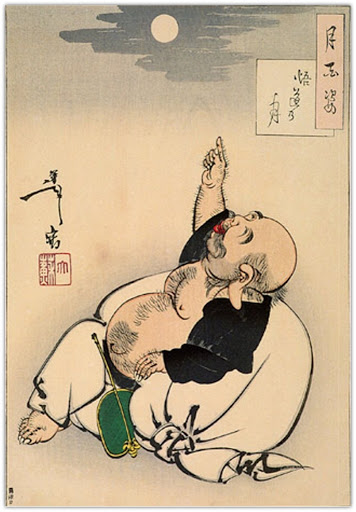
I SEE da MOON?
FIST LOGIC

THE GREAT UNPACKING.

SURPRISE……

It is the brushing away that makes it Bong Sau and not the shape.

-Wing Chun is a set of IDEAS, not techniques, that we explore and develop through playacting in a variety of staged situations to see if we can deploy them.

Chi Sau is a perfect example, nothing we do in Chi Sau is in any way genuinely useful, but it does allow us to put meat on the bones of our IDEAs so that we get to understand them better.

The reality of random violence, as opposed to sparring or role-playing, is that unless we are ‘extremely lucky’ we will always be in the wrong place at the wrong time, that is where and when we need any skill-set that we have developed.

We must understand how to unpack our skill-set to find what might be un-related little pieces of info that can be reassembled into an action that can be deployed in very close quarters.

Wing Chun is a Body Method, our training has two objectives.

  1. Learn the method in a controlled environment.
  2. Apply the method in an uncontrolled environment.

The closest we can come to the second objective is to put ourselves into what may appear to be the wrong place for us to use established Wing Chun stuff and see how other stuff can become Wing Chun.

I have heard people opine that the arts that start from positions that are already in tight contact, such as Jiu-Jitsu starting from a mounted position or Wrestling styles that begin from a clinch, are not very practical.

Whatever scenario we imagine we may encounter we will sooner or later make contact with the Bad Guy, it is what we do next that is the work, moving into contact or waiting until the Bad guy makes contact is just a step in the process that Jiu-Jitsu and Wrestling see as unnecessary. 

Getting into trouble is not the aim of the game, and not worth splitting hairs over, it is getting out of trouble that should be our focus.

————————————————————————–

Over the years I had numerous discussions with my Sifu about how Chinese does not translate into English or any European language. The main hurdle is that Chinese is a Logogram Language built around glyphs and all European languages are Alphabetic Languages built around letters and words.

He said this was why it is just not possible to understand Wing Chun by using words, spoken or written.

In English we expect a word to mean something specific whereas in Chinese a word simply points toward a glyph that may form part of a picture that must be deciphered to be understood.

In Wing Chun we have Chit Sau, the cutting hand, Garn Sau, the ploughing hand, Fook Sau the controlling hand, Tai Sau the raising hand and of course Bong Sau the wing hand.

If we ask ‘what is Bong Sau’ to a westerner we will get a bent arm gesture that comes out from the shoulder.

Really, that’s it?

If we retreat to the genesis myth for a moment, a Nun observes a fight between a Crane and a Snake, every time the snake attacks, the Crane brushes or sweeps away the attack with its wing.

The nun meditates on this and then decides to change her Kung Fu to reflect this idea.

What IDEA?

The IDEA of sweeping or brushing away an attack and not the IDEA of growing a wing.

It is the brushing away that makes it Bong Sau and not the shape.

It is the cutting that makes Chit Sau, the ploughing that makes Garn Sau, the controlling that makes Fook Sau and the raising up that makes Tai Sau.

If we use Tai Sau to brush away an attack does that make it Bong Sau?

This is what I refer to when I say we need to unpack the Forms, everything is pointing somewhere else.

did somebody say…..?
MOON, MOON, MOON!!!!!

FIST LOGIC

ADDITION TO THE LAST POST.

YOU SHOULD HAVE SAID THAT IN THE FIRST PLACE.

“There is only one move, only one shape, and only one body”.

As always at this morning’s training, I told the guy’s the usual, what I think is critical, stuff.

Everything we do needs to happen in mid-air {before contact} and will be in effect for around 1/10th of a second.

This puts everything in context, we must be correct before we make contact, albeit 1/100th of a second before contact.

Also my second sacred saying…..

“There is only one move, only one shape, and only one body”.

This one is a bit curly around the edges.

So check this out.

Take on movement, any movement let’s just pick the first movement, Jit Sau.

Spend as much free time as you can learning everything you think you can learn about Jit Sau.

If your head is in the right place you have just learned everything there is to learn about Wing Chun, but relax, it won’t be.

To help convince ourselves of this pick a movement you do not feel that you know very well, let’s pick the Biu Sau that comes from our chest in the Biu Gee Form.

Compare what you are doing, and what you are feeling in Biu Sau to what you do and feel in Jit Sau.

If there is only one move, and I assure you there is, these two moves are the same.

The first job, just observe and note where they differ.

The second job, resolve the differences.

This is a lot more difficult than it sounds, mainly getting the Head part correct, but if you can do Jit Sau how hard can it be?

As always, be kind to yourself if you are not making the progress you would like to make, and bear this in mind…..

…”when we hear or see anything we do not understand our brain translates what we are hearing or seeing into something we do understand, at this instant, we are no longer hearing or seeing correctly, we have lost it“.

This is part of the human condition and no amount of wishing or training can change this.

Fortunately, our body has its own intelligence, lets’s be Nerdy and call it “Deep Learning”, given enough time {think repetitive training}, our body will understand what our mind cannot, and hey presto we have the answer.

We all know this to be true, how often do you wake up in the middle of the night with the answer to something that has been evading you.

Long story short……..

If you wish to know everything, learn one thing completely.

“There is only one move, only one shape, and only one body”.

TURN IT ON.
FIST LOGIC

GETTING THE BEST FROM TRAINING?

SERIOUS TRAIN —- ING

What we are ‘really’ learning is how to access our skills, not learn some specific Sport or Martial Art style.

This post is not meant as a tongue in cheek jab at anyone, that is not my way, it is simply sharing things I know and believe, things that may help you.

What are the unseen benefits of Martial Arts training?

Self-confidence, good decision making, dependability the list goes on, where do these attributes come from.

The secret is, as my Sifu told me, turning up to training and paying attention.

Rain hail or shine, sick or healthy, hangover or tired.

This is not a secret.

When you watch an interview about a world-class sportsman or sportswoman one thing that all their contemporaries say is that they were always the first into training and the last out of training?

Not that they trained any harder.

Martial Arts training is at heart about training to be a better version of who we are, it is not an investment in our style, our club, or our Sifu it is and always has been an investment in ourselves.

And we must understand that over time it will be a considerable investment.

But we are worth it.

We only have one life, let’s be the best we can be.

When prospective students ask me if I give any kind of “Free Trial” or free uniform or free anything I just tell them to go somewhere else.

This is not arrogance on my behalf, but if they are not willing to put their hand in their pocket to benefit themselves and their lives why would they be willing to listen and pay attention to me.

Again quoting my Sifu, he would tell me that “People put no value in things they get for free”, I have seen this first hand for years and years.

Something that chips away at a student’s chance of fulfilling their dreams is when they turn up late, leave early and generally chat more than do the training.

Let me clarify something, turning up late is not according to any particular clock at any particular training hall, we all have life pressures that dictate what, where, and when, if the class starts at 7pm but you cannot get there until 7.45pm that is your time, 7.45pm, always be on time to your own clock, to yourself.

What makes some people so good?

I have played in a number of competitive “Social Level” Sports Teams in my life, Ice-Hockey, Five-a-Side Football, Tennis, and of course as a kid I fancied my chances to become a Boxer.

Like everyone I was as keen as mustard and put in the hard yards but despite the effort, I did not make it past “A” Grade in any sport I competed in, which is a long way from State Grade and a universe farther away from what is needed to be a pro.

But I would train like I was in with a shout.

Come ‘Match Day’ there was always one guy, sometimes two, that was simply streets ahead of the rest of us and somehow did it without trying too hard.

It is an easy excuse to say that they were just more skilful than the rest of us but that is not true.

They were better at accessing their skills that is all.

They knew what their skills were and they believed in their skills.

We do not learn this on ‘Match Day’.

We learn this at training.

And of great importance, we learn this over the days and weeks later by reviewing what we did.

What we are ‘really’ learning is how to access information, not learn some specific Sport or Martial Art style.

The physical side of what we do in training is just playing.

The goal of all training is to play to our strengths and avoid our weaknesses and not learn some new trick.

Play hard.

WHAT MOON?
FIST LOGIC

ARE FORMS VALID SELF-DEFENCE?

The Sil Lim Tao Form is the filter we apply to our structure, and to basic arm movement.

A Form, any Form in any style, is nothing more than a filter.


A filter that allows us to examine certain natural movements, postures, and shapes through the lens of that particular style.


When playing a Form……… and that is all we are doing, ‘playing a Form’ ……. how we engage our mind is what takes us forward, not how move our body.

In Wing Chun, how to play the movements of any of our forms can be learned in one weekend, that is one weekend spent on each Form.


However, understanding how any Form relates to us as individuals can take a lifetime.
Central to our explanation of Wing Chun Kung Fu is that all the work is based upon the ‘Sil Lim Tao’.

Which as we know is an IDEA.


The first step, in fact, an essential step, is to understand that the Sil Lim Tao Form …. is not the Sil Lim Tao IDEA.


The Sil Lim Tao Form is the filter we apply to our structure, and to basic arm movement.


The Chum Kiu Form is the filter we apply to making contact and accepting force.


The Biu Gee Form is the filter we apply to develop a greater understanding of generating striking power and issuing force.


The practice is to see how the IDEAS that are presented in these Forms are at work in all and any movements we make.

Especially movements we already make.

To see that the IDEAS that are presented in all three of these Forms are at play simultaneously in every SINGLE MOVE we make.

And have always made.

The training is to observe and where needed make adjustments to better the alignment of mind and body.

At best it is fine-tuning, there is nothing to learn in any of our Forms.

There is nothing to learn because we already know everything we need to know.

WHAT KIND OF DAY IS IT?
FIST LOGIC

DISCIPLINE, THE SUPER WEAPON WE ALL NEED.

From a still position think Fook Sau, perform Fook Sau, stop.

WHERE IS THE DISCIPLINE TRAINING IN EVERYDAY WING CHUN?

If we get in trouble our best chance of getting out of trouble is to stay disciplined, to do what we need to do, where we need to do it, and when we need to do it.

But what does that mean and where is it in our training?

As young kids engaged in Western Boxing, this was drilled into us by a 10-minute sparring exercise where we could not defend ourselves, hold up a guard or counter-attack our sparring partner.

Our sparring partners were free to {lightly} hit us anywhere and any way they wanted to, all we could do was evade, but without retreating, we could step away but not run away.

Without fear of a counter-attack, our sparring partner was relentless, often leaving themselves wide open for a counter we were forbidden to deliver.

This was preparing us to not fall for dummies or feints by trying to get in cheap shots that in a real fight could easily lead to our undoing.

Every few minutes the coach would shout ‘HIT’ this gave us permission to take one shot at our sparring partner and then back to the drill, this taught us how to be disciplined, how to wait until the shot was on, to not try to force the fight, to be patient.

This was an excellent drill that ‘really’ paid out when needed.

Do we have anything in Wing Chun that remotely approaches this kind of training?

That depends.

If we can look beyond what we think we are doing, and look at the fundamental IDEA we are seeking, then the answer is YES, we do.

First up, what is the IDEA we are hoping to find?

A method to develop PATIENCE and DISCIPLINE.

These are, of course, CONCEPTS, or IDEAS.

If we are completely tuned in to our training these IDEAS can be found anywhere, but an ideal, easy, and convenient place to begin is to be found in doing the Forms.

Not the specific movements of the Forms, but rather in the way we approach the Forms, the mindset more than the movement set.

The rhythm we establish, the flow from one thought to another thought more than the transition from one movement to another movement.

Essentially all Forms are a collection of single movements and not a movement set per se, there should be an established start point and an equally established finish point for each and every shape/movement.

When we finish one shape/movement we change our thinking to the next phase before we transition our posture or shape/movement.

For example, if we think of the progression of Fook Sau, Huen Sau, Wu Sau, Tor Sau {if we could endure the boredom we could do this forever and learn everything}. 

From a still position think Fook Sau, perform Fook Sau, stop.

Think Huen Sau, perform Huen Sau, stop.

Think Wu Sau, perform Wu Sau, stop.

Think Tor Sau, perform Tor Sau, stop.

 Rinse and repeat until the ‘End of Days’.

As a two-person training drill, there is nothing better than ‘Single Arm Chi Sau’.

At first, the very IDEA of ‘perform, stop, think, perform, stop, think, perform, stop, think, perform’ may seem very robotic and unnatural, but PATIENCE and DISCIPLINE, and of course awareness, will allow us to control the timing of the pauses between stop, think, perform so that it becomes Human, natural, responsive instead of reactive. 

Obviously, this exercise, this way of utilising the Sing Chi Sau Drill, requires that both players disconnect their EGOs.

 Which in itself is training us to be DISCIPLINED.

Training in any Form should never be easy, it should never be enjoyable, it should always annoy us at some level, it is learning to ignore the thing that we think is not needed and still do it, the thing Sifu says is important but we do not think is in any way important, this teaches the greatest lesson.

DISCIPLINE.

HOKKA HEY!

FIST LOGIC

KUNG FU TAG.

IS THIS TAG, SPARRING, OR CHI SAU?

The “Real Truth” of every Martial Art is Body Organisation.

What most people think of as Martial Arts training is really nothing more than a game of Tag played with moves that look like fighting.

Like Will Smith at the Oscars.

PRINCE OF BEL-AIR, OR CLEAR AIR?

Do not misread me here, this TAG is an important game to learn because the movements become the vehicle for the Style Specific Bodywork that turns this version of Tag from a game to a useable defensive or attacking fighting system with real power and ability.

This is all and every Self-Defence-Systems and all and every Martial Art Style without exception.

How can we claim our training is not just TAG when all we ever do is to pretend to hit each other, no one is ever seriously attacked, and this is a good thing.

There is training and then there is fighting, they are not the same thing, they are not even close to being the same thing.

This is especially true of “Reality-Based Martial Arts”, these guys just sweat a lot, pretend louder, pretend harder.

Everyone goes home, and no one goes to the hospital.

When we understand that it is not the shapes and movements that save the day but the QUALITY of the BODY that is making the shapes and movements, things become clearer and all styles become equal.

Different situations require different qualities.

If we intend to compete as an amateur or semi-pro fighter, as a “Combat Athlete” the most important qualities are physical qualities, skill, though obviously desirable is of secondary importance, the overriding “Super Quality” is the ability to go the distance and take the hits for as long as it takes to win, sometimes up to 30 minutes.  Hence the term “ATHLETE”.

Public Domain Self-Defence styles are more concerned with escaping a violent situation in one piece than victory at all costs, hit them hard, knock them down, and walk away, all of our efforts are to survive a violent 5 to 10-second window.

The ‘Super Quality” we need is organisation, good movement, and self-control, again skill, though obviously desirable is of secondary importance.

WING CHUN is a Public Domain Self-Defence System, a Five-Second answer that says F@CK YOU to people that mean us harm.

Think of this when you watch your favorite YouTube video of someone throwing 20 or 30 different strikes in a row, and yet the Bad Guy gets up to be hit again.

As brilliant as these guys are, and I am just as much a fan as anyone else, that is dancing.

 That is WING CHUN TAG.

In all fairness it would not take very much for these brilliant dancers to change what they do into genuine fighting skills, in their own way they are also athletes, just drop around 95% of the movement, in fact, if possible stay still and do the work.

But that “Still” stuff only works in reality, it sucks on YouTube.

The “Real Truth” of every Martial Art is Body Organisation.

If you are interested in learning the deeper levels of Wing Chun Body Organisation, if you are up for the work needed to open up the full potential of Chum Kiu and Biu Gee ping me a message, I am here to help.

Hmmmmm, Call that a slap? More like TAG, your it.
FIST LOGIC

GREETINGS FROM THE EDGE.

How we decode the data is the key, not what we call it or opine about it…..

A while ago I was having a conversation with a D.J. about how Karate was sourced from White Crane Kung Fu, and that at their heart they are the same thing, this led to him asking me if Chinese Forms and Japanese Kata are essentially the same things.

There is an opinion within Kung Fu circles, or at least within the Wing Chun circles I was part of that Forms and Kata are completely separate and different from each other.

I disagree, from my standpoint FORMS and KATA are just different words for the same thing, all training, be it subtle or overtly physical, is nothing more than the accumulation of information, the collection of raw data.

How we decode the data is the key, not what we call it or opine about it.

I think we can benefit from the approach that Wing Chun has FORMS and KATA.

Where is our starting point, and what is our position?

It is the usual thinking that FORMS are about understanding our shapes/postures, understanding their physical/emotional/mental make-up, and how to create and maintain that shape/posture.

The practice of moving slowly, and softly, allows a greater opportunity to ‘clearly’ observe how the shape/posture is constructed and how it relates to the rest of the frame, an observation that would be disrupted by the overt use of active muscles that would cause such tactile feedback as to wipe out the subtle nuances of joint control.

On the other hand, KATA is considered to be Shadow-Boxing exercises performed at full power with the mental image of actual contact and the deliberate injection of overt strength and tension.

Sadly, I have often experienced partisan, myopic snoberry calling out KATA as being way too forceful for a person to be able to feel anything, implying that they are somehow less than FORMS.

I think it is worth repeating myself here, all training, be it subtle or overtly physical, is nothing more than the accumulation of information, the collection of raw data.

How we decode the data is the key, not what we call it or opine about it.

FORMS and KATA do not teach us how to FIGHT, they teach us how to THINK.

As a memory aid FORMS and KATA are two different methods to explore the same sequence.

FORMS are somewhat passive, while KATAS are somewhat dynamic. 

They are two sides of the same coin, a touchy-feely tactile method that we use to help us connect with our training.

It is so important that we do not drift off into some fantasy world in any aspect of our training, but especially so in FORMS and KATA, they are memory aids and not fighting tools.

When push does come to shove both FORMS and KATA are inappropriate and useless.

FORMS and KATA do not teach us how to FIGHT, they teach us how to THINK.

Some say that FORMS are a type of mindfulness training while KATAS are a type of shadow-boxing, but in reality, the only difference between these two ideas is not the content just the context, i.e. If you think that you are being mindful, you are being mindful, or if you think that you are shadow-boxing, you are shadow-boxing as you go through the same set of movements.

If you think you are on the can… it is what it is…

With this is mind, if we so wish, FORMS can be used as KATA and KATA can be used as FORMS.

Forms and Kata are just data, albeit two different methods to extract information from the same data.

FORMS are information about ‘SHAPE and CONDITION’, whereas KATA is information about ‘MOVEMENT and SEQUENCE’.

When observing the complete SIL LIM TAO FORM { comprising S.L.T. Chum Kiu and Biu Gee} our focus is on how we create certain shapes, firstly just hand/arm shapes but leading on to whole body shapes, but of equal if not greater importance is how we live inside of these shapes.

Our Body Being, or the ‘Condition’ that I refer to as CRAZY HORSE.

In FORMS there is no promenading, no movement through space, everything happens in one spot, and what movement there is in the FORM is just repetition, mental reinforcement.

The shapes/postures we study in the SIL LIM TAO FORM are starting shapes/positions and finishing shapes/positions, there is no set, organised way to get from one place to another, from point ‘A’ to point ‘B’.

The SIL LIM TAO FORM is, as we all know, an IDEA.

The whole reason for doing THE SIL LIM TAO FORM is to observe our Body doing the SIL LIM TAO FORM, to observe the shape and condition of our body as it does the SIL LIM TAO FORM, and not to observe us doing anything else.

Especially fighting off an attacker.

This point alone is worth serious contemplation.

FORMS exist like a frozen moment in time, an aspect of ‘ONE SHAPE, ONE MOVEMENT, ONE BODY’ but let’s not go there today.

So what of KATA in Wing Chun?

KATA is everything else, the missing bits, the reflections.

If we regard FORMS as still pictures, KATA is a movie made from those still pictures.

If FORMS are simple shapes, conditions, and intentions KATA is a method to transform those simple shapes, conditions, and intentions into action.

 And then optimally progress from one action to another action.

FORMS are impractical, KATA is the very heart of practicality.

Heads/Tails, Yin/Yang, two sides of the same coin.

If we buy into this type of thinking that says we can have the SIL LIM TAO FORM as well as the SILL LIM TAO KATA, where is this dynamic physical practice to be found and explored?

MOK JAN JONG, the wooden dummy.

 LIK BOON DIM QUAN the six and a half point pole.

 BAAT CHAM DOA, the eight cutting/slashing knives.

From the perspective of the Wing Chun structure, there is nothing new introduced as we progress beyond the Biu Gee Form.

What is introduced is a method of dynamic movement and physical power production.

Performing KWAN SAU on the Dummy, the vigorous side slash of the Knives or the lunging thrust of the Pole what are these actions if not a KATA.

Understanding why FORMS ‘are the way they are’, has the potential to teach us more about FORMS than practising them ever can.

Spend time contemplating this statement…..

We do THE SIL LIM TAO FORM for no other reason than to observe our Body doing the SIL LIM TAO FORM.

For no other reason than to observe the shape and condition of our body as it does the SIL LIM TAO FORM.

We do not do THE SIL LIM TAO FORM to observe our body doing something else!

Especially fighting off an attacker.

Why does man kill?  He kills for food.

But not only food: frequently there must be a beverage.
– Woody Allen

WHAT MOON?

FIST LOGIC

VULCAN WING CHUN.

What a paradox, accept that we are play-acting but do not pretend it works.

Settle in guys, this is going to be a long one, this post has been bubbling away for years in one form or another, mostly it is fueled by the questions students ask me in ‘one-on-one’ lessons where we have more time and motivation for exploration.

Firstly we must, as always, remember that the most important attribute for a Martial Artist to develop in their training is honesty.

At some level, we all know that training is not fighting, that training is nothing like fighting, that what we cover in training is nothing like what we will face in a violent encounter.

This is not in any way a negative assessment, there is no other way to approach training, and this is the same for every Martial Art style.

We will never use the things we think we are training, but teachers like myself insist that Wing Chun is a supremely effective method of self-defence once we understand the deeper aspects of the work. 

Deeper aspect, Duh!!

Sometimes when I try to explain this stuff to you guys you look at me as if I am a retired physics teacher that has double-dosed on his meds and needs a sit-down and a cup of tea.

What are we learning/studying then?

We are learning/studying the exchange of force between two people.

How to accept it, how to store it, how to issue it, and if needed how to develop it out of our natural body and its natural movement.

The vehicle we use for this, the testing ground for our theories, is Wing Chun Kung Fu and in particular how to engage an attacker.

From this perspective, the perspective of the exchange of force, things like attacking, defending, punching, re-directing, kicking, borrowing, and anything else we care to mention are all the same thing.

One shape. One movement. One body.

The difficulty is recognising that we are not trying to learn and understand Wing Chun, we are trying to learn and understand the forces that operate it and the ‘Concepts’ Wing Chun uses to realise those forces.

Once we get this, every move we make can be called Wing Chun, in fact, every Martial Art and every Sport can be called Wing Chun.

I know that this is just a bit ‘Out There” but hang in, a light might turn on.

So the work becomes understanding the difference between the real and the unreal, the difference between what we are doing and what we are learning.

Don’t get me wrong, the technical side of the things we are learning will work just as it says on the box, but it is a case of building a skyscraper with good steel as opposed to building a skyscraper with poor steel.

They both may look the same but put them under extreme pressure and one stays up and one falls down.

Do not blame the architect, blame the builder.

Once we accept this dichotomy that nothing we are doing will work but that’s O.K. Because that is not what we are learning, the practicality of the technique we are doing becomes a bit of a moot point.

But we must be aware of what and why of our training or we are simply learning ‘shit’ that will get us done over.

In training, we often talk about developing Simultaneous Attack and Defence.

Let’s not get distracted by the fact that it is not possible to attack and defend at the same time, just as we cannot jump up and fall down at the same time, it is an exercise, a concept and a learning tool that is well suited to the task.

As we stand there fully aware of what is coming and our training partner, who means us no harm, whose role as a partner is to aid our development, PRETENDS to throw strikes at us which, in all honesty, would not put a hole in a wet paper bag, we PRETEND to deal with it.

The ‘Attack’ was never real therefore the ‘Defence’ was never real.

This is obviously ‘play-acting’, and that’s O.K.

As I say, short of going ‘full retard’ [Ben Stiller in tropical thunder]and getting stuck into each other, there is no other way, even in the so-called ‘Reality Based’ Martial Arts which in all honesty is the biggest play acting of all, a far, far deeper immersion into self-deception than Wing Chun could ever be. 

Training has always been this way, and it has always been this way because it is the only way.

We are not the first generation to misunderstand our training, to think that the techniques we train will work when the chips are down and someone means us harm, only to find out too late that they do not.

What a paradox, accept that we are play-acting but do not pretend it works.

Back in the 16th Century, when Self-Defence meant staying alive, the Sword Master George Silver wrote about ‘Reality Based’ Training” in his treatise on Swordsmanship, ‘The Paradox of Defences’

“These schools pay no attention to defence. Because of this, they die like flies. Then they point to these deaths and say, ‘See how deadly our art is?'”

It makes me think of Krav Maga.

Let’s pull this back in.

The purpose of Wing Chun training is to understand defence.

By understanding defence, I mean understanding Defence as a ‘Concept’ and not as a technique to stop a strike.

Defence is the art of preventing external forces from having a negative effect on us.

During training, if we look closely at ourselves and do not get involved in the scenario we are using, we observe that the aim of everything we do is to accept and as a result lessen impact forces.

To take the incoming force into ourselves and then move it somewhere else.

It is not possible to accurately portray this with words, it needs to be experienced, it needs to be felt to be understood.

Imagine throwing a large soft medicine ball with a friend, if we stand still and attempt a hard catch the ball almost knocks us over.

Sifu Isaac tells us that ‘to every action, there is a reaction of the same magnitude in the opposite direction’.

What hits us with the medicine ball exercise is the contact forces pushing us into the ground and the ground returning that same force.

When someone throws a punch or just pushes our hand it is the same.

Force pushes us into the ground and the ground pushes back.

What creates the contact forces is attempting to stop the movement of the ball.

If we move on contact with the medicine ball, prevent that impact force from travelling through my body to my foot and reaching the floor in the first place there is no return force as such.

Sifu Isaac’s first law, Inertia, if a body is at rest or moving at a constant speed in a straight line, it will remain at rest or keep moving in a straight line at constant speed unless it is acted upon by a force.

This is accepting force and redirecting force, keeping the force moving, shapes or stances are unimportant only moving the force matters.

The alignment of our internal structure and correct movement of our external structure allow the force to travel uninterrupted.

Almost.

Now imagine throwing the ball back to our partner.

What did we do? Where did the force come from to move the ball? how do we throw it faster, farther?

This is the real work.

Hitting people is child play, I know, I was once a child, however, hitting people hard from any position is a very special skill.

At 3:00 in the video, I talk about James getting his force back, the reason is that his force is now travelling through me to the extent that he is now trying to move the planet, obviously, he fails and gets his own force returned by the stability of Mother Earth.

The big girl was on my side.

MASTERY IS HITTING A TARGET NO ONE ELSE CAN HIT, GENIUS IS HITTING A TARGET NO ONE ELSE CAN SEE.

I wouldn’t tell you if it wasn’t true.

THE ‘D’ MAN.

WHAT MOON?
WHAT KIND OF DAY IS IT?
FIST LOGIC

JOINING – PIVOTING.

“In theory … theory and Reality are the same … but in reality, they are not”.

When someone attacks us when they strike us they are giving us their weight.

Our job is not to try to stop them from doing this but instead to accept that weight and then give it back to them, we do this by joining them and not by sending them away.

The way that Wing Chun does this is very clever, very subtle, and practically a passive action on our part.

Essentially we allow them to walk into something they have stabilised and secured ‘solidly’ to the planet.

The majority of students struggle with this because they do not fully understand Wing Chun Pivoting.

The reason for this misunderstanding is that there is Chum Kiu Pivoting and Biu Gee Pivoting but so few students stay around long enough to deeply study Biu Gee.

There is nothing secret or magical about the Biu Gee philosophy of pivoting, we are talking Wing Chun here where simplicity is the rule, in many ways, like so much of the difference between Chum Kiu bits and Biu Gee bits, we are just flipping the coin, playing the ‘B’ side, Yin and Yang.

Chum Kiu accepts force while Biu Gee issues force.

All ‘FORCE’ exists as a wave, even physical force, think of a Shock Wave.

For this conversation, the stimulus for this force is always a reaction to an action between ourselves and the ground.

Even in defence.

If our alignment is correct and our structure reliable contact with a strike pushes us into the ground creating an action between our feet and the ground which creates a reaction.

Our friend “Return Force”.

Quick recap…

The strike, and as such the line of force, comes into our arm and from there is transmitted through the shoulders, to the spine, then the pelvis then the legs, then the heels, and into the ground.

This transmission is pretty much instantaneous.

Our connection with the ground is responsible for what happens to that force, whether we dissipate it or return it.

If we rotate our feet as the strike lands, which changes the position of our heels from the contact point with the ground, we dissipate the force at the ‘grounded contact point’ by preventing an alignment for the ‘return force’ to enter back into the heels and as such into our body via the Kinetic Chain or Chain Reaction.

What return force does enter into our body experiences a Doppler Shift.

Although a Doppler Shift is usually used to describe light or sound waves it also relates to shock waves.

In brief, when compressed a wave becomes faster, louder, and stronger, when stretched it becomes slower, quieter, and weaker. If you are not familiar with the Doppler Effect Google it.

When we use Chum Kiu pivoting, where we move our feet, the aim is to negate any return force from entering our body where it could destabilise us and do other mischiefs, it is an intelligent use of basic natural physics.

How Wing Chun exploits this passively is what has always impressed me.

 If our alignment is correct, when the attacker steps into us he is essentially pushing himself into a statue of a person with an extended arm that he stabilises with his mass and stabs himself.

This is the bit that gets missed.

Did you miss it?

We“, -do not hit the bad guy.

Chum Kiu’s philosophy, is good for us, very bad for them.

Flip that coin.

Many students with incomplete knowledge of Biu Gee Philosophy think that the opening pivots are Elbow Strikes and ignore the pivoting.

It is subtle, what begins as a Chu Kiu pivot of the lower body stops before the end of the movement, which in application would be ‘almost contact’ with the target, but the torso is still rotating into and through contact.

Feet and hips are still, while the chest, shoulder girdle, and arm are still moving, our hips, legs, and feet are like a Bar Stool, our torso and all the other bits are like a kid swinging around on it.

Did you miss it?

When we use Biu Gee pivoting, which is happening from a solid base with no foot movement, we return the original force through our kinetic chain and add acceleration by torque brought about by upper body rotation.

Summation of Forces.

Another reason to research the Doppler Effect is to understand, from a dynamic Wing Chun perspective, both sides of the coin when it comes to the compression of time and space.

If we are standing still and the attacker is standing still, which is highly unlikely, everything is happening in standard Earth time, training hall time, the space between us is a shared space under equal control.

If we are standing still as the attacker steps into us, Earth time is being compressed, everything is now happening faster, with more power {louder and stronger} and the space it is happening in is now controlled by the Bad Guy.

If we step or pivot in toward the attacker we accelerate the compression, and “Up Size’ everything that is happening…… 

Understanding this can lead to better decision-making. 

If we pivot or step away, which would see us joining with the attacker’s line of force, we stretch space, weakening the Bad Guy’s attack and give ourselves more time to assess and react.

It is tempting to think that during a Chum Kiu pivot, as we are defending ourselves if we lock our pelvis and legs, rotate our upper body, and extend our arm while stabilising the shoulder girdle and spine just before contact then we can hit the Bad Guy as he steps in and hit him “really hard”.

In theory yes, however…

“In theory … theory and Reality are the same … but in reality, they are not”.

It is possible to pull this off in the training hall where all we need to focus on is our technique, but if we find ourselves in a genuine violent situation we will have other things to think about than pivoting.

Things like pivoting, shifting, and positioning need to be trained responses that we can trust our intention and intuition to make the appropriate choice.

In training, we should firmly set in place the IDEA that when pivoting for defence we move our feet and in attack, we keep them still.

Good judgement comes from experience.

Experience comes from bad judgement?

WHAT MOON?
WHAT KIND OF DAY IS IT?