FIST LOGIC

THE ROAD TO MASTERY.

image below… The Suspension Bridge on the Border of Hida and Etchū Provinces by Katsushika Hokusai

Does reaching Master Level have any relevance to surviving violence?

HOW DO WE MOVE FORWARD?

There is a saying that my Sifu used, and many of my fellow students still use, that I absolutely and completely disagree with….  Wing Chun is easy to learn but difficult to Master, maybe like so many things in Wing Chun this saying simply does not translate clearly into English, because in English this statement makes no sense.

Improving in any Martial Art, but especially Wing Chun is not really about the physical training, it is not about power production or dexterity, it is not about footwork or punching, it is not about Chi Sau or Forms but these are the things that consume our time, this is what we consider to be the work.

But is it?

I know from personal experience that in the chaos of a street fight there is precious little thinking going on, it is only in hindsight that we can garner an idea of what we did to survive.

And then we try to retrofit those actions to reflect our training as if it was even important, only the outcome is ever important.

The question must be asked, does reaching Master Level have any relevance to surviving violence?

These oblique ideas need to be justified if we truly wish to be in control of our own training and have it fulfil the role we wish it to play.

How do we do this?

How do we shape our involvement and as such propel our training to the top level?

Many people in Wing Chun focus the majority of their training on the Siu Nim Tao Form, which if it works for you is just fine but how do you know it is the best approach if it is the only approach you use?  

We benefit in any endeavour by using multiple approaches, by having different expectations.

It may be a cliche but it is also true that “If you only do what you have always done you will only get what you always got” so hoping to achieve upwards momentum by continually working on the Siu Nim Tao is a bit of a pipe dream.

Empty your cup and think about this.

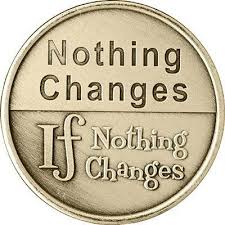
NOTHING CHANGES… IF NOTHING CHANGES!

I believe that only working on one Form is procrastination, it is lazy and ultimately tied to fear of failure.

Growth and improvement require feeding with a complex diet, they need dynamic involvement. 

There is another relatively large stumbling block when it comes to advancing in Wing Chun.

Most of the important work of Wing Chun is spent working out how to not do certain things.

Such as not fighting force, not creating tension in the body, not using overt strength.

The difficulty becomes learning how to not do something by actively doing something else?

This is quite a conundrum.

Anchoring our training in any single Form, not just the Siu Nim Tao, is always self-limiting bordering on self-defeating. 

Each Form has a core learning objective, often multiple core learning objectives, that only begin to make sense once they are viewed in relationship to the whole.  

That fabled 30,000-foot view.

For instance, what does the Siu Nim Tao teach us about moving our body or accepting force?  

What does Chum Kiu teach us about driving our energy out to the edges of the body or core winding?  

What does Biu Gee teach us about positioning and negating an opponent? 

What does the Dummy Form teach us about extending our awareness and energy out to manipulate a weapon?

Ultimately we must ask ourselves what does Wing Chun teach us about anything that is not Wing Chun?  

We need a large dose of honesty here, when the brown gets airborne and the fan shares it around it will not be two people doing Chi Sau.

Dai Sigung Isaac Newton informs us that every event is the sum of its parts, so at best, even if we are faultless and perfect, it will be only 50% Wing Chun.

As a final circling of the wagons, there is another thing that my Sifu would say that I absolutely and completely do agree with…. 

WING CHUN IS EASY TO LEARN, BUT DIFFICULT TO BELIEVE.

A painting of a Horse never won the Melbourne Cup.

Angry, art loving punter.
WHAT KIND OF DAY IS IT?

FIST LOGIC

I KNOW WING CHUN, BUT CAN I FIGHT?

Any Martial Art that teaches their students how to defend is not teaching them how to fight.

This is a question many students ask, and as a result, many schools set out to teach people how to fight with Wing Chun, but this approach is fraught with troublesome issues.

The first cab out of the rank is that Wing Chun does not fight.

This does not mean that we cannot use Wing Chun stylings in a fight, but it is not what the training is all about, and as such, if you use these stylistic motifs in a fight, it is not Wing Chun.

This IDEA can be difficult to understand and get our heads around, especially if we have limited experience with violence.

And it is not helped by internet celebrities using Wing Chun stylings in set-up demonstrations where they effortlessly punish numerous opponents.

History teaches that they come unstuck once they enter the arena with a genuine fighter.

This guy is truly amazing, but this is movie stuff, not real, and not Wing Chun.

But this is not just a Wing Chun problem.

Any Martial Art that teaches their students how to defend is not teaching them how to fight.

This should be obvious.

It teaches them how to defend because they are being attacked and not because they are involved in a toe-to-toe duel.

It teaches them how to escape violent situations.

Self-defence is not fighting.

In a fight, both sides attack, and attack, and attack.

Watch some tournament fights, no one wins a fight by defending.

This is not all doom and gloom, we just need to understand what we are trying to achieve.

There is a different mindset/attitude between fighting and escaping and it is a mindset/attitude that we unconsciously slip into and not one we consciously choose.

Fighting is two people exchanging blows, this is not what happens in an attack, and it is not what we hope to achieve in a counterattack.

In a violent encounter, which is the scenario that Wing Chun trains for, we are attacked, and our response is initially more in line with sheltering from a storm than defending…

…and then we find a way to turn the tide and unleash our own storm.

There is no exchanging punches, no looking for weakness’, no ducking and weaving, no feinting, and no concern about putting ourselves in a weak position, all hallmarks of fighting.

It is all or nothing and then home.

It is really, really important to think about this, to talk to fellow students to see their thinking on this, especially friends that have experience with combat sports.

Ask your Sifu when, if ever, he has used his Wing Chun, what was the situation?

I have used my Wing Chun on more than one occasion.

And none of them were fights.

If we do not understand when and where we will need the training, how can we make it work?

I will go into this deeper in a future post, meantime, think about this…

It is not the shapes or the moves that define a style.

EVERYONE HAS A PLAN… UNTIL YOU PUNCH THEM IN THE FACE.

MIKE TYSON

WHAT TYPE OF DAY IS IT FOR YOU?

FIST LOGIC

FROM GOOD FORTUNE TO TINNED TOMATOES.

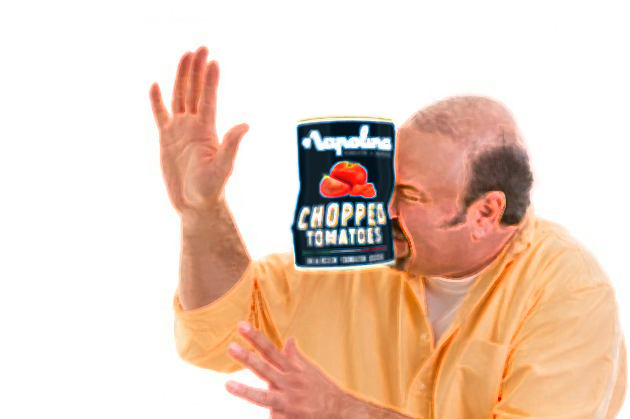
OUCH!!

How we train and what we train is not Wing Chun. Wing Chun is just a tin of tomatoes.

If, as I contend, there is only one body, only one shape and only one movement in Wing Chun, then it makes sense that there is also only one post.

This post is only 18 months old but I would warrant that you have all forgotten it.

Luckily, or perhaps not, I have not.

Lockdown.

The most valuable thing we can do at this time is to spend some time sorting out what it is we think we are doing.

What it is we want to do.

And find a way to get there.

Going into this post there are three things that I want you to take away from it for future reference.

They are more what the recently departed Edward de Bono would call a ‘provocation’ than information.

First off: In 47 B.C.E. Gaius Julius Ceasar, after a swift victory against Pharnaces II at the Battle of Zela, reported to the Roman Senate the words Veni; Vedi; Vici. I came, I saw, I conquered.


Considering that he was ‘greatly’ outnumbered he would have been more accurate to say Veni; Vidi; et bonam fortunam, I came, I saw, I got lucky.

Secondly: The great S.African golfer Gary Player once hit a seemingly impossible shot from a deep bunker straight into the hole.

As he walked out of the bunker, a spectator shouted, ‘That was a lucky shot, Gary’.

Gary Player turned to the fan and said ‘It sure was and you know what? The more I practise the luckier I get.

Finally: A poem I heard from Spike Milligan…


My Brother Tim had a tomato thrown at him, while tomatoes are soft and wrapped in a skin,
this one was especially packed in a tin.

How we train and what we train is not Wing Chun.
Wing Chun is just a tin of tomatoes.

Hopefully, this will all make sense in the end.

Back in the day, 15 or 20 years ago,I asked my teacher…

‘what is needed to become a Wing Chun Master’?

He said ‘there are no shortcuts or secrets, just turn up to training and pay attention”

Very wise words that have since proven true.

Then he winked, handed me a tin of tomatoes and said ‘don’t leave home without it’.

HOKKA HEY.

Something to consider.

If we find ourselves in a violent situation either we did not see it coming,

if we had we would have surely avoided it completely,

or we started it ourselves. 

Think about that.

WHAT KIND OF DAY IS IT?


FIST LOGIC

AT THE HEART IS SIMPLICITY.

In a world where too much Wing Chun is not enough, we all gave more.

This Saturday just past turned into a monster training session, the guys were all right up for it and I really felt the vibe.

The training was as the training is, but we all dug deep, so deep that I had way too much video footage.

I have cut the video up into 3 chunks so that you guys can watch one over coffee or what have you, and then tomorrow and the next day.

In a world where too much Wing Chun is not enough, we all gave more.

For tribe members that did not make it Saturday bring it in with you next time you train.

If your plan is to watch one a day then I suggest starting with the last video we shot, “The last 10 minutes” it was more a chat than training but it was tasty.

Most of the training that we improve from takes place between our ears, without it, there is nothing, so train every day.

Warriors don’t raise to the level of expectations, they fall to the level of their training.”

Archilochus
FIST LOGIC

MY BOOMERANG WON’T COME BACK!

DON’T DO THIS AT HOME KIDS.

Because if we ever do get into a fight, it will be on that bridge.

This post is only 6 or so months old so hopefully, it is not totally forgotten, it pretty much applies to what we have all been exploring this past week, albeit through different methods.

Everything will work to a certain extent, and everything will fail to a certain extent.

It is about 3 things.

Understanding how our body works

Understanding our ‘FIST LOGIC’.

And… Understanding how to build a bridge between the two.

Because if we ever do get into a fight, it will be on that bridge.

We are not people learning Wing Chun, we are people using WingChun to learn about ourselves.

There is a joke here in Oz. 

“What do you call a boomerang that doesn’t come back”?

A stick.

Asking “will my Martial Art work” is a little bit like asking will this stick work?

It will.

But only if you know how to use it, and are willing to use it.

If we do not align our training with hitting someone, and hitting them really hard, we have the wrong stick.

At the end of the day, everything we do is about hitting people, and not about defense.

The moral of this tale is knowing the right stick.

STABILISATION THROUGH COMPRESSION AND ORGANISATION.

Biu Gee introduces us to stabilisation through compression and organisation of the body, mostly, but not only, through ‘Core Winding’.

The various but sometimes subtle rotations of Biu Gee are intended to induce spontaneous martial Innovation’.

How can we approach this work to gain an understanding of these Concepts?

We should use something, anything we use frequently, and have a very natural feeling for, in my case, it is the Knife Hand.

Learn the shape of the Knife Hand.

Learn the shape of the transition from defense to attack and how this action creates and stores kinetic energy.

The best place to explore this is in the Biu Gee Form not in free play.

Any movement in the Form that extends into the ‘Hit Zone’ can be regarded as a Knife Hand, or if you prefer a punch mechanism.

By now you should all be aware that I believe that when training doing all of the Form slows your understanding down.

The best approach is to repeat the segments that can transition from a defensive {Chum Kiu} posture to an extension, be it Knife Hand, finger Jab, or Punch, they all use the same mechanism.

 The next step, take it into active play, in Chi Sau steer your partner out of his zone and into yours, this will simulate taking the Position of Dominance in a real fight.

How did you achieve it?

Did you push?

Did you pull?

Check it out.

C.K. shift left, B.G. upper body pivot to the floating ribs, do not let the feet dissolve the torsion.

In general, most Wing Chun practice does not improve overall movement, the information is there, but it is veiled in subtle inferences that are not openly discussed, it is the whole ‘Secret Information’ aspect of Biu Gee.

However, if you have good movement and agility, when you play the Biu Gee Form they will stick out like Dog’s Do Dah’s, here is a link to some good info on movement from outside of Wing Chun.

All difficult things have their origin in that which is easy,

and great things in that which is small. 

LAO TZU
HOKKA HEY!
WHAT KIND OF DAY IS IT?
FIST LOGIC

NON WING CHUN PREP FOR CHUM KIU.

Forms are organising patterns that have little if any genuine purpose apart from dexterity and proprioception.

This post was originally for Rick, but as I said back then…

It never hurts to go over stuff we think we know.

All Forms are a way to organise our body along certain lines to fit certain agendas.

Forms are organising patterns that have little if any genuine purpose apart from dexterity and proprioception.

Added to this we are training our body to be in a specific and exact shape.

This is very important and frequently overlooked or at the very least misunderstood.

Creating an exact shape is a transferable skill, once we can accurately make one exact shape we can accurately make any exact shape.

Chum Kiu introduces us to contact and as such introduces us to force/power and how to deal with it, use it.

Force/power comes from Gravity, sinking or dropping. It comes from Momentum, moving in a straight line and it comes from Torque, rotation.

Instead of just taking all this as a given try to identify these IDEAS in the various FORMS.

Don’t tell people how to do things, tell them what to do and let them surprise you with their results.  George S. Patton

HOKKA HEY!

WHAT KIND OF DAY IS IT?
FIST LOGIC

ALL-DAY TRAINING.

HELLO…..

Thursday evening 6.50pm. Jordel has just let me know he is stuck at work, Sam S. is not up for it due to a big day’s work and yes George has been called back into work, and Costas is staying home.

Rick, Saleh and Sam B. do not train Thursday.

8.00pm no one is coming but I am here, ready.

So here are a few quotes to think about and a small video.

“ Talent hits a target no one else can hit; Genius hits a target no one else can see. 

Arthur Schopenhauer 

Knowledge is gained by adding something every day. 
Wisdom is gained by taking something away every day.

Lao Tzu

Violence happens by Surprise, Closer, Harder and Faster than in most Martial Arts Training.

Everyone that knows anything.

Hit hard, hit first and keep on hitting.

Jackie Fisher.
 First Sea Lord of the Royal Navy 1904

If this brings up any questions bring them in.

WHAT TYPE OF DAY IS IT?
FIST LOGIC

WING CHUN DAO

CAN YOU SPOT THE DIFFERENCE?

The majority of the people that practice Wing Chun never think about performing violence.

IS WING CHUN THE NEW TAI CHI?

A common sight for any tourist that has been to Singapore, Hong Kong or China is the morning parks being filled with elderly Chinese performing Tai Chi, slow, graceful and relaxing, I do not think that there is any doubt that these citizens are not involved in a Martial Art, even though at its core Tai Chi is a really effective Martial Art, but if you mention Tai Chi this is the image most people come up with, most Martial Artists, even Wing Chun students scoff at the thought that Tai Chi is still an effective fighting Form.

  The Park People are involved in the Chi Kung aspect of Tai Chi, these days the great majority of Tai Chi practitioners are involved in the Chi Kung aspect with very few engaging in genuine Martial Tai Chi, their practice is slow, easy and thoughtful, discussions are held about the best shape, the correct placement of the limbs, the quality of the breathing, condensing the thought process, where to place the energy as you flow and the pursuit of mindfulness.

There is an abundance of proof that this approach is beneficial to the health and mental well-being of senior citizens and by that mark alone is a worthy pursuit for the more mature person.  What you very rarely see in the parks are young people doing Tai Chi.

This post has been prompted by a question I was asked regarding the vitriolic criticism that Wing Chun receives from the Mainstream Martial Arts community, a claim that Wing Chun is a pretend Martial Art, the twenty-first century Tai Chi.

Why do so many people hate Wing Chun?

In pursuit of balance, we should also consider “Why do so many people love Wing Chun”?

As a Wing Chun student and Instructor of over 30 years, I am definitely a member of the Wing Chun appreciation society, but I also share some of the less than flattering doubts of the Wing Chun haters,  it does concern me where Wing Chun appears to be heading.

To the Wing Chun haters there is absolutely no empirical evidence that Wing Chun works as a fighting art, this is in no way helped by the fact that more and more the widely established history of  Wing Chun is turning out to be nothing short of a fable, in Hong Kong, there is constant factional infighting amongst the Ip Man lineages to the extent that each do the style so differently, it is no longer the same style { but of course, everyone thinks their style is best, their Sifu is the best}, in a similar vein to Tai Chi that is composed of Chen style; Yang style, Wu style and Hao style, Wing Chun is breaking into different styles from different Masters that appear more interested in self-promotion than advancing Wing Chun.

And yet despite this obvious diluting of Ip Man’s art  Wing Chun lovers constantly claim that it is the best Martial Art on the planet, in fact, the superior or even ultimate fighting art.

Tai Chi translates to Supreme Ultimate Fist, once it was, but now it just  exercising.

In the Japanese Arts there is a clear distinction between a style that is done for self improvement and health and a style that is genuinely used for fighting.

 Namely -Do and -Jutsu { also pronounced as Jitsu}.

Ju-Do is self-improvement – Ju-Jutsu is intended for combat.

Ken-Do is self-improvement – Ken-Jutsu is intended for combat. 

Karate-do is self-improvement – Karate-Jutsu is intended for combat. 

Aiki-Do is self-improvement – Aiki-Jutsu is intended for combat.

Collectively they are regarded as  Bu-Do and Bu-Jutsu.

The Japanese -Do would be -Dao in Chinese, as in Siu Nim Dao.

If we temporarily borrow these delineations and apply them to Wing Chun then the vast majority of the world’s Wing Chun students are training in Wing Chun Dao.

The lineage that I am from, Chu Shong Tin – Jim Fung is 100%  Wing Chun Dao, in all my years of training in my Sifu’s school I do not think that anyone ever got hit with any real intent, there were accidents as there are in all schools, but then everything stopped instead of escalating, to some extent everybody was only learning how to apologise.

Because I trained in Boxing for years I was very aware that what we did was not fighting, even though most of the training would not fly as taught I had no problem with that, it was enjoyable, it was healthy, it was low impact and thanks to my Boxing experiences the IDEAS where convertible into fighting IDEAS,  but it appears that most Wing Chun students do have a problem with that and so claim that Wing Chun is a kick-ass Martial Art when neither themselves or most of their Instructors have ever been involved in a genuine “Blood and Snot” fight.

People that do AikiDo, JuDo, KenDo and Tai Chi very rarely posture and make claims,  they are fully aware that they are travelling a path of ritual self-improvement, and in general are accepted by the wider Martial Arts Community because of this fact.

The majority of people who practice Tai Chi never think about performing violence.

The majority of the people that practice Wing Chun never think about performing violence.

This is not a bad thing, perhaps the greater Wing Chun community should embrace it.

As I always say, the most important aspect for a Martial Artist to learn is Self-Honesty, we would all do well to find a way to stop self-delusion.

We must own what it is we do.

Or alternatively, find a way to train Wing Chun Jutsu.

 “Discipline is your best friend.

It will take of you like nothing else can.”

Jocko Willink

WARRIOR SPIRIT NEVER DIES.

WHAT TYPE OF DAY IS IT FOR YOU?
FIST LOGIC

DOING NOTHING! WHAT IS THAT?

MOSTLY NOTHING HAPPENING.

Our default setting will always be evolving, always trending to easier movements.

This is a two-part post about the same thing, just from different perspectives.

Last weekend, while working with my very senior students, which if you understand Wing Chun is frequently about understanding what “doing nothing” is and trying to internalise it, one of the guys effortless shunted me across the room.

He looked a bit nonplussed so I said “you do understand that you have just effortlessly thrown a 90kg man across the room do you not”?

He answered, “Yes, but you were not resisting”.

This is a statement that students who have no genuine experience of street violence frequently voice.

Things like asking for their partner to apply “More Force” is a classic example of this thinking.

If a person’s IDEA of a fight is two highly trained Combat Athletes competing against each other this is an easy misconception.

But on the street, attackers have no respect for their target and they do not expect anything except a screaming success in their attack.

Resistance is for defenders, not attackers.

If someone violently lunges at us and we step out of the way there is an even money bet that they will end up on their ass with no assistance from us.

Attackers do not offer resistance because they themselves do not expect resistance.

Have a cup of tea and think about it.

Is this “A-Hole” happily stepping in to get punched in the throat?

If the guy can end up on his ass without our help we do not need to do much to help him achieve his downfall.

Secondly.

Although we talk of doing nothing, we are obviously doing something.

And that something is just being as normal as we can be in the circumstances, and this obviously can vary according to the situation we encounter.

The nothing is that we are adding nothing extra to any move we perform, especially no extra and un-needed strength.

Adding “nothing extra” depends a great deal on us understanding our default settings.

The FORM, the complete FORM, allows us to explore how we can move in an easy and effortless way, the more we train the more we begin to be able to do these movements more easily.

Our default setting will always be evolving, always trending to easier movements.

This is of course the reason for the FORM in the first place.

To understand how we move, to observe our body at its base level and to try to keep it at that level even when the world around us is turning to shit.

This is a difficult task, even when we are training in a friendly environment it offers a challenge.

A challenge we will never rise to, but that is O.K.

Because it is trying to achieve our current default setting without forcing it that is always the aim and the recipe for success.

Yet again it is the lesson from Stravinski’s violinist.

Moonlight floods the whole sky from horizon to horizon;

How much it can fill your room depends on its windows.” 

― Rumi,

WHAT KIND OF DAY IS IT?
FIST LOGIC

THE ONE INCH PUNCH AND MY SIFU, JIM FUNG.

PIC

THIS IS A PUSH, IT NEEDED TO BE. BUT THE POWER IS STILL THERE.

The amount of power needed to abruptly push someone off of their feet is commensurate with the amount of power needed to break things.

Hey Tribe, as we are beginning to explore Wing Chun’s “inch power” here is a post from last year.

Richard asked the following question on our whatsapp Group page…

Hi Derek, question for the week. The 1 inch punch. I have seen vids of Bruce Lee do it with a lot of torsion, and Sigung Fung doing it square on. Is there any practical use? Was Sigung Fung that powerful?”

It is important to understand the nature of any demonstration is basically ‘Infotainment’.

The amount of power needed to abruptly push someone off of their feet is commensurate with the amount of power needed to break things.

Like ribs and eye sockets, good luck finding a volunteer for that trick.

There are many internet trolls that watch a video of my Sifu and scream “Fake”,.

From a video.

How smart are they.

One of the reasons Wing Chun does not have sparring is because the average Wing Chun player wishes to avoid getting hurt and not engage in it, it is the same with any demo.

I have seen my Sifu perform this on many occasions, the body movement is minimal, the focus sublime, it is as real as a car crash.

But it is also a gimmick, or at the least a training exercise.

As I recount in the video my Sifu once gave me a serious tap, not really a punch, but it was as hard as anything I have experienced.

And I used to box.

EVERYONE. HAS A PLAN, UNTIL YOU PUNCH THEM IN THE FACE.

HOKKA HEY

WHAT KIND OF DAY IS IT?