Costas was talking to me about someone we know who has a Youtube Channel, about something he was saying about part of our system.
I have no wish to get into a B.S. Internet argument so I will not name the guy and I will not criticise what he was talking about.
Instead, I will once again try to help you see who is worth listening to and who is not worth listening to.
There are some good people out there.
Not many, but some.
The little IDEA.
… Wing Chun does not fight.
The Bad guy attacks us, we counterattack and finish him right there and then.
There is no fighting.
Obviously, there is a good chance that on the first encounter, we are taken unawares and we do not pull off our counter-attack.
In which case we force a retreat to a better position and await the Bad Guy to attack us again.
This time we know what is going on and we succeed and finish it.
There is no fighting.
Ever.
It is always the same little IDEA.
We do not fight.
This is hard to GROCK for a very large portion of the Wing Chun Community because they, fortunately, have no experience of violence.
So they fall for fancy words and flashy videos.
Try this.
Dealing with violence is a lot like cooking.
It makes no difference how many books you have, or how many shows you have watched, you could even have a friend that is a world-class Chef, but as soon as you are put on the stove it turns out you cannot even cook an omelette.
Do not laugh, cooking an omelette correctly is not that easy.
In fact, before I retired, when I was interviewing for a position in my kitchen it was one of the tasks I asked all hopefuls to carry out.
In many cases it was the rock they perished on.
Cooking an omelette requires focus, and correct timing but above all else confidence.
When my Sifu passed away, hold that thought I do not expect to pass away, there where so many questions left unasked.
HI TRIBE.
As you all know, sometime in the first half of this year I am undergoing an extension to my previous Spinal Fusion.
For reasons I do not understand {I was a Chef in my career and not a Neuro-Surgeon}, they cannot simply extend the existing architecture but need to replace the old and put it all in new.
Because I have had this operation previously I fully understand the recovery process, but back then I was 42 years of age, this time I will be 70, perhaps it will be the same, I hope so.
Last time out it was 3 months before I could supervise hands-off teaching and 6 months before I could do hands-on teaching and resume my training, I expect this to be the minimal process this time around.
I do not like to consider it but there is a chance that I will not be returning to teaching at all.
When my Sifu passed away, hold that thought I do not expect to pass away, there where so many questions left unasked.
My not returning to teaching is to a large extent the same thing as my Sifu’s passing away.
My advice is to hope for the best outcome but work for the worst outcome.
The best course of action would be to train as often as possible over the next few months.
The second best course of action would be to make sure you have questions to work on when you do turn up to train.
As for what those questions should be, think of the things that do not make sense, or things that you think would not work in reality, because it does all work when you understand.
My advice would be to treat this year like it was only half a year, and dig in.
Believe me I fully intend to return and to keep teaching for many years to come, but there is a real chance that this could end up in a list of “Famous Last Words”.
Forms are the theatre of teaching without words, the lessons are able to settle at their own pace and make their own sense.
Humour requires an open and nimble mind, it allows us to simultaneously see what is in front of us without unneeded complexity and also see things in a new and refreshing light.
For instance…
Q. What is the difference between a Greengrocer and an Aeroplane Pilot?
A. One sells veggies, and one flies a ‘plane.
Sometimes things are as obvious and in our faces as that, no need for inner depth or secret understanding.
Some other jokes help us see that we were in fact looking in the wrong direction…
Two girls were talking and one said to the other…
… “I lost my virginity years ago, but luckily I still have the box in came in!
Boom, Boom, sooner or later the really important things are not so important after all.
So above all else let’s try to be mentally flexible and open-minded.
2023 is just around the corner, do we know what it is we are carrying forwards to this new year.
I hope so, because that is all we have to build on…
…our past training is the foundation for our future progress.
Or regress!
As always we should begin with a question.
What is a FORM?
A FORM is a collation of IDEAS.
A FORM is a piece of theatre we use to explore and interpret these collated IDEAS.
It is a per-FORM-ance.
Intellectually a FORM is a filing cabinet to store all relevant data.
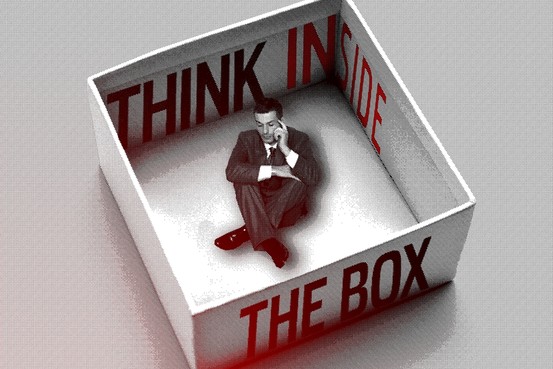
We could go as far as to say that a Form is ‘the box’ the IDEA came in.
Accepting this is the first step to understanding what is inside the box.
Anybody that has even the slightest understanding of Wing Chun knows that everything we do is infused with and directed by the Sil Lim Tao.
In short, in Wing Chun, everything is Sil Lim Tao.
Do we understand what we mean when we say “everything”?
A Form is a method for those few that know the deep secrets to explain their knowledge to the multitude that doesn’t know these secrets even exist.
Forms are the theatre of teaching without words, the lessons are able to settle at their own pace and make their own sense.
Forms are alchemy, a way to take a base material, the novice, and through practice, refine it to a more noble material, the practitioner, and eventually, a Master.
If like me you prefer science, in a book entitled Human Performance, the well-known psychologist Paul Fitts proposed three stages of learning motor skills:
a cognitive phase.
an associative phase.
an autonomous phase.
Whichever lens we choose, whatever prose we use…
… Forms are the uncarved block that already contains the masterpiece before the first touch of the chisel.
Or the thumb drive that holds the algorithm.
The wordless wisdom holds us hostage.
I know from experience how difficult it is to dedicate time to doing just Forms, it took me around 7 years to finally commit and settle into a new way of approaching the work, but I also know that it is Forms that link us to the reality of using Wing Chun out in the wild.
Training is training – playing is playing – fighting is fighting.
This post is not a sly swipe at a different style than the style I train in.
It is not even about styles, unless we are talking about dancing, and yes I have danced, in fact I have danced this dance, and though it is known by many names, today we will call this dance…
…first in best dressed.
It is usual when dancing to decide beforehand who is ‘Lead” and who is “Follow” this way both dancers come away with their shoes still shiny and all of their toes intact.
I have danced this dance as both ‘Lead” and “Follow”, as first in and as not first in.
In the video the Ponytail Guy does not realise that he is the ‘Follow’ and steps up with his arms open as if he is the ‘Lead’ expecting his partner to smoothly and quietly join him.
BOOM!
Let me make it very clear, this is not a dig at anyone or any other style, this could be any of us.
Mr Ponytail gets clipped hard by the first kick, you can see that it hurts him, and just completely messes him up, his brain says W.T.F.
The kick breaks his thinking up so much that as he is limping away he is looking for the next kick, the nervous system will do that if we are not careful, and he completely misses the slap that is coming in behind it.
Why would any of us do any better?
Mr Ponytail would never have volunteered for this fight unless in his own circles he was considered good at what he does, possibly a senior of his school.
He would not have stepped onto the mat…
…which by the way is a courageous thing to do for anybody…
… unless he thought, no, unless he believed, that he could at least hold his own.
But more than likely he fancied the win.
Just as he should have.
I for one would not put myself up for it unless I thought I could win it.
If we can resist the cheap thrill of criticising Mr Ponytail there is a great deal we can take away from this.
He who dares wins.
He who defends doesn’t.
In the real thing, the BIG EVENT, it is more about attitude than style and ability.
If you watch the video again read the body language of the two dancers.
Mr Ponytail thinks that this may be a bit of fun, more so than Mr No Hair, Mr Ponytails smiles, almost skips until that kick lands.
What was it Iron Mike said…
…’everyone has a plan’.
Mr Ponytails downfall came weeks before he stepped onto the mat.
I had a student that always pestered me to do sparring, but he did not know what sparring was, sparring is a way to work on aspects of a fight that you believe may need to compete with.
Sparring is one guy working on something and his partner agreeing to be hit while he works on it.
There are professional sparring partners that get paid serious money to do perform this function.
Correct, proper sparring is serious training, and not playing at fighting.
Training is training – playing is playing – fighting is fighting.
Students that possess no real experience of violence tend to conflate these very different activities.
Mr Ponytail turned up looking to play at fighting, you can see it in his face, you can see it in his movements.
If we do find ourselves out there in what Geoff Thompson referred to as “The Pavement Arena” more important than anything else is the will or intent to hurt the other guy, without that we are only dancing.
A big problem I see is that not many Wing Chun students hang around long enough to work on Biu Gee, let alone long enough to understand it.
The average Wing Chun player never gets their training wheels off.
Biu Gee is the attacking side of Wing Chun training, it can take many years to get to Biu Gee.
In the Standard Model we first focus on the defensive work, after all our main worry is a surprise attack, a mugging or the like so we do a lot of work on fending of the initial onslaught and then we work on turning the tables, this is essentially Chi Sau and Chum Kiu.
Then we attack, with the sole intention of completely destroying the opponent.
Domination, not dancing.
Biu Gee.
At the end of the day, how we relate to an attacker is a call we make on our own terms, we make a simple choice of who do we wish to be.
Mr No Hair or Mr Ponytail?
And think about this, if we go back again, and just look at the body language, Mr No Hair knew exactly why he was there and what needed to be done, but there was no MALICE, no evil intent.
On the Pavement Arena, there is only EVIL INTENT.
“To be a warrior is to learn to be genuine in every moment of your life.”
What is being taught is not correct but it is relatively easy to nudge it in the right direction if we know what to look for, and we are honest with ourselves.
I am still busy writing the e-book that I spoke of some months ago, writing an E-Book that actually has useable, honest information, is a very long-drawn-out process, longer than my first E-book by a country mile.
It is very clear to me that I will need to do an accompanying Video, or perhaps just commit the whole thing to video to bring clarity to some of the more, let’s say semi-controversial, deep or weird aspects of the training.
Here is the lead-in to my Chapter explaining Biu Gee, feedback is welcome.
What we were told as the history of Wing Chun is more and more being brought into doubt, recent research from respected professional Social Science Researchers has shed light in some dark corners, Ip Man is looking more and more quixotic.
NOTHING IS TRUE, EVERYTHING IS PERMITTED.
Hassan-i Sabbāh. 1034–1124
S.L.T. ‘C’. section. BUI GEE.
As with Chum Kiu, it is important that we do not consider the Biu Gee to be a new Form but more a new dance, or even better some new moves to an old dance.
If we can do this, once we get past the dance and have time to think about the moves of the Biu Gee, it actually helps to make Wing Chun smaller.
Observing how a certain movement from the first Form is expanded in the Chum Kiu and then transformed further in the Biu Gee lets us make the connections needed for the whole system to become one movement, one IDEA.
BIU GEE HIDDEN TRUTH IN PLAIN SIGHT.
A brief chat about what is publicly presented as Biu Gee, especially on YouTube.
Biu Gee is often referred to as being secret information that must not pass outside the door of the school.
Although I do not believe in there being secret information in Wing Chun I am comfortable with the idea that early Wing Chun Schools wanted to keep their best bits to themselves and as such used disinformation so that other styles would not have knowledge that could allow them to win in a fight.
Especially at the time of the Hong Kong Rooftop Challenge Fights in the 1950s.
There was potentially so much Face to be lost.
So not really secret, more likely just obscured from outsiders.
It makes a lot of sense not to allow your enemies to know what you do, but how do we keep it all to ourselves, how can we teach publicly without exposing our knowledge?
Junior students always talk to their friends, always try to show how their style is superior, they show everything that they have been taught, repeat everything that they have been told, in this day and age it is Youtube, nothing is held back.
If we are genuinely working on ways to defeat our opponents what would we do if we knew the opponent was listening to our lessons?
We would disguise all the information in a way that sounds correct but in reality, would never work.
This is mainstream Wing Chun today.
What most of the world thinks is Wing Chun is not the whole truth, in fact, I believe that it is deliberately misrepresented.
Is it at all possible to teach broken Wing Chun and yet somehow have the students learn the truth?
This is the myth behind the whole closed-door student thing, in public, they were taught broken Wing Chun then behind closed doors, it was corrected.
I do not think that this is likely, it would be too confusing, but what I think is a real possibility is that the serious students were told clearly that everything was broken and that the real work was to explore what they were taught and understand why and where it was broken.
Learn how to fix it, or at the least come back to their Sifu with their findings so that he could put them on the right path.
If as students we believe everything we are told we have voluntarily accepted the disinformation.
Yes, the magic “broken” Wing Chun will appear to work really well in theory, in training, even in demonstrations it will appear to be unbelievably good.
‘One Inch Punch’ good?
Disinformation fails if it does not appear to be true.
Wing Chun is fighting and fighting is not that complicated.
Unless someone has never had a genuine violent experience it is patently obvious that most of what is passed off as Wing Chun will fail and fail instantly against even a moderately combat-experienced fighter of any style.
It is not a long way wrong, but it is wrong enough, some vital information is missing.
But the truth is out there, in fact, it is right here in front of us in plain view.
We call it Biu Gee.
The correction formula that teaches us how to nudge broken Wing Chun into the art we all hope it is.
The ideas presented in the first two Forms will not work correctly without the oil and grease that can only be found in Biu Gee.
It was always meant to be this way.
Only loyal, dedicated students trained long enough to be shown Biu Gee.
Dedication and loyalty to the school got the gravy.
But in this time-poor, ‘please feed me’ world that we live in, especially when we are paying serious coin to the Wing Chun School to provide a service, very few students undertake the real work.
It is not the student’s fault, they more than likely were not told it was broken, many Instructors that set themselves up as Sifu are unknowingly teaching broken Wing Chun.
It is not their fault either, for they did not realise that they were teaching broken Wing Chun they simply passed on their Sifu’s disinformation in the way it was passed to them.
Generations of effective disinformation.
What is being taught is not correct but it is relatively easy to nudge it in the right direction if we know what to look for, and we are honest with ourselves.
Our Sifu or Sigung cannot teach us anything, only point us in the right direction, we must do the work in our own way and find our own Wing Chun.
There was a time in my training when my Sifu said to me…
…“When you come to my class it should be to get your homework marked and not to ask for my help with your training”.
I very much doubt that I was the only one of his students he said this to.
This is a repost of a repost, even though it was only back in September when I reposted it I find that the lesson has not quite sunk in. This is the Money Shot if we wish to understand the nuances of nerve activation, which is what brings our Crazy Horse to life. Believe me, this is one of those “I wish I had been told this earlier” kind of situations.
Where or what is the ‘LITTLE IDEA’.
Could it be that we are the ‘LITTLE IDEA’?
Any training is really about self-realisation.
The development of a new self, or at least a new vision that goes above and beyond us, sets new paradigms, attains new heights.
A self that is physically, mentally and emotionally on a different level.
A competent and capable self.
Trained and ready to face any challenge.
Not just violence.
Wing Chun is a vehicle.
But like any vehicle on any long journey, we would do well to know how it works, how to fix it when it breaks down, to treat it with respect, so that it lasts us a life time.
On any journeys of significance, as we progress, we accumulate new knowledge and develop opinions.
Opinions that change as we gain further knowledge.
It is how we grow, move forward, transcend.
At this juncture, my opinion is this…
The most important aspect of our training is to stabilise our spine.
I believe that this is ‘THE NUCLEUS OF THE LITTLE IDEA’!
All of our training, all of our FORMS, our drills, our Chi Sau and whatever else we are involved in and around are nothing more than ‘stress tests’ to see if we can play them and maintain “a stable spine’.
If this is ‘THE NUCLEUS OF THE LITTLE IDEA’, what is ”THE LITTLE IDEA’?
It grows from using this Nucleus, thinking about this Nucleus, becoming this Nucleus.
MOVING ON THE OUTSIDE, STILL ON THE INSIDE.
Task number one.
HOW DO WE STABILISE THE SPINE?
There are numerous methods although ultimately they all boil down to Intra-abdominal Pressure {I.A.P.}
I am in no way a physical therapist, I am not going to advise you how to do this, but to be expected there is a ‘living shit tonne’ of videos on Youtube, by real doctors.
This is a decent one for getting the general gist of where and how to start.
Watch this and then surf the recommended video links on the right of the presentation and find one that makes sense to you.
‘Crazy Horse’is an awareness and conditioning exercise, in time we need to infuse I.A.P. into it.
This is not particularly difficult, but neither is it quick.
In the numerous styles that I have studied there has always been talk of breathing techniques, Buddhist breathing, Daoist breathing, belly breathing, diaphragmatic breathing, breathing into our feet the list is endless.
They are all on the right track but they are also wrong in so many ways.
It was not until about 5 years ago when I was seeing a rehab specialist for several weeks, at the ‘Pain Clinic in Liverpool Hospital’, that I was finally able to put all the pieces together
We always boast that what we do in Wing Chun is based on ‘normal, human body movement’ but few schools teach ‘normal, human body movement’.
They teach ‘Wing Chun’ movement, which is so very rarely normal and only partly human.
This post is more a stream of a thought exercise than an attempt to say anything meaningful.
It popped up simply because I was thinking, and not because I was thinking of anything specific.
If it rings any bells or turns any lights on they are your bells and your lights.
You have heard me say on many occasions that the most important thing for a Martial Artist to develop is honesty.
Here we are in the run-up to the holiday season, Christmas, Hanukkah, Kwanzaa pick your flavour, the time when the training numbers drop off due to demands from friends and family, perhaps even work, I was a Chef and late December is a horror show.
This is when for our own benefit and growth above all else, we need to be honest.
Q. Why are we missing training tonight?
Is it really because we are in a situation where we are not at all in control of our own lives, that no decisions are our own, that other people call all of the shots?
Why do we invent these external pressures, or if the pressures are real and not invented, why do we comply with them?
Whose life is this?
Do we make our own decisions or do others make them for us?
This would be a form of slavery and a condition that would not bring us any benefit that we would ever sign up for.
But we did sign up.
Kung Fu training is not compulsory.
So where does honesty come into it?
It is in our honesty when answering any question that is asked of us.
Especially by ourselves.
For starters.
Why are we out with our friends instead of training?
Why are we shopping with our family instead of training?
Why are we doing overtime at work instead of training?
There will be some people reading these lines and thinking is Derek having some kind of a dig here?
Absolutely not.
The answer is that we deliberately choose to do these other things instead of training.
That we deliberately choose to do these other things.
Of course, we could equally ask, why am I training instead of being at the office party, or Christmas shopping, or spending time with friends and family?
This is essentially the same question.
A more challenging question would be, ‘why are we making excuses instead of taking responsibility for our own choices?
And here in late December, more than any other time of the year we are in the season choices.
Every day in this season we can begin the practice of honesty.
Or more importantly, begin to understand the pursuit of honesty.
Perhaps to establish a better grip on this we need to rephrase the word Honesty and the act of being Honest.
There is a word that has been used by countless wisdom traditions from all across the globe that fits here…
… IMPECCABLE.
What is it to be Impeccable?
To live in accordance with the highest standards; to be faultless, free from fault or blame, flawless.
As a boy I found this IDEA mirrored in the histories I was reading, tales of the Japanese Samurai and the struggles of the Lakota Peoples of North American Planes, and of the Toltecs of Mexico.
Warriors.
There are many ancient wisdom traditions that equate people actively and deliberately trying to understand life as Warriors.
So what is it to be a Warrior?
To be a warrior is to be ready at all times to meet death.
Back in the late 1960s, just as I was becoming obsessed with Judo I encountered and became absorbed in the writings of Carlos Castaneda, in particular the book Journey to Ixlan, which described a journey of healing and transformation through Toltec mysticism.
The main protagonist, Don Juan Matus says…
… “A warrior should be prepared only to battle. His spirit is not geared to indulging and complaining, nor is it geared to winning or losing. The spirit of a warrior is geared only to struggle, and every struggle is a warrior’s last battle on earth. Thus the outcome matters very little to him. In his last battle on earth, a warrior lets his spirit flow free and clear.
Don Juan Matus
There is only the moment we are in, to make excuses or blame other people is self-delusion and misses the point.
To be a warrior, to be IMPECCABLE does not need us to change the physical things we are doing, only the way we represent ourselves in the face of these events.
I am beginning to ramble so let’s pull it back together.
Q. Why do we do, the things we do?
Because we choose to.
Own it.
This post is not in any way about putting people in an awkward place to make them come to training.
But if you have come to training, come because you wish to learn whatever it is we offer, it is not playing, it is not fantasy fulfilment, it is a chance to learn something.
Own it.
I am not trying to create a Paul Coelho or Eckhart Tolle vibe here, but there is a very real correlation between their writings and in the deeper reasons for practising Martial Art.
Come training or go shopping they are the same, and every day is a school day.
Many people go to Hong Kong and come back as though they now posses secret knowledge.
I came to Wing Chun by accident.
My partner of the time wished to learn Kung Fu and she had been told of a style that was developed by a woman, Wing Chun.
Back in 1991 I had never heard of Wing Chun.
I was 38 years of age with over 30 years of experience in assorted, mostly Japanese, Martial Arts and fortunately for me I did not need to learn how to fight.
So I did not begin as others do, wide-eyed and hopeful.
For all of my life I have been influenced by creative and non-linear thinking, I was not the type of student that took anything at face value.
I have always required some kind of tangible, measurable proof.
So it was with a certain amount of difficulty that I listened to the seniors of the school telling me the Wing Chun story, “Invented by a woman, blah, blah, blah”.
It was all so obviously false, and I had a creeping suspicion that Wing Chun was a bogus Martial Art.
As the training progressed I was told things by my Instructors that quite simply did not make any sense, when I questioned them I was told that the problem was my level of understanding and not Wing Chun theory.
This was not the best way to win over a doubter, it reinforced my idea that Wing Chun was bogus and that my Instructors knew very little of value.
In time I became an Instructor and began training under the supervision of the Schools Master, Sifu {Jim} Fung Chuen Keung.
A genuine Hong Kong Master.
Over the years I developed a good, honest and open relationship with Sifu Jim, his English language skill was excellent so there was never any difficulty in his explaining exactly what he meant.
After many conversations Sifu Jim said to me that it was almost impossible for non-Chinese people to understand Wing Chun correctly, firstly there was the problem of translating anything from Chinese into English, the two languages did not share any common ground, so any translation was at best a guess that depended more on the individuals understanding of the subject matter.
However, Sifu Jim regarded the biggest problem as the difference between the basic building blocks of Chinese Civilisation as opposed to the building blocks of Western Civilisation.
Chinese thinking is a result of the influence of such thinkers as Lao Tzu, Confucius and Buddha, whereas Western thinking was based on the ideas of Greek and Arab philosophers and Judeo – Christian thinking.
This makes for a completely different World View.
Chinese people and Western people are doing completely different Martial Arts, even if we use the same words and the same moves we are not doing the same thing because we do not inhabit the same mental or emotional universe.
Pre W.W.2. Chinese thinking is very much about finding the middle ground, about accommodating diverse opinions and ideas, no such thing as being completely wrong or completely right.
In western thinking there is the great divide, it is forever and always right or wrong, Westerners truly think that the only way to the truth is by debate {argument} and that ultimately there can only be one way, this is the complete opposite of Chinese thinking.
At the time when I was having these conversations with my Sifu, many of my contemporaries were taking the pilgrimage to Hong Kong, to train with my Sifu’s own Sifu, Choy Shong Tin.
My Sifu shared his opinion that Westerners would have a serious problem in Hong Kong because we cannot change who we are and that it is the Chinese way to tell people they are doing well when in fact they are not.
Chinese people would understand the subtleties and put in more work, westerners would take it at face value and go buy a new hat.
Later in our relationship my Sifu told me that many of his Instructors did not teach what he had taught them.
They thought they were making things easier for the students by changing the explanations, but in the end they were just making things up and getting it wrong.
When I asked why he allowed this to happen and not fix it, he told me that even though it was his school, and his teachings, when people chose not to listen it was not his place to force it.
If they asked for help he would give it, but until then….
“People lose themselves and people can find themselves”.
The normal Chinese “Kung Fu” way was to understand you were lost and make an effort to get back on track.
This creates some unintended major issues for Westerners who think that they are right until being told otherwise.
For westerners, this is how our system works, how our schools work and how our societies work.
From this point on I would wince when someone said…
“This is what Sigung Choy said when I was in Hong Kong” implying that this is how it is.
Staying on this point for a moment did they really hear Sigung Choy say anything?
Or did they hear someone else translate what Sigung said?
Unless the translator is a United Nations-level translator that happens to have the same level of understanding of Wing Chun that Sigung Choy has the chances of that translation being accurate are slim to non-existent.
A genuine example about the vagaries of translations.
There was a video on YouTube of the late Wong Shun Leung visiting my Sifu’s school in Adelaide, Australia in 1992, my Sifu was acting as translator, and at one point W.S.L. describes his thinking about pivoting, which happened to be quite different from my Sifu’s idea so Sifu Jim translated it to be in line what he taught himself.
By the time of this video my Sifu had passed away so I could not ask him why he did that, but his excellent knowledge of English and his natural Cantonese made an accidental mistranslation unlikely.
Any translation is rarely what the person is saying.
Many people go to Hong Kong and come back as though they now posses secret knowledge.
Hopefully it is not deliberate, but they consider themselves favourably blessed because they have been to Hong Kong whereas others may not have been?
Suddenly everything they say is….
Sigung showed ME this.
Sigung told ME this.
I saw this in Hong Kong.
This is such a Western way of thinking, and yet many use it to measure Chinese thinking.
Once we Westerners think that we are following the “Right Way” we are truly lost.
But can we find our own way and if we do will it still be Wing Chun?
A question to all Westerners, do you think that Forms teach anything practical?
This is almost pure Plato, the diametric opposition of good and bad, it is hard to imagine any Chinese thinker choosing this path, but I have endured quite a few people that hold themselves in high esteem tell me that there is only THE FORM.
Is there any way that we Westerners can approach Wing Chun from a Chinese point of view?
My Sifu thought that this was just not possible, and now, after more than 30 years training and teaching Wing Chun, I tend to agree.
Shortly before his passing I asked my Sifu
Me: What is the “Little Idea”?
Sifu Jim: It is a Concept.
Me: But what is it about?
Sifu: You take an IDEA, any IDEA, and you make it smaller.
If we are smart, and we are in the midst of struggle, loaded like mules on the edge of collapse, we can put down our packs for a moment and stand tall, as humans, even though we know we must soon put back our packs and donkey up the mountain.












 Wing Chun Sydney, Australia