FIST LOGIC

BALANCE AND STABILITY.

Stability is the quality of being unchanging.

This time of year is traditionally a time of reflection; we compare where we are at in this moment compared to a previous time, such as last year.

How we measure this comparison sets up the training goals going forward.

In my own experience, this is reflected in Wing Chun becoming smaller and simpler; it has been at least twenty years since I learnt anything that could be regarded as “NEW”, but the understanding and appreciation of these things I have known for years continuous to grow deeper and more profound.

But just like everyone else I still need a plan going forward or all of my gains will cease to exist.

Use it or lose it.

If, like most of us lot, you have been training for more than 10 years, in which time even if you are unaware of it you have been shown everything that there is to know about Wing Chun, the emphasis should be on refining what you think you know, reducing the content, trying to identify a common denominator, and then polishing it until it shines like the Sun.

So where do we look and how do we make it interesting and not just more of the same?

Something that fascinates me is the progress in Human-like robots, and there is a shit-tonne of info on the web, especially VIDEO, that we can access.

After all, isn’t that what we are doing with Kung Fu, trying to make a perfect human?

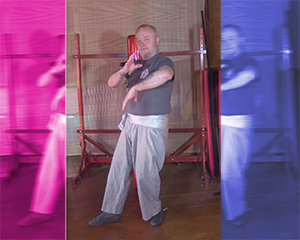
When I watch videos of the latest robots, the thing that impresses me most is their ability to keep Balance and Stability, even when being hit with a stick. It is pretty scary how good they are becoming.

We could do much worse than starting there.

First of all, let us be sure that we are talking about the same things, at least in the context of this post.

Balance is the ability to remain uptight working against no outside force other than gravity. 

Our weight is evenly distributed, and our spine is vertical.

Our body is aligned or “stacked’ in such a way that it is self-supporting and not held in place by using added physical strength to maintain it.

Stability is the quality of being unchanging.

From our Wing Chun perspective, this is especially the physical condition or feeling of self, what we refer to as “Body Being”, and to a certain extent the shapes we adopt when moving. 

Moving requires muscular effort, therefore, if we are moving, we are not in balance, counter-intuitively, this means that we are only in balance if we are still.

In the context of Wing Chun, where we constantly aim to minimise muscular tension, the implication is that the stiller we are, the closer to optimal we are, this is reflected in the principles of “Economy of Movement”, and “Minimal use of Brute Force”.

It should be quite obvious that being still is not the optimum position to defend ourselves from, but the theory is correct.

What we need is to establish a “Sliding Scale” with uninhibited free movement at one end and stillness at the other.

In a situation like this our training becomes more about this sliding scale used on our current knowledge than learning some IDEAL Wing Chun.

Training becomes about working with what we have and finding our personal “Goldilocks Zone”.

The way this Robot moves is the optimum way for a bipedal creature to move, and it looks like Chum Kiu.

It is clear that if we cannot stand up we cannot defend ourselves.

We cannot hope to achieve optimum Wing Chun without optimum Balance and stability.

FIST LOGIC

SEEKING THE COMBAT BRIDGE.

ARNHEM – A BRIDGE TOO FAR.

It is your journey and your choice.

Richard asked if I could put a post up to cover as much of Chum Kiu as I could, I am pretty sure it will be of use to a few of you.

First off, when listening to anyone about any Form from any style stay aware of the fact that a Form is nothing more than a structural framework that allows the concepts to be laid out in a way that makes sense to the right person at the right time.

In due course we will all interpret the information [any Form] in a way that fits the way we think and compliments the way we move.

Remain mentally flexible.

Let’s get to it.

What is the best way to approach Chum Kiu?

We can approach Chum Kiu in as many ways as we can think up, it can be super simple such as “How many new moves are the in Chum Kiu that I need to understand”?

The answer to this is just 2?!

Pivoting and Shifting.

Or we can dig deep into every nuanced interpretation and now there are millions of ways.

The best is, as with everything, start small and grow, from the super simple to the insanely complex.

It is your journey and your choice.

CHUM KIU- A CLOSER BRIDGE.

There are some personal picks from the archive below that will help your journey and save you making a detour into the past posts department.

FROM THE ARCHIVE.

Here are some earlier posts that will help with the work and the training of the aspects we explore with Chum Kiu.

I recommend reading the text to the posts as it sometimes adds clarity to the context of the video, but if you are stuck for time, as we all are, just watch the vids.

This is a pretty complete overview of the Chum Kiu application from the perspective of vectors, but it is quite long, Video duration 18 minutes. https://wordpress.com/post/wingchunsydney.com/1456

This is a medium length video that helps understand the transition from Crazy horse to Chum kiu. Video duration 09 minutes. https://wordpress.com/post/wingchunsydney.com/2064

This pivoting primer that is one of the best videos I have done for information transmission that can be easily used. Video duration 11 minutes. https://wordpress.com/post/wingchunsydney.com/1482

This post will also aid with pivoting. Video duration 07 minutes. https://wingchunsydney.com/2020/01/18/tension-and-torsion/

This post is mostly about punching but it has good instruction on Core Winding. Video duration 05 minutes.https://wordpress.com/post/wingchunsydney.com/509

This post is about the often overlooked aspect of sinking and Rising. An inherent part of all movement. Video duration 07 minutes. https://wordpress.com/post/wingchunsydney.com/2331

This post covers the summation of forces. The heart of Chum Kiu. Video duration 03 minutes. https://wordpress.com/post/wingchunsydney.com/2290

HOKKA HEY.
WHAT KIND OF DAY IS IT?
Uncategorized

BALANCE, STABILITY and COORDINATION.

If one moves they all move if one stops they all stop.

The most famous maxim in Real Estate is “Location, Location, Location”, the implication being that substance can be developed or improved later, in fact things can be demolished and rebuilt if the “Ground” we chose was fit for purpose.

In every style of Martial Arts this “Ground”, is the fundamentals of Self-control, the “Basics” of Human movement…

Balance, Stability and co-ordination.

Once developed this understanding is reinforced by an individual styles structure and philosophy.

It is one of life’s most curious enigmas that the people that would benefit the most from studying these basics tend to rush past them in pursuit of the so called advanced methods, ignoring older information for something newer without first reading the older information that they so obviously birthed from.

The stats for this blog tell me that very few visitors use the menu bar to explore what ,as the author of this blog, I think are the “Jewels in the Crown”.

Here is one of the posts that live in the Structure/Frame dropdown menu, this information is so central to everything else we do it could be used instead of standard training.

Balance and Stability:

Keeping it simple Balance is maintaining equilibrium when motionless against nothing but the Force of Gravity.

Balance is motionless, if we are moving it is more accurate to talk about Stability.

Stability is maintaining or regaining Balance against outside forces, including forces created by ourselves, as in our own movement.

Balance is motionless and Stability is maintaining or regaining Balance, therefore Stability is about remaining or becoming still.

Some confusion arises because frequently Stability is referred to as either Static Balance or Dynamic Balance, especially if we include coordination, in this context :

Static Balance refers to the ability to maintain the body’s centre of mass within its base of support, as in standing still.

Dynamic Balance refers to the ability to move the centre of mass outside the body’s base of support, while maintaining postural control as in moving.

Balance and Coordination.

 Dynamic Balance is the ability to stay upright or maintain control of body movement, and Coordination is the ability to move two or more body parts under this control, smoothly and efficiently.

As always the best approach is to do your own research and form your own opinion.

Three important principals of Balance / Stability.

  1. A broader base of support {wider feet} increases stability.
  2. Keeping the line of gravity central inside the support base increases stability.
  3. A lower centre of gravity increases stability.

From a Wing Chun perspective, the lower stances / positions of the Chum Kiu and Baat Cham do are more Stable than the higher stance / position of the First Form {S.L.T}.

Getting back to the previous statement that “Balance is motionless and Stability is maintaining or regaining Balance”, it is more useful to think that Stability is about remaining or becoming still, we can see that the movements activated through the various Wing Chun Forms are not so much about moving to or from an opponent but rather moving from one position of equilibrium to another, moving to a new position of Stability, they are about stopping.

This is an important factor in power production and in keeping with the Conservation of Momentum Theory.

If we use the Chum Kiu Form as our testing ground the cycle of movements should go from being still {Static Balance} through the sequence or movement of choice, for instance the lateral shifting with Dai Sau and Bong sau {Dynamic Balance} culminating in stillness at the completion of the sequence or movement {back to Static Balance}.

The movement of the arms adds extra complexity to maintaining Balance by introducing new vectors but the main take away for the arms is in developing coordination of the upper and lower body, the action should fill the same time period, both stopping and starting,  as the movement of the legs and waist. 

If one moves they all move if one stops they all stop.

The Wing Chun Forms are subtle and use minimal movement deliberately, because of this it can be difficult to observe the movements in detail, it is often easier and more effective to have stand alone exercises to study this, once we are familiar with the connections between Balance, Stability, Coordination and Movement the understanding can be transposed onto the various Forms.

BALANCE / STABILITY OVERVIEW.

BALANCE

POSTURE.

CORE ACTIVATION.

FIST LOGIC

3 BAGS OF CONCRETE.

If this is the case, which it could be, I would recommend immediately activating the “Nike Defence”, you know, run like hell.

Hi Guys,

You may wonder about the title of this piece and its relevance to self-defence, and believe me, it is relevant.

It stems from a conversation I held with our senior students Sam and Costas about the desire to develop more power, or simply put, ‘hitting harder’.

We have all noticed that lately there is a preponderance of videos on YouTube to this end, “How to hit harder”.

My position on this is that for Wing Chun students this type of video is not only of no value but holds the potential to undo all of our good work, let me try to explain.

The essence of Wing Chun, and many other “Soft Style” Martial Arts, is that we develop hitting power by naturally transferring “Body Mass” into a single point of our body and then onto a single point of a chosen target, not by physically trying to impart force by making a “Big Hit”.

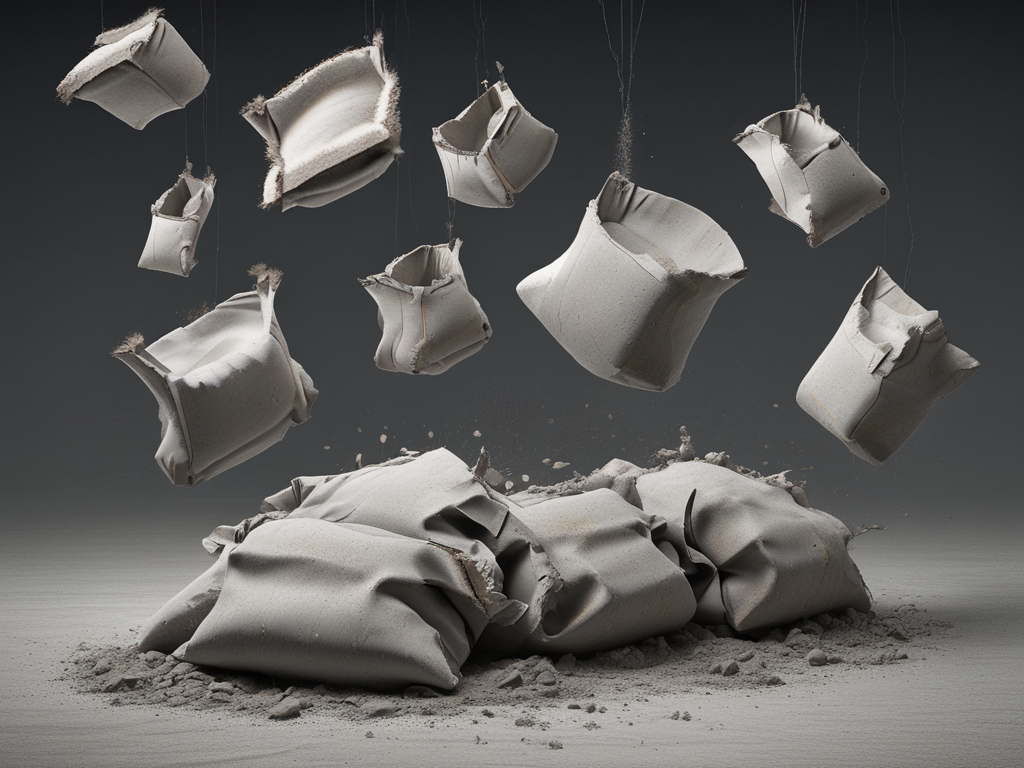
No one in my Martial Arts community is lighter than 60kg, as you all know I have always only taught adults. Here in Australia, a bag of pre-mixed concrete is 20 kg, so anyone that weighs 60 kg has the equivalent “Body Mass” of 3 bags of Concrete.

If we think that a 60kg guy cannot naturally hit hard enough, we are saying that dropping 3 bags of concrete onto an opponent will not get the job done?

If this is the case, which it could be, I would recommend immediately activating the “Nike Defence”, you know, run like hell.

Hitting someone shares the same science as any collision, and as such the force created is the sum of both forces involved, so if we are 60kg and the Bad Guy is 80kg {Bullies tend to be bigger than their chosen target}, the impact created will be the summation of both forces and closer to 140kg.

Which is of course 7 bags of concrete.

How is that not enough?

And again if that is the case, and it could be, here for sure, we use the Nike Defence.

To fully cover this topic we need to bring in some different concepts, which can end up in a bloated and somewhat confusing video, so I will break it down into smaller, bite-sized chunks.

This video is essentially just an intro.

Despite this there is a way for a 60kg person to drop 120kg onto an opponent without any extra training, yes you get it, hit them twice.

Which to me sounds a lot like what we train to do.

FIST LOGIC

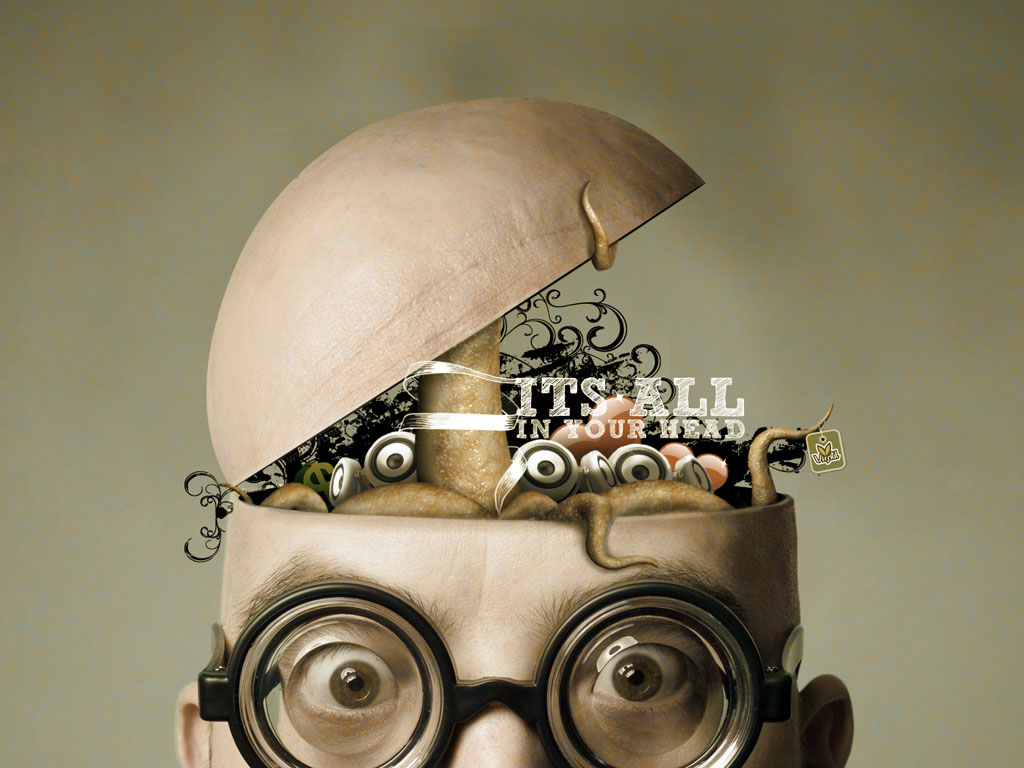
IT IS ALL IN OUR HEAD, BUT CAN WE GET IT OUT?

what on earth were we doing last year?

Hey guys.

The first video of 2024, and the question is how do we get what we think we got.

This is a very important topic, and not just for our Wing Chun, if you can do some research of your own.

Every new year our training should involve a new approach, if we need to cover old ground again, in the same way, what on earth were we doing last year?

WHAT KIND OF DAY IS IT?
FIST LOGIC

WING CHUN, PHILOSOPHY, AND DAOIST ALCHEMY.

quote

Hey Guys,

After training on Saturday, I asked the question of us all…

 ‘Why was it that the most talented of Kung Fu Masters came from either the Buddhist Shaolin Temple or the Taoist retreat of  “Wudang Mountain”?

This connection has for hundreds of years been pounced upon by the Right Wing, New-Age Charlatans claiming that Martial Arts leads us to the light.

That meditation and spirituality, not effort and conditioning, deserve to be regarded as the true secret to effective Kung Fu, and why it is so suited to the higher man as opposed to the thug.

That it is not about violence.

This has always been the selling point, even back in the time of ip Man.

Initially, it was an attempt to clean up the image of Kung Fu in the wake of the Boxer Rebellion.

But soon, as it sadly is today, it became a con to deceive unfit, physically challenged, lazy people into thinking that progress comes from good thoughts and relaxation, not, as is the actual way, through commitment and toil.

One thing that greatly aided the Monks and the Hermits to become highly capable was an abundance of time in which to train, and the inescapable fact that in their society if you could not effectively defend yourself you were soon eaten up by those lower men who coveted everything you owned, and cared not how they got their hands on it.

The Bandits ran amok through the Pearl River Delta.

Need does what needs must, even for Holy Men.

If we could put ourselves in the shoes of the Shaolin Monks, or, especially with regards to Wing Chun, the  Wudang Mountain Ascetics, there was obviously something besides just time to train that helped them excel.

Every action in their lives was an action that only dealt with the immediacy of the moment they were in.

In Wudang Taoism in particular, the essence of everything they did was mental focus and deliberation on the ‘WAY’.

This was reflected equally in everything they did and was not somehow specific to their Kung Fu as some would infer.

This adherence to the “WAY” is usually described as Taoist Alchemy.

But what we in this modern time think of as Alchemy, which has been so vilified by the world’s religions that it is considered to be a type of ‘Black Magic’ was not anything like what the Taoist Ascetics thought of themselves.

They were simply seekers of knowledge,  seekers after the truth of what they saw around themselves, Life, the Universe, and Everything.

Which of course included their Kung Fu.

It was not so much that they were trying to learn Kung Fu fighting, but rather trying to understand this thing they did on the deepest possible level, as just another method to follow ‘the Way’ even in the most chaotic moments and situations.

In many ways the physical aspect of Kung Fu fighting was not part of the process at all, it was just a way to engage with the subject of the study.

And this is very much mirrored in Wing Chun.

Wing Chun is about how to think about fighting, which has the happy result of us becoming extremely proficient at it.

Because there was never the pursuit of the fighting skill there is not a finishing point as such, there is never a moment where we can say. 

I am a Master.

There is always more.

Or at least the potential for more.

Those now referred to as Alchemists would have thought of themselves as Philosophers involved in understanding the Natural World, which all men are part of.

Natural Philosopher was the term in use before the coining of the term Scientist.

Plato was an Alchemist, and Pythagoras was an Alchemist.

The Church of Rome claimed that Leonardo De Vinci was an Alchemist and condemned him to death for his thinking.

Alchemical thinking is not anti-religion but it is accused of this by every religion.

We all harbor personal biases, that were planted into us at a very young age, which may make it tricky to engage with this IDEA, the IDEA of understanding the thinking of Alchemists as a way to understand Wing Chun, but it was this thinking that created it.

The thinking of the Alchemists was just that, thinking, it was never intended or envisioned as a replacement belief system

Anything we do intending to improve ourselves is the core of what we call Hermetic Alchemy.

Once we know the moves of Wing Chun this is the only way forward.


“The All is Mind; the Universe is Mental.”

THE KYBALION.

THE WAY THAT CAN BE SPOKEN OF……

FIST LOGIC

HIDDEN BUT NOT SACRED KNOWLEDGE.

Etymology… The occult (from the Latin word ‘occultus’; lit. ‘clandestine’, ‘hidden’, ‘secret’) is “knowledge of the hidden”. 

Hey guys, let me start by saying that there is no side to be taken with this post, no need to agree or disagree, it is just thinking out loud, and thinking should always be free to wander where it wishes to wander, and land wherever it wishes to land.

If you have done even the lightest study of Sacred Geometry you will see Wing Chun in the diagram at the head of the post, and as such there is nothing more for me to say.

If not read on.

This post has taken me more than 30 years to write.

And to be completely honest it has only crystallised in the last few years with my re-engagement with drawing and building sculpture.

If it does not make any sense at this time that is perfectly fine, just do not discount it out of hand because you do not understand it.

Something that I have told you all, in one way or another, is that we cannot hope to understand Wing Chun if we only use Wing Chun to try to understand it by.

In Neuroscience there is something called Gödel’s theorem.

This IDEA states quite clearly that no system is able to comprehend itself fully.

In short.. the brain cannot understand the brain.

As deep, nerdy, and perhaps even fluffy as this sounds it colours everything we see and think.

Which on the other side of the coin colours everything we think we see.

Wing Chun is a ‘CONCEPT’ driven martial art.

A concept is essentially an IDEA.

An Idea is a fundament of the ‘MIND’.

It is THINKING.

If we hope to understand Wing Chun as it was meant to be at its inception, surely we should start by trying to appreciate how Dr Leung Jan saw his place in the world.

To get some measure of understanding of the science and philosophy that permeated the society that Dr. Leung Jan was a part of.

Wing Chun was not a unique creation, it was a deviation from normal Kung Fu, a different type of thinking, a modernisation if we would like to think that way.

But its roots came from and cannot escape from the classical IDEA of Kung Fu, which itself was influenced by the philosophical cornerstones of Chinese upper society.

This strata of society possessed knowledge that was not common knowledge.

To the general population, it was looked upon as hidden knowledge, even secret knowledge. 

When these IDEAS are translated into Latin-based languages they are termed as OCCULT.

Etymology… The occult (from the Latin word ‘occultus’; lit. ‘clandestine’, ‘hidden’, ‘secret’) is “knowledge of the hidden”. 

In today’s common usage, occult refers to “knowledge of the paranormal”, which of course leads in the direction of ‘magical thinking’, as opposed to “knowledge of the measurable”, usually referred to as science.

It is so important to not conflate the modern IDEA of ‘knowledge of the hidden’ which always slips into magical or spiritual connotations, with the IDEA of ‘knowledge of the hidden’  from 17th century China, which for its time was actually science.

The Geometry and Mathematics of Chinese Architecture would have been considered occult thinking.

Gunpowder was a product of occult thinking.

It was not possible for their language to avoid being cloaked in what is now looked upon as spiritual terminologies, and spiritual theorems.

Whether we are pro-spiritual thinking or anti-spiritual thinking it is detrimental to our progress because BOTH lead us in an unintended direction.

Our challenge is to be able to connect today’s training to the thinking of 17th-century China, ignoring ‘New-age’ explanations and bring it into normality.

An example of how the ancients could translate religious IDEAS into secular methodologies that resonate with Wing Chun can be found in the Buddhist Heart Sutra that reflects…

Form is no other than emptiness.

Emptiness no other than Form.

Form is only emptiness.

Emptiness only Form.

If we can step away from even the lightest religiosity, this statement could be about the Sil Lim Tao, which in one old-world translation becomes the ‘Way of the Shaolin’.

Spiritual people living in violent times would, without thinking, use spiritual language about non-spiritual things, because that was simply how they spoke.

We should work diligently to not be moved in the wrong direction by words.

What was hidden knowledge to the ancient people of our world, and was still thought of as almost sacred in the time of Dr. Leung Jan is now taught to schoolchildren as a part of basic education.

Physics, Geometry, and Mathematics.

FIST LOGIC

THE NON-PHYSICAL SIDE, MIND BOXING.

All of our knowledge, all of our training and pretty much our only hope is in the ZONE.

There is an obvious contradiction when we try to talk about what we could/should do in a dangerous, violent situation, and then use a safe, non-violent situation, i.e. training, to explore this.

As Sam said at the end of training “It is really just about composure”, and that is bang on the money.

But we must ask ourselves, ‘how can we practice regaining composure in a safe training environment where we are, if nothing else, composed’?

Even a style that uses full-contact sparring has this problem, we can always walk away if we are not having fun.

Believe me, being on the wrong end of a kicking is in no way fun.

Walking away is simply not on the table, running perhaps, but even then we need to engineer our escape.

And to do that we need as much composure as we can muster.

How do we develop composure?

How do we regain composure in a Shit-Fight?

Once regained how do we maintain composure?

No matter which style we train, it is just not possible to come close to the reality of this in training, there is no other choice but to imagine it, to set up scenarios where we can play-act what we think will go down.

This is not as bogus as it may first sound, reality only happens ‘in the moment’, and after that it is stored as memory.

Neuroscientists have shown us that the human brain sees memory and imagination as the same thing.

And all of the ancient wisdom traditions tell us that “We are what we think”.

Since the time of the Stoics in ancient Greece, the philosopher Epictetus told us that how we think changes how we feel, how we feel changes how we think, and that they both affect how we act/ behave.

In today’s psychology, this is the core of Cognitive Behavioural Therapy C.B.T.

As you know I am not a supporter of the notion of “Internal” Kung Fu, by which I refer to the act of generating a force from an unknown origin to power our attacks, to me, is just magical thinking.

But there is, beyond doubt, a non-physical side to training that should not be ignored.

Only a fool would say that fighting/violence is a purely physical experience.

There is a definite emotional aspect and a definite mental aspect, that we simply must find a way to accommodate.

For ease of explanation, I refer to this emotional/mental aspect as “Mind Boxing”

I do not use the term Mind Boxing because I can somehow box with my mind, that is just as bad as any other kind of magical thinking, I call it Mind Boxing because I believe we need to observe, understand, and train our minds as a separate, yet inclusive, part of our {Chinese} Boxing.

I believe this topic to be so important that I have a stand-alone website CLICK HERE.

To paraphrase and contextualise Epictetus…

How we feel in a violent situation will influence how we think in a violent situation.

How we think in a violent situation will influence how we feel in a violent situation.

They will both, in their own way, influence what we do in a violent situation.

It is important to not only accept this but to also understand that the quantity/quality of the effect of how we think and the quantity/quality of the effect of how we feel when under pressure is a sliding scale.

As such no one-size-fits-all solution.

The challenge becomes ‘Can we come up with a generic method that can provide value for all of us’?

We are not alone in this quest, every Elite Sportsman knows this search and luckily for us the Internet is awash with information from Sports Psychologists to aid in eliminating, what in less dangerous environments, might be referred to as ‘performance anxiety’.

To take a leaf from the book of Sports Psychology we need to create a template that we can slip into whenever we need to perform a specific task.

This is where a layman’s understanding of how our Mind works becomes essential to progress.

Everything happening to us ‘in the moment’, all stimuli, are processed by our short-term memory.

The short-term memory is our director, our captain, it calls the shots.

But the short-term memory has minimal storage capacity, by some estimates, short-term memory can only hold around seven items of information at one time. 

Anything deemed not mission critical is shunted off into storage, into our long-term memory, where the brain permanently stores the information for future recall when necessary.

How we deal with what is happening right here, right now, right in front of us is the remit of our short-term memory.

But if we get in strife and hope to call on our training we need to access long-term memory.

While we are actively training all of our training information is stored in our short-term memory, but as soon as we leave to go home that info is moved to long-term storage.

When we think about an elite sportsman playing flawlessly, and effortlessly, we say that they are in the ZONE.

Being in the ZONE is being in unobstructed, unfettered contact with our Long-term memory.

How do we access the ZONE when we are in the middle of an active shitstorm?

Because this is more important than anything else.

All of our knowledge, all of our training and pretty much our only hope is in the ZONE.

And as the ‘Brown Becomes Airborne’, we are not.

If we return to the Sports world we see suggestions of setting up cues or triggers, single movements or thoughts that call up complex actions, and complex movements without complex thinking.

If we think about our computers, we click an icon or an alias to open a program.

Addressing the Ball in Golf, preparing to take a penalty in football, waiting for a delivery in cricket, taking a set position in a foot race, and waiting to return serve in tennis are examples many of us will have experience of from school if nothing else.

In these ready positions, the emphasis is as much on setting the tone of our emotions and settling into a pre-trained mindset, only once we are happy that we have adopted these positions do we engage in our trained skill.

Self-Defence Martial Arts are anticipating being surprised, but I think we all know that we cannot expect the unexpected.

The only thing we can expect is some level of surprise/shock.

Do we have any IDEA how to move into and adopt a ready position whilst in a state of surprise/shock?

HOW WE FEEL CHANGES HOW WE THINK.

HOW WE THINK CHANGES HOW WE FEEL.

THEY BOTH CHANGE HOW WE ACT.

EPICTETUS. 130A.D.

WHAT KIND OF DAY IS IT?
FIST LOGIC

FORMS ARE JUST MOVEMENT, IMPORTANT MOVEMENT, BUT STILL JUST MOVEMENT.

Rule #1, move as well as a normal person can move when they are just being normal.

Hey Guys, picture this.

We are watching a sporting event, pick your favourite flavour on this, and one player catches our eye, they are not doing anything outrageously special, but everything they do is effortless, smooth, focused and uncluttered.

Our thought is that this person is an elite sportsperson.

Why?

Because they move so well.

This thought exercise holds true for any sport, so it is obviously not the movements themselves, after all, different sports use different actions.

Rule #1, move as well as a normal person can move when they are just being normal.

As I mentioned, different sports use different moves because they have different goals and agendas.

So do different martial arts.

But in their hearts, they are all just the same human movements.

The takeaway from this thought experiment is that nothing we do will be of any benefit to us if we do not move well as a person.

Despite the hype around Wing Chun Forms, they are just our IDEA of a normal movement that meets our specific needs.

FIST LOGIC

FIRST BEATS FAST.

like most of the posts on FaceBook this sounds good, but, it is actually Bullshit.

Hey Guys,

Just a quick post to keep in touch.

Sam, Costas and I were working on stuff on Saturday that I thought was quite important to share, we lost the sound early into the piece so there is no commentary on the practice, all the same I am posting a few frames of what we did, with a bit of Timo Mass playing, to seed the water so to speak.

We will revisit this on Thursday evening so if you can, be here, and get all the information instead of just about 5% which is all we really put in these videos.

The heart of this matter is a better understanding of the whole idea of being fast.

Mark Zuckerberg once stated that his motto for Facebook was “Move fast and break things”, like most of the posts on FaceBook this sounds good, but, it is actually Bullshit.

what moon?