If we simplify wing Chun the training objective is to minimise incoming force while maximising outgoing force.
This is a game of opposites, accept incoming force with cotton and issue force with steel.
All techniques and strategies pay fealty to this IDEA.
Our concepts are suggestions and not directions, this leaves a great deal of room for interpretation, adlib, and creativity, but it also leaves us open to misunderstandings and working against ourselves.
One concept, ‘Wing Chun does not use Hard Blocking’ is a potential misunderstanding.
What is a ‘Hard Block’?
We could ask ‘How long is a piece of string”?
So what is a Hard Block? A ‘Hard Block’ is a clash of Arms.
Question.
Is there a time and place of contact where we move from Soft Block to Medium Block?
Or a transition from Medium Block to Hard Block?
The term ‘Hard’ is an infinitely variable metric that can never be in the same place on two successive instances or be the same quality or amount of HARDNESS for two different people.
Blocking is contact, and contact is a clash.
And clashing invokes the Law of Action/Reaction.
It is a shared event that is determined by two separate sides.
We need to re-explain this Concept as Wing Chun does not Clash with our opponent’s Arms.
One of the most overused cliches in Martial Arts is that of building a House.
When building a house, there are hierarchies that if avoided or approached out of order the task becomes infinitely more challenging.
We could for instance begin by building a roof, then suspend it and build walls down from that roof.
There is no getting away from the fact that a house is made of a roof, walls and a floor, eventually, we need to create all of these to have a house.
Conventional wisdom, and more than likely experience, favours building a slab, erecting walls, and then adding a roof.
Learning Wing Chun is just like building a House.
We can work on and learn the Forms in any order we choose, but some ways are easier than others.
As wildly confusing as it may sound approaching Wing Chun as a Martial Art in a physical sense is beginning by moving in the wrong direction.
It is not possible to learn the truth of Wing Chun by studying shapes and movements alone, the shapes and movements that are most commonly used are, in all truth, shapes and movements taken from other styles that were popular at the time.
We could just as well use any known style.
Shapes and movements are important, but as keys and not as weapons.
The shapes and movements open doors upon practices that refine and improve those same shapes and movements.
I genuinely believe that we could begin our study of Wing Chun with any of the Wing Chun Forms, even including the Mom Jan Jong, but just like the house, it is easier if we start with a good foundation.
This foundation is what I refer to as ‘CRAZY HORSE’, a device to hang the clothes known as Sil Lim Tao, Chum Kiu, Biu Gee and Mok Jan Jong on.
Once we have developed ‘CRAZY HORSE’ we could well start with Bill Gee.
But staying with the house-building analogy for a moment, to achieve good foundations it is vital that we build on solid ground.
The ‘solid ground, that we build on in Wing Chun is a previously learned skill set.
If we do not have a previously learned skill set then it stands to reason that we first must develop one.
The physical aspect of Wing Chun training, the aspect that so many people, especially YouTubers, think is what makes up Wing Chun, you know, the making contact bit, is nothing more than the setting up of solid ground to put our foundations on.
The real work begins once we have shapes we trust, once we have an effective way of moving.
In short, the real work begins once we know how to fight.
The video below quickly became longer than I intended so I will cover the manifestation of weight and how to use it at a later date, it is a really interesting and powerful topic which is relatively easy to grasp.
The audio volume in the following clip is a tad too much so lower your volume before clicking the play button.
All we need to do is step to the side as we poke the “Bad Guy” in the eye.
Yo Tribe,
Q… Am I a skilled Wing Chun Master?
A… Yes.
Q… Am I a skilled videographer?
A.. Sadly, no.
Yet again I failed to record what was a truly remarkable training session this past Saturday morning.
I am so lucky to have 3 students that are Master level in their own right, lucky to have 3 students that genuinely love digging into the minutiae of what makes this thing we spend so much time on work to its fullest potential.
However, I am dead set cursed that I care more about teaching than filming that teaching.
In the future, I will forego trying to record live training and do pre-set-up videos.
In this piece, I am using an old video of Sam and James on how to fine-tune positioning.
Successfully surviving a violent encounter has nothing to do with technique, it is not Tan Sau to Bong Sau to an Elbow strike, it is not about style, structure, power, or even speed, it is not about defending, it is not about attacking, all of this STUFF is useful, very useful, but is made redundant by ignorance, by not paying attention to the things that count, the Nitty Gritty.
And the Nitty Gritty is understanding the relationship and the interaction between two bodies in space.
From a training perspective, this means internalising the Concepts that govern the interaction of two bodies in space.
Pushing a car, hanging out the washing, throwing a Frisbee, or fighting Desperate Dan are equally governed by these basic concepts.
Once we have this down, everything just works.
It does not matter how powerful, fast, or devastating an opponent’s strike is if it misses.
Defending is simply a way to make the “Bad Guy” miss.
It also does not matter how soft, slow, or innocuous my own strike may be.
If it lands without any disruption I am in the box seat.
If I poke my attacker in the eye with my little finger the resulting spinal reflex action that their nervous system triggers will leave them open and defenseless for what comes next.
HERE IS SOME SECRET KNOWLEDGE…
All we need to do is step to the side as we poke the “Bad Guy” in the eye.
How hard is that?
But most people will not do that, it is too easy, and they think it will not work because they think there is more going on.
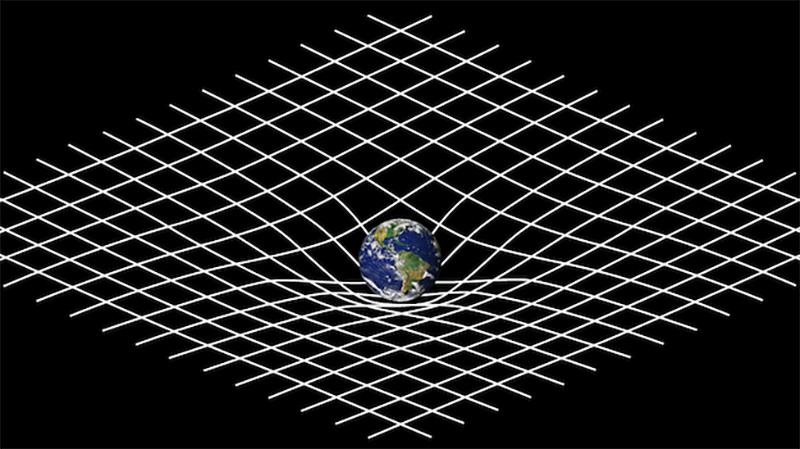
The Earth and everything on it warps the fabric of space and time.
No matter what we may think we are doing there is something happening that is real, measurable and usually contrary to what we think we are actually engaged in.
Body Alignment for instance, is an important topic in any Martial Art, most styles have their own particular approach that is usually played out in different stances and movement patterns, but in this Universe the only thing we ever align ourselves with is Gravity.
Because we have lived with Gravity for every second of our lives we tend not to notice it, and we need to.
Gravity infuses everything we do, constantly.
Gravity is pulling us down towards the centre of our planet’s mass, the reason we do not end up flat on the floor is that all of our collective body parts are FALLING into our Feet in such a way that they stack up on top of each other to create a balanced structure. This is the same with buildings, trees and even mountains.
In most Martial Arts the first learning objective is to be able to stand in this Balanced State that prevents us from falling over, there are numerous ways to achieve this, but they all have the same Goal.
Aligning ourselves with Gravity so that all of our weight FALLS into our Feet.
If our balance is correct we will not require any tension to hold us still, if there is tension then you are not in balance.
This is easy to test, just stand still.
If you are out of balance you will use tension to stop you from falling, this will fatigue the Muscle providing the tension, when this happens your body will independently move to a new position that will also be out of balance and require tension to prevent falling over, you see this all the time, people shifting from one leg to the other, mostly unaware that it is even happening.
It is easy to think that we use the Muscular Tension to hold us IN balance, but this is incorrect, the tension is holding us out of balance.
When we are in balance there is no need for tension.
Gravity is always pulling on us, if we do anything to work against this we are fighting force.
Think deeply about that.
If you are engaged in anything except allowing all of your Body to sink down, to drain into the Earth, you are fighting force and cannot possibly be relaxed no matter what you may think you are doing.
Once we have established balance and stillness it is time to introduce movement.
All movement is a result of our interaction with the Planet, all power comes from our interaction with the Planet, being still is a result of our interaction with the Planet.
The first moves are usually small, minor, often just an Arm, if my movement takes any of my weight out of my feet, if it in any way interferes with the constant sinking into the ground of every part that is me then it is no longer working with Gravity but is in fact fighting it.
Wherever I may choose to move it the weight of my Arm, my Feet must go to, or at the very least the action must not take anything away from my feet.
As difficult as this is to imagine if you think deeply on it you realise that there is no other way if we are to remain in unity with Gravity.
Take 20 minutes every day for a week to think deeply about this, take notes discuss it with friends, use what you discover to examine what you think you know, examine what you think you understand.
It is not about me being right or wrong, this is the way our Universe works, agreeing or disagreeing will not change the reality of our Cosmos.
When you understand …… things are just the way they are.
When you do not understand …… things are just the way they are.
When we move we must move with Gravity, so every move begins as a downward move.
My foot presses the Planet, and the Planet presses back.
Even when I am standing still the stacking of my body that allows my weight to fall into my foot creates this press.
When still my foot presses the planet, this is the fundamental connection.
The more aware of this you can be, the more you can accomplish with it.
The most important aspect of any stance or any movement is the relationship between our foot and the Planet.
When engaged in Chi Sau, a dynamic drill that encompasses both accepting and issuing force, we lose all idea of gravity, it is now just Chi Sau, for Chi Sau’s sake.
is it even possible to monitor how we are dealing with gravity?
Ultimately if we lose our control of, on, or with gravity, whether we are in a violent situation or a training situation, nothing we attempt will be successful.
My teacher would often come up to me when I was engaging in Chi Sau with a schoolmate and ask “What are your ankles doing”?
A quick aside regarding the video below, especially for any guests that may get confused with this type of training, but also for students who forget that there is a step after this, the step where we develop our own way to turn this IDEA into a practical, physical application for use in a chaotic violent situation.
It should be no surprise to learn that our nervous system is seriously invested in our survival, and as such it will override our brain {and if it deems it is necessary to ignore our training} when it comes to deciding how fast we do things, it will however naturally strive to at least equal the speed of the incoming strike, so it is more important that we are moving with a smooth, even rhythm that can be upsized to suit our needs.
All of our training is a method to physically represent the IDEA behind the work, it is not techniques, it is Wing Chun Science if you would, our Fist Logic.
Isaac Newton, the greatest of all Wing Chun elders, taught us that it takes more effort to make a still object move than it does to keep something moving or even speed up that movement, think about pushing a car.
Any IDEA that we can make work against a static object/training partner will work even more effortlessly against a moving object/training partner, and never forget that speed is just a metric.
This video is just a record of a normal training session, we are working on understanding an aspect of “The little IDEA” and as such see how our “Fist Logic” works in any shape, from any position in any situation.
Chi Sau is a game that we play by our own rules to get an outcome that we alone wish for, for reasons only we know.
Growing out of the last post and the premise that “if we do not know what we are looking for we will never find it”, here is a re-run from just after the first lockdown, it will help us move back into trying to establish some form of an understanding of what to look for in our training, I will cover this over the next few weeks.
Chi Sau is a game that we play by our own rules to get an outcome that we alone wish for, for reasons only we know.
In this way it is both remarkable and hopeless.
I think it is remarkable.
Many years ago when I was getting Tennis Instruction from an Australian National Coach, I was informed that we can only ever learn what we already know, which explains why I never made it to State Grade, but what does it tell us about our Chi Sau?
If what we do does not affect the bad guy what is the purpose of training/using it?
“The most difficult aspect of Wing Chun is accepting how simple it is”.
Hey Guys,
I have been using Youtube a great deal lately, and as such the recommendations that the YouTube algorithm throws at me daily have included many Wing Chun offerings.
At its heart, Youtube is just a self-promotion/ advertising platform, and as such what is offered frequently exists on very different levels of honesty from our everyday lived experience.
Especially in the realm of Wing Chun.
But we all watch Youtube and it has a disproportionate effect on our views and opinions.
When watching anything on YouTube we should think “Buyer Beware”.
The following Video is more me having a conversation with anyone that is willing to listen than anything else, however, if you can understand what I am talking about it may help your training exponentially
A couple of the things I remember my Sifu saying to me may help you navigate this video.
“The most difficult aspect of Wing Chun is accepting how simple it is”.
Jim Fung
“There is no reason to pressure ourselves about learning Wing Chun because we already know everything there is”.
Jim Fung
As a Wing Chun practitioner, I get upset when people from other styles bag us out and say we are nothing but con men selling nothing but false hope.
I know first-hand how good Wing Chun’s Fist Logic is, but I also know how much of what is called Wing Chun by the mainstream, is just a diluted and misunderstood version of what we do, designed for no other reason than to protect the rice bowl.
I truly, truly feel for people that spend years upon years looking at their Finger, and missing the Moon.
The really sad thing is that when you point these things out to the finger watchers, they feel that they have too much invested to change.
My Sifu was a very smart man and he was spot on with his observations.
Actively working on combos is, in my opinion, just training us to be impatient.
In the Bruce Lee film ‘Enter the Dragon’ when talking about being defeated the character played by Jim Brown says “WHEN IT COMES I WON’T EVEN NOTICE, I’LL BE TO BUSY LOOKING GOOD”.
Without intention what he is referring to is that if we are looking good we will probably lose, we are just dancing, a winning physical interaction is at best messy, usually downright ugly, but most importantly, it never looks GOOD.
As madcap as it sounds, when watching a movie or video clip if it looks like it would work in a real situation, it will more than likely fail.
But we are all human and get impressed by dance moves pretending to be fighting.
But if shit happens my advice is, ’don’t dance, just fight’.
Chi Sau training, when it is valuable and practical, from the outside will always look messy and weak if it looks good it is because we are succeeding in doing something our partner cannot counter.
But that is a fighting mentality, that is us trying to do something to our opponent, great fun and a big part of the Chi Sau game, but it is also the trigger for the trap.
The thing we really want to learn is how to prevent our opponent from doing something, anything, to us.
If we can negate our partner’s attack and open them up we can do anything we want at any time, this is the core of Chi Sau training, this is understanding how to transition from being attacked.
In training exercises, we are working on implementing one specific IDEA, but if we hope to prevail against an attacker out in the wild it will need multiple IDEAS.
Skill, ability, and effectiveness are governed more by transitions than combinations.
Perform one skill correctly then rapidly transition to another skill and do that correctly, rinse and repeat.
We can only transition between skills if we see them as individual skills, and as such we must train them as individual skills.
Actively working on combos is, in my opinion, just training us to be impatient.
Looking at this video it is tempting to say that what is going on with these guys is weak, not very good W.C. and would fail if we were in trouble.
But the truth is that this is very powerful training, the guys are staying in control of their shape, and their balance, not losing their composure and not trying to win when the win is not there.
This is what wins a violent conflict, not techniques or even power.
Control ourselves, stick to the plan, and trust the work and what we know.
“Your mind is a battlefield, be its commander, not its soldier.”
the overriding intention is ‘do the work, do not hang around, go home’.
It appears to be that time of year again, the time when Kung Fu Masters choose to step into an arena to battle fighters from other disciplines.
The clip I have here was recently posted to our WhatsApp group by Sam, it is a Kung Fu Master vs a youngish Female Boxer.
The difference in age, build, and weight is quite significant.
The only info I have of the two fighters is what is given in the video, but I have no reason to doubt the commentator.
The usual approach is to bag-out the Kung Fu guy for not being the second coming of Bruce Lee and generally covering him in scorn.
But why?
Even though it has been well over 40 years since I took someone on competitively, I remember the nerves stepping through the ropes, or onto that mat.
This ‘caper’ is not for the faint at heart, and we should at least give them some respect for this.
When Kung Fu practitioners talk about these events there is the suggestion that none of us cares about these fools and the games they play.
If that is the case why are the comments so brutal?
We do feel it, deep inside, we do get embarrassed, and feel ‘Tarred with the same brush’, and with a certain percentage of students, this creates a sense of doubt.
But I ask you, doubt about what?
Doubt about our ability to hold our nerves when we step into an area with someone that wants to hurt us?
Doubt about our conditioning to chase that someone around a ring for 15 minutes?
Doubt about our capacity to ignore punishment and carry on when the other fighter hits us?
This is not what we train for, so where does this doubt come from?
We should simply not go there.
What Kung Fu, and any other self-defence-minded Martial Art trains for, the environment we will find ourselves in so to speak, is a very short, very intense, unprepared-for attack.
The thing that makes this environment so difficult is that we will, to a certain degree, be caught out, be surprised, be shocked, the thing could be over before we know it has begun.
However, if we can reverse the flow, and surprise or shock our attacker, then the path ahead becomes much easier to navigate.
This is the concept of counter-attack, this is what we train.
It is not about swapping punches, is about turning tables.
If we look at the video we should ask ourselves….
Q. #1. Where are the Kung Fu skills?
All we see is an apparently untrained brawler trying to face off against a moderately trained boxer, which begs the obvious question…
Q. #2. Why is this trained Kung Fu Master choosing to brawl instead of using Kung Fu?
All Kung Fu styles, but particularly Wing Chun, operate from a position of responding to someone attacking us, that is the whole IDEA of self-defence.
It is hard to access self-defence IDEAs if we are the ones doing the attack.
If we look at this fight through the lens of our own ‘FIST LOGIC’ it is the young boxer, if anyone, that is employing Kung Fu philosophy.
This gets down to something I have been banging on about for years.
Kung Fu, and especially Wing Chun Kung Fu, does not fight.
Let’s spend a minute and clear this up a bit.
What is a fight?
A fight is an event where 2 people openly attack each other, that is it in a nutshell, attack, attack, attack, usually the closest anyone gets to defending themselves is through evasion.
‘Fighting‘ is not what Kung Fu prepares for.
What type of event does Kung Fu prepare for, and again, specifically Wing Chun Kung Fu?
It trains for an unwanted, unexpected, violent situation, and the goal is to get out of there as soon as possible, with a minimum amount of damage.
Obviously, to escape we may first need to incapacitate the attacker, but the overriding intention is ‘do the work, do not hang around, go home’.
Choosing to engage with another person in a fight, or trying to get ourselves out of an unwanted situation are two completely different environments with very different needs, and very different outcomes.
For every environment, there is an optimum way to interact with that environment.
Trying to use self-defence IDEAS for fighting is just choosing an inappropriate means of interaction with that environment.
A bit like Ballroom dancing in a wet suit and flippers.
I am sure someone could make it work, but why even try?
The skills we need are much less specialised physical skills, and more the ability to pick the right tool for the job.
This comes down to understanding what that job is, for example, are we choosing to fight someone as if duelling to defend our honour?
It comes down to detailing the outcomes we wish for, for example, are we looking to prove a point and set someone straight or just get out of there in one piece?
But most importantly, it is deeply understanding the capacity of what we are training to get us the results we want to get.
The video below is quite long, you will get what I am going on about in the first few minutes, but it is worth watching it all.
As always if this creates any kind of confusion we can do a training session to focus on this aspect.
Men occasionally stumble over the truth, but most of them pick themselves up and hurry off as if nothing had happened.
To a large extent, we don’t need to, because Dr Leung Jan found himself at this very juncture and made that call for us.
As someone that completed an apprenticeship, I have first-hand knowledge that the things I was expected to learn to get my Trade Papers, were things that were of limited value out in the field.
I would imagine this holds true for every trade, every profession, and every discipline.
Apart from anything else the outside world moves on.
After years of use, not overnight, inherent deficiencies in the old method come to light and because of this, the training IDEA gets seriously modified, if not abandoned.
Training is, by its very nature, years behind what is wanted at the ‘Coal Face’.
Fortunately, when we do enter the workforce, we are surrounded by journeymen that are up to speed with the job at hand and a new phase of training begins.
When we sit down and think about it, training in any discipline or subject is never enough, it is just a bridge to get us from where we are to where we need to be.
And if we are still actively training, we are not there yet.
Well, that’s awkward, please continue.
Two things become clear…
1. Because the outside world moves on, it is required of us that we are constantly trying to keep pace with it.
2. As situations change our job changes, and as our job changes our training must change or we get left behind.
In the workplace whole Industries vanish, factories retool, and workers undergo re-training in a new field, this is what we all know to be true and has been a constant since the beginning of the Industrial Revolution.
Do we really miss Steam Trains?
When we think of this and then turn our thoughts to the suitability of our ‘Old Training’, things like, where it came from, what its was intended for, and measure it against what is needed in todays world can we be objective enough to be honest?
To a large extent, we don’t need to, because Dr Leung Jan found himself at this very juncture and made that call for us.
When it comes to problem-solving and decision-making, the clunky, heavy bits, like machinations, applications, and fabrications all change, but something ethereal remains.
The one thing that puts Homo Sapiens at the top of the tree remains.
The ability to engage in reasonable, analytical, logical thought remains.
Our ability to take old, perhaps outdated information and change it into a new IDEA.
A new way.
A new answer.
But here is the “GOOD NEWS”.
When all we need to change is our thinking there is no need for a wholesale retool, no need to abandon all of our previous hard-won skills.
At its heart Wing Chun is a set of IDEAS that sit inside the boundaries of…
Directness,
Simplicity,
The Economy of Movement,
Non-Use of Brute Force
Practicality.
If we can engage these concepts along the lines of De Bono’s6 Thinking Hats they become timeless, malleable and always fit for purpose.
Any method that abides by these principles, irrelevant of source or intention, as if by magic, becomes Wing Chun, so in practice, there is no set M.O.
With no set or default method, the catalogue of commonly used, practical techniques, is, to be expected, somewhat fluid.
Wing Chun is constantly improving, always starting anew.
Continued growth along a set path or set direction is evolutionary.
The ability to change in any direction, along any path, which I.M.O. is ground zero for Wing Chun, is revolutionary.
Wing Chun translates into English as “Everlasting Springtime”.
Spring is the season of rebirth.
Wing Chun could just as easily be translated into ‘Never Ending Rebirth”.
Continuous improvement and continuous growth are fuelled by change and pragmatism.
In true Mandalorian spirit…
THIS IS THE WAY.
This is why there are so many different styles and training methodologies in Wing Chun, and yet they are all Wing Chun.
To less experienced students that are looking for, hoping for, guidance, secret knowledge, or perhaps a splash of special sauce, this could be a concern.
However, for more experienced students who know in their hearts that a punch is just a punch, this becomes a 2Ltr bottle of Special Sauce.
As I mentioned in the last post, there must have been a first-ever violent confrontation between two men, so whatever they did, even though it had never been done before, became normal human behaviour because it was being done without outside interference or coaching.
By normal human beings.
As simple as this sounds it is not not all plain sailing.
Even with our eyes wide open ‘Training’ can become a trap.
An invisible, imperceptible trap, that we build with nothing but good intentions.
It can become the antithesis of what we think it is.
None of us are safe from this, we are all prone to fall for this trap, even Instructors and Masters.
Come to think of it especially Instructors and Masters, at this level most practitioners have forgotten why they took up the training in the first place.
Avoidance is impossible so we need a key, a file in a Cake, or a get-out-of-jail-free card.
For Dr Leung Jan, who was only interested in finding a way out of his own trap, Wing Chun was that get-out-of-jail-free card.
But what do we use?
If learning and understanding Wing Chun has become the reason we train, Wing Chun has become the trap.
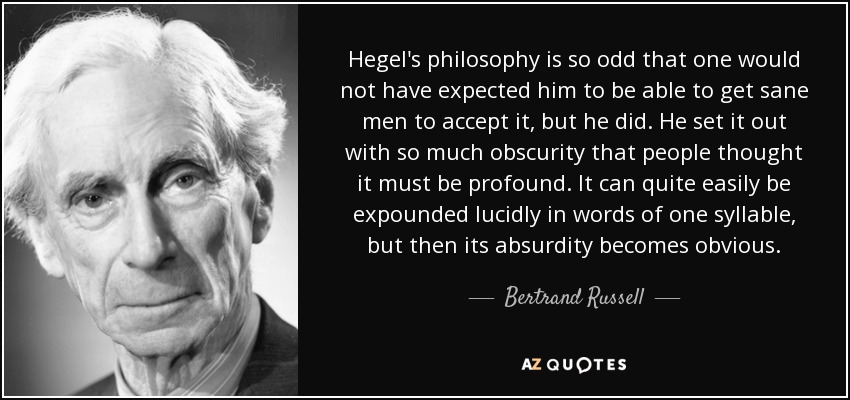
Perhaps we should stop reading the Kuen Kuit and start reading Hegel.
History teaches that people have never learned anything from history.
We do not help our training partners by not putting them at risk
HEY GUYS,
Watching Sam and Saleh rough-housing the other day reminded me that training with someone of a much lower level should be embraced by the more senior student for what we can learn about ourselves, and not just considerd to be a teaching or mentoring situation.
Apart from being fun for all involved, it allows the senior to get an IDEA of how easily things could work against an ordinary, potentially lesser-skilled person {which would describe the average Bad Guy that is likely to attack a complete stranger} to get almost real-world results without all of the shit that comes with violence.
For the Junior training partner, as long as they do not have a loss of confidence it can allow them to see where continued training can take them, that progress stems from a better understanding of objectives that leads to better outcomes and not just trying harder, and that power comes from the correctness of application.
Seniors students do the same things but the results are poles apart.
However, progress is easier to attain if we are on a level playing field that offers no easy excuses.
As difficult as it is to imagine it, there must have been a time and place when the first violent exchange between humans took place.
So the first question that arises is, ‘what style did these two guys use’?
And then the thought of who taught them?
Obviously, no one taught them, after all this is the first-ever fight.
Whatever they did was instinctive, and innate.
The rules of natural selection would lead us to think that the Victor of this first-ever fight was whichever person was bigger, faster, stronger because when all else is equal these are the advantages that make a difference.
As is usually the case payback was hoped for but the loser, let’s call him Man #1 now had to find a way to overcome the advantages that his opponent had, let’s call him Man #2.
For instance, as a means to negate the superior reach of his opponent Man #1 chose to use his leg to reach in under the incoming punch.
Or perhaps Man #1 chooses to use better movement choices before engagement so as to be behind Man #2 and be able to attack from a safer position.
In short, the first fighting style was formulated,
Martial Arts had begun and the goal was to negate the advantages that Man #2 had over Man #1.
This is of course the goal of every organised fighting system.
To overcome any of our opponent’s advantages.
Somehow this gets lost, and it becomes about overcoming our own perceived disadvantages, and how we can improve our perceived disability.
We lose sight of it being how we can avoid things being done to us.
But somewhere inside we know that everything is about dealing with the other person’s advantages.
So as we improve somehow the threat we think we will face escalates.
Mysteriously Man #2 has also been training, the unknown threat becomes greater so that Man #2 is always better than us.
As long as we are thinking about our own lack of ability we are not working with a reference that has relevance in any potential reality.
A question we should ponder is ‘If we do not know the ability of Man #1 how can we avoid it’?
Without some level of understanding of this conundrum, it is quite possible that we are about to spend 20 years becoming the best in the world at the wrong thing.
We could be the world’s best grappler and get knocked out by the first punch.
We could be the world’s best striker and be immediately taken to the floor and choked out.
We could be the world’s best grappler and striker only to be hit in the back of the head with a stick.
When we become our own frame of reference, focusing on only our own ability all we do is feed our fear.
After all, if we have no IDEA of what Man #2 will do we are always stepping into the unknown.
That is the one thing everyone fears.
No matter why we began training in Martial Arts, or why we continue to train in Martial Arts the Martial Arts themselves have just one purpose, one desired outcome.
This ‘OUTCOME’, is the IDEA we are trying to understand through our training.
But we can get lost and begin to think that training is all about the method of achieving that ‘OUTCOME’.
This approach to training becomes a trap.
Can we avoid this in training?
For one thing, we could change how we describe to ourselves what we are planning to do and learn to avoid, not defend, the most common attack that we think there is.
Even when I do use a technique to defend myself If I engage Man #2s incoming strike I am avoiding being hit.
We will all have our own thought about what this attack may be, but there is always one that we worry about, one that tests our confidence.
Here is the hard bit.
Then we must give our training partners permission to do it to us, a complete free pass, at first within comfortable speed and force parameters but it must be done in a way that if we do not avoid it will making contact we will be hit.
When we play the agonist, the attacker, we do the same thing for our partner.
This is BEING A GOOD BAD GUY.
If both partners are of similar skill levels, and both commit to BEING A GOOD BAD GUY, the action/reaction of attack/defence will be the same from both sides.
The training objective and what we are trying to observe and understand in this exercise is how difficult it is, even when we try our best, to land a blow on someone with our type of training, even at our current level of training.
As I said at the beginning, seniors and juniors do the same thing, seniors just do it better, so our current level is always good enough.
This is inside-out training in many ways.
Here we are, the Bad Guy, trying our best to succeed but all the same failing miserably.
This is the aim of this exercise.
The harder we try, the more we fail, the better the proof that what we do has merit.
Think about it, if I try to land a true strike on my partner and he can prevent it then it stands as proof positive that the training works.
To be of value we cannot go easy on each other, it must always be as real as it can safely be, there should be a little uneasiness, a level of doubt.
A proper punch, even at half speed and half force, will have the correct shape and correct alignment, and more importantly, the correct intention and only the correct defence will stop it.
We must abandon any idea of going easy on our partners as they will with us.
What all training is really about is navigating risk.
We do not help our training partners by not putting them at risk, and in return they do not help us.
This next IDEA may sound contradictory, but once we are capable of dealing with these training attacks, situations that we can deal with, we need to deliberately pick it up to a point where we cannot deal with the attack.
In this instance BEING A GOOD BAD GUY translates to working faster, but still within acceptable force parameters than our partner can cope with.
Yes, squeaky bum time.
In this aspect of the exercise, as defenders we let our emotions run the show.
No false bravado.
Not standing our ground against our better judgement because we know it is only training and we know our partner does not want to hurt us.
If our partner is BEING A GOOD BAD GUY and going all in this will be the easiest part of that evening’s training.
We may flinch, we may duck or even try to get away under the onslaught but if we are both still in the same moment what we feel happening to ourselves under the attack will also happen to our partner when we attack them when it is our turn.
The training objective and what we are trying to observe and understand in this exercise is how our training method affects someone that is not ready for it.
Which will be everybody, think about it, no one chooses to attack someone else expecting to be battered.
At first, we will not be able to observe how our body and nervous system are usurping control, as we react without thinking, but once we review what just happened can pay attention to how we feel, we can get a first-hand experience of how a human being, any human being, all human beings respond to violent shock.
Underneath all of our training we are just ordinary people, and ordinary people are driven more by results than by methods.
Too many students spend their limited training time focusing on producing a movement via a prescribed method, instead of focusing on what that movement produces.
The most valuable use of training time comes from learning to improve something we already know.
The least valuable use of training time comes from trying to learn something new.
Before we can do “our thing” we must accept “this thing”.
This post is essentially working from where I left off in last week’s post, about the wisdom of ‘stepping back’ as opposed to the perceived advice of the Kuen Kuit which is the opposite.
To anyone reading this in Sydney N.S.W. If you fancy checking us out, to get a handle on exactly what we are going on about, the best time to do it is now, call me.
You guys have heard me say many times that Wing Chun is back to front.
That we are not trying to learn the things we practice in training.
Rather we are trying to learn a method or methods of how to achieve the results of this practice.
From this perspective, all Martial Arts are the same.
All Martial Arts are a way of retelling the parable of “The finger pointing at the Moon”
As “out there” as this might sound, when ”it” hits the fan, the last thing we need, and the last thing we should reach for, is our Kung Fu skill.
But we will reach for it, sooner or later.
The most important thing to bed down first is self-control, or at least an understanding of the things that cannot be controlled.
This is as much a management thing as it is a frontline worker thing, and as such we need good management skills more than we need Kung Fu skills.
And the most important thing to manage is preparation.
It may sound like crazy talk to say we must be prepared for this unknown and potentially unknowable happening.
But we can be.
By being the best version of ourselves before the shit happens.
Enough sleep, enough hydration, decent nutrition and the minimum of stress from any outside source.
However, dealing with “IT” when and where “IT” happens comes down to “emotional self-regulation”.
Learning to manage our ego, our self-talk and emotional responses to counter the negative effects of being in the middle of this thing we would much rather not be in at all.
Anger, anxiety, fear, and even panic will pass within a few short moments if we can get control of our breathing and score a little bit of time and space.
This can often be achieved with something as simple as an apology.
There is no need to mean this apology, but it will buy us time.
And time breeds space.
A quick caveat regarding space.
Space is being in touch or out of touch, if the Bad Guy can reach us with an extended leg, we are too close, if the Bad Guy cannot touch with a folded arm, we are too far away.
The point of practicing our FORMS is to create a calm, balanced and objective state of mind that we can readily assume whenever we find ourselfvesunder pressure.
When we suddenly realise that here “IT” is.
Now is the time.
Confusion will be natural, chances are high that we will not know why this is happening.
Before we can do “our thing” we must accept “this thing”.
We must accept the uncertainty of the situation.
Only then can we make things happen.
It is only now that we can hold any hope of our training kicking in.
That is the Ace up our sleeve.
Our training kicking in.
The first fight we need to win is against our negative self.
After we win that fight the ‘Bad Guy’ will be a push-over.
Often literally.
A violent shove and a loud yell can turn the largest of foes into a Bunny Rabbit.
Knock ‘em down, stick ‘em in the pot.
Not literally, of course, this is a Poetic license.









 Wing Chun Sydney, Australia