Life does not resemble training, never did, never will,
I think that as a result of the focus on Forms, Kata, Drills, Chi Sau or whatever we call them, as Martial Artists we are guilty of overlooking the obvious, it is only the end result, the PRODUCT of all of our training that really matters.
You disagree, then imagine this, we find ourselves in a situation were violence is unavoidable, inevitable and we are given the following choice beforehand ……….
To perform our chosen Martial Art flawlessly without error in accordance with everything that the Martial Art stands for displayed and intact for all to see, but sadly get the living shit beaten out of us.
To fight in a way that made us look like we had never undergone a days training in our life but finish victorious without a single scratch, bruise or blemish to our person with the opponent left as a crumpled mess in the dirt at our feet.
I know my choice.
If in some dim corner of your mind you think well, I will fight perfectly and win, you are living in dreamland, and I hope you know it.
People in the Martial Arts community that have never had fights, let alone lost one or two badly, develop distorted ideas based more on hope than genuine expectations.
They have no idea how foolish they sound to people that have experienced violence first hand when they go on, and on, and on, and on, and on about how Forms, Kata, whatever { insert favourite word here} are more important than Function.
Forms, Kata etc are important without and beyond any shadow of a doubt but how can any type of training be more important than the ability to win?
WHAT DOES IT TAKE TO WIN?
If we are in a sporting contest then skill is often the deciding factor, if it is a chaotic street encounter then the deciding factor is more often than not luck.
CAN WE TRAIN TO BE LUCKY?
There is a well know and often used maxim / quote that goes “The harder I train the luckier I get” that somehow implies that training itself is enough, that does not sound quite right to me, however there is an earlier similar maxim that says “The more you know, the more luck you will have” which to me speaks of experience and understanding over simply training.
I like maxims / quotes, they act on me as seeds of creative thought that allow me to look at the same thing in many different ways, getting this post back on track with Product over Process in respect of being in a violent situation two more maxims / quotes come to mind.
Maxim #1. “It is not the strongest or the most intelligent who will survive but those who can best manage change.”
This Darwinian sounding quote begs the question “how does building the basis of our training around the uniformity of doing the same or similar Form or Kata day after day, week after week, year after year in any way prepare us for change or equip us with the tools for change”
The absolute opposite of change is uni-FORM-ity.
Maxim #2. “The race is not always to the swift,nor the battle to the strong, but that’s the way to bet”.There is something about this maxim that just makes sense, skilled or not, lucky or not we need the physical wherewithal to both deliver and take a blow, being attacked is the impetus for all our training.
I have had the misfortune to lose a fight badly, in competition and in the wild.
It sucks.
And for a few days so did I because I could not chew.
I have hit men hard, real hard and watched them take the best I have and spit it back at me, like it or not this is what we train for…
… everyone gets a turn at losing.
It is how we come back from defeat that really makes us what we are.
Think on that and ask “will my Process in any way help me recover”?
“Will the trust in my Product enable me to fight again”?
Life does not resemble training, never did, never will, sitting in the comfortable centre will not prepare us for when the going gets weird, but how do we prepare, is there even a way?
Training uniformly in the comfortable centre will not prepare us for what happens out at the edges, we must mix it up before we are pushed over that edge.
I cannot resist a last maxim – quote
The Edge… there is no honest way to explain it because the only people who really know where it is are the ones who have gone over.
Realise that it is not about you. Nothing others do is because of you.
Hi Tribe.
This is not a short, read it on the toilet type of posting, this is a mid-length essay, dedicate about 20 minutes, if you make this investment it WILL save you years, so make a coffee, kick out the cat, put your feet up and clear your mind. Or don’t, your call.
SETTLE IN, SETTLE DOWN, BE HERE NOW.
From the outset we must realise that there is no way to talk about the Warrior Mindset, all we can hope for is a way to talk about approaching the Warrior Mindset.We do not seek it out and find it, the Warrior Mindset finds us as a result of our work.
The Warrior Mindset is open to two very different interpretations, a Martial Warrior is a soldier that fights other soldiers, and a Spiritual Warrior is a man that fights the baser elements of himself.Martial Arts conflate these two ideas with very mixed results, mainly due to unrealistic expectations of progress through mystical osmosis.
Martial Arts are the messenger and not the message, but they do provide the tools to translate the message.
Wether we are a Martial Warrior fighting for our lives, or a Spiritual Warriors fighting self ignorance it all hinges on being in the present, the Here and Now, at all times.
Martial Arts provide this by giving us a ritualistic training method, a way of developing singular focus by working hard at performing all of the movements flawlessly, by focusing on what we are doing to the exclusion of all other distractions.It is simpler than it sounds, it could be any movement, any shape done in any way but as human beings repetition and ritual are very powerful aids to success, this is the genesis of all Martial Arts Forms.
There is a great deal of wisdom available to us from such diverse sources as the Toltec Shaman of Mexico, the Buddhism of Tibet, the Egyptian Book of the Dead and of course all of the Martial Art Classics, but there is also new knowledge from more recent travellers on this road from both the military aspect such as Lt. Col. Dave Grossman to the more cerebral approach of Dr. Gavin Becker.
We would profit greatly from visiting more than one library.This essay is intended as an entrée to encourage and entice you to seek out the Grand Buffet.
SETTLE IN, SETTLE DOWN.
Everything begins with Intention, we must know what it is we wish to do, what we hope to find, if we do not know beforehand what we are looking for we will walk right past it when it turns up, as Winston Churchill observed “Men occasionally stumble over the truth, but most of them pick themselves up and hurry off as if nothing had happened.”
CENTRING.
Are we centring our body awareness? Are we centring our mental awareness? Or are we centring our spiritual awareness? Do we even know if there is any difference?
What we seek is what T.S.Elliot referred to as the Still Point of a Moving World.
At the still point of the moving world, there the dance is ……… except for the point, the still point, there would be no dance, and there is only the dance. {Burnt Norton 1935}
BE HERE NOW,
Your breath is always in the here and now, you can’t pay attention to a past breath, and we have no thought of future breath, so if you are paying attention to your breath, you must be in the present.
Breathe in through the nose, a full breathe, hold for a second or three and breathe out through the mouth, breath it all out hold and repeat, and repeat and repeat.
Do not attach importance to the actual breathing, no Wim HofMethod or Pranayama, as wonderful and powerful as these methods are they are intended for different outcomes and could end up both distractive and destructive.
While you breathe observe your breath, feel it, hear it, watch it as it moves through your body like a living thing.What effect does your breath have on different parts of your body, do your shoulders move as you breath?Do they tense? Do they relax?Do they behave the same on Inhalation and exhalation?
Get to know your breath and how every part of your body reacts when you breathe, even down to your toes.Your body is a bellows, feel your chest widen sideways as you inhale and recognise the muscles that do this, then feel it naturally contract as you exhale.
This is not centring, this is just us settling in and settling down, preparing the body and mind for centring.
Centring is a meditation.
The 5 Sounds.
Breathe, settle in and settle down, keep breathing.
Locate and identify a sound that is near you, for instance the sound of your own breathing, listen to it for a short while.
Find a second sound slightly farther away, perhaps a bird, a creaking branch, identify it and place its position in space and notice its relationship to you [orient], is it in front, behind, higher, lower, left, right that kind of thing, listen for a while.Find a third sound even farther out, identify, place, orient, listen patiently. Find a fourth sound even farther out still, identify, place, orient.
For the fifth sound listen right out at the edge of your hearing, it may be just a distant rumbling, listen to it and let it fill the air. Breathe.
Reverse the order of discovery until you are once again at the centre of your personal universe listening to your breathing.
The 5 Feelings.
Breathe, settle in and settle down, keep breathing.
In a purely physical sense feel something affecting your body, it could be the wind on your skin, the sun on your head, your feet pressing the floor, if you are sitting or lying down there are many other possibilities, your shirt collar on your neck in short anything, firstly feel everything separately one at a time, just like the previous exercise feel it, identify its position is space, listen to it.
Feel 5 separate things and then finally feel all 5 things simultaneously.
The 5 Expansions.
Breathe, settle in and settle down, keep breathing.
#1. Close your eyes and see yourself as if from above, see the immediate space around you on all sides, this is well suited to doing indoors sitting down, see the room, see the furniture, breathe easily as you observe the surroundings. Realise that even from here you can still see yourself.
#2. Inhale and expand to a height were you can only see the house that has the room you are sitting in, see the space around the house, trees, cars, neighbours, breathe easily as you observe the surroundings. Realise that even from here you can still see yourself.
#3. Inhale and expand to a height were you can only see the Town/City where your house is, breathe easily as you observe the surroundings. Realise that even from here you can still see yourself.
#4. Inhale and expand to a height were you can only see the country you live in, breathe easily as you observe your surroundings.Realise that even from here you can still see yourself.
#5. Inhale and expand to a height were you can only see the planet Earth from space, breathe easily as you observe your surroundings. Realise that even from here you can still see yourself. At the centre of it all.
The 5 Positions of a Warrior Mindset to apply to the ‘Waking World’.
#1. Measure every decision, every action against the undeniable fact that you are going to die.Maybe not right now, but quite possibly later on today.When measured against our ultimate demise all problems are seen for what they really are and shrink into insignificance.
#2. Do your best. Your best is going to change from minute to minute; it will be different when you are healthy as opposed to when you are sick. Whatever you are doing, simply do your best, and you will avoid self-judgement, and the negativity that goes with it.
#3. Realise that it is not about you. Nothing others do is because of you. What others say and do is a projection of their own reality, their own story. When the actions of others have no importance there is no self doubt. Even in a antagonistic situation it is not about you, a soldier just kills another soldier, not a singular individual person.
#4. Understand the power and greatness of not knowing. All of our problems arise from known things, all of the great answers are as of yet unknown, the things we think we know are the cages that we bind ourselves with. Not knowing is not just a state to be endured; it’s a state of possibility and, a state of power. Creativity is a consequence of not knowing.
#5. Be impeccable. This above all: to thine own self be true, and it must follow, as the night the day, thou canst not then be false to any man. Hamlet Act 1, scene 3, 78–82.
Warriors have an ulterior purpose for their acts which has nothing to do with personal gain. The average man acts only if there is a chance for profit. Warriors act not for profit, but for the spirit.
Using our training to do the work.
Opening up the way to translate the message, how to do the work that will hopefully lead to the Warrior Mindset manifesting.
As I have already mentioned first of all comes INTENTION.
Do we intend to be Martial Warriors or Spiritual Warriors?
The training is the same, so right here right now we do not need to choose, but be assured the final set of stairs are very different.
Let’s make a start, although it is in no way a prerequisite most of the people that will even attempt this work usually have a decent level of basic training, some knowledge of Forms or Kata and a level of understanding about the effort and commitment needed to be competent in the Martial Arts.
Q.Why are we training?
A.Hopefully to develop a Warrior Mindset.
Q.What is training?
A.Training is way to become better, not a chance to prove how good we are.
Think a while on that last statement, “Training is way to become better, not a chance to prove how good we are”.
For a student that has been training for 12 months to a master that has been training for 60 years this statement holds true.
The main aim is to take ourselves out of the equation, to become a witness to the unfolding event and not a participant, only in this way can we respond as opposed to reacting.
This is a life skill, not just a martial skill.
We train Wing Chun so I will use Wing Chun references but it is just a method and could of course be used with any style, any system.
Pick a movement from any of the Wing Chun Forms, just one movement, develop as much knowledge and understanding that you can about this particular movement, get it straight in your head before you attempt to force it on your body.
As Human Beings everything we do is a complete body action, if your Form of choice is the First Form, the S.L.T.Where the only moving parts are your arms, do not make the error of not seeing this as a complete body action.
Stillness and movement are part of a singular continuum, just like sound and silence, hot and cold, they both describe each other, no matter how still my body is my blood and spirit still move.
Let us use the most basic and well known movement, Taan Sau.
As we perform Taan Sau what is the top of our head doing? What is the arch of our foot doing? What is our spine doing?If we happen to be a person who agrees with the idea of circulating energy, what is our Chi doing?
So much to think about, so many body parts to track, so much to be aware of and yet we have not even mentioned the shoulder or the elbow or any other part or aspect of the arm, still we are without doubt talking about Tarn Sau.
It can be any movement from any Form, it is always our whole and complete body, no gaps, no omissions, this in turn creates a condition of singular and concentrated focus that removes us from the world of not doing Wing Chun and drops us squarely into the world of doing Wing Chun.
We are removed from the world of NOT NOW and manifest in the world of ONLY NOW.
Being in the NOW allows us to witness what is happening and make a suitable response instead of just a hopeful reaction.
I will finish with two of my favourite quotes/parables.
Firstly the Taoist Scholar Chuang Tzu. This is a reworking of the Empty Boat Parable, I do not remember where it came from but I really get it.
A man is crossing a river in his skiff in a storm when suddenly another skiff collides with him.He becomes angry and begins to shout until he notices that the skiff is empty, that it has broken its moorings and is loose on the tide.Noticing that the skiff is empty and loose on the tide he stops shouting because there is no one to shout at, suddenly he realises that we are all skiffs in a storm, loose on the tide, and that there is no one to shout.
The second is from the great composer Igor Stravinsky, or quite possibly an Urban myth.
When rehearsing for the upcoming debut of the Firebird Suite, the first violin came to Stravinsky and told him that he was quitting the orchestra because the violin solo was just far too difficult for him to play, Stravinsky laughed and said “of course it is, what I really want is to hear someone of your skill level trying to play it”.
If one moves they all move if one stops they all stop.
The most famous maxim in Real Estate is “Location, Location, Location”, the implication being that substance can be developed or improved later, in fact things can be demolished and rebuilt if the “Ground” we chose was fit for purpose.
In every style of Martial Arts this “Ground”, is the fundamentals of Self-control, the “Basics” of Human movement…
Balance, Stability and co-ordination.
Once developed this understanding is reinforced by an individual styles structure and philosophy.
It is one of life’s most curious enigmas that the people that would benefit the most from studying these basics tend to rush past them in pursuit of the so called advanced methods, ignoring older information for something newer without first reading the older information that they so obviously birthed from.
The stats for this blog tell me that very few visitors use the menu bar to explore what ,as the author of this blog, I think are the “Jewels in the Crown”.
Here is one of the posts that live in the Structure/Frame dropdown menu, this information is so central to everything else we do it could be used instead of standard training.
Balance and Stability:
Keeping it simple Balance is maintaining equilibrium when motionless against nothing but the Force of Gravity.
Balance is motionless, if we are moving it is more accurate to talk about Stability.
Stability is maintaining or regaining Balance against outside forces, including forces created by ourselves, as in our own movement.
Balance is motionless and Stability is maintaining or regaining Balance, therefore Stability is about remaining or becoming still.
Some confusion arises because frequently Stability is referred to as either Static Balance or Dynamic Balance, especially if we include coordination, in this context :
Static Balance refers to the ability to maintain the body’s centre of mass within its base of support, as in standing still.
Dynamic Balance refers to the ability to move the centre of mass outside the body’s base of support, while maintaining postural control as in moving.
Balance and Coordination.
Dynamic Balance is the ability to stay upright or maintain control of body movement, and Coordination is the ability to move two or more body parts under this control, smoothly and efficiently.
As always the best approach is to do your own research and form your own opinion.
Three important principals of Balance / Stability.
A broader base of support {wider feet} increases stability.
Keeping the line of gravity central inside the support base increases stability.
A lower centre of gravity increases stability.
From a Wing Chun perspective, the lower stances / positions of the Chum Kiu and Baat Cham do are more Stable than the higher stance / position of the First Form {S.L.T}.
Getting back to the previous statement that “Balance is motionless and Stability is maintaining or regaining Balance”, it is more useful to think that Stability is about remaining or becoming still, we can see that the movements activated through the various Wing Chun Forms are not so much about moving to or from an opponent but rather moving from one position of equilibrium to another, moving to a new position of Stability, they are about stopping.
This is an important factor in power production and in keeping with the Conservation of Momentum Theory.
If we use the Chum Kiu Form as our testing ground the cycle of movements should go from being still {Static Balance} through the sequence or movement of choice, for instance the lateral shifting with Dai Sau and Bong sau {Dynamic Balance} culminating in stillness at the completion of the sequence or movement {back to Static Balance}.
The movement of the arms adds extra complexity to maintaining Balance by introducing new vectors but the main take away for the arms is in developing coordination of the upper and lower body, the action should fill the same time period, both stopping and starting,as the movement of the legs and waist.
If one moves they all move if one stops they all stop.
The Wing Chun Forms are subtle and use minimal movement deliberately, because of this it can be difficult to observe the movements in detail, it is often easier and more effective to have stand alone exercises to study this, once we are familiar with the connections between Balance, Stability, Coordination and Movement the understanding can be transposed onto the various Forms.
it is so much more important to understand the philosophy of what we do as opposed to the methodology.
Hey Guys,
We have spent the early months of this year working on the not-so-obvious and not-so-visible side of Wing Chun, but at the end of the day, this stuff is only needed once we engage someone.
To get us back into the correct head-space to survive violence we need to change which thinking hat we are wearing.
We need our Counter-Attacking Hat.
What is the action we refer to as a Counter Attack?
Whenever we try to get deep into it we are confronted by the fact that we need additional information to put it into the correct context.
It is just not possible to talk about Counter Attacking without a concrete reference to what an Attack is, and this of course opens up the need to have a concrete reference to what Fighting is, the different phases of Fighting, the difference between Attacking and Defending, Fighting and Attacking, Fighting and Defending, in short, we need to have at least a personal opinion of the dynamics of violence.
We train and approach Wing Chun as an answer to Violence.
This affects everything we do and everything we train, and it unavoidably creates a bias towards Function and Application.
I have been involved in enough violence to be acutely aware that no man can ever truly understand or in fact prepare for violence, it is just too expansive, and its appearance is usually random and unpredictable.
But as individuals, we owe it to ourselves to try to understand what wethink violence is.
This will be different for every one of us, this is why it is so much more important to understand the philosophy of what we do as opposed to the methodology.
The reason we spend a decent amount of our training time attempting to relate what we are training to where and why we think we would use it, we often learn more about the practicality of our training from exploring our conversations than exploring the physical aspect of the training.
As a teacher I find these conversations so engaging because I find myself in a position where I am trying to answer many different questions with one simple answer, this leads to my own further development.
Before discussing the Philosophy of Counter Attack, let’s talk about the dynamics of rightly or wrongly expected violence.
VIOLENCE – A GENERLISATION.
Violence is multi-faceted and layered, it comes in many shapes and sizes, one on one, many against one, gang on gang, country against country every event is a new event that has so little in common with what came before the value of prior experience is far less than we may imagine.
In general terms violence comes in two flavours, let’s call them Social and Anti – Social.
SOCIAL VIOLENCE,
This is a FIGHT.
Fights are events between two people that have agreed to fight, a Match Fight, a Combat Sports competition or when outsides of sports someone says to the other something along the lines of ….
’I will meet you at such a place at such a time and we will sort this out’.
In this type of engagement, both parties know why they are there and what is about to go down, it is consensual, and they have given each other permission to use violence, there is no surprise here, there is usually some kind of support and a designated endpoint such as a knockout, one person being unable to continue or submission and then the thing is over.
If one of the fighters is injured help is never far away.Schoolyard fights fall into this category unless it is a bullying situation.
ANTI-SOCIAL VIOLENCE,.
This is an unprovoked ATTACK, and in general what Non-Combat Sports Martial Artists train for, only one of the people involved knows the reason for this, only one person knows what the end point is, and it is usually incapacitation, there is very rarely support for the person being attacked and if at the end that person is left injured there is no guarantee of help.
This is a bad headspace that has a dramatic often debilitating effect on performance.
In the middle of this event, the intended victim may get the upper hand and turn the tables on the attacker, but only the roles change, the outcome remains the same, the victim simply becomes the attacker, and the attacker becomes the victim.
ANATOMY OF A VIOLENT EVENT.
Fighting, Attacking and Defending are three very different situations that cannot and should not be looked at as different aspects of the same thing.
Fighting is when two people are both engaged in the same event, trying to reach the same goal,for the same reason, it is consensual, usually preplanned and allows for strategies to be thought out and implemented. This is primarily a competition mindset.
Think Boxing or M.M.A.
Attacking is when one person without any thought or concern for the other uses violence to further their own agenda. This is predatory behaviour, a predatory mindset.
Think of something along the lines of a mugging.
Defending is when a person that is under attack in any situation tries to prevent an attacker from hurting them.This is a survivalist mindset.
It is important to acknowledge that defending does not mean fighting back, to fight back requires a change of mindset, this is the problem with thinking that Wing Chun’s Simultaneous Attack and Defence is a methodology instead of a concept, to be able to implement S.A & D we would need to be in two different mindsets at the same time, being in two minds is an expression used to illustrate indecisiveness or confusion.
MINDSET.
Mindsets govern how our body works, how it reacts to stimuli, what hormones the body creates and how much control we have over our movements.
There are major physical, emotional, mental and physiological differences between the mindsets that automatically develop when Fighting, Attacking or Defending, they are not even close to being the same thing, and they are incapable of being combined.
Do not just take my word for it, do some research, and check it out.
PHASES OF A VIOLENT EVENT.
From the Wing Chun training perspective what we think we would face in a violent event would have three distinct phases that require different thinking and application.This does not include totally random surprise attacks, they are undefendable, most violence has some kind of precursor so we will at least be aware of the possibility of violence.
Phase #1.
The attacker is aggressive and animated, Wing Chun man is passive and ready, the attacker mistakes passivity for weakness and launches the attack without fear of retaliation, W.C man intercepts and presses forward with relentless attacks, possibly ending the threat there and then.
If successful we move to Phase #3.This is a typical training scenario.
Phase #2.
W.C.Mans first response did not end the threat, both men separate and regroup, the element of surprise is gone, and the attacker knows the game is afoot and will now be cautious, possibly use kicks, possibly try to rush in and overwhelm us, possibly set in for a long thoughtful brawl, Mano e Mano.
This phase is completely unpredictable, and as such is rarely if ever approached in training.
Phase #3.
W.C. Man ends the threat and enacts a preplanned exit strategy.
This is another aspect that does not get enough time in most training, it brings its own bundle of questions, the most pertinent being……..
What constitutes a win?
Do I stay or do I go?
To be continued…
COUNTER-ATTACKING DOES NOT REQUIRE DEFENCE, ONLY THAT WE ARE UNDER ATTACK.
In this Saturday morning’s training I felt that we had in some way finished a rotation and we were once again setting our first steps on the journey that is understanding Wing Chun, but this time with the benefit of the knowledge we accumulated from previous rotations.
Borrowed maps from fellow travellers.
Over the coming week, I am going to re-run a number of posts that are in sync with this IDEA.
ONCE MORE WITH FEELING.
There is more to a Bus Journey than a Driver and a Bus, there needs to be interaction, our Ego makes us think that we bring about that interaction, we think the act of driving is us creating the interaction, but Driving is an inherent part of being a Driver, just as much as breathing or eating.
Interaction is not done, it just happens.
The magic in all of this is that the Bus does not know the Driver exists, and the Driver does not realise that he is part of the Bus.
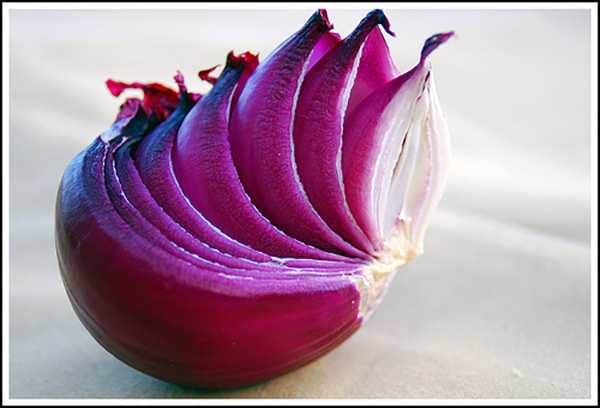
When we think of Layers we tend to envision them as physical things like layers of an Onion, without realising it we think we have some control over them, that we can separate them manually, move from one to another simply by choosing to, this is rarely the case, we would do better to see Layers as something like a state change or dimension shift, something that happens around us, something we have little control over like the dawning of a new day, one moment it is pitch black, then a sliver of light breaks in and then just like magic it is all daylight.
When we first do the Form we place our awareness into a single Arm and we keep it there as we make the different movements, for a long time that’s all there is, an Arm moving somewhere, we become amazed, and slightly obsessed.
As we become familiar and comfortable with this way of being we start to sense that there is something else here, without noticing the transition our awareness is now consumed by the rotation of the Shoulder, the hinging of the Elbow, the flexing of the Wrist and the extension of the Fingers, in everything we do this is the new reality of moving, and again we become amazed, and slightly obsessed.
With repetition comes familiarity, increased knowledge begins another transition, now our awareness is consumed by the Bridge alone {the lower Arm from the Elbow to the Finger tips}, externally the moves are the same, everything that was happening before is still happening, including the amazement and obsession.
Time, repetition, familiarity, transition, the pattern repeats but now there is just one tiny spot on the Bridge, it could be anywhere, a Finger Tip, an Elbow, a Wrist, as if someone had just marked us with a Felt Tipped Board Marker, a little Green Dot.
Every move every action is just this little Green Dot going about its business, following our intention. Time, repetition, familiarity, transition, we realise that our whole Body is made up of millions of little Green Dots, connected, and unified, when one Green Dot moves they all move, so we only ever need to move one Green Dot.
Any green dot we choose, it could be on our wrist if we are thinking Sil Lim Tao, on our Waist if we are thinking Chum Kiu, on a Shoulder if we are thinking Biu Gee, it is just a thought, just an IDEA.
When any single part of us moves all of us moves.
There is a perception that deeper levels or layers bring greater more complex IDEAS, this is as far from the truth as we can get, every layer underneath is smaller, simpler and closer to the core.
The easiest place to experience these transitions, these layers, these dimension shifts or state changes is of course the First Form, not because it is in any way superior to the other Forms but because there is a lot less going on,
This is why so many people spend so much time on this Form, but there is a danger in this practice, if we cannot, or do not make the connections between all the Forms, if we cannot or do not create one unified method, one unified IDEA we may end up with a deep understanding of the First Form but a shallow understanding of Chum Kiu and Bill Gee.
When we consider that in ‘application’ we only ever use aspects of Chum Kiu and Bil Gee this could become a problem.
There is no special trick or skill to unifying the Forms, we just spend an equal amount of time on each one, if we can find one move, one feeling, that is exactly the same in all the Forms and work outwards from that point, interaction will just happen.
The Driver boards the Bus and takes his seat, the Bus kicks into life and the Journey begins.
Today is a different journey than yesterday, even if we take the same route.
The journey from ‘not knowing’ to ‘knowing’ is very much like travelling along a dark road, when knowledge arrives it does not come as a bolt of lightning that brings instant illumination and clarity, it is much more like falling into a hole in the road that was always there, we just could not see it in the dark.
There is more to a Bus Journey than a Driver and a Bus, there needs to be interaction, our Ego makes us think that we bring about that interaction, we think the act of driving is us creating the interaction, but Driving is an inherent part of being a Driver, just as much as breathing or eating.
Interaction is not done, it just happens.
The magic in all of this is that the Bus does not know the Driver exists, and the Driver does not realise that he is part of the Bus.
When we think of Layers we tend to envision them as physical things like layers of an Onion, without realising it we think we have some control over them, that we can separate them manually, move from one to another simply by choosing to, this is rarely the case, we would do better to see Layers as something like a state change or dimension shift, something that happens around us, something we have little control over like the dawning of a new day, one moment it is pitch black, then a sliver of light breaks in and then just like magic it is all daylight.
When we first do the Form we place our awareness into a single Arm and we keep it there as we make the different movements, for a long time that’s all there is, an Arm moving somewhere, we become amazed, and slightly obsessed.
As we become familiar and comfortable with this way of being we start to sense that there is something else here, without noticing the transition our awareness is now consumed by the rotation of the Shoulder, the hinging of the Elbow, the flexing of the Wrist and the extension of the Fingers, in everything we do this is the new reality of moving, and again we become amazed, and slightly obsessed.
With repetition comes familiarity, increased knowledge begins another transition, now our awareness is consumed by the Bridge alone {the lower Arm from the Elbow to the Finger tips}, externally the moves are the same, everything that was happening before is still happening, including the amazement and obsession.
Time, repetition, familiarity, transition, the pattern repeats but now there is just one tiny spot on the Bridge, it could be anywhere, a Finger Tip, an Elbow, a Wrist, as if someone had just marked us with a Felt Tipped Board Marker, a little Green Dot.
Every move every action is just this little Green Dot going about its business, following our intention. Time, repetition, familiarity, transition, we realise that our whole Body is made up of millions of little Green Dots, connected, unified, when one Green Dot moves they all move, so we only ever need to move one Green Dot.
Any one we choose, it could be on our wrist if we are thinking Sil Lim Tao, on our Waist if we are thinking Chum Kiu, on a Shoulder if we are thinking Biu Gee, it is just a thought, just an IDEA.
When any single part of us moves all of us moves.
There is a perception that deeper levels or layers bring greater more complex IDEAS, this is as far from the truth as we can get, just like an Onion every layer underneath is smaller, simpler and closer to the core.
The easiest place to experience these transitions, these layers, these dimension shifts or state changes is of the course the First Form, not because it is any way superior to the other Forms but because there is a lot less going on, this is why so many people spend so much time on this Form, but there is a danger here, if we cannot, or do not make the connections between all the Forms, if we cannot or do not create one unified method, one unified IDEA we may end up with a deep understanding of the First Form but a shallow understanding of Chum Kiu and Bill Gee.
When we consider that in application we only ever use aspects of Chum Kiu and Bil Gee this could be a problem.
There is no special trick or skill to unifying the Forms, we just spend an equal amount of time on each one, if we can find one move, one feeling, that is exactly the same in all the Forms and work outwards from that point, interaction will just happen.
The Driver boards the Bus and takes his seat, the Bus kicks into life and the Journey begins.
The journey from not knowing to knowing is very much like traveling along a dark road, when knowledge arrives it does not come as a bolt of lightning that brings instant illumination and clarity, it is much more like falling into an information filled hole in the road that was always there, we just could not see it in the dark.
As we emerge from the lockdown as much as we may want training to ramp up and get back to normal we will need to act with responsibility regarding “Social distancing”, and keeping at 1.5Metres from each other.
These ‘Social Distancing Rules’ have been mandated by the N.S.W. Government, non-compliance can lead to a hefty fine.
A goodly amount of what we did previously will remain on hold until we see which way the community responds to opening-up and if the Government allow close physical contact, i.e. hand to hand contact, handshakes.
Chi Sau will not be doable for the first few weeks, even if restrictions get eased and we used extended Arms we would be within the 1.5M. zone, the same holds true for most of our application training but we can still hit pads as long as both the pad man and the striker adopt bladed stances.
Applications can be adapted so that the passive partner could be holding an extended pad and striking with a foam ‘Pool Noodle’ to simulate an arm or leg.
This may sound like a negative but it can so easily be turned into a positive.
The ‘Theory of Training’ {Forms} is different in just about every way from the ‘Theory of Fighting’ {Applications} and we need an equal understanding of both if we wish to be proficient Wing Chun fighters.
Focusing only on the ‘Theory of Training’ will not help anyone become a proficient fighter, it is primarily a method of developing a Wing Chun Body.
Focusing only on ‘Theory of Fighting’ may help us become a decent Street Fighter, but not a decent Wing Chun fighter, which is our ultimate goal surely?
From our ‘FIST LOGIC’ perspective the Theory of Fighting ‘ is primarily a method to effectively use the Wing Chun Body.
If we do not develop a ‘fully functioning’Wing Chun Body we have nothing to use.
Our skill level in fighting will always be intimately linked to our understanding of the Theory of Training, they are codependent on each other.
Remember to notify me if you plan to attend any of the training sessions as we are legally limited to 10 people per session, this should not present any difficulties as there are very rarely more than eight in attendance, but I would not wish for any of you to turn up and be turned away.
What we are seeing is the Disneyfication of Wing Chun,
This is a re-posting from April of last year, this subject is of even greater significance now that we are training without guidance.
Let me state clearly that I am a great believer in the Deeper Philosophy of Wing Chun, when used correctly as a Martial Art I think it is nothing short of remarkable.
However….
To a large section of the Australian Wing Chun community the Sil Lim Tao is the beginning and end of everything.
So much so that they only train the Sil Lim Tao at the expense of the other more applicable Forms.
How did a ‘little idea’ become such a big deal?
It has gotten to the point that if you go to a workshop with a senior master all that is worked on is actions from the First Form, nothing is ever spoken about violence.
I was recently at such a workshop, when I pointed out that the exercise being shown had no practical value I was nearly mobbed by the more zealous attendees.
In fact there is a consensus that Wing Chun is not just for fighting.
But of course it is, fighting is all it is for.
What we are seeing is the Disneyfication of Wing Chun, the complete watering down of a once effective fighting system into a parody of itself, there are even national Chi Sau competitions, something that flies in the face of Wing Chun’s own principles.
The bigger problem though is that this is not a slow decent into obscurity like T.K.D. and Tai Chi this is a swan dive from a great height that just keeps picking up speed, helped along by Facebook and Youtube.
A question must be asked.
How can a Martial Art not be for fighting?
Can we call ourselves Martial Artists if our aim is not to improve Martial Skills for the only outcome of being more effective fighters?
I have a longstanding friendship with the senior instructor for a very large Wing Chun School who holds the idea that Wing Chun is not just for fighting, even if he does not impart this thinking to his students it must be obvious by his example, this is how the rot spreads.
I am in the process of reading a book called Wilful Blindness by Margret Heffernan, it is this book that has driven me to write this post, although the book has nothing to do with the Martial Arts it describes the malaise Wing Chun faces perfectly.
Heffernan argues that the biggest threats and dangers we face are the ones we don’t see—not because they’re secret or invisible, but because we’re wilfully blind.
Without meaning to students put as much effort into avoiding the reality of what we do as they do into learning what we do.
They turn a blind eye to the truth and ignore the obvious.
Wing Chun is not the culprit here, it is the victim, in a market economy it is the customer that shapes the inventory, the man who pays the piper calls the tune.
Wing Chun becomes what we think it is and how we think about Wing Chun will not only shape our own training but the very future of the style.
Do we think shallow or do we think deep?
A shallow thinker sees only one problem and they answer in only one way {one Form}.
A deep thinker approaches multiple problems from different angles.
Far too often students refuse to engage their minds.
They swallow up instruction and information, but never question the thinking behind it or make the effort to analyse and quantify what they have just been taught.
Facebook and Youtube are echo chambers that allow them to obsessively seek out truth that confirms their world view and cling to it with little room for awareness and understanding of their own thought processes
The biggest barrier to deeper understanding is confirmation bias.
In Wing Chun this happens with a deep belief in lineage.
The Sil Lim Tao Form is not a shadow boxing form, this is well known, it is not intended to make contact, this also is well known.
How can training this Form help us fight?
Heffernan argues that the biggest threats and dangers we face are the ones we don’t see—not because they’re secret or invisible, but because we’re wilfully blind.
What we think of as six Forms are better seen as two different presentations of the one “Little Idea”.
Hi Guys,
I have not been able to do the videos I promised to do as I have unfortunately pulled the muscles in the side of my neck and the rear of my shoulder that is stopping me from holding my head straight.
I will be doing some videos as soon as my neck/shoulder allows but in the meantime here is some food for thought.
In this time of self-isolation, the only access we can have to Wing Chun is through the Forms.
What we think of as six Forms are better seen as two different presentations of the one “Little Idea”.
The first three Forms present as Information, the second three Forms present as Application.
What most people refer to as the Sil Lim Tao Form is in fact only the “A” Section of the Sil Lim Tao Form, Chum Kiu is the “B” Section and Biu Gee the “C” Section.
Only on completion of the Biu Gee set have we seen all of the components of the Sil Lim Tao Form.
The Dummy, the Knives and the Pole are three semi-practical methods/constructions for exploring the “Little Idea” with a more physical agenda.
Seeing the S.L.T. Chum Kiu and Biu Gee as different levels of the same thing makes it easier to understand the unified nature of Wing Chun and from there to engage in deconstruction and reconstruction which is the only way we can coax them into life.
Break them down and build them up better than before.
To do this we need to have a deep understanding of what the Forms are, how they fit in the system, what the critical components are and how they inter-relate.
During this awkward time, we have a chance to really engage with the Bio-mechanical aspects of the Wing Chun body without the distraction of trying to solve aggressive physical problems in that thing we call training.
If we can all get into this it will save everyone years of stumbling in the dark.
It should not be too long before I can film but in the meantime, I will put up the new page and populate it with some of my previous videos.
MAXIM FROM THE SCHOOL OF CHAN WAH SHUN { PRINCIPAL TEACHER OF IP MAN }
The most difficult thing to accept and the steepest learning curve is to ‘NOT’ try to prevent someone from hitting us.
We develop the use and understanding of the Shield Arm, like so many other aspects of Wing Chun through Chi Sau.
Or to be more precise and correct through the thoughtful engagement with an opponent in Chi Sau while operating with the knowledge that Chi Sau itself is a practice from Chum Kiu.
As seductive as the idea of osmosis is we should not place any faith in it, a reality in every walk of life is that ‘People without questions rarely find answers’, just playing Chi Sau will not deliver an understanding of the Shield Arm unless we are actively looking to understand the Shield Arm and using Chi Sau as the means to that end, unless we can manifest the IDEA of the Shield no amount of Chum Kiu will teach us how to move it.
The most difficult thing to accept and the steepest learning curve is to ‘NOT’ try to prevent someone from hitting us.
That is Defending.
Wing Chun Counter Attacks.
The Shield is there to stop the Bad Guy hitting us, it is not used to try to hit the Bad Guy, the only time a shield was used to hit the opponent was once knights started to wear plate armour that could resist sword cuts, then the damage came from being knocked down crashing about inside a metal suit, a bit like a car crash, not from the shield bash.
I mentioned that in all probability we will need to bring about the transition from the initial chaos of contact to a position where we can implement our Counter Attack philosophy, this does require physical use of the shield, but not by attacking.
Using the Shield to make the space to transition from the initial chaos of the first encounter to phase #2 is about using our own force or energy to move us to a safer place by using the opponent as an anchor, it is not about trying to move them to better position to attack them, that is not to say that we could not or should not do that, it would just not be considered ‘Counter Attacking’, it would be diametrically opposed to this philosophy.
Once we are in a safer place the Bad Guy is once again invited to attack us.
Philosophies should be guides, not dogma, this is the deep philosophy behind Wing Chun, the deep philosophy behind our training.
Theory and reality are not in anyway similar, in reality if we find ourselves in a violent situation anything goes, if it works it was the correct choice.
Over the years quite a few people of accused me of trying to re invent the wheel with the way I approach Wing Chun, my usual reply is that people accused John Dunlop and Charles Goodyear of the same thing when they introduced the pneumatic tyre, it is incorrect to imply that I am involved in reinventing the wheel, It would be a lot more accurate to say that I am trying to upgrade the suspension.










 Wing Chun Sydney, Australia