FIST LOGIC

HONG KONG SPAGHETTI ARMS; CLOSER THAN HONG KONG.

COME CLOSER.

“Never let the drive for perfection be the enemy of doing things effectively”

Back in the late 1990s and early 2000s, a significant number of students from my Sifu’s school would travel to Hong Kong to train at Grandmaster Chu ShongTin’s school,   Chu ShongTin was our Sifu’s Sifu.

Very few would stay for more than a week but they would return shining with an inner light and full of tales of amazing feats, brilliant teachings and the sheer joy of being in the company of greatness.

A fair call.

But they also returned with an arm structure that for some reason was much less efficient and effective than it was before they left Australia.

This condition humorously became known as ‘Hong Kong Spaghetti Arms’.

Those afflicted with Hong Kong Spaghetti Arms would act as if they knew something we did not, despite not being able to prevent themselves from being hit when playing Chi Sau.

If ever there was a case of “Never let the drive for perfection be the enemy of doing things effectively” this was it.

I know where the condition of Spaghetti Arms comes from and I also know that it is a correct step on the path to a capable and effective body, but it is only a transition phase, it is a means to an end, and not an end in itself.

But hey, what can you learn in a week?

Sadly these Wing Chun tourists were stuck half-way along the road to amazing unbendable arms, if they had stayed longer in Hong Kong they would have learned how to correctly take the “impractical softness” out of their arms and replace it with rigidity without using muscular strength.

The Sil Lim Tao Form, or rather the “A” section of the overall Sil Lim Tao has three major learning objectives.

  1. Set up the neutral body.
  2. Move the arms without disturbing the neutral body.
  3. Energise the neutral body so that it becomes an active body.

Step #2 is what results in Spaghetti Arms.

The purpose of the Sil Lim Tao Form is to become familiar with our own body structure, it is not in any way intended to make contact with another person or outside force so having Spaghetti Arms is of no consequence when doing the Form.

In fact, it is as it should be.

The third learning objective of the Sil Lim Tao Form, energising the neutral body, brings everything together, torso, arms, and legs by various stabilisations, both global and local.

 Stabilisation of the lower torso or Pelvic Girdle is achieved by recruiting the DEEP MUSCLES…

1. The muscles of the pelvic floor…. Contract the glutes.

2. The transverse abdominals…. pull in the navel

3. The multifidus….. Stand tall.

4. The Internal Obliques… breathe sideways.

5. The Diaphragm… tuck the diaphragm under the ribs.

In short our core muscles that attach to and hold our spine secure.

Local Stabilisation of the torso is not addressed in the S. L. T.  as there is zero body movement, it is introduced in Chum Kiu and Biu Gee.

Stabilisation of the upper torso or Pectoral Girdle is achieved by recruiting

 1. The Levator Scapulae …  Pull the head back and stretch the neck.

2. The Rotator Cuff Muscles…. Bend the Bar.

As you can see when we follow the simple set-up of…

  1. Contract the Glutes.
  2. Pull in the navel.
  3. Stand Tall.
  4. Breathe Sideways.
  5. Tuck up the diaphragm.
  6. Bend the Bar.
  7. Stretch the Neck.

… we stabilise our complete torso.

This set-up could well still suffer from Spaghetti Arms as there is still some work to do.

One of the many reasons we do the S. L. T. Form so slowly is to allow us to observe and make contact with the bones and most importantly the joints of our arms.

The shoulder joint, the Elbow joint, the wrist joint, and the finger joints.

If we ‘bend the bar’ we stabilise the shoulder joint, this results in a natural, pliable solidity in the shoulder joint.

When we hinge the elbow joint we create a kinetic force that pushes our forearm down into the wrist and our upper arm back into that stable shoulder joint connecting the upper arm to the torso and creating a return force back down the upper arm that crosses the elbow jointed reinforces the forearms force.

It is just physics.

In a contact any force pushing my wrist back toward us is met by the return force from our body, if the muscles surrounding and crossing the Elbow are contracted I have real problems, in effect both of us are putting pressure on the elbow joint, if it is natural and only working as a hinge the partner/opponent has real problems due to the aforementioned return force.

We, people, are not used to using the elbow joint as it was intended, as a hinge, instead we think that it is a way to move our arms and as such when the elbow struggles we engage all of the local muscles that we can call upon to get the elbow to move the arm.

Each muscle and there are 7 major muscles attached to the elbow joint and 9 that cross the elbow joint, calls up a favour from its neighbour, soon every muscle in our body except the little muscles in the Pinky Toe are giving a hand.

Result – Gridlock.

It is misleading of me to say just “control the Elbow Hinge and you control the whole arm” because teaching our body to trust that simple, natural movement when we are in dangerous situations is more than we can hope to get from an intense week in Hong Kong.

It can take a very long time to convince our Monkey Brain that this is a good IDEA.

Best we start today.

Book a flight.

Or come see me because as my Sifu would say about himself, “I am closer than Hong Kong”.

“A mind that is stretched by a new experience can never go back to its old dimensions.”

Oliver Wendell Holmes
HOKKA HEY.
FIST LOGIC

BODY INTEGRITY AND OTHER SEXY STUFF.

We could ask ‘How long is a piece of string”?

 If we simplify wing Chun the training objective is to minimise incoming force while maximising outgoing force.

This is a game of opposites, accept incoming force with cotton and issue force with steel.

All techniques and strategies pay fealty to this IDEA.

Our concepts are suggestions and not directions, this leaves a great deal of room for interpretation, adlib, and creativity, but it also leaves us open to misunderstandings and working against ourselves.

One concept, ‘Wing Chun does not use Hard Blocking’ is a potential misunderstanding.

What is a ‘Hard Block’?

We could ask ‘How long is a piece of string”?

So what is a Hard Block?  A ‘Hard Block’ is a clash of Arms.

Question.

Is there a time and place of contact where we move from Soft Block to Medium Block? 

Or a transition from Medium Block to Hard Block?

The term ‘Hard’ is an infinitely variable metric that can never be in the same place on two successive instances or be the same quality or amount of HARDNESS for two different people.

Blocking is contact, and contact is a clash.

And clashing invokes the Law of Action/Reaction.

It is a shared event that is determined by two separate sides.

We need to re-explain this Concept as Wing Chun does not Clash with our opponent’s Arms.

One of the most overused cliches in Martial Arts is that of building a House.

When building a house, there are hierarchies that if avoided or approached out of order the task becomes infinitely more challenging.

We could for instance begin by building a roof, then suspend it and build walls down from that roof.

There is no getting away from the fact that a house is made of a roof, walls and a floor, eventually, we need to create all of these to have a house.

Conventional wisdom, and more than likely experience, favours building a slab, erecting walls, and then adding a roof. 

Learning Wing Chun is just like building a House.

We can work on and learn the Forms in any order we choose, but some ways are easier than others.

As wildly confusing as it may sound approaching Wing Chun as a Martial Art in a physical sense is beginning by moving in the wrong direction.

It is not possible to learn the truth of Wing Chun by studying shapes and movements alone, the shapes and movements that are most commonly used are, in all truth, shapes and movements taken from other styles that were popular at the time.

We could just as well use any known style.

Shapes and movements are important, but as keys and not as weapons.

The shapes and movements open doors upon practices that refine and improve those same shapes and movements.

I genuinely believe that we could begin our study of Wing Chun with any of the  Wing Chun Forms, even including the Mom Jan Jong, but just like the house, it is easier if we start with a good foundation.

This foundation is what I refer to as ‘CRAZY HORSE’, a device to hang the clothes known as Sil Lim Tao, Chum Kiu, Biu Gee and Mok Jan Jong on.

Once we have developed ‘CRAZY HORSE’ we could well start with Bill Gee.

But staying with the house-building analogy for a moment, to achieve good foundations it is vital that we build on solid ground.

The ‘solid ground, that we build on in Wing Chun is a previously learned skill set.

If we do not have a previously learned skill set then it stands to reason that we first must develop one.

The physical aspect of Wing Chun training, the aspect that so many people, especially YouTubers, think is what makes up Wing Chun, you know, the making contact bit, is nothing more than the setting up of solid ground to put our foundations on.

The real work begins once we have shapes we trust, once we have an effective way of moving.

In short, the real work begins once we know how to fight.

The video below quickly became longer than I intended so I will cover the manifestation of weight and how to use it at a later date, it is a really interesting and powerful topic which is relatively easy to grasp.

Be aware that he audio volume of the following clip is overly loud so do yourself a favour and lower the volume before clicking play.

NOTHING HAPPENS UNTIL SOMETHING MOVES.

ALBERT EINSTEIN.
what moon?
FIST LOGIC

SEEKING THE COMBAT BRIDGE.

ARNHEM – A BRIDGE TOO FAR.

It is your journey and your choice.

Richard asked if I could put a post up to cover as much of Chum Kiu as I could, I am pretty sure it will be of use to a few of you.

First off, when listening to anyone about any Form from any style stay aware of the fact that a Form is nothing more than a structural framework that allows the concepts to be laid out in a way that makes sense to the right person at the right time.

In due course we will all interpret the information [any Form] in a way that fits the way we think and compliments the way we move.

Remain mentally flexible.

Let’s get to it.

What is the best way to approach Chum Kiu?

We can approach Chum Kiu in as many ways as we can think up, it can be super simple such as “How many new moves are the in Chum Kiu that I need to understand”?

The answer to this is just 2?!

Pivoting and Shifting.

Or we can dig deep into every nuanced interpretation and now there are millions of ways.

The best is, as with everything, start small and grow, from the super simple to the insanely complex.

It is your journey and your choice.

CHUM KIU- A CLOSER BRIDGE.

There are some personal picks from the archive below that will help your journey and save you making a detour into the past posts department.

FROM THE ARCHIVE.

Here are some earlier posts that will help with the work and the training of the aspects we explore with Chum Kiu.

I recommend reading the text to the posts as it sometimes adds clarity to the context of the video, but if you are stuck for time, as we all are, just watch the vids.

This is a pretty complete overview of the Chum Kiu application from the perspective of vectors, but it is quite long, Video duration 18 minutes. https://wordpress.com/post/wingchunsydney.com/1456

This is a medium length video that helps understand the transition from Crazy horse to Chum kiu. Video duration 09 minutes. https://wordpress.com/post/wingchunsydney.com/2064

This pivoting primer that is one of the best videos I have done for information transmission that can be easily used. Video duration 11 minutes. https://wordpress.com/post/wingchunsydney.com/1482

This post will also aid with pivoting. Video duration 07 minutes. https://wingchunsydney.com/2020/01/18/tension-and-torsion/

This post is mostly about punching but it has good instruction on Core Winding. Video duration 05 minutes.https://wordpress.com/post/wingchunsydney.com/509

This post is about the often overlooked aspect of sinking and Rising. An inherent part of all movement. Video duration 07 minutes. https://wordpress.com/post/wingchunsydney.com/2331

This post covers the summation of forces. The heart of Chum Kiu. Video duration 03 minutes. https://wordpress.com/post/wingchunsydney.com/2290

HOKKA HEY.
WHAT KIND OF DAY IS IT?
FIST LOGIC

BEING OUR BEST AT THE WORST OF TIMES.

Do you know your weaknesses, more importantly, do you know how to avoid them?

There is something that we should never forget, and that is…

why we are training?

We are learning to defend ourselves against a persons or persons that intends us serious physical harm.

Despite that training is fun and enjoyable, as I think it should be…

We are not playing.

We are not learning to dance.

Question? Do you know your weaknesses, and more importantly, do you know how to avoid them?

How can we plan for something that we do not even know is going to happen?

Let’s start with the worse thing we can think of, it will be different for all of us but be honest to yourself, there is no need for anyone else to know, we all have one darker fear and if we are ever slipping towards it, we will panic big time if we have not at least played it out in our minds a few times.

My favourite military maxim that should always be considered is …. ‘no battle plan survives contact with the enemy’.

This is not about being real, it is about being semi-prepared, engage your imagination, if in doubt about what would happen in a real situation pick the worst option you can think of.

I will use my worst fear as an example, but it is just the thought process that is important, develop, ask and answer your own questions.

My biggest worry is that I am on the floor!!!

Question #1. How did I get here?

Did the Bad Guy knock me down? Did he catch a kick I attempted and threw me? Did I trip over my own feet?

Most fights that end up on the floor are there because people fall over much more than someone does Ju-Jitsu.

Whatever caused this problem becomes an area for involvement in our training, develop a style that kicks less, stays out of reach of your partner, and develops a better, more well-balanced movement.

Question #2. Could I have prevented this?

If it was something the Bad Guy did what happened that allowed him to be in a position to do that?

Was it his skill and speed or was it a case of me being inattentive or late to respond?

Either way, this problem was caused by not being in control of my personal space and something I can take into training is the question “what does it mean to control my personal space”?

As a training exercise in Chi Sau get a friend to continuously press you and work on maintaining the same shape, position and distance from them at all times.

Ask yourself can I control my personal space by standing in one spot while my attacker is mobile, there is no correct or incorrect answer here, just a specific personal idea that we can train to be more natural.

Question #3. Was he fast or was I slow?

We can always work on our speed, especially the speed we think, our body only ever works at the speed of our thoughts, to a very large extent being quick is about having fewer choices to deliberate on.

Do not waste valuable mental processing time on trying to develop or use ‘Mind Force’, be deliberate and only think about things you can do that will actively help.

If we do not know how to transition from one situation or one position to another we will be stuck in both time and space and an easy target.

Again as a Chi Sau drill work on changing shapes, stances, and positions in space.

Create a drill in Chi Sau where one partner applies a strong forward drive, and the other partner tries to find a way to get behind the aggressor, do not be nice to each other, make it a win / lose game.

In training we usually tend to just do as we are told, often there is no genuine connection to what we as students think may happen, or what we may need, and very rarely is there any student input to reflect a personal worry or experience.

As Instructors we should encourage this type of engagement, as students, we should force ourselves to ask questions, even when we think they may be stupid.

Nearly everything we do in Wing Chun falls under the umbrella of simultaneous attack and defence, in so many street situations this is a practical impossibility. The IDEA is sound, but how close can we get to it?

In street situations the attacker has no time to try to find the best shot, there is no feinting, no dodging and weaving patiently seeking a better position, it is just a flurry of whatever and it is instantly in our face.

Most street violence that Wing Chun would engage with, the average mugging, for instance, is over in less time than it takes to read this sentence.

I am serious, if we lose control of the first 4 or 5 seconds it is ‘lights out and go home’.

If we do not see it coming we are not going to stop it from happening, this is an alarming thought, but it is what it is.

There is a saying in the Boxing World, “it is the punch you do not see that knocks you out”!

Question #4. Why was I unprepared?

No one can teach functional situational awareness because the situation changes from day to day and place to place, because of this most situations we find ourselves in will appear to be almost out of nowhere.

Unpreparedness is our default position, get used to it, train it.

If our regular training does not include ways to regain a good position from a bad position then the prognosis will be terminal, do not fall for the fantasy that Biu Gee teaches emergency techniques, find a way to make space and regain balance.

Question #5. How did this situation arise?

The only way to avoid potential problems is to see them as they evolve, and leave before conception.

Most people that fail in a violent situation do not fail because of a lack of skill or ability, it is usually a lack of trust, or a lack of confidence all made more destructive by the shock inherent in being attacked.

There are hundreds if not thousands of violently effective people who have no training at all in our world, but they are courageous to the level of foolhardiness, they will walk into our fists, we have a huge advantage if we can only bring it to the fore.

Think.

Plan ahead.

Survive.

This is what all training should be. Any other approach is leading to the wrong choice at the wrong time.

Work on your weaknesses, play to your strengths.

WHAT KIND OF DAY IS IT FOR YOU?
FIST LOGIC

CHOOSING THE RIGHT STICK.

We are not people learning to use Wing Chun, we are people choosing Wing Chun to learn how to use ourselves.

Everything will work to a certain extent, and everything will fail to a certain extent.

Becoming capable is about 3 things.

Understanding how our body works

Understanding our styles philosophy, our ‘FIST LOGIC’

Understanding how to build a bridge between the two.

Because if we ever find ourselves in a violent situation…

… it will be on that bridge.

We are not people learning to use Wing Chun, we are people choosing Wing Chun to learn how to use ourselves.

Asking will my Martial art work is a little bit like asking will this stick work?

It will if you know how to use it, and are willing to use it.

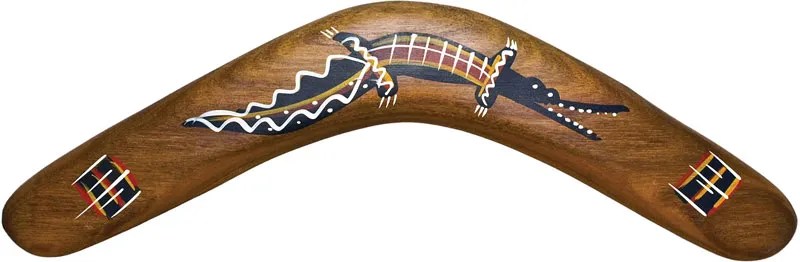
There is a joke here in Oz. 

Q. What do you call a Boomerang that does not come back?

A. A stick.

The moral of this tale is choosing the right stick.

Whenever we talk about interacting with another Human Being, be it in a violent situation or otherwise, and especially if we are giving suggestions on how to interact with another Human Being, we should always prefix the statement with “It depends”.

So when our Combat Athlete cousins say that our training sucks, we need to approach it from the position of “it depends’.

Because sometimes it does, and we do not even realise this.

Especially if the approach is that of the Mind leading the Body, as it is with much of Kung Fu.

The Tai Chi Classics tell us that “where the Mind leads, the Chi follows’, and my own teacher would say that the ultimate expression of Wing Chun is when the Mind does the work.

Modern advances in medical imaging, especially in the area of Magnetic Resonance imaging, have shown which areas of the brain are stimulated in response to physical pain, which essentially is the same as any physical sensation such as making contact,.

The results leave us without doubt that it is the Body that influences the Brain and not the other way around, this is important because it shines a light on the fact that what we think we are doing is not what is happening, and how we react to this experience, the ‘Take Away’ so to speak [ in a training environment this can be viewed as what we think we are learning] is often the opposite of what we think will happen.

This is a huge, complex subject, but relatively easy to wrap our heads around, that I will go into at a later date.

Understanding this is the difference between choosing a Boomerang or choosing a Stick.

FIST LOGIC

SOLO PLAY, THE RULE OF THREES AND SOME OTHER STUFF.

“Are these moves really important, or are we being played”?

The ‘RULE OF THREES’ is a useful tool when presenting anything to an audience, it tends to get more engagement.

When we consider how closely related Kung Fu is to Theatre and Ritual it is easy to see why this tool is so widely used in Kung Fu Forms.

In Wing Chun, we are told that any movement in any form that is done three times is of more value to our training than something done twice or only once.

The question arises, unwelcome as it is…

“Are these moves really important, or are we being played”?

All that aside, on Thursday evening we did some things that I would like us all to be on the same page about.

Solo training can be difficult to value, but I assure you without a serious approach to solo training we remain nothing more than players.

HOKKA HEY

WHAT KIND OF DAY IS IT FOR YOU?
FIST LOGIC

FIRST BEATS FAST.

like most of the posts on FaceBook this sounds good, but, it is actually Bullshit.

This is a reposting to keep the information flow going, somehow I keep messing up the videos, we had a great session this morning but I forgot to turn on the Camera, DUH. Hopefully I will record it on Thursday evening.

This video is about similar things to what we are working on so I hope you get something from it. Try to look at it from the perspective of getting in place to use a one-inch strike, which as we have been talking about is the only way we can exchange maximum weight with maximum accuracy.

Hey Guys,

Sam, Costas and I were working on stuff on Saturday that I thought was quite important to share, we lost the sound early into the piece so there is no commentary on the practice, all the same I am posting a few frames of what we did, with a bit of Timo Mass playing, to seed the water so to speak.

We will revisit this on Thursday evening so if you can, be here, and get all the information instead of just about 5% which is all we really put in these videos.

The heart of this matter is a better understanding of the whole idea of being fast.

Mark Zuckerberg once stated that his motto for Facebook was “Move fast and break things”, like most of the posts on FaceBook this sounds good, but, it is actually Bullshit.

what moon?
FIST LOGIC

On Sheep, Wolves, and Sheepdogs.

The Wolves do not train for what they do, it is part of their nature, and this is important.

The title of this post is also the title of an essay by By LTC (RET) Dave Grossman, author of “On Killing.”  

Here is a paragraph from the essay and a link to the complete text.

“Then there are the wolves,” the old war veteran said, “and the wolves feed on the sheep without mercy.” Do you believe there are wolves out there who will feed on the flock without mercy? You better believe it. There are evil men in this world and they are capable of evil deeds. The moment you forget that or pretend it is not so, you become a sheep. There is no safety in denial.

“Then there are sheepdogs,” he went on, “and I’m a sheepdog. I live to protect the flock and confront the wolf.”

Here is the link to the complete essay.  https://www.mwkworks.com/onsheepwolvesandsheepdogs.html

To a minor extent, people who choose to study any Martial Art fit into the Sheepdog category, even when they aim only to defend themselves.

I do not expect many people to take the time to read the whole essay, especially as it is specifically American and mostly aimed at “First Responder” types, so here are two of the final sentences that sum up the mood of the text.

This business of being a sheep or a sheep dog is not a yes-no dichotomy. It is not an all-or-nothing, either-or choice. It is a matter of degrees, a continuum.

The degree to which you move up that continuum, away from sheephood and denial, is the degree to which you and your loved ones will survive, physically and psychologically at your moment of truth.

There is a great deal to unpack in this essay, some may find it challenging to see their own life and experiences reflected in it, but it is there for all of us if we know what to look for.

Generalising and simplifying society into these three categories in a way we can relate to could be that there are people who willingly and without excuse randomly and viciously attack people they do not know.

This would be the Wolf, its main weapon is deceit and surprise, and these people rarely take any kind of organised training.

Then there are the Sheep, we all hold our own IDEA of who and what they are.

And lastly the Sheepdog.  A person who unflinchingly places themselves in harm’s way, even if it is for only personal safety and this type of person is usually trained and frequently still training.

The Wolves do not train for what they do, it is part of their nature, and this is important.

It helps us develop a deeper understanding of the “Context” involved in random violence, it helps us get a deeper understanding of what we can expect from our training, and it allows us to face without the slightest embaresment the claim from “Combat Athletes’ or even those in our traditional Martial Arts community that favour competition, that our training is bogus and useless due to it focusing on simplistic “Generic Attacks”.

Which of course it does.

But that is the point.


IF YOU REALLY WANT TO GET BETTER,

DO NOT TRY TO DO MORE.

FIST LOGIC

ONLY OUT OF THE ‘WHAT’, CAN EMERGE THE ‘HOW’.

THINK LIKE A CHESS COMPUTER AND DEAL WITH THE JOB AT HAND.

Something that I think we are all a little bit guilty of is to think that there is more to dealing with violence than there is, we all do it, and I am not sure if there is any way to prevent this, so our best way forwards is to accept it and find a way to work around it.

A well proven method to improve anything is to reduce it to the simplest form that can still do the same work.

This is the Principal of Parsimony. {A.K.A. Occam’s Razor}.

The principle that the most acceptable explanation of an occurrence, phenomenon, or event is the simplest, involving the fewest entities, assumptions, or changes.

This is the philosophy of many Martial Art styles, but it is by no way the practice.

Even with Wing Chun, which has at its core the Principle of Simplicity, we spend many years learning how to deal with something that happens in a split second.

Can you relate to the tale below…

As a kid I was a decent Chess player, I represented my School and up until my early 30s I was an active member of a chess club. 

Like all chess enthusiasts I had dozens of books, I re-played famous games from past masters to try to improve my game, and like everyone else I thought that we must be able to see 5 or more moves ahead.

Then around 1983  I bought my first consumer level chess computer.

Even at its lower levels I lost.

I only began to win games once I began to play the way the computer played. And that was by treating every move as a seperate problem that only needed to solve that single situation.

I was still a chess club player and in what appeared to everyone else as overnight, I began to win a great deal more matches than I lost, along the way I took some notable scalps for my current standing, to be expected the much better players still beat me, but I went from “D” grade to “B” grade in 2 tournaments.

THINK LIKE A CHESS COMPUTER AND DEAL WITH THE JOB AT HAND.

From a personal prospective what is the problem we are trying to solve? 

What is the simplest way of solving it?

For instance….

From a “Fighting” perspective this is simply “how do I hit my opponent”?

As a Self-Defence problem it becomes “how do I stop my opponent hitting me”?

This approach allows for great personalisation instead of trying to make someone else’s IDEA work for us.

So how do we stop someone from hitting us?

The answers vary from run away, to hit them first, and all things in between.

But whichever answer we choose it will be our own answer.

Now we can direct our training into something we think is a good IDEA.

But how do we train that IDEA without getting swayed by our partisan bias?

FIST LOGIC

RELEASING FORCE.

IS IT THE WATER, OR IS IT THE DAM?

My Tennis coach would tell me that “It makes no difference how hard you hit the ball if the other guy can’t reach it”.

Something that should be completely obvious to all of us, and I think it is, is that making contact is the only game in town.

And that is coming from a Self-defence guy.

Be it a fist, a forearm, an elbow strike, a headbut, a knee strike, a shin kick or a foot up the watusi, if we do not make contact with our attacker when we interact, it is down hill all day.

Forget style or technique, if we are not hitting them, they are hitting us.

As this thread started off from the IDEA of hitting harder and working to that end, my own experiences tell me that by far the most important thing is to hit first.

To use a quote from my tennis coach back when I was competing at club level, “it does not matter how slow a ball is going if your opponent cant reach it”.

Being first gives us a great, and frequently a winning, advantage.

So the first consideration is how do we make contact before our attacker takes the high ground.

The key is to delay the attack until missing is more difficult than landing the blow.

When we understand it, this is the impetus of the one inch punch.

VIDEO

Because of what my Tennis coach told me I am more of a results guy than a methodology guy.

Only out of the “WHAT” can emerge the “HOW”.