“What have you learned from 50 years in the study of Chadō?
One of my favorite maxims/stories is from 16th century Japan.
The famous Tea Master, Sen no Rikyū, a National Living Treasure was retiring after over 50 years following Chadō, the way of Tea.
He was asked…
“What have you learned from 50 years in the study of Chadō?
He thought for a while, massaged his chin and replied…
‘Before ChadōTea was just Tea, but as I became more involved in ChadōTea became much more than Tea, finally, once I understood ChadōTea was once again just Tea.
It is essentially meaningless to go over the same old ground in the expectation of finding something new.
We need a new IDEA.
We all have a shape, a posture or a setup.
We adopt them because we think they will aid us in what is upcoming.
In this way, every shape we adopt is a reflection of what we are thinking, the more we think about something the better and more effective our shapes become.
In this way when two people fight they pit one shape against another, one set of thinking against another.
To a very large extent we are always fighting our opponents thinking.
There are two ways to win this fight.
Have a better, more effective way of thinking.
Disrupt our opponents thinking so that it becomes ineffective.
If our shape is a result/reflection of our thinking then when we attack our opponent’s shape, we attack his thinking.
For me, this is at the heart of everything we do, especially Chi Sau.
I really do hope you disagree with this last set of IDEAS, at least in a minor way.
We need provocation to help us see what we really think.
HOKA HEY.
Have a great 2021, that hopefully will not be much of a test after 2020.
Training can go in many directions, hard, soft, internal, external, practical, spiritual you name it.
A few weeks back I caught up with a friend, an ex-student, that has not trained with me in what seems like forever, it is about a decade, after playing around for half an hour he said…
“Your wing Chun is nothing like it was when I trained with you”…
I have thought deep on this, and he is wrong.
My Wing Chun is the same…
It is Wing Chun.
Wing Chun is always just Wing Chun.
Training can go in many directions, hard, soft, internal, external, practical, spiritual you name it.
But that is just training.
Training is not fighting.
No matter how we train…
When it is “go” time…
It is “go” time.
If for any reason this does not make sense…
Stay out of trouble over Christmas and the New Year.
“Because what ever word we choose is just a made up word for an imaginary event that we only think is happening”.
Imagination is how we humans interact with the universe around us.
How we see it.
Not as it is.
But as something it is not.
Something that we can make sense of, work with.
This does not make it “REAL” in any sense of the word, but it does make it a very valuable mental method.
When teaching my IDEA of “Crazy Horse” I encourage my guys to give their imagination free reign.
I put it to them that what we are doing when we engage our imagination is creating a language that both our mind and our body can use to communicate with each other.
Creating what I refer to as “feeling pictures”, or “screenshots” of our inner working.
One imagining I like to use is to think that we have a hydraulic pump deep in our pelvis.
This pump sends pressurised water down our legs, up our spine, along our shoulders and into the arms and hands until we are full and can even feel our skin bulging as the water tries to exit through our fingers and toes.
Most students achieve this easily and sometimes ask….
“Is this Chi/Nim Lik/Nim Tao/Kundalini”?
I answer…
“It can be if you wish it to be”.
“Because what ever word we choose is just a made up word for an imaginary event that we only think is happening”.
Some people take umbridge with me for saying that Chi, or Nim Lik, or Nim Tao, or Kundalini are only imaginary, they feel I am being dissmissive.
I am not.
I do not see any problem with using our imagination.
I am repeating myself here but Imagination is how we humans interact with the universe around us.
We all deeply believe that when we look out of a window and see BLUE skies, GREEN trees, RED cars on BLACK roads it is because they are real.
And I am the first to agree that not only do I do this but that this is a universal consensus.
The fact that we all agree, all think and perhaps even see the same thing does not make it REAL.
Not even close.
We do not LOOK OUT of windows, we do not LOOK at anything, our eyes are more akin to cameras than scanners, we open the lens and the view flows IN.
We only IMAGINE that we look out.
In our universe there is no colour, there is only different wavelengths of electro-magnetic energy, we interpret these different wavelengths to represent different colours.
Except of course for the “Clour-blind” in our society.
All and any interpretation of any subject is just us using our IMAGINATION.
What has all this got to do with teaching and studying Wing Chun?
When people from the C.S.T. lineage like Sifu John Kaufman talk about Nim Lik and Nim Tao, when people from the Robert Chu lineage like Alan Orr talk about the 7 Bows and linking/de-linking or when I talk about putting on our Crazy Horse and staying in the Goldilocks Zone we are using a different imaginary language to talk about the same thing.
The Ghost in the Machine if you wish.
Underneath this language, our bodies are doing or at least attempting to achieve the same objective.
That is the reality of what we are doing and as such is the true work.
If we take the Kung Fu and Spirituality away completely, what is our body ‘actually’ doing when we ask it to link and de-link, to bend one of the 7 bows, raise up Nim Lik or engage Nim Tao, stay in the Goldilocks Zone or put on our Crazy Horse?
Whatever we think that is we would benefit from exploring in that direction.
Apart from any other considerations this thing is measurable, observable and capable of being experienced/felt by a person other than ourselves.
It is REALITY and not IMAGINATION.
Do I know what lies beneath the imaginary language I create, beneath my Crazy Horse and my Goldilocks Zone?
We will never use Wing Chun if we are in a stressful and violent situation, we will just do stuff, any stuff our body thinks will do the job of getting us out of there.
If we allow ourselves to approach this work we call Wing Chun as play it is usually effortless, it is only when we over invest in it, attach importance to it, elevate it, forget that it is, in the end, just normal human movement that it gets tricky.
Even before we embark on Crazy Horse practice we learn that torso is independent.
Add to this that the arms are independent of the torso.
Also that the legs are independent of the torso.
In throwing sports this is referred to as separation.
Keeping it simple, from a purely physical perspective, Crazy Horse is pretty much what we do when we push a shopping trolley around a Supermarket.
Think about that and then go out and find a shopping trolley.
One of the reasons, in fact the main reason I have so many props and tricks is to prevent us from elevating it to something other than simply ‘work’.
We will never use Wing Chun if we are in a stressful and violent situation, we will just do stuff, any stuff our body thinks will do the job of getting us out of there.
Under stress our body reverts to the things it knows how to do best, or at least is the most familiar with. We all do other things in life far more often, and usually better and more naturally than when we do Wing Chun.
It is only in training that we do Wing Chun, if we can reach the point where we regard our training as just ‘stuff’, ‘ordinary stuff’ not ‘special stuff’ there is a good chance our body will pick it when we need to ‘get stuff’ done.
Once more for the late comers.
Play with it, do not take it so seriously, this is possibly the best information you will ever get.
If we need to concentrate {which is essentially a form of mental isolation} on what we are doing we will never have access to that skill in a dynamic, ever changing, hectic and stressful environment that is a violent situation.
I do not think there is anything to gain by taking away the padding, but awareness of it certainly helps.
Training is a habit, break that habit, it dies.
This became an Australia-wide possibility in March, with the ‘Lockdown’.
I realised from day one that the situation needed approaching with urgency and diligence.
And a plan.
Every Monday evening, Thursday evening and Saturday morning I would be found in the Studio, training for the two hours that I would usually be teaching.
Finding meaningful things to do for two hours solo was a far greater challenge than I anticipated, especially as the lockdown stretched on without an end in sight, month after month.
One of my favourite tools in training is Occams Razor, so out it came and in I went.
I did not intend to undergo a total reset, but that is what happened, as a result when the ‘Lockdown’ lifted it was less a restart and more of a reboot.
I had a brand new O.S.
My take on Wing Chun was forever a gently evolving process, but I came out of the enforced isolation with something lean, mean and ‘very’ practical.
I have always seen Wing Chun as physical activity, so that is what went under the microscope first.
What I found was a lot of ‘dead wood’.
I.M.O.
From earlier research grew the understanding that initially there was only one FORM, the Sil Lim Tao.
This overlong Form proved hard to teach, it was cut into three sections, the later sections becoming Chum Kiu and Biu Gee.
It would appear that these sections were too short, so they underwent a certain amount of padding to give them gravitas.
All the Forms were extended to 108 moves in line with Budhist Sacred number thinking.
I do not think there is anything to gain by taking away the padding, but awareness of it certainly helps.
After all the movements themselves are not the purpose.
All journeys begin with a single step, by default, this is the most important step.
How we set our body up is the beginning and end of everything.
On seeing this, all of the Forms become tests to see if we can maintain this set up during movement that escalates from simple through to complex.
It is tricky to put a name on this setup, is it posture, condition, shape, structure?
It is all of the above and more, I call it ‘Putting on our Crazy Horse”.
The world has changed since Leung Jan, Chan Wah Shun and Ip Man.
The atomic explosion of money on offer in modern sport has meant that there has been unprecedented research into how the ‘Human Body’ works and how to maximise its potential.
Quite remarkably, Wing Chun was always on the same wavelength.
It just got a bit left behind, like all Kung Fu.
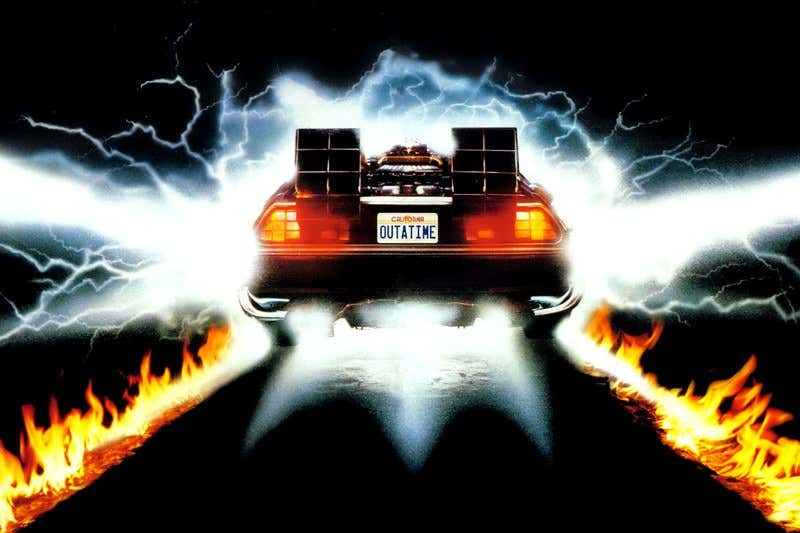
So it is into the DeLorian and back to the future.
One FORM only, with modern Sports Science Influences.
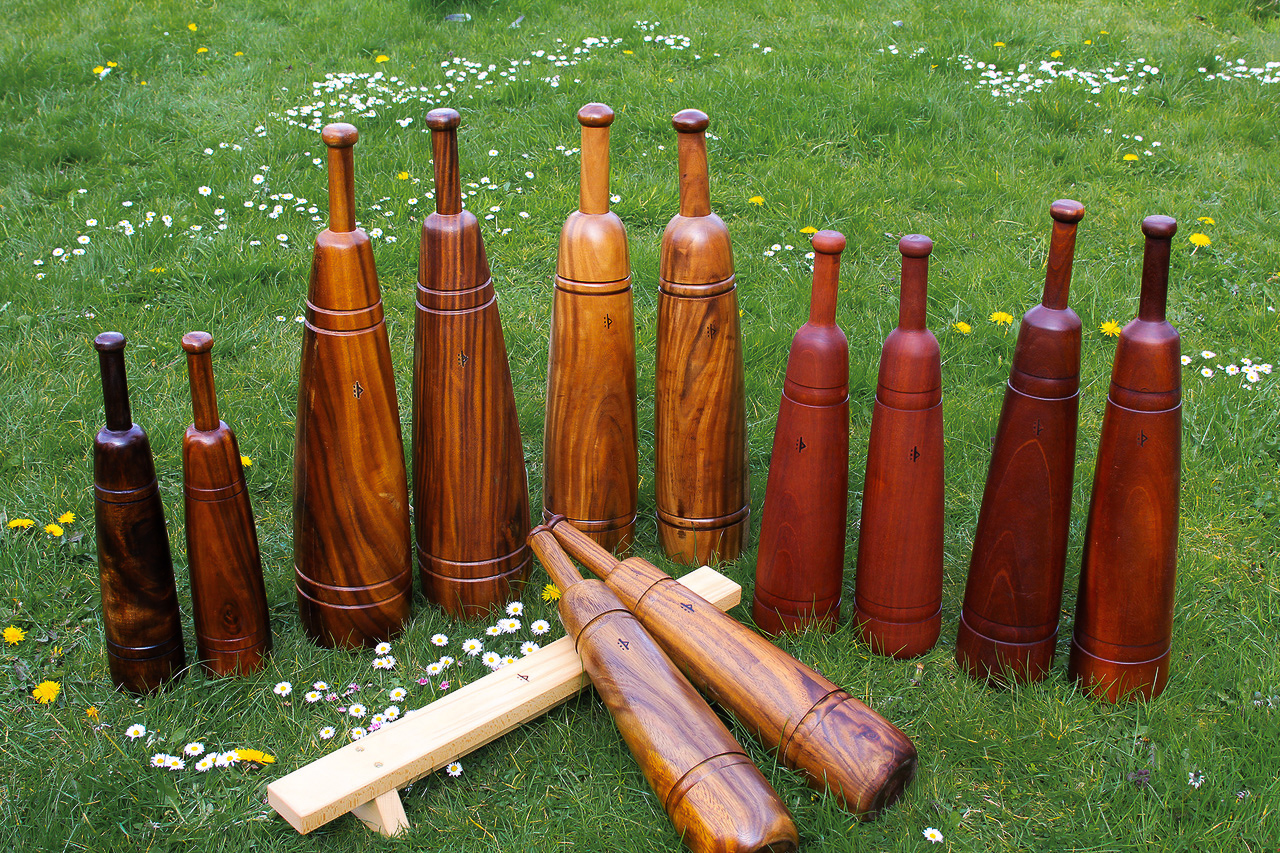
Indian Clubs, Maces, Persian Meels or Gada have been the choice of strongmen and warriors for centuries.
A couple of the guys asked if I could make a video the next time I made some Indian Clubs, so here we are.
Indian Clubs, Maces, Persian Meels or Gada have been the choice of strongmen and warriors for centuries.
The total cost of a pair of these clubs can be as little as $20, much cheaper than buying them if you have the time and are just a little bit practical.
As I was surfing the net to find a few exercises to recommend I came accross a really cool product called a Pahlavandle, it is a handle that fits to a soda bottle and instantly turns it into an Indian Club, it is from Denmark so getting it into Australia by post may not be possible at the moment due to Covid restrictions. Here is a link.
Here is a pick, check them out if you do not feel like making some.
Solo training is a double-edged sword, if we get it right, it can open everything up and make even the most difficult things seem simple.
If we get it wrong, we are almost doing a different Martial Art that at best can only offer confusion.
The difference between our training being on the ‘Fairway’ or being in the ‘Rough’ is not physical, it is intentional, just like the golf analogy it is all about direction.
Direction only comes into being once we know the destination, where are we trying to send it to?
Solo training is small picture stuff, just us, on our own, doing some movements, making some shapes.
But even small pictures live inside the big picture.
Why are we in this place doing this thing?
Here is a thought to engage while looking at the small picture stuff.
It may help with context and clarity of vision.
Then again it may not.
“Who decides where we hit the Bad Guy”?
Wing Chun is a counter-attacking Martial Style, everything we do is in response to what someone is trying to do to us.
It is a little bit like Chess, he moves we move in a better way.
The Bad Guy decides where and when we hit him, think about that.
To understand Wing Chun, we need to understand or at least reconnect with something we have always known.
An aid to this end is to think like an Artist, not a Martial Artist, but an “Art” artist.
We need to be more like a playwright, such as Bill Shakespeare.
Or a visual artist such as Mark Rothko.
Or even better a poet such as John Keats.
It was Keats who coined the phrase “Negative Capability”…
for a writer to pursue a vision of artistic beauty even when it leads them into intellectual confusion and uncertainty, as opposed to a preference for philosophical certainty over artistic beauty.
J.K.
In many ways, this spins me back to the heady days of my misspent youth, to the hip ‘Harvard’ professor Timothy Leary who advised us all to “turn on, tune in and drop out”.
Every time we get astonished by some new information from our teacher, when we cannot believe we can do so much with so little we are in the universe of “Negative Capability”, and the citizens that thrive there.
What did these diverse individual entities such as Shakespear, Rothko, Keats and Wing Chun have in common?
The Human Condition.
The most amazing, and perhaps perplexingly disturbing thing about the Human Condition is that we are all born with it.
There is nothing to learn.
Just acceptance and understanding.
If we wish to understand Wing Chun, we must first understand what it is to be human.








 Wing Chun Sydney, Australia