FIST LOGIC

A BIT MORE ABOUT STANCES.

Everything we do, everything we train for is contact with either an incoming strike or an available target. And for that we need STABILITY.

In a one on one conflict, the aim is to affect our opponent more than they affect us, hopefully, before they affect us.

It becomes a bit of a no-brainer that everything we do must affect our opponent.

If my arms are still moving, I have not yet made contact with my opponent.

If I have not made contact with my opponent, I am not affecting them at all.

As counter-intuitive as it may appear, what we do is all about stopping.

Or to be more accurate, forcing our opponent into stopping our strike or interception with their body.

Everything we do, everything we train for is contact with either an incoming strike or an available target. And for that we need STABILITY.

Somehow this gets overlooked to the point of almost being ignored.

This is where STANCES live.

Once we spend some time working and thinking about stances, perhaps even begin to understand them a little, we see our Forms in a different light.

Forms become a way of practising how to move out of one stance and into another.

A method of transitioning from one position of stability to another position of stability.

This is the beginning of the “Little Idea”.

Each section of our body, Arms, Legs, Torso examined through the first, second and third forms respectively.

Stances provide Stability, Forms introduce Mobility, Stability is at the opposite end of a sliding scale from Mobility.

In a real situation, we will be using an amalgamation of IDEAs from all aspects of the Sil Lim Tao.

We can only become the Martial Artist that we hope to be in 2,3 or 5 years by understanding and being the Martial Artist that we are today.

HOKKA HEY

WHAT KIND OF DAY IS IT FOR YOU?
FIST LOGIC

STANCES, FORMS, STILLNESS AND MOVEMENT.

The things we can learn from STANCES and FORMS are so deeply important that they are beyond value.

Anyone with fighting experience, especially ‘Street fighting’ experience, will tell you that there are ‘NO STANCES’ in a fight.

A stance is a perfect Idea, an ideal shape and position that we benefit from being as close to as we can be.

The reason for this is explained by the ‘THEORY OF THE CONSERVATION OF MOMENTUM’.

In practice, we only ever move into a stance or out of a stance, yet all the action happens in the space between these points.

STANCES and FORMS share the same confusion, we spend a great deal of time and energy training them but in the end, we will never use them.

This is a paradox of cosmic proportions.

This is why it is so difficult to get beginning students to engage in a meaningful way, even students with zero fighting experience know instinctively that STANCES and FORMS have no practical value.

The first confusion we come across is that although we train them statically they are in fact transitional shapes that we move into or out of.

The things we can learn from STANCES and FORMS are so deeply important that they are beyond value.

How we resolve this importance from a purely personal perspective will determine the quality of most if not all of our Martial Actions.

Stances should be looked as being still points in a progressive movement, and not specific shapes and locations.

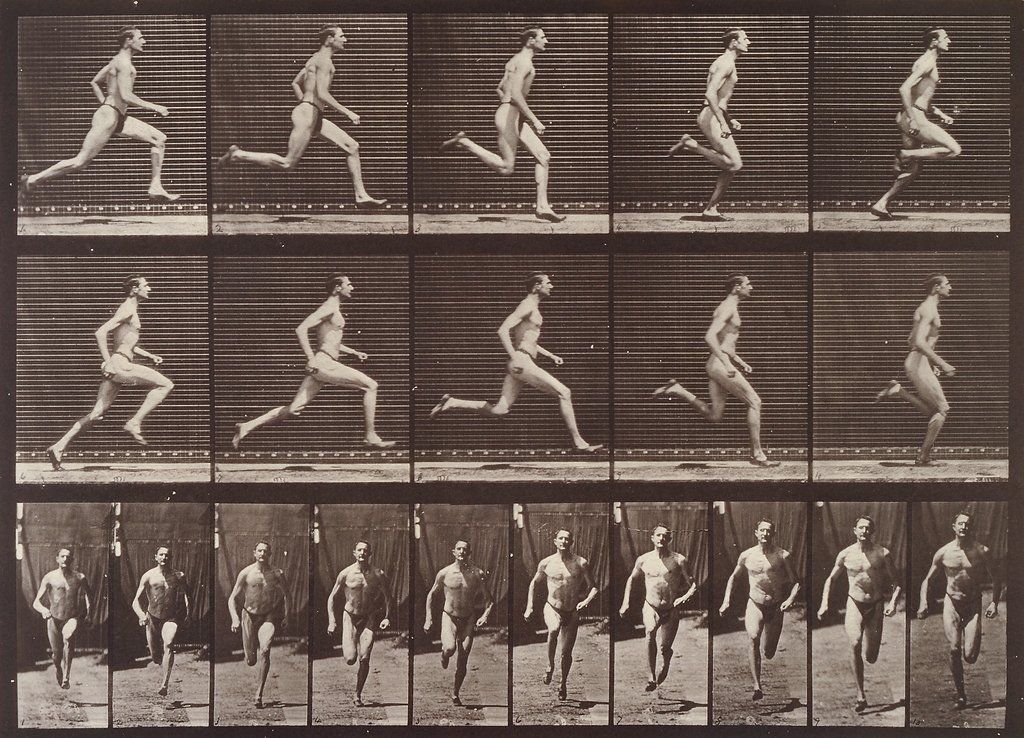
If it was available back in 1860 Doctor Leung Jan would have simply used ‘Time Lapse Photography’ and completely ignored the path of STANCES and FORMS.

Despite Stances being static they are an exploration of Human Movement, allowing us to look in detail at how our body is set up at different points in a possible progression.

Most importantly starting points and finishing points, but they can also function as a fault-finding method if we are not hitting the end stance position correctly when we move through a certain sequence.

When we look at Stances in relation to Forms we see a suggestion of how we would/could connect a start point Stance to an endpoint Stance.

STAND AND DELIVER!

Adding otherworldly importance or abilities to STANCES and FORMS has definite entertainment value if someone is a ‘Hobbyist’, but being involved in any kind of thinking that is not ‘RIGHT HERE-RIGHT NOW’ can only be detrimental to an aspiring Martial Artist.

We can only become the Martial Artist that we hope to be in 2,3 or 5 years by understanding and being the Martial Artist that we are today.
And we can only become that person by understanding the training we are doing today.

HOKKA HEY
WHAT KIND OF DAY IS IT FOR YOU?
FIST LOGIC

FEEDBACK LOOPS; BODY BEING.

We become familiar with the Body Being by creating and observing Feedback Loops.

In a nutshell, the ‘LITTLE IDEA’ is about understanding how to develop/build/create the condition/shape we are after and then learning how to use it.

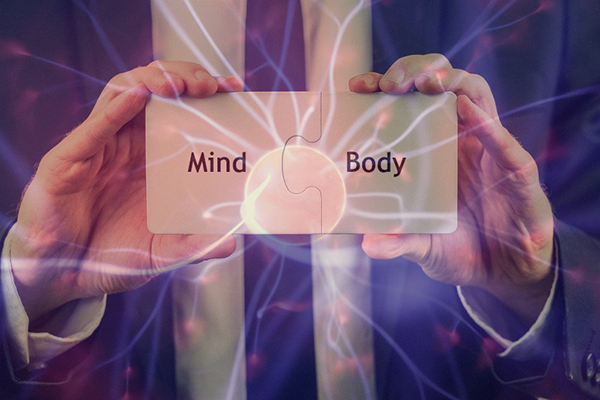
This aspect is often referred to as the MIND/BODY CONNECTION, but it is primarily about being a BODY.

BEING a better body than we are today, BEING a better human being.

HUMAN BEING – HUMAN BODY – BODY BEING.

To aid clarity when we are talking about experiencing the Mind and Body working together we can refer to this unity as ‘BODY BEING’.

BODY BEING is a manifestation of self-awareness.

Physical leading Mental.

Inner leading Outer.

We cannot “BE” something we are not aware of, something we do not know about.

We become familiar with the Body Being by creating and observing Feedback Loops.

AS ALWAYS…

WORK ON YOUR WEAKNESS’, PLAY TO YOUR STRENGTH.

HOKKA HEY

WHAT KIND OF DAY IS IT FOR YOU?
FIST LOGIC

TWO PATHS, ONE DESTINATION.

DAOISTS TO THE LEFT OF ME, BUDDHISTS TO THE RIGHT.

The scale is certainly different, perhaps that is all.

One pronounced effect this COVID lockdown and ongoing restrictions has brought upon me is that I have spent a great deal of training time on my own.

This has brought about an increased involvement in the more passive, internal side of the training, this is reflected in my teaching since we resumed.

I have a problem with this.

There is no doubt that the passive training benefits the active training and vice versa, however, I genuinely believe that when you train in the “External/Hard” approach alongside the “Internal/Soft” approach there is a very real potential to diminish both sets of work.

The reason is quite straight forward, the mind set, the emotional response and the physical condition that are required for either discipline are as close to opposite as we can get, it is an anti-matter/matter situation.

The Samurai, Vikings, Yaqui Shaman, Indian Warrior Princes, in fact all or any of the Priest of Mars from history were well aware of this and would take themselves away on “Spirit Quests” to spend serious time looking inward.

They would seperate themselves from all forms of violence or any other contact with the outside world or interaction with other people.

When the job was done, the vision received or the wisdom manifested and they returned to the world of men it was business as usual, no more meditation, no more ‘Mr. Nice Guy’ back to the old ‘hack and slash’.

I am fully aware that we live in different time with different reasons for the training we do but is what we do that far removed from the like of Spartacus or Alexander the Great.

The scale is certainly different, perhaps that is all.

But the way I think is the way I think.

Few of us could afford the time or find the motivation to go on a Vision Quest, but something we could and perhaps should do is put one week a month aside for just passive/soft/internal training and see where it takes us.

I know it will take us to a good place.

AS ALWAYS…

TRAIN YOUR WEAKNESS – WORK TO YOUR STRENGTH.

HOKKA HEY

WHAT KIND OF DAY IS IT FOR YOU?
FIST LOGIC

INTENT versus INTENTION.

OR INTENT.

Intent is innate, it is wisdom, it is MIND BOXING.

Intention is acquired, it is technology, it is FIST LOGIC.

Thursday evening I was talking with Costas and George, two of my senior students about plateaus, wrong turns and misunderstandings.

As with all hiccups in understanding Wing Chun they stem from the difficulty in translating pictures, pictograms, Chinese script, into words, built from letters as used in the English language.

We only have 26 letters to choose from to describe everything that exists.

There are always going to be problems, especially when we use certain different words interchangeably.

INTENT  – INTENTION we can even get a bit deeper into the weeds with INTEND.

My Sifu, a Hong Kong-born Chinese Gentleman with a  Mother Tongue of Cantonese, who spoke first-rate English, would say that the best that can be done when translating from Chinese to English is to guess and try to get as close as possible. 

The trouble begins when the desired guess sounds very similar to something with a different meaning.

This then becomes an issue with phonetics, in fact exploiting this difference is a popular comedic device, using a word that means something completely different in the place of the expected word.

“Did you hear about the bald guy that had Rabbits tattooed all over his head because from a distance they looked like Hares”

This is a very common literary device in English.

Hair – Hare.

Where – Wear.

Pear – Pair.

Red – Read, {past tense of Read}.

Boot – Boot, {car versus left in this case}.

This is compounded even more when the students first language is not English.

How can we describe INTENT in a way that is clear and easy.

Intent is stored power, potential.

Intention is directing where to put that potential to use.

Look at it this way, if we have 3 or 4 devices that use the same battery while the battery is on the shelf its potential is the same, it can play music, shine a light, drive a toy car.

As soon as we put that battery in the device its potential becomes the devices potential.

Intent is multi-functional capable of moving in any direction for any purpose, it is the energy to do work, it is capable of any work.

Intention is directing this energy, using the energy to perform specific work.

Intent is innate, it is wisdom, it is MIND BOXING.

Intention is acquired, it is technology, it is FIST LOGIC.

Now that we have cleared this up somewhat are we any closer to knowing how to use it?

After all, action is potential realised.

HOKKA HEY.

WHAT KIND OF DAY IS IT FOR YOU?
FIST LOGIC

MIND BOXING.

Does the value lay in the act of the practice or the product of the practice’?

What is Mind Boxing?

First off it is an actual style of Kung Fu, named Yi Quan.

Yi Quan derives its name from a training method that is an intrinsic aspect of all Southern Fist Styles.

Outside of Yi Quan ‘Mind Boxing’ is a term used for a group of methodologies that unite the Mental and Physical into a combined new and superior whole.

This revolves around Chi Kung alongside that of martial techniques.

Although I have practised {minimally} the internal Kung Fu styles of Bagua Zhang, Xing Yi and I have also spent significant time on Ba Duan Jin Chi Kung.

I cannot say that I believe in the cultivation or application of Chi, but there is little doubt that something is going on that is of great value to a martial artist.

Something I find interesting is that many if not all of the early civilisations had some kind of energy work, but only the Chinese talk of it as being a physical power generator.

There are some subtle but intriguing variations in the Global Practice.

The Shaman of the Yaqui Indians of New Mexico advise keeping the hands closed to avoid energy spilling out, and then the Mongolian Shaman advises to keep or hands open so that the energy can come in.

Apart from this, the systems are very similar in thought and process to Chinese Chi Kung.

What do we make of this?

There is no doubt that we can ‘excite’ areas of our body by directing our attention to that place, relax our muscles with just our thoughts and send blood to our extremities by breathing, but I am pretty sure we could do that anyway, we just did not notice.

The big question is…

Does the value lay in the act of the practice or the product of the practice’?

Let me reiterate that I am not doubting that there is value.

Is it Intent or Intention?

The explosion of money in professional sport over the last century has also brought an equal explosion into sports-related research, and created the fields of ‘Sports Science’, and ‘Sports Medicine’.

And with it ‘Sports Psychologists’, Muscular-skeletal specialists, Physical therapists and an ever-increasing list of allied disciplines.

21st Century Sports Shamans?

There are several areas were the work of the ancient Shaman is verified by our modern-day Shaman.

But no-one can find verifiable existence of Chi.

As I say I am not doubting that there is something going on, but what?

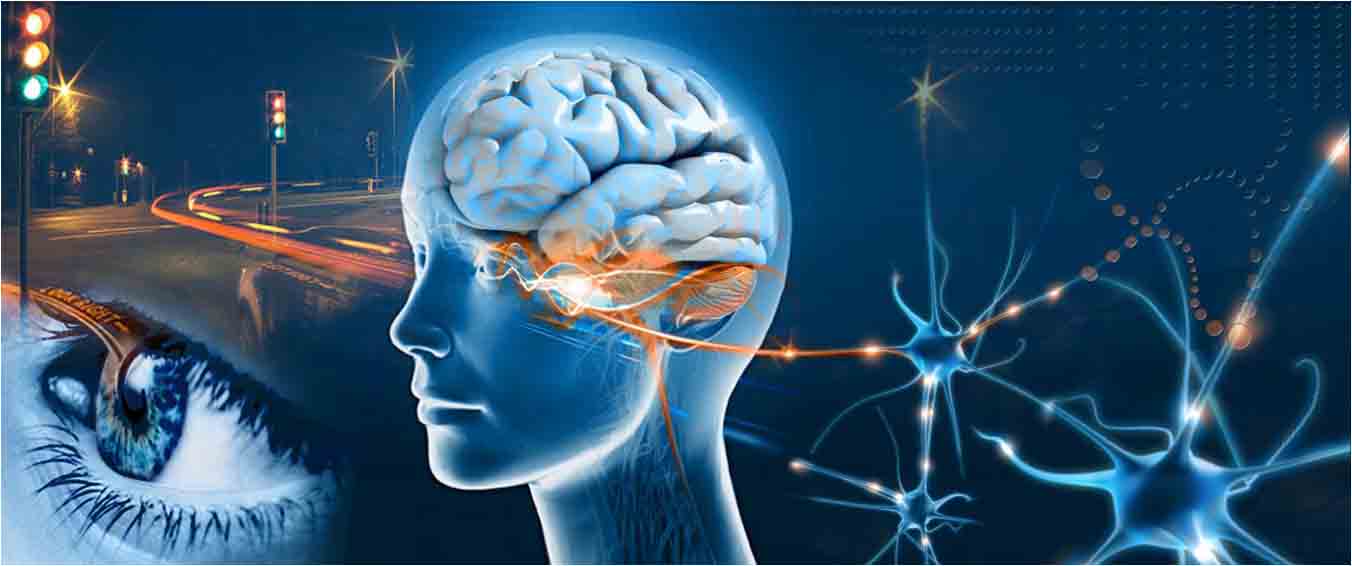
I believe that the juncture is the Neuro Biometric Boundry that controls all Physical movement, we are essentially rewiring or even reprogramming our brain.

As close as the old sifus were they just did not know what we know today, they were correct in thinking that the work is always done on the inside from the inside

Never disengage the mind in training or you will only be training your brain to hide away from what you think you are training for.

There is much more to come from me on this topic, it is just so very difficult to articulate.

HOKKA HEY.

WHAT KIND OF DAY IS IT FOR YOU?
FIST LOGIC

FOOD FOR THOUGHT.

This does not mean that we cannot reach the same destination by a different path.

The ancient Kung Fu masters did not explain or talk about the organising physics of our universe anything like the same way we western educated people do.

But that does not mean that they did not understand it, understanding something in a different way, even a completely different way, is still understanding.

Qi, jing, Yi, Sung are just words, used to describe a feeling, framed from the perspective of a certain philosophy.

These words make perfect and easy sense to a person that follows this type of philosophy and can manifest in many positive ways.

If we are not living this philosophy naturally in every minute of our waking day these words are meaningless and their practice is pointless.

This does not mean that we cannot reach the same destination by a different path.

Every wisdom tradition from every part of our world covers the same ground,

Every culture posses this profound knowledge and explains it very differently.

But it is the same thing.

Consciousness.

But it needs to be our own consciousness an not one borrowed from some exotic location.

Chi, Jing, Yi and Sung only exist in China, to be expected if we wish to talk about, experience or realise Chi, Jing, Yi or Sung we can only do it in China.

This does not in any way imply that the experience behind these words/names does not exist for example, here in Australia, but it will only answer and come to us when we use its Australian name.

As always…

WORK ON YOUR WEAKNESS’ – PLAY TO YOUR STRENGTH.

WHAT KIND OF DAY IS IT FOR YOU?
FIST LOGIC

COMMONALITY.

Finding different ways to enrich and expand what we consider to be viable ‘Solo Training’ should be a priority.

Post-Lock-down I have had a few students from other schools taking some short term instruction with me due to Covid.

With visitors, I make a real effort to sew as little confusion as possible, especially as the way I teach and talk about Wing Chun is so very different than their Schools/Instructors.

There is an idea that progress is gained by listening, learning and understanding what we do.

Especially Forms.

But I think there is another way.

‘Deciding’ what we want to do.

I talk to guest students more from the context of ‘sport’ than Wing Chun.

Take any bat and ball sport or any throwing sport and look at it from the context of body movement.

There is a ‘commonality’ to these actions, typically referred to as fundamental motor skills.

If we recognise that ‘commonality’, embrace it, we are half-way to knowing how to play all other sports.

Including Kung Fu.

Cricket, tennis, baseball, shot putt, discus, they all share that ‘commonality’.

All of us have a great deal of personal experience with sports, even if we consider ourselves pretty ordinary.

Therefore we all have personal experience of at least one expression of that same commonality.

The changes to how we train, brought about by COVID, creates an environment where ‘Solo Training” is more important than ever if we wish to move forwards or simply maintain our current level.

Finding different ways to enrich and expand what we consider to be viable ‘Solo Training’ should be a priority.

Areas of interest are Physcho-neural programming, in the 1980s I had great results from the Sybervision Programs with Golf and Tennis.

Psychoneuromuscular theory.

Visualization technique.

Cognitive/Insight Learning.

Extrinsic feedback.

VIDEO.

As always…

TRAIN YOUR WEAKNESS’ – PLAY TO YOUR STRENGTH.

WHAT KIND OF DAY IS IT FOR YOU?
HOKKA HEY.
FIST LOGIC

A BOOK REVIEW. THE CREATION OF WING CHUN. BEN JUDKINS and John Nielson.

Three complete make-overs in ten years! What The..?

Over Christmas, I treated myself to a ‘Kindle’ copy of Ben Judkins & John Nielsons…

“The Creation of Wing Chun”.

Ben Judkins is the creator of the blog ‘Kung Fu Tea’ if you have been to the blog, and if not ‘why not’? You will know his style, he is an academic researcher and not an Ernest Hemingway imitator.

Although the title is the History of Wing Chun there is far more to this book than imagined by the title.

Three-quarters of the book describes the social and political environment that Wing Chun emerged from, and we are all the better off for this, it adds depth and much-needed context.

It is academic work by a professional academic, be prepared for this, a few sections are like ‘wading through a swimming pool of leftover Christmas Custard’.

To paraphrase Winston Churchill…

“If you are wading through custard, keep going”.

Understanding the historical/social and political context that influenced the formation of Wing Chun answered so many questions I had not even realised I wanted to be answered, filled so many gaps I never knew existed.

The final quarter of the book focuses on Yip Man and Hong Kong and the creation of modern Wing Chun.

How it happened.

Where it happened.

Why it happened.

There are numerous enlightening insights into the beginning of what would become the most popular Martial Arts style on Earth.

One part that ‘really’ caught my attention…

 In 1949 the Chines Communist Party closed its borders with the European Enclaves of Macau and Hong Kong, this act separated thousands of people from their families, Ip Man was one of these thousands of now displaced people.

He did not see his sons, Ip Chun and Ip Ching for over 10 years.

Without giving too much away during the 1950s Ip Man changed the content and the way of training his Wing Chun three times, so much so that when he was eventually reunited with his sons they hardly recognised what he was teaching.

Three complete make-overs in ten years! What The…..?

When we consider that two of his most notable and respected students, Wong Sheung Leung and Chu Shong Tin, also made their own major changes to the content and teaching of the style it becomes almost redundant to talk of “correct” Wing Chun. 

This is a slow and sometimes sluggish read but if you are at all interested in Wing Chun it is essential reading.

The history of Wing Chun is not at all as we think it is, one thing that is clear is that through its “Golden Years” the only constant was constant change.

as I always say…

WHAT KIND OF DAY IS IT FOR YOU?
FIST LOGIC

SPINAL STABILISATION.

The Little Idea???

MOVING ON THE OUTSIDE, STILL ON THE INSIDE.

Where or what is the ‘LITTLE IDEA’.

Could it be that we are the ‘LITTLE IDEA’?

Any training is really about self-realisation.

The development of a new self, or at least a new vision that goes above and beyond us, sets new paradigms, attains new heights.

A self that is physically, mentally and emotionally on a different level.

A competent and capable self.

Trained and ready to face any challenge. 

Not just violence.

Wing Chun is a vehicle.

But like any vehicle on any long journey, we would do well to know how it works, how to fix it when it breaks down, to treat it with respect, so that it lasts us a life time.

On any journeys of significance, as we progress, we accumulate new knowledge and develop opinions.

Opinions that change as we gain further knowledge.

It is how we grow, move forward, transcend.

At this juncture, my opinion is this… 

The most important aspect of our training is to stabilise our spine.

 I believe that this is ‘THE NUCLEUS OF THE LITTLE IDEA’!

All of our training, all of our FORMS, our drills, our Chi Sau and whatever else we are involved in and around are nothing more than ‘stress tests’ to see if we can play them and maintain “a stable spine’.

If this is ‘THE NUCLEUS OF THE LITTLE IDEA’, what is ”THE LITTLE IDEA’?

It grows from using this Nucleus, thinking about this Nucleus, becoming this Nucleus.

MOVING ON THE OUTSIDE, STILL ON THE INSIDE.

Task number one.

HOW DO WE STABILISE THE SPINE?

There are numerous methods although ultimately they all boil down to Intra-abdominal Pressure {I.A.P.}

I am in no way a physical therapist, I am not going to advise you how to do this, but to be expected there is a ‘living shit tonne’ of videos on Youtube, by real doctors.

This is a decent one for getting the general gist of where and how to start.

Watch this and then surf the recommended video links on the right of the presentation and find one that makes sense to you.

Work on this alongside your ‘Crazy Horse’ exercises.

‘Crazy Horse’ is an awareness and conditioning exercise, in time we need to infuse I.A.P. into it.

This is not particularly difficult, but neither is it quick.

In the numerous styles that I have studied there has always been talk of breathing techniques, Buddhist breathing, Daoist breathing, belly breathing, diaphragmatic breathing, breathing into our feet the list is endless.

They are all on the right track but they are also wrong in so many ways.

It was not until about 5 years ago when I was seeing a rehab specialist for several weeks, at the ‘Pain Clinic in Liverpool Hospital’, that I was finally able to put all the pieces together

We always boast that what we do in Wing Chun is based on ‘normal, human body movement’ but few schools teach ‘normal, human body movement’.

They teach Wing Chun movement, which is so very rarely normal and only partly human.

I know that I am repeating myself here…

First, let’s be better humans.

As always…

WORK ON YOUR WEAKNES’S – PLAY TO YOUR STRENGTH.

WHAT KIND OF DAY IS IT FOR YOU?
HOKKA HEY!