FIST LOGIC

CONNECTING TO NATURAL HUMAN BODY MOVEMENT

A General Theory of Fighting Arts becomes grounded in Human Movement and not, as it so often is, ‘Esoteric Ideology’.

 The General Theory of Fighting Arts is a term widely used to try to get students to identify the mutual movements of all martial styles, and the alignment with most dynamic sports.

One thing we have all been told, and if we are talking to beginners or non Wing Chun people often repeat is that ‘Wing Chun movement is based on normal human body movement’.

I do not think that students give enough credence to this statement, that ‘Wing Chun movement is based on normal human body movement’.

It gets treated as if it is just some sort of cagey advertising spin just as many Instructors still claim that Wing Chun was invented by a woman, a device to encourage smaller, less athletic men to take up Wing Chun instead of a rival code.

But Wing Chun IS based on normal human body movements.

If we approach the work from this perspective and look at what is presented and how it is presented, we see a pattern emerge, that in the progression of the FORMS, as we move from the first Form to Chum Kiu and then Biu Gee, this progression is nothing more than the introduction of more complex movement for people not familiar with this way of moving.

This approach more than likely had merit back in 1860s Foshan but today, due to the average sporting curriculum of most western schools every 12-year-old child is familiar with these moves.

A very large proportion of what is introduced through the Forms is simply unnecessary, at least from the point of view of controlling our body.

Do not get me wrong, the FORMS are needed for other reasons so I am not suggesting abandonment.

But we can easily be moving at a level that is needed for any aspect of the work be it the Dummy, the Pole or the Knives if we put more practice and focus into moving better as a Human.

Take any movement or action from any sport, especially a throwing or bat and ball sport, and you will find the moves somewhere in the Form.

 A General Theory of Fighting Arts becomes grounded in Human Movement and not, as it so often is, ‘Esoteric Ideology’.

This week spend some quality time exploring the similarities between Martial Movement, Sports and Dancing, once you see how they amalgamate, consolidate and integrate FORMS become a secondary consideration. 

IMAGINE, MANIFEST AND WORK ON THE IDEA OF THE FRAME.

And while you a re at it put some minutes into the MAGNIFICENT SEVEN.
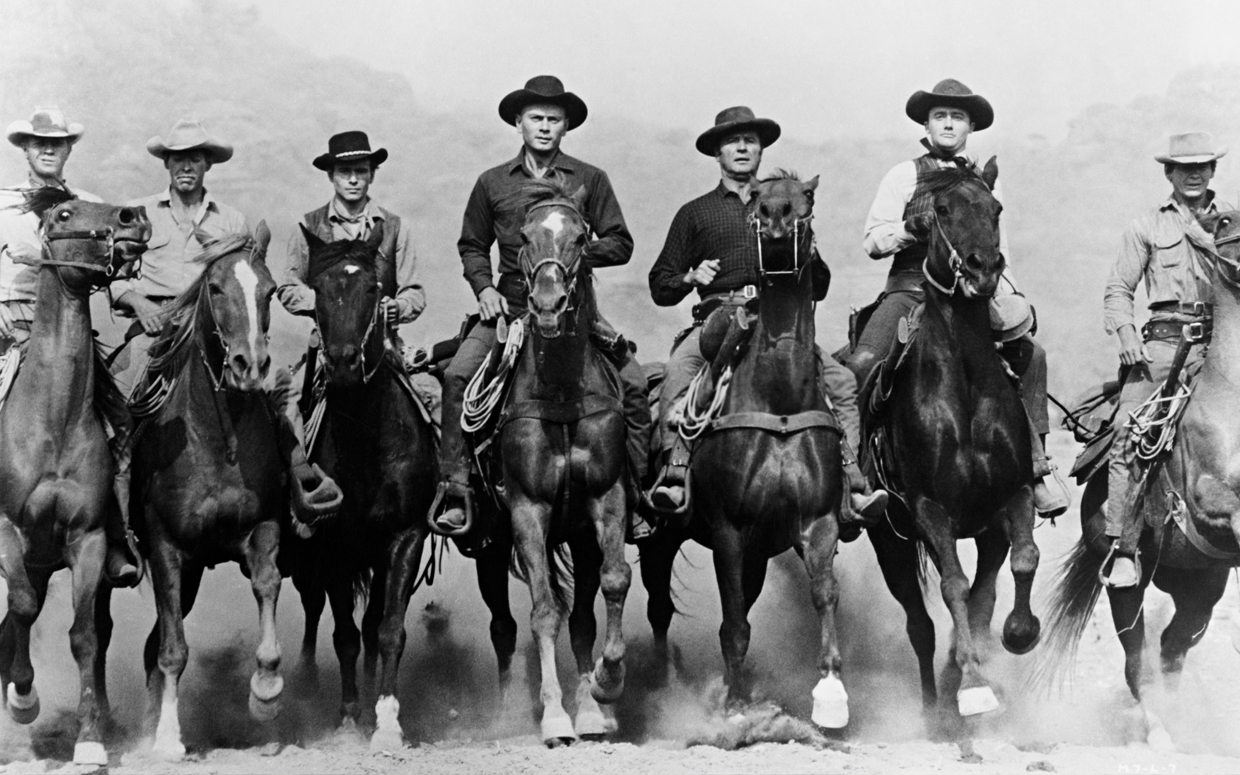
Here they are, and here is a recap.

WHEN YOU UNDERSTAND, THINGS ARE JUST THE WAY THEY ARE.

WHEN YOU DO NOT UNDERSTAND, THINGS ARE JUST THE WAY THEY ARE.

HOKKA HEY

WHAT KIND OF DAY IS IT FOR YOU?
FIST LOGIC

FABRICATING THE FRAME.

Simplification of information requires that at some point we need to be overcomplicated and moderately confused.

We all know that Wing Chun is a concept based Martial Art that is based around the Sil Lim Tao.

The ‘small thought or little idea’.

But what exactly is that?

After 30 years of training, I have concluded that the Sil Lim Tao as a concept is a Chinese equivalent of the ‘Law of Parsimony’.

Simplification of information requires that at some point we need to be overcomplicated and moderately confused.

We better get started is all I can say.

The IDEA of the ‘FRAME’ as a virtual reality 3-dimensional construct that we constantly use as our method of representing points in a space of given dimensions by internal physical coordinates. may sound a bit whacky at first but it is simple, quite elegant and readily accessible to anyone with any imagination.

Over the coming weeks I will attempt to expand and simplify the whole IDEA of building and working from the FRAME as opposed to using more common, physical or mechanical means.

This methodology is central not only to Wing Chun but to most other Martial Arts, all sport or any form of movement technology that is intended to be functional such as dance or acrobatics.

HOKKA HEY

WHAT KIND OF DAY IS IT FOR YOU?

FIST LOGIC

WILL THE REAL WING CHUN PLEASE STAND UP?

MY TEACHER, JIM FUNG, PASSED ON 18 – 03 – 2007.

Wing Chun is in danger of becoming a dinosaur or worse yet a religion.

Who did what, where, when and why?

Back in the mid-1850s, Leung Jan of Foshan {the creator of Wing Chun} was a doctor, herbalist and bonesetter working with the Red Boat Opera Troupe in Guangdong Province.

From his experiences with the Martial Arts actors of the Red Boat Troupe, he formulated a new Martial System that he called Wing Chun.

As a bonesetter, he would have been conscious of anatomically correct movement, and of course, would have avoided any of the injury-causing movements that he would have been treating the Red Boats Martial Artists for.

If we relate his situation/position then to what occurs today he would have been akin to a modern-day Physical Therapist working through a CrossFit Gym.

Perhaps along the lines of T.R.S’s Kelly Starret or Smashwerx’s Trevor Bachmeyer.

He was coming from a position of avoiding injury but more importantly doing things better than before.

Fast forwards to 1950, Hong Kong, Ip Man opens a school that would ultimately bring Wing Chun to the world.

It is doubtful that Ip Mans Wing Chun was remotely similar to Leung Jan’s, his knowledge came from a variety of sources and from the outset his ideas reflected the living experiences he had as an undercover policeman and intelligence officer.

Dark alleys, multiple attackers.

It is well documented that Ip Man deliberately removed many of the traditional Chinese elements from his Wing Chun, such as the Bagua and 5 elements, to appeal to the more modern thinking young people of post-civil-war Hong Kong.

Three times Ip Man changed the presentation and content of his Wing Chun to the point that when his sons joined him in Hong Kong in the early 1960s they did not recognise the art he was teaching compared to the art he taught them in Foshan.

Ip Man was feeling the pulse of the times and quite possibly created a new Martial Art.

Just like Dr Jan of Foshan, he was coming from a position of doing things better than before.

Two of Ip Mans more famous students, Wong Shun Leung and Chu Shong Tin, went on to make severe departures to what Ip Man had taught them, interestingly their changes were in contrary directions to each other.

Their reason for the change was more an update than a reinvention, they were coming from the same position of doing things better than before.

Ip man passed in 1972, Wong Shun Leung passed in 1997, Chu Shong Tin passed in 2014.

If we look around the Wing Chun world, everyone is ideologically stuck in the late 20th century Hong Kong.

Wing Chun is in danger of becoming a dinosaur or worse yet a religion.

Surely it is time for someone to be coming from a position of doing things better than before.

The old torches have long since burnt out.

WHEN YOU UNDERSTAND, THINGS ARE JUST THE WAY THEY ARE.

WHEN YOU DO NOT UNDERSTAND, THINGS ARE JUST THE WAY THEY ARE.
HOKKA HEY

WHAT KIND OF DAY IS IT FOR YOU?
FIST LOGIC

SOLO PLAY, THE RULE OF THREES AND SOME OTHER STUFF.

“Are these moves really important, or are we being played”?

The ‘RULE OF THREES’ is a useful tool when presenting anything to an audience, it tends to get more engagement.

When we consider how closely related Kung Fu is to Theatre and Ritual it is easy to see why this tool is so widely used in Kung Fu Forms.

In Wing Chun, we are told that any movement in any form that is done three times is of more value to our training than something done twice or only once.

The question arises, unwelcome as it is…

“Are these moves really important, or are we being played”?

All that aside, on Thursday evening we did some things that I would like us all to be on the same page about.

Solo training can be difficult to value, but I assure you without a serious approach to solo training we remain nothing more than players.

HOKKA HEY

WHAT KIND OF DAY IS IT FOR YOU?
FIST LOGIC

SINKING AND RISING.

SINKING INTO AN UPWARDS ARROW.

Getting a better understanding of Dai Sigung Issacs theory of the “conservation of momentum” will be of more value to us, from the perspective of practical application than 5 years Chi Sau.

All power production is the result of how well we move or control our weight.

The most natural and easiest method is to simply drop our weight down toward Mother Earth or lift it towards the Heavens, and of course we experience this in our Heaven and Earth stretch.

The most important thing to remember when we drop our weight is that it goes with gravity, straight down, not towards a chosen place or target.

In line with this when we lift our weight it also travels in a straight line, from the floor to our Pelvic Centre and not toward a chosen destination.

Dropping and lifting our weight is what I refer to as “Sinking and Rising”.

I prefer this term because it implies control and not happenstance.

Getting a better understanding of Dai Sigung Issacs theory of the “conservation of momentum” will be of more value to us, from the perspective of practical application than 5 years Chi Sau.

Work hard at understanding the IDEA of “Sinking and Rising” but do not think that it is any more important than everything else we do.

Knowledge is gained by adding something every day.  Wisdom is gained by taking something away every day.

HOKKA HEY

WHAT KIND OF DAY IS IT FOR YOU?

FIST LOGIC

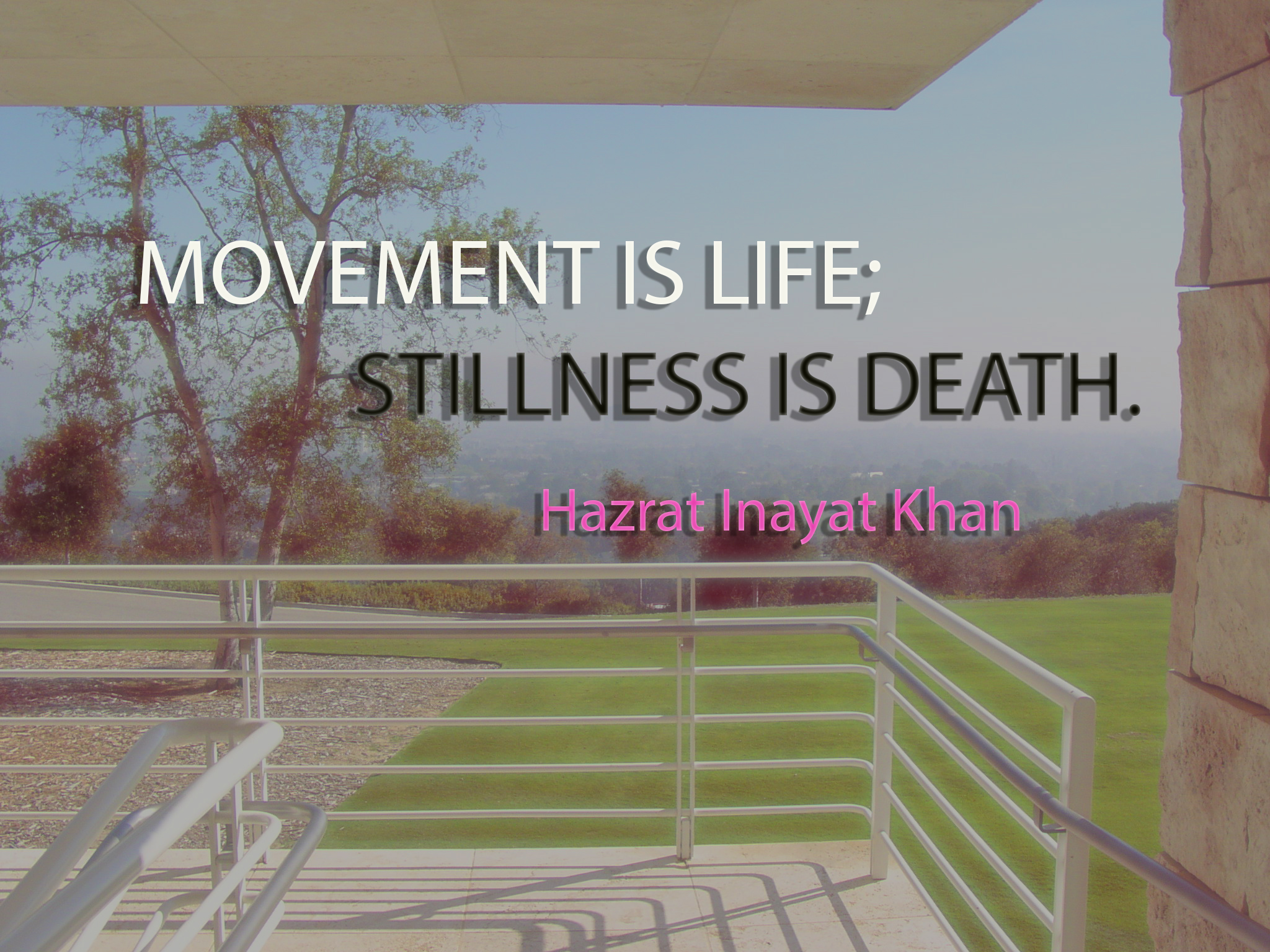
THE DEATH OF STILLNESS.

A VIEW FROM THE GETTY, LOS ANGELES.

Stability is having control of the body while we are moving or being affected by an outside influence.

Movement is born from stillness. Movement is the death of stillness.

This is a self-evident statement overlooked during training, especially in the pursuit of Stability.

Balance and Stability are frequently used interchangeably, I plead guilty to that myself, but they are two very different things.

Balance is having control of our body under the influence of gravity alone. Essentially standing still.

Stability is having control of the body while we are moving or being affected by an outside influence.

Think of it this way…

While practising the First Form, our body is still and we can work on being aware of what it means to be in balance.

While practising Chum Ku our body is moving, our balance is effectively surrendered but working on maintaining the connections of our body brings about stability.

Stance training is about working on these connections, understanding them, internalising them.

Things to look for and explore during stance training are conditions such as…

Where is our ‘Line of Gravity’?
Where is our ‘Centre of Gravity’?
Where is my ‘Lower Tantien?
Where is my ‘Middle Tantien’?
What is the relationship of each of these to each other
Are we in ‘Balance’?

Moving or transitioning from one ‘Stance’ to another ‘Stance’, which is what we are doing as we play Chum Kiu, requires that we ask ourselves the same set of questions as we move.
Where is our ‘Line of Gravity’?
Where is our ‘Centre of Gravity’?
Where is my ‘Lower Tantien?
Where is my ‘Middle Tantien’?
What is the relationship of each of these to each other?
How is the alignment of my feet to my ‘Lower Tantien’?
how is the alignment of my Arms to my ‘Middle Tantien’?

And of course, once we arrive at/in our new ‘Stance” we ask once more…

Where is our ‘Line of Gravity’?
Where is our ‘Centre of Gravity’?
Where is my ‘Lower Tantien?
Where is my ‘Middle Tantien’?
What is the relationship of each of these to each other?
Are we in ‘Balance’?

If we choose to stop a movement mid-transition, something I recommend, this becomes a ‘Stance’ and we begin the test again.

Hitting each other, doing drills and playing Chi Sau are fun games to prevent boredom and stagnation.

Stance training is where the ‘Gold’ is.

We started with a truth that sounds like a cliché, so let us also end with one…

Moving quickly evolves from smoothness. Soothness evolves from moving slowly.

Learn the form, but seek the formless.

Learn it all, then forget it all.

Learn The Way, then find your own way.

HOKKA HEY

FIST LOGIC

CAN EVERYTHING/ANYTHING BE A FORM?

It is quite ridiculous to think that any single set of movements truly reflects the IDEA.

WITHOUT DEEP THINKING, TRAINING IS SHALLOW AND MEANINGLESS.

HERE IS SOMETHING TO THINK ON.

What are Forms for?

Forms are movement.

Some Forms have very little movement, others have lots of movement.

Essentially movement is just movement.

QUESTION: What makes one FORM any different, useful or more meaningful than another Form?

ANSWER: INTENT.

But not INTENTION.

Do we know the difference?

INTENT is potential.

INTENTION is channeling that potential.

Without INTENT there can never be INTENTION.

It is evolutionary.

INTENT is Intrinsic Energy, INTENTION is directing that energy to organise and mobilise the body.

Therefore; movement is an expression of INTENTION.

QUESTION: Is the Sil Lim Tao Form a vehicle for the development of INTENT or a vehicle for the direction of INTENTION?

It cannot be both.

All Martial Arts Styles have Forms, Kata, Movement Sets or Drills.

Do they serve the same purpose as our Form?

This is worth thinking about.

Let me reiterate; movement is an expression of INTENTION.

ARE FORMS VALID TRAINING?

All training is task specific.

What ‘specific task’ are we attempting when doing the S.L.T?

Avoid the self-delusion of thinking that the specific task is to do the Form.

The task is to illuminate the IDEA.

The shape of the S.L.T. Form {the complete set of Wing Chun ideas presented through all 6 forms} does not create the IDEA, it is the IDEA that created the shape we call Form.

It is quite ridiculous to think that any single set of movements truly reflects the IDEA.

It is closer to the mark to think that all movement reflects the IDEA.

Many other styles achieve the same end, the same IDEA, from very different Forms, different movements, different shapes.

What then is the IDEA?

The IDEA is a representation of the “HUMAN CONDITION”.

Wing Chun is exploring the Human Condition from the position of a Martial Art.

The best method is…

Learn the form, but seek the formless.

Learn it all, then forget it all.

Learn The Way, then find your own way.

HOKKA HEY

WHAT KIND OF DAY IS IT FOR YOU?
FIST LOGIC

SUMMATION OF FORCES IN SHIFTING.

The illustration above could very well be someone throwing a punch.

Monday evening I was working on Sequential Acceleration and Summation of Forces with Saleh, it is important to understand that in Wing Chun the overall instruction of correct movement is scattered throughout the Sil Lim Tao { the complete S.L.T. Containing Chum Kiu and Biu Gee}, no single part of the Form has all of the pieces, some assembly is required.

Separate aspects of Chum Kiu and Biu Gee introduce all of the mechanical IDEAS for shifting our weight both inside our frame and through space that is later mixed and matched through the Dummy, the Knives and the Pole to give us a more complete view.

The illustration above could very well be someone throwing a punch, all it needs is to adjust for a more vertical spine.

The exercise usually equated with pre-Long Pole training is the culmination of all of our moving mechanisms and the closest we get to practical Martial movement.

Summation of Forces.

The combination of forces produced by different parts of the human body. When a person is moving or attempting to move an object, several different parts of the body act together to maximize the force. In theory, force summation occurs when all body parts act simultaneously In practice, the strongest and lowest body parts around the centre of gravity (e.g. trunk and thighs) move first, followed by the weaker, lighter, and faster extremities. This is known as sequential acceleration and results in successive force summation. To obtain a maximum force, summation also needs sequential stabilization of body parts, with some body parts having to be fixed at stable points while other parts produce the effective forces. OXFORD DICTIONARY OF SPORT.

THE ONLY WAY TO BE A BETTER MARTIAL ARTIST IN 3, 5 OR10 YEARS IS TO UNDERSTAND THE MARTIAL ARTIST WE ARE TODAY.

HOKKA HEY
WHAT KIND OF DAY IS IT FOR YOU?
FIST LOGIC

Accepting Honesty.

It is well documented that there are far more non-violence related benefits to Martial Arts training than those that only benefit fighting.

A theme that reoccurs on this blog is that the most important attribute for a Martial Artist to develop is HONESTY.

Personal honesty.

Not bullshitting ourselves.

Everywhere, all of the time.

It begins by being honest about the effectiveness of our chosen style to perform were we would wish it to perform.

Which leads to being honest about our ability to use that chosen style.

The major benefit of any style of Martial Art training is that little by little they lead us to a position/stance of more refined understanding of ourselves, a better human being, a higher honesty.

But it begins by being honest about what we do and why we do it.

It is well documented that there are far more non-violence related benefits to Martial Arts training than those that only benefit fighting.

There is nothing negative about approaching training as a hobby.

You will still learn all the moves, all the skills and if you were in a situation that required them they would most certainly work.

How do you define a situation that requires you to use your training?

This is a matter of ‘personal philosophy’ and not Martial Arts.

We may not see it clearly but every choice we make in life is decided by our chosen, working philosophy.

If you are any kind of religious/spiritual/mindfulness person then violence is not the first choice of solving any problem.

That is a central tenet to all of the religious/spiritual/mindfulness philosophies.

If you turn the other cheek you will get hit a second time, then what?

What is the philosophy of your Martial Art?

Do you know it?

Does it have one?

What happens if it clashes with your favoured philosophy?

To answer this requires HONESTY.

If you are thinking that you can change horses in mid-stream due to the situation, you are disrespecting both the new and the old philosophies.

HONESTY is not binary.

It is always on, or always off.

This is the beginning.

This is the hidden agenda for all Martial Arts.

The acceptance of HONESTY as an absolute, not an option.

IF WE WISH TO BE A BETTER MARTIAL ARTIST IN 3, 5 OR 10 YEARS WE MUST UNDERSTAND THE MARTIAL ARTIST WE ARE TODAY.

HOKKA HEY

WHAT KIND OF DAY IS IT FOR YOU?

FIST LOGIC

THE REALITY OF THE UNREAL.

AFTER YOU, OR IS IT AFTER YOU OR MAYBE YOU?

The IDEA {S.L.T.} creates the method we call a Form as a way to describe itself to itself, nothing more.

There is only one stance, and we are always in that stance even when we are moving or standing in a completely different shape.

Say what?

Our first task is to make sense of what appears to be this non-sensical statement.

Where to begin?

In the book of 5 rings, Miyamoto Mushashi says “it is necessary to maintain the combat stance in everyday life and to make your everyday stance your combat stance”.

Thousands perhaps millions of Martial Artists have at least read this quote, perhaps even used it.

So let us start there.

Exactly what is our ‘everyday stance’?

Do we know?

What kind of knowledge do we need to understand our Everyday Stance?

 Proprioception?

Kinaesthetic awareness?

 Spatial imagination?

Is a STANCE a shape?

Or is it the IDEA of a shape?

As we all know everything we do in Wing Chun is Sil Lim Tao.

Sil Lim Tao is not a method, it is an IDEA, it is a view, a position a STANCE.

The IDEA {S.L.T.} creates the method we call a Form as a way to describe itself to itself, nothing more.

This method we call the FORM brings the IDEA {S.L.T.} into view as a tangible, explainable thing, in reality, it is nothing more than a language.

And in doing so we claim that the FORM verifies the IDEA.

Self-verification is a dubious currency, we must tread this path with caution.

Mental gymnastics, reality suspension, believing things that do not exist in any measurable way.

This is the core of what we do.

Understanding what is meant by ‘There is only one stance, and we are always in that stance, even when we are moving or standing in a completely different shape’ should be child’s play.

As sentient beings how we describe the world and the things in it to ourselves is central to our understanding.

The language we use is key.

How we describe what a STANCE is and does will shape what it is and what we can expect it to do.

Describe its POTENTIAL, both present and future.

It is a personal thing, we choose teachers that speak the same language, use the same references, talk in the same pictures.

There is no “Right” or “Wrong” just different illustrations that we do or do not understand.

A STANCE to me is an energy storage device, a battery if you wish, when it is empty I can accept force into me to charge it up and when it is charged I can issue force, use that energy to do work.

Empty batteries cannot do work.

Our most important task is to learn how to charge the battery.

A ready STANCE may appear to be still and motionless but it should be full to the brim with potential that is screaming out to be converted into kinetic energy.

Turning energy into work could go something like this.

From stillness/readiness, or just the position we find ourself in, what is the simplest, easiest kind of movement that we can make, what is available or even possible?

Why are we making this particular movement?

For instance, are we moving out of the way or into contact?

What stillness/readiness/position does this movement lead us into and how does the sequence progress?

Using this method we could if we wished, build situation-specific Forms.

If we do not know the answer to these questions before we ask them our movement becomes random, pointless.

They lack ‘INTENTION’.

Any movement must be instant, deliberate and accurate, any cessation of movement must be absolute.

There are limitations to all movement, every action has a start point and a finish point.

STANCE – MOVEMENT – STANCE.

Duration or ‘action length’.

Controlling that ‘action length’ brings neutralisation and control.

Understanding my personal ‘action length’ will familiarise me with my opponents ‘ action length’, the science of our Universe is the same for all of us.

When I move to my new stance it must be outside my opponents ‘action length’, my leg or foot must move farther than his and in doing so break his shape and intention.

When we move an opponent we must move him farther away than his stance is located.

We can explore this as a Chi Sau exercise.

IF WE WISH TO BE A BETTER MARTIAL ARTIST IN 3, 5 OR10 YEARS WE MUST UNDERSTAND THE MARTIAL ARTIST WE ARE TODAY.

HOKKA HEY
WHAT KIND OF DAY IS IT FOR YOU?