FIST LOGIC

LEAD-IN TO UNDERSTANDING ‘CONCEPT’

Ip Man more than likely created the world’s first MacDojo, teaching students basic Kung Fu moves.

Thinking Hats on guys.

This is a warm-up piece to set some sort of ‘context’ to when I try to explain what I ‘THINK’ it means to be a Concept Driven Martial Art.

To understand Wing Chun today we need to have some idea of where it came from, which is almost impossible as most of what is thought as our history is just B.S. pushed out by unscrupulous Martial Arts Entrepreneurs such as William Cheung and Leung Ting, and all who copy them today.

The history of Wing Chun is at best vague and mostly fictitious but after decades of serious research by dedicated professionals, we think we know that what we call Wing Chun was formulated by Doctor Leung Jan from Guangdong in S.E. China.

Dr Leung was a Shaolin Kung Fu practitioner of some merit and a medical doctor that is reported to have worked closely with the Red Boat Opera Company.

Opera companies consisted of a troupe of performing Martial Artists that used most styles of Kung Fu to tell their stories.

Dr Leung’s role in today’s terms would be that of a physiotherapist and sports doctor, and then, as now, his main job would have been to keep the Opera Martial Artists fit, healthy and able to perform.

THINK KUNG FU CROSSFIT.

In this way, he would have automatically compiled a catalog of movements that caused serious physical injuries to the person performing them and other movements that did not cause any injuries to the person performing them.

Keep this in mind, I believe it is central to getting this thing of ours.

KNOWN HISTORY, NOT FAKE HISTORY.

Throughout the 1600s to 1800s Guandong, especially the Peral River Delta, was in a state of constant war, rebellion, or just plain old social disorder.

There is no need for extravagant Martial Art mythologies, the reality of the times was far worse than any movie.

The Pearl River Delta experienced an almost continuous assault from Japanese Pirates to the Portuguese Navy to the British Navy, French Navy {the opium Wars}, the Taipings and then the Heaven and Earth Society it is no wonder that Foshan became a center for respected Martial Arts learning.

Those skills were needed to survive.

For whatever reason in the mid-1860s, Dr Leung decided that his chosen Martial Art was not quite fit for purpose, it is easy to imagine that with him being a well known wealthy businessman and the breakdown of social order he would have been the target of many attempted muggings or robberies.

He decided to do something about that.

Aided by his medical knowledge and years of repairing the damage to the Red Boat Opera Crew he devised a way to refine everything he knew.
At first, this was just a family thing.

Outside of his apothecary was a money lender named Chan Wah Shun, we can only imagine the problems he faced at this unstable time.
Dr Leung passed his knowledge onto Chan Wah Shun, it is highly unlikely that Chan Wah Shun did the same Martial Art as Leung Jan as he was reported to be a very large and strong man, but he was able to use Leung Jan’s method to improve what he knew.

Chan Wah Shun was the first person to teach this new method publicly, his last and most famous student was Ip Man.

From the beginning Wing Chun, if it was called that back then, was about refining and improving a known set of physical movements.

Ip Man and Hong Kong.

After the Chinese Civil War, Ip Man was in Hong Kong and found himself in a perilous position, not only was he from a wealthy landowning family but he had also worked with the K.M.T. The Nationalist government, so he would have definitely been on the communist hit list because of this he stayed in Hong Kong.

Ip Man needed to live so he began to teach Wing Chun publicly at the Restaurant Workers Union.

These Unions were not like our Labour Unions they were more an employment agency that provided workers to employers, Kung Fu lessons were provided free by the Union as a way to get people to sign up to that Union.

Ip Man more than likely created the world’s first MacDojo, teaching students basic Kung Fu moves.

Then as now, students came and went rarely attending for more than three months, to try to keep up with the requirements of the post-war young men Ip Man would change what he taught as Wing Chun in an attempt to placate the paying customers.

Let’s be fair he needed to eat.

When his children rejoined him after a ten-year forced absence they did not recognise what he was teaching.

However, if anyone stayed long enough to learn those basic Kung Fu moves he would then introduce them to what has always been the true work of Wing Chun, how to refine and improve what is already known.

This description of our history and about Ip Man upsets many students and I have had many heated conversations, but it should not, it is honest and for my money, it helps us get to the place where Wing Chun lives.

All Wing Chun Schools are MacDojos until the students have genuine skills that can be refined.

I think that this is actually a very good thing and not as negative as it sounds, the trick will be ‘can I convince you’.

 Talent hits a target no one else can hit; Genius hits a target no one else can see. 

– Arthur Schopenhauer 
HOKKA HEY.
WHAT KIND OF DAY IS IT?
FIST LOGIC

WHICH SIDE ARE YOU ON?

LISTEN TO YOUR HEART

This is where ‘CONTEXT’ becomes more important than content.

The last post generated a lot more chat than usual, and as a result, I have had a few interesting conversations about the ‘What and Why” of training.

You have all heard me say on many occasions that “if you do not know what you are looking for, you will struggle to find it”.

It is not just me that thinks this way.

Men occasionally stumble over the truth, but most of them pick themselves up and hurry off as if nothing ever happened.

Winston Churchill

It makes little difference if we think that Wing Chun is a self-defence system or fighting style because when we do get in trouble, we will not be thinking, we will just be doing our STUFF.

But it does make a ‘Massive’ difference to our training.

Because that is where we get the information that becomes our STUFF.

So it is a bit of a no-brainer that the most important thing for any of us to get from our training is confidence in the information.

Not only confidence that what we are being taught will work, everything will work if we get the chance to use it.

But confidence that WE would be able to use that information as intended. 

Does our training leave us fully and correctly prepared?

Not just physically and mentally.

But EMOTIONALLY.

So that confidence we are developing had better align itself with how we present ourselves to the world, and most importantly how we think about ourselves.

If not, when push comes to shove, we will hesitate to make that decision, it will go badly for us.

HE WHO HESITATES IS LOST – “Swift and resolute action lead to success; self-doubt is a prelude to disaster.  

Joseph Addison.

This is where ‘CONTEXT’ becomes more important than content.

This is why we must know if we are learning to defend ourselves or if we are learning how to fight.

There is no right or wrong side it is simply a choice.

If you are training with me and think you are learning how to FIGHT, you are with the wrong teacher.

Do not let this confuse you, self-defence is not being SOFT.

Self-defence is not “NOT FIGHTING”.

Self-defence is a starting position, it is a choice we make to allow the ‘Bad Guy’ to make his own bed.

Then we put him in it.

That is a choice I can live with.

That is a choice that reflects how I see myself.

WHAT MOON?

 Personally, I’m always ready to learn, although I do not always like being taught. —

Winston Churchill

FIST LOGIC

WING CHUN DOES NOT FIGHT.

NOT TODAY THANK YOU.

Training to be capable of responding to violence does not make us a violent person, it makes us a prepared person.

RESPONDING TO ANTI-SOCIAL VIOLENCE.

Just like the majority of Martial Artists, my hope is that I never need to use my training. I hope to never again experience violence. 

To be honest, I do not like violence, and the thought of being involved in violence is uncomfortable.

However training in any Martial Art for whatever reason, be it sport, aesthetics, fitness or cultural curiosity, is at its core a study of violence.

An attempt to understand and be able to respond to violence.

Training to be capable of responding to violence does not make us a violent person, it makes us a prepared person.

“Chance favours the prepared mind”. Louis Pasteur.

Do we think that violence can be understood? It is such a vast field.

For instance, although what we do is called Martial Art we are not talking about Military Conflict.

That is a different version of violence altogether.

As non-military Martial Artists, our concern is Interpersonal Violence.

Even here the lived experience of most people is usually very different from each other, the best we can hope for is a Generalised conversation.

To do this without misunderstanding we need to have a shared lexicon, the same terminology, to be on the same page using the same frames of reference.

What follows is a legend for this and any other of my posts.

Interpersonal Violence comes in two basic flavours.

  1. Organised – Social Violence.
  2. Random – Antisocial Violence.

Social Violence is a situation where all parties know what is going to happen, when it is going to happen and where it is going to happen.

Above these considerations is the fact that at any time one of the participants can simply say “no thanks I have changed my mind”, this is why to an extent this is a social event.

Social violence is any competition at any level from a World Championship U.F.C. Match, to an Olympic T.K.D. round to a Club sparring session even to two blokes saying “O.K. let’s take this outside”.

There is always the option to say “not today thank you”.

Antisocial Violence is where an attacker, Person #1, has an agenda that is for the most part unknown to Person #2.

The scope of this aspect of violence is truly huge, but for this post let’s think that it spans situations such as P. #1 attacks P. #2 from an unseen position, to wearing the wrong Football Jersey in the wrong suburb, to being caught out eyeing up a jealous and Pig Headed blokes girlfriend, to a random difference of opinion that boils over without too much warning.

This is the environment we envision.

Social Violence/Competition is the realm of Combat Sports and of course Combat Athletes. N.Q.U.

Anti-Social/Violence Self Defence is the realm of Traditional Martial Arts, the realm of the majority of Citizen Martial Artists, such as ourselves.

It is of the utmost importance that we know where we fit so that we can evaluate and steer our training in the right direction.

Zoom in a little.

ORGANISED/SOCIAL VIOLENCE.

In Combat Sport both parties begin from the same position, no one man has an advantage, there is no surprise, there is a known start, and a known finish.

And there are rules.

 Once the contest kicks off there is little thought of organised deliberate defence, to a very large extent Combat Athletes depend upon their physical, mental and emotional conditioning to ignore the shock, ignore the pain and press on. 

If they have any thought of defence it is knowing how to evade incoming strikes as they themselves attack, both parties aiming to knock the fight out of their opponent first.

This is what a “FIGHT” is, this is what “FIGHTING” is, two men {or women} flat out attacking each other, no quarter asked or given, they just swap punches until someone can no longer continue or the fight is stopped.

Despite the apparent chaos, there is a level of certainty in this situation.

Let me put this in here, it will explain itself later…..

…..WING CHUN DOES NOT FIGHT.

RANDOM/ANTISOCIAL VIOLENCE.

Long story short, being in a random encounter is the complete opposite of Competition, especially from the perspective that there is some sort of certainty to the situation.

Social violence is relatively straightforward, what you see is what you get, partly because of the rules, but also because of the Athletes themselves, despite them being on occasion BRUTAL neither side are out for blood, they just want to win the bout.

Here is a somewhat harsh truth. Random Violence is finding ourselves in a completely unknown and unknowable situation.

Is it even possible for us to prepare for an unknown and unknowable situation?

That depends.

It depends on if we see it coming, and if we have a plan.

We should not fool ourselves, if we do not see it coming we are toast, so we can bypass that discussion.

It should be a total no-brainer that if we can de-escalate any situation and walk away that should be the first choice, but Random Violence is rarely about being offered choices.

It may be cliche´but in any violent situation the only thing we can control is ourselves and the more we know of ourselves the easier it will be to keep control.

The first aim of any training is learning about ourselves so that when it happens we are not completely clueless.

Then through training various scenarios to build up some kind of Blueprint.

There should be a great deal more to training than learning how to physically hit someone.

What we do know and is something to think about and factor in is that the mindset, attitude, or demeanour of an attacker is so completely different from the mindset, attitude, or demeanour of a defender that they cannot exist at the same time.

This is pretty much the cornerstone of Wing Chun’s Fist Logic, how we set our strategy.

What do we know about our {unknown} attacker?

He [she] wants to hurt us and to do it as quickly as possible.

Their plan is shock and awe.

The very fact that they are so brazenly attacking us, tells us that they are not expecting any significant resistance.

If it is an argument that has boiled over, if the attacker is angry they have already lost control of their thinking and they will not be able to change their mind quickly or easily once the circumstances change.

What else do we know?

Attackers attack and have no thought of defence.

Defenders defend and have no thought of attack.

Fighting is two people attacking each other.

When people lose control of their thinking this is what happens.

To everybody.

WING CHUN DOES NOT FIGHT.

I know all too well that in a real situation it is unwise to assume, but here it is fine so I am assuming that whatever the situation we are fully aware of what is happening, aware that something is about to go off.

It is no longer a situation in our control.

If possible we should make a little more space, which will give us a little more time.

On a surface level, our aim is to turn the tables, to make ourselves the attacker, in the fullest sense, we attack relentlessly until the fight has gone out of the Bad Guy, then we leave. P.O.Q.

 There is of course a chance that we cannot fully turn the tables, we start exchanging punches, we start to FIGHT.

WING CHUN DOES NOT FIGHT.

If this happens we break away, make space, reset and prepare to go again once the Bad Guy resumes attacking.

IF THEY DO NOT ATTACK, GOOD, WE ALL GO HOME. BUT IF THEY DO.

We do not prepare to defend, we prepare to turn the tables on them once more, to become the attacker once more.

This is of course counter-attacking, this is Wing Chun.

On a deeper level, we are using our thinking to destroy our attackers thinking.

It is their IDEA of hurting us that we need to change.

It is quite pointless to be concerned about techniques or styles and how to counter them, we need to cause chaos in their thinking, overwhelm their nervous system.

Two ways that are guaranteed to achieve this are causing them pain and compromising their balance.

Once we have managed to stop them thinking we have taken away not only their reason for attacking but also their ability to defend themselves.

This is a very general overview, this is the picture I have painted for myself over many, many years to give much-needed context to my training, it does not need to be your picture.

But it really helps if you have something like it.

Anyone can fight, seven-year-olds do it every day, my Cats do it.

We are not training to FIGHT, we are training to THINK.

THE ‘D’MAN.

HOKKA HEY.
FIST LOGIC

THE METAMORPHOSIS OF HUEN SAU.

AH HA!
NOW I GET IT.

I thought “If I had only known this from the beginning it could have saved me years”.

Back in the day when I first began working on the Biu Gee Form it was Huen Sau that turned the light on.

It was Huen Sau that helped me realise that the three individual Forms, Sil Lim Tao, Chum Kiu, and Biu Gee were in fact just sections of the ONE FORM.

I thought “If I had only known this from the beginning it could have saved me years”.

Huen Sau was the first structure that I recognised moving through the Forms, ever-changing but always the same.

In S.L.T. we are stationary, in Chum Kiu we are shifting, in Biu Gee we are rotating/pivoting, and in the Baat Cham Dao, we combine all three aspects into one smooth functional action/movement.

It really was a ‘lightbulb moment’.

When we first encounter Huen Sau it is just the flexion of the wrist keeping the hand flat as it was at the end of Taan Sau and then a 90-degree rotation of the Radius/Ulna, we point to the ceiling, then point to the floor, so simple.

The ‘Ah Ha’ moment for me in Biu Gee was understanding what the fingers were doing, maybe I had been told before and simply missed it, but none of my training partners was aware of it either.

When I told my Sifu he said yes he told me before, then he laughed and said that he had missed it as well in his training.

I think that the main thing to stay aware of is the feeling in the fingers, they should be alive but not tense, just like when pointing at something, we can feel the tendons full of vigour but the finger is not tensed to the point of bending, in fact, if the hand is cupping in any way at all even minimally, or the fingers are bending this is incorrect.

The upper arm remains in its position parallel to our ribcage and is not directly involved in this action, the rotation of the forearm is only the forearm, the Radius crosses over the Ulna, if there is no unneeded tension the Elbow will flex naturally as the Hand rotates.

This is pretty much how we would pick up a dropped pen from the floor.

I have said many times that “what the arms, hands, wrists, and fingers do in the S.L.T. First Form is the same as they do in the Chum Kiu and Biu Gee, for me, the action of Huen Sau really brought this home.

CHECK IT OUT.

WHEN YOU UNDERSTAND, THINGS ARE JUST THE WAY THEY ARE. WHEN YOU DO NOT UNDERSTAND, THINGS ARE JUST THE WAY THEY ARE.

ZEN MAXIM.

WHAT MOON.
WHAT KIND OF DAY IS IT?
FIST LOGIC

THE THIRD LEG.

Sports Psychologists are often engaged to address the Sef-Talk of the player.

Hi Guys,

The Sil Lim Tao is like a three-legged stool, and like a three-legged stool if we remove one of the legs the stool fails.

The area that is the third leg is the area that in sports is the realm of Sports Psychology, and this is an area we would all do well to research.

Sports Psychologists are often engaged to address the Sef-Talk of the player.

We are no different, that is part of my job as a teacher.

Self-Talk may appear to be a minor part of learning a Martial Art, but once we can ‘clearly’ see the BIG PICTURE, we come to the conclusion that it is, in fact, the most important part of our training.

You have heard me say over and over that the most important aspect for a Martial Artist to develop is honesty.

A genuine plus here is that this aspect of our training delivers a major positive effect on our everyday life.

Positive, honest Self-Talk firstly benefits our training and then leaks into our all-around behaviour making us more reliable and more responsible people, better people, speaking the truth to ourselves leads to speaking the truth to others and by extension living the truth.

Living the truth leads to good decision making not just in a violent confrontation but in every interaction that we get involved in.

The first and most important step is, to be honest about our training.

Honest about ourselves and why we are training.

Honest about what it is we are training and where and why we would need it.

On the whole Wing Chun people are not aggressive people, we would prefer to avoid confrontation than engage it, we choose to be good citizens.

But this is not a description of the person attacking us.

There is a fair amount of political correctness in Martial Arts training, very few students are comfortable to admit that we are learning to be violent, to be better at violence than the person being { not attempting to be } violent to us, but this is the core of what we do.

Violence is rarely the answer, but when it is the answer, it is the only answer.

TIM LARKIN.

A large part of the ‘Third Leg’, our Psychology or as I call it our ‘FIST LOGIC’ is becoming comfortable with this proposition.

Every sports team of any merit has a sports psychologist on their staff, the difference between ‘Elite’ teams and just very good teams is frequently down to their psychology.

The difference between going home or going to the hospital could be down to our psychology.

WHEN IT IS GO-TIME THERE IS NO CHOICE EXCEPT TO BE BE ALL IN.

GO-TIME.
HOKKA HEY.
FIST LOGIC

THE POINTY END.

EAT THIS!

But we are not and have never claimed or pretended to be training to become Elite Combat Athletes

Hey Tribe.

I had a fantastic two and a half hours with James Monday evening, mostly talking through what we have been doing for the last month and a half while he was away.

I have been a mentor to James for over twenty years we have a very open training relationship, James has never cared too much about the “Art” side of our thing, he cares more about what happens when the rubber meets the road, at the pointy end of the stick.

He sees what we do as a capital M …..  Martial -art, and not a capital A, ….. martial-Art.

If James thinks anything is in any way ‘suss’ he calls it out.

So Monday was probably 70% chat as I tried to explain the whole three-legged stool thing.

You know Mind Body – [fighting] Spirit thing.

Being able to see beyond what we are doing at that moment in training, to be able to see things as dynamic relationships can help us see where and how our training fits into the bigger picture of surviving and escaping violence. This is I.M.O. The key to being a capable, competent human being.

This can only be done later in our down-time, going over events in our mind, comparing what we did to what we meant to do, when we self-evaluate the actions we took in training or in a shit-storm.

In the military this would be referred to as an ‘after-action report’, or debrief.

In training, we work on how to defend/defuse all and any of the usual attacks we can think a Bad Guy may use.

This is referred to asgeneric attack training’.

Through this method we see that we can deal with any generic shape, any generic attempts to hit us, in short, we can beat anything a generic attacker will throw at us.

The complaint many Armchair Warriors throw at this generic approach is that all of the things we train against are nothing less than feeds, that we are ready for them, and that we not only know what is coming but make sure our training partners avoid trickery so that we do see it coming.

The claim is that in a real fight the Bad Guy will not let us see it coming.

On the surface, this sounds like a fair call.

But it is not and here is why.

Perhaps if we are two highly skilled Elite Combat Athletes that have trained intensely for this fight for months, watched videos to understand each others style and have come up with new ways to beat established defences this would be true.

On top of all that we, the Elite Combat Athletes, arrive at the venue for the fight fully rested, in peak condition, full of confidence and self-belief to the extent that when it gets hard and messy we can stay calm and not get stressed in anyway, hold off adrenalin, stay focused and stick to the game plan.

This complaint may appear to make sense.

Especially if you have never been a guest at one of these occasions.

But we are not and have never claimed or pretended to be training to become Elite Combat Athletes

For everyone except Elite Combat Athletes this claim is just as self-delusional as the claim that generic training is self-delusional.

The IDEA of training IS to be ready for it”, and the IDEA of developing awareness IS “to see it coming”.

But training is never fighting and we all know this.

Not for ourselves or the Elite Combat Athletes.

Things never go the way we plan or the way we hope.

But if we start without a plan we cannot change our plan.

If we start without hope we have no hope.

There is a maxim in the Military, and if anyone truly knows about conflict it is the real Warriors, the guys that go to war, the Military. They say….

…. “No battle plan survives contact with the enemy”.

What we are trying to achieve through training is a condition, a mind-set, an attitude that when it is “Go-Time” we have the “IDEA” of being ready and the “IDEA” of awareness.

That will put us streets ahead because in a real shit storm the Bad Guy will soon have no IDEA ….. just anger.

Let’s keep this conversation going, we all speak English in slightly different ways, feel free to ask me what I mean by certain word choices. 

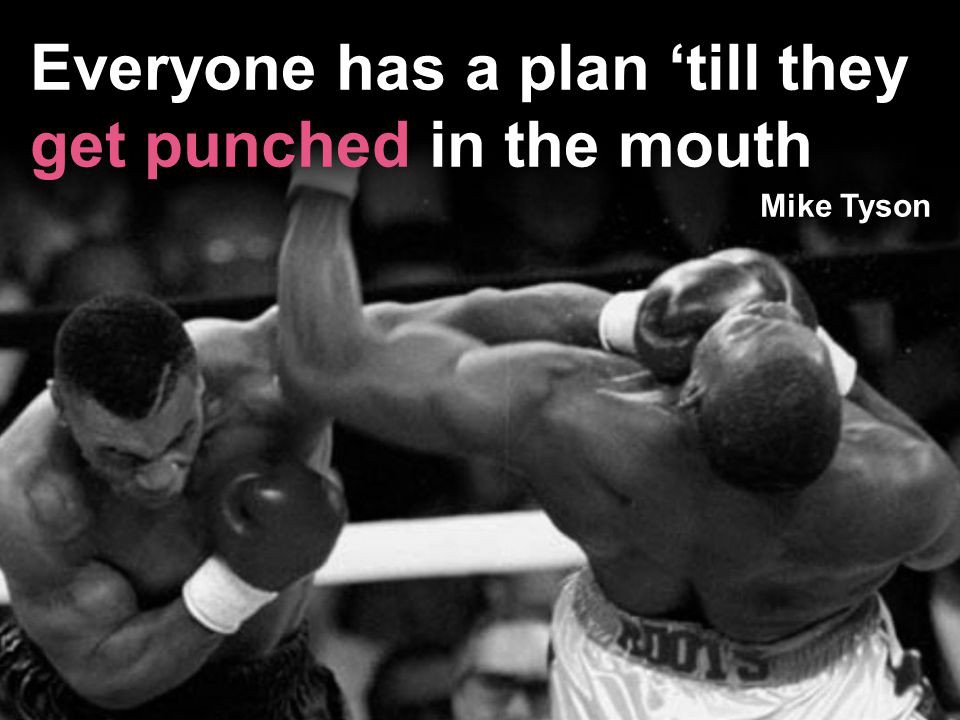
EVERYONE HAS A PLAN…….

IRON MIKE
HOKKA HEY.
WHAT KIND OF DAY IS IT?
FIST LOGIC

THE WAITING GAME.

WHAT KIND OF TIME IS IT?

Not Counter-Attack as a method or Counter-Attack as a strategy but as an IDEA or group of IDEAS that can give purpose to method and direction to strategy.

O.K. Guys.

This mini-essay was way too big for the WhatsApp chat and anyway you may need to bookmark it to come back and re-read it.

Wing Chun was hybridised in the late 1860s from various Shaolin Styles by Dr. Leung Jan, this is history, not news, but do we understand why it is worth remembering?

If the physical shapes we use began as Shaolin shapes they are still Shaolin shapes.

Therefore Wing Chun is everything else apart from the Shaolin shapes.

The everything else package is the “Little Idea”, the five principles, and one concept.

The “Little Idea” of uniting the three aspects of Body, Mind, and {fighting} Spirit to the same end. 

The principles of Directness, Practicality, Simplicity. Economy of Movement and Non-use of Brute Force.

The concept of Counter-Attack.

Not Counter-Attack as a method or Counter-Attack as a strategy but as an IDEA or group of IDEAS that can give purpose to method and direction to strategy.

If we watch anyone trying and failing to use Wing Chun in a violent situation, it is usually because they are FIGHTING and not Counter-Attacking. 

They are using shapes we would recognise as they walk into punches or stand still for kicks and take-downs, but these are Shaolin shapes.

People that have little to no experience of what Geoff Thompson referred to as the ‘Pavement Arena’, street violence, struggle to understand how to take this dance we are learning and make it shine out there in the dark.

Without experience, there is no way to compare our training to the ugly mess of violent reality.

But we do not need experience of violent street contact to understand a Concept.

A concept is a head thing, ‘reality’ is everything else.

I know that you guys think that I am some kind of sports nut and that’s why I bring everything we do into the sports universe.

As Hercule Poirot would quip, ‘au contraire mon ami’.

Sports is ritual warfare, it was a semi-civilised substitute for violent contact between rival tribes, you only need to watch Liverpool v Everton in the English Premier League, New South Wales v Queensland in ‘The State of Origin’, Chicago Bears v the Green Bay Packers in the American National Football League or the old U.S.S.R.v Czechoslovakia ice hockey teams in the Olympics to see that it still is.

A good starting point for this chat, what is Counter-Attacking in Sport? 

Counter-Attacking begins with a turnover of the ball/puck in the build-up attack by team ‘A’.

Up to that point, team ‘B’ was either not in the play or under the cosh.

This can come about from a tackle or a bad pass but to be relevant to Wing Chun it comes from team ‘B’ reading the play and being in the right place at the right time.

A team ‘B’ player unexpectedly intercepts a pass while team ‘A’ is still pressing forward, breaks free unmarked and heads for the team ‘A’s goal.

I can almost hear you all saying ‘DUH’ we know how does it help?

To ‘GROK” Counter-Attack we need to understand what team ‘B’ is NOT DOING before the interception.

Of great importance is they are not trying to force the play. 

They are simply taking up intelligent positions, moving with the press, filling gaps and waiting for that moment their training tells them will come, waiting for their window of opportunity to open.

And when it opens, they dive through.

Recently when we were working on defending against an opponent that kicks, I suggested that the learning objective should be to understand why the kicks failed and not why we succeeded.

This is tricky stuff because we need to refuse our ego the credit of a job well done and reduce it to a bad decision by the attacker.

As I said at the time, we should work on these defences against opponents kicks to understand the futility of unsophisticated, obvious attacking.

As we know Wing Chun is based on everyday human body movements, if our attacker is an everyday type of human, which they will be, there is a random chance that they could come up with the same response as we would use to the same attack. 

Without realising or intending it.

I realise that this is Chimpanzee typing out Shakespear level of possibility but it is a possibility, and Wing Chun does not take chances no matter how small.

Wing Chun is not for sport, if we are using our training someone is actively trying to harm us.

Not a place to take chances.

 Wing Chun training shows us is that when we use our shapes and movements, working from the perspective of Counter-Attack, the majority of what others see as effective, useable attacks do nothing more than put the attacker in a perilous position. 

Returning to the Sports counter-Attack for a moment, once the breakthrough has been made the counter-Attack is completed.

From this point on it is an attack in its own right, do not miss this.

 Did you miss it?

There is still a lot of work to be done, team ‘A’ will turn and chase, if it is Soccer or Hockey there is a goalie to take on and there is every chance of the break fizzling out and it is back to the drawing board, once again taking up intelligent positions, moving with the press, filling gaps and waiting for that moment, waiting for a window of opportunity to open.

Counter-Attacking is not a method or strategy it is a conscious and deliberate decision not to force an attack.

It is a waiting game.

Once taken, this decision can apply our method and prosecute our strategy.

I realise that this is a bit wordy and may take a few run-throughs to get it, there is another way, go watch some Football or Ice Hockey.

WE DO NOT SEE THE WORLD AS IT IS. WE SEE IT AS WE ARE.

WHAT MOON?
WHAT KIND OF DAY IS IT?
FIST LOGIC

THE IDEA THAT BECAME WING CHUN.

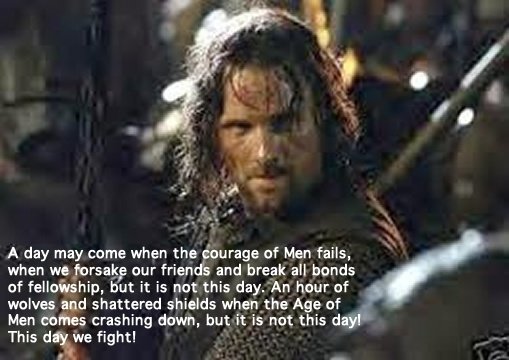
IT IS NEVER THAT DAY!

Sil Lim Tao translates to the Way of the Little Idea. The little Idea is simple, but the ‘Way’ to discover the Little Idea is less simple.

Hi guys, this is to try to prompt those of you that do not yet spend quality SOLO time working with the Form to get more involved with it.

I get it, it can be frustrating trying to understand how doing a Form can be fundamental to our core abilities.

Been there, done that.

It took me about 7 years before I finally understood the importance but once I did my Wing Chun improved on an almost daily basis.

I am just trying to save you time. Lots of time.

Understanding complex ideas easily is as much about understanding the analogies we use as it is about genuinely related information.
Analogies are the pictures we use to bring into focus or gather up the loose ends of a vague idea or underdeveloped concept.

Try to consider the Sil Lim Tao Form as a physical manifestation of an analogy. Let it paint you a picture.

Sil Lim Tao translates to the Way of the Little Idea. The little Idea is simple, but the ‘Way’ to discover the Little Idea is less simple.

Because we confuse the “Way” with the”IDEA“.

The “Way” is not the “IDEA“.

“The Map is Not the Territory, the Word is Not the Thing” as pointed out by the philosopher Alfred Korzybski”.

The Sil Lim Tao Form is not the Sil Lim Tao, it is a Form, a movement set, as easy as it is to read this it can prove difficult to digest.
The Sil Lim Tao Form is not the Way, it is a vehicle to approach and then explore the Way. But it is not just a vehicle it is also a scaffold that supports and reinforces the IDEA while we build it. And it is also the concept that told us we needed a vehicle to find the IDEA in the first place.

There are three aspects to training, a physical aspect, what we do. A mental aspect, what/how we think. An emotional aspect, how we feel. These three separate aspects are tightly interconnected, how we feel affects how we think, how we think affects what we do, what we do affects how we feel, around and around and around we go.
Understanding this interconnection shines a light on the importance of self-talk because self-talk is the major contributor to how we feel.

What does your self-talk say when you consider spending 10 minutes on the Form?

Wing Chun was thought up many years before ‘data retrieval systems’ were invented, years before people understood the role of the conscious mind or short-term memory and the subconscious mind or long-term memory, and how these systems worked together. Years before neuroscience discovered that all physical action begins in the Brain/Mind.
From one synapse a signal is sent, that signal is received by a different synapse, a nerve or muscle is activated, an action is performed.

Even the action of standing still, doing nothing is something we actively do!

It is via this interconnection that we come to understand the “IDEA” that became Wing Chun.

When we are in training mode, moving slowly, deliberately and accurately, we are in our conscious mind, accessing short-term memory doing what we are thinking. Our brain is impressing/recording this action to our subconscious mind or long-term memory so that later if we find ourselves in a situation that we do not have enough time to assess and choose the right action, no time to think, we just hit the replay button and allow our subconscious to choose.

If we are not regularly engaging with the Sil Lim Tao Form then on some level we are telling ourselves that it has little or no value.

Without knowing it we are moving into a good/bad, right/wrong, correct/incorrect mindset.

Every action we do, every defence/attack choice is created from aspects of the Sil Lim Tao Form.

Why would our subconscious mind choose to respond with something that we keep telling ourselves is of little value?

Developing our power is 100% in the Mind, consciousness is not optional, if we are awake we are aware, conscious power is everyday power. 

Developing our subconscious power is less automatic, we reach it through consistent, deliberate practice.  

To phrase this in easy English the aim is to Act, Feel and Think in the same way to the same end. 

Three different paths, one vehicle.

The Sil Lim Tao Form.

Stack it up, power it up, build it up.

In the lower of the two videos, I mention that we are trying to be the best we can be at this or any other singular time.

There will be days in training when we appear to never get with the project, nothing goes the way we want it to go, even on this day we are the best we can be…. on this day, at this time in this place.

No one chooses to train poorly, we all give it all that we have, so if it starts going sideways be aware of this, do not try to train harder, do less, even take a break.

When it comes to fu**ing up… TODAY IS NOT THAT DAY.

Words of advice for young people….

IF WE HOPE TO SUCCESSFULLY BE NASTY TO OTHER PEOPLE IT BEGINS BY BEING NICE TO OURSELVES…..THE “D” MAN.

HOKKA HEY!
FIST LOGIC

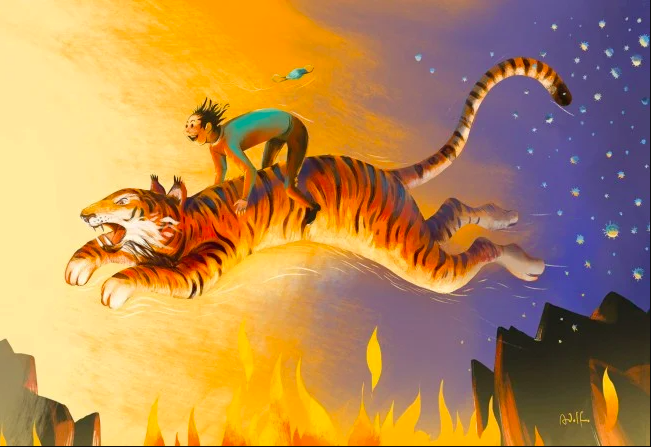
YEAR OF THE TIGER TAKE #2.

Kung Hei Fat Choy. 恭喜发财

“And we may ask ourselves, well, how did we get here”?

KUNG HEI FAT CHOY to all of you guys and all visitors.

A new year a new start, well that is the dream, but this year it is tinged with doubt due to the Pandemic.

There is always hope or there is nothing, but new starts lead us into thinking of the past period that we have just endured

The changes our school has gone through are many, and some of you do not know the full story.

Chinese New Year is our anniversary.

It was the first Monday of the Lunar New Year for 2010, the Year of the Golden Tiger, that we held the opening night of what is now Wing Chun Sydney.

On the first Monday of this Lunar New Year, the Year of the Water Tiger, we turn 12 years old, and we are only just hanging on.

I know that there are many schools in a similar perhaps even worse situation, many have already upped stumps and headed to the Pavillion.

In the wake of the ravages the school has suffered due to the ramifications of Covid-19, what was once a healthy 40 students and 2 schools is now just 8 of us in the Studio at the back of my home.

To paraphrase David Byrne…

“And we may ask ourselves, well, how did we get here”?

My Sifu, Jim Fung Cheung Kuen passed away in 2007, to many who trained with him this was unexpected.

Out of nowhere, we were rudderless.

His school, the I.W.C.A. was suddenly adrift and taking in water.

The consensus at the top was to keep on keeping on, but this was always a flawed IDEA.

There was no natural successor.

So the school’s 7 most senior students assumed control, the governance of the school fell upon what was at best a non-aligned, non-cooperative committee.

The writing may not have yet been on the wall but the signwriters Van was in the Carpark.

Skip to 18 months later, Wednesday evening after instructor training, in the Cosmo pub over the road from the Training Hall, most of the remaining Senior Instructors carrying on like Wednesday night was party night.

In particular, as usual, me complaining about the fact that the new school had nothing in common with the school our Sifu ran, the school we helped him build.

The ‘Old School”.

A good friend and long-time training partner Greg turns around to me and says…

… “For f*cks sake Derek, are you still going on about this? Either get over it or just leave.”

The chances are that Greg had responded this way to my non-stop complaints every Wednesday evening.

But this Wednesday, perhaps I had not drunk as much, I heard him.

I nodded.

I thanked him for his insight.

The next day, Thursday, I turned up to the sub-school I was responsible for in one of Sydney’s outer suburbs, a group that I had managed for the past 11 years, and gave the students the news that for me…

… the race was run.

To be expected the sub-school continued but a few months and a few replacement instructors later one of the more serious students, Sam, asked if I would be willing to independently teach a breakaway group he had assembled.

A group made up of the core members of the old sub-school.

12 students met with me to lay out their IDEA and asked if I would teach them.

It was a good IDEA, more importantly, it was not my IDEA.

On the first Monday of the Chinese New Year of 2010, we came into existence.

Wing Chun Inc. Began as 14 people with the same goal.

12 students, my wife Mandy, and myself.

The first few years kicked on brilliantly, and there was a moment when we were almost famous, 2 schools at different ends of Sydney and over 40 students.

Things change, life is tricky.

Today, of the 12 Foundation Members, only Sam is still on-board, which is fitting as it was Sam’s drive that created the whole IDEA in the first place.

Thanks to Covid-19 we are now just 8 people.

But we are the best 8.

In February 2010 we grew from 14 people.

We still have Sam.

We can do it again.

Rise up, get on board.

THE REAL VOYAGE OF DISCOVERY IS NOT IN SEEKING NEW LANDSCAPES,

BUT IN SEEKING NEW EYES.

MARCEL PROUST.

RENAISSANCE.
HOKKA HEY.
FIST LOGIC

HOMEWORK.

OH NO. HOMEWORK SUKS.

HI GUYS,

Try to watch this video a couple of times before your next training, and of course, find time to work the movements.

Things will make sense a lot quicker and sink in a lot easier if you have this in your head.

Stay Frosty.

video

SEXY BUT NOT WING CHUN.
HOKKA HEY.