The biggest obstacles for us to avoid are the very things we think we are training.
Practical answers to practical problems.
Hi Guys, despite our ever-dwindling numbers, and a general fall-off in participation by those that remain, I am still working on the E-Book to try to shorten your journey.
Perhaps it is because of this that I persist.
We live in a new world, Covid 19 has F*cked with us all and often the question gets asked.
Why bother?
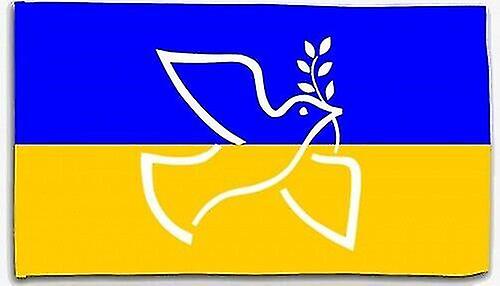
Covid 19, the war in Ukraine, Scott Morrison how much shit can one planet endure?
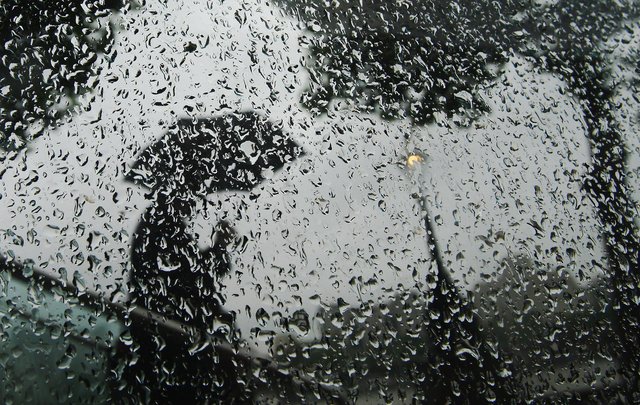
And yes, it is still raining here in Sydney.
But there is always a light.
In many ways I finished the e-book weeks ago, I just keep going back and finding ways to edit it.
Here is the prologue, hopefully putting it out there will mean I will leave it alone and with a bit of luck this IDEA will result in me finalising it.
A couple of zen koans that I find appropriate.
鬆.
“When we understand, things are just the way they are”.
“When we do not understand, things are just the way they are”.
鬆.
Te shan was sitting outside meditating.
Lung-t’an asked him why he didn’t go back home.
Te shan answered, “Because it is dark.”
Lung-t’an then lit a candle and handed it to him.
As Te shan was about to take it, Lung-t’an blew it out.
Te shan had a sudden realisation, and bowed.
鬆.
Prologue
My journey is just like your journey.
The long time student’s experience of Wing Chun.
Sometimes the way was smooth, my mind was clear, I knew where I was, I knew where I needed to be and I knew how to get there.
But then there were those other times.
Times when the very nature of a ‘concept-driven martial art’ caused a mental fog to set in, and I questioned the wisdom, question the FIST LOGIC.
I doubt that just reading this E-Book will clear the fog but hopefully, it will give you enough light so that you do not crash into too many things.
Allow me to switch metaphors, imagine Wing Chun as a river, a deep river with many currents.
Some of these currents speed us forward but then some of these currents slow us down or even turn us around, we cannot influence these currents as they are beyond our control, but with a little help we can learn to see them and avoid them.
The biggest obstacles for us to avoid are the very things we think we are training.
Practical answers to practical problems.
It takes a certain amount of trust to move away from this, to be able to see the physical things as ways to explore the non-physical things such as intention, strategy and planning.
And as weird as it is, understanding the role that the Laws of Physics play, they make many things unavoidable and others unnecessary.
Most importantly however is discovering that the how and what we think, simply put our opinion, is what has the biggest impact on any violent situation, which is the end product of our physical training, much more so than anything we train.
Developing mental flexibility is the core of the work, we need to be comfortable with the physical/non-physical paradox.
The Core of the Wing Chun system is the Sil Lim Tao Form.
Sil Lim Tao translates to something akin to “The way of the little IDEA”.
The Sil Lim Tao Form is not the ‘Little Idea” but it is a vehicle for us to discover and explore “The Little Idea”.
The ‘IDEA” is not a shape, the “IDEA” is not a sequence of movements but the “IDEA” is there, lurking amongst the shapes and movements waiting to be found.
It is highly likely that the “IDEA” will reveal itself in different ways to different people, this book is an attempt to explain how the “IDEA” revealed itself to me.
Because if we ever do get into a fight, it will be on that bridge.
Everything will work to a certain extent, and everything will fail to a certain extent.
It is about 3 things.
Understanding how our body works
Understanding our ‘FIST LOGIC’.
And… Understanding how to build a bridge between the two.
Because if we ever do get into a fight, it will be on that bridge.
We are not people learning Wing Chun, we are people using WingChun to learn about ourselves.
There is a joke here in Oz.
“What do you call a boomerang that doesn’t come back”?
A stick.
Asking “will my Martial art work” is a little bit like asking will this stick work?
It will.
But only if you know how to use it, and are willing to use it.
If we do not align our training with hitting someone, and hitting them really hard, we have the wrong stick.
At the end of the day, everything we do is about hitting people, and not about defense.
The moral of this tale is knowing the right stick.
STABILISATION THROUGH COMPRESSION AND ORGANISATION.
Biu Gee introduces us to stabilisation through compression and organisation of the body, mostly, but not only, through ‘Core Winding’.
The various but sometimes subtle rotations of Biu Gee are intended to induce spontaneous martial Innovation’.
How can we approach this work to gain an understanding of these Concepts?
We should use something, anything we use frequently, and have a very natural feeling for, in my case, it is the Knife Hand.
Learn the shape of the Knife Hand.
Learn the shape of the transition from defense to attack and how this action creates and stores kinetic energy.
The best place to explore this is in the Biu Gee Form not in free play.
Any movement in the Form that extends into the ‘Hit Zone’ can be regarded as a Knife Hand, or if you prefer a punch mechanism.
By now you should all be aware that I believe that when training doing all of the Form slows your understanding down.
The best approach is to repeat the segments that can transition from a defensive {Chum Kiu} posture to an extension, be it Knife Hand, finger Jab, or Punch, they all use the same mechanism.
The next step, take it into active play, in Chi Sau steer your partner out of his zone and into yours, this will simulate taking the Position of Dominance in a real fight.
How did you achieve it?
Did you push?
Did you pull?
Check it out.
C.K. shift left, B.G. upper body pivot to the floating ribs, do not let the feet dissolve the torsion.
In general, most Wing Chun practice does not improve overall movement, the information is there, but it is veiled in subtle inferences that are not openly discussed, it is the whole ‘Secret Information’ aspect of Biu Gee.
However, if you have good movement and agility, when you play the Biu Gee Form they will stick out like Dog’s Do Dah’s, here is a link to some good info on movement from outside of Wing Chun.
All difficult things have their origin in that which is easy,
The conflict between nations and conflict between individuals is only a difference of scale, the same rules are in play.
Hey Tribe.
As strange as it may seem the information that comes out during wartime can help us look at our training from a different direction.
This post is almost stream-of-consciousness stuff, open up your thinking and see where it takes you.
鬆.
An ever-present conundrum for all Martial Artists is that ‘Training is not fighting’, it is not even close to fighting, to examine this if we take our cue from the recent Ukraine War, our training is like the Military Exercises that Russia held with Belarus prior to the invasion.
Pretend fighting with a hint of malice, but when the invasion came it was completely different from the Exercise.
The shape the invasion took would have been decided in a Wargame that was played out some weeks or months before in Moscow.
鬆.
When I bring up the IDEA of Wargaming, most students think about Military Exercises.
They are two very different things.
A military exercise is mostly non-aggressive and cooperative concerned with friendly forces working in unison, learning how to not get in each other’s way.
A Military Exercise is as much about logistics as it is about operations, as much about troop movement as it is about engagement, about troop formation and how to get into position to deploy those formations.
A Military Exercise is what Russia recently pretended to be engaged in with Belarus, and as such it allowed them to have 150,00 men in position to invade.
The major difference between Wargaming and Military Exercise is ‘Boots on the Ground’.
Wargaming is a simulation.
Like all simulations, it begins with accurate information regarding both sides of the conflict’s state of readiness, military capabilities, material capacity as in men, planes, tanks, bombs, and an understanding of both sides’ preferred and trained operating tactics.
These numbers are loaded into a computer and run.
The first aim of the simulation is to find the areas of conflict where known methods of operation could break down upon contact with the enemy.
Finding a solution to these problems is how future strategies are devised.
The conflict between nations and conflict between individuals is only a difference of scale, the same rules are in play.
What we do in the training hall day in day out is a civilian version of a Military Exercise, it teaches us the shape we should be and the way we should move.
Thinking that this training will be ‘Fit for Purpose’ without some kind of related Wargaming, will be walking blindly into other nations/person’s ‘area of control’, effectively walking into a kill box.
When we look at what we do in training, we see that everything is built around set-ups and feeds.
If we are honest we will see that nothing we do is n any way similar to what we would expect to come up against in a violent situation.
This is not just Wing Chun, this is every Martial Art.
Even people like Lee Morrison of Urban Combatives, who bases all of his training material on ‘real’ situations that he has been in, training is still set-ups and feeds.
There is no other way, training is training, fighting is fighting.
Wargaming our training should deliberately set out to find where everything fails, in this way we can have a workaround in place before it goes wrong or a the very least avoid that particular scenario.
In civilian Martial Arts, all of them and not just Wing Chun, there is a lot of foolishness about how good things are, how superior our style is to another so much so that many Martial Artists are blindly and quite stupidly partisan.
Every Martial Art style in the world was created to solve a particular, local problem, they all face the possibility of failure once that local problem changes.
Do not take a knife to a gunfight.
鬆.
If we run a Wargame simulation between ourselves and some random ‘Bad Guy’ what do we come up with?
What do we know in advance?
We have no accurate information about the Bad Guy’s capability or capacity, this lack of information can be a source of panic, fear of the unknown.
Is there a way to steer this into an area that is known?
It is an uncomfortable fact that {Random Street} Violence happens closer, quicker and is far, far more brutal than anything we do in training.
To achieve some kind of even playing field where we stand a fighting chance we must match the Bad Guy for pace, aggression and determination.
But we do not train these things so how can we do that?
The hardest thing to do in any contest, be it combative or sports is to take back lost ground, so the easy answer is, do not lose ground in the first place.
if we revisit the fact that {Random Street} Violence happens closer, quicker and is far, far more brutal than anything we do in training the only hope we have of not losing ground is to see it coming and slow this attack down to the pace we train at.
Can we do that?
How do we do that?
Space is Time and Time is Space.
If I can create more Space then I create more Time.
If I can create more Time then I slow everything down.
In my opinion, there is a fateful flaw in the way Wing Chun is presented to the general public, if you watch any videos or think back to any seminars that you have attended the Wing Chun Actor/Sifu is always stepping into his attacker.
Stepping in compresses Space and as such reduces Time.
This might work in the training hall with a compliant partner that is standing still but once again we must think about the fact that {Random Street} violence happens closer, quicker and is far, far more brutal than anything we do in training.
Our best hope of not losing ground is to make Space and extend Time.
Apart from anything else Wing Chun is a Counter-Attacking Martial Art, it is unlikely we would ever be in a position to step into an attacker that is aggressively stepping in toward us.
So why do we do it?
It is to get a feel for the way time and space would be compressed and changed when the Bad Guy steps into us and we stand still.
鬆.
Wing Chun is a Concept Driven Martial Art, it is not a methodology.
There is a bit of an ongoing Furphy in Martial Arts, and that is that we train so we can be responsive and not reactive in a violent situation, this is of course bunkum.
Nice Idea, but so is World Peace and where are we with that?
When someone attacks us it is a stimulus, stimulus incites action, action creates a reaction.
We respond to emails, not actions.
To respond requires thought, saying that we will respond and not react is kidding ourselves, pretending that we will be able to think clearly amid the chaos.
But this is not bad news, it is simply data, it describes the environment we occupy, if we know that we cannot think amid the chaos then we must try to control the chaos, try to control what causes the chaos and in most cases it is our mind that creates the chaos.
If we can teach our Mind/Body to react in a certain way if we are in certain environments, which of course we can and we can do it easily, then the aim becomes choosing the most appropriate environments or changing the environment we are in for a more suitable one.
鬆.
Sifu Isaac informs us that every action creates an equal but opposite reaction.
In so many ways keeping to the ‘Routine’ is more important than the content of any training.
I was recently on the phone with a prospective new student and he asked me…
… ‘How often should I train, and how long will it take me to become proficient”?
Wow, what a question.
The reality is that if we want to make any kind of meaningful progress we should train every day.
However this is not what most people wish to hear, so I made up a number that I hoped pleased him, twice a week for two years.
In my experience, the type of people that ask this question never stick it out, even for just two years.
I have not heard back from him.
The reason that we should train every day is often misunderstood, it has nothing to do with the complexity or difficulty of the subject matter, and everything about how our brain handles and stores information.
Be it Kung Fu, mathematics or learning a new language they all suffer the same.
When I was in management, I became aware of a thing called the Ebbinghaus’ forgetting curve, or simply ‘the forgetting curve’ which details how information is lost over time when you don’t try to retain it.
Trying to retain it is not just hoping you remember.
This blog is not the place to go deep into this kind of stuff so I am just going to paste a piece from an old article that I advise you to cross-reference.
Research on the forgetting curve (Figure 1) shows that within one hour, people will have forgotten an average of 50 per cent of the information you presented. Within 24 hours, they have forgotten an average of 70 per cent of new information, and within a week, forgetting claims an average of 90 per cent of it. All of your hard work simply drains away.
Training every day does not mean supervised training, although that would be ideal, but, to be effective it does need to be structured, it needs to become routine.
This concept of making training a fixed routine was introduced to me as a junior Boxer, and then reinforced when I switched to Judo.
Routines establish patterns, and we all know how much our Brain loves patterns.
My Judo Sensei would say that diligently turning up to training was more important than what we did in training, and at one time about 20 years later when I was talking with my Wing Chun Sifu Jim Fung, I asked him…
Me…”What does it take to become a Master”?
Sifu Jim…”Turn up to training and pay attention”?
This is a deep subject that deserves personal study.
When we consider that what we do in training is mostly make-believe it is not so big a deal if we forget it, but there are parts of it that simply must be remembered, must become routine.
If you can remember the conversations we have had about short-term memory vs long-term memory, conscious memory vs sub-conscious memory this is very much connected.
Translating the work we do into images, feelings and ideas as opposed to techniques.
My main reason for this Blog is to try to keep everyone connected to what we are striving for, but nothing comes close to real-time, hands-on training.
I do know how tricky it can be to prioritise our training to be the number one choice for what to do in our free time, friends and family tend to see ‘training’ as a hobby and do not understand the drive to keep the routine.
In so many ways keeping to the ‘Routine’ is more important than the content of any training.
The thing about routines is that they don’t require us to predict how we will feel in the future but instead ask us to determine how we’ll act despite how we might feel.
There is a brilliant flip side to this, once we understand how something works, we also know how to stop it from working, how to break it.
THIS IS WHERE CONCEPTS COME IN.
This may end up a long post, make ‘yerself’ a coffee, or perhaps two.
There are two distinct sides to Wing Chun that in many ways have so little in common they do not, at first, appear to fit together.
Let us call these sides the Physical side and the non-Physical side.
On the physical side, the bulk of the technical work is simply to develop dexterity and coordination.
To develop a ‘high’ level of control over our physical movements.
Training is not an open-ended exercise, all training in every style is a way to deal with a specific problem.
Wing Chun training is about surviving a random, violent encounter with a ‘person or persons unknown‘.
This fact is what many students struggle to come to terms with and as such fail to grasp the purpose of the training.
Training becomes a never-ending succession of “But what if”?
Because of this, students often have less confidence after 6 months of training than they did with no training at all.
Let me repeat this, Wing Chun training is about surviving a random, violent encounter with a person or persons unknown.
For application purposes, we only need four movements/techniques to deal with all of the problems we are anticipating from this person or persons unknown, they are Tai Sau, Jit Sau, Pak Sau and Tarn Sau.
Plus, of course, striking, but all men/women already know how to hit other men/women, all we need to do is improve that aspect.
This physical side is simply generic Kung Fu.
MacDojo Kung Fu.
As hard as it may be to believe, there is no need for anything more and we could learn all of this in that first 6 months if we gave it some air.
At this stage, this MacDojo Kung Fu is not yet Wing Chun, it is just ‘the box’ Wing Chun comes in.
THE NON-PHYSICAL SIDE.
From day one, working with the non-physical aspects of Wing Chun, what I refer to as our ‘FIST LOGIC’, simply rubs the wrong way.
Trying to resolve physical problems with non-physical answers is ‘always’ going to be a challenge, but that is the ‘work’.
It is not difficult ‘work’, but neither is it quick ‘work’.
If we use the old chestnut analogy of a journey, the physical side and the non-physical side are heading to the same destination, however, not only are they taking different routes but Physical is going by Aeroplane, while Non-Physical is going by Boat.
Non-Physical is, to be expected, where the whole Conceptual Martial Art comes in.
So how does that work?
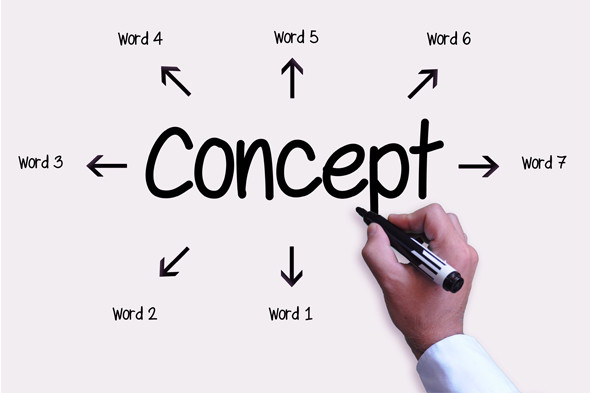
A Concept is an understanding retained in the mind, from experience, reasoning and/or imagination; a generalization (generic, basic form), or abstraction (mental impression), of a particular set of instances or occurrences (specific, though different, recorded manifestations of the concept).
WIKIDIFF.
Something to get our head around is that a Concept is different and separate from function, action, or methodology.
Concepts are starting points, whereas all applications are destinations.
Non-Physical training is to take what we do in the training hall and relate it to things we already know and understand.
Normal Human Body Movement.
Wing Chun’s Fist Logic is not a method for dealing with violence, human beings know this well enough, rather it is a self-organising map [S.O.M] for understanding certain physical aspects of violence.
Concepts are non-physical tools we use to build new approaches to old IDEAs.
They are thought exercises that only exist in our heads.
We must realise that the Bad Guy will never do what we ask our training partners to do, accordingly, nothing we do in training will work the way we train it.
But that’s O.K. That’s not what we are looking for.
The scenario that we are training becomes the seed for the thought exercise.
Our training becomes a study of the Concept of Random Engagement.
We are not trying to learn how to defend against a swinging headshot, we are using this scenario as a thought exercise to explore and observe the dynamics of the situation.
Concepts seed Sub-Concepts, this is where we can take our MacDojo Kung Fu and begin to turn it into Wing Chun.
When we explore the concept of ‘power production’, we develop Sub-Concepts of good body shape, relative positioning, stability, speed of delivery, correct skeletal alignment, the summation of force, hierarchy of joint movements, efficient recruitment of the kinetic chain and so on.
There is a brilliant flip side to this, once we understand how something works, we also know how to stop it from working, how to break it.
Now we can ask what makes this swinging headshot attack work?
We can identify the sub-concept of relative positioning and ask “How can I prevent that”?
Or if we think the most important aspect of the attack is the speed of delivery we can ask “How do I slow him down”?
The clenched fist that hopes to land is the last link in the attacker’s kinetic chain, how can I use that knowledge? Can I break the chain?
We can take our sub-concepts and use them as stand-alone concepts, if we choose to do this with relative positioning we seed new sub-concepts such as the attacker’s movement, or possibly lack of it, our own movement and even stillness, we can understand how to slow things down or speed things up by the manipulation of this relative positioning, redshift and blueshift in spacetime.
We can get all of this by exploring just one dynamic scenario.
Once we understand this way of thinking, once we see this event from the position of our ‘Fist Logic’ what we are training almost does not matter.
Everything we do will have power, everything we choose to do will work.
But somewhere along the road, this shit might get real.
Surviving a violent attack is as far away from a thought exercise as we can get, in fact in a violent encounter, there is no time to think.
It is only the training that involves concepts and uses thought exercises.
The purpose of the thought exercises is to change how we perceive what is going on in a particular event.
To change the relative non-physical positions of ourselves and the Bad Guy.
We cannot change the reality of what is happening, things are always just what they are, but we can change how we think about it and as such how we react to it.
Without Wing Chun’s ‘Fist Logic’ we get drawn into the Bad Guy’s universe, we try to stop them from doing whatever it is they are doing, it becomes their show, it becomes all about them.
If something is happening to us, and we wish to control/understand/change it, then we must make it all about us.
Because it is all about us.
The first BIG change in our perception is that we do not want to try to stop the Bad Guy from hitting us, it is already too late for that we are under attack, fists are flying.
How we respond to situations emotionally is of far greater importance than any technique.
THINK ABOUT IT.
FIST LOGIC AND MIND BOXING.
There is a style of Kung Fu named Yi Quan {translates to Mind Boxing} that has no physical techniques whatsoever, I worked with a Chinese guy that trained in this style, it was interesting but it did not work very well.
We can gain great benefit from any form of Non-Physical or Mind Boxing but we must never forget why we are doing it.
Wing Chun training is about surviving a random, violent encounter with a ‘person or persons unknown‘.
The most testing aspect of becoming capable in Wing Chun is being able to combine the Non-Physical {Mind Boxing} with the Physical {MacDojo Kung Fu}.
This forms the FIST LOGIC, the destination is always us hitting someone that is trying to harm us.
However, because we are decent Human Beings this is easier said than done.
“The only way that we can live is if we grow. The only way we can grow is if we change. The only way we can change is if we learn. The only way we can learn is if we are exposed. And the only way that we are exposed is if we throw ourselves into the open.”
Ip Man more than likely created the world’s first MacDojo, teaching students basic Kung Fu moves.
Thinking Hats on guys.
This is a warm-up piece to set some sort of ‘context’ to when I try to explain what I ‘THINK’ it means to be a Concept Driven Martial Art.
To understand Wing Chun today we need to have some idea of where it came from, which is almost impossible as most of what is thought as our history is just B.S. pushed out by unscrupulous Martial Arts Entrepreneurs such as William Cheung and Leung Ting, and all who copy them today.
The history of Wing Chun is at best vague and mostly fictitious but after decades of serious research by dedicated professionals, we think we know that what we call Wing Chun was formulated by Doctor Leung Jan from Guangdong in S.E. China.
Dr Leung was a Shaolin Kung Fu practitioner of some merit and a medical doctor that is reported to have worked closely with the Red Boat Opera Company.
Opera companies consisted of a troupe of performing Martial Artists that used most styles of Kung Fu to tell their stories.
Dr Leung’s role in today’s terms would be that of a physiotherapist and sports doctor, and then, as now, his main job would have been to keep the Opera Martial Artists fit, healthy and able to perform.
THINK KUNG FU CROSSFIT.
In this way, he would have automatically compiled a catalog of movements that caused serious physical injuries to the person performing them and other movements that did not cause any injuries to the person performing them.
Keep this in mind, I believe it is central to getting this thing of ours.
KNOWN HISTORY, NOT FAKE HISTORY.
Throughout the 1600s to 1800s Guandong, especially the Peral River Delta, was in a state of constant war, rebellion, or just plain old social disorder.
There is no need for extravagant Martial Art mythologies, the reality of the times was far worse than any movie.
The Pearl River Delta experienced an almost continuous assault from Japanese Pirates to the Portuguese Navy to the British Navy, French Navy {the opium Wars}, the Taipings and then the Heaven and Earth Society it is no wonder that Foshan became a center for respected Martial Arts learning.
Those skills were needed to survive.
For whatever reason in the mid-1860s, Dr Leung decided that his chosen Martial Art was not quite fit for purpose, it is easy to imagine that with him being a well known wealthy businessman and the breakdown of social order he would have been the target of many attempted muggings or robberies.
He decided to do something about that.
Aided by his medical knowledge and years of repairing the damage to the Red Boat Opera Crew he devised a way to refine everything he knew. At first, this was just a family thing.
Outside of his apothecary was a money lender named Chan Wah Shun, we can only imagine the problems he faced at this unstable time. Dr Leung passed his knowledge onto Chan Wah Shun, it is highly unlikely that Chan Wah Shun did the same Martial Art as Leung Jan as he was reported to be a very large and strong man, but he was able to use Leung Jan’s method to improve what he knew.
Chan Wah Shun was the first person to teach this new method publicly, his last and most famous student was Ip Man.
From the beginning Wing Chun, if it was called that back then, was about refining and improving a known set of physical movements.
Ip Man and Hong Kong.
After the Chinese Civil War, Ip Man was in Hong Kong and found himself in a perilous position, not only was he from a wealthy landowning family but he had also worked with the K.M.T. The Nationalist government, so he would have definitely been on the communist hit list because of this he stayed in Hong Kong.
Ip Man needed to live so he began to teach Wing Chun publicly at the Restaurant Workers Union.
These Unions were not like our Labour Unions they were more an employment agency that provided workers to employers, Kung Fu lessons were provided free by the Union as a way to get people to sign up to that Union.
Ip Man more than likely created the world’s first MacDojo, teaching students basic Kung Fu moves.
Then as now, students came and went rarely attending for more than three months, to try to keep up with the requirements of the post-war young men Ip Man would change what he taught as Wing Chun in an attempt to placate the paying customers.
Let’s be fair he needed to eat.
When his children rejoined him after a ten-year forced absence they did not recognise what he was teaching.
However, if anyone stayed long enough to learn those basic Kung Fu moves he would then introduce them to what has always been the true work of Wing Chun, how to refine and improve what is already known.
This description of our history and about Ip Man upsets many students and I have had many heated conversations, but it should not, it is honest and for my money, it helps us get to the place where Wing Chun lives.
All Wing Chun Schools are MacDojos until the students have genuine skills that can be refined.
I think that this is actually a very good thing and not as negative as it sounds, the trick will be ‘can I convince you’.
“ Talent hits a target no one else can hit; Genius hits a target no one else can see.
This is where ‘CONTEXT’ becomes more important than content.
The last post generated a lot more chat than usual, and as a result, I have had a few interesting conversations about the ‘What and Why” of training.
You have all heard me say on many occasions that “if you do not know what you are looking for, you will struggle to find it”.
It is not just me that thinks this way.
Men occasionally stumble over the truth, but most of them pick themselves up and hurry off as if nothing ever happened.
Winston Churchill
It makes little difference if we think that Wing Chun is a self-defence system or fighting style because when we do get in trouble, we will not be thinking, we will just be doing our STUFF.
But it does make a ‘Massive’ difference to our training.
Because that is where we get the information that becomes our STUFF.
So it is a bit of a no-brainer that the most important thing for any of us to get from our training is confidence in the information.
Not only confidence that what we are being taught will work, everything will work if we get the chance to use it.
But confidence that WE would be able to use that information as intended.
Does our training leave us fully and correctly prepared?
Not just physically and mentally.
But EMOTIONALLY.
So that confidence we are developing had better align itself with how we present ourselves to the world, and most importantly how we think about ourselves.
If not, when push comes to shove, we will hesitate to make that decision, it will go badly for us.
HE WHO HESITATES IS LOST – “Swift and resolute action lead to success; self-doubt is a prelude to disaster.
Joseph Addison.
This is where ‘CONTEXT’ becomes more important than content.
This is why we must know if we are learning to defend ourselves or if we are learning how to fight.
There is no right or wrong side it is simply a choice.
If you are training with me and think you are learning how to FIGHT, you are with the wrong teacher.
Do not let this confuse you, self-defence is not being SOFT.
Self-defence is not “NOT FIGHTING”.
Self-defence is a starting position, it is a choice we make to allow the ‘Bad Guy’ to make his own bed.
Then we put him in it.
That is a choice I can live with.
That is a choice that reflects how I see myself.
WHAT MOON?
Personally, I’m always ready to learn, although I do not always like being taught. —
Training to be capable of responding to violence does not make us a violent person, it makes us a prepared person.
RESPONDING TO ANTI-SOCIAL VIOLENCE.
Just like the majority of Martial Artists, my hope is that I never need to use my training. I hope to never again experience violence.
To be honest, I do not like violence, and the thought of being involved in violence is uncomfortable.
However training in any Martial Art for whatever reason, be it sport, aesthetics, fitness or cultural curiosity, is at its core a study of violence.
An attempt to understand and be able to respond to violence.
Training to be capable of responding to violence does not make us a violent person, it makes us a prepared person.
“Chance favours the prepared mind”. Louis Pasteur.
Do we think that violence can be understood? It is such a vast field.
For instance, although what we do is called Martial Art we are not talking about Military Conflict.
That is a different version of violence altogether.
As non-military Martial Artists, our concern is Interpersonal Violence.
Even here the lived experience of most people is usually very different from each other, the best we can hope for is a Generalised conversation.
To do this without misunderstanding we need to have a shared lexicon, the same terminology, to be on the same page using the same frames of reference.
What follows is a legend for this and any other of my posts.
Interpersonal Violence comes in two basic flavours.
Organised – Social Violence.
Random – Antisocial Violence.
Social Violence is a situation where all parties know what is going to happen, when it is going to happen and where it is going to happen.
Above these considerations is the fact that at any time one of the participants can simply say “no thanks I have changed my mind”, this is why to an extent this is a social event.
Social violence is any competition at any level from a World Championship U.F.C. Match, to an Olympic T.K.D. round to a Club sparring session even to two blokes saying “O.K. let’s take this outside”.
There is always the option to say “not today thank you”.
Antisocial Violence is where an attacker, Person #1, has an agenda that is for the most part unknown to Person #2.
The scope of this aspect of violence is truly huge, but for this post let’s think that it spans situations such as P. #1 attacks P. #2 from an unseen position, to wearing the wrong Football Jersey in the wrong suburb, to being caught out eyeing up a jealous and Pig Headed blokes girlfriend, to a random difference of opinion that boils over without too much warning.
This is the environment we envision.
Social Violence/Competition is the realm of Combat Sports and of course Combat Athletes. N.Q.U.
Anti-Social/Violence Self Defence is the realm of Traditional Martial Arts, the realm of the majority of Citizen Martial Artists, such as ourselves.
It is of the utmost importance that we know where we fit so that we can evaluate and steer our training in the right direction.
Zoom in a little.
ORGANISED/SOCIAL VIOLENCE.
In Combat Sport both parties begin from the same position, no one man has an advantage, there is no surprise, there is a known start, and a known finish.
And there are rules.
Once the contest kicks off there is little thought of organised deliberate defence, to a very large extent Combat Athletes depend upon their physical, mental and emotional conditioning to ignore the shock, ignore the pain and press on.
If they have any thought of defence it is knowing how to evade incoming strikes as they themselves attack, both parties aiming to knock the fight out of their opponent first.
This is what a “FIGHT” is, this is what “FIGHTING” is, two men {or women} flat out attacking each other, no quarter asked or given, they just swap punches until someone can no longer continue or the fight is stopped.
Despite the apparent chaos, there is a level of certainty in this situation.
Let me put this in here, it will explain itself later…..
…..WING CHUN DOES NOT FIGHT.
RANDOM/ANTISOCIAL VIOLENCE.
Long story short, being in a random encounter is the complete opposite of Competition, especially from the perspective that there is some sort of certainty to the situation.
Social violence is relatively straightforward, what you see is what you get, partly because of the rules, but also because of the Athletes themselves, despite them being on occasion BRUTAL neither side are out for blood, they just want to win the bout.
Here is a somewhat harsh truth. Random Violence is finding ourselves in a completely unknown and unknowable situation.
Is it even possible for us to prepare for an unknown and unknowable situation?
That depends.
It depends on if we see it coming, and if we have a plan.
We should not fool ourselves, if we do not see it coming we are toast, so we can bypass that discussion.
It should be a total no-brainer that if we can de-escalate any situation and walk away that should be the first choice, but Random Violence is rarely about being offered choices.
It may be cliche´but in any violent situation the only thing we can control is ourselves and the more we know of ourselves the easier it will be to keep control.
The first aim of any training is learning about ourselves so that when it happens we are not completely clueless.
Then through training various scenarios to build up some kind of Blueprint.
There should be a great deal more to training than learning how to physically hit someone.
What we do know and is something to think about and factor in is that the mindset, attitude, or demeanour of an attacker is so completely different from the mindset, attitude, or demeanour of a defender that they cannot exist at the same time.
This is pretty much the cornerstone of Wing Chun’s Fist Logic, how we set our strategy.
What do we know about our {unknown} attacker?
He [she] wants to hurt us and to do it as quickly as possible.
Their plan is shock and awe.
The very fact that they are so brazenly attacking us, tells us that they are not expecting any significant resistance.
If it is an argument that has boiled over, if the attacker is angry they have already lost control of their thinking and they will not be able to change their mind quickly or easily once the circumstances change.
What else do we know?
Attackers attack and have no thought of defence.
Defenders defend and have no thought of attack.
Fighting is two people attacking each other.
When people lose control of their thinking this is what happens.
To everybody.
WING CHUN DOES NOT FIGHT.
I know all too well that in a real situation it is unwise to assume, but here it is fine so I am assuming that whatever the situation we are fully aware of what is happening, aware that something is about to go off.
It is no longer a situation in our control.
If possible we should make a little more space, which will give us a little more time.
On a surface level, our aim is to turn the tables, to make ourselves the attacker, in the fullest sense, we attack relentlessly until the fight has gone out of the Bad Guy, then we leave. P.O.Q.
There is of course a chance that we cannot fully turn the tables, we start exchanging punches, we start to FIGHT.
WING CHUN DOES NOT FIGHT.
If this happens we break away, make space, reset and prepare to go again once the Bad Guy resumes attacking.
IF THEY DO NOT ATTACK, GOOD, WE ALL GO HOME. BUT IF THEY DO.
We do not prepare to defend, we prepare to turn the tables on them once more, to become the attacker once more.
This is of course counter-attacking, this is Wing Chun.
On a deeper level, we are using our thinking to destroy our attackers thinking.
It is their IDEA of hurting us that we need to change.
It is quite pointless to be concerned about techniques or styles and how to counter them, we need to cause chaos in their thinking, overwhelm their nervous system.
Two ways that are guaranteed to achieve this are causing them pain and compromising their balance.
Once we have managed to stop them thinking we have taken away not only their reason for attacking but also their ability to defend themselves.
This is a very general overview, this is the picture I have painted for myself over many, many years to give much-needed context to my training, it does not need to be your picture.
But it really helps if you have something like it.
Anyone can fight, seven-year-olds do it every day, my Cats do it.
We are not training to FIGHT, we are training to THINK.
I thought “If I had only known this from the beginning it could have saved me years”.
Back in the day when I first began working on the Biu Gee Form it was Huen Sau that turned the light on.
It was Huen Sau that helped me realise that the three individual Forms, Sil Lim Tao, Chum Kiu, and Biu Gee were in fact just sections of the ONE FORM.
I thought “If I had only known this from the beginning it could have saved me years”.
Huen Sau was the first structure that I recognised moving through the Forms, ever-changing but always the same.
In S.L.T. we are stationary, in Chum Kiu we are shifting, in Biu Gee we are rotating/pivoting, and in the Baat Cham Dao, we combine all three aspects into one smooth functional action/movement.
It really was a ‘lightbulb moment’.
When we first encounter Huen Sau it is just the flexion of the wrist keeping the hand flat as it was at the end of Taan Sau and then a 90-degree rotation of the Radius/Ulna, we point to the ceiling, then point to the floor, so simple.
The ‘Ah Ha’ moment for me in Biu Gee was understanding what the fingers were doing, maybe I had been told before and simply missed it, but none of my training partners was aware of it either.
When I told my Sifu he said yes he told me before, then he laughed and said that he had missed it as well in his training.
I think that the main thing to stay aware of is the feeling in the fingers, they should be alive but not tense, just like when pointing at something, we can feel the tendons full of vigour but the finger is not tensed to the point of bending, in fact, if the hand is cupping in any way at all even minimally, or the fingers are bending this is incorrect.
The upper arm remains in its position parallel to our ribcage and is not directly involved in this action, the rotation of the forearm is only the forearm, the Radius crosses over the Ulna, if there is no unneeded tension the Elbow will flex naturally as the Hand rotates.
This is pretty much how we would pick up a dropped pen from the floor.
I have said many times that “what the arms, hands, wrists, and fingers do in the S.L.T. First Form is the same as they do in the Chum Kiu and Biu Gee, for me, the action of Huen Sau really brought this home.
CHECK IT OUT.
WHEN YOU UNDERSTAND, THINGS ARE JUST THE WAY THEY ARE.WHEN YOU DO NOT UNDERSTAND, THINGS ARE JUST THE WAY THEY ARE.
Sports Psychologists are often engaged to address the Sef-Talk of the player.
Hi Guys,
The Sil Lim Tao is like a three-legged stool, and like a three-legged stool if we remove one of the legs the stool fails.
The area that is the third leg is the area that in sports is the realm of Sports Psychology, and this is an area we would all do well to research.
Sports Psychologists are often engaged to address the Sef-Talk of the player.
We are no different, that is part of my job as a teacher.
Self-Talk may appear to be a minor part of learning a Martial Art, but once we can ‘clearly’ see the BIG PICTURE, we come to the conclusion that it is, in fact, the most important part of our training.
You have heard me say over and over that the most important aspect for a Martial Artist to develop is honesty.
A genuine plus here is that this aspect of our training delivers a major positive effect on our everyday life.
Positive, honest Self-Talk firstly benefits our training and then leaks into our all-around behaviour making us more reliable and more responsible people, better people, speaking the truth to ourselves leads to speaking the truth to others and by extension living the truth.
Living the truth leads to good decision making not just in a violent confrontation but in every interaction that we get involved in.
The first and most important step is, to be honest about our training.
Honest about ourselves and why we are training.
Honest about what it is we are training and where and why we would need it.
On the whole Wing Chun people are not aggressive people, we would prefer to avoid confrontation than engage it, we choose to be good citizens.
But this is not a description of the person attacking us.
There is a fair amount of political correctness in Martial Arts training, very few students are comfortable to admit that we are learning to be violent, to be better at violence than the person being { not attempting to be } violent to us, but this is the core of what we do.
Violence is rarely the answer, but when it is the answer, it is the only answer.
TIM LARKIN.
A large part of the ‘Third Leg’, our Psychology or as I call it our ‘FIST LOGIC’ is becoming comfortable with this proposition.
Every sports team of any merit has a sports psychologist on their staff, the difference between ‘Elite’ teams and just very good teams is frequently down to their psychology.
The difference between going home or going to the hospital could be down to our psychology.
WHEN IT IS GO-TIME THERE IS NO CHOICE EXCEPT TO BE BE ALL IN.







 Wing Chun Sydney, Australia