FIST LOGIC

GETTING IT WRONG IS NORMAL.

Obviously, the sooner we redress the situation the better, but it is NEVER too late.

Learning any skill is a lot more of a puzzle than a task, and one of the most enabling and at the same time disabling aspects is how well we deal with mistakes we make along the way.

As Carl Sagan pointed out in his cautionary tale about the Bamboozle,

 ” If we’ve been bamboozled long enough, we tend to reject any evidence of the bamboozle. We’re no longer interested in finding out the truth. The bamboozle has captured us. It’s simply too painful to acknowledge.”

But this effect happens at all levels of thought, we all avoid owning up to errors, especially if we worked hard to get to this incorrect position, and think we will need to restart the whole thing to get it right.

What can help with this is understanding what in a 1969 paper Management Trainer Martin Broadwell called the “4 levels of teaching”  which today is better known as the “4 levels of competence”.

The four stages are:

  1. Unconscious incompetence. The individual does not understand or know how to do something and does not necessarily recognise the deficit. They may deny the usefulness of the skill. The individual must recognise their own incompetence, and the value of the new skill, before moving on to the next stage. The length of time an individual spends in this stage depends on the strength of the stimulus to learn.[1]
  2. Conscious incompetence. Though the individual does not understand or know how to do something, they recognise the deficit, as well as the value of a new skill in addressing the deficit. The making of mistakes can be integral to the learning process at this stage.
  3. Conscious competence. The individual understands or knows how to do something. It may be broken down into steps, and there is heavy conscious involvement in executing the new skill. However, demonstrating the skill or knowledge requires concentration, and if it is broken, they lapse into incompetence.[1]
  4. Unconscious competence. The individual has had so much practice with a skill that it has become “second nature” and can be performed easily. As a result, the skill can be performed while executing another task. The individual may be able to teach it to others, depending on how and when it was learned.

Once we see that it is simply human nature to get everything wrong at first it makes it so much easier to retrace our steps and make a fresh start.

The main fear is that if it took us 10 years to get it wrong it will take another 10 years to correct this mistake.

No one is ever 100% wrong, it is usually more like 5 or 10%, and frequently it is not the physical aspects but how we think about or look at the physical aspects.

We were looking in the right direction but at the wrong thing.

The very fact that there is a Buddhist Sutras covering this is an indication of how prevalent it is among us all.

With respect to my  Wing Chun training, this was definitely the case for many years in my past, and through conversations with my teacher/sifu it was also his experience, and he told me that his teacher had told him the very same thing.

We should not fear getting things wrong, it is only by understanding what is incorrect that we can recognise what is correct.

Obviously, the sooner we redress the situation the better, but it is NEVER too late.

I have been actively teaching Wing Chun for over 25 years, and it is my observation, from teaching hundreds of Wing Chun students, that most students do not recognise what Wing Chun is trying to teach them.

They are looking at what they think is Wing Chun, but they are seeing something else.

There is no need to be upset or embarrassed by this, I was in this place, as was my Sifu, Jim Fung, and as was his Sifu, Choy Shun Tin. 

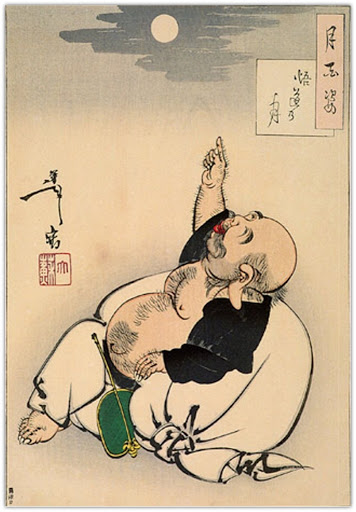
I am a finger pointing to the moon. Don’t look at me; look at the moon.”

THE BUDDHA.

what moon?
FIST LOGIC

POSSIBLY A GREAT LEARNING VIDEO.

Like most YouTube videos this was a set-up with a specific agenda, and unless I am mistaken the agenda was to show how ‘Karate kicks Ass, and Wing Chun sucks’.

The YouTube algorithm recently suggested a post of a well known internet Karateka facing off against an almost equally well known internet Wing Chun player. 

I do not mean any disrespect by this description, but I only know these two guys from the internet.

As you all know I do not like commenting on videos for the simple reason that we do not know what the participants are trying to do and it is so easy to get everything wrong.

But this video sat in my head like an extra hot curry sits in your belly and it just had to be set free or else I would have soiled myself.

As someone who understands Wing Chun, I was dismayed to see what the Wing Chun YouTube influencer was putting out there.

Like most YouTube videos this was a set-up with a specific agenda, and unless I am mistaken the agenda was to show how ‘Karate kicks Ass, and Wing Chun sucks’.

This is not an spiteful, and unwarranted roasting, the actors were willing to put it out there to be interacted with, it even had a share button, so here it is.

Before we even address how ‘BAAAAAD’ the presented Wing Chun was we should first address it as a match-up itself.

Which had a lot to teach about fighting ignorance“.

For starters, the match started in homage to Enter the Dragon with both men touching wrists.

Pure cinematic bullshit.

This only works if the opponent is an actor whose role is not to react.

Or, as in this case, if one man is 30cm taller than the other man.

For the moment let’s look past the fact that Wing Chun does not fight and just deal with what is presented.

If we are up against a taller man the most important thing is to control the distances.

Especially the kicking distance.

We must be either to far away to kick, or if we talk Wing Chun, too close in to kick.

Which against a skilled kicker means pretty much Nose-to-Nose, jamming up their legs.

The correct Wing Chun position is to firstly be out of range, and as the opponent steps in to fire off a kick, step in to the nose-to-nose space, jamming the legs and smacking the dude in the head as a bonus.

In this instance this so-called Wing Chun Man was in the perfect position for a skilled kicker to take his head off.

And of course, the Karateka said thank ‘you very much’ and kicked him in the neck.

Right there, in any kind of realistic situation, this was “Game Over”.

Credit where credit is due this kick was a display of high skill.

The short video is less than a minute in length, and yet the little man still manages to do so many things wrong.

I still cannot decide if his positioning was simply a bad decision, or attempted suicide.

Let’s now look at this from a Wing Chun perspective.

As I say all the time if we are touching someone in any way what so ever, it should be either causing them pain, or disturbing their balance.

Triggering a Somatic Reflex we can then exploit.

So being in a wrist-to-wrist standoff is just madness {or attempted suicide}.

Being an American {or Canadian, they are so often just stoned Americans} he more than likely believes that what is on the movies is reality, he cleary thinks that trying a Pak Sau and punch against an aware and prepared opponent will work.

After all if Bruce Lee did it it must be good.

Moving on.

We can clearly see that everything the little man was trying to do was at Chi Sau range, which is the Neutral Zone, the Middle Zone.

The Middle Zone is the Fool’s Zone, because to have any influence on our opponent we must press forward.

Which is what the little man does and gets fed a diet of fists.

Wing Chun does not attack, it counter-attacks, but the little man kept trying to press forward and just got fed pain.

In training, we may sometimes step into our opponent to get familiar with the compression of space and time, {because our training partner does not wish to commit to a genuine attack and step into us and pay the obvious price}.

It is a training artefact and not a strategy, as counter-attackers our best bet is to almost stand and wait until the opponent steps into us, but the only way we can come close to replicating this time/space compression in training is for us to step forward.

On the occasion where the little man did get inside the defence of the bigger man he had no plan, no intention, did nothing to change the bigger man’s thinking, and as such was simply pushed out into a perfect kicking position.

Just target practice.

So little time, so many mistakes.

Despite this being a pitiful example of the very worst example of Wing Chun, it has a great deal of value.

It is a clear and accurate video on what not to do.

One thing this video clearly shows is that Wing Chun fails miserably, and almost instantly, if not used in the time and place it was designed to operate, as a counter-attacking method against a committed attacker.

Another thing on show here, and a problem that can get into a students’s head, is coming back for more and thinking it is training you how to get the technique working.

It just teaches you how to get flattened.

While the little man acknowledges that he was pinged he just steps back in and does the same thing. 

As I said earlier, I do not know if this was simply making bad decisions or attempting suicide.

The really bad thing about this video is that it perpetuates the IDEA that Wing Chun is a fighting style, and a very poor fighting style at that.

Wing Chun was and is intended as a genuine set of answers to genuine problems.

With a genuine problem, if our first answer does not work we do not get a second chance.

If we touch an opponent we must either cause them so much pain that their brain turns off, or we affect their balance to the same end.

It is videos like this that feed the complete misunderstanding of what and why we train.

I will cover this later.

IT IS EASIER TO FOOL PEOPLE

THAN TO CONVINCE THEM THAT THEY HAVE BEEN FOOLED.

MARK TWAIN.
what moon?
FIST LOGIC

MAKING GOOD DECISIONS.

This post could save your Bacon.

Guys.

Do not get nervous about there being more than two paragraphs to read and no video you can listen to on the toilet.

This post could save your Bacon.

Martial Art knowledge is a skill set, and like all skill sets it will work at different levels in different situations, excelling in some and being unsuited to others.

Think about it this way, being a great swimmer will not particularly help with your Maths homework.

We all get this, but for some reason, we do not think it applies to getting the most from our Martial Arts training.

To be able to fully utilise any skill set we need to have two things.

#1. As deep an understanding as possible of the ‘capacity’ of our skill -set.

#2. As deep an understanding as possible of the problem we hope to solve with our skill set.

Hopefully, now my swimmer doing maths homework does not sound so frivolous.

There is no easy or binary answer to this, it is always subjective, ‘Can I use the things I am learning to deal with the problem I anticipate’?

The first priority is of course identifying the problem.

What do we anticipate happening that we will need this skill set for?

This is why it is so subjective, my fears may not be your fears, my goals, may not be your goals.

I am choosing to generalise so that most of us can get the most out of reading this.

For us as Martial Artists, the potential problem is violence.

There are two sides to this coin.

#1. Violence that we chose to engage in.

#2. Violence we did not choose to engage in.

Let’s present this as option #1, a fight, and option #2, a mugging [being attacked].

Do we fully understand the difference between these options?

We must, many students fail or fear to recognise that they do not understand this.

If I am training to fight I will most likely fail in a ‘Mugging’.

Equally, if I am training to escape/survive a ‘Mugging’ I will most likely fail in a fight.

You can try to train for both but the requirements of time and effort are beyond the best of us.

Even professional fighters get mugged, never forget Anthony Mundine getting mugged at Brighton Beach [N.S.W.] at pretty much the peak of his ability.

Once we have made the decision the next question is….

What type of situation was our training devised for?

In our case, the training of Wing Chun, it is the training of a counter-attacking Martial Art.

It should be clear to all that we only counter-attack once we have been attacked [otherwise we are the attacker], so the primary objective of Wing Chun is to escape/survive a ‘Mugging’.

If we need to beat the ‘Brown Stuff’ out of the attacker to achieve this, so be it, but our primary intention is escape.

If you do not tick this box your future could be perilous.

In my imagined scenario, my justification for why I train in Wing Chun, I find myself in a situation where I have been attacked, I did not choose to be in this situation, but luckily, the skill set I possess is a great fit, I can engage this situation from a position of confidence.

It is of critical importance that we understand this not only before the violent situation materialises, but before we begin training in the first place.

I am pretty sure that we will all be in a different head-space over this, so here is some more information to hopefully help establish a more representative stance.

There is a tendency amongst Martial Artists to believe that whatever Martial Art they train, it is this training that will save the day.

This is very rarely the case.

No matter what style we use it is simply a tool to help us implement our current intentions, strategies, ideas, or whatever word fits the bill.

Basically, it helps us make good decisions.

Of greater importance is how we see the situation, as this will colour our understanding, influence any intentions, strategies, or ideas we may have, and it will heavily influence our decision-making.

Violent situations are won or lost by how well we understand what is happening and how well we implement any decisions we choose to balance this situation.

It is impossible to make suitable decisions if we do not know what is going on.

Are we identifying the situation correctly?

Are we fighting someone?

Are we attacking someone?

Are we being attacked by someone?

Fighting, attacking, and defending are not as is often mistakenly thought, different aspects of the same thing.

Fighting, attacking, and defending exist in different environments, and different worlds, they create different problems on physical, emotional, and mental levels that demand an almost specialist approach.

There is rarely a one-size-fits-all answer.

The old cliche of “Never take a knife to a gunfight” is a clear picture of how what may work well in one situation will just flat-out fail in another situation.

Are we fighting, are we attacking someone, or are we being attacked?

Is there a difference in mindset between these 3 situations? Only you can decide this.

Is there a difference in physical preparedness between these 3 situations? Only you can decide this.

Is there a difference in our mental/emotional reaction between these 3 situations? Only you can decide this.

Let’s unpack this a little and paint a simple picture to help us come to a better decision.

FIGHTING.

Fighting is a contest of two or more people trying to better their opponent and giving no quarter along the way, for whatever reason.

The goal is to win at all costs, to give everything until it has all gone.

There will be pain, there will be injury, it will be brutal.

FIGHTERS expect and accept this.

If someone is not physically, mentally, and emotionally trained to deal with being hit, being hurt, or being injured, their chances of success in a fight are diminished.

Being fit, being fast, and being strong is of little use if that person cannot handle being hurt.

The key to being a good FIGHTER is not any chosen style, every style can be effective, the key is training to work through the pain.

ATTACKING.

It is easy to think that attacking a defending are two sides of the same coin, but this is a serious mistake, they are two sides of related yet very different coins and require completely different thinking and approach.

To the attacker, the focus is on surprise, stealth, and even cheating.

There is no wish to engage the person they are attacking on any kind of level playing field.

Speed and surprise are the currency of an attacker, the sooner it is done and dusted the better.

In a perfect attack, the victim does not get the chance to defend themselves.

Think about that.

Attackers tend to lead with their most powerful or most successful weapon or tactic to the extent that they may flee the field if they do not get early success.

Very few attackers [bullies, muggers] are courageous.

DEFENDING.

As a victim of an attack, the most important thing is time.

Time for the defender to orient to this chaotic situation.

Time to allow the attacker to fail.

This may be a simple picture but it is valid.

Where all this gets confused and conflated is that there is a real chance we could find ourselves in a situation where we begin as a defender, somehow we find the time to turn the tables and become the attacker, but then find that we cannot close it out, so we just end up fighting.

This is a negative situation for everyone.

To give ourselves the highest hope of a positive outcome the first thing we need to establish is, what group do we identify with?

Are we Fighters?

Are we Attackers?

Are we Defenders?

Only once we decide who we are can we have any hope of enabling our training.

At this point, it is very important to get on board with the IDEA that all Martial Arts styles can do the job.

No one style is any better than any other style, it is always how well the practitioner can implement the training.

If we re-read the simple painting of the situation there are already some effective answers.

Only a FIGHTER trains to ignore pain, if we see ourselves as fighters are we training for this?

I know that I am not, I am training to hurt an attacker who more than likely cannot handle pain.

This more than anything else informs my training and as such it will hopefully inform my decision-making when the “Brown gets Airborne”.

MANY PEOPLE CAN IGNORE A HIT.

NO-ONE CAN IGNORE AN INJURY

TIM LARKIN. T.F.T.

FIST LOGIC

FORMS ARE JUST MOVEMENT, IMPORTANT MOVEMENT, BUT STILL JUST MOVEMENT.

Rule #1, move as well as a normal person can move when they are just being normal.

Hey Guys, picture this.

We are watching a sporting event, pick your favourite flavour on this, and one player catches our eye, they are not doing anything outrageously special, but everything they do is effortless, smooth, focused and uncluttered.

Our thought is that this person is an elite sportsperson.

Why?

Because they move so well.

This thought exercise holds true for any sport, so it is obviously not the movements themselves, after all, different sports use different actions.

Rule #1, move as well as a normal person can move when they are just being normal.

As I mentioned, different sports use different moves because they have different goals and agendas.

So do different martial arts.

But in their hearts, they are all just the same human movements.

The takeaway from this thought experiment is that nothing we do will be of any benefit to us if we do not move well as a person.

Despite the hype around Wing Chun Forms, they are just our IDEA of a normal movement that meets our specific needs.

FIST LOGIC

FIRST BEATS FAST.

like most of the posts on FaceBook this sounds good, but, it is actually Bullshit.

Hey Guys,

Just a quick post to keep in touch.

Sam, Costas and I were working on stuff on Saturday that I thought was quite important to share, we lost the sound early into the piece so there is no commentary on the practice, all the same I am posting a few frames of what we did, with a bit of Timo Mass playing, to seed the water so to speak.

We will revisit this on Thursday evening so if you can, be here, and get all the information instead of just about 5% which is all we really put in these videos.

The heart of this matter is a better understanding of the whole idea of being fast.

Mark Zuckerberg once stated that his motto for Facebook was “Move fast and break things”, like most of the posts on FaceBook this sounds good, but, it is actually Bullshit.

what moon?
FIST LOGIC

IT MAY SOUND CRAZY, BUT, LET THEM HIT YOU.

Wing Chun does not attack, Wing Chun counterattacks.

I have mentioned before how intercepting an incoming strike is essentially a ‘Hard Block’, something that we do not do with Wing Chun, and a major misunderstanding about contact.

This is not just a stylistic interpretation, it is a fundamental aspect of what Wing Chun is.

To intercept an incoming strike we must firstly be aware of the event as it unfolds, and secondly, be moving towards the contact.

Moving in towards contact is off course an act of attacking.

Wing Chun does not attack, Wing Chun counter attacks.

Many students struggle to appreciate the true nature of a counter-attack and fail to grasp some very basic even bedrock IDEAS that result from operating from a counter-attacking perspective.

Everyone pays lip service to the notion that we cannot counter-attack unless an attack has happened.

But few join the dots and arrive at the conclusion that an attack has not happened until a strike lands.

Nor do they understand the implications.

If we are in a violent situation we are not bound to only use Wing Chun.

If I choose I can intercept or block an incoming strike or even initiate a preemptive strike of my own, options that may be the better choice in situ.

If I am using Wing Chun Fist Logic the situation has been taken out of my hands, I am already the victim of an attack.

I can only counter-attack after an attack.

After a strike has landed or is at the very least microseconds away from landing.

If the choice is mine {which it will not be anyway} my best option is to let the strike land and not try to prevent it from landing.

Before everyone loses their shit over this comment this is not advice on what to do, it is simply pointing out the conditions needed for counter-attack and as such the conditions needed for Wing Chun.

Letting the incoming strike make contact does not mean that I just stand there and take it, it is more that I control the time, place, and manner of contact.

This is a strategic approach that once understood aids us in being in the best place, at the best time and doing the best thing. 

Although this is most definitely a strategic approach it is not about pre-planning or trying to force the attacker into moving how we wish them to move.

It is strategy from the perspective of knowing our options.

Like so much of Wing Chun this IDEA is counter-intuitive but once explored becomes the go to choice.

what moon?

FIST LOGIC

THE STICK WE ALWAYS CARRY.

Sticks and Stones were the first weapons man ever used.

RANGES AND STICKS.

I always get bemused when people who claim to know things about violent physical interactions with other people start to talk about fighting ranges.

Anyone who does know about violence knows that there is only one range.

Contact.

When we consider the range that Wing Chun operates at as a self-defence-oriented martial art, what we are talking about is the other end of an attack.

Even if the initial strike is from what is sometimes called long-range, the follow-up is right down our throats so we should settle down and settle in.

Into being up close and personal.

Our very own Dai Sigung Isaac Newton and Sibak Albert Einstein made it very clear that time and space are two sides of the same coin.

When we are short of one we are short of both, so whatever we do it needs to be very quick, and very close.

There is a great deal of well-intentioned but misguided information kicking around the self-defence community, most of it can be blown away by basic high-school-level physics, and the rest by common sense.

We get out of bad situations by putting the bad guy down, it is not the best thought, but it is the truth.

Sticks and Stones were the first weapons man ever used.

And more than anything else, the only wrong move is not to move.

SPEAK SOFTLY AND CARRY A BIG STICK.

Theodore Roosevelt.
what moon?
FIST LOGIC

IMAGINATION IS OH SO REAL.

Concepts are IDEAS, seed IDEAS, that provide a departure point for exploration.

As a ‘Concept Driven’ Martial Art, we can and do, use training methods that are as much about understanding thought processes as they are about fighting.

Especially if we are digging deep into the theory of our FIST LOGIC.

Some of the more nuanced aspects such as INTENTION, which due to the peculiarities of the English language is always tricky to explain, and understanding what it means to release a strike and not push it are areas where a different approach can pay dividends.

Using IMAGINATION is one such tool.

It is important to come at this training with an open mind, but it is equally important to understand that this is just a TRAINING TOOL, a method to help us make a breakthrough that we can then work on with more familiar approaches.

As baby humans, “Play Acting” is how we learn all of our earliest lessons, it is something we all know how to do, and if we can allow ourselves to access this very old skill it can help us see things we would never see by other methods.

But as I say, this is just a training method, I am not suggesting that should be something we do in a dire situation.

All this kind of stuff is working on the conceptual aspect of Wing Chun, and as such we should not make the mistake of thinking that a “CONCEPT” is in any way real or what we are after.

Concepts are IDEAS, seed IDEAS, that provide a departure point for exploration.

REALITY: WHAT A CONCEPT.

ROBIN WILLIAMS.
FIST LOGIC

BODY INTEGRITY AND OTHER SEXY STUFF.

We could ask ‘How long is a piece of string”?

 If we simplify wing Chun the training objective is to minimise incoming force while maximising outgoing force.

This is a game of opposites, accept incoming force with cotton and issue force with steel.

All techniques and strategies pay fealty to this IDEA.

Our concepts are suggestions and not directions, this leaves a great deal of room for interpretation, adlib, and creativity, but it also leaves us open to misunderstandings and working against ourselves.

One concept, ‘Wing Chun does not use Hard Blocking’ is a potential misunderstanding.

What is a ‘Hard Block’?

We could ask ‘How long is a piece of string”?

So what is a Hard Block?  A ‘Hard Block’ is a clash of Arms.

Question.

Is there a time and place of contact where we move from Soft Block to Medium Block? 

Or a transition from Medium Block to Hard Block?

The term ‘Hard’ is an infinitely variable metric that can never be in the same place on two successive instances or be the same quality or amount of HARDNESS for two different people.

Blocking is contact, and contact is a clash.

And clashing invokes the Law of Action/Reaction.

It is a shared event that is determined by two separate sides.

We need to re-explain this Concept as Wing Chun does not Clash with our opponent’s Arms.

One of the most overused cliches in Martial Arts is that of building a House.

When building a house, there are hierarchies that if avoided or approached out of order the task becomes infinitely more challenging.

We could for instance begin by building a roof, then suspend it and build walls down from that roof.

There is no getting away from the fact that a house is made of a roof, walls and a floor, eventually, we need to create all of these to have a house.

Conventional wisdom, and more than likely experience, favours building a slab, erecting walls, and then adding a roof. 

Learning Wing Chun is just like building a House.

We can work on and learn the Forms in any order we choose, but some ways are easier than others.

As wildly confusing as it may sound approaching Wing Chun as a Martial Art in a physical sense is beginning by moving in the wrong direction.

It is not possible to learn the truth of Wing Chun by studying shapes and movements alone, the shapes and movements that are most commonly used are, in all truth, shapes and movements taken from other styles that were popular at the time.

We could just as well use any known style.

Shapes and movements are important, but as keys and not as weapons.

The shapes and movements open doors upon practices that refine and improve those same shapes and movements.

I genuinely believe that we could begin our study of Wing Chun with any of the  Wing Chun Forms, even including the Mom Jan Jong, but just like the house, it is easier if we start with a good foundation.

This foundation is what I refer to as ‘CRAZY HORSE’, a device to hang the clothes known as Sil Lim Tao, Chum Kiu, Biu Gee and Mok Jan Jong on.

Once we have developed ‘CRAZY HORSE’ we could well start with Bill Gee.

But staying with the house-building analogy for a moment, to achieve good foundations it is vital that we build on solid ground.

The ‘solid ground, that we build on in Wing Chun is a previously learned skill set.

If we do not have a previously learned skill set then it stands to reason that we first must develop one.

The physical aspect of Wing Chun training, the aspect that so many people, especially YouTubers, think is what makes up Wing Chun, you know, the making contact bit, is nothing more than the setting up of solid ground to put our foundations on.

The real work begins once we have shapes we trust, once we have an effective way of moving.

In short, the real work begins once we know how to fight.

The video below quickly became longer than I intended so I will cover the manifestation of weight and how to use it at a later date, it is a really interesting and powerful topic which is relatively easy to grasp.

The audio volume in the following clip is a tad too much so lower your volume before clicking the play button.

NOTHING HAPPENS UNTIL SOMETHING MOVES.

ALBERT EINSTEIN.
what moon?
FIST LOGIC

THE NITTY GRITTY.

All we need to do is step to the side as we poke the “Bad Guy” in the eye.

Yo Tribe,

Q… Am I a skilled Wing Chun Master?

A… Yes.

Q… Am I a skilled videographer?

A.. Sadly, no.

Yet again I failed to record what was a truly remarkable training session this past Saturday morning.

I am so lucky to have 3 students that are Master level in their own right, lucky to have 3 students that genuinely love digging into the minutiae of what makes this thing we spend so much time on work to its fullest potential.

However, I am dead set cursed that I care more about teaching than filming that teaching.

In the future, I will forego trying to record live training and do pre-set-up videos.

In this piece, I am using an old video of Sam and James on how to fine-tune positioning.

Successfully surviving a violent encounter has nothing to do with technique, it is not Tan Sau to Bong Sau to an Elbow strike, it is not about style, structure, power, or even speed, it is not about defending, it is not about attacking, all of this STUFF is useful, very useful,  but is made redundant by ignorance, by not paying attention to the things that count, the Nitty Gritty.

And the Nitty Gritty is understanding the relationship and the interaction between two bodies in space.

From a training perspective, this means internalising the Concepts that govern the interaction of two bodies in space.

Pushing a car, hanging out the washing, throwing a Frisbee, or fighting Desperate Dan are equally governed by these basic concepts.

Once we have this down, everything just works.

It does not matter how powerful, fast, or devastating an opponent’s strike is if it misses.

Defending is simply a way to make the “Bad Guy” miss.

It also does not matter how soft, slow, or innocuous my own strike may be.

If it lands without any disruption I am in the box seat.

If I poke my attacker in the eye with my little finger the resulting spinal reflex action that their nervous system triggers will leave them open and defenseless for what comes next.

HERE IS SOME SECRET KNOWLEDGE…

All we need to do is step to the side as we poke the “Bad Guy” in the eye.

How hard is that?

But most people will not do that, it is too easy, and they think it will not work because they think there is more going on.

But there isn’t.

NO BATTLE PLAN SURVIVES CONTACT WITH THE ENEMY.

MILITARY MAXIM.
what moon?