
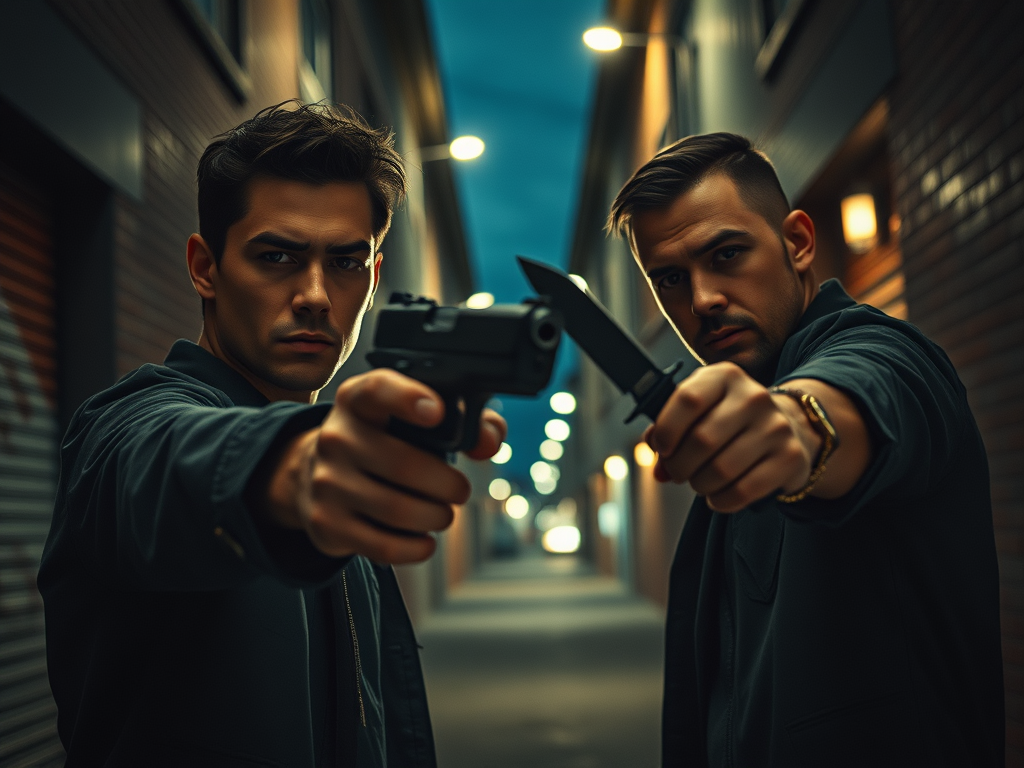
This is where it gets funky. It’s both.
Anyone with hands on experience of Wing Chun training will testify to how counter intuitive the training can be.
Wing Chun is a ‘Concept’ driven style that approaches all of our training as a means to understanding the force dynamics of the situation we find ourselves in, or as my teacher would say “a means to an end, and not an end in itself”.
What end? To turn the tables and prosecute our own agenda, that’s what end..
Wing Chun training is never representative of genuine combat, it is not imaginary fighting. Due to this there is no thought of ‘this leads on to this’, no linear progression of escalation as there is in many other styles, which is why to the uninformed it looks bogus or at best ineffective.
In early training many of the things we prioritise, such as do not focus on what the opponent is doing, and in particular not focusing on the point of contact, standard approaches for many fighting styles, are the ‘means to an an end’ and not what the learning objective is.
The learning objective is to develop a whole body approach, which is usually accomplished after the development of the IDEAS introduced in Chum Kiu, reinforced in Biu Gee, explored on the Jong and personalised via the Pole and Knives. The IDEA of filling the body with ‘Intention’ even to the end of the Fingers {Biu Gee}.
This creates a level of misunderstanding and confusion about our training, even among some of our own students.
When any of us play on the Dummy, and of course when we play Chi Sau, we all consciously and deliberately make contact with our wrists, which on the face of it contradicts the ethos of ‘avoid the contact point’.
So what is it, focus on the contact point or ignore the contact point?
This is where it gets funky. It’s both. But wait minute, is that even possible? In reality NO, but conceptually YES.
The following video clip should be appreciated as a fly-on-the-wall type of thing, no one was trying to demonstrate or pose anything. I video these to make sure that I am not accidentally giving fantasy [read B.S.] ideas to my students. It is really important to me that if anyone uses what I show them, it will get them out of trouble.
It can, and in many cases but not all, take years for this to make sense. But once it does it is brilliant. This understanding is accomplished more by thinking than by punching, and a good place to begin this thinking is by exploring and improving our understanding of the out and out reality of counter-attack and self-defence… as CONCEPTS.
In training, we work hard to develop a whole-body approach that allows us to align everything behind any spot we choose, even a fingertip as in Biu Gee, a forearm as in Chum Kiu, or 13 feet away at the end of a long pole.
In a physical altercation, if given the chance, we will connect via our wrists as we do in Chi Sau, as we do on the Dummy, however…. our philosophy holds with the IDEA that we will probably not be able to make this decision in an all out attack against us, especially an unexpected attack, in this situation the ‘whole body’ approach which aligns the ‘whole body’ behind a single point, be it the contact point or not, maintains body integrity in all situations, even when we do not know what is going on.
Wing Chun is not and was never intended for fighting, it is intended for dealing with unwanted violent contact, this may of course require us to fight back, and just like our attacker do it violently and viciously, but that is not the work we do in training.
If we struggle to make sense of this, we will struggle to grasp the truly amazing aspects of Wing Chun and, of course, struggle against violence.
Fortunately for them, many people have no personal experience of being violently attacked without much warning, but there is a downside to this, it tends to create the idea that an unexpected violent attack is somehow the same as a fight.
It is not.
It is closer, more aggressive, way scarier and over in just a few seconds, it is not that standard fighting skills will not work in this environment, it is more that we will not get the time or space to use them.
I am not trying to scare anyone with this, the opposite in fact, I am hoping to point to how it is the odd, sometimes weird and apparently pointless things that we do in late training that, often as a reflex action, stop attackers from overwhelming us in an instant, and as such give us the chance to turn the tables and retaliate.
Even once we turn the tables Wing Chun does not fight….It just beats the crap out of the Bad Guy.
And this brings us full circle to the main cause of confusion and fabrication…
… training is not fighting.
Break this down a bit, what is training? Training is learning, and learning is thinking.
What is fighting? Fighting is action, and action is movement.
Therefore, training = thinking, while action = movement.
Thinking is not ‘movement’.

 Wing Chun Sydney, Australia