If we simplify wing Chun the training objective is to minimise incoming force while maximising outgoing force.
This is a game of opposites, accept incoming force with cotton and issue force with steel.
All techniques and strategies pay fealty to this IDEA.
Our concepts are suggestions and not directions, this leaves a great deal of room for interpretation, adlib, and creativity, but it also leaves us open to misunderstandings and working against ourselves.
One concept, ‘Wing Chun does not use Hard Blocking’ is a potential misunderstanding.
What is a ‘Hard Block’?
We could ask ‘How long is a piece of string”?
So what is a Hard Block? A ‘Hard Block’ is a clash of Arms.
Question.
Is there a time and place of contact where we move from Soft Block to Medium Block?
Or a transition from Medium Block to Hard Block?
The term ‘Hard’ is an infinitely variable metric that can never be in the same place on two successive instances or be the same quality or amount of HARDNESS for two different people.
Blocking is contact, and contact is a clash.
And clashing invokes the Law of Action/Reaction.
It is a shared event that is determined by two separate sides.
We need to re-explain this Concept as Wing Chun does not Clash with our opponent’s Arms.
One of the most overused cliches in Martial Arts is that of building a House.
When building a house, there are hierarchies that if avoided or approached out of order the task becomes infinitely more challenging.
We could for instance begin by building a roof, then suspend it and build walls down from that roof.
There is no getting away from the fact that a house is made of a roof, walls and a floor, eventually, we need to create all of these to have a house.
Conventional wisdom, and more than likely experience, favours building a slab, erecting walls, and then adding a roof.
Learning Wing Chun is just like building a House.
We can work on and learn the Forms in any order we choose, but some ways are easier than others.
As wildly confusing as it may sound approaching Wing Chun as a Martial Art in a physical sense is beginning by moving in the wrong direction.
It is not possible to learn the truth of Wing Chun by studying shapes and movements alone, the shapes and movements that are most commonly used are, in all truth, shapes and movements taken from other styles that were popular at the time.
We could just as well use any known style.
Shapes and movements are important, but as keys and not as weapons.
The shapes and movements open doors upon practices that refine and improve those same shapes and movements.
I genuinely believe that we could begin our study of Wing Chun with any of the Wing Chun Forms, even including the Mom Jan Jong, but just like the house, it is easier if we start with a good foundation.
This foundation is what I refer to as ‘CRAZY HORSE’, a device to hang the clothes known as Sil Lim Tao, Chum Kiu, Biu Gee and Mok Jan Jong on.
Once we have developed ‘CRAZY HORSE’ we could well start with Bill Gee.
But staying with the house-building analogy for a moment, to achieve good foundations it is vital that we build on solid ground.
The ‘solid ground, that we build on in Wing Chun is a previously learned skill set.
If we do not have a previously learned skill set then it stands to reason that we first must develop one.
The physical aspect of Wing Chun training, the aspect that so many people, especially YouTubers, think is what makes up Wing Chun, you know, the making contact bit, is nothing more than the setting up of solid ground to put our foundations on.
The real work begins once we have shapes we trust, once we have an effective way of moving.
In short, the real work begins once we know how to fight.
The video below quickly became longer than I intended so I will cover the manifestation of weight and how to use it at a later date, it is a really interesting and powerful topic which is relatively easy to grasp.
The audio volume in the following clip is a tad too much so lower your volume before clicking the play button.
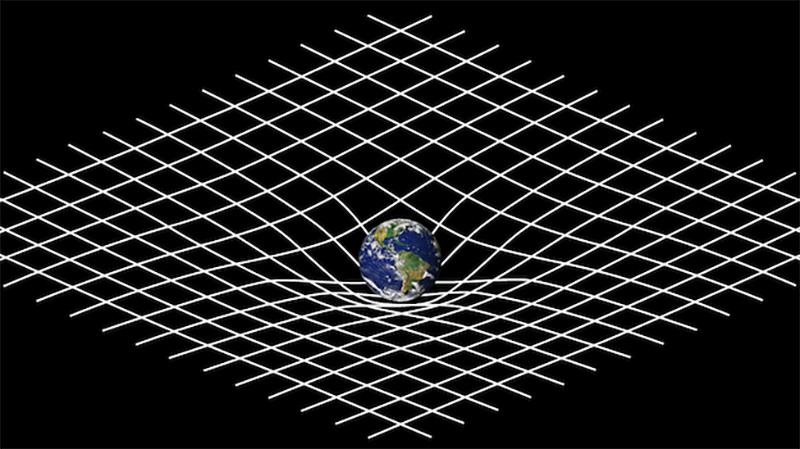
The Earth and everything on it warps the fabric of space and time.
No matter what we may think we are doing there is something happening that is real, measurable and usually contrary to what we think we are actually engaged in.
Body Alignment for instance, is an important topic in any Martial Art, most styles have their own particular approach that is usually played out in different stances and movement patterns, but in this Universe the only thing we ever align ourselves with is Gravity.
Because we have lived with Gravity for every second of our lives we tend not to notice it, and we need to.
Gravity infuses everything we do, constantly.
Gravity is pulling us down towards the centre of our planet’s mass, the reason we do not end up flat on the floor is that all of our collective body parts are FALLING into our Feet in such a way that they stack up on top of each other to create a balanced structure. This is the same with buildings, trees and even mountains.
In most Martial Arts the first learning objective is to be able to stand in this Balanced State that prevents us from falling over, there are numerous ways to achieve this, but they all have the same Goal.
Aligning ourselves with Gravity so that all of our weight FALLS into our Feet.
If our balance is correct we will not require any tension to hold us still, if there is tension then you are not in balance.
This is easy to test, just stand still.
If you are out of balance you will use tension to stop you from falling, this will fatigue the Muscle providing the tension, when this happens your body will independently move to a new position that will also be out of balance and require tension to prevent falling over, you see this all the time, people shifting from one leg to the other, mostly unaware that it is even happening.
It is easy to think that we use the Muscular Tension to hold us IN balance, but this is incorrect, the tension is holding us out of balance.
When we are in balance there is no need for tension.
Gravity is always pulling on us, if we do anything to work against this we are fighting force.
Think deeply about that.
If you are engaged in anything except allowing all of your Body to sink down, to drain into the Earth, you are fighting force and cannot possibly be relaxed no matter what you may think you are doing.
Once we have established balance and stillness it is time to introduce movement.
All movement is a result of our interaction with the Planet, all power comes from our interaction with the Planet, being still is a result of our interaction with the Planet.
The first moves are usually small, minor, often just an Arm, if my movement takes any of my weight out of my feet, if it in any way interferes with the constant sinking into the ground of every part that is me then it is no longer working with Gravity but is in fact fighting it.
Wherever I may choose to move it the weight of my Arm, my Feet must go to, or at the very least the action must not take anything away from my feet.
As difficult as this is to imagine if you think deeply on it you realise that there is no other way if we are to remain in unity with Gravity.
Take 20 minutes every day for a week to think deeply about this, take notes discuss it with friends, use what you discover to examine what you think you know, examine what you think you understand.
It is not about me being right or wrong, this is the way our Universe works, agreeing or disagreeing will not change the reality of our Cosmos.
When you understand …… things are just the way they are.
When you do not understand …… things are just the way they are.
When we move we must move with Gravity, so every move begins as a downward move.
My foot presses the Planet, and the Planet presses back.
Even when I am standing still the stacking of my body that allows my weight to fall into my foot creates this press.
When still my foot presses the planet, this is the fundamental connection.
The more aware of this you can be, the more you can accomplish with it.
The most important aspect of any stance or any movement is the relationship between our foot and the Planet.
When engaged in Chi Sau, a dynamic drill that encompasses both accepting and issuing force, we lose all idea of gravity, it is now just Chi Sau, for Chi Sau’s sake.
is it even possible to monitor how we are dealing with gravity?
Ultimately if we lose our control of, on, or with gravity, whether we are in a violent situation or a training situation, nothing we attempt will be successful.
My teacher would often come up to me when I was engaging in Chi Sau with a schoolmate and ask “What are your ankles doing”?
A quick aside regarding the video below, especially for any guests that may get confused with this type of training, but also for students who forget that there is a step after this, the step where we develop our own way to turn this IDEA into a practical, physical application for use in a chaotic violent situation.
It should be no surprise to learn that our nervous system is seriously invested in our survival, and as such it will override our brain {and if it deems it is necessary to ignore our training} when it comes to deciding how fast we do things, it will however naturally strive to at least equal the speed of the incoming strike, so it is more important that we are moving with a smooth, even rhythm that can be upsized to suit our needs.
All of our training is a method to physically represent the IDEA behind the work, it is not techniques, it is Wing Chun Science if you would, our Fist Logic.
Isaac Newton, the greatest of all Wing Chun elders, taught us that it takes more effort to make a still object move than it does to keep something moving or even speed up that movement, think about pushing a car.
Any IDEA that we can make work against a static object/training partner will work even more effortlessly against a moving object/training partner, and never forget that speed is just a metric.
This video is just a record of a normal training session, we are working on understanding an aspect of “The little IDEA” and as such see how our “Fist Logic” works in any shape, from any position in any situation.
the overriding intention is ‘do the work, do not hang around, go home’.
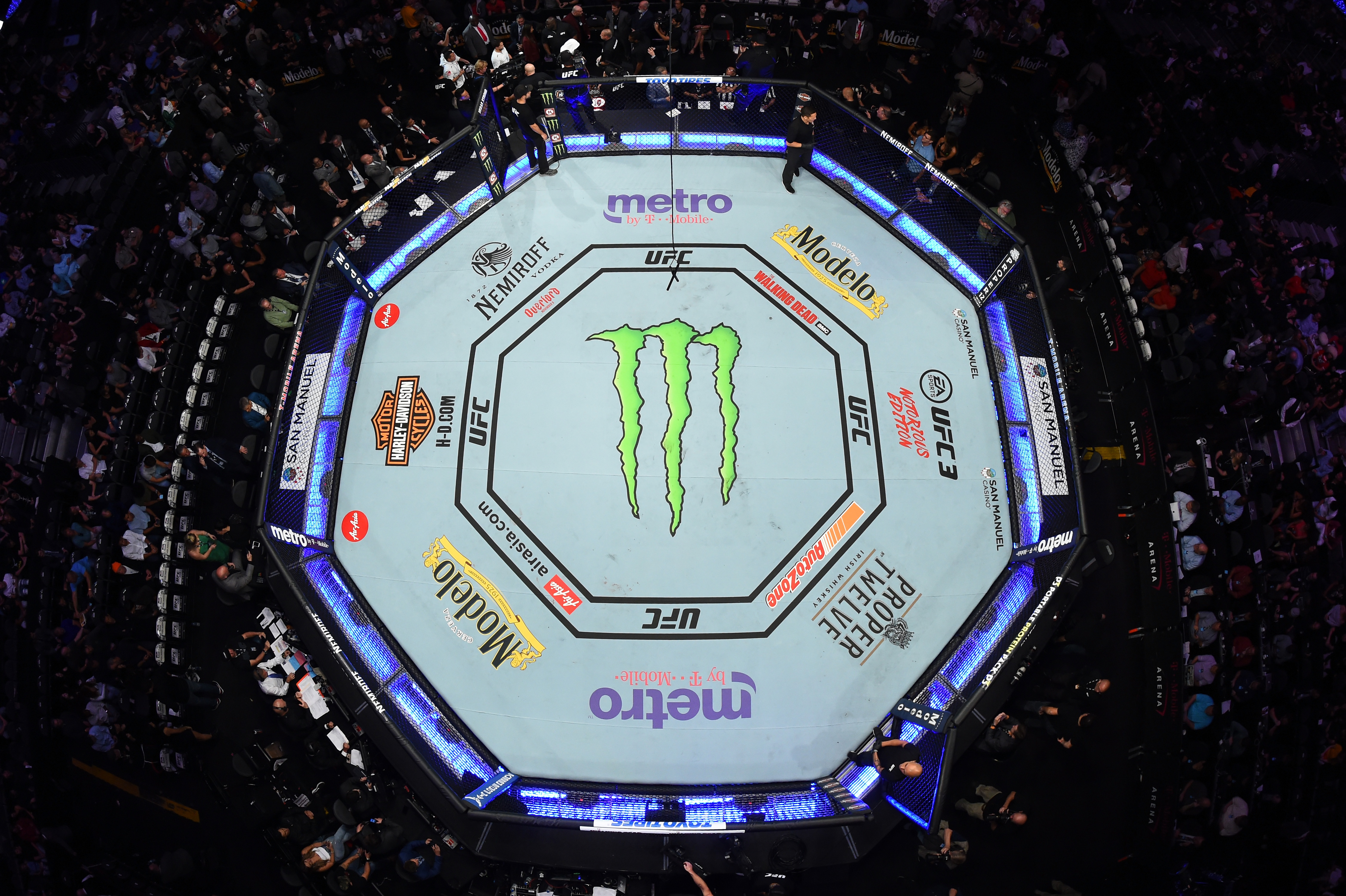
It appears to be that time of year again, the time when Kung Fu Masters choose to step into an arena to battle fighters from other disciplines.
The clip I have here was recently posted to our WhatsApp group by Sam, it is a Kung Fu Master vs a youngish Female Boxer.
The difference in age, build, and weight is quite significant.
The only info I have of the two fighters is what is given in the video, but I have no reason to doubt the commentator.
The usual approach is to bag-out the Kung Fu guy for not being the second coming of Bruce Lee and generally covering him in scorn.
But why?
Even though it has been well over 40 years since I took someone on competitively, I remember the nerves stepping through the ropes, or onto that mat.
This ‘caper’ is not for the faint at heart, and we should at least give them some respect for this.
When Kung Fu practitioners talk about these events there is the suggestion that none of us cares about these fools and the games they play.
If that is the case why are the comments so brutal?
We do feel it, deep inside, we do get embarrassed, and feel ‘Tarred with the same brush’, and with a certain percentage of students, this creates a sense of doubt.
But I ask you, doubt about what?
Doubt about our ability to hold our nerves when we step into an area with someone that wants to hurt us?
Doubt about our conditioning to chase that someone around a ring for 15 minutes?
Doubt about our capacity to ignore punishment and carry on when the other fighter hits us?
This is not what we train for, so where does this doubt come from?
We should simply not go there.
What Kung Fu, and any other self-defence-minded Martial Art trains for, the environment we will find ourselves in so to speak, is a very short, very intense, unprepared-for attack.
The thing that makes this environment so difficult is that we will, to a certain degree, be caught out, be surprised, be shocked, the thing could be over before we know it has begun.
However, if we can reverse the flow, and surprise or shock our attacker, then the path ahead becomes much easier to navigate.
This is the concept of counter-attack, this is what we train.
It is not about swapping punches, is about turning tables.
If we look at the video we should ask ourselves….
Q. #1. Where are the Kung Fu skills?
All we see is an apparently untrained brawler trying to face off against a moderately trained boxer, which begs the obvious question…
Q. #2. Why is this trained Kung Fu Master choosing to brawl instead of using Kung Fu?
All Kung Fu styles, but particularly Wing Chun, operate from a position of responding to someone attacking us, that is the whole IDEA of self-defence.
It is hard to access self-defence IDEAs if we are the ones doing the attack.
If we look at this fight through the lens of our own ‘FIST LOGIC’ it is the young boxer, if anyone, that is employing Kung Fu philosophy.
This gets down to something I have been banging on about for years.
Kung Fu, and especially Wing Chun Kung Fu, does not fight.
Let’s spend a minute and clear this up a bit.
What is a fight?
A fight is an event where 2 people openly attack each other, that is it in a nutshell, attack, attack, attack, usually the closest anyone gets to defending themselves is through evasion.
‘Fighting‘ is not what Kung Fu prepares for.
What type of event does Kung Fu prepare for, and again, specifically Wing Chun Kung Fu?
It trains for an unwanted, unexpected, violent situation, and the goal is to get out of there as soon as possible, with a minimum amount of damage.
Obviously, to escape we may first need to incapacitate the attacker, but the overriding intention is ‘do the work, do not hang around, go home’.
Choosing to engage with another person in a fight, or trying to get ourselves out of an unwanted situation are two completely different environments with very different needs, and very different outcomes.
For every environment, there is an optimum way to interact with that environment.
Trying to use self-defence IDEAS for fighting is just choosing an inappropriate means of interaction with that environment.
A bit like Ballroom dancing in a wet suit and flippers.
I am sure someone could make it work, but why even try?
The skills we need are much less specialised physical skills, and more the ability to pick the right tool for the job.
This comes down to understanding what that job is, for example, are we choosing to fight someone as if duelling to defend our honour?
It comes down to detailing the outcomes we wish for, for example, are we looking to prove a point and set someone straight or just get out of there in one piece?
But most importantly, it is deeply understanding the capacity of what we are training to get us the results we want to get.
The video below is quite long, you will get what I am going on about in the first few minutes, but it is worth watching it all.
As always if this creates any kind of confusion we can do a training session to focus on this aspect.
Men occasionally stumble over the truth, but most of them pick themselves up and hurry off as if nothing had happened.
We do not help our training partners by not putting them at risk
HEY GUYS,
Watching Sam and Saleh rough-housing the other day reminded me that training with someone of a much lower level should be embraced by the more senior student for what we can learn about ourselves, and not just considerd to be a teaching or mentoring situation.
Apart from being fun for all involved, it allows the senior to get an IDEA of how easily things could work against an ordinary, potentially lesser-skilled person {which would describe the average Bad Guy that is likely to attack a complete stranger} to get almost real-world results without all of the shit that comes with violence.
For the Junior training partner, as long as they do not have a loss of confidence it can allow them to see where continued training can take them, that progress stems from a better understanding of objectives that leads to better outcomes and not just trying harder, and that power comes from the correctness of application.
Seniors students do the same things but the results are poles apart.
However, progress is easier to attain if we are on a level playing field that offers no easy excuses.
As difficult as it is to imagine it, there must have been a time and place when the first violent exchange between humans took place.
So the first question that arises is, ‘what style did these two guys use’?
And then the thought of who taught them?
Obviously, no one taught them, after all this is the first-ever fight.
Whatever they did was instinctive, and innate.
The rules of natural selection would lead us to think that the Victor of this first-ever fight was whichever person was bigger, faster, stronger because when all else is equal these are the advantages that make a difference.
As is usually the case payback was hoped for but the loser, let’s call him Man #1 now had to find a way to overcome the advantages that his opponent had, let’s call him Man #2.
For instance, as a means to negate the superior reach of his opponent Man #1 chose to use his leg to reach in under the incoming punch.
Or perhaps Man #1 chooses to use better movement choices before engagement so as to be behind Man #2 and be able to attack from a safer position.
In short, the first fighting style was formulated,
Martial Arts had begun and the goal was to negate the advantages that Man #2 had over Man #1.
This is of course the goal of every organised fighting system.
To overcome any of our opponent’s advantages.
Somehow this gets lost, and it becomes about overcoming our own perceived disadvantages, and how we can improve our perceived disability.
We lose sight of it being how we can avoid things being done to us.
But somewhere inside we know that everything is about dealing with the other person’s advantages.
So as we improve somehow the threat we think we will face escalates.
Mysteriously Man #2 has also been training, the unknown threat becomes greater so that Man #2 is always better than us.
As long as we are thinking about our own lack of ability we are not working with a reference that has relevance in any potential reality.
A question we should ponder is ‘If we do not know the ability of Man #1 how can we avoid it’?
Without some level of understanding of this conundrum, it is quite possible that we are about to spend 20 years becoming the best in the world at the wrong thing.
We could be the world’s best grappler and get knocked out by the first punch.
We could be the world’s best striker and be immediately taken to the floor and choked out.
We could be the world’s best grappler and striker only to be hit in the back of the head with a stick.
When we become our own frame of reference, focusing on only our own ability all we do is feed our fear.
After all, if we have no IDEA of what Man #2 will do we are always stepping into the unknown.
That is the one thing everyone fears.
No matter why we began training in Martial Arts, or why we continue to train in Martial Arts the Martial Arts themselves have just one purpose, one desired outcome.
This ‘OUTCOME’, is the IDEA we are trying to understand through our training.
But we can get lost and begin to think that training is all about the method of achieving that ‘OUTCOME’.
This approach to training becomes a trap.
Can we avoid this in training?
For one thing, we could change how we describe to ourselves what we are planning to do and learn to avoid, not defend, the most common attack that we think there is.
Even when I do use a technique to defend myself If I engage Man #2s incoming strike I am avoiding being hit.
We will all have our own thought about what this attack may be, but there is always one that we worry about, one that tests our confidence.
Here is the hard bit.
Then we must give our training partners permission to do it to us, a complete free pass, at first within comfortable speed and force parameters but it must be done in a way that if we do not avoid it will making contact we will be hit.
When we play the agonist, the attacker, we do the same thing for our partner.
This is BEING A GOOD BAD GUY.
If both partners are of similar skill levels, and both commit to BEING A GOOD BAD GUY, the action/reaction of attack/defence will be the same from both sides.
The training objective and what we are trying to observe and understand in this exercise is how difficult it is, even when we try our best, to land a blow on someone with our type of training, even at our current level of training.
As I said at the beginning, seniors and juniors do the same thing, seniors just do it better, so our current level is always good enough.
This is inside-out training in many ways.
Here we are, the Bad Guy, trying our best to succeed but all the same failing miserably.
This is the aim of this exercise.
The harder we try, the more we fail, the better the proof that what we do has merit.
Think about it, if I try to land a true strike on my partner and he can prevent it then it stands as proof positive that the training works.
To be of value we cannot go easy on each other, it must always be as real as it can safely be, there should be a little uneasiness, a level of doubt.
A proper punch, even at half speed and half force, will have the correct shape and correct alignment, and more importantly, the correct intention and only the correct defence will stop it.
We must abandon any idea of going easy on our partners as they will with us.
What all training is really about is navigating risk.
We do not help our training partners by not putting them at risk, and in return they do not help us.
This next IDEA may sound contradictory, but once we are capable of dealing with these training attacks, situations that we can deal with, we need to deliberately pick it up to a point where we cannot deal with the attack.
In this instance BEING A GOOD BAD GUY translates to working faster, but still within acceptable force parameters than our partner can cope with.
Yes, squeaky bum time.
In this aspect of the exercise, as defenders we let our emotions run the show.
No false bravado.
Not standing our ground against our better judgement because we know it is only training and we know our partner does not want to hurt us.
If our partner is BEING A GOOD BAD GUY and going all in this will be the easiest part of that evening’s training.
We may flinch, we may duck or even try to get away under the onslaught but if we are both still in the same moment what we feel happening to ourselves under the attack will also happen to our partner when we attack them when it is our turn.
The training objective and what we are trying to observe and understand in this exercise is how our training method affects someone that is not ready for it.
Which will be everybody, think about it, no one chooses to attack someone else expecting to be battered.
At first, we will not be able to observe how our body and nervous system are usurping control, as we react without thinking, but once we review what just happened can pay attention to how we feel, we can get a first-hand experience of how a human being, any human being, all human beings respond to violent shock.
Underneath all of our training we are just ordinary people, and ordinary people are driven more by results than by methods.
Too many students spend their limited training time focusing on producing a movement via a prescribed method, instead of focusing on what that movement produces.
The most valuable use of training time comes from learning to improve something we already know.
The least valuable use of training time comes from trying to learn something new.
This is not fighting advice, this is behavioural advice.
This post has been inspired by some of the comments over the last few weeks while working with knives and then finding ways to transfer the work to a practical/violent situation.
We have been putting in the hard yards on the physical-dynamic side of training, so I thought a change of pace may be called for, and give our little grey cells a turn.
Wing Chun does not have a universally recognised theoretical approach, this is part and parcel of it being a ‘Concept’ driven style, and because of this the closest we come to an operating manual is the Kuen Kuit, which is a collection of training hints passed down from days gone by.
To my knowledge, the ‘Kuen Kuit’ was never set down at any one time or at any one place by any one Master or practitioner, so it is very much just a collection of suggestions from a collection of senior students describing things as they saw it at that time.
And it was a very different time than today with very different problems.
My own view of Wing Chun today, after 30 years of training, is completely different than it was 10 years ago after 20 years of training, and I am sure this is true of all senior practitioners.
The blokes that put down the ‘Kuen Kuit’ were no different from any of us mob, today’s senior practitioners and the IDEAS in the Kuen Kuit are best seen as just opinions.
This post is my opinion.
Good or Bad, it is up to each one of us to decide the value of any opinions.
My main concern about considering the Kuen Kuit as a FIST LOGIC BLUEPRINT is the style in which it is written, the IDEAS and advice presented are cryptic and open to many different translations and interpretations.
This post’s title stemmed from a quote you can find in the ‘Kuen Kuit’ that runs a somewhat controversial flag up the flagpole with the IDEA that WING CHUN never takes a backward step.
What do we think this means?
In my Sifu’s school, this IDEA implied that Wing Chun relentlessly pressed forward, and to this extent that was exactly how it was trained.
I was looked upon as a spoiler when I voiced disagreement and pointed out that having the awareness to adequately respond to what is happening in the chaos of a random attack, which is Wing Chun’s area of operation, is difficult enough and that trying to force a pre-planned agenda is pretty much impossible.
This only led to a circular argument about reaction or response that solved nothing.
At the end of the day we stand or fall by the decisions we make ‘in the moment’ much more than by any strategy or agenda we believe in. Good decisions grow from good information much more than intense training.
And of course, self-knowledge, the goal of all training in all styles.
While there are without doubt some individuals that willingly walk towards danger, the majority of us will always choose to walk away from it.
Incidentally, once our nervous system senses danger this choice will be made for us on a subconscious level and not by any kind of wishful thinking on our part developed during training.
I have always considered Wing Chun to be a clever and insightful Martial Style, deliberately training to work against our base instincts is neither of these things, but this is just my opinion.
When we are talking about information and data collection, the bigger the picture is the more information we can gather.
The genesis of Wing Chun was during the Taiping Rebellion in the late 1800’s, a particularly violent period of S.E. China’s history that lasted for 15 years and is estimated to have cost 30,000,000 lives.
During the Taiping Rebellion social order had broken down and it became every man for themselves.
Decisions that people faced were often life or death.
Try to put yourself in their shoes for a moment, do we walk in and take our chances, or do we use caution and aim for safety?
We may never find ourselves in such a predicament as the Cantonese of the late 1800s but this was the thinking that forged Wing Chun.
I have another issue with this IDEA of relentlessly, physically, pushing forward.
As a young teenage boxer, I soon found out that walking into punches hurts just as much as being hit by an advancing opponent.
Relentlessly, physically, pushing forward automatically adopts an attacking win-at-all-costs mindset, it leaves no space for readjustment if things go pear-shaped.
And when things do go pear-shaped they do it in an instant.
A deeply recognised part of our FIST LOGIC is Counter-Attacking, our philosophy is that we have a better chance to defeat an opponent that is committed to an attack than we do by attacking ourselves.
Following this last thread puts us in danger of drifting away from the question here, so let’s claw our way back.
To what does ‘Wing Chun never takes a backward step‘ refer?
Like the guys that wrote the ‘Kuen Kuit’ this is just my opinion, but it is an opinion that I have reached through lived experiences, and not me renting someone else’s opinion.
This is not fighting advice, this is behavioural advice.
The most valuable commodity in a physical altercation is time, time to think, time to make good decisions, and time to act.
The best way to earn more time is to create more space between ourselves and the attacker.
The best way to create more space is to move out of reach.
The most effective way to move out of reach is to take a backward step.
If we understand that the only reason we would be using our training is to get out of what is a serious and dangerous situation, not taking a backward step refers to never giving up.
It is about heart, it is about courage, it is about determination.
In the moment we may need to step away to evade, to step back in to attack, only to find the attacker is clued up and we need to step away again.
We will most certainly get hit, we may take damage and we may need to step away to regain our composure.
If we are teaching ourselves to step in, to press forward, how do we survive the curve ball?
I will end this by repeating myself…
… At the end of the day we stand or fall by the decisions we make ‘in the moment’ much more than by any strategy or agenda we believe in. Good decisions grow from good information much more than intense training.
What kind of day is it for you?
Even though I am one of the first to say that ‘training is not fighting’.
I also believe that ‘how we train is how we will fight’.
When we land a punch we create a collision with the target and our punch.
As Instructors at my sifu’s school, we were all required to deliver the same definition of Wing Chun power to our students, which was…
F = M x A.
Force = Mass x Acceleration.
This is obviously correct, but due to how the English language uses the word acceleration, as in something going faster, this could, and did, lead to misunderstandings.
Acceleration is a change in velocity.
Slowing down is a change in velocity.
Therefore slowing down is also acceleration!
Thinking that acceleration was just going faster made it difficult for students to understand the many ways of bringing about a change of velocity and ultimately led to students trying to speed things up and using unneeded effort.
It is much easier to think of Power as a measurement of Work done over Time.
This may sound a bit cumbersome but it makes things clearer once we get it.
Wikipedia explains it this way…
…As a simple example, burning one kilogram of coal releases much more energy than detonating a kilogram of TNT but because the TNT reaction releases energy much more quickly, it delivers far more power than the coal…
Now we can approach the issue from the perspective of releasing energy.
When we land a punch we create a collision with the target and our punch.
The energy released in a collision is the sum of the mass of both parts, so the power generated is no longer just coming from our punch but from the combined mass of both people involved.
The first thing to consider is that to release 100% of our share of this total amount of energy our punch must land perfectly on our target.
For optimum power production, the accuracy of our technique is more important than our speed of delivery.
One way to help achieve this accuracy is to travel over the shortest possible distance.
And of course, shorter distances result in quicker travel times for the same energy investment.
If we can bring about a situation where everything is happening, not necessarily moving, quicker, for example allowing the attacker to move toward us, and delay our response until the last possible minute, we increase the chance of accurate contact while simultaneously shortening the time it takes to release the potential energy of the collision.
As complex and Nerdy as this may sound, this is a central IDEA in Wing Chun’s Fist Logic so all we need is to trust the training and perform the task, understanding is preferred but not needed for this approach to suceed.
The Hierarchy of Movements and the Summation of Forces.
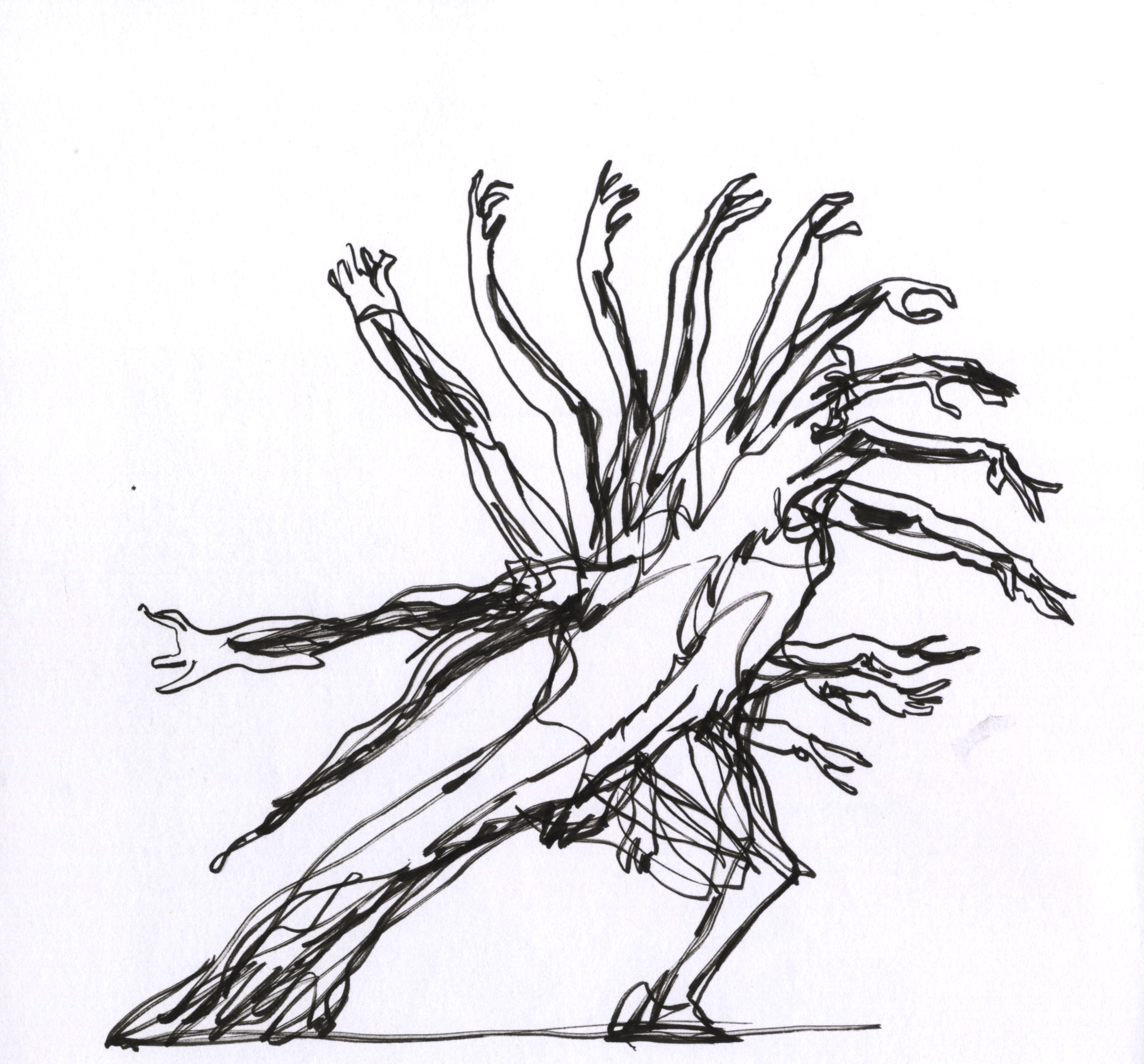
The Hierarchy of Movements…The strongest and lowest body parts around the centre of gravity move first, followed by the weaker, lighter, and faster extremities.
e.g. We move our Pelvis, then our Pelvis moves our Chest/Shoulder, and then our Shoulder moves our Arms.
Summation of Force… Essentially this means that when multiple forces act upon the same object in the same direction these forces add together.
When we move our Pelvis as we do in Chum Kiu, and then rotate our torso as we do in Big Gee, and finally extend our Arm to strike as we do in S.L.T. these individual forces add up to create a much greater force.
All of the relevant body parts do not need to initiate at the same time but all of the relevant body parts do need to be moving together at the moment of contact for this to work.
There can be a minor disconnect between the step, the twist, and the punch at initiation as long as they are all moving toward the target as the strike lands.
When we look at the relative distances covered by each section of our body as we engage an attacker, the punch, which under ideal circumstances is only travelling 1 inch, the fabled “inch power”, needs to start later than the step and upper body twist to avoid landing too soon, and as a result, is always playing catch-up.
This natural catch-up creates yet more [positive/faster] acceleration to an already [positively/faster] accelerating body.
When we engage in FORM analysis the goal is not to learn the FORM, the goal is to maintain control of our body as it plays out movement.
In this way, every one of our FORMS is teaching the same lesson.
RICK recently sent me an article, written by someone about their experience while training in Wing Chun in Hong Kong.
To my sensibilities, it was a very odd article that used magical thinking as a way to explain how to do what we do.
It is not the first time I have read such opinions.
In fact, I first read about them as a 12-year-old boy while studying Chinese history in high school, way back in 1965.
This was the story of the Boxer Rebellion.
When the British established the first trade mission with China in 187? It was the beginning of a culture clash that China would never recover from culminating in the Boxer Rebellion.
The Boxer Rebellion was an officially supported peasant uprising of 1900 that attempted to drive all foreigners from China.
“Boxers” was a name that foreigners gave to the Chinese secret society known as the “Righteous and Harmonious Fists” that was spread throughout Kung Fu Kwoons.
It was the “Righteous and Harmonious Fists” that prosecuted the peoples anger at the foreign interlopers.
The leaders of the “Righteous and Harmonious Fists” genuinely believed that Kung Fu, specifically Iron Shirt and Iron Body training, made them invulnerable.
This was magical thinking of the highest order.
In August of 1900, this magical thinking was proven to be wrong as dozens if not hundreds of Kung Fu Masters fell to the European Muskets.
It was the old world v the new world.
Mystic Superstition v Science.
In the wake of the Boxer Rebellion and the second Sino-Japanese war, both sides of Chinese politics embarked on a program to modernise itself and dispel all of the old superstitions.
It is worth noting that it was in this social climate that Wing Chun blossomed, with its principles of Simplicity and Practicality and its abandonment of the more esoteric aspects of traditional Kung Fu.
Wing Chun was Kung Fu for the new age.
But the more things change, the more they stay the same.
There has always been a split in the Kung Fu community along these lines, some schools still look to the past with Chi Kung and the BaGua while others modernise by embracing sports science.
Even in Wing Chun.
My Sifu’s school was a massive school with something in the vicinity of 1000 students enrolled at any one time in 3 states and 30 sub-schools, to be expected there was a sliding scale of opinions.
A small cohort of the school would pilgrimage to Hong Kong and would return with a different IDEA of what Wing Chun is and how it should be trained.
There is no harm in this, training is not fighting, but many of the IDEAS began to spread like a virus through my Sifu’s school, and these IDEAS flew in the face of established science.
There was talk of being able to generate force without that force returning from the ground, dismissing Newton’s Third Law of action and reaction, and talk of the training accessing an area of the human brain unknown to Neuroscience.
Training that develops a force that is only known to the initiates of this specific type of training.
Echoes of Iron Body Training.
One side of this coin is that it is harmless fun to use magical thinking in our training, and to a large extent anything that helps and encourages someone to train more often and invest more effort is a good thing.
But the negative side of this harmless fun is that it ignores the things we know to be true, it leads us away from the honesty of everyday existence, and it encourages naive students to trust in things that do not work.
I understand the allure of this IDEA.
Who would not like to achieve Top End results without putting in any hard work.
It is the Kung Fu Law of Attraction.
Claims that we can create force without pushing the floor are disingenuous, to say the least.
Even when we stand completely still our body weight, powered by gravity, pushes the floor.
And the floor pushes back.
I think we can all understand that if force could be created without interacting with the floor, both N.A.S.A. and Elon Musk would be using it for rocket propulsion.
We are in the ‘End-Game’, only results matter here.
When Leung Jan began developing what we all now refer to as Wing Chun it was a method of refining his own, quite substantial Martial abilities.
Because of this, there were no specific conditioning IDEAs added to the new work, he would have already been using his previous conditioning from his previous style.
To fill this void we always needed to bring conditioning tools in from outside sources, and, where possible, convert them to align with Wing Chun’s thinking, our Fist Logic.
The most important skills to have if we wish to better our opponent in a violent interaction are speed, strength, and aggression.
Or more to the point the ability to deliver our Wing Chun training with speed, strength, and aggression.
This appears to fly in the face of much of the basic Wing Chun approach, especially once we explore how to ‘load’ what we do.
In my opinion, this is why Ip Man made the Baat Cham Dao one of his training protocols, to step outside of the box.
Wing Chun is a ‘FIST-ART’ after all, there is no need to add weapons.
Training is not fighting, they are closely related but not as joined at the hip as many think.
As clearly as I can state, training Wing Chun teaches us Wing Chun, but it does not teach us how to fight.
Each of us, in our own way, needs to be able to use the Wing Chun we have learned while engaged in what is essentially unrelated fighting.
In fighting, there is no time to think, no time to try it again, no place for relaxing, deliberately introduced softness, or any organised movement sets.
This is true of every style and not just Wing Chun.
The external attributes of speed, strength, and aggression, all of which are quite rightly excluded from training practice because they clash with our training ideology, are the backbone of the Baat Cham Dao.
There is no other reason for this FORM to exist, as I say, Wing Chun is a ‘Fist’ art.
This does not need to be a problem.
In the Big Picture everyday world that we think the brown will become airborne in, not everything we do needs to be Wing Chun.
Just because we train in Wing Chun, believe in Wing Chun and recommend Wing Chun, we have not in any way committed ourselves to some unbreakable contract that means that we can only use Wing Chun if we are in a dire situation.
Over the years I have helped hundreds of students with their training and at some time or another during practice, they have asked “Can we do this in Wing Chun”?
Do what?
Survive?
What is the Wing Chun end game?
Wing Chun exists to escape violence.
Holding an opinion that there is a raft of things we cannot do is sports thinking, imagining that there are rules that if broken can get us disqualified from the match.
There are no ‘Sportsman-like’ rules in an unasked-for violent situation, especially no rules that would force the referee to intervene and save our Ass.
To survive a violent situation we need to be faster, stronger, and nastier than our attacker, otherwise, at best, we are only a 50% chance of getting out in one piece.
Of all of our movement sets, the Baat Cham Dao affords us the opportunity to add the much-needed increased load to the training.
There are no new learning objectives in the Baat Cham Dao Form, we have done all of the actions and movements in a previous Form and should be comfortable with, if not capable of, making these actions and movements, so we have little need to focus on specific mechanics.
The overall scope of work we do in the Baat Cham Dao From is to gradually, but continuously, increase the load while trying to keep it inside the envelope of Wing Chun philosophy.
In training, we all try for perfection, but in a violent situation ‘close enough’ is usually good enough.
Especially ‘close enough’ delivered fast with unrelenting aggression.
Working in this way with the Baat Cham Dao allows us to find the limits of how fast we can move, how much strength we can use and how aggressive we can be before we erode the very stuff we have spent years trying to understand.
Forgetting our objectives.
During the journey, we commonly forget our goal.
Almost every profession is chosen and commenced as a means to an end but continued as an end in itself.
Forgetting our objectives is the most frequent of all acts of stupidity.
In Daoism, Peach Wood Swords are a symbol of a person that is trying to cut away the bonds that tie them to the world of men…
If we can introduce an element of play to our training there is a greater chance that we will more frequently and more thoughtfully, engage in that training, and of course, more chance that we will learn and benefit from that training.
In Wing Chun Kuen, which as we know is a FIST ART, the Dummy, the Pole and the Knives are examples of such play.
They are theatre.
Their purpose is not to teach us how to use a weapon, but it is to teach us how to better understand, and by extension use, our empty hand skills.
To get the most from this playful training we should avoid thinking that it is the weapons we are learning.
And at all times try to see through the dance and observe the movements of the Body, and relate all moves back to the Sil Lim Tao.
WHY WE SHOULD ALL PLAY THE KNIFE FORM.
If we are talking about developing a working Martial Art that we can depend on to get the job done we should all be working with the Baat Cham Dao { Knives} Form.
Wing Chun was developed by Dr Leung Jan as a method to improve an already existing skill set.
To that end, the first three Forms are all about building a structure and studying the concepts, with very little that translates easily to applying Wing Chun to an attacker.
The Dummy, the Pole, and the Knives take the information delivered in the first three forms and make suggestions as to how we could combine them.
The dummy is mostly about understanding how to accept force, the Pole is mostly about how to issue Force, but the Knives show us how to move around while being active while potentially issuing and accepting force.
The Knife Form is the only Wing Chun Form that has anything remotely comparable to actual fighting moves.
Where it gets confusing is that the moves are for use in Empty Hand fighting.
Working on and with the Knives is still predominately defensive but that’s O.K. because Wing Chun IS predominantly defensive.
We cannot counter-attack until we are under attack, ergo, counter-attacking is defensive.
The length, weight, and balance of the Baat Cham Dao, which are truly dreadful from the perspective of a useable weapon, make it easy for us to be aware of multiple body connections while doing moves that are, like the moves of the Dummy Form, essentially Chi Sau.
The footwork in the Baat Cham Dao Form is out of Chum Kiu and Biu Gee and is presented in such a way that introduces sinking, rising, twisting, lunging, forwards movement, backward movement, sideways movement and oblique movement, that effortlessly links all of the work from the first three forms in a clear and concise fashion.
If we can resist the fantasy of thinking that we are using genuine weapons and allow the Knives to simply be a training tool, a feedback device, the Baat Cham Dao Form can lead to a dynamic understanding of Wing Chun.
Many of my seniors tried to tell me that the weapons were real, my Sifu even wrote a book on them, interestingly in his book my Sifu uses the moves with a squash racquet against an attacker.
But with regrd to them being genuine weapons one question they all struggled with was…
…If the Knives were added to the system as genuine weapons training it must be obvious that at that time and place, there was a very real need for weapons over empty hands.
If this is the case why are they introduced so late in the training?
Surely, they would be taught from the beginning if they were needed?
Think about that.
Taking a fist to a knife fight is no better than taking a knife to a gunfight.
Because the Baat Cham Dao is not a genuine fighting knife/sword we can replace it with any similar length and weighted implement and get all of the above elements and benefits from the work.
And the benefits are massive.
I know that when you look around YouTube you can see all manner of madness being performed with the Baat Cham Dao, but these are shifty people that are trying to sell something to naive shoppers, we really should know better.
On Youtube there are even people kicking while using the Baat Cham Dao, what is that about?
If we are kicking at an attacker we are outside of knife/sword range and as such if my opponent is unarmed I should close the gap and use the knife/sword, that is why we have it.
Alternatively, if the opponent is armed and out of knife/sword range as we try to kick they will chop our leg off.
The thing about common sense is that it is not very common.
The knife/sword moves in the Form are the moves we make in our ‘empty hand’ applications, the knives allow us to make a better mental connection to the correct alignment.
The treasure is found by practicing dynamic coordinated movements.
To keep this video inside everyone’s attention span I have not gone into the pure movement side of the Baart Cham Dao, I will do a separate video later in the week.
video
Back in the early days of the internet, I would seek out and gobble up any books I could find on Wing Chun.
I came across a book called ‘Conversations with Wing Chun Masters’ or something along those lines, it was compiled by an American so there were no inherent translation issues, unfortunately, I have long since lost it.
One such conversation was with a student of Ip Man that was also his nephew, a family member, who claimed that it was Ip Man himself that created the Baat Cham Dao Form and that he was almost coerced into it by his students.
In the early days of his teaching, sometime around 1950-51, Ip Man was reported to have had two Peach Wood Swords on the wall where he taught, which his students pestered him to teach them how to use.
Ip Man resisted because he claimed the Swords were fragile, somewhere along the line one of his students managed to copy the Swords and had a few pairs made from aluminium and presented them to Sifu Ip, upon which he created what we now know as the Baat Cham Dao Form.
There is nothing untoward in this, many Masters create their own Forms in their own Schools, and at that time nobody could have predicted how popular Wing Chun would become.
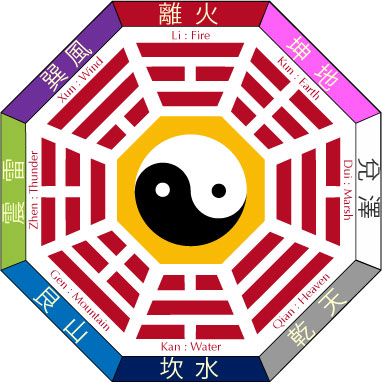
The nephew also said that Sifu Ip used the knives to explain the Ba Gua, something that during the mid-1950s came to be viewed as old-fashioned, mystic superstition and was dropped, but the Baat Cham Dao themselves remained in the system.
What always gave this story credence for me is that it was widely known that Ip Man considered himself a Daoist Gentleman.
In Daoism, Peach Wood Swords are a symbol of a person that is trying to cut away the bonds that tie them to the world of men and free themselves to walk a more spiritual path.
The Ba Gua is a Daoist tool that explores the connection to the 8 elements that make up the Chinese Spiritual Universe.
Baat Chm Dao translates to 8 cutting knives/swords, and the movement set comprises 8 directions.
It is the IDEA of how a spring works that we are after and not any specific mechanisms.
In training, we will focus on a certain aspect or concept, such as Springy Force, and describe it in a certain way, but the ultimate learning objective is to see how it works with everything we do all of the time.
Wing Chun is a multi-layered system, and like any system for it to work correctly and effectively every part of the system must interact with every other part of the system.
If just one part does not work then the whole system breaks down.
It is not practical or in fact useful to think along the lines of ‘this does that’ as all aspects can be used in numerous different ways, everything we do, every shape, every posture, and every action can be used for defence or attack, and as such requires us to be able to see things through a different lens in training and yet the learning objective is to combine both visions into a new and unique version of itself.
Although when working on and through Chum Kiu we explore Wing Chun’s defensive IDEAS this does not mean that Chum Kiu is exclusively defensive.
And when working on and through Biu Gee we explore Wing Chun attacking IDEAS it does not mean Biu Gee is exclusively concerned with attacking.
This is just a teaching protocol, a linear progression that is easier to navigate and understand than trying to explain the circular, multi-layered reality that is Wing Chun in an application.
As we all know if we are using Wing Chun to its optimal we are using simultaneous attack and defence and to be expected we are using both sets of IDEAS, both attack and defence, both Chum Kiu and Biu Gee.
Chum Kiu and Biu Gee are multi-faceted, the IDEAS and actions are many layers deep and while we may approach the IDEAS in a single-minded way the outcome we are after is a dynamic, constantly mobile combination of all the things introduced in both Forms.
Like a Lego set that moves in cycles of construction, de-construction and re-construction, the combinations are restricted only by our level of understanding and creativity.
To be expected this is also the case with Springy Force.
It is the IDEA of how a spring works that we are after and not any specific mechanisms.
The more we can understand about springs the more we understand about Springy force.
At times this can be a little confusing as we introduce explanations to fill out the IDEA, explanations that may in isolation look contradictory.
Finding comparable examples of the central IDEAS of Wing Chun in the real world can help us get a quicker understanding of what might appear to be vague concepts.
I think that most of us have an IDEA of the function of a car’s shock absorbers and how they can be adjusted to affect the height and quality of the ride, this is usually a function or quality based upon the stroke length.
As an analogy we can look at the tension in our body, be it intentional or residual, as creating a change to the stroke length and a change to the overall action of the Shock absorber.
A shorter stroke length is returns force harder and quicker, while a longer stroke length returns force softer and slower.
If you do not have this understanding ask Dr Google.
Power is described as the result of energy spent over time, the less time spent releasing a set amount of energy creates more power than the same amount of energy spent over a longer time period.
With the shock absorber the shorter stroke results in a harder result than the longer stroke.
The way we strike is a perfect example of a short stroke issuing more power.
As always the purpose of these videos is to help you all dig deep into the theory side of this thing we do, and of course, to hopefully inspire those of you that fell away during covid to come back to training, you know who you are and I know you still clock the videos.
While it is essential to understand the theories if we wish to be competent at Wing Chun, and watching these videos and reading the post will most certainly help, nothing beats the feedback that comes from supervised training and touching hands with your Wing Chun brothers.